
Sri Lanka aims to finalize debt-restructuring talks with international creditors by the second quarter of 2023, as it looks for early assurances from lenders to help unlock a $2.9 billion loan from the International Monetary Fund
President Ranil Wickremesinghe expressed confidence in the successful restructuring of external debt following talks with the Chinese Finance Minister.
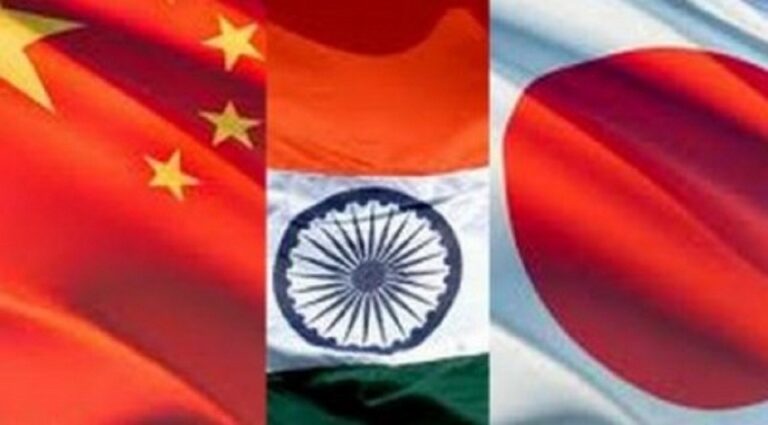
The President said that the delegation headed by the State Minister of Finance, who is currently in Washington, held initial discussions on Saturday with the International Monetary Fund and the three main countries, China, India and Japan that have given loans to the country.
He said that the Government is giving priority to immediately solve the problem of the country’s bankruptcy and to ensure food security.
Sri Lanka has concluded formal talks recently as it seeks IMF board approval for the loan in December or January, local authorities said in a virtual presentation.
The most effective way to obtain the financing assurances quickly is the creation of an ad-hoc bilateral creditor coordination platform allowing the official bilateral creditors to give their financing assurances to the IMF collectively after having debated among themselves,” the authorities said.
The South Asian nation, which fell into its first ever default in May, has said it will ensure transparency and equal treatment among creditors including China, Japan and India.
But some of Sri Lanka’s bondholders see talks dragging on for months as they push for the inclusion of local debt and loans from non-state creditors in the restructuring.
Central bank Governor Nandalal Weerasinghe said the “perimeter” of Sri Lanka’s debt exercise is still being considered with the assistance of the debt advisers, according to people with knowledge of the matter who declined to be identified.
The issue of domestic debt is being looked at very carefully given the impact it may have on the stability of Sri Lanka’s banking sector and the overall macro fiscal framework, the people cited Weerasinghe, he added.
Sri Lanka’s debt stood at $101 billion last year, including guaranteed loans by state companies and central bank liabilities. Local currency debt accounted for 54 percent of the total, while bilateral debt is about 12 percent, according to Finance Ministry data.
Fitch Ratings earlier this month warned the nation is contending with a high risk of default on its local currency bonds.
President Ranil Wickremesinghe said the government was looking at debt talks including local bonds in the restructuring, while Weerasinghe had said he was confident Sri Lanka’s debt can be made sustainable without changing the domestic component.
Wickremesinghe is seeking bilateral creditor coordination to help accelerate efforts toward “debt sustainability and ensure comparability of treatment,” according to a Finance Ministry statement.
The president’s media unit confirmed that Sri Lanka’s three main bilateral creditors were among 23 Paris and non-Paris Club members that attended a forum for ambassadors recently
Sri Lanka to begin crucial debt talks with China India and Japan
Children’s Caucus focus on the formulation of a national policy for children with special needs
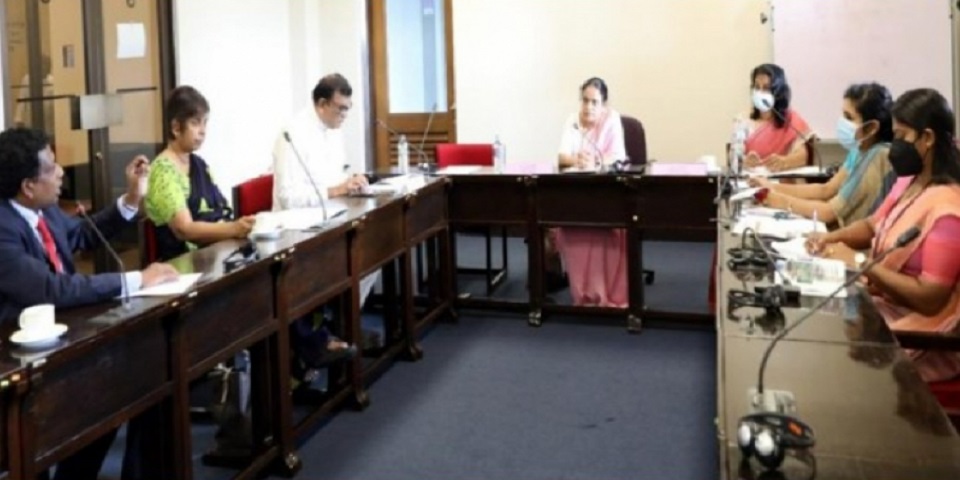
The Parliament Children’s Caucus focused on the need to formulate a national policy to ensure the well-being of children with special needs in Sri Lanka.
Views on this regard were expressed when the Parliament Children’s Caucus met in Parliament Oct (18) under the chairmanship of its Chairperson, SJB MP Rohini Kumari Wijerathna.
The views and suggestions of the members regarding the future work of the caucus regarding the well-being of children in this country also received special attention. Accordingly, it was decided to have extensive discussions with the Ministry of Women and Child Affairs and other affiliated institutions, Children and Women Bureau and representatives of the United Nations International Children’s Emergency Fund (UNICEF) extensive discussions on the problems and proposals related to child care, with a special focus on child care.
Various fields related to children in the country were also given attention whilst providing quality education to the entire child population, providing adequate health care, to make existing resources and officials more efficient, to identify environments before children are abused and implementing the necessary measures, ensuring access to good nutrition and creating opportunities for children to develop their potential were also looked into.
Also, it was further emphasised that it is essential to find solutions to the various problems for the children of rural, urban and plantation people separately. It was also special that the members of the caucus agreed to work with government officials and non-governmental organisations related to children with the priority of the ideas and suggestions of the provincial commissioners using new technology.
The members of the caucus who expressed their displeasure about the use of media in concerning situations related to children, focused their attention on the need to create a proper programme and policy together with the relevant minister. In addition, the need to create an awareness programme on child malnutrition was also discussed.
MP Velu Kumar, co-vice president of the Caucus, and MPs Thalatha Athukorala, Dr. Sudarshini Fernandopulle, K. Sujith Sanjaya Perera, Weerasumana Weerasinghe, Diana Gamage and Manjula Dissanayake were present at the occasion.
US Assistant Secretary Lu assures assistance to SL
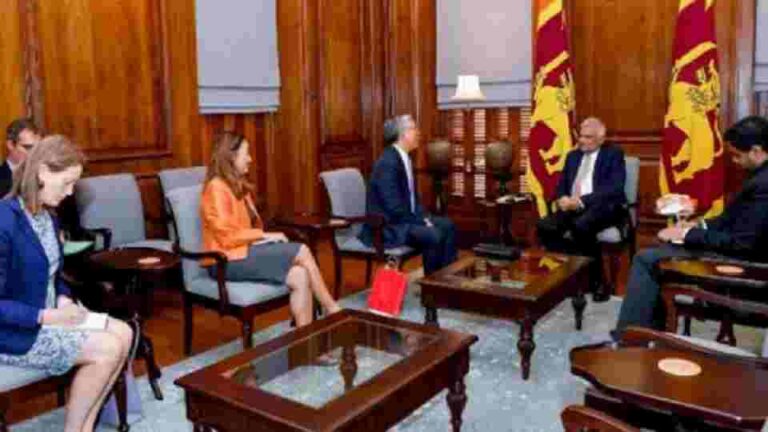
Assistant Secretary of State for South and Central Asian Affairs Donald Lu who is currently on an official visit to Sri Lanka met with President Ranil Wickremesinghe and assured to support Sri Lanka during this difficult period.
While appreciating the President’s efforts in rebuilding Sri Lanka’s economy he said that President Ranil Wickremesinghe is the right person to get the country out of the present crisis & assured him that he has a force backing him.
He also stated that the U.S. government would continue to assist Sri Lanka with their negotiations with the IMF and the debt restructuring talks.
These remarks were made during the discussion that took place this evening (19) at the Presidential Secretariat in Colombo.
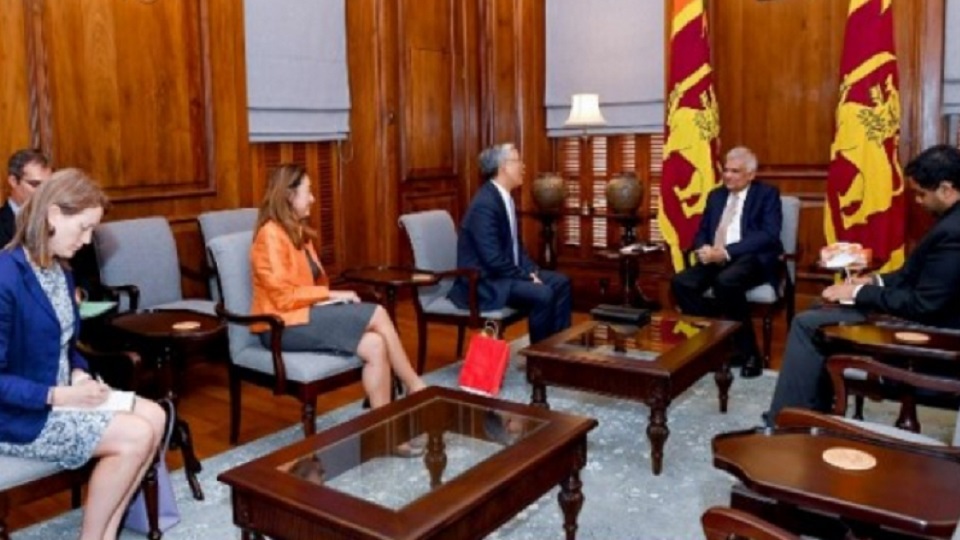
During the discussion President Wickremesinghe also expressed his appreciation to the US Government for their continuous support towards Sri Lanka.
The Assistant Secretary further stated that the US government is expected to provide all possible support to Sri Lanka and its people in this difficult period and welcomed the President’s efforts in regard to reconciliation and strengthening of the Democratic institutions.
The US Ambassador to t Sri Lanka Julie Chung and Political and Economic Advisor Susan Walke were also present at this discussion.
PMD
SATHOSA slashes prices of 06 essential food items

Lanka SATHOSA has slashed the prices of six essential food items.
Accordingly the revised prices of these food items are as follows;
- 01 kg of garlic previously sold for Rs. 550 slashed by Rs. 60 – new price Rs. 490.
- 01 kg of flour previously sold for Rs. 375 slashed by Rs. 55 – new price Rs. 320.
- 01 kg of dried sprats previously sold for Rs. 1500 slashed by Rs. 50 – new price Rs. 1450.
- 01 kg of large lentils (Kadala Parippu) previously sold for Rs. 315 slashed by Rs. 30 – new price Rs. 285.
- 01 kg of white sugar previously sold for Rs. 275 slashed by Rs. 15 – new price Rs. 260.
- 01 kg of imported white Kekulu rice previously sold for Rs. 174 slashed by Rs. 05 – new price Rs. 169.
MIAP
SL may have to revert to an ‘era of queues’ if revenue not raised through direct tax increases: President
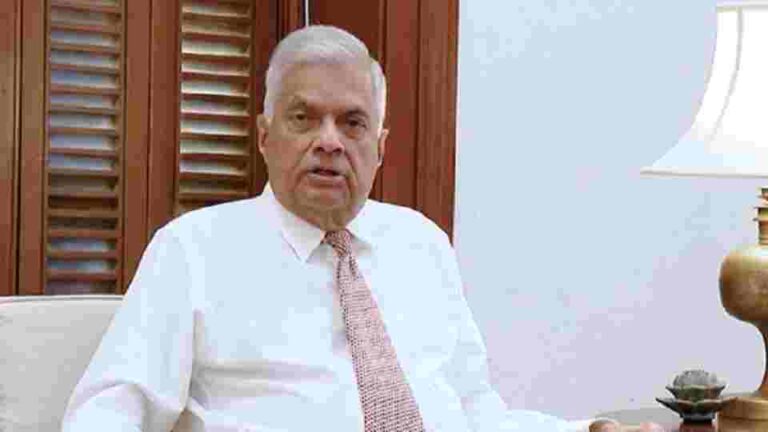
Government ready for prudent economic management following successful debt restructuring – President
• The country lost Rs. 700 billion due to wrong economic policies in the past
• The inflation rate increased to 70 per cent since Rs. 2,300 billion was printed during the past two and a half years.
• The country will have to revert to an era of queues if revenue is not raised through direct tax increases.
The Government is ready to implement prudent economic management after successful debt restructuring, emphasized President Ranil Wickremesinghe, when he delivered a special statement on tax policy today (19).
President Wickremesinghe further noted that it was not possible to strengthen the economy without increasing the revenue of the country, which will compel him to reluctantly make tough decisions in order to rebuild the nation.
The full statement by President Ranil Wickremesinghe is as follows;
An important step in Sri Lanka’s debt restructuring program took place last week. A team under the Minister of State for Finance participated in the Annual (October 07) meeting of the International Monetary Fund (IMF). In that instance, a meeting was convened by the IMF, with the lending and international private institutions to Sri Lanka.
Over 75 persons participated both in person and through zoom technology. The main objective of this meeting was for the three main countries that have granted loans to Sri Lanka, namely Japan, China and India, to come together on a common platform to discuss the future steps in the formulation of concessions.
During this meeting, the IMF and Sri Lanka pointed out the need for a common platform. India and China have informed that they will examine the issues further and respond accordingly. These two countries have also informed the possible need for bilateral discussions in this regard.
Many other countries also participated in this meeting, including the attendance of an Assistant Secretary of the United States Treasury. All this was possible due to the implementation of the decisions taken in consultation with the IMF.
There is an aspect about the income of the Government of Sri Lanka which need to be noted. In 2015, during a visit to Sri Lanka the IMF representatives underlined the need or a surplus in the primary budget. Therefore, it was provided for in 2017-2018. However, it was reduced in 2019 due to the Easter Sunday bombings. However, there were no serious repercussions. The IMF was optimistic that Sri Lanka would be able to increase its revenue, since there was a surplus in the primary budget.
At that juncture, Sri Lanka’s income was between 14.5% – 15% of the Gross Domestic Product (GDP). However, it was agreed that Sri Lanka could gradually increase this to 17%-18%.
However, in November 2019, the country’s taxes were drastically reduced, with the Government revenue decreasing to 8.5%. In this context, the IMF set aside the agreements and declared that it was unable to provide the agreed assistance.
That year the Government lost approximately Rs. 600-700 billion as revenue. Simultaneously, the country had to face the Covid-19 pandemic. These issues are the main factors that led to the collapse of Sri Lanka’s economy.
The IMF advised the need for a surplus in Sri Lanka’s primary budget. It was agreed to, since the country needs the support of the IMF.
It was also decided to increase the country’s income from 8.5% to 14.5% of the GDP. However, it is a difficult task to accomplish immediately, it is envisaged to achieve this by 2026.
Initially, a decision had to be taken on the manner in which the income is to be increased. Money was printed due to the decrease in income. During the past two years, Rs. 2300 billion has been printed, resulting in inflation rising to 70% – 75% and even more in respect of food inflation.
These increases need to be controlled, while securing income. Therefore, during the discussions with the IMF a new tax system has been proposed. The IMF informed that even the export industries would be required to pay taxes.
The IMF pointed out that in countries with an export economy, the related industries were liable for tax. The IMF also upheld that Sri Lanka’s primary export economy is based on the plantation industry. During British rule, taxes were charged from every plantation sector, including tea, coconut and rubber. Therefore, if the country has to move towards that goal, taxes will have to be paid. The export sector has now questioned this aspect and the related concerns are to be submitted to the IMF.
The second issue regarding the personal tax structure. The majority of tax revenue is through indirect taxation. The majority of the country’s citizens, even those below the poverty line, had no choice but to pay indirect taxes. The direct tax revenue is 20% and 80% has been derived from indirect taxes.
The IMF that particularly had reservations in this regard were of the view that the amount of tax obtained through direct taxes should exceed 20%. The IMF noted that otherwise this would not be successful and ordinary citizens would need to pay taxes.
Therefore, according to this framework, and also to achieve the goals of 2026, the Treasury and the IMF discussed the possibility of limiting the taxation from those who have an income of Rs. 200,000, which however, did not materialize. Eventually, this has resulted in the decision to levy income tax on people earning over 100,000. Today, this has become a vital concern amongst the citizens.
Against this backdrop, without this tax system, the desired goal will not be achieved. The agreed goal is to achieve 14.5% – 15% of Gross Domestic Product (GDP) revenue by 2026.
If Sri Lanka withdraws from this program, IMF assistance will not be received. Without IMF certification, the support of these international financial institutions such as the World Bank, Asian Development Bank, and the countries that have supported financially will not be forthcoming. If that happens, the country will be back to the era of queues.
Tougher times ahead will have to be faced. Therefore, these loans need to be obtained and embark on a debt-restructuring program. These decisions are not being taken wilfully, but are being done reluctantly. However, these decisions will be reconsidered periodically.
In the same manner of conducting the debt restructuring program successfully, if a bountiful Maha season is achieved as expected, it will help in reducing economic pressure. Measures to increase the country’s foreign reserves has also been discussed and once all these steps have been implemented the country can move forward.
The country at this juncture is facing a difficult period. Expectedly tough decisions have to be taken during these difficult times. I undertook this challenge when no one else was willing to come forward. Therefore, it is my responsibility to explain the background of the related issues and the Government is also ready to discuss this further if required.
PMD
Debate on second reading of 22A to commence today. Vote tomorrow
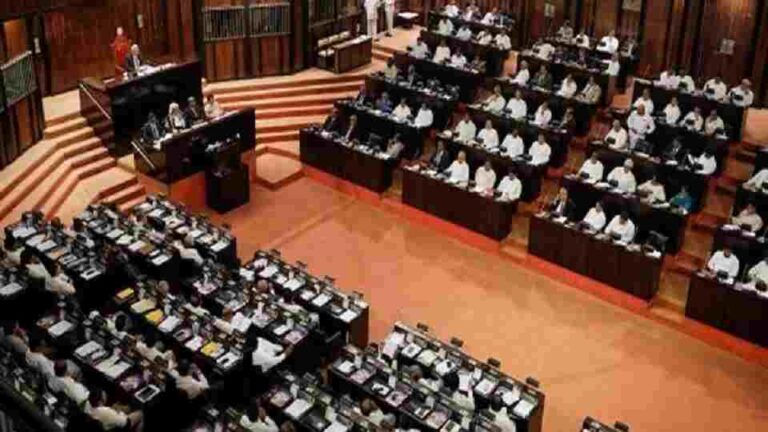
The debate on the second reading of the 22nd Amendment to the Constitution is set to take place today (20) and tomorrow (21) in Parliament.
Parliament convenes at 09.30 am today and queries expecting oral responses will take place until 10.30 am.
Later, the debate on the second reading of the 22A will take place from 10.30 am to 05.00 pm.
The manner in which the aforementioned affairs are carried out will be followed tomorrow as well, with a subsequent holding of a vote for the 22A.
MIAP
Sri Lanka Original Narrative Summary: 20/10
- Most Venerable Dr Pallegama Siriniwasa Nayaka Thera, 69, Atamasthanadhipathi, passes away: final rites on October 22 in Anuradhapura.
- JVP leader Anura Dissanayake says Sri Lanka would have been in a dire situation if India had not provided “cash” funds over USD 3.8 bn in 6 months: from October 2021 to April 2022, India’s assistance has been in the form of a RBI SWAP, ACU deferral and Fuel and Trade Finance: proposed IMF assistance is only USD 2.9 bn over a period of 4 years, with heavy conditions.
- President Ranil Wickremasinghe says IMF has stressed the need for a common platform with Sri Lanka’s 3 main creditors Japan, China and India: also says no alternative but to restructure country’s debt: warns harder times are inevitable.
- Fitch Ratings says “rated Sri Lankan corporates in consumer-goods retail, power generation and homebuilding will be among the most affected if the economic crisis deepens or continues.
- Central Bank accepts only Rs.16 bn out of Rs.75 bn T-Bills offered: short by a massive Rs.59 bn: keeps interest rates unchanged: 3 mths-33.0%: 6 mths-32.5%: 1Yr-29.6%: “money printing” so far under Gov. Weerasinghe rises to a staggering Rs.654 bn @ Rs.3.5 bn per day.
- State Tourism Minister Diana Gamage says beautiful women from 80 countries will compete in Sri Lanka for the title Miss Tourism 2022, in a pageant to be held in December.
- Leader of the House Susil Premajayanth says there’s no Constitutional provision to form a “People’s Council” which is similar to Parliament.
- US Assistant Secretary of State for South and Central Asian Affairs Donald Lu meets President Ranil Wickremesinghe: appreciates President’s efforts in rebuilding the economy: says President is the right person to get the country out of the present crisis.
- Sri Lankan Ambassador in Russia, Professor Janitha Liyanage discusses the significance of a long term credit line to Sri Lanka to procure fuel from Russia, with the Russian government.
- Opposition MP and former Justice Minister Thalatha Atukorale calls for relocation of the female wards of the country’s prisons to their own separate premises: says it would be “good for everybody”.
Sri Lankan Airlines convenes international travel trade confab in Nov.

SriLankan Airlines, as a prime promoter of destination Sri Lanka, in a bid to support the country’s tourism recovery drive, will be hosting over 150 international travel agents in Colombo for a commercial conference and a travel mart in mid-November this year.
This will be the first time in recent history that such a large representation of the international travel trade industry has arrived in the country for an interactive initiative.
SriLankan Airlines CEO Richard Nuttall said: “Now the country is moving forward, the travel advisories are lifted, fuel is available, and it is time for us to rejuvenate tourism back to experience the wonders of Sri Lanka.
The time has come when as SriLankan Airlines, the national carrier, we would like to demonstrate and show our valued partners across the network, that there was never a better time to visit and to raise awareness across the industry.”
The conference will bring together the travel trade fraternity from across the SriLankan network, focusing on those who significantly offer Sri Lanka in their product portfolio.
The visiting agents will be apprised on Sri Lanka’s tourism aspirations, the airline’s commercial outlook, and will be given a first-hand experience on the country’s ground situation to reassure them of the island’s readiness and stature to host any type of traveler.
The conference will be followed by a travel mart, where Sri Lankan tour operators and destination management companies will be given the chance to interact with the visiting agents to explore business opportunities.
The national carrier currently connects a range of destinations into Sri Lanka which includes leading tourism feeder markets such as the UK, Germany, France, India, and Australia.
The National Carrier has continued to support the country’s recovery efforts in the face of all recent challenges and has effectively and proactively steered many initiatives to retain the faith of travelers on destination Sri Lanka.
08 long-term detainees under PTA released
08 persons arrested and detained under the controversial Prevention of Terrorism Act (PTA) for a very long time have been released today (19) under the pardon of the President, revealed Tamil National Alliance (TNA) MP Charles Nirmalanathan, speaking to Parliament today (19).
The TNA MP noted that he adds his thanks to President Wickremesinghe and Justice Minister Rajapaksa.
MIAP
SL manufacturing sector continues contraction amidst marginal growth in services
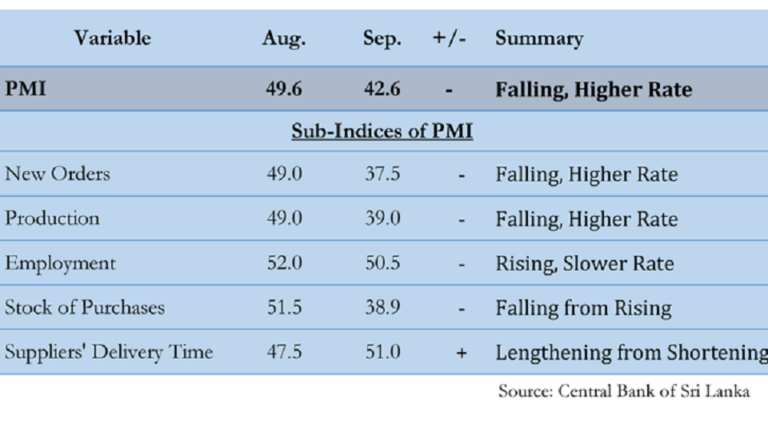
Sri Lanka manufacturing sector continued contraction in September whilst the services sector limped to marginal growth as per the Central Bank Purchasing Managers Indices (PMI).
The index compiler, Central Bank, said the manufacturing PMI declined indicating a setback in manufacturing activities on a month-on-month basis.
Services PMI recorded an index value of 51.2 in September 2022 indicating a marginal expansion in the services sector driven by the increases observed in New Businesses, Business Activities and Expectations for Activity.
Nevertheless, many respondents expressed their concerns over the supply side constraints, increase in Value Added Tax (VAT), introduction of Social Security Contribution Levy (SSCL) and increase in direct taxes, which could have negative effects on their business operations.
CB said the Manufacturing PMI recorded an index value of 42.6 in September 2022, with a decline of 7.0 index points from the previous month driven by the decreases in all the sub-indices, except Employment and Suppliers’ Delivery Time.
The decline in New Orders and Production was mainly attributable to the manufacture of food and beverages, and textiles and wearing apparel sectors.
Many respondents representing manufacturing firms primarily catering to the domestic markets, including the manufacture of food and beverages, mentioned that the decline in demand was due to the deteriorating purchasing power of the consumers.
Further, manufacturers in the export-oriented industries mentioned that they experienced a weaker demand mainly due to the fear of recession in the major export destinations.
However, Employment is broadly at the level of the previous month, while an improvement seen in the manufacture of textile and apparel sector.
As the apparel sector frequently suffers from the scarcity of employees, it has tended to recruit despite the gloomy outlook, taking advantage of the healthy influx.
The Stock of Purchases decreased in line with the decline in New Orders and Production while Suppliers’ Delivery Time lengthened slightly in September 2022.
Some respondents mentioned that they continuously experience difficulties in sourcing raw materials due to lower foreign exchange availability, although some recent improvement has been witnessed.
For the next three months, the overall expectations for manufacturing activities will be deteriorated like in September 2022, anticipating demand side impediments to be intensified in the coming months.
The Services PMI, the new businesses expanded in September 2022 compared to August 2022, particularly with the improvements observed in financial services, accommodation, food and beverage and education sub-sectors.
Business Activities in the services sector increased further during September amid the ease of the energy crisis and improvements in economic conditions
Accordingly, business activities related to financial services, other personal activities, education and insurance sub-sectors recorded improvements compared to the previous month.
Nevertheless, business activities of real estate, postal and courier and human health sub-sectors declined during the month.
Employment continued to fall in September due to increasing resignations and retirements besides halt in new recruitments.