Chairman of the National Gem & Jewellery Authority, Thilak Weerasinghe has been removed from his post, based on a number of corruptions and frauds committed during his tenure.
Weerasinghe has been accused of many irregularities under his watch, including allowing illegal mining and attempting to release a confiscated pouch containing gems worth around Rs. 01 billion illegally.
The Parliamentary Committee on Public Enterprises (CoPE) is also conducting a probe into these allegations.
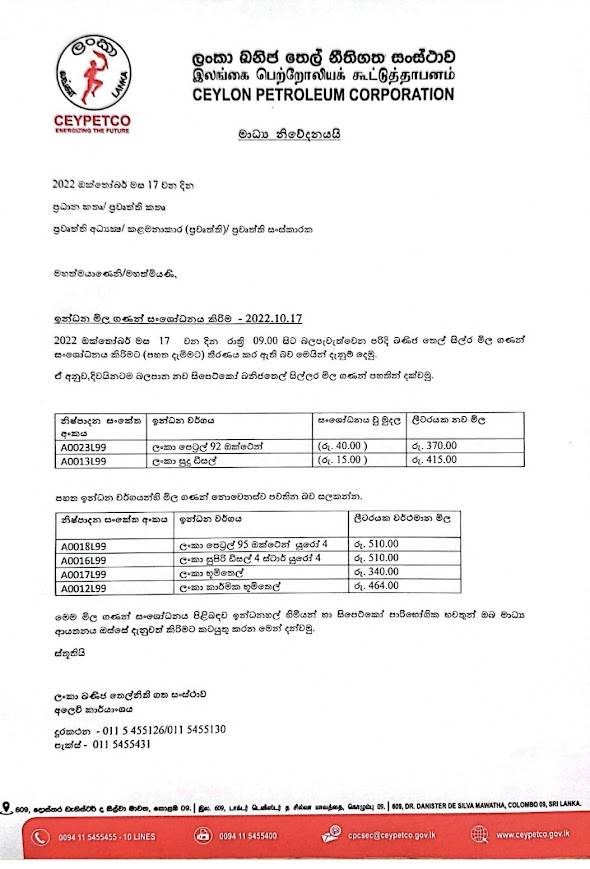
Fuel prices will be revised effective from 9 pm tonight (17), announced the Ceylon Petroleum Corporation (CEYPETCO).
Accordingly, the price of 92 Octane Petrol will be slashed by Rs 40 per litre to be sold for Rs. 370 and the price of Auto Diesel will be slashed by Rs. 15 per litre to be sold for Rs. 415.
Meanwhile, Lanka Indian Oil Company (LIOC) has also revised their fuel price simultaneous to that of the CEYPETCO effective from tonight.
Accordingly, LIOC has slashed the price of 92 Octane Petrol by Rs. 40 per litre and Auto Diesel Rs. 15 per litre.
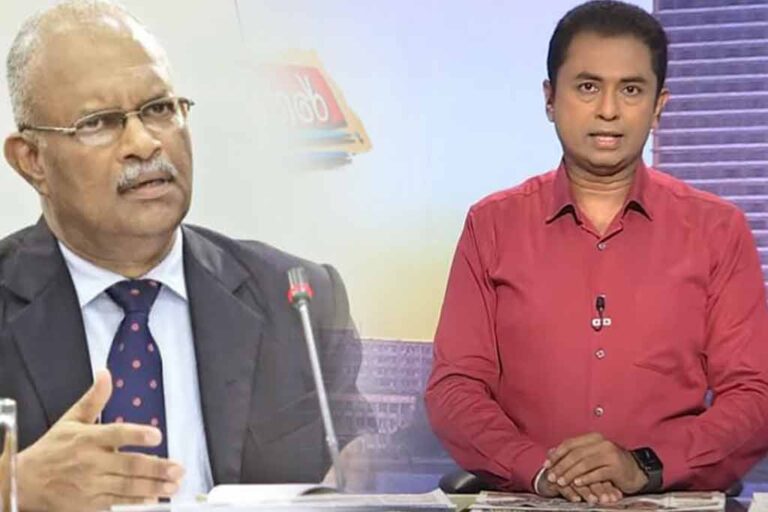
Journalist Chamuditha Samarawickrama who is working at HiruTV has been issued summons to appear before the Colombo District Court tomorrow (18), in connection with a case filed by former Director of the Criminal Investigation Department (CID) Shani Abeysekara accusing him of defamation.
Abeysekara in his lawsuit points out that he has been a well reputed officer in the service of Sri Lanka Police and accuses Hiru TV and Samarawickrama of making an defamatory comment during the television programme ‘Paththare Wisthare’ aired on October 19, 2021.
Proposes Detention Without Judicial Review at Military-Run Centers
(New York, October 17, 2022) – The Sri Lankan government should withdraw a draft law that would give the authorities broad powers to detain people in military-run “rehabilitation” centers, placing them at great risk of abuse, Human Rights Watch said today. The Bureau of Rehabilitation Bill, submitted to parliament on September 23, 2022, would allow the compulsory detention in centers of “drug dependant persons, ex-combatants, members of violent extremist groups and any other group of persons.”
The Bureau of Rehabilitation Bill would establish a new administrative structure controlled by the Defense Ministry to operate “rehabilitation” centers staffed by military personnel. The proposed law, which human rights advocates have already challenged in the Supreme Court, does not describe the basis for being sent for “rehabilitation,” but other recent government policies provide vague and arbitrary powers to forcibly “rehabilitate” people who have not been convicted of any crime.
“The Sri Lankan government’s proposed ‘rehabilitation’ efforts appear to be nothing more than a new form of abusive detention without charge,” said Meenakshi Ganguly, South Asia director at Human Rights Watch. “The Rehabilitation Bill would open the door widely to more torture, mistreatment, and endless detention.”
The Sri Lankan government has previously used coercive “rehabilitation” centers to enable arbitrary detention and torture. Following the civil war, which ended in 2009, thousands of people whom the government identified as members of the defeated separatist Liberation Tigers of Tamil Eelam were detained in military-run “rehabilitation” centers, where some were allegedly tortured and subjected to other abuses, including sexual violence. The current bill seeks once again to “rehabilitate” “ex-combatants” 13 years after the war ended.
The Rehabilitation Bill is the latest measure in a long history of laws, such as the Prevention of Terrorism Act (PTA), that authorize arbitrary detention and torture in Sri Lanka. The law could be used to target minority communities or anti-government protesters whom President Ranil Wickremesinghe has labeled “extremists.”
Under the Rehabilitation Bill, which would allow prolonged detention without judicial oversight, government officials would be protected from criminal liability for their actions if they act “in good faith.” The bill also empowers officials to use undefined “minimum force” to “compel obedience” from detainees. Another provision provides that an official who “without reasonable cause” strikes, wounds, ill-treats, or willfully neglects anyone under rehabilitation can be punished by up to 18 months in prison, suggesting that there might be a “reasonable cause” to harm detainees. International law absolutely prohibits torture, and other cruel, inhuman or degrading treatment or punishment.
Sri Lanka already has a system of forced “rehabilitation” for alleged drug users, which is run by the armed forces at two sites previously used to “rehabilitate” former combatants. There have been allegations of forced labor and ill-treatment, including the collective punishment of inmates, who are denied access to medically appropriate treatment for drug dependency while undergoing coercive “de-addiction.” The death of an inmate at the Kandakadu rehabilitation center in June led to the arrest of four army and air force sergeants acting as “therapists.”
International standards for the treatment of addiction maintain that treatment should always be voluntary and addiction regarded primarily as a health condition. The abstinence-based “rehabilitation” programs operated by the military are not based on scientific evidence and provide no harm reduction services.
In 2017, the United Nations Working Group on Arbitrary Detention expressed concern at the involvement of the Sri Lankan military in drug treatment and at the lack of medical care, as well as irregularities in the judicial process. The detention of alleged drug users for coercive “rehabilitation” is incompatible with medically appropriate drug dependency treatment and contravenes international law, Human Rights Watch said.
The proposed amendment to the drug law contains provisions to weaken evidentiary standards and deny bail to suspects in some criminal cases related to the possession of drugs. Sri Lanka continues to impose the death penalty for some drug offenses, contrary to international law standards and despite a national moratorium on executions since 1976.
The Rehabilitation Bureau Bill and the proposed amendment to anti-narcotics legislation are only the latest measures in President Wickremesinghe’s assault on fundamental rights, Human Rights Watch said. An attempt to use the Official Secrets Act to restrict public gatherings in the capital, Colombo, was withdrawn earlier in October amid widespread objections that the action was unlawful.
On October 6, the United Nations Human Rights Council adopted a resolution expressing concern at the human rights situation in Sri Lanka and mandating enhanced UN monitoring, as well as renewing a mandate for the UN to collect and analyze evidence of past human rights violations for use in future prosecutions.
“President Wickremesinghe is pursuing abusive and repressive policies that make it difficult for Sri Lanka’s international partners to wholeheartedly back desperately needed economic measures,” Ganguly said. “Foreign governments should make clear that they will support the urgent needs of the Sri Lankan people, but they will also take action through targeted sanctions and other measures against those committing serious human rights violations.”
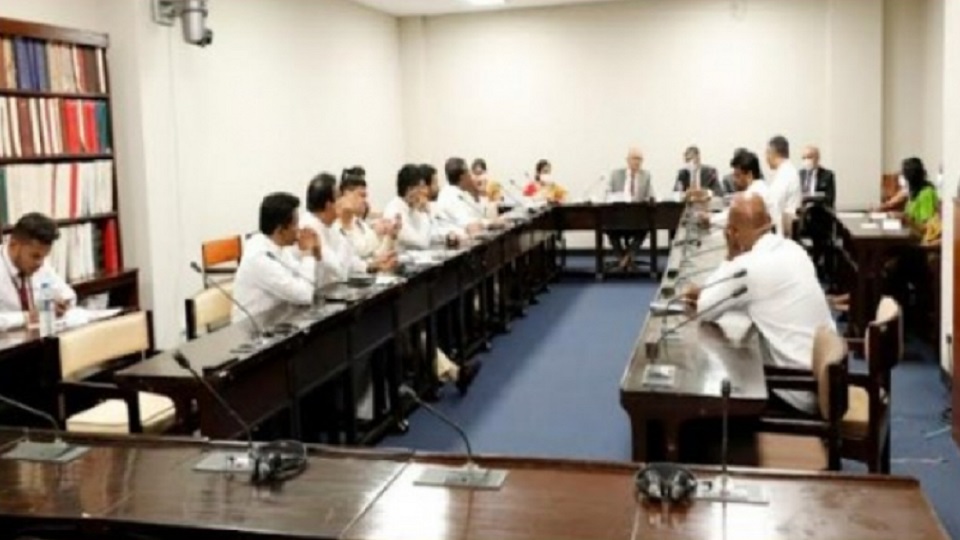
It was decided that the Auditor General and the Department of Public Enterprises will actively contribute towards the future work of the CoPE Committee.
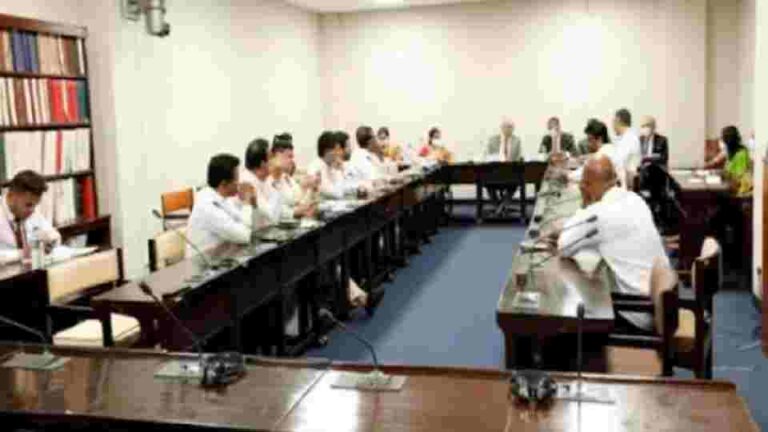
The Chairman of the Committee, MP (Prof.) Ranjith Bandara said that the Auditor General and the Department of Public Enterprises have decided to actively contribute to the future work of the Committee on Public Enterprises (CoPE) of Parliament.
He stated this as the CoPE met recently for the third session of the Ninth Parliament.
It was agreed upon to get the contribution of the Auditor General especially for the matters of convening the institutions, appointing sub-committees and doing follow-ups, to add entities that can be added and to obtain the assistance of the Department of Public Enterprises to remove 17 entities with who are minor stakeholders from the list.
In particular, the Department of Public Enterprises was entrusted with the responsibility of informing the Director General through a short note about the contribution of the representatives of the Treasury in participating in the board meetings of the institutions and the main points discussed in the meetings.
In deciding the institutions to be called before the CoPE, subject to the recommendations of the Auditor General, it was decided to call the relevant institutions considering the risk situations they are currently facing, the problems that need to be solved immediately, the need for follow-up and whenever it is considered necessary to bring in such institutions.
Accordingly, the Committee Members has agreed to call 05 institutions before the CoPE in the future. Ceylon Fisheries Corporation, Sri Lanka Bureau of Foreign Employment, Land Reform Commission, National Livestock Development Board, Sri Jayewardenepura General Hospital are to be summoned before the CoPE in the future.
Also, it was decided to appoint several sub-committees as it is difficult for the main committee to call all the public enterprises. It was also decided to consider the list of institution summons and the list of institutions which summons have been cancelled prepared by the Auditor General and decide on the institutions to be called to the sub-committees in the next committee term.
The Auditor General prepares a plan to strengthen the internal audit of every public enterprise and it is to be used for audit work in the future. The Committee also proposed to amend the Standing Orders to expand the powers of the CoPE.
Arrangements have already been made to send the request to the Speaker. Also, the Auditor General was assigned to make necessary recommendations to simplify the government’s procurement process.
Also, the Committee members decided to call all the parties and inquire about the coal tender that was discussed in the last few days. The Committee has also decided to inform the former chairman of the CoPE in writing to come before the committee and present the matters presented to the media in the past.
The Committee also paid attention to the issues included in the procurement guidelines manual and decided to discuss the Ace Embilipitiya Power Project.
State Minister Jagath Pushpakumara and MPs Lohan Ratwatte, Indika Anuruddha, Shantha Bandara, D.V. Chanaka, Janaka Wakkumbura, Anura Kumara Dissanayaka, Mahindananda Aluthgamage, Patali Champika Ranawaka, Eran Wickramaratne, Nimal Lanza, Sanjeeva Edirimanna, Madhura Withanage, Premnath C. Dolawatte, Jagath Kumara Sumithraarachchi and Upul Mahendra Rajapaksha were present at the meeting.
The current price of dried fish in comparison of that of the last six months has dropped at a considerable rate, revealed the Association of Dried Fish Importers, speaking to a briefing in Colombo yesterday (16).
Union Vice President R.G. Wilson said the price of dried fish has dropped by about 30 – 35 per cent.
“Considering the last period, there is a change in the price of dried fish. There is a price drop of about 30 – 35 per cent. This is because local products are coming in. Also, the customer has difficulties. Those who purchased 01 kilo of dried fish now resort to a lesser mass. ‘Katta Karawala’ dried dish soared up to even Rs. 2100 – 2200. Now around Rs. 1600 – 1700. ‘Bala Karawala’ dried fish sold for Rs. 1200 – 1300, now the retail price Rs. 800,” he said.
Sri Lanka hopes to attract over 900,000 tourists by the end of this year as the country works toward restoring normalcy following recent economic and political instability, the Sri Lanka Tourism Development Authority (SLTDA) said on Wednesday.
SLTDA Chairperson Priantha Fernando said in a statement that Sri Lanka aims to attract at least 972,475 tourists by the end of 2022.
“We are not happy with the arrival figures over the last nine months. It is a gradual build-up, fighting against the negativity,” Fernando said.
“However efforts are being taken to increase the influx of international visitors for the remaining months of the year,” he added.
Sri Lanka’s tourist arrivals faced a drastic drop in September, when only 29,802 visitors entered the country despite the relaxation of travel restrictions imposed by key source markets.
According to industry experts, the country is well behind its competitors in the region in its tourism sector recovery.
Competing nations such as the Maldives have been welcoming well over 100,000 tourists on a monthly basis for the past several months, while tourist arrivals to Sri Lanka have been ranging from 30,000 to 60,000, official statistics have shown.
Tourism, one of Sri Lanka’s leading foreign exchange earners, has suffered a setback due to the COVID-19 pandemic and its economic and political crises.
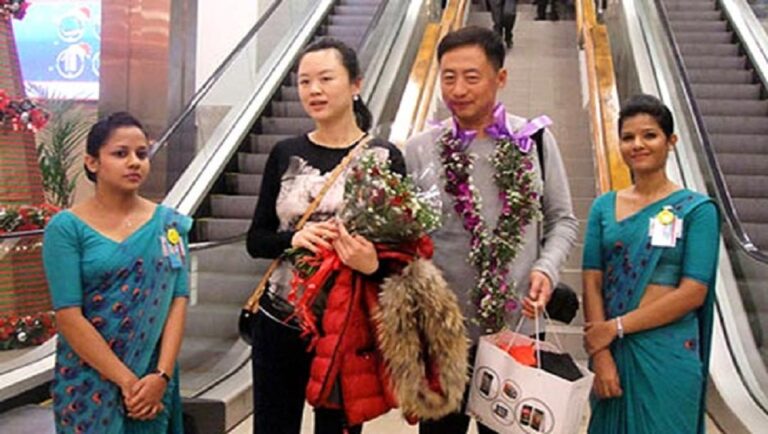
China’s Ambassador to Sri Lanka Qi Zhenhong today assured former President Mahinda Rajapaksa that Chinese tourists would begin to visit Sri Lanka soon as China’s COVID-19 common policy allows.
The Chinese envoy paid a courtesy call on Mahinda Rajapaksa where the two discussed a wide range of issues in relation to further strengthening the cordial relations between Sri Lanka and the People’s Republic of China.
During the discussions, Rajapaksa handed over a congratulatory letter addressed to President Xi Jinping, wishing him for the upcoming 20th National Congress of the Communist Party of China which will be a new milestone in China’s socialist construction.
Ambassador thanked Rajapaksa for his best wishes and said Sri Lanka and China had shared a long history of friendship, trust and mutual understanding which was evident in their relationship even to date.
Ambassador Qi also noted that Sri Lanka was presently facing difficulties but said he was confident the country would restore normalcy soon.He also assured of China’s assistance for Sri Lanka to overcome its challenges.
Rajapaksa also raised the issue of Sri Lankans travelling to China, and Chinese tourists to the island, to which Ambassador Qi responded saying Sri Lankan businessmen and students have already been given visas to return to China and the Chinese tourists will come back to the island as soon as China’s COVID-19 common policy allows.
The SLPP leader and the Chinese Envoy also discussed international relations at the current crucial moment, and both agreed that the SLPP and the CPC should further enhance exchanges and collaboration especially for the youth members.
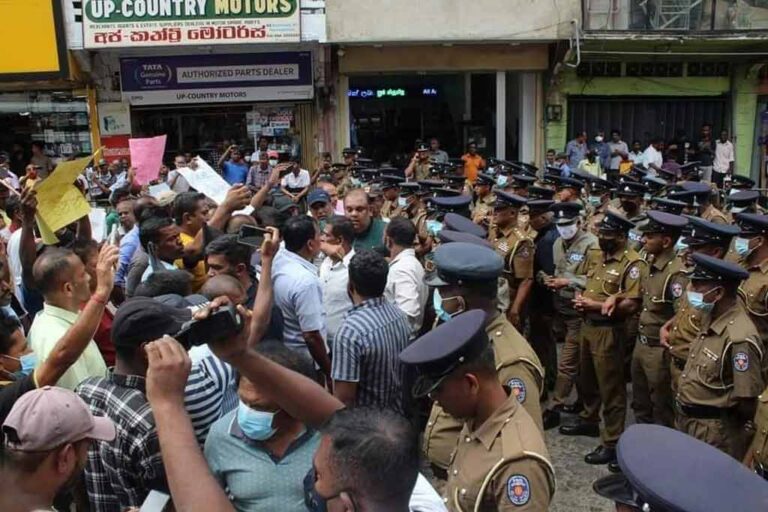
15 supporters of the Samagi Jana Balawegaya (SJB) including SJB Nawalapitiya Electoral Organiser Sasanka Sampath Sanjeewa who were arrested during the swarming of protests against the arrival of former Prime Minister Mahinda Rajapaksa in the area yesterday were released on bail.
The arrestees were granted bail as they were produced before Nawalapitiya Magistrate Nilantha Wimalaratne yesterday (16). The arrestees were taken to the Official Residence of the Magistrate and later produced before him.
The SJB supporters were released on a personal bail of Rs. 100,000 each and ordered to appear in Court on December 13.
Showers or thundershowers will occur at times in Western, Sabaragamuwa, Central and North-Western provinces and in Galle and Matara districts and fairly heavy showers above 75 mm can be expected at some places in Western, Sabaragamuwa and Centralprovinces and in Galle and Matara districts, the Department of Meteorology said in a statement.
Showers or thundershowers will occur elsewhere over the Island during the afternoon or night.
General public is kindly requested to take adequate precautions to minimise damages caused by temporary localised strong winds and lightning during thundershowers.
Marine Weather
Condition of Rain:
Showers or thundershowers will occur at times in the sea areas off the coast extending from Puttalam to Matara via Colombo. Showers or thundershowers may occur at several places in the other sea areas around the island during the afternoon or night.
Winds:
Winds will be south-westerly and wind speed will be (25-35) kmph. Wind speed may increase up to (40-45) kmph at timesin the sea areas off the coast extending from Puttalam to Kankasanturai via Mannar and up to (45-55) kmph at timesin the sea areas off the coast extending from Galle to Pottuvil via Matara and Hambantota.
State of Sea:
The sea areas off the coast extending from Galle to Pottuvil via Matara and Hambantota will be rough at times and sea areas off the coast extending from Puttalam to Kankasanturai via Mannar may be fairly rough at times. Temporarily strong gusty winds and very rough seas can be expected during thundershowers.