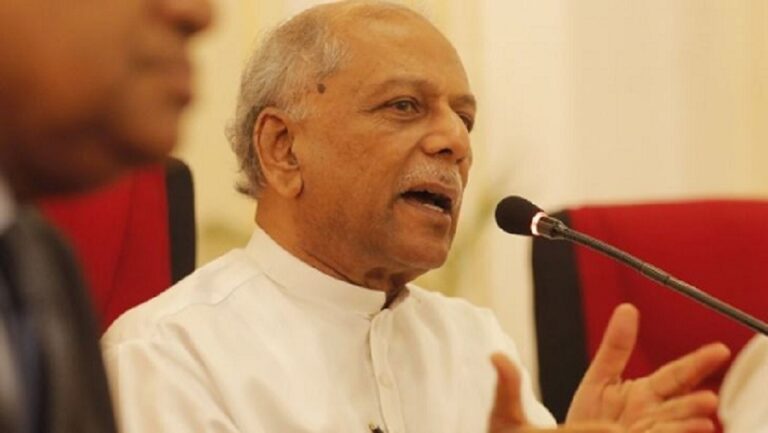
Prime Minister Ranil Wickremesinghe said he commenced discussions with the delegation of the International Monetary Fund (IMF) and an agreement is expected to be achieved on staff-level.
‘Today, I met the visiting IMF Team and commenced discussions. Looking forward to reaching a staff level agreement and finalising the programme soon,’ he tweeted.
‘Facets of Sri Lanka’, an event showcasing the many lures that Sri Lanka offers to its visitors was held at the premises of the Sri Lanka Mission to the United Nations in New York on 14 June 2022.
Welcoming the gathering, Ambassador and Permanent Represetaive to Sri Lanka in New York, Mohan Peiris, spoke of the various sights and sounds of Sri Lanka to travellers from the time of Marco Polo, including the eight UNESCO World Heritage Sites, pristine beaches, cool climates of the mountains, cultural heritage and the diversity of its fauna and flora.
The General Manager of Turkish Airlines, Emre Ismailoglu and Regional Manager of Turkish Airlines Alp Ozaman made a detailed presentation on its partnership with Sri Lanka and the facilities Turkish Airlines offers its clients worldwide. Turkish Airlines currently has seven (7) flights per week from New York to Colombo via Istanbul and Male, and beginning October is due to double this frequency to fourteen (14) flight per week from Istanbul to Colombo.
Presentations were made by Chairman of Jetwing Travels Shiromal Cooray and Executive Director Raju Arasaratnam, on the offers and facilities available at Jetwing Hotels in Sri Lanka, which includes over 9 Jetwing subsidiaries such as Jetwing Holidays, Jetwing Air, Jetwing Events, Jetwing Adventure and Jet Leisure Maldives.
A ‘Tea Tasting’ demonstration was conducted by Rasika Wickramasinghe of Basilur Tea, where the guests were treated to the different varieties of tea available in Sri Lanka including the variety of flavours of teas from different regions.
There was also a raffle draw that gave away two business class tickets to Sri Lanka, as well as a 5 night stay at star class Jetwing hotels in Colombo and Heritance Aarah in Male.
The event was graced by leading tour operators in the tri-state area, Ambassadors and diplomatic corps based in New York, and representatives from the USA-Sri Lanka Chamber of Commerce.
The guests were entertained to Sri Lankan delicacies and Basilur Tea.
Permanent Mission of Sri Lanka to the United Nations
Australia’s Minister for Home Affairs Clare O’Neill assures her willingness to provide assistance to increase government revenue and also help in the success of the sustainable Energy Generation Programme through the experience in customs administration.
She gave this assurance when she met President GotabayaRajapaksa in Colombo on Monday 20.
She also said that her government is ready to assist in the regulation of fishermen, the promotion of vocational and technical education and to make Sri Lanka a hub for higher education for international students, the statement added.
Australia’s Minister for Home Affairs Clare O’Neill has said that the Australian government will assist Sri Lanka in overcoming the present economic crisis in compliance with the framework of the International Monetary Fund (IMF).
Sri Lankan Prime Minister Ranil Wickremesinghe held discussions with Australia’s Minister of Home Affairs, Clare O’Neil, on Monday (20) at the Prime Minister’s office.
The Minister expressed Australia’s continued support for Sri Lanka and the Sri Lankan Government’s efforts to stabilize the economy.
The Prime Minister explained that Sri Lanka was focused on developing an export oriented economy which would be opened up to investments from overseas.
Minister O’Neil said that the Australian Government was interested in promoting Australian investments in Sri Lanka, while also continuing to drive up Australian tourism to Sri Lanka.
While explaining that her Government was preparing to develop its shipping lines, the Minister explained her administration’s policy regarding maritime security and human smuggling.
The Prime Minister stated that the Sri Lankan Government and its security forces remained committed to ensuring a halt to human smuggling.
The Home Affairs Minister also extended an offer to assist Sri Lanka with restructuring and further developing the Department of Customs.
The Prime Minister extended his thanks to the Australian Government for providing a $50 million development-assistance package to Sri Lanka.
Mrs. Claire O’Neill, who is on an official visit to Sri Lanka, made these remarks when she called on President Gotabaya Rajapaksa at the President’s House in Colombo, today (20), according to President’s Media Division.
The “Zero Chance” campaign for illegal migration and human trafficking was the policy of the previous Conservative Government of Australia. She stated the same was the policy of the new government too, which represents the Labour Party.
President Rajapaksa explaining the steps that he had taken when he was the Defence Secretary to prevent illegal migration said that the Navy is taking such actions as are necessary to prevent illegal migration, the PMD reported.
President Rajapaksa appreciated the support of the Australian Government in providing naval, technical and material assistance and noted that the two countries were working closely together.
Australia is on high alert for security in the Indian Ocean. President Rajapaksa stated that the Sri Lankan government would extend its fullest support to maintain the Indian Ocean as a Security Zone.
It was also revealed that around 50 Navy personnel are currently in Australia for special training. The President commended such training opportunities and their cooperation with the Sri Lankan security forces.
Sri Lanka’s Excise Department is in the process of enhancing revenue collection and strengthening tax administration with the aim of contributing much needed cash for state coffers in the severe economic crisis, top official of the department said.
It has collected Rs. 80 billion up now this year from the set target of Rs.180 billion even during the period of economic difficulty tiding over the present crisis, Commissioner General of Excise M.J. Gunasiri said.
The Department has been able to increase its revenue to Rs.140 billion in 2021 from Rs.121 billion in 2020; he said adding that the tax administration has been strengthened.
The Department has broadened the scope of digitalised sticker system from a paper-based sticker system implementing both systems to cover importers and local manufacturers depending on their scale of production.
With the introduction of the system, liquor tax revenue has increased significantly during January to April 2022 due to lessening of revenue leakage, he added.
The Department of Excise will also continue its digitisation process by incorporating an IT managed revenue system with the implementation of the foolproof sticker and digital image system for liquor and liquor-based products.
93 percent of total tax revenue came from six leading liquor companies in the island and there was no tax loss or default at present or in the past, he disclosed.
With the aim of preventing adulterated or illicit liquor entering in to the market, Excise Department has taken measures to introduce standards for locally manufactured liquor and strict monitoring and inspection process will be carried out to find vendors violating it, he revealed.
The process of issuing liquor licenses is being continued as it will minimise the industrial corruption attempts like adulterating or selling substandard liquor, he said.
The Department of Excise, Government Analyst Department, Sri Lanka Standard Institution, Industrial Technology Institute as well as members of the local liquor industry collaborated to introduce the new set of standards for all the alcoholic beverages in the country, he pointed out.
It will expedite the process of system automation by incorporating IT managed revenue system instead of the currently using manual revenue system to better facilitate revenue collection and revenue administration.
A Revenue Risk Management System (RRMS) and Excise Revenue Management System (ERMS) will be introduced soon for domestic licensed liquor producers which were already introduced for the licensed liquor importers to strengthen the revenue administration.
All eyes are on the Ceylon Electricity Board (CEB). But why now and what is at stake for the working people? I address below the dangers of privatising CEB, the IMF’s push for market pricing electricity and the problematic Adani-deal.
Crises and privatisation
For over a decade the privatisation push that came along with the second wave of neoliberal policies characterised by financialisation, urbanisation and infrastructure build out had put “reform” of CEB on the agenda. Reform in this context is a euphemism for privatisation, and for extraction of profits from utilities. By 2016, market pricing energy and restructuring State-Owned Enterprises such as CEB was put forward in what became Sri Lanka’s 16th IMF Agreement.
Crises as we have seen around the world are an opportunity for setting the landscape for exploitation, extraction and capitalist accumulation. The long queues for fuel despite the prices being tripled and the desperation of people during hours of power cuts show the necessity of energy for any economic activity. This means that there is tremendous potential to extract profits from the energy sector. Furthermore, as Sri Lanka goes through a balance of payment crisis, a fire sale of assets becomes the finance capitalists’ easy and desirable fix. The external debt then can be addressed by selling the country’s strategic assets to global capital, and the local elite can reap profits in the process of privatisation and creating an environment for continued extraction from the public.
In this context, there are many ways of privatising electricity services in a country like ours. It could start with allowing large companies like Adani Group to generate and sell electricity, or it could be through outsourcing bill collection, or it can be through floating CEB in the stock market to be controlled by financiers whose only motive is profit. In the end such privatisation leads to increased burden on the working people who have to pay much higher prices for electricity or face disconnection from the electricity grid.
Losses and subsidies
The current attack on CEB claims that it is a loss making entity and a great drain on national coffers. According to the Central Bank Annual Report for 2021, the CEB lost Rs. 22 billion in 2021 and Rs. 69 billion in 2020, the difference mainly caused by the availability of rain water in the catchments for hydroelectricity generation. And CEB’s long-term liabilities by the end of 2021 stood at Rs. 503 billion. But this accumulated debt of CEB should be put in context with for example the Government’s investment in highways and roads, which for example in the Budget for 2022 alone was Rs. 270 billion.
The question nevertheless is how can such losses – which really are subsidies – be addressed? We must first acknowledge that Sri Lanka is unique; it is one of the few Third World countries where almost the entire population is connected to the electricity grid. In fact, a majority of our population pay just Rs. 7.5 per kWh of electricity or less than Rs. 500 a month, and gain from the subsidy for using below 60 kWh. The cost of production of electricity in 2020 and 2021 was about Rs. 20 per kWh, so obviously there is a major subsidy given to our working people. Next, the pricing structure is such that the total average cost of electricity for domestic users including the wealthier classes was Rs. 15, industries Rs. 15, government Rs. 18 and hotels Rs. 18. In other words, almost all the major sectors have got subsidised electricity making so-called losses inevitable. Furthermore, electricity tariffs have not been revised for the most part since 2014. Therefore, while CEB like any other institution needs to be made more efficient, the real issue is about pricing by the Government to ensure there is greater redistribution through electricity prices; where the wealthier classes and the tourism sector for example pay much more. Moreover, there needs to be redistributive taxation to ensure subsidised services for the working people.
If we take the current year, with less water available for hydroelectricity and the tremendous rise in global prices for oil with the war in Ukraine coupled with the depreciation of the rupee, the generation of electricity can go as high as Rs. 50 per kWh. These price rises and the attendant “losses” should not be used to attack CEB and push for its privatisation. Rather there needs to be prioritising of state support and allocations for essential sectors, including with redistribution through income and wealth taxes. Furthermore, raising the price of electricity for lower consumers can lead to further dispossession. As the incomes of working people fall with the economic crisis, electricity prices can affect their livelihoods; they will for example find it hard to irrigate their gardens and continue with petty production requiring electric power.
Corporates and resistance
In this context, the Adani wind power plant deal is a notorious case that should concern all of us. The cost apparently agreed to in an MOU for the generation of one kWh is US$ 0.0755 whereas the market rate internationally is less than half that amount. Indeed, if such high costs are incurred in generation of electricity in a deal that came through without bidding, those costs are going to be passed on to the consumers or taxpayers. Second, the massive 500 MW capacity plant will absorb almost all of the projected 700 MW allocated for wind power considering diversification for various forms of electricity generation totalling usage now of between 2,300 MW and 2,800 MW in Sri Lanka. This could prove a serious problem in the future, as it curtails other market entrants and also provides tremendous monopolistic leverage to Adani Group. Finally, unlike bidding for projects where the specifications should have been set by Sri Lanka, this is a project that Adani has designed and Sri Lanka has meekly accepted. With land allocated in Mannar and Kilinochchi for this project, if Adani dumps less efficient wind power infrastructure, we will be tying up much larger tracts of lands without considering the opportunity costs of land use. These are convincing arguments conveyed by some engineers, and the Government should clarify, or alternatively repeal the deal if it is so detrimental to the country.
I am also concerned about the social and political consequences of the kind of opposition that can emerge to the Adani deal. We should be clear about the class interests behind this deal, and it is not about whether Adani is Indian, Chinese or American. A xenophobic nationalist reaction fuelling anti-Indian sentiments detracts from the issue of providing electricity services in a sustainable and affordable manner to our working people.
Clarity on the class politics in opposing global and Sri Lankan corporate interests affecting our working people is needed as we are likely to see many more deals like this as the economic crisis deepens. For the moment, we must come to the defence of CEB and its unions under attack and resist the moves underway to privatise electricity.
The conflict in Ukraine may still be dominating the news, but it’s not the only calamity in the world, nor the worst.
Sri Lanka is currently in the midst of the direst economic and political crisis in its history, and there are fears that more nations could go down the same path as the global economy continues to falter.
How contagious is it? To discuss this, Oksana is joined by Ahilan Kadirgamar, political economist and senior lecturer at the University of Jaffna.
The Tamil National Alliance (TNA) is making numerous efforts to uplift Sri Lanka from its ongoing economic crisis, whereas the Government is refusing to take heed to the advise given by the TNA and also refuses to accept and acknowledge the efforts made by the party, says TNA MP Shanakiyan Rasamanickam.
He made this statement while speaking to The Morning today (20).
“I am currently in Switzerland to meet with the diaspora in Bern. There are over 60,000 members of the Tamil diaspora here. I had a discussion with the members and it was productive. Before this crisis arose, the diaspora has always been supportive of uplifting Sri Lanka, and for the last 70 years the diaspora has been eager to support. As a first step, I suggested for the members who support family in Sri Lanka to continue remitting money for their families in USD and Euros so that we bring in foreign exchange,” he said.
He further noted that people who remit funds from abroad should continue to remit the same amount as they used to in the foreign currency and not in the conversion sum in Sri Lankan rupees.
“The diaspora had one main concern and that was the political security and accountability. If they send the funds, is there accountability? Will these funds go to the betterment of the country? These were the main concerns that were brought up, but I took the initiative to encourage the members to continue sending the foreign remittances so that the country will benefit on the long run.” he concluded.
MP Rasamanickam reiterated that the TNA was making efforts to help in the upliftment of Sri Lanka, but very limited acknowledgement or notice has been taken by the Government of the efforts made by the TNA.
The Australian government has announced it will provide AUD $50 million to support Sri Lanka amid its worst economic crisis in 70 years.
This grant is in addition to its bilateral allocation and official development assistance (ODA) of US$ 77.4 million provided to the island nation for the period of 2021-2022 -2023, Finance Ministry statistics showed.
Australia’s Foreign Affairs Minister Penny Wong announced the Official Development Assistance will be provided to “support Sri Lanka meet urgent food and healthcare needs”.
In her statement Ms Wong said there are “deeper consequences for the region if this crisis continues”.Sri Lanka currently faces its worst economic crisis in seventy years, leading to shortages of food, medicine and fuel.
The Foreign Minister said Australia has a close and long-standing relationship with Sri Lanka. “Not only do we want to help the people of Sri Lanka in its time of need, there are also deeper consequences for the region if this crisis continues.”
She said “We will contribute an immediate $22 million to the World Food Programme for emergency food assistance to help three million people in Sri Lanka meet their daily nutritional needs.”
“Australia will also provide $23 million in development assistance to Sri Lanka in 2022-23.”“This will support health services, and economic recovery, with a strong emphasis on protecting those at risk, especially women and girls.”
These contributions are in addition to $5 million recently provided to United Nations agencies for Sri Lanka.
Australia’s development program will support Sri Lanka’s efforts to enhance health security, stability and economic recovery through flexible and responsive approaches that meet Sri Lanka’s emerging needs, building on our long-term development cooperation partnership with Sri Lanka.
In the longer-term it will support stability in Sri Lanka through a range of governance and social inclusion programs. These programs are aimed at supporting Sri Lanka’s efforts to increase economic growth, reduce poverty and inequality, and strengthen the capacity of relevant authorities.
Australia’s programs aim to support a robust, inclusive and sustainable Sri Lankan recovery from the pandemic.
It has redesigned the skills building element of our portfolio to assist with faster economic recovery in selected value chains such as tourism, agriculture and aquaculture.
Australia’s private sector development work will address the pandemic’s disproportionate impact on those most vulnerable, particularly women and people with disabilities.
Australian Department of Foreign Affairs and Trade will leverage its partnership with the World Bank to assist recovery of Sri Lanka Small to Medium-sized Enterprises through economic policy reforms.
Australia’s and Sri Lanka’s economic recoveries will be boosted through increased trade and education linkages over the longer-term, as we pursue the objectives of our bilateral Trade and Investment Framework Arrangement.
Strategy for the Restoration and Rebuilding of the Agri-Food Sector of Sri Lanka has been devised by the members of the Faculties of Agriculture of the State Universities of Sri Lanka includes two sections of activities.
The proposal addresses the present food crisis by identifying immediate actions to address the most pressing needs of the current moment and also identifies actions requiring immediate attention that if unaddressed can exacerbate the crisis in the long-term.
This strategic plan of action for protecting the Agri-Food Sector was presented to President Gotabaya Rajapaksa and Prime Minister Ranil Wickremasinghe through a letter dated 15 June 2022 and signed by the Deans of all Faculties of Agriculture.
The action plan is designed to address the two objectives of ensuring food and nutrition security and of protecting and sustaining livelihoods and employment in the agri-food sector. It focuses on the entire food system considering all economic factors and priority sub-sectors in the agriculture value/supply chains.
The prevailing situation has brought to the forefront serious concerns, especially relating to increases in food prices and shortages in food. Food inflation in Sri Lanka during May 2022 (year-on-year basis) has stood at an all-time high of 57.4%.
The recent appeal from the United Nations (UN) to the global community for $ 47 million in humanitarian aid to Sri Lanka to provide lifesaving assistance to 1.7 million people indicates, to some extent, the extent of the crisis.
It is estimated that 4.9, 3.5 and 2.4 million people are in need of food security, agriculture and livelihood, and nutrition, respectively (UN, 2022).
The problems confronted by society today are a result of a lack of a consistent long-term policy and action programs for agriculture, which could have prevented a crisis of this nature from occurring.
Such a policy must be developed and must include mechanisms to address future crisis situations by effectively using knowledge, other resources, and institutional structures (state and others) the plan of action indicated.
It must use consultative processes in a holistic manner that ensures that a system to address pressing issues, over the long term, in a sustained manner, is developed in which relevant institutions and bodies are represented with nominees identified through proper channels of communication.
The Faculties of Agriculture are committed to addressing the problems faced by the people of this country and will gladly extend support to any follow up actions of the State in implementing this plan.
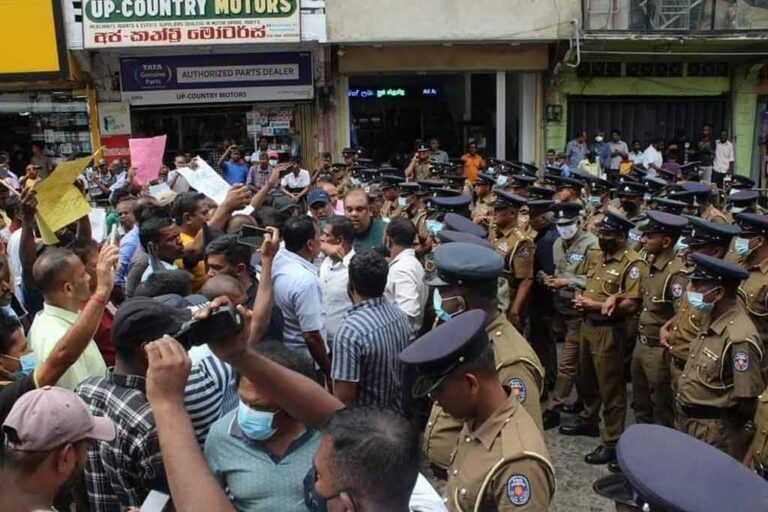
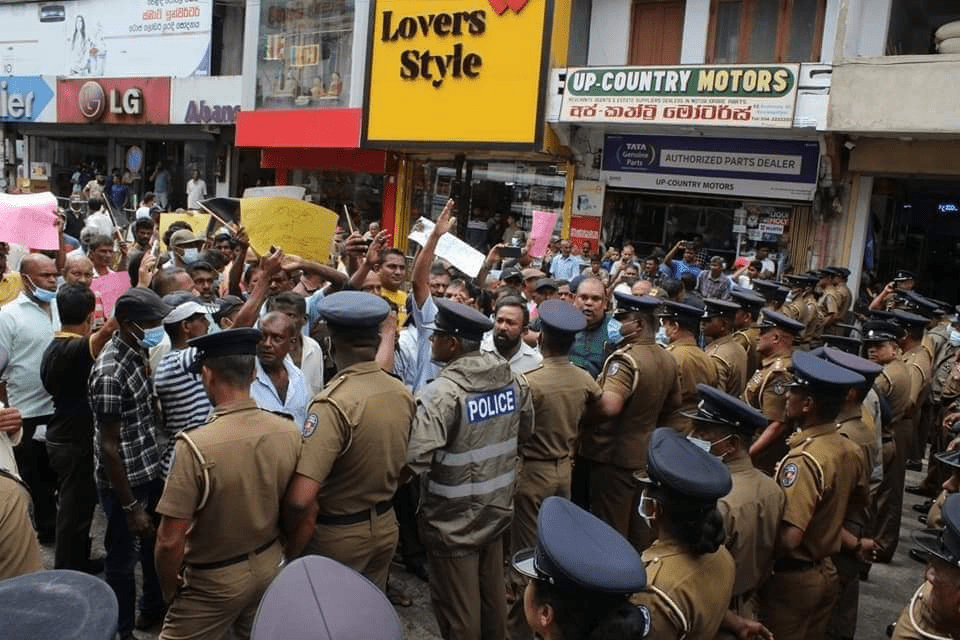
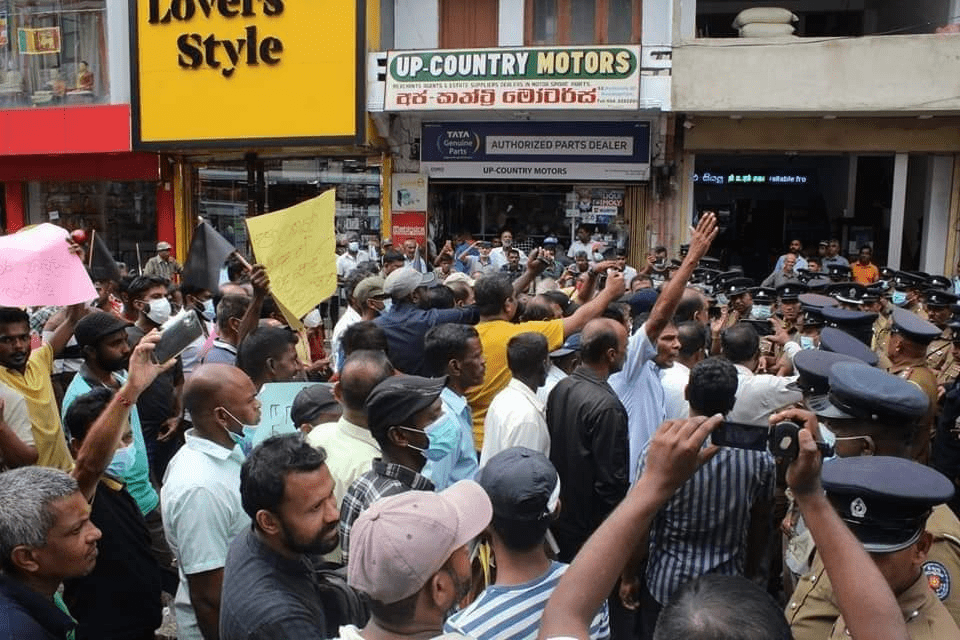
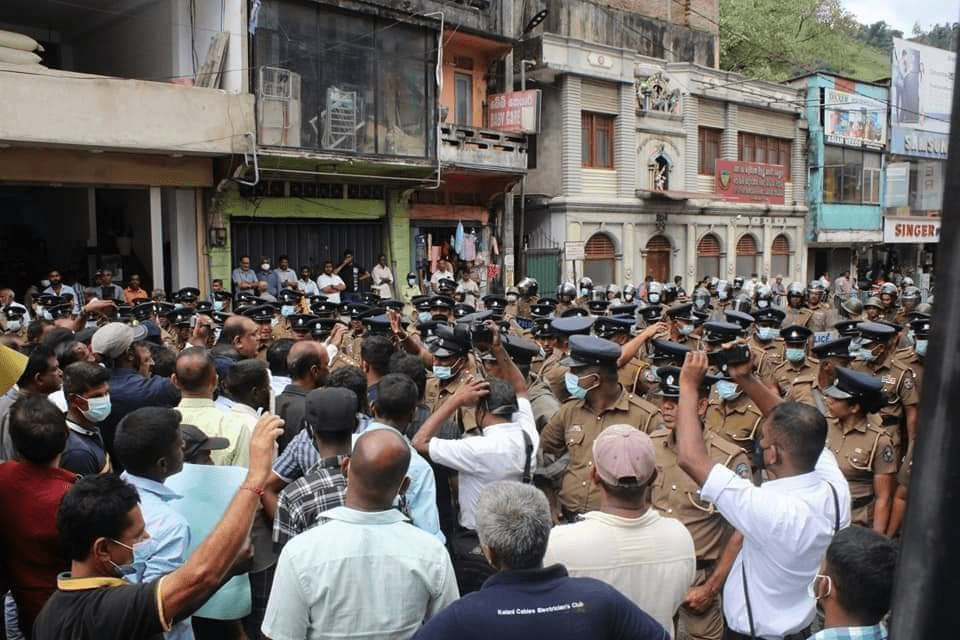
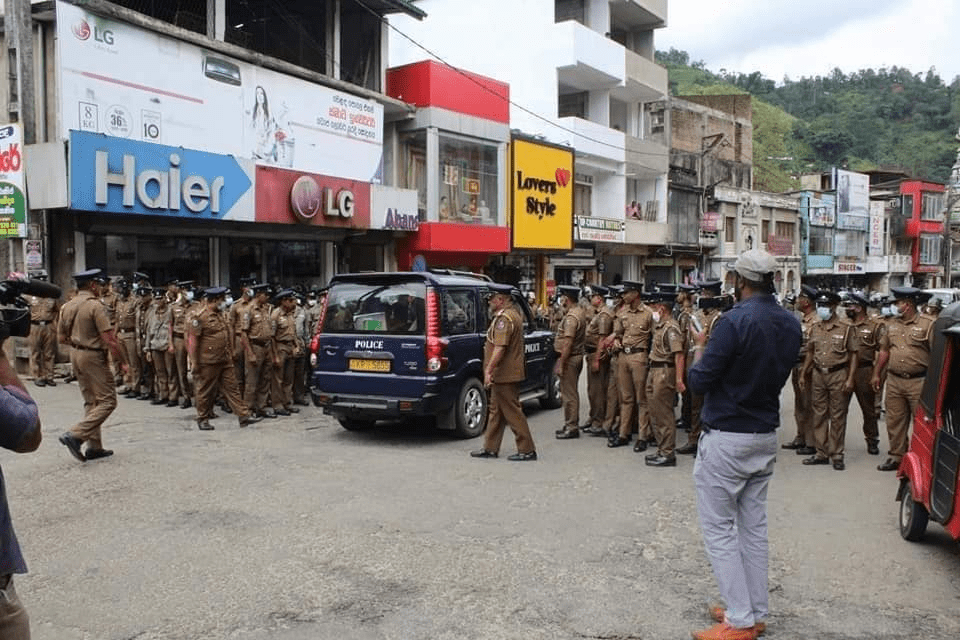
The Samagi Jana Balawegaya (SJB) today (20) lodged a complaint with the Police Headquarters against the harassment that recently took place at fuel queues by Police officers, demanding a disciplinary action against the officers responsible.
Although the Police should act to protect the people, some officers are working to protect the rulers, SJB MP Mujibur Rahuman attending the event said.
The government is implementing a programme for repression, allowing the Police to act to beyond their duties in serving the government’s desired, the MP went on, adding that the Inspector General of Police (IGP) is requested to conduct a probe into such officers.