Home Blog Page 2056

It is impossible for anyone to bring inflation below 30% – 40% in the next 06 months

0

Central Bank Governor Nandalal Weerasinghe says it is impossible for anyone to bring inflation below 30% – 40% in the next six months.

“There will be only a limited amount of economic activity in the country within the next three to six months. That means the economy is shrinking. Our forecast for this year is that the economy will shrink at a rate higher than any year we have ever experienced in history. No one can bring inflation below 30% – 40% in the next six months. This is an issue that severely affects the poor and vulnerable. Especially if the government does not provide assistance, it will be difficult for the low-income poor to live on their income. You will see poverty levels rising in this country. Most will fall below the poverty line. As the economy shrinks, more and more people will lose their jobs. This is because small and medium scale industries cannot function normally. ”

Nandalal Weerasinghe said this while participating in a discussion organized by the Press Club of the Sri Lanka Press Institute yesterday (25).

Fuel crisis: Russia responds to Sri Lanka’s request

0

Russia is considering Sri Lanka’s request for fuel from Russia, said Anastasia Haklova, First Secretary of the Russian Embassy in Sri Lanka.

The Russian Embassy in Sri Lanka will provide the necessary assistance in this regard, she said.

However, the first secretary has told the media that reports that a meeting had been held between the Russian ambassador to Sri Lanka and the Sri Lankan Minister of Energy in this regard were untrue.

A program of cultivating the required food in own home gardens should be implemented – Department of Agriculture

0

Director General of Agriculture Ajantha de Silva says that people should be interested in producing food crops at home. He says that this will bring some relief to the economic crisis faced by the country.

A program called ‘Ratama Wawamu – Ekwa Dinamu’ has been launched for this purpose and the Director General of Agriculture stated this while participating in this program in Kandy today.

Ajantha de Silva says that the program of cultivating the required food items in own homes will be started in the backyards of the officers of the Department of Agriculture and to set an example, home gardening will be started in the office premises.

He also stated that the Department of Agriculture is responsible for supplying grains such as cowpea, green gram, undu and sesame seeds as well as low country vegetables such as pumpkin, potato and okra without any shortage of seeds.

Activities of multi-day fishing vessels will have to suspended if no fuel subsidy is given

0

The All Ceylon Multi-Day Fishing Vessel Owners’ Association says that if the government does not take action to provide a fuel subsidy, the entire country’s multi-day fishing vessels will have to be removed from fishing activities.

They stated that it has become very difficult for them to continue their work in the face of rising fuel prices.

They said it was unfortunate that the government did not pay attention to the fisheries sector, which is a major source of income for the country, adding that if the multi-day fishing vessels were stopped, the country would lose hundreds of thousands of dollars in revenue as well.

They made this statement at a press conference held by the association yesterday (25).

President asks to start language and vocational training aimed at sending skilled workers abroad

0

President Gotabhaya Rajapaksa has said that language and vocational training programs should be launched in Japan, Poland and Romania as there are many vacancies for skilled workers in various fields.

The President made this observation addressing a progress review meeting of the program to direct skilled workers to foreign employment markets yesterday (25).

BPPL secures US$ 15 million from the U.S Development Finance Corporation

0

Sri Lanka’s plastic recycling capabilities and infrastructure are set to soar with BPPL Holdings PLC, the country’s pioneer in the field, securing long-term funding of US$ 15 million from the International Development Finance Corporation (DFC) of the United States of America.

The funds raised from DFC, the development finance agency of the United States Government, will enable BPPL to expand its monofilament and polyester yarn operations, which use plastic waste as its primary raw material.

This will generate greater export earnings for Sri Lanka whilst addressing the hazardous practices of plastic disposal – one of the country’s critical environmental problems.

BPPL is one of Southeast Asia’s largest brush manufacturers and Sri Lanka’s only polyester yarn producer, driven by state-of-the-art production technology and an unwavering commitment to sustainability.

They collect and convert waste plastic to produce brush ware, monofilaments and recycled polyester yarn, almost all of which are exported. The company’s recent efforts have won them several accolades, such as from Forbes Asia, ranking them amongst the top 200 companies under US$1 billion in revenue in Asia in 2021.

The new funding will be used to expand operations to double the number of PET plastic bottle collection centres and the company’s bottle washing capacity, and to enhance monofilament and polyester yarn production by 40% and 55% per annum, respectively, over the next 4-5 years.

Currently, BPPL has approximately 480 waste plastic collection entities that will benefit from this development, enhancing livelihood and income.

Through DFC’s support, BPPL is poised to expand this network, creating greater employment within and beyond the company.

On the environmental front, this funding will increase the share of waste plastic collected in the country to approximately 6,000 tons per annum, the company noted.

This would increase the productive use of waste plastic while reducing the environmental damage caused by plastics ending up in landfills or water bodies.

“BPPL’s success in securing this funding from one of the world’s leading providers of development finance is a testament to our strength and stability, as well as an endorsement of our mission,” BPPL Holdings PLC Managing Director and Chief Executive Officer, Dr. Anush Amarasinghe said.

“This serves as a timely boost, assisting BPPL to further enhance many key aspects of our operations. The development that will come about through this initiative will positively impact the country economically, socially and environmentally.”he added.

“DFC’s investment in BPPL will promote transformative and sustainable development in Sri Lanka,” said DFC Chief Climate Officer Jake Levine. “Together, DFC’s financing and BPPL’s proven track record will boost economic growth while helping to advance a vision for a circular economy, which is ultimately a critical part of the work to address the climate crisis.”

The loan provided by DFC has a 10-year tenure with a three-year grace period and is subject to regulatory approvals.

World Bank rules out new financing to Sri Lanka

0

The World Bank on Tuesday said it is not planning to provide any new financing to cash-strapped Sri Lanka until an adequate economic policy framework has been put in place.

In a statement, the multilateral development bank said it was repurposing resources from previously approved projects to help the Sri Lankan government pay for some essential medicines, temporary cash transfers for poor and vulnerable households, and other support.

It said recent media reports had inaccurately stated that the World Bank planned to provide Sri Lanka with a new bridge loan or other loan commitments.

“Recent media reports have inaccurately stated that the World Bank is planning support for Sri Lanka in the form of a bridge loan or new loan commitments, among other incorrect assertions.

WB is concerned for the people of Sri Lanka and are working in coordination with the IMF and other development partners in advising on appropriate policies to restore economic stability and broad-based growth. 

Until an adequate macroeconomic policy framework is in place, the World Bank does not plan to offer new financing to Sri Lanka.

The World Bank  is currently repurposing resources from previously approved projects to help the government with some essential medicines, temporary cash transfers for poor and vulnerable households, school meals for children of vulnerable families, and support for farmers and small businesses.”

Sri Lanka Treasury faces daily cash flow issues

0

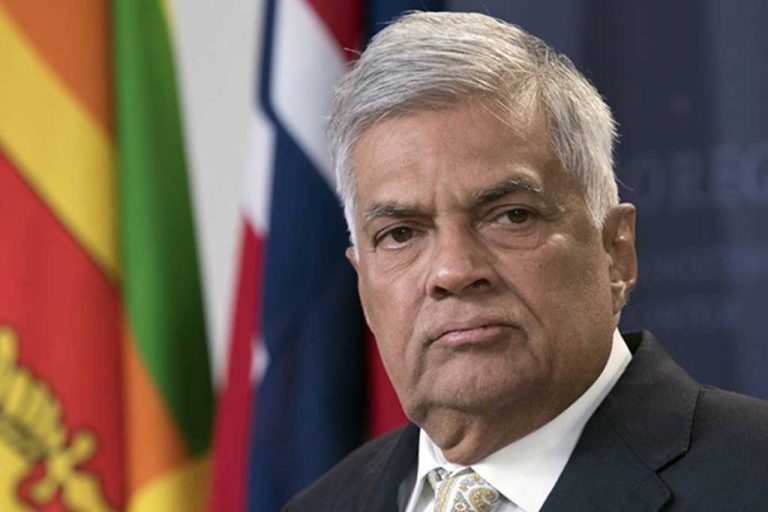
Sri Lanka needs a long-term sustainable fiscal management mechanism to overcome the present socio –ecnomic crisis Prime Minister Ranil Wickremsinghe told the cabinet of ministers.

The Prime Minister called on the multi-party Cabinet of Ministers to keep aside their political differences and to collectively deliver the responsibilities in this crucial juncture wher the country has no money for daily needs.

“Last year, the daily State revenue was only Rs. 4 billion, while the expenditure was Rs. 9.6 billion. Thus, creating a daily cash shortfall of Rs. 5.6 billion.

To manage this fiscal gap, successive Governments obtained loans and serviced them. Eventually, this vicious cycle which spanned over decades led to the worst economic crisis,” he explained.

He also said in 2014, the daily income of the Government was Rs. 3.2 billion, while the expenses were Rs. 4.9 billion creating a cash shortfall of Rs. 1.7 billion.

In 2019, the revenue increased to Rs. 5 billion, but expenses also escalated to Rs. 9.1 billion, thus creating a daily shortfall of Rs. 4.1 billion.

“Sri Lanka also had an economic module where our daily lifestyles were based on imported goodies. The annual exports were around $ 12 billion, while the import bill was $ 22 billion – resulting in a major gap in the current account,” he added.

“The lost revenue of around $ 10 billion from the tourism industry over the past two years, drastic drop in workers’ remittances led to faster depletion of foreign reserves – recording an overall gross domestic product (GDP) of -3.6% in 2021 or a peril.

With known net debt service payments of US$ 6.6 bn this year and current fully usable official reserves of less than US$ 1 bn (2-3 weeks of imports), Sri Lanka is confronted with both a cash flow problem and a debt problem.

The liquidity problem is compounded by the fact that the only known additional external financing, at this point, are lines of credit from India (USD 1.5bn) and Pakistan (USD 200 mn).

These will certainly contain the depletion of reserves. They will not have a very material impact on the existing external financing gap, which is likely to be at least USD 7 bn this year, even with very optimistic assumptions about receipts from tourism, asset sales, remittances and FDI.

People’s Mandate Needed to Address National Crisis

0

The people are undergoing unprecedented hardships at the current time. There is a disjuncture between what government leaders have been saying and what is materializing.  Assurances are being made that shiploads of fuel have been unloaded.  However, many service stations remain closed and those open have lines stretching for kilometers even overnight.  The small 15-member interim government drawn from all parties that was promised by President Gotabaya Rajapaksa to resolve the present crisis was not appointed.  Now the government appears to be heading towards a large sized one dominated by the ruling party with a full complement of ministers and state ministers.

It seems to be the case that the present composition of parliament will not permit good governance. This is plainly the belief of those who continue to peacefully protest against the government in person at various protest sites.  This is also the feeling of the many citizens who protest in their hearts and minds wherever they live and work.  It is distressing that 19 of 27 hours of parliament time was spent to discuss the burned houses of the politicians. If this continues no one will be able to prevent this country from going to a situation of severe anarchy which will lead to further political upheavals and injury to people not only by violence but by hunger as well.  

The National Peace Council is dismayed at the appointment of 23 new secretaries to ministries by the president, all of whom belong to the ethnic majority community.  This insensitive action will not be conducive to promote a sense of belonging to the ethnic and religious minorities who constitute nearly one third of the population of the country.   We are also dismayed that public minded citizens who volunteered to give evidence regarding the violence used against peaceful protestors in front of the prime minister’s official residence and the presidential secretariat have had their passports impounded. This makes it seem as if the victim has become the accused.

The National Peace Council notes that the appointment of four cabinet spokespersons will not assure the people or the international community that a cohesive and stable government is in place.  In this context we are concerned that the World Bank has issued a statement that they will not be in a position to financially assist the country until an adequate macroeconomic policy framework is in place for which political stability and unity is a prerequisite.  The National Peace Council calls for elections to be held as soon as possible to enable the people to give a fresh mandate to those who will bring about change.  We believe a government with a new mandate can win the confidence of the Sri Lankan people and the international community to get the country out of the quagmire it is in.

The National Peace Council of Sri Lanka

The United Nations General Assembly adopts Sri Lanka sponsored resolution to declare 1 March as ‘World Sea-grass Day’

0

The United Nations General Assembly adopted on 23 May 2022, a Sri Lanka sponsored Resolution A/76/L.56, declaring 1 March as World Seagrass Day. The resolution was adopted by consensus, and co-sponsored by 24 countries.

Ambassador Mohan Pieris, Permanent Representative of Sri Lanka to the UN, introduced the resolution under Agenda Item 15: Integrated and coordinated implementation of and follow-up to the outcomes of the major United Nations conferences and summits in the economic, social and related fields.

In his introduction, Ambassador Pieris highlighted Sri Lanka’s interest as a littoral state in bringing attention and awareness on a small but significant aspect of universal importance in combatting climate change. He highlighted the importance of seagrass as a carbon sink, in protection against coastal erosion, in stabilizing the sea bottom, increasing the resilience of the most vulnerable ecosystems, and increasing food stability for a number of marine creatures, and the pivotal role it plays in curtailing the effects of climate change.  

The World Seagrass Association closely supported the Government of Sri Lanka in this endeavor.

Seagrasses are one of the most valuable marine ecosystems on earth covering around 300,000 square kilometers in 159 countries and six continents. They provide a range of critical environmental, economic and social benefits. The most significant benefit being the enormous carbon sequestration potential of seagrass, storing up to 18 percent of the world’s oceanic carbon, which is greater than that of rainforests which makes protection and restoration of seagrass a vital tool in efforts to adapt and mitigate the adverse effects of climate change. The vital functions of seagrasses also include its role in stabilizing the sea bottom and providing ecosystem support via food and shelter for a number of marine creatures, including commercial and recreational fish species, as well as endangered and charismatic species such as turtles, dugongs and manatees. However, seagrass ecosystems are being destroyed as a result of human activity. The United Nations Environmental Programme Publication ‘Out of the Blue: the value of seagrasses to the environment and to people’ states that “7 per cent of seagrass marine habitat is being lost worldwide per year, which is equivalent to a football field of seagrass lost every 30 minutes”.

The initiative was a collective effort of studying sea grass ecosystems and examining restoration and conservation through Nature-based Solutions by an NGO and academics and paving the way to highlight the importance of scientific-evidence based approaches at the policy level.

The  Biodiversity Secretariat of the Ministry of Environment, Department of Aquaculture & Fisheries at the Wayamba University and the Blue Resource Trust worked together with the Ocean Affairs, Environment and Climate Change of the Ministry of Foreign Affairs and contributed to the process and coordinated with the Permanent Representative of Sri Lanka to the UN in New York in this regard.

The introductory speech by Ambassador Pieris can be viewed here: https://youtu.be/S3EB7C0I0kY

The full adoption of the resolution can be viewed here: https://youtu.be/gnJ2huRVs3k

Permanent Representative of Sri Lanka to the UN

New York

25 May, 2022