Home Blog Page 2071

CID to record statements from six members of the SLPP

0

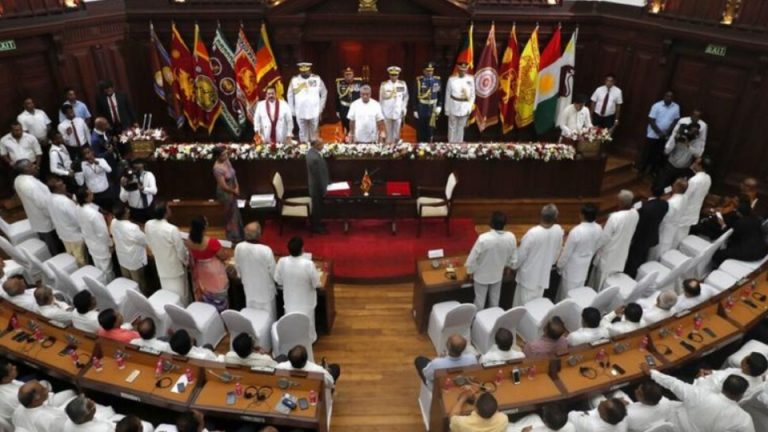
The CID is scheduled to record statements from six members of the SLPP today (19) regarding the attack on the Golf Face protest site.

Accordingly, statements are to be obtained from Johnston Fernando, Sanjeewa Edirimanne, CB Ratnayake, Rohitha Abeygunawardena, Indika Anuruddha and Pavithra Devi Wanniarachchi at the Parliament complex today.

Although the CID had gone to Parliament yesterday and the day before yesterday to obtain statements from them, it has not been done yet.

Ramesh Pathirana accuses the IGP of not ordering to prevent the attack on Galle Face Protest

0

Ramesh Pathirana, a former minister and former cabinet spokesman, has said that the attack on the peaceful Galle Face Protest on May 09 by Mahinda Rajapaksa’s supporters could have been prevented but IGP CD Wickramaratne has ordered not to do so.

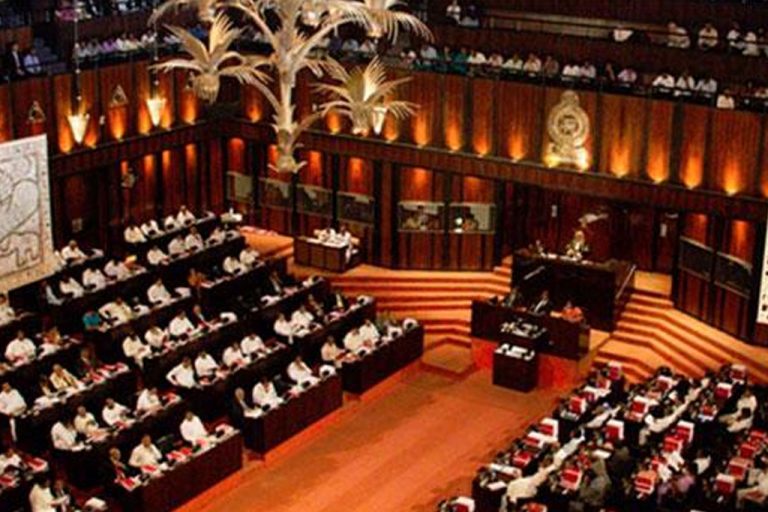
Ramesh Pathirana stated this addressing the Parliament yesterday (18).

It is a serious question as to how CD Wickremaratne will continue to hold the post of IGP despite the existence of such a serious allegation and how the investigation into this incident will be continued under him.

Sri Lanka awaits a new Finance Minister 

0

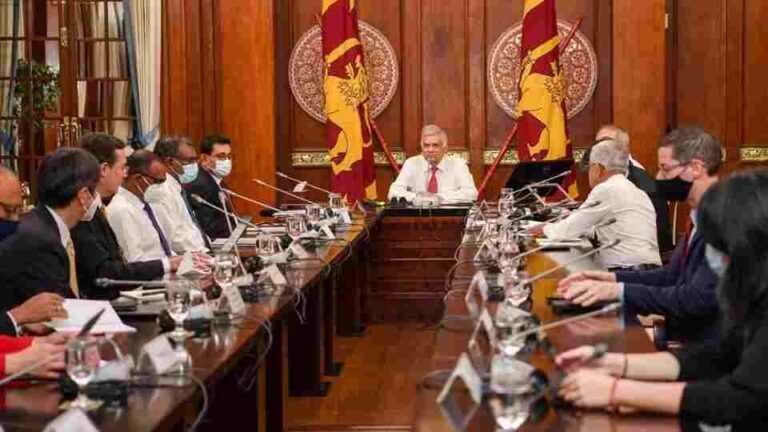
Authorities in Sri Lanka this week are expected to name a new finance minister and raise interest rates as they struggle to stabilize an economy spiraling into chaos by a lack of dollars and surging inflation.

Prime Minister Ranil Wickremesinghe, appointed last week, is expected to soon choose a finance ministeror take up the portfolio by himdelf  help lead talks with the International Monetary Fund over badly needed aid.

Meanwhile, the Central Bank of Sri Lanka is expected to raise its benchmark standing lending rate by 75 basis points on Thursday from 14.5%,  as it tries to battle Asia’s fastest inflation.

The decisions come as the South Asian country barrels toward its first official default, with the 30-day grace period for missed interest payments on dollar bonds ending Wednesday.

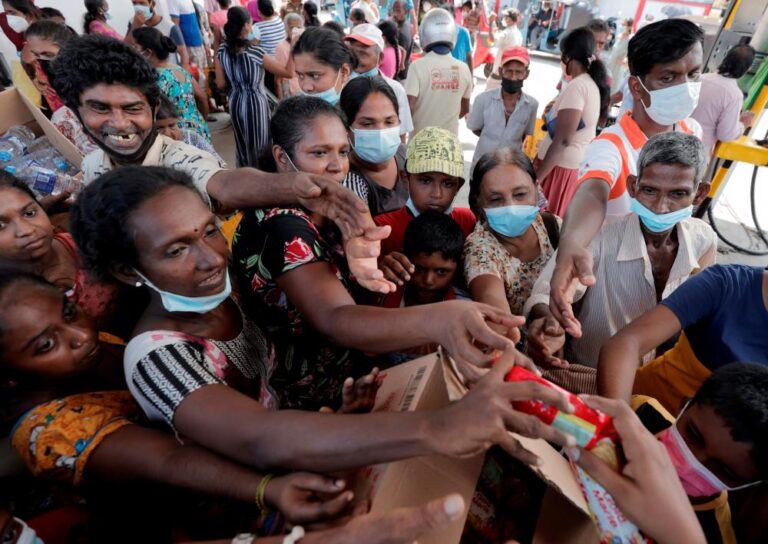
The prime minister on Monday warned that the country was down to its last day of gasoline supplies, as it doesn’t have the dollars to pay for shipments aboard tankers anchored just offshore.

 He also said it would need to print money to pay government salaries, a move that will certainly worsen inflation already running near 30%.

Sri Lanka ‘ present administration headed by newly appointed Prime Minister Ranil Wickremasighe will unveil economic recovery plan or Way forward fiscal plan next week .

The Finance ministry  has allready devised this  fiscal plan  for economic recovery to operationalise necessary measures to build the credibility of the economy on a sustained basis.

It has suggested a holistic national effort, with the participation and ownership of all stakeholders including citizens, political entities, the civil service, and private sector, among others. 

Prime Minister Ranil Wickremesinghe told parliament on Wednesady18 that he will submit this economic recovery plan next week although there was some  some disparity in the Government data.

He also promised to arrange a meeting between the main opposition Samagi Jana Balawegaya (SJB) and Treasury to discuss matters related to the economy.

The offer was made by the Prime Minister while responding to a question raised by SJB MP Dr. Harsha de Silva in Parliament yesterday.

Dr. Harsha de Silva questioned reports that Sri Lanka was going into a hard default of its repayments.


The Tamil Struggle, the Aragalaya and Sri Lankan Identity

0

Ambika Satkunanathan  Groundviews 15 May 2022

May 18, 2009. The end of the war.

Of the many horrific visuals of the end of the war the one that is etched in my memory is of people crossing the Mullaivaikkal bridge. At the time it was not possible to watch it without crying. Even now, it is difficult to watch without feeling emotional, if not cry.

Why?

Violence, loss and pain: the open wounds of 2009 and long before

In the video you see people who have been battered, suffered violence of horrific proportions, subjected to unspeakable indignities and seen unimaginable horrors. But what makes you cry is not just that. What makes you cry is seeing people who have been broken by the violence and brutally robbed of their dignity.

The months that followed were similarly harrowing. The appalling conditions at the camps for internally displaced persons, the government refusing to allow people to leave the camps thereby making it a place of mass detention and collective punishment. The struggle faced by humanitarian agencies to obtain access to the camps. The arrests from the camps and allegations of many human rights violations. Even now, reading a Magistrate Court order dated April 27, 2009, which states, to date, 30 starvation deaths had taken place and on average five deaths took place daily makes one shudder. The order further states that on April 27, 2009 14 deaths of the elderly were registered at the Chettikulam welfare centre and on April 26, 2009 3 deaths registered at Kadirgamar Nagar.

The memories of those days are of constant struggles with the state, with and within the United Nations, with and within international non-governmental organisations (INGOs), with and within civil society organisations and between all these entities.

Those who were in government then are in government now. The Rajapaksas. Gotabaya Rajapaksa, the then Secretary, Ministry of Defence, who claimed credit and is hailed as the mastermind who ended the war, stands accused of grave violations of international humanitarian and human rights law. He is now president.

Imagine the fear and anxiety of the Tamil community when Gotabaya Rajapaksa was elected president in November 2019. Many in the South do not have to imagine the fear and anxiety anymore because more than two years after he was elected, people in the South like those in the North and East are experiencing the Rajapaksa brand of violence, albeit in different ways and of a lesser intensity. The result – the protests. The aragalaya (the struggle).

How do you solve a problem like the state?

The state response to the aragalaya, although not of the proportions as the response to the Tamil struggle, has been the close-to-standard state response to dissent. Its response has been violence and repression both by abusing the law and ignoring the law. The president abused the law by declaring a state of emergency and issuing emergency regulations that restrict many rights and bestow additional powers upon the military when such a declaration was not justified. The regime ignored the law by failing to prevent the attacks on the protestors and then has done nothing to hold the attackers accountable.

Many younger protestors may not be aware the Tamil struggle began decades ago before the Liberation Tigers of Tamil Eelam (LTTE) came into being and is continuing years after the LTTE was defeated militarily. Just as the pre-LTTE peaceful Tamil struggle was subject to state violence, the post-LTTE peaceful Tamil struggle was and is being subject to state violence.

The problem is hence the state. The Sinhala Buddhist nationalist state, which made cannon fodder of young rural Sinhala men, who flocked to the armed forces as they had no other livelihood options, for its ethno-nationalist majoritarian project.

Historically, the structural violence unleashed by the state which leads to counter violence, often in self defence, has been ignored. Violence is part of a continuum and to prevent violence in any form, the violent nature of the state has to be addressed. Yet we ignore the structural violence and address only the symptoms and expect change. We are then surprised when very little changes and the cycle of violence continues.

Unity: the natural outcome of respect and equality

During the last few weeks, I have been repeatedly asked, especially by international media, whether the “unity” that came into being as a result of the protests will withstand the resolution of the economic problems. The assumption being, there is unity now.

There is as yet no unity in the manner conceived by those asking the question. What do I mean? There is no common Sri Lankan identity around which all citizens coalesce because the Sri Lankan identity is often conceived, certainly conceived by the state and definitely the Rajapaksas, as one in which the diverse and plural nature of Sri Lanka is erased. An identity modelled largely on a Sinhala Buddhist identity.

There is no unity because issues that have affected certain parts of the population, such as plantation workers and the Tamil community, are not part of the demands of current protests. This is not surprising because the genesis of the protests lies in the economic crisis. There is only one common demand of the protests – that the president and his family should step down. There are two other demands around which there might be general consensus, i.e., the abolition of the executive presidency and addressing corruption.

At the same time, there is growing awareness and space to speak of issues previously thought not possible. Militarisation, war crimes, the Channel 4 documentary, racism. One hears people say, “if they are doing this in the South, imagine what they must have done in the North and East”. There are some who realise that the state is now using in the South strategies it used to perpetrate violence against the Tamils in the North and East for decades.

It is this realisation which must be grasped, since it is because successive governments were allowed to perpetrate violence, not only unquestioned but also cheered on by large sections of the Southern public, that the Rajapaksa regime is able to act with impunity now. It is this that can be the beginning of the acknowledgment of historical violence and heeding and addressing calls for truth, justice and equal citizenship. Perhaps this could be the initial steps towards a plural and diverse Sri Lanka where you do not have to divest your ethnic or religious identity to be Sri Lankan.

May 18: the test

On 18 May, Tamils will mark the end of the war and memorialise those killed during the war. The state response to memorialisation has consisted of different forms of violence. Even during Yahapalana there were initial attempts to curtail memorialisation activities. In response, the Human Rights Commission of Sri Lanka wrote to the president reiterating the right to memorialise and the importance of memorialisation to rebuild inter-community trust and deal with the past.

In May 2022, while Gotabaya Rajapaksa has brought armoured personnel carriers and the military to Colombo, there are indications that the military is stepping up its surveillance and intimidation in the North and East to prevent memorialisation activities. Regrouping of the LTTE is a narrative that has been often revived to curtail memorialisation on 18 May. Even those in Colombo are anxious about what could possibly happen in the North and East, the North in particular, with one friend expressing concern about people joining the commemoration activities with expressions of caution such as, “don’t go”, “be careful” and “if you are photographed there will be problems”. Even now, even in Colombo, there is fear for the safety of those who participate in these activities.

In this context, will those who are part of the aragalaya show solidarity with Tamils? How will they respond to the on-going violence of the state?

Demanding accountability for grave violations of humanitarian and human rights law is an act of countering the violence of the state.

Demanding demilitarisation is an act of countering the violence of the state.

Speaking of the violence the state has perpetrated on Tamils is an act of countering the violence of the state.

Showing solidarity is an act of countering the violence of the state.

Countering the violence of the state benefits us all. That is the lesson to be learnt.

Release all political prisoners immediately. Find victims of enforced disappearances. Abolish the Prevention of Terrorism: Radical Centre

0

Act: Radical Centre

The Radical Centre calls on the Gotabaya Rajapaksa-Ranil Wickremesinghe administration to release all political prisoners who have been incarcerated for almost thirteen years since the end of Sri Lanka’s long drawn conflict. The organization also calls on the government to release all information pertaining to the victims of enforced disappearances and to abolish the draconian Prevention of Terrorism Act (PTA). 

As the Tamil people in the North and East prepare to mark the Mullivaikkal Remembrance Day to commemorate thousands of loved ones lost to war in Mullaivaikkal, we stress that consecutive governments are responsible not only for the economic crisis but also for crimes committed against the Tamil people in Sri Lanka. Since receiving independence in 1948, for nearly seven decades, the entire citizenry has inherited merely oppression and suffering as a result of the political activism of those involved in the governance of Sri Lanka. In fact, the suffering of the Tamil people has been far greater.

For over 13 years, innocent mothers have embarked on a search for their children who disappeared after being handed over to the government forces during current President Gotabaya Rajapaksa’s tenure as the Secretary of Defense. They are the same children left unfound during current Prime Minister Ranil Wickremesinghe’s previous tenure in the same post. We in the South cannot escape the responsibility of forcing the government to find those children.

Mothers in the North and East have been engaged in a struggle for nearly 2,000 days, in a bid to force the government to reveal the fate of their relatives who went missing during the last stages of the war. According to the Office of Missing Persons formed by the Wickremesinghe administration in 2017, 21 171 persons continue to be missing along with the 1642 persons who were handed over to the government forces following the end of the war.  Families of the missing began satyagraha campaigns in early 2017 in Vavuniya, Kilinochchi, Jaffna, Mullaitivu, Trincomalee and Ampara districts, demanding the government to reveal the fate of their missing loved ones.

According to journalists reporting on the war affected in the North and East, at least 115 parents engaged in the continuous efforts of achieving international justice for the disappearances of their children have now passed on without getting any closer to the truth.

The Radical Centre expresses their support to the mothers who have been engaged in perhaps the longest struggle in Sri Lanka’s history on empty stomachs amidst many other obstacles while also facing harassment by government security forces. The Radical Centre would like to remind the protestors now engaged in a struggle in the South that we must learn from the Mothers of the North on how to fight without retreating until the objective of the struggle is achieved.

We are also displeased over the conduct of the Office of the Missing Persons (OMP), which has so far failed to find a single missing person on behalf of the relatives who are in a constant struggle to find their loved ones.

The Radical Centre cannot accept the government’s decision to pay compensation to the relatives of the victims of enforced disappearances. We see the move as merely an attempt to cover up crimes committed against these people.

The ‘Radical Centre’ also calls for the immediate release of Tamil political prisoners who have been inhumanely imprisoned for many years simply for fighting for the legitimate rights of their people. We call on the government to extend the hands of humanity to the North by ensuring the immediate and unconditional release of all political prisoners currently in custody.

The ‘Radical Centre’ has also observed how politicians in power have continuously misused the PTA to seek revenge on their opponents.

Therefore, we urge the government to abolish the PTA, which has tarnished the country’s image before the international community, and to further create an environment in which all citizens of the country can live with dignity.

For Radical Centre,

Jayani Abeysekara (Convenor)

Harendran Krishnasamy

C.S. Kodikara

Sanjaya Liyanage

Prime Minister Narendra Modi visits Lumbini on Buddha Purnima

0

Prime Minister Narendra Modi visited Lumbini, birthplace of Lord Buddha, on auspicious Buddha Purnima on 16 May 2022.  He paid the visit at the invitation of the Rt. Hon’ble Sher Bahadur Deuba, Prime Minister of Nepal.

2.     Prime Minister Modi commenced his maiden visit to Lumbini as the PM on a pious note by offering special prayers at the sacred Mayadevi Temple, within which lies the birthplace of Lord Buddha. The Prime Ministers of India and Nepal visited the historical Ashoka Pillar, that carries the first epigraphic evidence of Lumbini being the birthplace of Lord Buddha.

3.     The two leaders took part in “Shilanyas” (foundation stone laying) ceremony of the India International Centre for Buddhist Culture and Heritage in the Lumbini Monastic Zone. The Center is being built at a plot belonging to the International Buddhist Confederation, New Delhi. This is being envisaged as a Net-Zero compliant world-class facility that would house prayer halls, meditation centre, library, exhibition hall, cafeteria and other amenities and would be open to Buddhist pilgrims and tourists.

4.     Prime Minister Modi also attended 2566th Buddha Jayanti celebrations organized by Government of Nepal. He addressed a large gathering of monks, dignitaries, officials and those associated with the Buddhist World on the occasion. Speaking at the event, Prime Minister Modi described Buddha as the embodiment of the collective understanding of humanity.

5.     India has an unparalleled position in the hearts of followers of Buddhism. Buddhist ties occupy a central place in the abiding people-to-people linkages between India and Sri Lanka. Prime Minister Narendra Modi was the chief guest at the 14th International Vesak Day celebrations in Sri Lanka in May 2017. Attesting to strong ties between the two countries in the sphere of Buddhism, Prime Minister Modi announced a grant of USD 15 million towards the promotion of these ties. MOU for operationalizing this grant was signed on 28 March 2022 during the visit of External Affairs Minister Dr. S. Jaishankar to Sri Lanka. The grant is aimed at constructing/renovating Buddhist monasteries, capacity development, reciprocal exposition of The Buddha’s relics, among others. It may also be recalled that the inaugural international flight to Kushinagar, where The Buddha attained Mahaparinirvana, had a group of close to 100 monks from all parts of Sri Lanka.

***

Colombo

17 May 2022

JPMorgan backs Sri Lanka bonds on bets that crippling crisis to ease

0

Reuters – U.S. investment bank JPMorgan backed Sri Lanka’s crisis-hit government bonds on Wednesday, saying recent political changes in the country should gradually improve its strains and help its talks with the International Monetary Fund.

Adding an ‘overweight’ – effectively a buy recommendation – JPMorgan analysts said: “political stability should pave the way for bonds to move higher from near all-time lows”.

Sri Lanka is officially now in default as a so-called “grace period” to make some already-overdue bond interest payments expired on Wednesday.

“We think this stability should result in both IMF discussions and the process of appointing legal and financial advisors moving forward,” JPMorgan added

Issuance of birth, marriage and death certificates disabled

0

The issuance of birth, marriage and death certificates will be temporarily disabled due to an error occurred in the LNG Database, revealed the Registrar General’s Department.

The error has led to the halting of certified copies islandwide, it added.

Repairs to the database have commenced and the issuance of copies will resume once the database is restored, the Department said in a statement.

MIAP

IOC responds to reports on fuel price surge

0

The Lanka Indian Oil Company (IOC) said the reports on the company increasing fuel prices from today (18) are completely false.

MIAP

May 09 assault: Bail denied to prevent public disturbance. Suspects remanded till May 25.

0

Ruling Party MPs Sanath Nishantha and Milan Jayathilake, former Provincial Council Member Amal Silva and Dehiwala-Mount Lavinia Urban Council worker Subhash Fernando, who were arrested in alleged connection to the brutal assault launched on the peaceful protests held in front of Temple Trees and Galleface, Colombo on May 09 were remanded till May 25, as per the order of Fort Magistrate Thilina Gamage.

This was when the suspects were produced before the Court today (18).

In consideration of the facts, evidence and statements collected from all the parties, the Court denied the suspects’ bail application given the possibility of inciting public disturbance upon any granting of bail amidst the ongoing investigations and that the injured are still in medical care.

Considering the request for an appropriate order ensuring the security of MPs, the Magistrate directed the Commissioner General of Prisons to take appropriate measures regarding their safety and to ensure that they attend the Parliament sittings.

The prison officials were ordered to produce both former Provincial Council Member Silva and Worker of the Dehiwala – Mount Lavinia Council Fernando for an ID parade with masks on the next day. The Magistrate also noted that the Court observes that the suspects should act more responsibly as MPs.

Shavendra Fernando PC appearing for the suspects objected to the holding of an ID parade stating that despite the suspects being covered with masks their photographs were shown on the media, which would be ‘prejudicial’ to the suspects, thereby urging the Court to cancel the holding of an ID parade. Amal Silva’s name was mentioned by the CID publicly, Fernando PC noted.

Denying the request, the Magistrate asked him to elaborate it as the hearing continues further.

The Attorney General’s Department told the Court that it was identified that MPs Sanath Nishantha and Milan Jayathilake instructed the rioters to ‘attack and kill’ (gahapiyaw, marapiyaw) several witnesses including Lahiru Chathuranga.

U.R. De Silva PC appearing for Nishantha told the Court that his client was attacked and that the ‘conduct’ of Lahiru Weerasekara who testified was ‘known by the entire country.’

In response, the Magistrate said, “Are there only two pieces of evidence? Lahiru Weerasekera has a number of such cases in this Court. Evidence, including circumstantial evidence against these people, must be presented.”

Rasik Faruq PC appearing for Jayathilake told the Court that every allegation against his client were false and that they had been to the protest ground to settle the matter. In the event that the suspects’ houses were destroyed in the aftermath of the event, this would be a bailable offense, he added.

Upul Jayasuriya PC appearing for the aggrieved party told the Court, “This is a case that gained the entire Sri Lanka’s attention. It will take time for the Criminal Investigation Department to conduct the probes. The meeting held at Temple Trees was held to conspire. Who gave them the rods? Is there any advance preparation? This is not an event causing a minor injury. They walked not to observe Pirith. Reasonable time should be given for the investigations. This is a non-bailable offense.”

Deputy Solicitor General Riyaz Fari told the Court, “Those injured are still being treated. They were not produced. Should they be released on bail, public disturbance may occur. I object to the granting of bail.”

In response, Silva PC said, “This would be false. I informed in writing. When we told them that we were ready to come, they said not to come and that an arrest ought to be made. The arrest was made based on a partial agreement.”