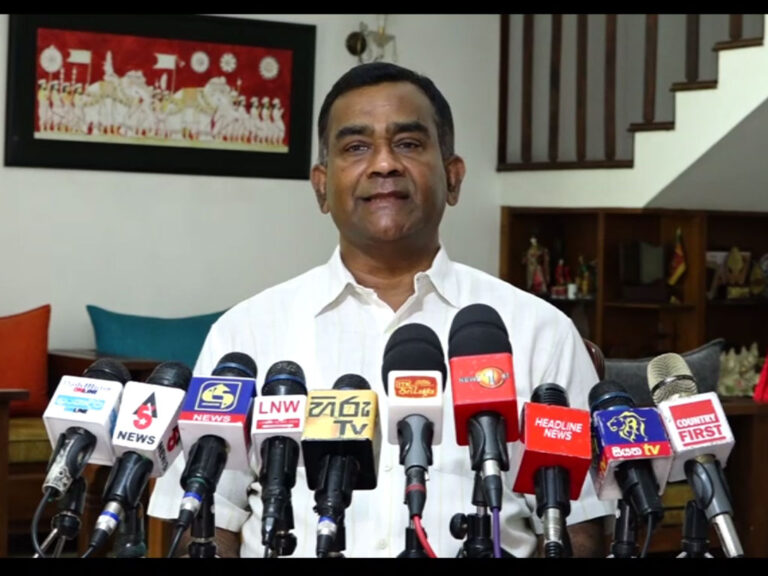
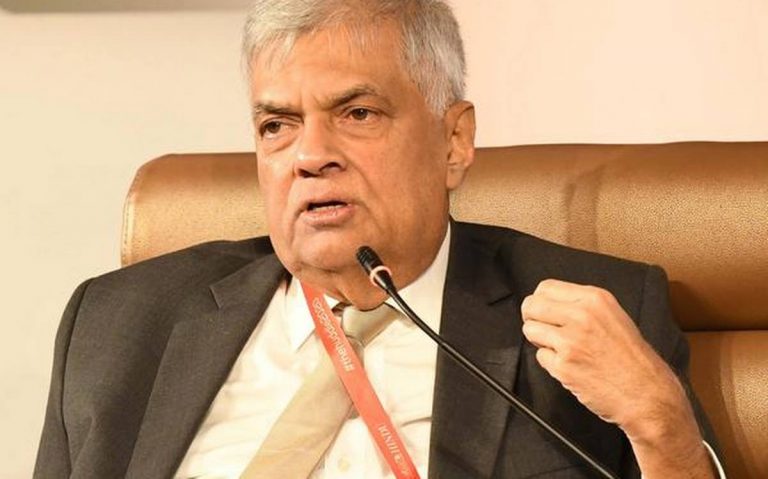
Despite President Ranil Wickremesinghe’s promise on the Prevention of Terrorism Act (PTA) being enforced to boost the economic development of the country, the Act is being used to repress political activists, alleged Samagi Jana Balawegaya (SJB) MP Tissa Attanayake, speaking to media today (22).
As of now, a group of protesters including student activist Wasantha Mudalige has been arrested and the government should reveal reasons as to why they were charged under the PTA, the MP noted.
The Opposition MP questioned how marching against the President and calling for an election is an act of terrorism, adding that the government is now enforcing the emergency regulations for repression instead of solving the people’s problems.
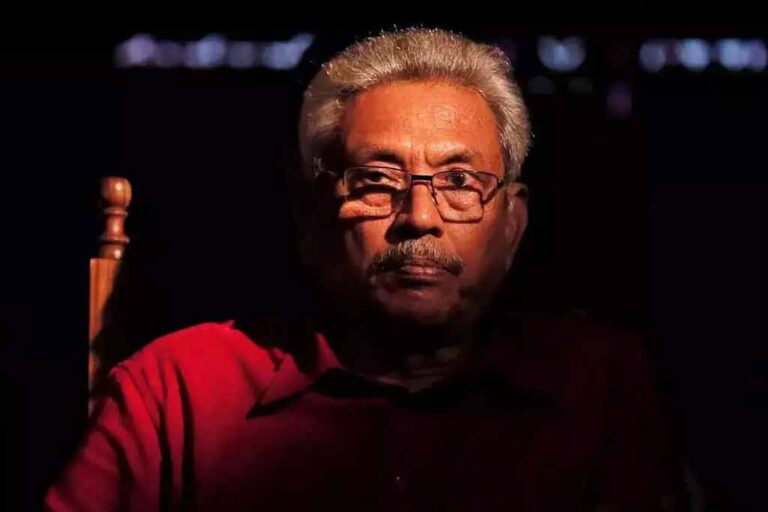
Former Sri Lankan President Gotabaya Rajapaksa’s return to the country will further be delayed dismissing early reports on his return on August 24.
Although the ex President is expecting to return to the island his return will not take place on the 24th, according to Private Secretary Sugeeshwara Senadheera.
His exact date of return has not been confirmed yet.
Rajapaksa fled the nation amidst growing objections from the public leading to the historic ‘Aragalaya’ anti-government protests and he landed on Maldives and later Singapore. His route continued to Thailand and the ex Sri Lankan President has been allowed to stay there for several months.
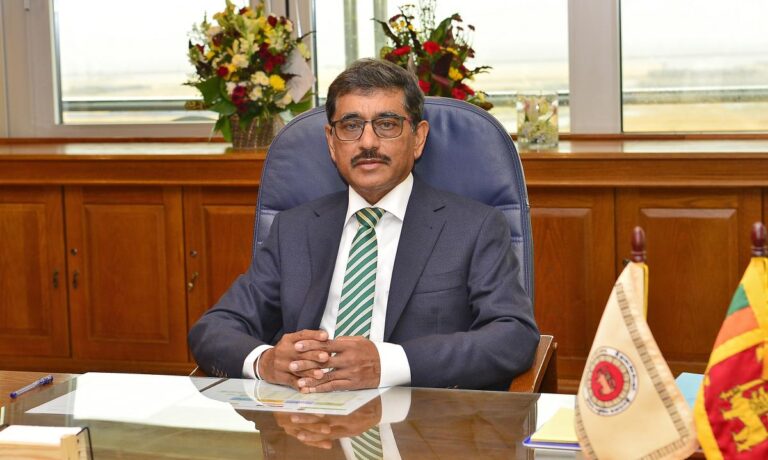
Central Bank Governor Dr. Nandalal Weerasinghe expressed confidence on the gradual recovery of the ailing economy and reaching debt sustainability without re-structuring domestic debt with forex inflows coming in normal banking channels following the ban on open account transactions.
The economic growth is projected to contract to over 8 percent this year from the earlier projection of 7.5 percent while the inflation would come down to around 60- to 65 percent from the earlier projection of over 70 percent.
Foreign exchange inflows are now adequate to pay for essential food, fuel and medicine imports owing to Central Bank’s policy measures, he claimed.
Contradicting the President’s view of possible restructuring of massive domestic debt, Dr Weerasinghe said that there was no need to restructure domestic debt at present as the monetary authority has taken measures towards debt sustainability safe guarding the banking sector.
At least two recent public meetings President Ranil Wickremasinghe categorically stated that domestic debt stock was serious and it needs to be restructured as well and that external consultants were looking into it.
He told the Organisation of Professional Associations (OPA) annual conference and awards ceremony held in Colombo this week that Sri Lanka’s International Sovereign Bond (ISB) holders may exert pressure on the government to restructure the domestic debt
He noted that they alone may not be keen to accept a steep haircut under a debt sustainability plan, which is a prerequisite to secure an International Monetary Fund (IMF) bailout.
However Dr Weerasinghe disclosed that still there was no request for domestic debt restructuring and the Central Bank is fully convinced that it would be able to make it sustainable.
“The government position is to re-structure external debt,” Dr Weerasinghe said adding that the banks liquidity position will be affected by domestic debt restructuring. .
The Central Bank is holding one to one talks with banks to discuss ways and means to minimise the impact on the local banking system and maintain debt sustainability.
He emphasised the need of minimising any adverse impact on banking system, to maintain financial stability which will help expedite economic recovery.
The Governor expressed the belief that external creditors could recover their liabilities faster than expected with relief on dues by not resorting to domestic debt restructure.
He revealed that International Monetary Fund (IMF) team will be visiting Sri Lanka by the end of this month to reach Staff-Level Agreement on macroeconomic programme and debt restructuring target in the next 10 years’.
The country’s forex inflows were much better at present following the restriction on non essential imports and prohibition of open account transactions of importers and high export earnings.
The essential food commodity importers were given a relief to import essential food items on open account transactions on directive from the high authority and released them with required foeign exchange via banks, he revealed.
This has helped to tackle shortage of essential food items and reduce prices to some extent adding that the ban will be re-imposed soon.
The government will go all out to convince China to support Sri Lanka with the aim of finalising the International Monetary Fund (IMF) bailout loan although it has to repay more debt to the West as International Sovereign Bond payments official sources closely connected to ongoing negotiations said.
Sri Lanka is set to submit a comprehensive economic reform programme including the policies needed to correct structural imbalances over an extended period along with debt restructuring report prepared by financial and legal advisory firms Lazard and Clifford Chance LLP very soon (this month) a senior official said. .
He noted that those negotiations with the IMF were more difficult and complex due to the country’s inability to service debts owing to dwindling reserves and dollar scarcity.
Once a staff-level agreement is reached, the country’s economic reform and debt restructuring plan (structural adjustment) will be submitted to the IMF Board of Directors for approval.
As of 2021, a staggering 81 percent of Sri Lanka’s foreign debt was owed to U.S. and European financial institutions, as well as Japan and India and 10 percent owed to China Finance Ministry data shows. .
According to ministry statistics as of the end of April 2021, the majority of ists foreign debt around 47 percent is owned by Western venture funds and banks..
The top holders of the Sri Lankan government’s debt, in the form of international sovereign bonds (ISBs), are BlackRock (U.S.),Ashmore Group (Britain),Allianz (Germany),BS Switzerland), HSBC (Britain), JPMorgan Chase (U.S.) and Prudential (U.S.), a senior government official said.
The Asian Development Bank and World Bank were the other debtors which, own 13 percent and 9 percent of Sri Lanka’s foreign debt, respectively. Asian Development Bank (ADB) also owns a marginal percentage.
Japan, owns 10% of Sri Lanka’s foreign debt while India 2 percent by end of last year. According to Sri Lanka’s economic programme (structural adjustment plan) the government has to make at least nine commitments via fiscal policy measures.
According to the Plan, major policy decisions to be taken on Increase income tax rates, reduce income tax thresholds, increase VAT rate and reduce VAT threshold, setting up an independent debt office, Continuation of high interest rate, Continuation of high interest rate, and no more fixed exchange rates.
The other commitments are the listing minority stakes of some SOEs in the stock market, making SOEs more transparent, restructure Sri Lankan Airlines, CPC and CEB and consider Samurdhi as more targeted welfare.
The government is also committed to introduce several other policy measures such as to introduce cost-based fuel pricing formula, Electricity pricing formula, electricity bill increase, repeal Monetary Law Act and pass the Central Bank bill to reduce political intervention in CB as well as relaxing import restrictions
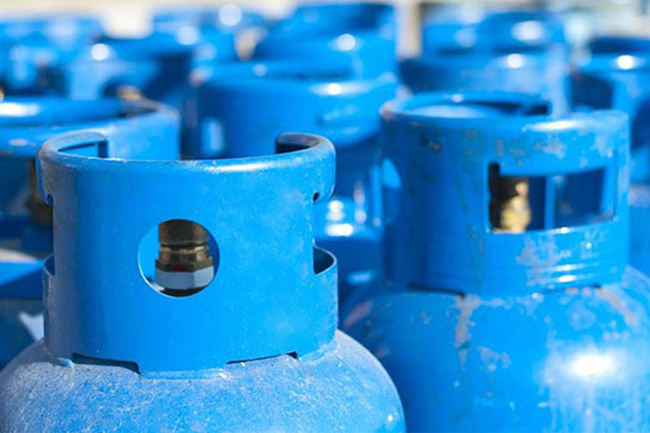
Litro Gas Lanka Limited has successfully tackled the LPG crisis restoring supplies while reducing prices after streamlining the management and expediting the shipments to meet the demand for the next three months and beyond, company sources revealed.
It has awarded a short-term LPG contract for 100,000MTs and received the quantity of 33,000 MTs of consistently since July this year effectively easing the shortage in the market through a proper distribution system of LP gas cylinders, a top official of the company said.
The Litro gas has floated a term contract of 280000 MTs for one year (2022-2023) and the tender evaluation process now underway with the securing of bank credit lines to service the contract, he added.
The present Supplier OQ Trading of UAE and Siam Gas of Singapore the eliminated bidder of the previous controversial LP Gas Tender for 280,000 MTs cancelled by Litro Gas Lanka on July 24 2022 are in the contest once again to gain the contract from the fresh tender.
This was revealed at the bid opening of the new tender called to procure 280,000 MTs of LP Gas on Monday 15.
Only two prospective bidders at the bid opening were the OQ Trading and Siam Gas who submitted bids for the tender re-called by Litro Gas Lanka Limited in accordance with the directive of the Parliamentary Committee on Public Enterprises (COPE) to procure LPG for the period of 2022- 2023.
The COPE has recommended that an investigation be conducted by the Auditor General’s Department on the cancellation of the Term tender, which had been approved by the Cabinet to purchase LP gas from Siam Gas at US$ 96 per MT and opting to buy 100,000 MT of gas at a cost of $ 129 per MT from OQ Trading.
According to official documents, OQ Trading was awarded an order to supply 100,000 Metric Tons of LP Gas of which almost 33,000 MTs have already been supplied. The supply of the balance quantity of 67,000 MTs is scheduled to be completed by October 2022.
It is believed that Litro Gas Lanka would conclude the evaluation process soon and report to the COPE of the new successful bidder, who is expected to start delivery from November 2022.
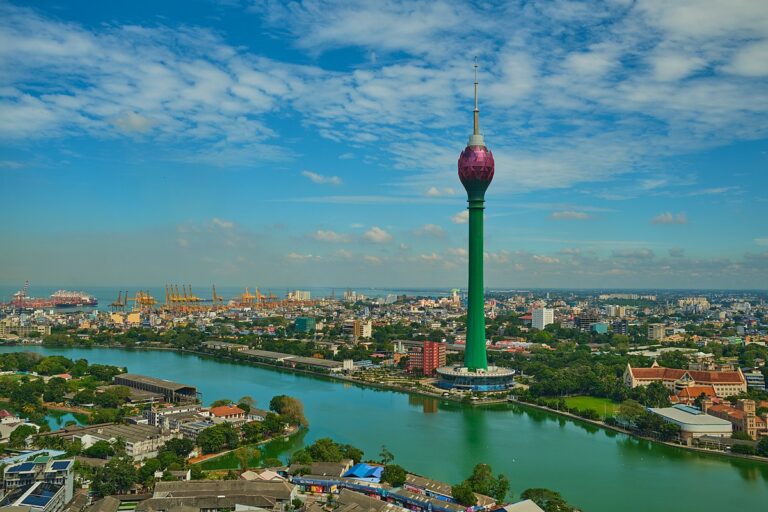
The Treasury owned Lotus Tower Company Ltd is set to launch commercial operations with the opening of a 356 metre tall tower for the public on September 15, a high official of the company said.
The new company was established after the Lotus Tower was brought under the purview of the Ministry of Finance, from its current authority, the Telecommunication Regulatory Commission of Sri Lanka (TRCSL), in February 2022.
The tower was constructed by the contractor China National Electronic Import and Export Corporation (CNEIEC) with a total cost of US $ 104.3 million, an 80 percent of the cost funded by Exim Bank of China.
The aim of launching commercial operations of the Lotus Tower is to provide an opportunity for investments in various business enterprises.
Lotus Tower Company Ltd has published a news paper advertisement recently calling for prospective investors to invest in various services which are expected to commence at stalls in seven stories of the tower.
The ground floor or the basement is set apart for super luxury and special trade stalls, lake view food court, souvenirs shop, and photo studio and exhibition gallery.
An innovation centre, lake view coffee lounge, E-sports centre, 9-D cinema halls, digital banking services and digital arts museum will be set up at the first floor.
The second floor space is available for business office facilities, exhibition hall, Auditorium and separate spaces for special ceremonies.
Roof terrace is set apart for roof top restaurant and free spaces as well as separate spaces for special ceremonies.
The sky lounge and special hall for ceremonies are to come up in the third floor, a, hall for ceremonies in the fourth floor, rotating restaurant at the fifth floor, luxury room facilities at the sixth floor and an observation deck at the seventh floor.
According to the original plan of the project, the tower was to be developed as a telecommunication tower equipped with a hotel, a telecommunications museum, restaurants, auditorium, an observation deck, a shopping mall and a conference centre.
In the uncertainty of receiving foreign aid, Sri Lanka should commit itself to finding solutions to the current crisis, said President Ranil Wickremesinghe, addressing the District Development Council of Anuradhapura.
He stressed that no one can stand idly by anymore and every must work together for the sake of the country. The public servants, in particular, should be delivering a service commensurate with the salaries they receive, and anyone failing to serve must resign, he warned.
The President further noted that any failure from his end will also drive him to meet the same fate and that should he fail to serve the people will oust him as well.
Public servants at the village level, in particular, have a big role to play and special attention has to be paid to their delivery of services, Wickremesinghe noted.
The Nittambuwa Police have arrested a person on suspicion of being involved in the riots that took place on May 09.
The suspect, Arjuna Ramadoru, is also a ‘GotaGoHome’ protest organiser leading anti-government protests in France and was arrested when arrived in Sri Lanka to visit his relatives.
According to the Police, the suspect is involved in the unrest occurred in Nittambuwa on May 09. Ramadoru left for France after the events, Police added.
The suspect was arrested yesterday (20) and will be produced to the Court, Police further noted.
The water tariffs will surge by 70 per cent from September 01 this year revealed the National Water Supply and Drainage Board.
The decision, however, will not affect low income families, and a final decision has not been taken to date on the percentage by which the water tariffs are increased in business premises.
Previously steps were taken to revise the electricity tariffs and although the percentage was revealed to be 70 per cent the charge has increased by more than 100 per cent in some bills.
GALENBINDUNUWEWA, Sri Lanka—For greater than half a century, Pahatha Mellange Jayaappu has tilled the sphere on his modest farm in Sri Lanka’s agricultural heartland, unswayed by recurrent political and financial turmoil.
Now the 71-year-old is simply attempting to eke out sufficient of a harvest to feed his household after an abrupt ban on chemical fertilizers final 12 months devastated his crops. He says he has given up on planting for revenue.
“We have lived through armed insurrections and bad government policies,” Mr. Jayaappu stated. “This is the worst year I’ve ever seen. They have destroyed the farmers.”
Many Sri Lankans aren’t getting sufficient to eat, and farmers and agricultural specialists say the meals shortages are set to worsen. The authorities reversed the ban in November and promised contemporary provides of chemical fertilizers, however farmers stated many obtained solely a small quantity, and too late for the present rising season.
The nationwide yield from this month’s rice harvest—certainly one of two annually—will probably be simply half the traditional degree, stated Manoj Thibbotuwawa, a meals safety professional on the Institute of Policy Studies of Sri Lanka, a Colombo-based assume tank. Yields of different main crops resembling corn and sorghum will probably be off 30% to 60%.
The island nation of twenty-two million has been within the grip of an financial disaster lengthy within the making. Financial pressures began mounting earlier than the pandemic due to debt-fueled infrastructure spending and tax cuts that slashed authorities income. Then Covid-19 battered the tourism trade, and the conflict in Ukraine roiled international markets for meals and gas.
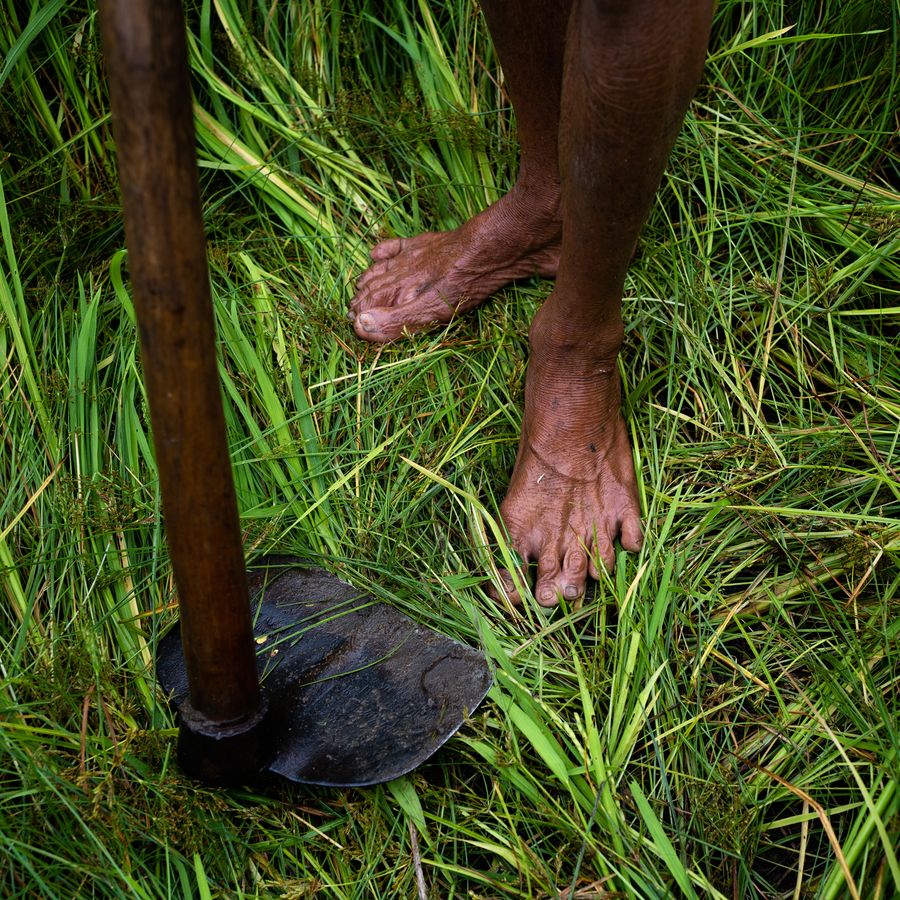
Without fertilizer, the 1-acre farm of Wasala Mudiyansalage Walamaga Gedera Weerakoon Banda, 66 years outdated, not produces sufficient rice for his household, not to mention to promote. He grows quite a lot of crops now, usually going to village gala’s to promote his greens, and works as a day laborer for a bit further money. Deepti Asthana for The Wall Street Journal
The ban on imports of agricultural chemical substances took impact in May 2021, and the rice harvest the next March was down 40%, based on authorities information. Prices soared. Sri Lanka, which had been largely self-sufficient in rice, was compelled to make use of a few of its fast-dwindling international reserves to import the important thing staple. Other crops, like tea, an vital foreign-exchange earner, have additionally suffered. In May, the nation defaulted on its exterior debt.
Nearly 6.3 million Sri Lankans lack entry to satisfactory meals, the United Nations World Food Program reported final month, and effectively over half of households are reducing again on meals or consuming less-nutritious meals. Food inflation crossed 90% in July, based on official information.
“Never before in modern history have we faced famine of this scale,” President Ranil Wickremesinghe stated final month.
Mr. Wickremesinghe was put in by Parliament final month after his predecessor, Gotabaya Rajapaksa, fled the nation and resigned within the face of mass protests over gas shortages and meals costs. The new president has warned that the nation must discover a additional $300 million to import sufficient fertilizer to stop one other rice catastrophe. The subsequent crop might be sown in September.
Mr. Rajapaksa billed the ban as a nationwide shift to natural farming, however agricultural specialists say that requires a years long transition. Opposition lawmakers stated reducing off imports of fertilizer, which the federal government closely subsidizes for farmers, was a shortsighted try to carry on to international reserves.
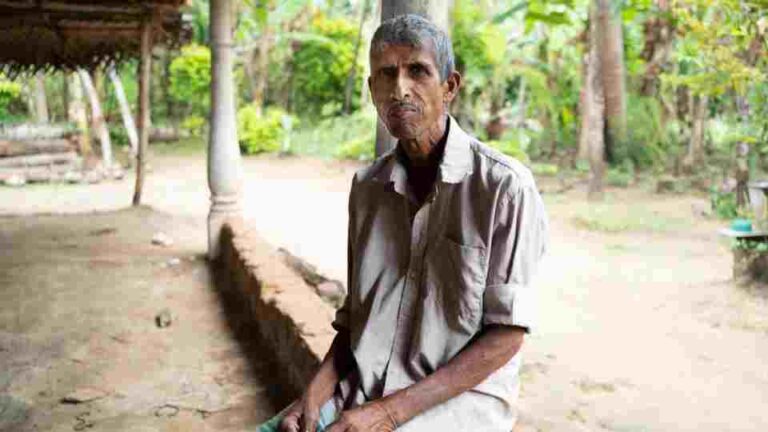
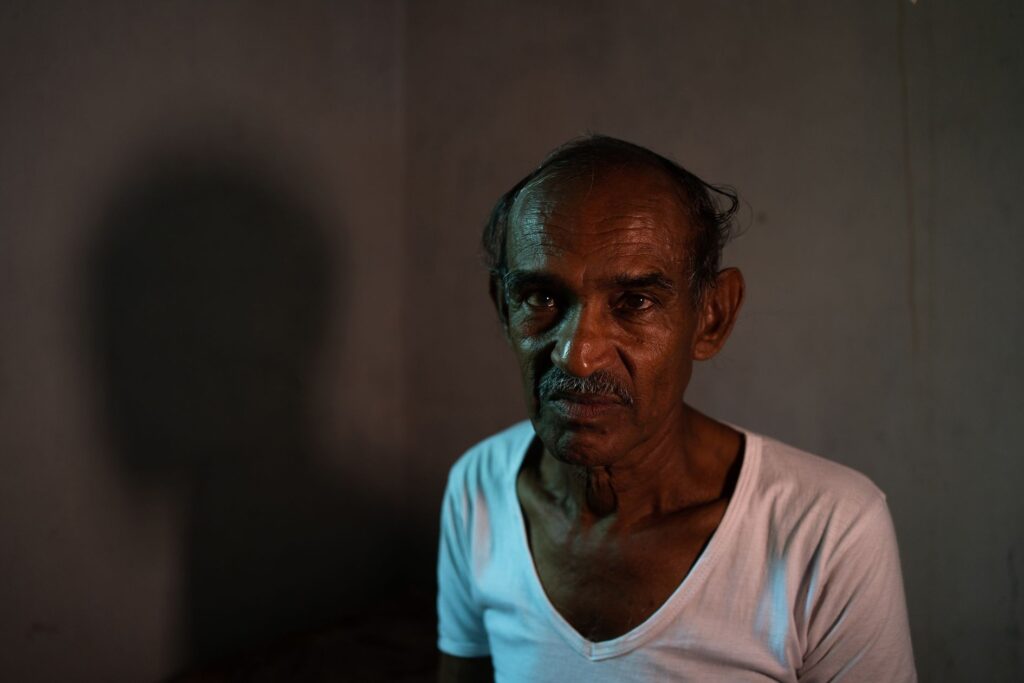
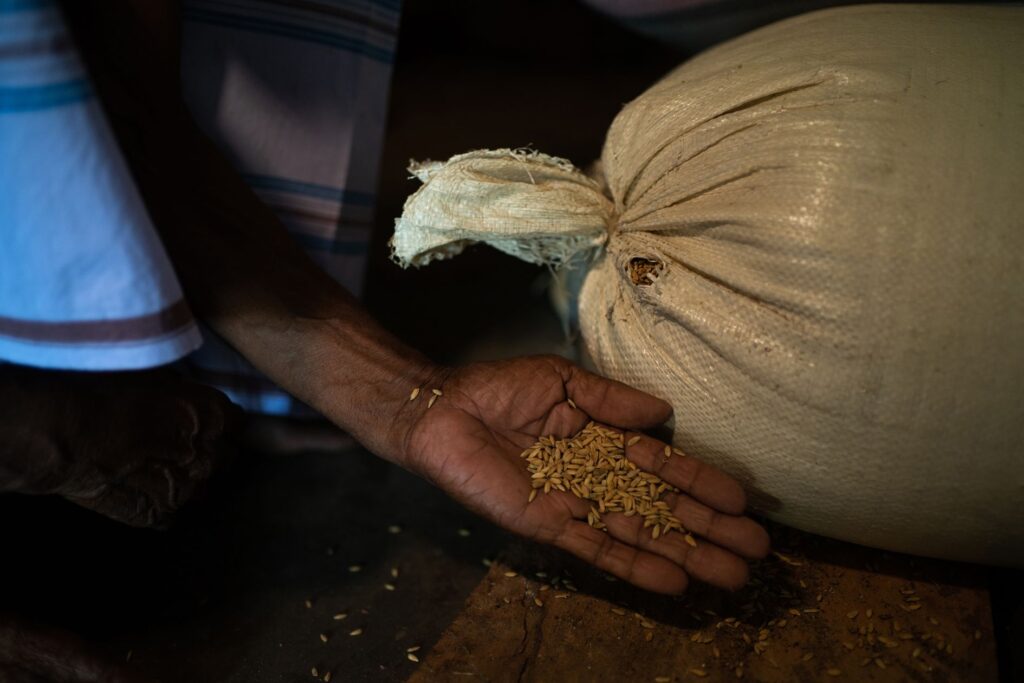
Above, farmer Pahatha Mellange Jayaappu, 71, has pawned practically all his spouse’s jewellery for farm loans; beneath, a number of the rice he has saved for his household, which he thinks gained’t be sufficient.
In Anuradhapura district, a significant hub of rice farming within the northern a part of Sri Lanka, many farmers say they don’t imagine that their troubles will finish quickly. About half the farmers within the area have given up on business farming.
“Even those who cultivate the land don’t have enough to eat,” stated 66-year-old farmer Wasala Mudiyansalage Walamaga Gedera Weerakoon Banda. His 1-acre farm, which normally produces about 2,000 kilos of rice—permitting him to promote half for a revenue—now can’t produce sufficient to feed his household, he stated. He and his spouse are down to 2 meals a day, and should go to 1 if the present crop disappoints.
He has been working as a wage laborer on close by farms to make a bit further money. “We have barely any income,” he stated.
Farmers complained that the natural fertilizers that got here in the marketplace after the ban took impact had been poor high quality, full of fabric that wasn’t absolutely decomposed. And the haste of the ban left inadequate time to make their very own compost, or discover ways to farm organically.
Sanath Sisira tried sprinkling cow and hen manure onto his fields, which helped his guava crops some however had zero impact on his rice crop.
“You can’t just throw food waste into the fields,” he stated. Without chemical pesticides, he added, bugs have devoured his melon crop. He says vehicles hauling crops are trailed by flocks of crows, as they’re crawling with bugs.
The authorities started supplying chemical fertilizers at a sponsored value to farmers on Monday, and international organizations just like the World Bank have agreed to offer monetary help to purchase fertilizer, stated
W.M.D. Wanninayake,
spokesman for the agriculture ministry. The ministry can also be encouraging farmers to plant crops like corn and mung beans, which require much less fertilizer than rice.
The nation has two rice farming seasons, with the smaller crop sown in May and harvested this month. If the climate cooperates, the following planting season must be profitable, stated Mr. Wanninayake.
But first will come this month’s harvest, which many farmers say they count on to be disastrous. Mr. Jayaappu estimated his rice crop at about 200 kilos, greater than 90% beneath regular. His soybean discipline will yield about one-third of what it did in earlier years. He didn’t hassle planting corn.
Mr. Thibbotuwawa, the food-security professional, stated extra meals shortages, particularly of rice, will hit by September, requiring the federal government to import extra.
“What we need is the government to prioritize these essential foods,” he stated.
But that may imply diverting the nation’s restricted international foreign money away from different necessities resembling gas and fertilizer, placing the following rice season in additional peril.
Many small-scale farmers like Mr. Jayaappu say they may not maintain out for an additional season, particularly after taking out loans. Some discuss of going into cities for building jobs, or of their wives going overseas to work as family helpers.
Anuradhapura district in northern Sri Lanka—referred to as ‘rice bowl’ of the area—was thrown into disaster by a ban on imports of artificial fertilizer and pesticides that took impact in May of 2021.
The ban was lifted in November, however fertilizer remains to be brief. Though Sanath Sisira, 44 years outdated, stocked up when the ban was introduced, he’s rising rice on simply half an acre of his 2½-acre farm.
Farmers are diversifying their crops to make sure they will feed their households. Other crops have the benefit of being much less labor-intensive and never requiring loans to purchase fertilizer.
Farmer Pahatha Mellange Jayaappu’s 13-year-old grandson, Anupama Deshan Gunawardhena, joins in farm work like sowing and plowing—and within the sense of insecurity because the household goes via this financial disaster.
Mr. Jayaappu’s, spouse, 66-year-old Wadu Gedera Yaso Menika, says their two sons, seeing no future in farming, are working as day laborers.
Farmers, who reside in tile-roof properties with primary facilities, additionally should take care of frequent energy cuts ensuing from gas shortages, one other product of the financial disaster.
Sameera Madushanka, 30, in his agrarian store in Galenbindunuwewa village. The discover says ‘no cash loans,’ referring to buying fertilizer on credit score. The value of a bag of fertilizer peaked at greater than 25 instances its pre-ban degree.
Mr. Jayaappu stated he and his spouse have pawned practically all of her jewellery to maintain the farm operating. Costs have skyrocketed, he stated—employed labor and rented machines tripling; substandard pesticide quadrupling.
He spent the equal of $113 on a 50-kilo bag of fertilizer on the black market, which is rife with pretend merchandise. He realized as soon as he acquired residence that the fertilizer was the unsuitable form. He sprinkled it over his rice fields anyway—to no impact. During a standard 12 months, he used to earn an annual revenue of about $1,400; now he’s shedding cash.
Mr. Jayaappu’s spouse, Wadu Gedera Yaso Menika, stated the household has run via all the cash she saved from two years’ work as a housemaid in Saudi Arabia. Now she worries that they must take out extra loans to maintain planting the following season.
The 66-year-old is livid on the authorities. There isn’t any level in farming, she stated, with out good fertilizer.
“We have tried everything,” she stated. “Everything died.”