Home Blog Page 2114

Navy seizes 47 people attempted to migrate illegally

0

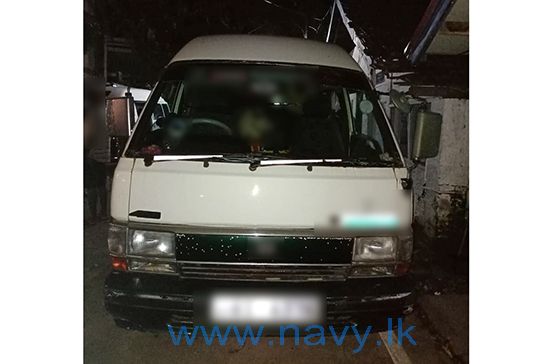
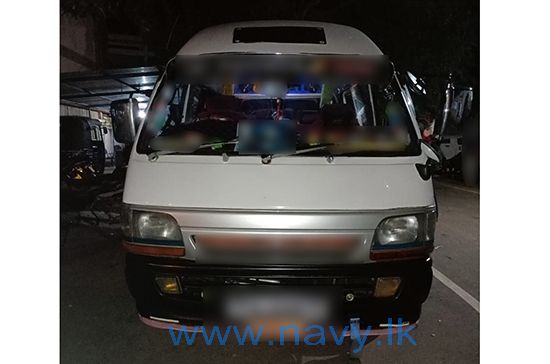
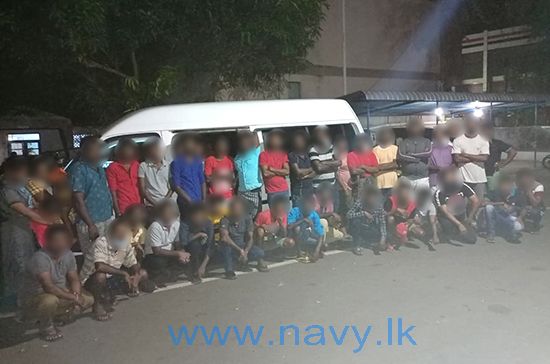
The Sri Lanka Navy has seized 47 people accused of attempting to illegally migrate to a foreign country by sea.

Based on information received by the Navy, the Wennappuwa Police arrested these suspects in a joint mission with the Navy after a special search operation in the area.

The suspects were arrested along with three suspicious vans. Among the arrestees are 37 men, six women and four underage people, who happen to be residents of Jaffna, Vavuniya, Trincomalee, Kalmunai, Batticaloa, Puttalam, Chillaw, Marawila, Mahawewa, Mundalama and Wellawatta.

The suspects were handed over to the Wennappuwa Police station for further investigations.

MIAP

Catholic Priests, Sisters and Brothers raise concern over state repression against Fr. Jeevantha Peiris

0

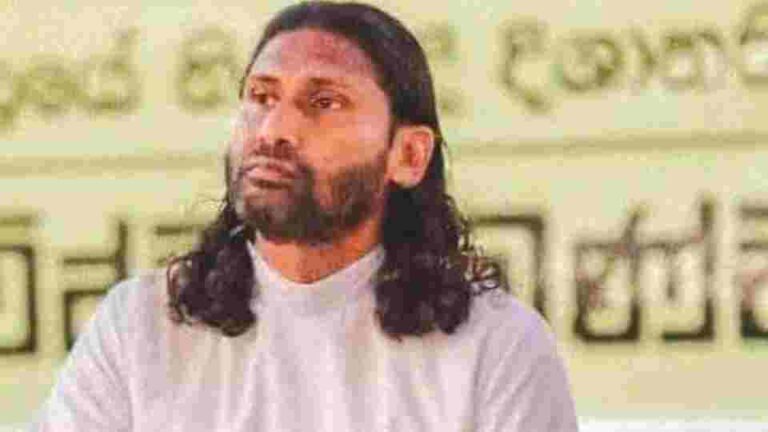
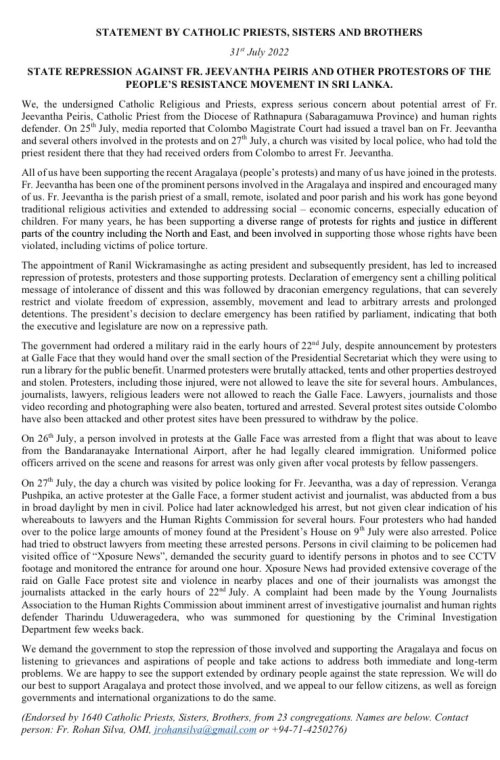
The Catholic Clergy in Sri Lanka has raised its concern over the state repression against Fr. Jeevantha Peiris, who is a prominent voice in the anti-government protests demanding the stepping down of the government, and other protesters revealing of a potential arrest.

Signed by 1,640 Catholic priests, Sisters and Brothers from 23 congregations, a statement issued yesterday (31) said the appointment of Ranil Wickremesinghe as the President has led to increased repression of protests, protesters and those endorsing anti-government movements.

The collective of Catholic clergy demand the government to stop the repression of those involved and supporting the ‘Aragalaya’ movement against the government and focus on listening to grievances and aspirations of people and take actions to address both immediate and long-term problems.

MIAP

There’s light at the end of the tunnel, it’s how fast we can get to it: President

0

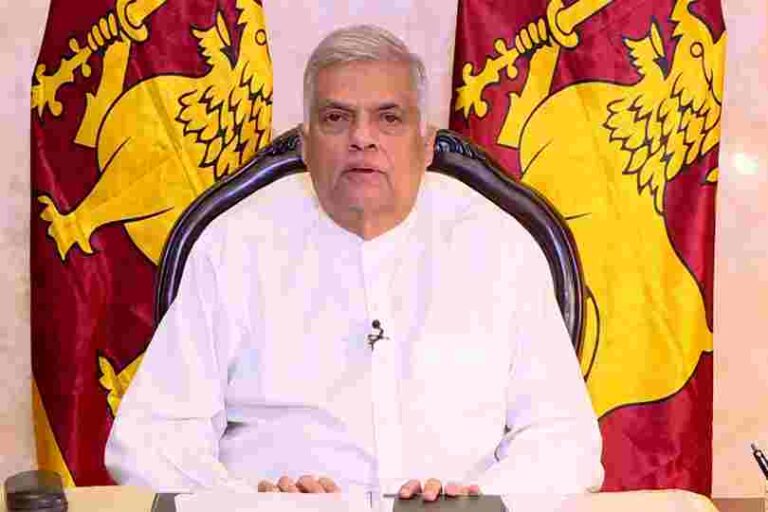
This is not the right time for former President Gotabaya Rajapaksa to return to Sri Lanka given that his return may lead to another uprising among the anti-government protesters who are lining up to oust him due to the economic crisis, said President Ranil Wickremesinghe speaking to Wall Street Journal.

Sri Lanka’s new president said the country has experienced the worst of its economic crisis and that restoring political stability will allow it to begin turning a corner, starting with finalising negotiations for an International Monetary Fund (IMF) bailout that had stalled due to recent turmoil.

He added that despite the island nation hitting the bottom he can see the light at the end of the tunnel and that it is a matter of how fast the country can get to it.

Wickremesinghe noted it will be months before Sri Lankans begin to see their economic circumstances improve markedly.

He added that the IMF staff level agreement to be reached by the end of August, after which the country would be able to further talks with sovereign bond holders and bilateral creditors.

Any preliminary agreement would still require IMF board approval for the disbursement of funds, a process that could consume months.

MIAP

All buses will operate from tomorrow if enough fuel provided: All Ceylon Private Bus Owners Association

0

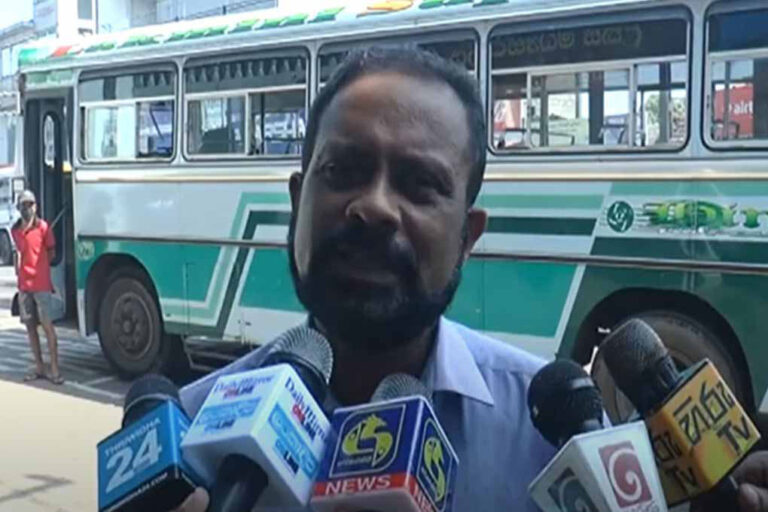
All Ceylon Private Bus Owners Association speaking to media today (01) said at least 300 litres of diesel should be provided per bus every week should short-distance buses run properly.

Union Chief Secretary Anjana Priyanjith revealed that private buses are currently running at a rate of 30 per cent and the government must allow the issuance of 60 litres of diesel required for a short-distance bus should the rate be maintained at 80 – 90 per cent.

If enough fuel stocks are provided via the QR Code system or any means necessary, all buses can operate from tomorrow, Priyanjith emphasised.

Meanwhile, the inter-provincial buses run at a very low rate and these buses are in requirement of about 150 litres of diesel but are supplied with less than 50 – 60 litres, he noted.

The Union Secretary further pointed out that the Subject Minister should commence negotiations with the bus owners’ associations, should the obstacles in public transport be removed and all buses run.

MIAP

WB disburses US $ 160 m to tackle SL’s urgent essential item shortage

0

The World Bank Group said last week it is deeply concerned about the dire economic situation and its impact on the people of Sri Lanka.

To help alleviate severe shortages of essential items such as medicines, cooking gas, fertiliser, meals for school children and cash transfers for poor and vulnerable households, World Bank said it is repurposing resources under existing loans in its portfolio.

“To date, about $ 160 million of these funds has been disbursed to meet urgent needs. In addition, other ongoing projects continue to support basic services, the delivery of medicine and medical supplies, school meals and tuition waivers,” the World Bank said in a statement.

“The World Bank is working closely with implementing agencies to establish robust controls and fiduciary oversight to ensure these resources reach the poorest and most vulnerable while continuing to monitor this closely.

It is also coordinating closely with other development partners to maximise the impact of our support for the people of Sri Lanka,” it said.

World Bank also said until an adequate macroeconomic policy framework is in place, it does not plan to offer new financing to Sri Lanka.

“This requires deep structural reforms that focus on economic stabilisation, and also on addressing the root structural causes that created this crisis to ensure that Sri Lanka’s future recovery and development is resilient and inclusive,” the World Bank added.

The World Bank does not plan to offer new financing to Sri Lanka, which is battling its worst economic crisis in decades, until the Indian Ocean nation has an adequate macroeconomic policy framework in place, the lender said on Thursday.

In a statement, the World Bank said Sri Lanka needed to adopt structural reforms that focus on economic stabilisation and tackle the root causes of its crisis, which has starved it of foreign exchange and led to shortages of food, fuel and medicines.

“The World Bank Group is deeply concerned about the dire economic situation and its impact on the people of Sri Lanka,” it said.

The bank is repurposing resources under existing loans to help alleviate shortages of essential items such as medicine, cooking gas, fertiliser, meals for children and cash for vulnerable households, it added.

The bank said it was working closely to establish control and fiduciary oversight to ensure fair distribution.

Another body found on Galleface coast

0

A dead body of an unidentified male has been found on the Galleface coast this (01) morning.

The deceased was a man in his 40s, according to Police.

On July 30, a dead body of a man was found on the Galleface coast and it was later confirmed that the deceased was an 18-year old resident of Pannipitiya.

SL Consumer confidence continued to decline in June

0

Consumer confidence, already at extremely low levels, continued to drop with the public continuing to indicate they believe conditions will worsen in coming months and years.

The Institute for Health Policy (IHP) released yesterday the June 2022 update of its Consumer Confidence Indices, which are being tried as part of its Sri Lanka Opinion Tracker Survey (SLOTS).

All IHP’s Consumer Confidence measures declined throughout the month of June, falling to their lowest values since IHP started tracking them in September 2021, and in all cases very close to their lowest possible level.

The Index of Consumer Sentiment (ICS), which is the broadest measure reflecting the public’s views on their personal economic status and the broader national economy, fell four points from six in May to two in June, close to its lowest potential level of zero.

The Index of Consumer Expectation (ICE), which captures Sri Lankans’ views about the future, also fell from four points to one in June, indicating that sentiment is being driven by increasing lack of confidence in the future.

The Index of Consumer Conditions (ICC) a broad measure of perceptions about current conditions, also fell from six to four in June.

This worsening in sentiment is despite the resignation of the Prime Minister and Cabinet in early May but coincided with growing numbers of people turning out on the street and calls for the President to resign.

The deterioration in the economic situation with continuing power cuts, lack of fuel and transports, and worsening shortages of items undoubtedly contribute. Overall, the public remained deeply pessimistic about conditions and the future during June.

he current declining trend started in mid-February with the start of power cuts and increasing impact of foreign exchange shortages, plateau from mid-March, before consumer sentiment started to decline again from early April around the time of the resignation of the Cabinet.

Consumer pessimism is now universal, across all segments. Until February 2022, consumer confidence had been higher in the youth (ages 18–29 years) than older adults, largely because the youth continued to be significantly less pessimistic about the future (tracked by the ICE which looks at future expectations), but this future optimism of the youth has now collapsed, with consumer sentiment similar across all age groups.

The public appears resigned to the likelihood that economic conditions will worsen, with all three forward looking measures (household situation in next 12 months, country situation in next 12 months and in 5 years) now below 10, and worse than the measures tracking current and recent conditions.

With the measure tracking public views of the country’s situation in five years’ time at a new low of 3, more than 95% of Sri Lankans think the country’s economy will be in worse condition five years’ time than now.

QR Code based fuel distribution commences

0

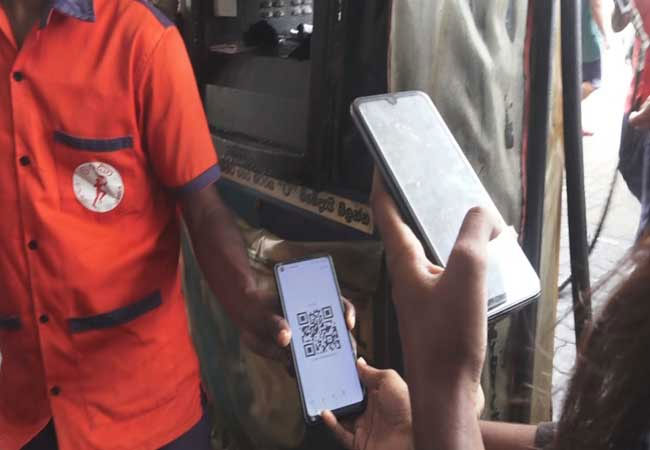
The QR Code based fuel distribution has commenced from midnight yesterday in a move to address the fuel crisis in the country.

The national fuel pass also known as the QR Code system from hereon will be the only method by which fuel is distributed.

Accordingly, fuel will not be issued according to the vehicle numbers and the distribution subject to QR Code will be restricted for one vehicle per one day a week.

Despite the system being formal for fuel distribution, not enough fuel is distributed for a week via the system, grieved the public and the fuel station owners.

Nonetheless, about five million vehicles have already registered for the national fuel pass.

The permission to issue fuel for generators and small industrial machines should be obtained through the respective divisional secretariats and the desired fuel station should be selected via registration in advance in this regard.

Meanwhile, the Petroleum Distributors Association urged the government to provide military protection near fuel stations to avoid any unrest during the issuance of fuel.

MIAP

22A to be presented to Cabinet today

0

The 22nd Amendment to the Constitution will be presented to the Cabinet today (01).

The draft 22A has currently been gazetted and will be subjected to amendments.

Accordingly, the interim provisions added by former President Rajapaksa keeping the power of appointing and removing ministers to the President have now been removed.

MIAP

SL mulls oil exploration in Mannar Basin amid tender delay causing US$1 billion loss

0

The long-delayed Mannar basin M2 block (exploration and production) tender and commencement of exploration work by the selected bidder for the M1 and C1 July 2019 tender could cost Sri Lanka over a billion dollars in foreign direct investment (FDI).

Moreover, the delays conducting a marketing campaign to attract further investment while the oil and gas prices have been at historically high levels could be foregoing
billions more.

However Sri Lanka’s Power and Energy Minister Kanchana Wijesekera said that the government is ‘planning to advertise plots for studies on oil exploration in the Mannar Basin following research conducted in the area last year’.

The crisis-hit Sri Lankan government is planning to undertake a feasibility study on oil exploration in the Mannar Basin, a shallow bay part of the Laccadive Sea in the Indian Ocean, which has about 5 trillion cubic feet of natural gas, enough to meet the energy needs of the island nation for the next six decades, a media report has said.

A natural gas field was reportedly discovered for the first time here in 2011, but the country has not yet capitalised on this treasure trove, which could potentially solve Sri Lanka’s energy requirements, news portal Ada Derana has reported.

Minister Kanchana Wijesekera said that the government is “planning to advertise plots for studies on oil exploration in the Mannar Basin following research conducted in the area last year.”

According to the findings of the Committee on Public Accounts held in 2016, the Chief Accounting Officer said there were about 5 billion barrels of fuel and about 5 trillion cubic feet of natural gas in the Mannar Basin, which is enough to meet the needs of about 60 years, the report said.

Cairn India drilled three completed exploratory wells between 2011 and 2013. Two of the wells, Barracuda and Dorado, contain gas estimated to be 1.8 TCF and 300 BCF, respectively.

While they were not commercially viable when the oil and gas prices collapsed in 2014, there is a strong possibility they will be at today’s prices. There are technologies that have reduced capital expenditure such as gas-to-wire power generation that help make the economic case for production of these gas finds.


Cairn India has invested nearly US $ 200 million in Sri Lanka but it would require an investment of over US $ 1 billion to build production infrastructure.

Therefore, it is vital to urgently attract as many investors as possible for exploration and production to maximize the benefits to Sri Lanka – especially in light of the global energy crisis and concomitant energy price increases, which have enhanced investor appetite.

While one must drill to ascertain the actual existence and quantity of resources, seismic studies estimate nine TCF of gas and several billion barrels of oil in the Mannar basin.


This could fulfil several decades of the country’s energy needs while potentially saving US $ 6-7 billion p.a. in expenditure on energy. It also opens opportunities for Sri Lanka to earn revenue through production sharing agreements with investors, who take 100 percent of the risk.


The industry, which holds the potential to contribute crucial foreign exchange, both in terms of investment and possible future revenue from production, has largely been ignored or mismanaged in recent times.

It is imperative that Sri Lanka does not miss the small window of opportunity available with high prices and supply pressures, fast-disappearing internal combustion engines as well as the displacement of fossil fuels with the advent of ‘net zero’