The Ceylon Petroleum Corporation (CPC) will reinstate its 2018 policy of paying commission to Corporation Owned (CoDo) and Dealer Owned (DoDo) dealers only on cap prices of Rs. 162 per litre on Petrol 92 with immediate effect.
A senior official stated that CPC has been paying commission of 2.75% to CoDO and 3% to DoDo on full – per litre cost, respectively, rather than just paying the commission on the fixed upper-limit cap price of Rs. 162, which was established in 2018 by then Finance Minister Mangala Samaraweera.
The official explained that, according to the agreement, CPC is required only to pay Rs. 4.86 commission per litre for 3% of the cap price of Rs. 162 regardless of any price hike.
But due to the abolishment of this policy, the CPC had to pay a 3% commission on the entire cost per litre.
“For instance, when Petrol 92 was priced at Rs. 470 per litre, CPC paid Rs. 14.10 in commission per litre whereas, according to the fixed upper limit cap price, it should have only been Rs. 4.86. With the new court ruling, CPC will only pay commission to dealers at the cap price of Rs. 162,” the official said.
Commenting further, the official also said that the court had also granted the approval to claim the overpaid commissions from all its dealers in Sri Lanka.
“With this court order, we will be able to recover Rs. 4.3 billion from roughly 700 fuel stations and save a minimum of Rs. 50 million on a daily basis. This is a significant accomplishment for us because now we can reduce fuel prices by approximately 8 rupees per litre,” the official added.
Last week, the CPC reduced the fuel prices accordingly. The new prices are as follows; Petrol 92 Octane – Rs. 450; Petrol 95 Octane – Rs. 540; Diesel – Rs. 440 and Super Diesel – Rs. 510.
Additionally, the CPC has urged customers to use the recently introduced fuel pass system, which involves registering a vehicle and receiving a QR code, in order to avoid waiting in line at gas stations.
CPC to pay dealer commission only on restricted prices
Do President and PM resort to same old mistakes in history by adopting Emergency Bill?

The Tamil Community should be given the opportunity to contribute to the money inflow amidst the current economic collapse befallen the country, TNA MP Shanakiyan Rasamanickam emphasised speaking in Parliament today (27).
Joining the debate on the adoption of the Emergency Bill, the TNA MP pointed out that economic zones should be established in the North and the East and expressed confidence that Ranil Wickremesinghe as the new President and Dinesh Gunawardena as the new Prime Minister as mature politicians may not commit the same mistakes as the leaders of the past. Accordingly, the two should provide the Tamil people with the opportunity to contribute to the country’s economy, he stressed.
Although it is possible to open doors to dollar infusion and investment opportunities by involving the Tamil community via the adoption of new constitutional reforms to address their political issues, the adoption of the Emergency Law speaks otherwise, begging the question whether the current rulers are resorting to the same mistakes committed by the leaders of the past, Rasamanickam noted.
The TNA MP further added that should the government want to see an end to the current people’s protests, it should not suppress them but bring about the reforms they demand.
MIAP
Bangladesh extends wishes for RW’s election as President

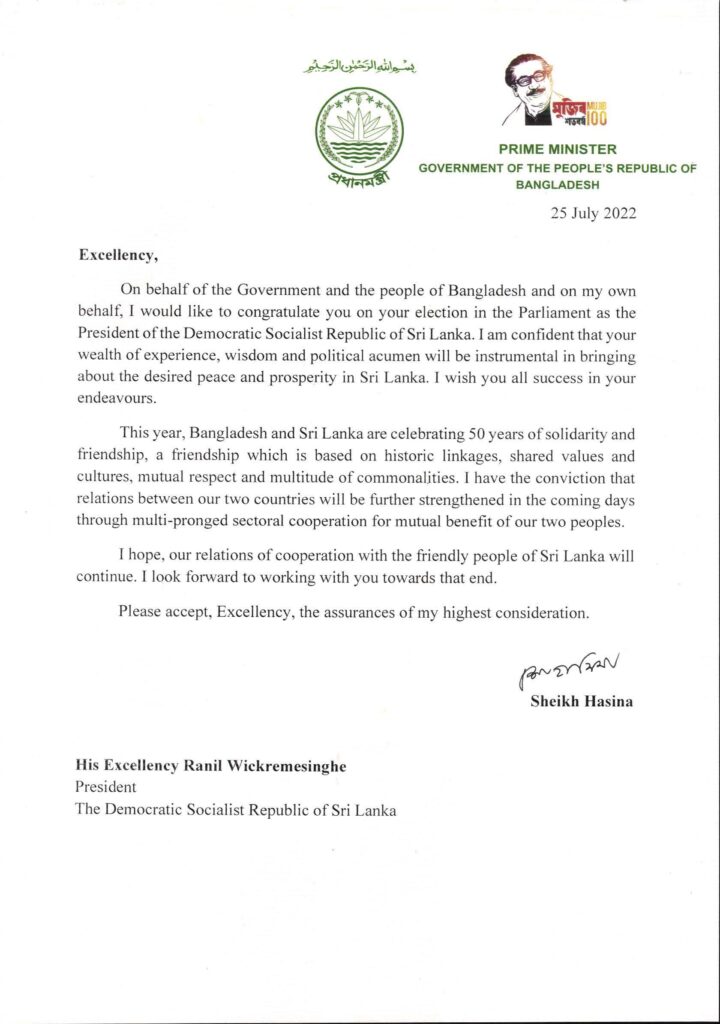
Bangladesh has extended its wishes to Ranil Wickremesinghe on his election as the President of Sri Lanka.
In a letter, the Prime Minister of the Government of the People’s Republic of Bangladesh said the two nations are celebrating fifty years of solidarity and friendship based on historic linkages, shared values and cultures, mutual respect and multitude of commonalities.
The Bangladesh Prime Minister noted that the relations of cooperation with the friendly people of Sri Lanka will continue.
India plans to fix SL economic crisis by long-term investments
After helping Sri Lanka with an unprecedented assistance of around $4 billion since January as the country plunged into a deep economic crisis, India is now planning to invest heavily in newer sectors through both private and public firms there to tackle socio- economic issues , Indian high commissioner to Sri Lanka Gopal Baglay disclosed. .
The sectors India will focus on include renewable energy, hydrocarbons, ports and infrastructure, and IT among others. Both countries are also looking at signing the long pending Economic and Technology Co-operation Agreement.
The top Indian diplomat in Colombo said New Delhi will now work with the new government there, both at the functional as well as political levels, to facilitate talks for a bailout package by the International Monetary Fund (IMF) for Sri Lanka, which got stuck earlier as the situation there worsened.
The island nation has been reeling under a massive crisis following over 100 days of protests by its people, witnessing a change of regime with the ousting of former president Gotabaya Rajapaksa, who eventually fled the country.
Subsequently, Ranil Wickremesinghe was elected as president and Dinesh Gunawardena as prime minister.
“India will engage with the new Sri Lankan government on this for promoting greater trade, greater investment and more cooperation between the two economies,” he added.
According to Baglay, discussions with the new government there have already begun regarding which sectors the investments will be coming in.
He said Indian investors, from the public as well as private sectors, will explore opportunities in certain key sectors of ports and infrastructure, renewable energy, electricity, hydrocarbons, agriculture and dairy, education and information technology, among others.
“Basically those areas where India has its own strength…And we being in the neighbourhood are in a better position to create wider ties in these areas. It is already happening as we speak,” he said, adding that a team from NTPC Ltd (National Thermal Power Corporation Limited) had visited Sri Lanka earlier this month.
The NTPC is looking at establishing a solar power plant in Sampur in eastern Sri Lanka near Trincomalee, under a joint collaboration with the Ceylon Electricity Board (CEB).
“Even in this situation, which obviously has its own difficulties, we continue to work with the Sri Lankan government to push forward, as best as one can, joint ventures and joint projects. At the same time, we are also in discussion with the new government to create more avenues for newer investments from India,” Baglay highlighted.
He said that apart from renewable energy and IT, the focus now will also be on the manufacturing of pharmaceutical products.
“Sri Lanka presently imports pharmaceuticals, 70 per cent of which actually comes from India. So, the idea is if Sri Lanka can not only start producing pharmaceutical products for its own requirements but eventually also export them to earn forex,” added Baglay.
Russia pledges to further foster friendly relations with Sri Lanka
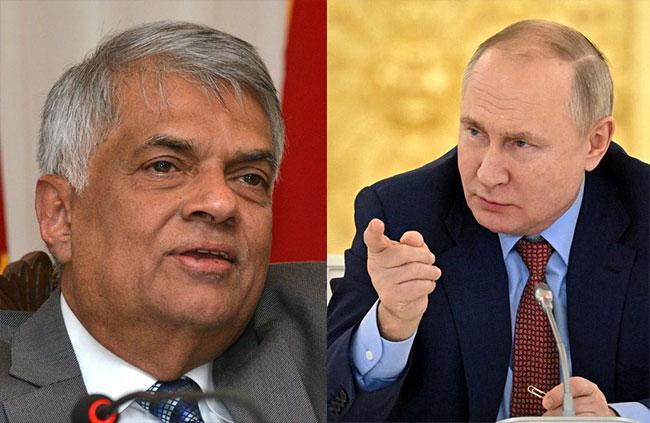
Russia has pledged to further develop traditionally friendly relations with Sri Lanka while fostering constructive bilateral cooperation in various spheres for the benefit of peoples of the two countries.
This pledge was given by Russian President Vladimir Putin in a congratulatory message to newly appointed Sri Lanka President Ranil Wickremasinghe.
Russian President Putin says he is counting on President Ranil Wickremesinghe to develop relations between Russia and Sri Lanka.
He noted that the relationship between Russia and Sri Lanka are of traditionally friendly nature.
He expressed the belief that the two countries will work for the strengthening of regional stability and security.
President Putin’s message was conveyed by Russia’s Ambassador to Sri Lanka Yury Materiy when he called on President Ranil Wickremesinghe recently.
Achieving a trade turnover of $700 million in the coming years was set as a high-priority goal, as the countries intensified the work of the Intergovernmental Russian-Sri Lankan Commission on Trade, Economic, Scientific and Technical Cooperation.
It is noteworthy that the bilateral partnership has a developed legal framework – there are agreements on cooperation in the field of fisheries, science, technology and innovation, as well as tourism, culture, and space exploration.
At the moment, the planned indicator of the volume of trade turnover has not yet been reached – according to the results of 2020 it amounted to $492 million; promisingly, this is a quarter higher than a year earlier.
Almost half of Russian exports consist of machinery and equipment, while up to a third are cereals, mainly wheat.
Until 2018, Sri Lanka was one of the world’s leading buyers of Russian chrysotile asbestos, used in construction. However, the government of the country has decided to completely abandon the use of this material by 2029, and the volume of purchases has decreased significantly.
The Emerald Island supplies Russia mainly with tea, which accounts for half of its imports, as well as textiles and knitwear (40%).
An intergovernmental agreement on cooperation and mutual assistance in customs matters is being prepared for signing.
At the meeting of the co-chairs the intergovernmental commission in June 2021 noted the prospects for cooperation on the peaceful use of nuclear energy, including the construction of nuclear power plants, as well as the use of nuclear technology in medicine and agriculture.
In the interest of ensuring the energy security of the island, Russia also intends to increase the supply of coal and petroleum products, and cooperation in the hydropower industry is also planned in the future.
There is potential in the civil aviation, construction, chemical and pharmaceutical industries.
An important area of bilateral cooperation is tourism. In the pre-Covid times, the unique natural and historical sights of the Emerald Isle rightfully won the love of Russian tourists.
In 2020, due to the restrictions imposed, only 49,000 Russians were able to visit Sri Lanka, but as a result of the easing of the quarantine regime and the restoration of air traffic, the prospects for doubling the number of visitors have opened up for today.
Acuity Knowledge Partners expands work force in Sri Lanka

Amidst the economic challenges which Sri Lanka continues to grapple with Acuity Knowledge Partners (Acuity), a leading provider of bespoke research, analytics and technology solutions to the financial services sector, is announcing plans to expand its workforce in the country and to enhance healthcare and remuneration benefits to its employees based in Colombo.
The economic outlook in Sri Lanka continues to remain uncertain due to fiscal and external imbalances. Year on year inflation has accelerated amid rising global commodity prices, fuel prices and partial monetization of the fiscal deficit.
However, this is not impacting on the service which Acuity’s Sri Lankan team provides to over 50 leading global financial institutions. In recognition of Acuity’s employees’ continued commitment, the firm is reinforcing its focus on an employee-centric work culture.
Effective from 1 July, Acuity’s Colombo-based employees will benefit from enhanced medical insurance cover, a significant increase in annual base salary as a long-term measure and an additional monthly cost-of-living allowance for at least the next six months. This is in addition to increased salaries and performance bonuses awarded in April this year.
Changes to the insurance cover provided to employees will provide: 25% enhancement in surgical and hospitalization cover; 25% enhancement in Life insurance cover, and OPD cover is enhanced for all the employees.
In addition to the enhancement of medical insurance and OPD covers, Acuity is providing even increased allowances for transport, meals and other expenses.
These moves are further testimony to Acuity’s ongoing commitment to stand by its employees during this tumultuous period. In addition, with a team size of over 450 employees as of June 2022, Acuity is announcing that it will continue hiring in Sri Lanka with a target to grow its team to over 500 employees by year end 2022.
Acuity Knowledge Partners CEO Robert King said: “While the current economic conditions present many challenges, these will not deter Acuity Knowledge Partners from expanding its presence in Sri Lanka.
We have grown both our global and Sri Lankan staff significantly since 2020 and we expect the growth momentum to continue in the future. The creation of centres of excellence and the sustainability of high-quality talent is a long-term project. Acuity has been proudly present in Sri Lanka since 2003.”
Govt reactivates Fuel Procurement Plan to streamline petroleum imports
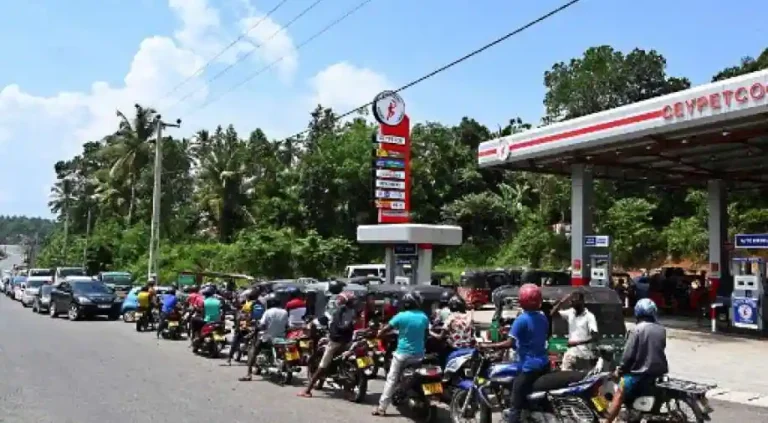
The new administration headed by President Ranil Wickremesinghe is ready to reactivate the regular fuel procurement plan which was abandoned last year and introduce a fuel information management system along with the national fuel pass with QR code with effect from tomorrow, Energy Ministry sources disclosed.
This is aimed at providing fuel to the people in a methodical manner where the pumping at petrol sheds would be rationed under a limited weekly quantity as the government is in financial difficulty in paying for petroleum imports due to the severe forex crisis.
The procurement plan 2021-2023 for crude oil and refined petroleum products prepared by a high powered committee had to be abandoned due to a rapid increase in global oil prices especially after Russia’s invasion of Ukraine, a high ranking official of the Energy Ministry told the Business Times.
He noted that the Sapugaskanda oil refinery had to close down several times since mid last year as a result of the halting of crude oil imports owing to high global prices, forcing the CPC to go for the spot purchasing of refined oil only.
The CPC has completely ignored the procurement plan 2021-2023 which had clear guidelines, details and instructions for the importation of refined oil on term tender basis in an orderly manner following proper tender procedures, a Finance Ministry observation report attached to a cabinet memorandum during 2021/2022 period revealed.
The Ministry also questioned the CPC as to why they were delaying placing new orders when the Treasury was ready to release the funds, including the premium fee to get a fuel shipment from a reputed company as soon as possible
The Energy Ministry will look into these aspects including finding dollars before reactivating the procurement plan in consultations with the Finance Ministry, a top official of the ministry said. The country needs 4000 MT petrol and 5500 MT of diesel to meet the daily demand and to achieve this requirement a diesel shipment should arrive in the island once every seven days and petrol shipment once in 10 days.
Therefore orders for fuel shipments should be placed 35 days before the arrival of the ship and the planning of procurement will have to be done at least two months ahead, he said adding that the officials of the stock review committee are fully conversant with this procedure.
The fuel stock position has come down to almost zero level owing to mismanagement of the CPC owing to inefficiency and corrupt practices of some officials with connections to the fuel mafia who were behind creating a shortage of fuel without following the procurement plan, a former top official of the Ceylon Petroleum Storage Terminals Limited (CPSTL) divulged.
There were around 80 registered suppliers including 12 regular suppliers connected to international oil companies who use to bid for fuel term tenders and almost all of them are now reluctant to import oil on behalf of the CPC as it owes them millions of rupees for previous supplies, he disclosed.
Most of them have become frustrated due to bureaucratic red tape and demands for commissions as well as unnecessary interference of some officials in the procurement process of fuel, he added.
The fuel information management system aimed at eliminating queues will provide the public with visibility about the fuel stations that offer fuel, and the availability.
During the first phase, the system will be updated daily in the morning, with the information about the fuel dispatch, along with the fuel filling station details, the quantity of fuel dispatched, and the availability of stocks.
GR allowed to stay in Singapore for another 2 weeks
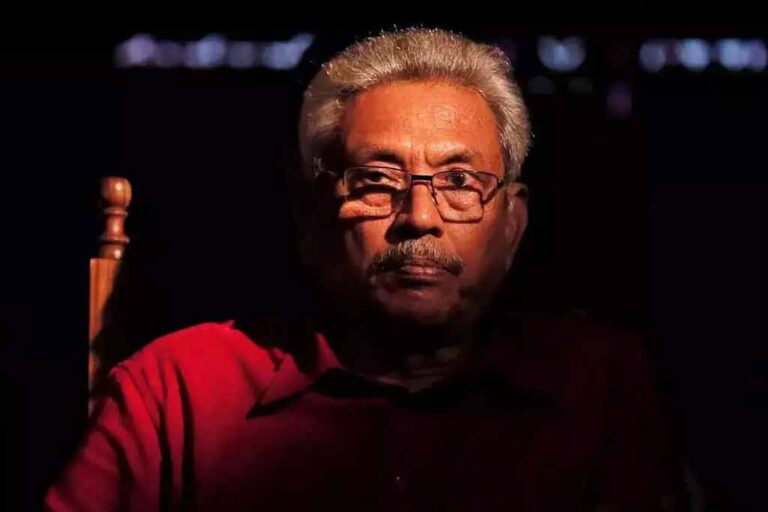
Former President Gotabhaya Rajapaksa has been allowed to stay in Singapore for another two weeks by the country’s authorities.
Accordingly, foreign media have reported that he has been allowed to stay in the country until August 11.
He arrived in Singapore from the Maldives on a plane belonging to Saudi Airlines July 14th.
Hemasiri Fernando awarded life membership of the Commonwealth Games Federation
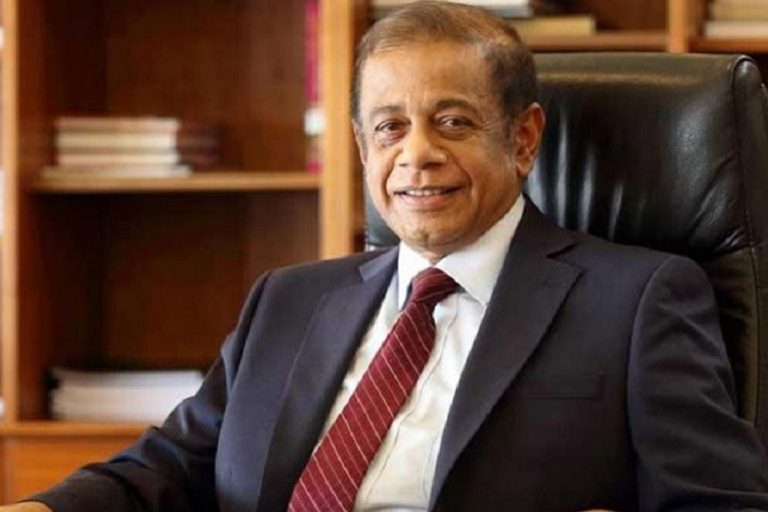
Hemasiri Fernando has been awarded life membership of the Commonwealth Games Federation. It was announced yesterday at its Annual General Assembly held in Birmingham. Hemasiri Fernando has done outstanding work as the President of the Sri Lanka Olympic Committee and was the person who took the initiative to build its headquarters building.
The home of the Sri Lanka Olympic Committee, which has been praised by Olympic representatives from various countries as the most attractive national Olympic home, is especially appreciated by Sergi Bubka, who is a senior vice-president of the International Athletics Association and an honorary member of the International Olympic Committee, nicknamed the Flying Man. The Auditorium of the Olympic Committee is known as the Hemasiri Fernando Auditorium.
Hemasiri Fernando has represented Sri Lanka in the shooting event and has been fond of sports since his school days. Hemasiri, who has been involved in athletics, basketball, and football, has led the Colombo University team in cricket during his university life.
Hemasiri Fernando, who distinguished himself as a Navy officer, after retiring from service, joined a large portion of work as an administrative officer in the public service. He chaired Sri Lanka Telecom, Board of Investment, Airport and Aviation Services Authority as well as the People’s Bank, all of those institutions are fit for tomorrow’s world. He can be named as a forward-looking administrator who made sacrifices in the midst of various obstacles to shape the way.
Hemasiri Fernando, who has worked as the Prime Minister’s Secretary, has also worked as the President’s Chief of Staff. Hemasiri Fernando, who has worked as the Secretary of the Ministry of Defense as well as the Secretary of the Ministry of Posts, carried out a pioneering mission to match many of the functions of the Ministry of Posts with new technology.
He is highly interested in stamp collecting and railways and works with great dedication to further educate the Sri Lankan community in this regard. ‘A Railway Museum’ is one of his dreams and he has a big plan to bring additional income to the Railway Department. Also, the luxury train managed by the Sri Lanka Railway Department is Hemasiri Fernando’s personal train.
Essays on Ceylon Railways, The Uva Railway, Railway to the Moon and The Viceroy Special are their works done by him. There is a great possibility that a controversial work that will reveal the political and social reality of this country will be published by him.
Hemasiri Fernando, who does not hesitate to make bold decisions and statements, and who always wants to see the world and pursues up-to-date knowledge, is still young in his abilities.
LNW heartily congratulates Hemasiri on the honor bestowed upon Sri Lanka by qualifying for life membership of the Commonwealth Games Federation as a Sri Lankan!
Vajira Abeywardena sworn in as a Member of Parliament
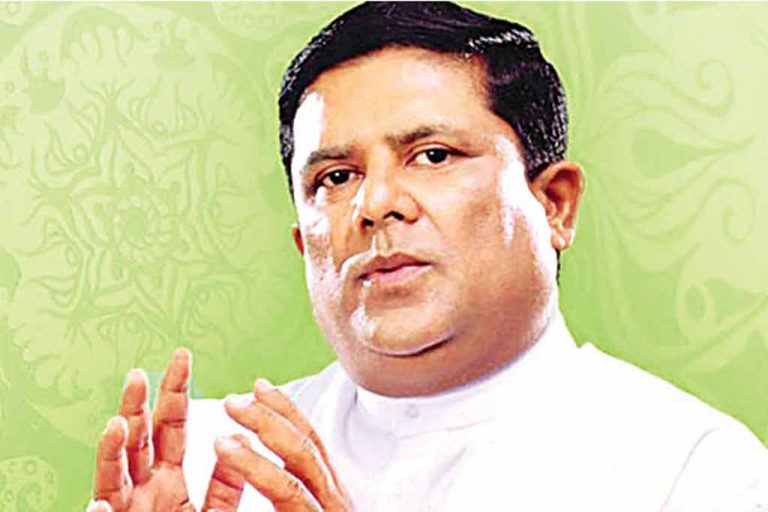
United National Party Chairman Vajira Abeywardena was sworn in as a Member of Parliament today (27).
Vajira Abeywardena was nominated by the United National Party for the position of National List Member of United National Party, which became vacant after Ranil Wickramasinghe assumed the office of President and the Election Commission had issued the related gazette announcement a few days ago.