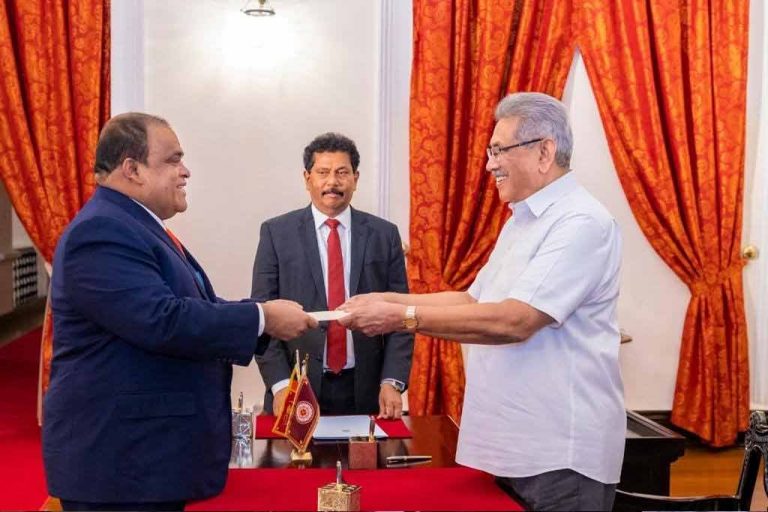
President Gotabaya Rajapaksa has issued an extraordinary gazette announcement further expanding the scope of the Investment Promotion Ministry under Dhammika Perera.
Accordingly,
Rakna Protection Lanka Company SELENDIVA INVESTMENTS LIMITED Hotel Developers Lanka Private Company
These institutions have also been assigned to the Ministry of Investment Promotion.
Before her career in the IMF, Ms Gopinath was the John Zwaanstra Professor of International Studies, and Economics at Harvard University’s economics department.
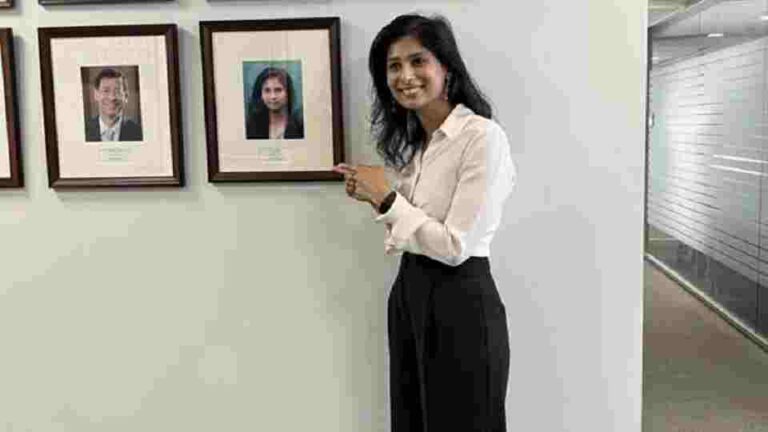
Gita Gopinath created history after becoming the first woman to serve as the chief of International Monetary Fund. She has broken another glass ceiling, she shared a post on social media where Ms Gopinath can be seen posing alongside her framed picture on the wall of former Chief Economists of the IMF.
As mentioned above, she is the only woman to make it to the coveted position and hence, the wall. Posing alongside the wall, Ms Gopinath said, “Breaking the trend…I joined the wall of former Chief Economists of the IMF.”
Breaking the trend 👊💥…I joined the wall of former Chief Economists of the IMF 😀 pic.twitter.com/kPay44tIfK
Gita Gopinath served as chief economist of the IMF between 2019 and 2022. Earlier this year, Ms Gopinath took on the role of the IMF’s first deputy managing director (FDMD). According to the IMF’s official website, Ms Gopinath “oversees the work of staff, represents the Fund at multilateral forums, maintains high-level contacts with member governments and Board members, the media, and other institutions, leads the Fund’s work on surveillance and related policies, and oversees research and flagship publications.”
Before her career in the IMF, Ms Gopinath was the John Zwaanstra Professor of International Studies, and Economics at Harvard University’s economics department (2005-22).
Comments After Ms Gopinath, the IMF appointed Pierre-Olivier Gourinchas as its new chief economist.
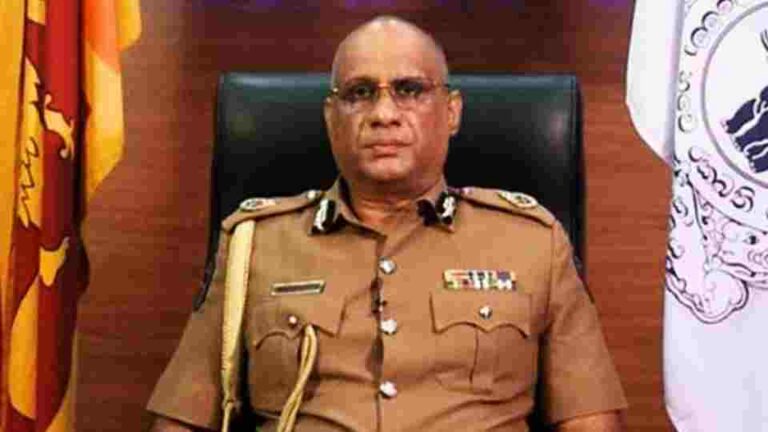
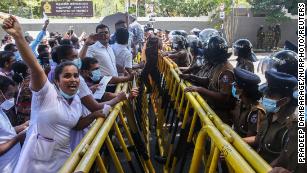
Inspector General of Police (IGP) C.D. Wickramaratne urged the people to exercise their right to protest within the legal framework, following a failed attempt to obtain a court order barring the holding of anti-government protests.
The IGP noted that the Police respect the right of the people to hold peaceful protests and assemblies, however, the Police do not tolerate those who behave violently by damaging public property. As well as protecting the right to assembly and the freedom of expression, the Police also have the responsibility to protect the normal life of the people, he added.
Wickramaratne made this observation in response to the upcoming anti-government protests organised by Sri Lankan protesters.
Earlier, the Court denied the Police’s request to obtain an order against the protests due on July 08 and 09 in the vicinity of the President’s House.
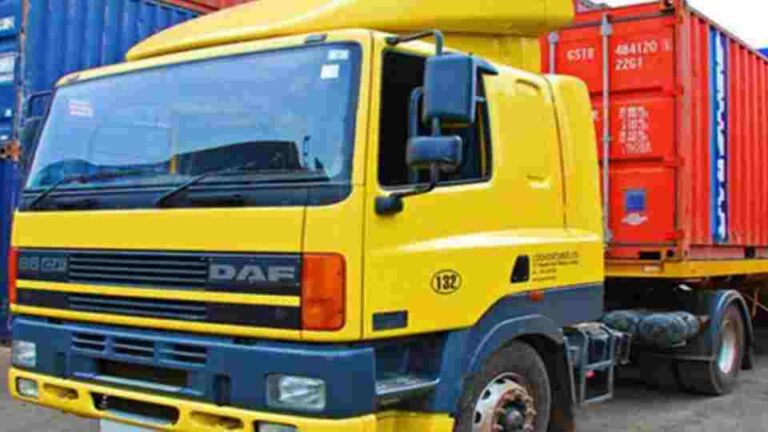
Container transport vehicles have reportedly dropped themselves out from service due to the fuel crisis. Less than 500 transport vehicles have been added to today’s operations, said the United Lanka Container Transport Vehicle Owners Association.
More than 6,000 vehicles are used daily to transport containers carrying commodities exported and imported, and accordingly, less than 10 per cent of container vehicles are in operation today.
The Union alleged that despite the government’s announcement on providing enough fuel for their vehicles, there is no proper programme implemented for the purpose. Should the government fail to implement an acceptable programme, the container trucks that are currently in operation will also have to be withdrawn, it added.
In any event were the container trucks taken out from operation, it will have a direct impact on the country’s export activities and all transportation activities, including the transportation of imported essential foods.
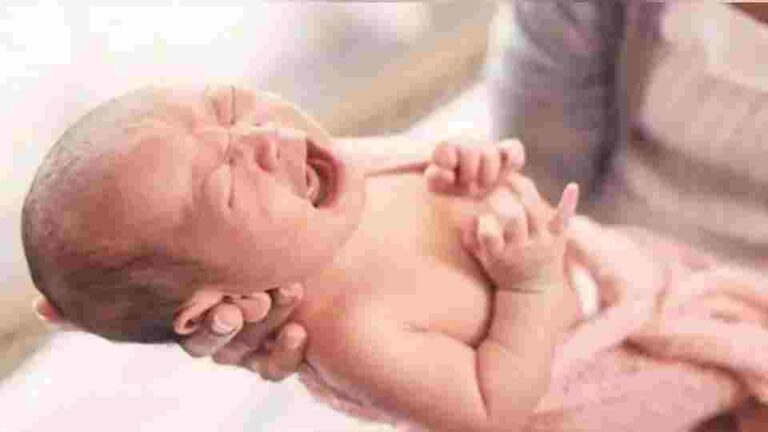
The newborn baby of the woman who was hospitalised due to going into labour while waiting in a passport queue for two days has died, due to low birth weight.
She was staying near the Battaramulla Immigration and Emigration Office with her husband to collect her passport for two days, after which she had gone into labour and was admitted to the hospital.
The woman is in good health, according to reports.
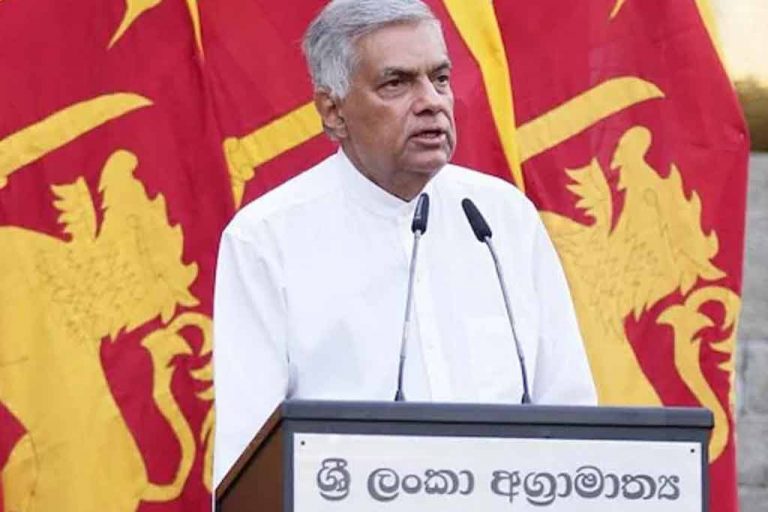
Colombo, Sri Lanka(CNN)Sri Lanka is “bankrupt,” Prime Minister Ranil Wickremesinghe said Tuesday, as the country suffers its worst financial crisis in decades, leaving millions struggling to buy food, medicine and fuel.
Wickremesinghe told lawmakers that negotiations with the International Monetary Fund (IMF) to revive the country’s “collapsed” economy are “difficult,” because the South Asian nation of 22 million has entered the talks as a bankrupt country, rather than a developing one.
“We are now participating in the negotiations as a bankrupt country. Therefore, we have to face a more difficult and complicated situation than previous negotiations,” Wickremesinghe said in parliament.
“Due to the state of bankruptcy our country is in, we have to submit a plan on our debt sustainability to (the IMF) separately,” he added. “Only when they are satisfied with that plan can we reach an agreement at the staff level. This is not a straightforward process.”
Sri Lanka is in the midst of its worst financial crisis in seven decades, after its foreign exchange reserves plummeted to record lows, with dollars running out to pay for essential imports including food, medicine and fuel.
President Gotabaya Rajapaksa tweeted Wednesday that he had sought assistance from Russian President Vladimir Putin and requested “an offer of credit support to import fuel.”
In several major cities, including Sri Lanka’s commercial capital, Colombo, hundreds continue to queue for hours to buy fuel, sometimes clashing with police and the military as they wait. Schools have been suspended and fuel has been limited to essential services.
On Sunday Sri Lanka’s energy minister, Kanchana Wijesekera, said the country had less than a day’s worth of fuel left.
“In terms of fuel and food, our country was going to have to face this crisis at some point in time. Fuel was scarce. Food prices went up,” he said, adding international crises like Russia’s war in Ukraine have made things worse.
“Due to the recent global crises, this situation has become more acute and we who were in the frying pan fell into the oven,” Wijesekera said.
On Tuesday, Prime Minister Wickremesinghe said he hoped that a report on debt restructuring and sustainability would be submitted to the IMF by August. Once there is an agreement, a comprehensive loan assistance program would be prepared for a period of four years, Wickremesinghe said.
His speech in parliament was interrupted by opposition lawmakers chanting cries of “Gota go Home” — a reference to the president, who was in attendance. Rajapaksa was seen leaving the building amid exclamations.
For months, large numbers of Sri Lankans have been calling for Rajapaksa to resign over accusations of economic mismanagement.
Wickremesinghe said that by the end of this year, inflation will rise to 60%.
“This will be a difficult and bitter journey,” Wickremesinghe said. “But we can get relief at the end of this journey. Progress can be made.”
The British government said on Tuesday it is now advising against all but essential travel to Sri Lanka due to the impact of the economic crisis. CNN’s Jessie Yeung contributed reporting.
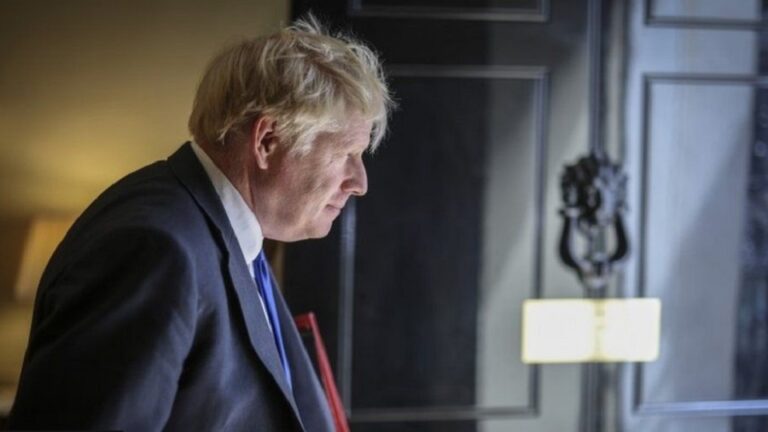
UK Prime Minister Boris Johnson confirmed he is leaving office a short while ago, following many cabinet appointments calling for him to resign.
Chancellor Nadhim Zahawi, who was given the job two days ago, said the situation was “not sustainable and will only get worse”.
And Education Secretary Michelle Donelan quit, saying Mr Johnson had “put us in an impossible situation”.
Johnson earlier insisted he has a “colossal mandate to keep going” and therefore will not resign.
The wave of resignations from the government and party exceeded 50 on Thursday, as Northern Ireland Secretary Brandon Lewis became the first cabinet member of the day to quit, quickly followed by seven other ministers.
Previously loyal supporters – including Priti Patel and Grant Shapps – urged him to step down on Wednesday.
A pregnant woman who visited the Battaramulla Office of the Department of Immigration and Emigration to obtain a passport has given birth to a child upon being hospitalised after two days of waiting in the queue.
This 26-year-old mother, a resident of Hatton, went into labour while waiting in the passport queue and the Police and military officers who were on duty admitted her to the Soyza Women’s Hospital in Colombo.
Both the mother and the baby are in good health, reports said.
She visited the Dept Office with her husband to obtain a passport to travel abroad.
In the wake of the crisis situation in the country, court proceedings have been disrupted and the Judicial Service Commission, therefore, had decided to adjourn all hearings except those essential.
Despite the Commission’s decision, some of the judges have acted on continuing trials of cases considered to be non-essential. Accordingly, the Judicial Service Commission has decided to call in these judges and receive justifications from their end.
Via a circular issued by the Commission, ten magistrates and district judges have been ordered to report to the Commission and justify their actions.
Earlier, the Judicial Service Commission had informed via a circular that the court proceedings which had been delayed due to the Covid-19 pandemic should be continued without delay, but the decision was revised via another circular a week after upon consideration on the country’s prevailing crisis, concluding that only the essential cases should be heard.
Sri Lanka’s foreign reserves have dropped to US $ 1.9 billion at the end of June, 2022, revealed the Central Bank of Sri Lanka (CBSL). Of the reserves is US $ 1.5 billion received from a credit facility by China and accordingly the amount consumable is limited to US $ 400 million, the country’s central monetary hub revealed.
Due to the current financial crisis, the CBSL has decided to further tighten its fiscal policies, raising the fixed deposit facility rate to 14.5 per cent and the fixed loan facility rate to 15.5 per cent.
Inflation is likely to further soar in the future, but the CBSL emphasised that it will be taking measures to control inflation to the best of its capability.
Meanwhile, the country’s economic growth has dropped to 1.6 per cent in the first quarter of 2022, mainly due to the energy crisis.