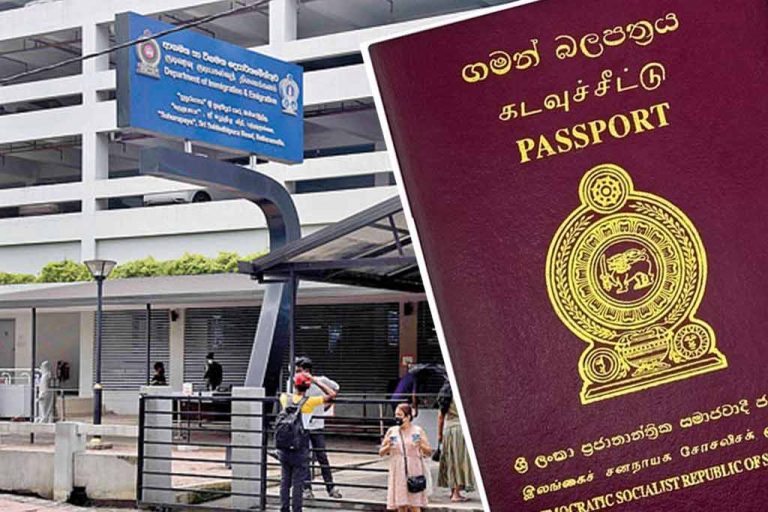
Minister of Investment Promotion Dhammika Perera has taken steps to open a separate counter for passport recipients, in a move to expedite the issuance of passports for those expecting foreign employment.
Accordingly, people who have complete documents pertaining to the obtainment of passports can now collect theirs from the special counter opened at the Passport Head Office of the Department of Immigration and Emigration in Suhurupaya, Battaramulla.
Minister Perera viewed that those who are in possession of the relevant documents can attend to this special counter and obtain passports without having to wait in the regular queue.
This economic crisis way beyond the imagination of the public and our politicians
Majority of the people in Sri Lanka have finally realised the country is fast approaching the precipice of a failed state and that it will in its wake inflict irreversible injuries on the people at all levels of society. The dollar shortage has caused power and fuel shortages affecting all sectors while skyrocketing prices of essential goods have disrupted life across the country.
The elected rulers are under obligation to serve all the citizens by putting the country first and not act out of political expediency but principles, but in Sri Lanka they have robbed the country dry, mismanaged the economy and refuse to go saying they have a mandate. The mandate of the President and Parliament is long gone when they failed to honour their commitments to the people. The country needs a fresh set of leaders to get us out of this pit. The current lot simply can’t start from the President to the Opposition Leaders. None has presented a viable recovery plan worthwhile even talking about in this article.
A businessman who became a politician says he knows what to do. Making money scrupulously or unscrupulous is very different to running a country, politics is a totally different challenge. That is why billionaires like Branson, Musk and Zuckerberg don’t waste their valuable time doing politics. They work towards changing the world with their innovations.
We certainly can’t get out of this crisis by doing ‘Sillara’ things. We need fundamental change of a high order and we need to integrate with the world. That requires serious education and experience. We cannot be a cowboy nation. Today we have a set of international creditors who have no faith in our future, largely due to our political leadership and the capacity in the bureaucracy. We have a set of bureaucrats who can’t say boo to a goose in an international forum.
What happened to our once respected civil service? Then we spend billions on a foreign service that has absolutely no value. They should be at the forefront of this economic crisis. The foreign ministry lacks any viable leadership and it is best to shut it down till we get our act together as a country. How many tourists, FDI or trade arrangements or contacts have they delivered in the past one year? Showcase it to Sri Lanka if there are any tangible results. Some of them are President’s friends.
We cannot starve anymore for our top diplomats to sip wine at cocktails in various capitals. Run down the Foreign Service till we can get up as a nation. The Foreign Minister is seen all over the world. Has he mobilised one dime or a fuel ship for the suffering people?
Also the CBSL is taking decisions as though they are doing a service to their fellow citizens. They forget that they are being looked after by the taxpayers’ money. They have an obligation to look after the wellbeing of the poor by being dynamic and innovative. They are not doing that other than making life difficult for everyone.
The food crisis is largely manmade, the President’s decision to adopt organic farming last year turned out to be disastrous. The ban on all chemical fertilisers led to a surge in prices and food shortages. Although the policy was partially reversed later, the damage had been done. No one dared to say anything, including our religious leaders. The people who made money with their government contacts and those who ransacked the banks by getting loans with no security or got the banks to write off their loans were the only winners. The public is now paying for these excesses. We have all to take the blame for this mess caused by our leaders, for watching in silence until it was too late.
At least in the minimum they who destroyed the economy must be charged in court for mismanagement. Meanwhile all we can hope for now is for foreign and private institutions as well as men and women of goodwill to organise assistance to help our people severely affected by the economic crisis. Countries like Bangladesh and Nepal are proactively taking measures to prevent a Sri Lankan style crisis, whilst India is becoming a global leader by intelligently playing the global game. Whilst we are saddled with a large group of idiotic political leaders, who refuse to go in front of a mirror.
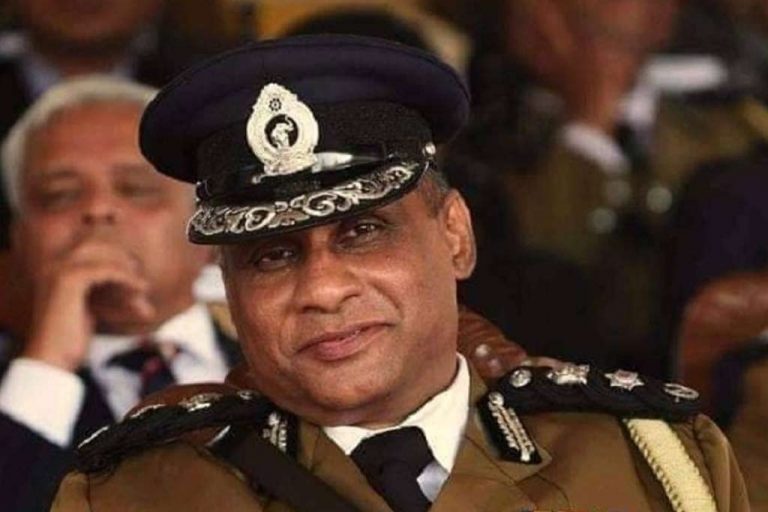
The Attorney General has sent a letter to the Inspector General of Police expressing displeasure for avoiding his request to transfer Senior Deputy Inspector General of Police in Charge of the Western Province, Deshabandu Tennakoon.
Accordingly, the Attorney General has elaborated on the problematic situation that followed upon the events.
In his letter, the AG emphasises that any person of intelligence would understand that SDIG Tennakoon not being transferred could have an effect on the police probe into the May 09 attacks. The Court also ordered the AG to justify the action of not transferring Tennakoon as instructed, hence the AG’s displeasure.
The SDIG was accused of paving the way for pro-Rajapaksa protesters to launch an assault on peaceful demonstrators at GotaGoGama and MainaGoGama on May 09, stemming an island wide unrest thereafter. Tennakoon was also accused of failing to avert the attacks.
Instead of transferring the SDIG in this regard, the IGP had suspended him from his duties.
President Gotabaya Rajapaksa will soon leave for the United Arab Emirates revealed former Minister Mahindananda Aluthgamage, speaking at a briefing held in the Department of Government Information yesterday (28).
The President’s visit to the UAE focuses on discussions to obtain continuous fuel, he added.
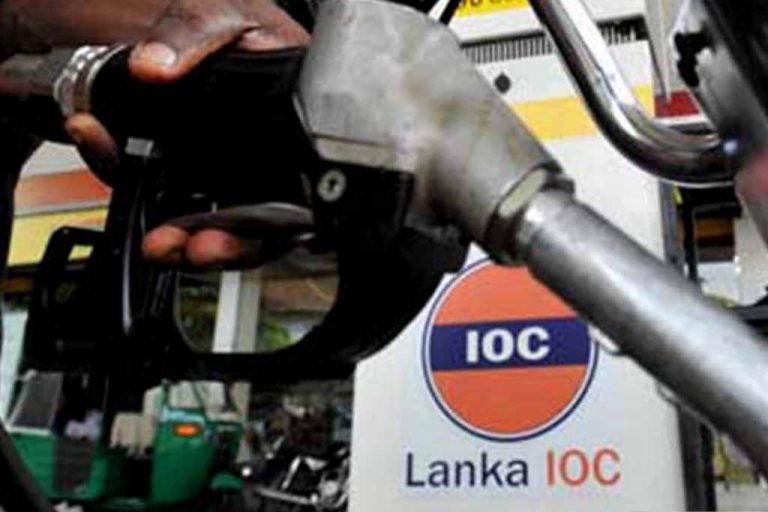
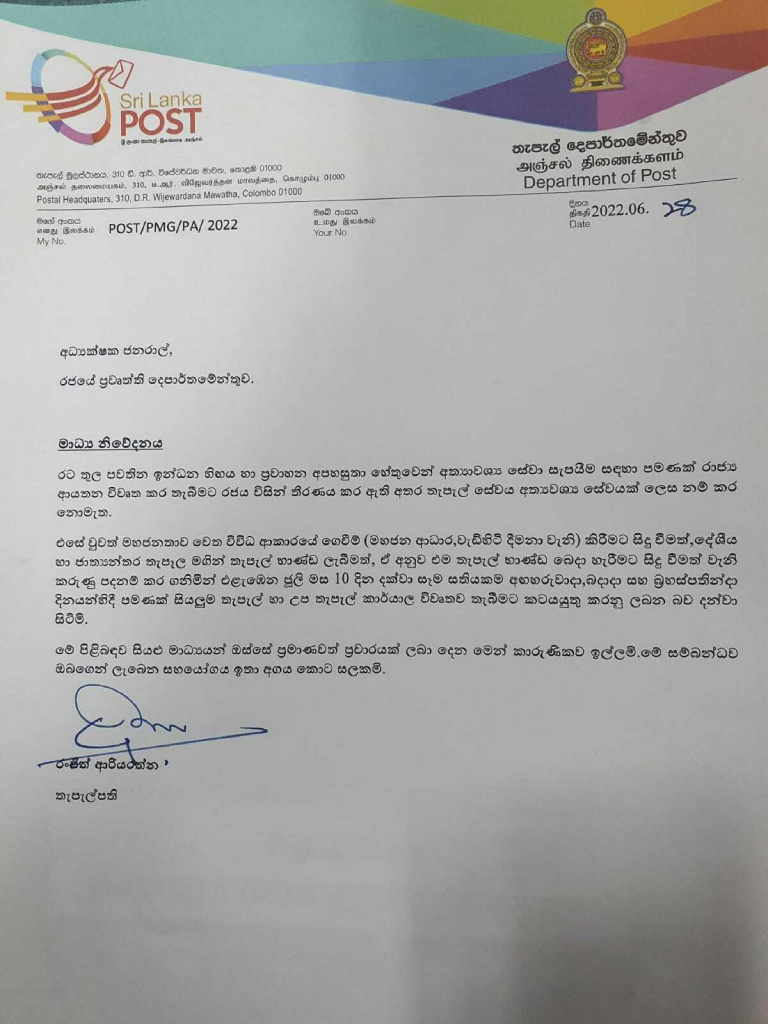
Sri Lanka has suspended sales of fuel for non-essential vehicles as it faces its worst economic crisis in decades.
For the next two weeks, only buses, trains and vehicles used for medical services and transporting food will be allowed to fill up with fuel.
Schools in urban areas have shut, while officials have told the country’s 22 million residents to work from home.
The South Asian nation is in talks over a bailout deal as it struggles to pay for imports such as fuel and food.
Sri Lanka is the first country to take the drastic step in halting sales of fuel to ordinary people “since the 1970s oil crisis, when fuel was rationed in the US and Europe and speed limits introduced to reduce demand”, Nathan Piper, head of oil and gas research at Investec, told the BBC.
He said the ban underlined the steep rise in oil pricing and limited foreign exchange reserves in Sri Lanka.
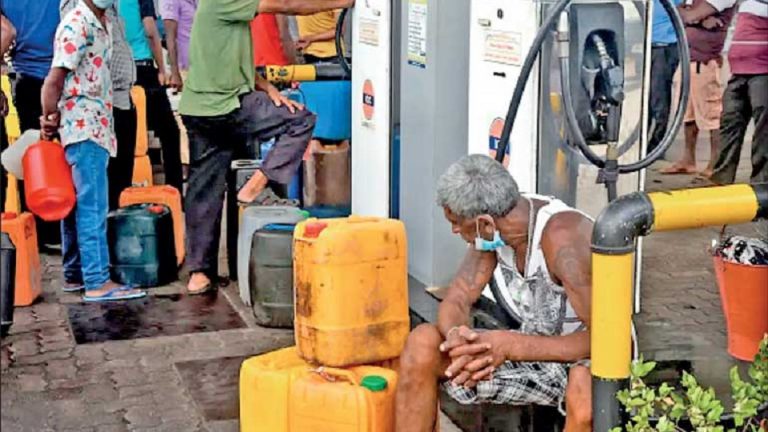
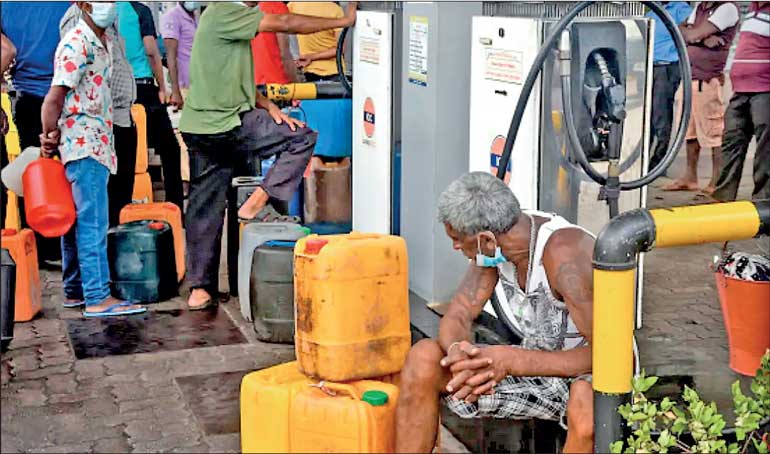
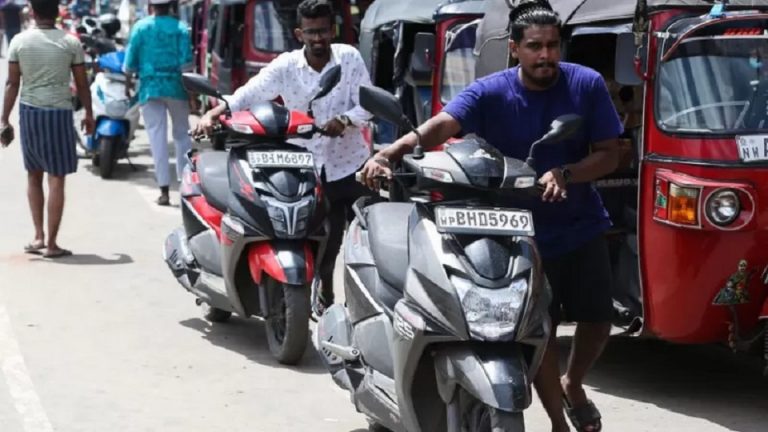
Many of the island’s residents don’t know how they will cope without fuel. There have been long queues at filling stations across Sri Lanka for months.
Chinthaka Kumara, a 29-year-old taxi driver in Colombo, thought the ban would “create more problems for people”.
“I’m a daily wage earner. I’ve been in this queue for three days and I don’t know when we will get petrol,” he told BBC Sinhala.
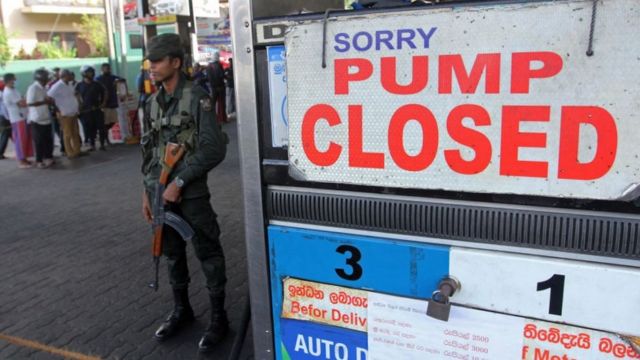
Image caption, A member of the security forces stands guard outside a fuel station in Colombo
Drivers have been asked to go home, with tokens distributed aimed at rationing scarce fuel stocks. Some kept queuing, but others couldn’t.
“I was in a queue for two days. I got a token – number 11 – but I don’t know when I will get fuel,” S Wijetunga, a 52-year-old private sector executive, told the BBC.
“I need to go to the office now, so I have no option but to leave my vehicle here and go in a three-wheeler.”
Kenat, a motorised rickshaw driver in the Colombo suburb of Kotahena, said people like him were being “destroyed”.
“Our family used to have three meals a day. Now we eat only twice a day. If this continues, it will come down to one meal,” he told BBC Tamil.
‘Severe economic crisis’
With an economy hit hard by the pandemic, rising energy prices and populist tax cuts, Sri Lanka lacks enough foreign currency to pay for imports of essential goods.
Acute shortages of fuel, food and medicines have helped to push the cost of living to record highs in the country, where many people rely on motor vehicles for their livelihoods.
On Monday, the government said it would ban private vehicles from buying petrol and diesel until 10 July.
Cabinet spokesperson Bandula Gunewardena said Sri Lanka had “never faced such a severe economic crisis in its history”.
The cash-strapped country has also sent officials to the major energy producers Russia and Qatar in a bid to secure cheap oil supplies.
Over the weekend, officials said the country had only 9,000 tonnes of diesel and 6,000 tonnes of petrol to fuel essential services in the coming days.
It has been estimated that the stocks would last for less than a week under regular demand.
“We are doing everything we can to get new stocks, but we don’t know when that will be,” power and energy minister Kanchana Wijesekera told reporters on Sunday.
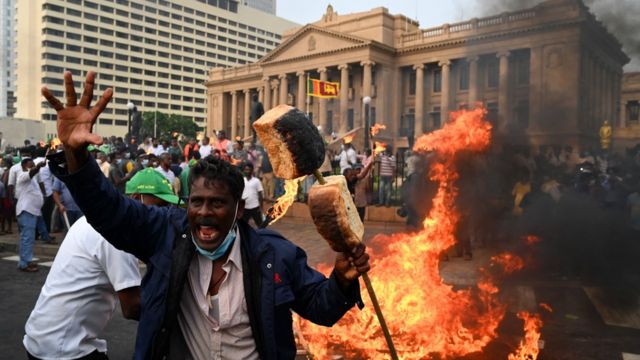
Image caption, In Colombo, protests against price hikes erupted in April, with mounting calls for the president to quit
In May, the country defaulted on its debts with international lenders for the first time in its history. That followed weeks of protests against President Gotabaya Rajapaksa’s government. His brother Mahinda quit as prime minister, but the president is still under pressure to resign.
“The government seems to take no action at all,” Kannan, another driver seeking fuel in the capital, told BBC Tamil.
“They are asking us to be patient. They say they don’t have dollars. But I ask the government – who is responsible for this?”
He suggested “educated youngsters” should lead the country instead.
Last week, an International Monetary Fund team arrived in Sri Lanka for talks over a $3bn (£2.4bn) bailout deal.
The government is also seeking assistance from India and China to import essential items. New Prime Minister Ranil Wickremesinghe said earlier this month the country needed at least $5bn over the next six months to pay for essential goods such as food, fuel and fertiliser.
The government blames the crisis on the Covid pandemic, which affected Sri Lanka’s tourist trade – one of its biggest foreign currency earners.
But many experts say mismanagement is the main cause of the economic collapse.
Sri Lanka’s foreign currency reserves dwindled to almost nothing after years during which it imported much more than it exported and racked up huge debts with China on controversial infrastructure projects.
When Sri Lanka’s foreign currency shortages became a serious problem in early 2021, the government tried to limit the outflow by banning imports of chemical fertiliser, telling farmers to use locally sourced organic fertilisers instead.
This led to widespread crop failure. Sri Lanka had to supplement its food stocks from abroad, which made its foreign currency shortage even worse.
Five failed finance companies are to be liquidated in accordance with a decision taken by the Monetary Board of the Central Bank of Sri Lanka (Monetary Board).
The Monetary Board of the Central Bank of Sri Lanka (Monetary Board) established the Advisory Committee for Revival of Failed Finance Companies (Committee) in October 2021 to examine possible revival options for five (5) failed finance companies.
These companies are Central Investments & Finance Ltd., ETI Finance Ltd., TKS Finance Ltd., The Finance Company PLC and The Standard Credit Finance Ltd, of which licenses have been either cancelled or suspended.
The Monetary Board has vested the Committee with the responsibility of recommending possible revival options or recommending liquidation for aforementioned five failed finance companies if such revival options do not seem feasible.
The Committee submitted its final report to the Monetary Board on 31.05.2022, after careful consideration of several proposals submitted by different parties for revival of four (4) of the above-mentioned companies.
The Monetary Board, having considered the Report of the Committee on the said five failed finance companies, noted that the proposals received for perusal of the said Committee were not viable and entailed a number of policy and legal implications, which did not appear to be workable within the existing regulatory framework.
Further, given the present economic conditions, the said Committee does not expect any viable proposals to be received from prospective investors.
Under these circumstances, the only option concerning the five (05) failed finance companies would be to continue with liquidation proceedings/filing for liquidation. In the light of the above, the Committee in its report has recommended to wind up the Committee.
Based on the recommendation of the Committee the Monetary Board decided to dissolve the Committee.
Consequently, actions will be taken to liquidate the aforementioned five failed finance companies in accordance with applicable legal provisions.
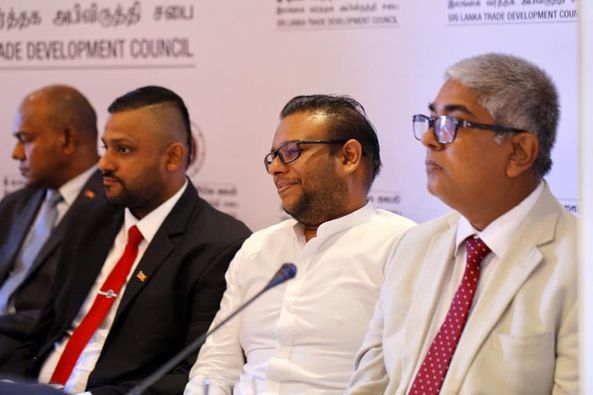
Sri Lanka Trade Development Council (SLTDC) recently demanded immediate action from the Government to protect the small and medium enterprises (SMEs) with a plan to Cabinet paper, warning they would otherwise bring all engaged in the sector to the streets.
The SME sector has been the worst hit by back-to-back blows since 2019, and the economic crisis has worsened the situation with most unable to operate their businesses or on the verge of bankruptcy.
The key demands of SLTDC include; immediately extending a financial relief package to all SMEs for one year whilst suspending all recovery actions, supporting the SME sector to convert businesses to export-oriented companies by providing special credit facilities and tax reliefs.
“SMEs are the live wire of the economy that helps to at least maintain it in this dire straits. We have been the worst hit with triple blows since 2019.
Yet, the resilient SMEs managed to continue despite internal and external challenges. But now, we have exhausted ourselves with no support whatsoever from the authorities. Hence, we submitted key proposals to the Government to implement immediately to protect the SMEs,” SLTDC Chairman Roshana Waduge said.
“We strongly believe that the Central Bank could have been more proactive in supporting the SMEs, but they have kept mum about it. Therefore, we made the request to the Government and hope they will take immediate steps to put forward a Cabinet paper next Monday before the sector collapses,” he added.
Waduge said it was sad that the gravity of the economic crisis and the urgency to protect local businesses has still not been comprehended by the political authorities.
“In other countries, SMEs are the first to be taken care of as they represent the backbone of an economy. However, in Sri Lanka, the banking and financial sector is killing the already crippled SME sector with recoveries and legal actions, while imposing high-interest rates of 30% on facilities obtained previously at low rates of 7-8% in an unfair manner.
“If the SMEs collapse, it will have an unimaginable adverse impact on the economy which will lead to an increase in unemployment, poverty, and scarcity of products and services,” he explained.
SMEs make up the largest part of the economy, accounting for 80% of all businesses whilst contributing to over 52% of GDP, and 45% of the total workforce accounting for 4.6 million employees engaged in the sector.
SLTDC Vice Chairman Indika Sampath Merenchige said the ignorance by the Government will only lead to economic peril.
“If the political authorities ignore our appeal to protect the backbone of the economy, we assure to take the lead for the next phase of people’s struggle by taking the baton from them. It will mean 4.6 million people in SMEs taking to the streets,” he warned.
Merenchige said the urgency today is a complete system change and not just the 21st Amendment to the Constitution. “We need consistent national policies to ensure economic development, stability, and sustainability,” he pointed out.
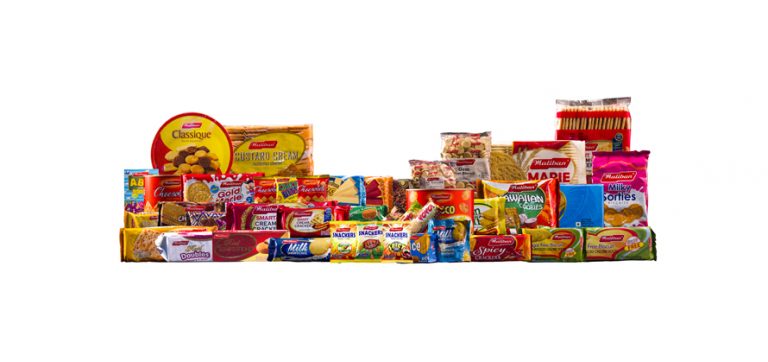
Sri Lanka’s confectionary industry has suspended the production of several of its most popular product ranges to prioritise the manufacturing of ready-to-eat items, which is becoming a popular option as the country continues to face severe shortage in gas.
As the cost of raw materials and fuel are increasing at a pace that industries cannot cope with, the Lanka Confectionery Manufacturers Association (LCMA) said stakeholders have started discontinuing production of ranges, especially easy-to-make desserts, and are instead focusing on keeping the production of items such as biscuits.
The confectionery industry has seen a 30 percent drop in overall production so far, as a reflection of multiple challenges they endured amidst the worst economic crisis.
The us $ 150-200 million worth confectionery industry — had been struggling for the past two years to import raw materials, deal with the exchange rate, source fuel and find containers to ship their goods to export markets on time.
“We have seen a 30 percent drop in overall production so far. With no concrete plan from authorities on how to fix the problems, the stakeholders fear the production will further drop to 40 percent by next week,” Lanka Confectionery Manufacturers Association (LCMA) President S.D. Suriyakumar.
Due to the shortage of ingredients, such as wheat, and increase in production costs, many manufacturers have halted operations. This has led to a drop in supply of confectionery items in the market.
The industry increased the price of its products by 30 percent last month. According to Suriyakumara, the hike has had little impact on sales.
“People don’t have a choice. There is no gas to cook food. Bakeries and eateries have closed down. Biscuits are a new staple now.
The LCMA head shared that following the further increase in the price of flour, which went up by Rs. 40 per kilogram yesterday, the industry has no choice but to pass it on to the consumer.
About 50,000 direct employees and over 500,000 informal workers have been discontinued due to the inability to maintain costs.
Suriyakumar said the initiative to promote confectionery products in new markets will be done as a private-public partnership (PPP) with support from the Department of Commerce.
“At the early stage of our export industry, our products were only sold in areas where ethnic groups were residing, but now our products are in leading supermarkets such as Tesco, Lulu and Walmart, to name a few. We export to over 50 countries at present,” he added.
In November 2021, the industry said they were looking to move production to more favourable overseas locations.
However, the decision was later reversed after considering the impact it would have on the livelihood of over 550,000 people engaged in the industry and overall economy.