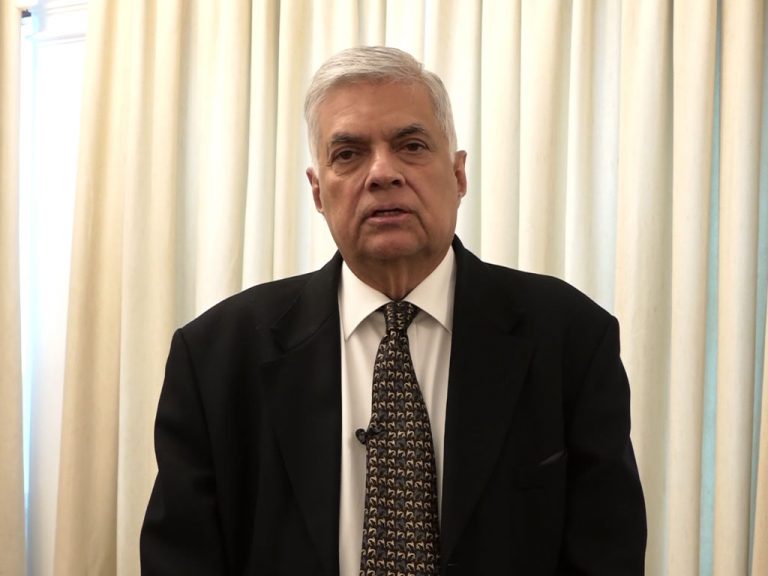
Chairperson of the Public Utilities Commission of Sri Lanka (PUCSL), Janaka Ratnayake owes the Ceylon Electricity Board (CEB) an arrears payment of over Rs. 02 million on a hotel belonging to him, media reports claimed.
According to these reports, the arrears payment is an unsettled electricity bill amounting to over Rs. 2.1 million. The hotel is located in Torrington Place, Colombo 07, reports added.
Upon query, Ratnayake told media that the arrears payment is due to the grace period given to the hotel industry to settle the electricity bills. The relevant arrears are being settled at present, he claimed.
Despite April 11 and 12 being declared as public holidays in a manner in which people of rural areas are able to return to their homes tomorrow (08) evening for the upcoming Sinhala and Tamil New Year, young protesters in Colombo said they will not abandon their struggle.
Accordingly, the demonstrations against the President and the government will continue in the upcoming week as planned, they added.
Anti-government protests are largely growing in many parts of the country and a large crowd was expected to gather in Colombo this weekend for a massive demonstration.
These anti-government protests are continuing for nine consecutive days since the March 30 public blast in Mirihana.
There is no truth to the claim that many surgeries have been stalled at the Nawaloka and Asiri Hospitals amid the absence of anesthetics, two spokespersons on behalf of the two facilities said.
The above is reported in in assurance of these two hospitals’ Right-to-Reply. These spokespersons claimed that no such issues have raised in their private hospitals with regard to surgeries and that the procedures are being undertaken as usual.
The Spokesperson for the Asiri Hospital further noted that they are in possession of an additional stock of medicines sufficient for three months at all times.
President Gotabaya Rajapaksa is reportedly preparing to hand over the Premiership to the Opposition in a move to resolve the political crisis befallen the country due to the economic crisis.
That being said, a person in the Opposition who is capable of winning the confidence of the majority is to be given the post of Prime Minister, sources said.
The Ruling Party has discussed the importance of allowing the Opposition to intervene in the affairs of the country on the basis of consensus to prevent the country falling into anarchy.
In the meantime, the President is preparing to address the nation today, during which aforementioned decision will be announced, according to sources.
NewsHubNZ: New Zealand Prime Minister says Sri Lanka is experiencing an incredibly tumultuous period as island-wide protests continue amid an economic crisis.
Economic blunders have been compounded by the pandemic, resulting in soaring inflation and a shortage of food, fuel and medical supplies.
“In terms of the foreign policy implications for New Zealand that’s where I am looking to receive an additional briefing over the coming 24 hours from the ministry,” Prime Minister Jacinda Ardern said.
When asked if she condemned Sri Lanka’s leadership, Ardern stopped short but acknowledged the growing frustration of Sri Lankan people.
“It is a very tumultuous time politically and domestically in Sri Lanka,” she said.
The President of Sri Lanka, Gotabaya Rajapaksa, imposed a 36-hour curfew and a social media blackout in response to the protests.
New Zealand Foreign Minister Nanaia Mahuta has also weight weighed in, saying: “New Zealand strongly upholds democratic values and institutions, including free speech and the right to peacefully protest.”
She said Aotearoa New Zealand was monitoring the unfolding economic, political and security situation in Sri Lanka closely – and encouraged all parties to continue to work on a peaceful solution.
The protest is drawing attention from around the world with the diaspora also taking to the streets in the US, Australia and New Zealand.
The Opposition is set to table a proposal to ban the Executive Presidency, revealed the Chief Opposition Whip, SJB MP Lakshman Kiriella, speaking to Parliament.
As the Leader of the Opposition made it clear, such changes can be made with the agreement of both sides, the Chief Opposition Whip noted, adding that the 19th Amendment to the Constitution should be reenacted and that a bill will be tabled to abolish the Executive Presidency very soon.
Sri Lanka’s beleaguered president will not be resigning, his government’s whip has told parliament.
The declaration defies calls from the public and political opponents for Gotabaya Rajapaksa to step down amid the country’s economic crisis.
Crowds have protested for weeks over lengthy power cuts and shortages of gas, food and other basic goods.
The public anger has prompted nearly all Cabinet ministers to quit, and scores of MPs to leave his government.
Opposition MPs have also rejected his invite to form a national unity government, saying voters want the president and entire government to resign.
But on Wednesday, Chief Government Whip Johnston Fernando told lawmakers: “As a responsible Government, we state President Gotabaya Rajapaksa will not resign from his post under any circumstances.”
On Tuesday night, Mr Rajapaksa lifted controversial state of emergency measures following further protests, the departure of several government lawmakers and the resignation of his finance minister.
The president had invoked the law – which allows the arrest of suspects without warrants – on 1 April after protests outside his house.
But he lifted them on Tuesday in an apparent concession to angry citizens. Earlier that day in parliament, 41 MPs had left the president’s ruling coalition to “represent themselves independently”. The implication of this is still unclear.
Sri Lanka is facing its worst economic crisis since gaining independence from the UK in 1948.
The heavily import-reliant South Asian nation no longer has enough dollar reserves to buy essential items like food, fuel to power vehicles or even generate electricity.
People have been suffering power cuts of up to 13 hours, massive inflation and a shortage of food and basic goods.
Protests across the country continued on Wednesday. Public frustration over the crisis has seen peaceful demonstrations held since January.
Image caption, Sri Lankans from all walks of life – including Catholic nuns – have joined protests
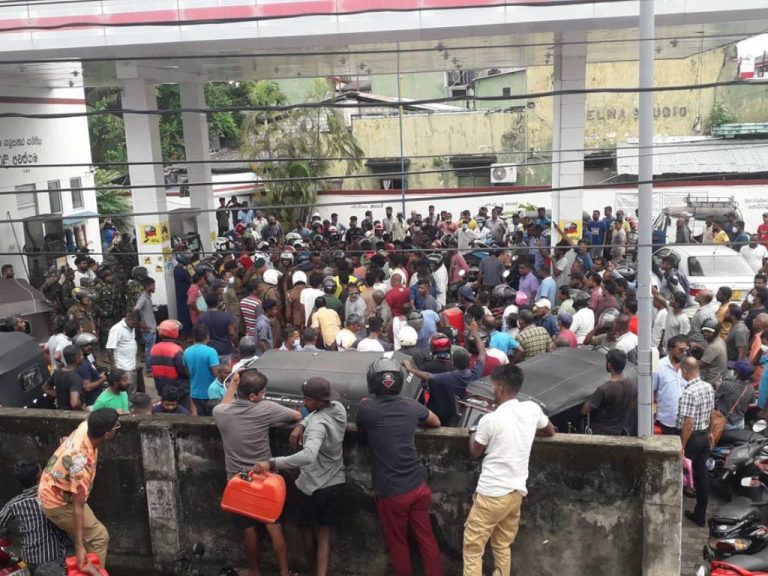
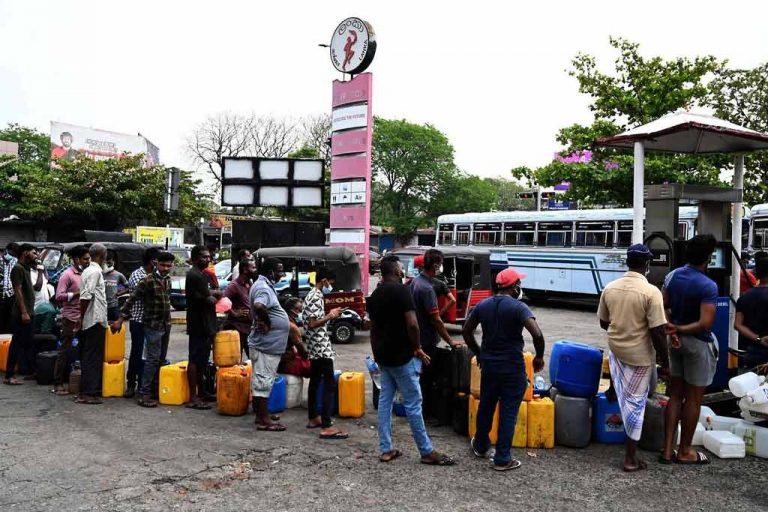
But the situation has escalated in the last fortnight, with many more people taking to the streets as power cuts stretched to 13 hours and petrol stations ran out of fuel.
“People can’t afford their daily rice, their dhal, their basic necessities. People can’t get on buses to come to work, to go to school,” one protester told the BBC this week.
While most protests are peaceful, there have also been violent flare-ups – with attacks on politicians’ homes and clashes between protesters and police.https://polling.bbc.co.uk/ws/av-embeds/cps/news/world-asia-61005827/p0bz69tz/en-GB/amp#amp=1Video caption,
WATCH: Police in Sri Lanka fire tear gas and water cannon at protesters in Kandy
On Tuesday, the UN Human Rights Office expressed its concerns about the emergency measures in a statement issued before they were lifted.
The UN noted the reports of police violence and said it was worried the restrictions aimed at “preventing or discouraging people from legitimately expressing their grievances through public protests”.
It added that: “The drift towards militarisation and the weakening of institutional checks and balances in Sri Lanka have affected the state’s ability to effectively tackle the economic crisis.”