Home Blog Page 2181

Govers Corporate Case to be heard on April 28

0

The Colombo High Court today (05) ordered that the case filed by the Attorney General against six defendants including former Minister Namal Rajapaksa on the accusation of investing illicit earnings amounting to Rs. 30 million in Govers Corporate (Pvt.) Ltd. be taken up for hearing on April 28.

Gamini Marapana PC appearing for the accused Rajapaksa stated should there be any request made for his client to travel abroad, it will be made on the same day.

Archbishop’s House endorses anti-government protests (VIDEO)

0

The Archbishop’s House has endorsed the anti-government protests by staging a peaceful demonstration with a march from the Archbishop’s House to the centre of Borella city today (05).

The event was participated by many Catholic fathers, led by the Archbishop of Colombo His Eminence Malcolm Cardinal Ranjith.

As a government elected by the people, the voice of the people should be heard and the people have more power over politicians, Reverend Father Cyril Gamini told media.

MIAP

‘Jana Niyamu Kalakaruwo’ artists collective stages protest near Parliament entrance (VIDEO)

0

The ‘Jana Niyamu Kalakaruwo’ artists collective today (05) staged an anti-government protest near the Parliament roundabout.

The protest demanded that the President and the government should step down in obedience to the public’s demand.

Heavy security was deployed in the area where the protest was taking place.

MIAP

Special debate in Parliament tomorrow and the day after

0

A special debate on the crisis befallen the country is due to be held in Parliament tomorrow and the day after.

The debate is scheduled based on the agreements made during the party leaders’ meeting held under the patronage of Speaker Mahinda Yapa Abeywardena upon the Parliament adjournment today (05).

Addressing Parliament, Leader of the National People’s Power (NPP) and the Janatha Vimukthi Peramuna (JVP) MP Anura Kumara Dissanayake proposed that that the Parliamentary sitting be adjourned immediately and a party leaders’ meeting be convened given that there was no point in talking about bills without ministers.

MIAP

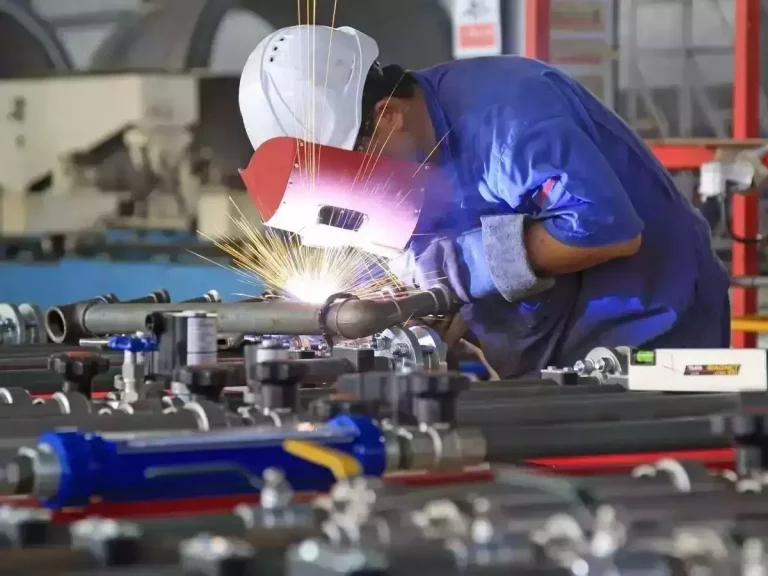
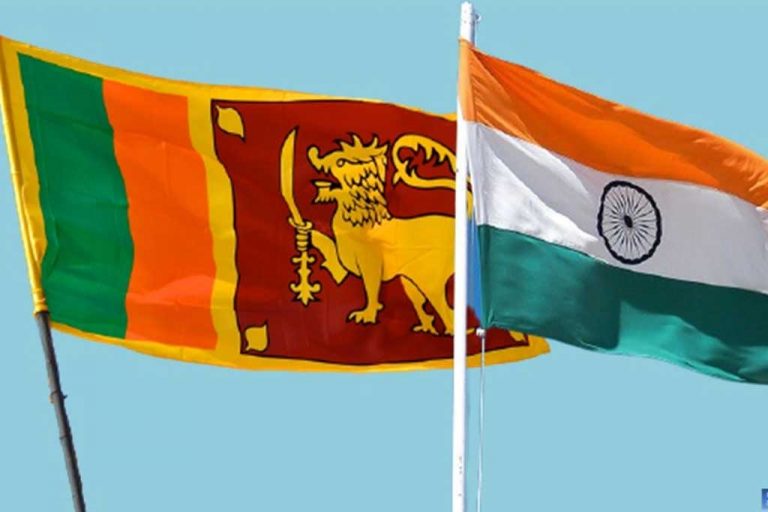
Chinese loans for white elephant projects pushed SL and Pak into present crisis: Hindustani Times Report

0

All the blame for the crisis in these two countries cannot be put on the shoulders of Beijing as the majority of it rests on the myopic leadership of these nations.

Eighteen kilometres from Chinese owned Hambantota Port in Sri Lanka lies Mattala Rajapaksa International airport, which has unfortunately earned the sobriquet of being the least used airport in the world. Built during the presidency of Mahinda Rajapaksa, both port and airport, built from high-interest loans from Chinese EXIM bank, are monuments to fiscal profligacy practised by rulers of the Island nation currently reeling under deep economic and political crisis.

Like Sri Lanka, Pakistan is also the biggest beneficiary of economic assistance from China and that too has descended into political and economic chaos. Instead of Chinese loans making the two economies more resilient, the client states of Beijing have literally folded up in wake of the global economic crisis brought on by a pandemic, which ironically has origins in Wuhan, China.

Sri Lanka is presently reeling under protests due to rampaging inflation; Pakistan is in a free drop with Imran Khan Niazi now a Prime Minister just in the name after having totally exposed the fragility of democracy in the Islamic Republic for his own survival.

The Chinese Communist Party (CCP) owned media dismisses predatory economic policies of Beijing as western propaganda and insists that loans given to countries like Pakistan and Sri Lanka are only a small portion of their overall debt portfolios. These Chinese claims are substantiated by the openly available information on government-to-government loans from China. But this is only half of the story as information on the actual liabilities or outflows of the borrowing countries on account of guaranteed returns on investments, commercial loans etc. is not readily available.

Like in the case of Pakistan, Beijing has maintained that its loans comprise 10 per cent of Sri Lanka’s overall external debt. This works out to be USD five billion out of total debt of nearly USD 51 billion. But this figure does not include currency swaps, foreign currency term facility agreements, and loans given by Chinese state-owned enterprises. Project wise loans given by the Chinese EXIM bank are estimated to be USD 4.8 billion, out of which only USD one billion carries a concessional interest rate of two per cent while the remainder carries a whopping rate of six per cent.

In Pakistan, the Chinese EXIM Bank has loaned USD 11 billion (concessional) at an interest rate of 1.6 per cent for infrastructure projects and another USD 15.5 billion (commercial) carrying an interest rate of 5-6 per cent for power projects under the China Pakistan Economic Corridor, part of the BRI and designed to give Beijing access to the Arabian Sea and beyond. All debts are denominated in USD dollars, which hedges the Chinese exposure to exchange rate fluctuations but increases the cost of hard currency for the borrowers. In Pakistan, the debt burden has consistently increased due to the regular depreciation of the Pakistani Rupee at an average of six per cent per year. In Sri Lanka, the Lankan Rupee collapsed in a matter of days, increasing the cost of hard currency dramatically.

All the blame for the crisis in these two countries cannot be put on the shoulders of Beijing as the majority of it rests on the myopic leadership of these nations. Tempted by the easy availability of loans from China to finance ambitious infrastructure projects that give an impression of rapid economic development to the gullible public, these leaderships threw fiscal prudence and economic viability out of the window to retain political power. With Beijing neutral to whether the borrowing regime was corrupt or inefficient or both, these politically expedient loans have now come to haunt these two countries.

The Hambantota Port in Sri Lanka and Gwadar Port in restive Baluchistan in Pakistan are classical cases of white elephant projects. Both the ports are located strategically but are commercially unsustainable as there is simply not enough traffic. China has already acquired Hambantota and it is not a matter of wild imagination that it acquires Gwadar too in the coming months. Fact is that there is no real income from these ports and cargo traffic is being diverted from Colombo and Karachi ports to keep them operational. In the meantime, Matala airport is sometimes used for storing paddy.

The extent of profiteering by the Chinese companies that execute projects is also not often known. In Pakistan, it was accidentally illustrated by the leaked Power Producers Report in April 2020, which examined among others, two thermal power projects in Sahiwal and Port Qasim. Both were executed by Chinese companies. For these two projects worth USD 3.8 billion, the report found an overpayment of Pak ₹483.64 billion or approximately USD 3 billion.

With the Ukraine-Russia war not showing signs of any resolution and parts of China being hit by the coronavirus, global finance will continue to lag, putting countries like Sri Lanka and Pakistan in the high-risk category for investment as they are also facing serious political turmoil. Economic engagement of the dragon will prove very costly to both Islamabad and Colombo with the gullible masses taken for a royal ride.

Hindustani Times

Ali Sabry resigns from his new ministerial portfolio

0

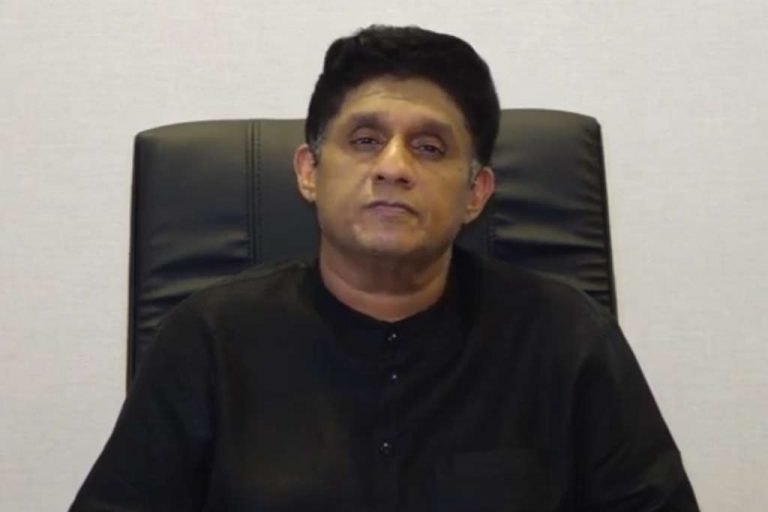
Mohammed Ali Sabry has resigned from his post as the Minister of Finance a day after he was sworn in.

Sabry has tendered his letter of resignation to President Gotabaya Rajapaksa.

MIAP

Jeewan Thondaman steps down from Ministerial Portfolio. CWC leaves Government

0

Jeewan Thondaman announced he has stepped down from his position as the State Minister of Estate Housing and Community Infrastructure.

His letter of resignation has been handed over to the President.

Meanwhile, Leader of the Ceylon Workers’ Congress (CWC) Senthil Thondaman said his party will be leaving the government and acting as an independent group in Parliament, making it the second political party to leave the government amidst the anti-government uprising.

Earlier, the Sri Lanka Freedom Party (SLFP) had left the government to serve as an independent group in Parliament.

In the wake of the rapidly growing opposition against the government in its alleged failure to settle the devastating economic and other crises befallen Sri Lanka, the dialogue of whether the government will lose the majority in Parliament is hitting its fever pitch now.

MIAP

Sajith proposes to abolish the Executive Presidency within this week

0

The Leader of the Opposition Sajith Premadasa stated in Parliament today (05) that no one from the Samagi Jana Balawegaya representing the Opposition will obtain opportunistic ministerial portfolios.

Premadasa said that if they want to come to power it would be with the blessings of the people.

Meanwhile, he said that the government should now listen to the protests and resort to a system of abolishing the executive presidency.

If possible, it should start this week, he said.

Dr. Nandalal Weerasinghe new CBSL Chief

0

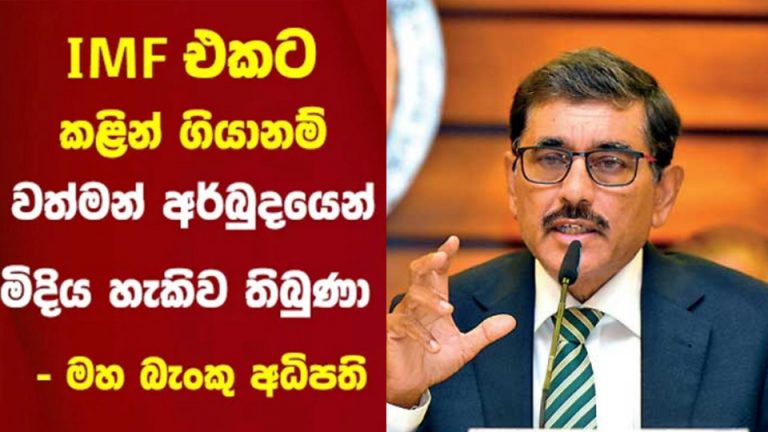
Dr. P. Nandalal Weerasinghe has been appointed as the new Governor of the Central Bank of Sri Lanka (CBSL).

Weerasinghe served as a Deputy Governor for the CBSL and will be serving as the new Governor upon the stepping down of predecessor Ajith Nivard Cabraal.

He will assume office on April 07.

MIAP

Anura urges the Speaker to adjourn the Parliamentary debate and convene a meeting of party leaders

0

Jathika Jana Balawegaya leader Anura Dissanayake said in Parliament today (05) that there was no point in talking about bills without ministers in parliament now and that a meeting of party leaders should be convened immediately to discuss the situation in the country and take decisions.

Accordingly, the Member of Parliament requested the Speaker to immediately adjourn the Parliamentary debate and convene a meeting of the party leaders.