By: Staff Writer
December 07, Colombo (LNW): Cyclone Ditwah has delivered a sharp blow to Sri Lanka’s tourism sector, exposing long-standing vulnerabilities while simultaneously demonstrating its remarkable capacity for quick rebound. Though over 25,000 tourists arrived during and after the disaster, the uneven impact on hotels, infrastructure, and coastal destinations underscores the need for comprehensive climate-resilient planning across the industry.
Hoteliers in the Southern and Eastern coastal belts report extensive damage: washed-out beach fronts, water-damaged ground-floor facilities, destroyed landscaping, and significant losses in back-of-house machinery. Several boutique hotels between Hikkaduwa and Tangalle remain partially closed, while eco-lodges in riverine areas have suspended operations due to safety concerns. Industry associations warn that repairing damaged properties could take months, affecting room capacity and seasonal earnings.
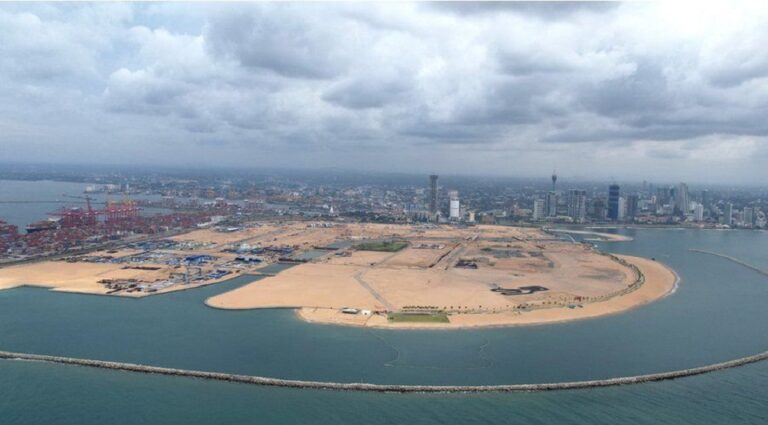
Yet the influx of tourists has not collapsed. With arrivals surpassing 2.1 million by November and the month’s 212,906 visitors marking a five-year high for November performance, the sector’s revival momentum remains intact. Colombo, in particular, has absorbed diverted tourist flows, with high-end hotels maintaining 70–75% occupancy even amid the crisis. The awarding of Five-Star certification to Cinnamon Life at City of Dreams highlights the capital’s growing role as an urban leisure and MICE destination.
The disaster, however, has spotlighted gaps in emergency readiness. Many hotels lacked comprehensive disaster-response protocols, while some coastal regions faced delays in relief access due to damaged roads and communication blackouts. Tourism experts argue that without updated evacuation plans, stronger early-warning systems, and mandated climate-resilient hotel standards, future disasters could trigger far deeper economic shocks.
Sri Lanka Tourism officials emphasise that recovery efforts are already underway. Short-term steps include rapid hotel inspections, emergency repair grants, and re-establishing travel confidence through transparent communication with source markets. International campaigns are being prepared to reassure travellers that the island remains open, safe, and operational.
Long-term planning aims to reposition Sri Lanka as a climate-resilient destination. This includes coastal protection engineering, green hotel certification programmes, diversification into inland and niche tourism products, and strategic promotion of Colombo as a year-round entertainment and convention hub. The cyclone’s aftermath has become an inflection point: policymakers must now embed climate adaptation into tourism development rather than treat disasters as temporary setbacks.
The sector’s path forward depends on how swiftly damaged regions are restored and whether lessons from Cyclone Ditwah can reshape the industry’s preparedness. Sri Lanka’s tourism backbone has held firm but its future resilience hinges on structural reforms that match the private sector’s determination.
Cyclone Tests Resilience of Sri Lanka’s Tourism Backbone
Government Relief Funds Under Fire amid Massive Recovery Shortfall
By: Staff Writer
December 07, Colombo (LNW): Sri Lanka’s post-cyclone recovery now hinges on a critical financial debate: whether the Government’s newly presented relief plan—outlined by the President in Parliament—can realistically rebuild homes, livelihoods, and the vast public infrastructure destroyed by Cyclone Ditwah and subsequent floods and landslides. The Government insists its allocations are adequate, yet mounting evidence and parliamentary scrutiny paint a more uncertain picture.
During the debate on compensation and rebuilding support, Committee on Public Finance Chair Harsha de Silva urged the administration to divert Rs. 500 billion—currently earmarked for the retirement of treasury bills in 2026—towards urgent reconstruction. He argued that the Treasury has the legal and fiscal flexibility to postpone debt retirement, particularly when thousands of families remain displaced and economic activity in several districts has ground to a halt.
According to de Silva, the Government had originally advised banks to maintain over Rs. 1 trillion in emergency reserves. However, only half of that amount has been set aside for debt payments. “This is clearly not the moment to prioritise reducing a decimal fraction of interest,” he cautioned, emphasising that every rupee now should support rebuilding homes, restoring livelihoods, and compensating businesses—especially MSMEs facing a debt burden approaching Rs. 1 trillion after years of economic volatility.
The President’s financial plan includes allocations for house repair grants, livelihood assistance, and emergency clean-up operations. Yet, questions loom over whether the proposed spending matches the scale of destruction. Initial government estimates place total losses between $3 billion and $6 billion, but no definitive assessment has been issued. A World Bank-led damage evaluation is expected within two weeks, likely to provide the first credible figure. If losses are closer to $6 billion (about Rs. 2 trillion), current allocations appear far from adequate.
Compounding concerns is the Public Financial Management Act, which sets a primary expenditure ceiling of 13% of GDP for 2026 in line with IMF commitments. While de Silva acknowledged this limit, he pointed out that the law allows exceeding the cap during emergencies—making expanded public spending legally permissible if the Government chooses to act decisively.
Meanwhile, around Rs. 50 billion remains unspent from the 2025 Budget’s emergency funds. De Silva argued these could be mobilised within weeks for immediate relief. He also criticised the standard Rs. 25,000 compensation payment as outdated, suggesting it be doubled given recent inflation, rising construction costs, and the severe material shortages in flood-affected districts.
The President’s plan aims to restore normalcy, but without clearer damage assessments, transparent budget priorities, and a willingness to adjust fiscal commitments, Sri Lanka risks underfunding its recovery at the very moment citizens need the State most.
Cyclone Havoc Exposes Deep Fragility in Sri Lanka’s Tea Economy
By: Staff Writer
December 07, Colombo (LNW): Sri Lanka’s tea industry, already battling falling export volumes and escalating production costs, has suffered one of its worst setbacks in years following last week’s cyclone, with industry leaders warning that the road to recovery will be long, costly and highly uncertain.
Preliminary assessments show extensive destruction of machinery, access roads, tea-processing facilities and worker housing across multiple tea-growing districts. Officials from the Colombo Tea Traders Association (CTTA) revealed that more than 30 major tea-exporting companies, responsible for roughly Rs. 110 billion in annual export earnings, have experienced some level of operational disruption.
According to CTTA Chairman Lushantha De Silva, these exporters may take two to three weeks to resume partial operations, but the damage to high-value machinery especially tea-bagging and withering equipment could take months to restore.
“Sri Lanka does not have the technology to repair most of these specialised machines. They will have to be sent overseas, and that creates delays and enormous costs,” he said, adding that the government must “step in decisively” to help the industry recover.
The disaster struck at a time when the industry was already under pressure. Latest figures from the Sri Lanka Tea Board show that tea export volumes for January–October 2025 fell to around 205 million kg, down from 212 million kg in the same period last year, while export earnings rose only marginally to US$1.27 billion due to higher global prices rather than improved output.
The cyclone now threatens to widen this gap, with logistics bottlenecks and damaged infrastructure expected to suppress export performance over the next quarter.
Estate-level devastation is still being counted. Early regional reports indicate that over 6,000 hectares of plantations suffered varying levels of soil erosion, landslides, uprooted tea bushes and debris damage. Several elevations remain inaccessible, delaying a full assessment of losses.
Tea estate owner Samantha Dodangoda noted that while the cyclone may not cause an immediate collapse in production, labour shortages are emerging as a serious challenge. “Tea pluckers are scared to return to the slopes after seeing the landslides. Safety concerns will slow the process for days,” she said.
Dodangoda warned that the collapse of rural road networks poses a bigger threat than field damage. With at least 120 rural access roads blocked or destroyed in tea-growing areas, transporting green leaf to factories and finished tea to ports has become extremely difficult. “You can’t keep these roads closed forever, but rebuilding will take time,” she added.
Industry analysts argue that the government must urgently launch a national tea sector disaster-recovery plan, including concessional financing for machinery repairs, a compensation scheme for affected estates, emergency road reconstruction and climate-resilience measures to protect high-risk plantations.
Without swift intervention, Sri Lanka’s already vulnerable tea export sector—one of the country’s top foreign-exchange earners could face a prolonged setback with ripple effects across rural livelihoods and the broader economy.
SLTB Limits Use of Train Season Tickets to Areas With Suspended Railway Services
December 07, Colombo (LNW): The Sri Lanka Transport Board (SLTB) has clarified that passengers with monthly train season tickets may use them on SLTB buses only in regions where rail services remain curtailed or fully suspended following recent disruptions.
The Board reported a rise in attempts by commuters to use rail passes on buses operating along routes where train services have already returned to normal, prompting the reminder.
In a related move, the National Transport Commission (NTC) has arranged special morning buses for tomorrow on the busy Kandy–Colombo corridor to ease passenger congestion.
NTC Chairman P.A. Chandrapala confirmed that travellers will be allowed to board these additional services using their train season tickets, given the temporary strain on the rail network.
Meanwhile, the Department of Railways has turned its focus towards a significant infrastructure concern in the Peradeniya area. Plans are being considered for the construction of a new double-lane railway bridge over the Mahaweli River, after engineers determined that the existing structure has deteriorated beyond practical repair.
General Manager of Railways, Ravindra Padmapriya, stated that a final decision on the matter is expected tomorrow, noting that a replacement bridge would be essential to ensure long-term safety and uninterrupted rail operations.
A/L Script Marking Resumes as Education Sector Moves Back into Gear After Ditwah
December 07, Colombo (LNW): The Department of Examinations has restarted the first phase of marking for the GCE Advanced Level answer scripts, a process that had been abruptly suspended when Cyclone Ditwah caused widespread disruption across the country.
Commissioner General of Examinations, Indika Kumari Liyanage, confirmed that the second phase of evaluation is set to commence on December 27, allowing examiners to return to their schedules with minimal further delay.
The subjects that were postponed due to the cyclone are now expected to be held in January next year, ensuring that students can complete their examinations within a revised but manageable timeframe.
Liyanage also noted that, despite rumours circulating on social media, there is no evidence so far of any leak of the A/L Economics paper. The Criminal Investigation Department is continuing its inquiry to rule out any irregularities.
As the education system gradually stabilises, the Ministry of Education has announced that schools unaffected by the disaster will reopen on 16 December. Meanwhile, universities, national colleges of education, and vocational training centres are scheduled to resume academic activities tomorrow, signalling a broader return to routine after several weeks of severe disruption.
Officials emphasise that while the recovery process is still ongoing in the hardest-hit districts, every effort is being made to ensure that students’ academic progress is not hindered.
Government to Begin Household Damage Survey as Cyclone Ditwah Recovery Measures Expand
December 07, Colombo (LNW): The Ministry of Housing, Construction, and Water Supply has confirmed that a wide-ranging assessment of housing damage caused by Cyclone Ditwah will begin tomorrow (08), marking the next phase of the Government’s relief effort.
A special committee operating under the Presidential Secretariat has been tasked with carrying out the survey, which is expected to cover thousands of affected homes across multiple districts.
Under the newly announced support scheme, each affected household will receive Rs. 25,000 to assist with cleaning and making homes safe for re-entry. In addition, a one-time payment of Rs. 50,000 will be made to help families replace basic household items and support initial resettlement needs, regardless of the legal status of property ownership.
To further cushion the blow suffered by families whose homes were destroyed or whose livelihoods have collapsed entirely, the Government will provide monthly allowances for three months. Smaller families—those consisting of two members or fewer—will receive Rs. 25,000 per month, while households with more than two members will be granted Rs. 50,000 per month for the same duration.
For those left without a roof over their heads, an additional payment of Rs. 25,000 per month has been allocated for temporary accommodation, capped at six months. Officials say this measure is intended to prevent families from falling into long-term displacement while permanent housing solutions are being arranged.
The Ministry noted that the scale of destruction in some areas is still being fully understood, and the assessment beginning tomorrow will help refine ongoing recovery plans. Authorities are urging residents to cooperate with survey teams to ensure aid is distributed swiftly and fairly.
President Calls for Extraordinary Coordination to Rebuild Lives in Post-Disaster Kandy
December 07, Colombo (LNW): President Anura Kumara Dissanayake has underscored the need for an emergency-style operational framework—one that surpasses the limits of routine public administration—to restore normal life in the aftermath of the recent disaster.
Speaking at the Kandy District Coordinating Committee meeting held at the District Secretariat yesterday morning (06), the President carried out a detailed review of urgent recovery efforts now under way. These include clearing blocked roads, restoring electricity and water, ensuring fuel availability, repairing irrigation systems and reconnecting disrupted communications.
He directed officials to make full use of funds already allocated for the next 25 days, insisting that road-clearing work must be completed quickly while long-term reconstruction continues in parallel. Water supply, he said, must be fully restored within three days, with bowsers deployed wherever required. The Tri-Forces have also been instructed to provide technical and logistical backing as an extraordinary measure.
The President further ordered Divisional Secretariats to coordinate the cleaning of household wells and pressed for electricity in the district to be reinstated—at least temporarily—by 31 December. Comprehensive restoration work will follow in the second phase of the recovery programme.
Turning to agriculture, he called for an urgent assessment of arable land, emphasising the need to prioritise the cultivation of both paddy and vegetables to stabilise food supplies. Irrigation authorities and agrarian officials have been told to work in closer alignment to guarantee water distribution. Compensation payments of Rs. 200,000 for affected farmers are to be expedited, with vegetable growers entitled to Rs. 150,000 per hectare. Adjustments will also be made to compensate banana growers facing similar losses.
Livestock losses were discussed at length, with the President urging that detailed records be maintained and damaged farms revived quickly so that farmers can regain income and the wider food supply—particularly milk and poultry—can recover.
Fuel shortages in Pussellawa and Meetalawa, caused by road blockages, were also addressed. The President instructed the Road Development Authority, the Tri-Forces and the Police to jointly ensure fuel reaches these areas by the end of the day.
He stressed the importance of reopening schools without delay so that scheduled examinations can proceed, and examined progress made in restoring healthcare services, railways and communications. Damage to homes and public institutions, along with resettlement needs, was also discussed. The President said nearby state lands would be identified for relocating affected families, and emphasised that compensation for house repair and reconstruction must be properly utilised. All payments arising under the 2025 Budget must, he insisted, be completed before 31 December to avoid placing pressure on next year’s finances.
A long-term solution to the garbage crisis in Gampola was also considered. Until the release of Mahaweli land is formalised, the President directed that temporarily available Ceylon Electricity Board land be used for waste disposal.
He noted that while natural disasters may be unavoidable, the scale of devastation can be reduced through proper planning. He called for a scientific study of the Central Highlands and a comprehensive plan to rehabilitate the region’s fragile ecological systems. Local authorities, he said, must enforce their powers rigorously to prevent unauthorised construction, and the Ceylon Electricity Board should refuse power connections to illegal settlements.
Despite early fears that recovery would take months, the President stated that significant progress has been made in a remarkably short period. With sustained cooperation, he said, the country can move swiftly towards full restoration.
He ended by expressing his deep appreciation for the hard work demonstrated by state officials and the Tri-Forces throughout the crisis response.
Switzerland Sends Specialist WASH Team and Equipment to Bolster Sri Lanka’s Post-Storm Recovery
December 07, Colombo (LNW): Switzerland has dispatched a shipment of vital Water, Sanitation and Hygiene (WASH) equipment—along with a team of technical experts—to assist Sri Lanka in managing its ongoing relief operations after the recent bout of extreme weather.
The consignment touched down at Bandaranaike International Airport yesterday (06), where it was formally handed over by members of the visiting Swiss WASH Mission.
The delegation was led by Martin Bölsterli, the mission’s team leader, accompanied by senior coordinator Yvonne Josy Müller. Both emphasised Switzerland’s commitment to supporting countries facing severe humanitarian strain.
Among the supplies delivered were advanced water purification units designed to provide safe drinking water in areas where local systems have been damaged or contaminated. In addition, Swiss specialists have been deployed to work alongside Sri Lankan teams in setting up and maintaining the equipment, as well as advising on broader sanitation challenges emerging in hard-hit communities.
Receiving the donation on Sri Lanka’s behalf was Sunil Jayaweera, former Director of Preparedness at the Disaster Management Centre (DMC), who has returned to volunteer in the national response following his retirement.
He described the assistance as “timely and immensely practical”, noting that access to clean water has become a critical concern in several districts.
Officials say the support will not only help stabilise current conditions but also strengthen the capacity of humanitarian agencies working to restore essential services. The arrival of the Swiss mission adds to the growing wave of international assistance extended to Sri Lanka as recovery efforts expand in scope and urgency.
Dozens of Reservoirs Overflow as Authorities Move to Repair Storm-Damaged Irrigation Network
December 07, Colombo (LNW): The Irrigation Department has confirmed that around 30 major reservoirs and nearly 40 medium-sized tanks are currently overflowing following days of persistent, intense rainfall.
Director of Irrigation (Water Management), H.M.P.S.D. Herath, said the situation is being closely monitored, though engineers do not anticipate significant flooding in low-lying areas at present.
Among the reservoirs spilling excess water are Senanayake Samudra in Ampara, Mahawilachchiya, Mahakanadarawa and Rajanganaya in the Anuradhapura region, Deduru Oya in Kurunegala, Lunugamvehera in Hambantota and the Sorabora reservoir in Badulla.
According to Herath, the Rajanganaya Reservoir is currently discharging about 6,476 cubic feet of water per second into the Kala Oya, while the Angamuwa Reservoir is releasing approximately 1,164 cubic feet per second.
Despite the opening of spill gates, officials insist that the controlled releases remain relatively modest and pose no immediate risk to surrounding communities. Even so, the recent deluge has caused notable damage to several irrigation structures, prompting rapid emergency repairs.
Work on the damaged South Canal of the Rajanganaya Reservoir is already under way and is expected to conclude by the end of today (07), allowing irrigation to resume for farmland dependent on its supply. At the same time, renovation of the Elahera Yodha Canal is progressing with the help of military personnel and local farming groups.
Herath noted that the completion timeline will hinge on the weather in the coming days and the volume of water being released from the Moragahakanda Reservoir.
Temporary reinforcement of other compromised structures is continuing under departmental oversight, with teams deployed across several districts to ensure the network remains stable.
In a separate update, L.S. Sooriyabandara, Director of Irrigation (Hydrology & Disaster Management), reported that Baddegama and Ratnapura recorded the highest rainfall in the past 24 hours, receiving between 30 and 35 millimetres.
He added that although water levels in the Malwathu Oya near Thanthirimale rose above normal earlier, they have since begun to subside. No flooding is expected, as water is being released purely as a precaution to manage reservoir levels.
Major tanks such as Deduru Oya, Rajanganaya and Nachchaduwa, along with several medium-sized reservoirs in Anuradhapura, continue controlled water releases to ease inflows as authorities maintain heightened vigilance over the island’s water systems.
New National Hotline ‘1904’ Launched for Reporting Essential Service Disruptions
December 07, Colombo (LNW): The Office of the Commissioner General of Essential Services (CGES) has introduced a new rapid-response hotline, 1904, enabling the public to report difficulties in accessing key services anywhere in the country. Officials say the service is designed to streamline complaints, strengthen coordination among agencies, and speed up responses during emergencies or unexpected service breakdowns.
Residents may use 1904 to flag problems relating to electricity, fuel supply, drinking water and sanitation, public transport, food and other basic goods, telecommunications and ICT services, hospital and emergency medical care, as well as irrigation and other critical services listed under Gazette Extraordinary No. 2464/29. Authorities have indicated that additional categories may be incorporated as national needs evolve.
All calls will be routed to the CGES Operations Centre, where trained staff will verify each report, assess its urgency, and relay it to the appropriate response units. Officials noted that improved digital tracking tools have been integrated into the system to ensure that complaints are properly monitored until they are resolved.
The CGES has urged the public to use the number responsibly and to provide clear, accurate details so that teams on the ground can act swiftly. Early feedback from trial operations suggests the hotline could significantly reduce delays in responding to service failures, particularly during adverse weather or periods of heightened demand.