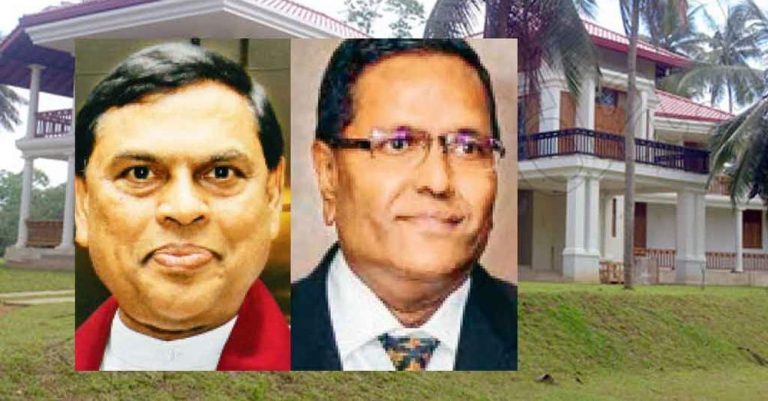
Sri Lanka faces “solvency” issues because of risks stemming from unsustainable debt levels that jeopardize the nation’s economy, according to International Monetary Fund staff.
“Based on staff analysis, the fiscal consolidation necessary to bring debt down to safe levels would require excessive adjustment over the coming years, pointing to a clear solvency problem,” the IMF said in its Article IV consultation report, released Friday in Washington.
The full report provides further analysis of the South Asian island nation’s debt and finances. A summary of the report released earlier in the month said Sri Lanka faced unsustainable debt levels and needed a “credible and coherent” strategy to restore stability.
The country’s “debt overhang,” along with persistent fiscal and balance-of-payments shortfalls, “will constrain growth and jeopardize macroeconomic stability in both the near and medium term,” the report said.
People stand in a queue to buy kerosene oil at a gas station in Colombo on March 25. Photographer: Ishara S. Kodikara/AFP/Getty Images
“Rollover risk is very high,” the IMF said. “FX debt service needs of $7 billion each year will require access to very large amounts of external financing at concessional rates and long maturities, sustained over many years.”
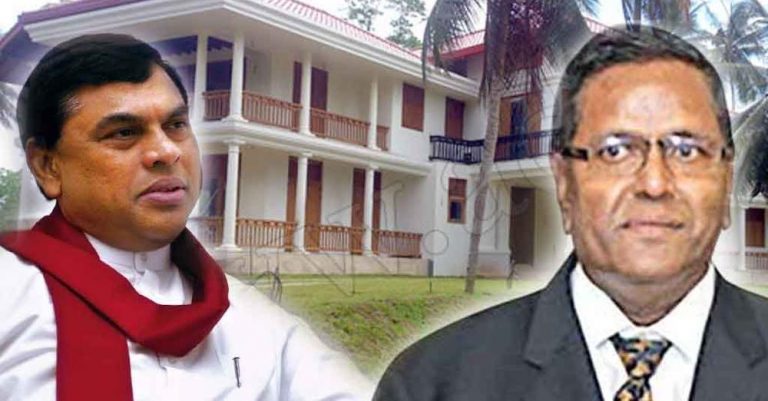
Since the IMF board considered the staff report in late February, a surge in oil prices and the loss of tourists because of the war in Ukraine exacerbated its foreign exchange crisis, forcing the government of President Gotabaya Rajapaksa to seek IMF aid. Negotiations on a possible aid package are expected to start in April, when Finance Minister Basil Rajapaksa, a brother of the president, travels to Washington.
The spiraling crisis has also led the country to raise interest rates, devalue the local currency and curb non-essential imports.
Sri Lanka has about $2 billion of reserves against $3.9 billion of foreign-currency debt due for the remainder of 2022, according to Bloomberg calculations based on central bank data. This includes $1 billion of sovereign bonds maturing in July.
“With the government indicating that it is seeking a closer engagement with the IMF, the Central Bank of Sri Lanka stands ready to cooperate in such an engagement,” the monetary authority said in an amended statement Saturday.
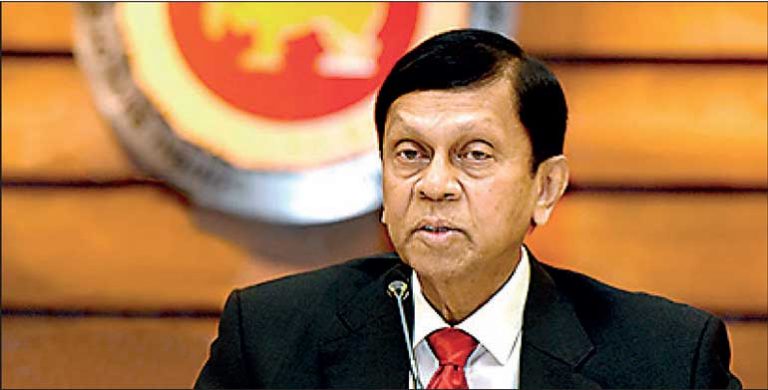
Sri Lanka has to be “prepared to manage the negatives,” central bank Governor Ajith Nivard Cabraal said on Thursday, referring to entering an IMF program, but did not elaborate.
Celebrating 183 years as the leading business Chamber of the country, the Ceylon Chamber of Commerce continues its uninterrupted record of yeoman service to Sri Lanka’s private sector.
Established in 1839, the Ceylon Chamber is among the most iconic Chambers of Commerce in South East Asia, working tirelessly to perpetuate its proud tradition as the premier representative of Sri Lanka’s private sector.
The Chamber acts as a unifying voice for the country’s business sector, facilitated by a formidable membership comprising the private sector, regional and sectoral Chambers of commerce and industry, trade and service associations, employer associations and bilateral business councils, while strategic alliances with public sector institutions add further impetus to the mandate, officials of the Chamber said.
While the challenges caused by the pandemic continued into the second year, the Chamber continued to demonstrate characteristic vision and resilience, choosing to look ahead and prepare the ground for the economic resurgence that would inevitably follow.
The Ceylon Chamber came to the forefront recently in raising the voice of the private sector on its own and together with other chambers, on how the nation could tackle the foreign exchange crisis it is currently grappling with.
The Chamber noted that many of its recommendations have now been accepted while its leadership has been accorded a place at the table by inviting them to the recently established Advisory Committee to the Economic Council.
As a series of lockdowns and border closures continued to restrict both national and international movement, the Chamber seamlessly moved its medley of services to virtual platforms.
Numerous trade promotion webinars and B2B meetings, networking sessions with overseas missions, and several Memoranda of Understanding signed with international Chambers of Commerce, were successfully conducted virtually, facilitating the exploration of opportunities for bilateral investment and trade across North and South America, Europe, Africa, Asia and Australia.
The Chamber’s Economic Intelligence Unit played a particularly important role in the face of mounting economic exigencies, disseminating critical macro-economic and sector-based market intelligence, thereby providing a roadmap for the private sector to develop sustainable business strategies.
Recommendations on national policy formulation as well as engagements with the Government on behalf of the private sector were received positively, with some recommendations being incorporated in the National Budget 2022 as well as contributing towards the resolution of certain sector specific industry concerns.
Committed to identifying and leveraging emerging and future trends to facilitate a thriving business environment, the past year has also seen continued focus on the country’s SME and startup sectors. The Council for Startups and the Centre for SMEs are Ceylon Chamber initiatives actively involved in fostering startup and entrepreneurial ecosystems, which have been identified as key drivers of economic growth.
Partnerships with international aid agencies on socio-economic development and capacity building projects, and the Chamber Academy which facilitates knowledge-transfer workshops and seminars are among other initiatives through which the Ceylon Chamber contributes to holistic development of the private sector.
25 March 2022, Colombo, Sri Lanka – In Sri Lanka, women are denied equal access to the jobs market not just because of family or social factors, but also by employers. This is the focus of a report launched by UN Women today, titled Gender Disparities and Labour Market Challenges: The Demand for Women Workers in Sri Lanka. This report is amongst the first in the country to illustrate the largely unexplored factors on the part of employers and firms that prevent women from entering the paid workforce.
In 2019, only 36 percent of Sri Lankan women of working age were willing and able to engage in paid employment. While supply-side analyses have identified unpaid care work, skills deficits, and socio-cultural factors such as gender norms and stereotypes as underlying factors that hinder women from engaging in the formal labour force, this report meets a significant gap in our understanding on the demand-side barriers erected by employers.
For instance, new analysis from the report shows that: a) gender-based occupational segregation powerfully conditions the demand by employers for low-skilled women workers, partly because women are paid less than men; b) employers who are legally constrained from offering flexible working hours and nightwork for women, and those who could not finance maternity benefits, hired relatively fewer women; c) employers who had set ideas about the kind of jobs women can and cannot do, also hired fewer women; d) women workers in middle-level occupations are perceived as having the highest skills deficits, especially in English language skills, and in their ability to learn and solve problems; e) three-fourths of male respondents were unconsciously prejudiced against women workers and were less likely to hire women; f) employers were willing to hire women with disabilities but are constrained by lack of experience and opportunities for training them.
The findings also revealed, that unlike in other emerging economies, export orientation in Sri Lanka was not associated with an increased demand for women workers, reflecting the weak export orientation of the economy in recent times. Firms also seemed to lag in the application of digital technology in business operations to reskill workers. This was most evident when employees were constrained by limited access to IT related systems and lacked the experience and resources to work from home during the pandemic. This digital divide is a major constraint for women’s engagement in upcoming industries with potential to offer increased job opportunities.
Speaking at the launch, Hanaa Singer-Hamdy, Resident Coordinator of the UN in Sri Lanka highlighted: “The implications of low workforce participation for women and for the economy at large are serious. This is why this new research report is vital and needs to be considered in long-term economic policymaking. It provides us with a roadmap on which government and corporate policies are critical to support women’s full engagement in the labour force”.
Ramaaya Salgado, UN Women Sri Lanka’s Country Focal Point added: “Creating conditions for decent work and protecting employees from discrimination are basic human rights. Women’s ability to participate equally in existing labour markets and their ability to meaningfully participate in economic decision-making at all levels is central to realizing women’s rights and gender equality. We hope that the policy directions laid out in this study [outlined below] will serve as a guide for the government, the private sector and non-governmental organizations in taking action to increase women’s participation in the paid workforce”.
During the launch, the study was officially presented to Hon. Dr. Sudarshini Fernandopulle, State Minister of Primary Health Care, Epidemics and COVID Disease Control and Chairperson of the Women Parliamentarians’ Caucus and Kumari Jayasekera, State Secretary of the State Ministry of Women and Child Development, Pre-Schools & Primary Education, School Infrastructure & Education Services. The launch was followed by a panel discussion with key officials from the government, civil society and the private sector.
Highlighting the need to fulfil the promise of the 2030 Agenda, Kumari Jayasekera highlighted that, “As the gravity of this subject is high, we welcome all stakeholders to work in an integrated approach. Increasing the demand for women workers requires a concerted, coordinated effort by government, the private sector, and the non-government sector involving a process of raising awareness, engaging in policy dialogue and formulation, designing strategic interventions, and the implementation and monitoring of these interventions”.
To ensure that women have the choice to work for pay without discrimination or bias, UN Women is calling for better policy, action, and investment in Sri Lanka’s formal enterprises. This includes the formulation of macroeconomic, industrial and trade policies to diversify and upgrade productive structures, promote productive efficiency, and catalyse export-led economic growth, in order to help create jobs for women, especially in small economies like Sri Lanka. Further, in-light of the ongoing pandemic, it is recommended to promote digitization, automation and work-from-home arrangements, which will also help upgrade production processes.
The policy recommendations also highlight the importance of training women in middle-level occupational skills, especially in English language skills. Supportive interventions are also required to train women with disabilities in order to make employers more confident about hiring them. Promoting small and medium-sized enterprises (SMEs), female entrepreneurship, ownership, and management is also highlighted as SMEs generate more demand for women workers.
Lastly, an emphasis on the need to reform labour laws to facilitate flexible working hours and nightwork for women and setting up a social fund for maternity benefits is also recommended. Encouraging family-friendly workplace policies that support the retention of women employees even after marriage will ensure that more women are able to enter the paid workforce.
About UN Women: UN Women is the UN organization dedicated to gender equality and the empowerment of women. A global champion for women and girls, UN Women was established to accelerate progress on meeting their needs worldwide. Learn more at: asiapacific.unwomen.org
Photo 1 – (L-R) Speakers and panelists at the report launch
Photo 2 – Ramaaya Salgado, Country Focal Point, UN Women Sri Lanka handing over the report to Hon. Dr. Sudarshini Fernandopulle, State Minister of Primary Health Care, Epidemics and COVID Disease Control and Chairperson of the Women Parliamentarians’ Caucus
Photo 3 – (L-R) Ramaaya Salgado, Country Focal Point, UN Women Sri Lanka, Hanaa Singer-Hamdy, Resident Coordinator of the UN in Sri Lanka and Ms. Kumari Jayasekera, State Secretary
Foreign Minister Professor G.L. Peiris met with a delegation of Senators from the French Republic in Colombo on Thursday, 24 March 2022.
During the meeting, the discussions covered a variety of issues including constitutional reform, investment of French companies in Sri Lanka, expansion of markets in France for value added exports from Sri Lanka, especially, tea, fisheries products, apparel and gems and jewellery, tourism, with an emphasis on health tourism and environmental tourism and cooperation in the education and cultural sectors.
The French Senators stated that they were working towards strengthening the bilateral relationship between Sri Lanka and the French Republic.
Minister of Youth & Sports, Minister of Development Coordination and Monitoring and State Minister of Digital Technology and Enterprise Development, Namal Rajapaksa, French Ambassador Eric Lavertu and Secretary to the Foreign Ministry, Admiral Colombage were among those present.
Sharp increases in prices of basic commodities, accompanied by shortages, have severely impacted upon the standard of living of the general population and even prompted the government to call out the army to maintain social peace where queues have formed, as at petrol stations. The All Party Conference (APC) presided over by President Gotabaya Rajapaksa has taken place in this context of an unprecedented economic crisis in the country.
The boycott of the APC by the main opposition parties and even by a section within the government highlights the sharp political divisions and lack of trust within the polity. The president recognized this reality when he stated that the conference was not called to gain a political advantage. He added that he would once again invite the parties that did not attend the conference. The president also said that he would prepare a plan to carry out the recommendations made by the political party leaders.
The National Peace Council appreciates the approach of finding solutions through discussions. President Rajapaksa’s apology to former Prime Minister Ranil Wickremesinghe after a government member tried to score political points against the former government was in keeping with his stated commitment to make this an occasion for non-partisan problem solving. The president’s meeting with the TNA today must also lead to further discussions and action on the ground in the area of national reconciliation that will help to strengthen economic investment and aid flows to the country.
We call on the other political parties to join the next round of discussions. Unlike the parliamentary forum in which the government and opposition sit on opposite sides, the need of the present time is to agree on a policy for the country that will resolve the economic problems that the people face and which all political parties can endorse for the longer term irrespective of who leads the government. This time of crisis demands sincerity, commitment and mutual accommodation on partisan political positions for the sake of the people.
Governing Council
The National Peace Council is an independent and non partisan organization that works towards a negotiated political solution to the ethnic conflict in Sri Lanka. It has a vision of a peaceful and prosperous Sri Lanka in which the freedom, human rights and democratic rights of all the communities are respected. The policy of the National Peace Council is determined by its Governing Council of 20 members who are drawn from diverse walks of life and belong to all the main ethnic and religious communities in the country.
The Government of Sri Lanka has appointed Mrs Shirley Marguerite Hopman-Aluwihare as the Honorary Consul of Sri Lanka in the Ho Chi Minh City of Viet Nam. She received her Exequatur from Mr Pham Hoang Tung, Deputy Director-General of the Department of Consular Affairs of the Ministry of Foreign Affairs of the Socialist Republic of Viet Nam, on 23 March 2022, in Ha Noi.
Mrs Hopman-Aluwihare is a past pupil of the Methodist College of Colombo. She possesses significant experience in the field of travel and tourism, having worked at Walkers Tours, Delmage Group etc., holding senior positions. She has been living in Ho Chi Minh City since 2008 and currently functions as the Managing Director of NetGlo Solutions Limited, Viet Nam, which is a global networking and sourcing company, with partner offices in Thailand and Australia. NetGlo is also a member of the Viet Nam Chamber of Commerce and Industry (VCCI).
Ho Chi Minh City is the Commercial Capital of Viet Nam. It is therefore vital that a Sri Lankan representative be present in this city to promote trade, tourism, investment, people-to-people contacts etc. This timely appointment will be a catalyst for the promotional activities that are being organized by Sri Lanka, and the Sri Lankan community in Ho Chi Minh City will be able to avail basic Consular services through the new Honorary Consul.
Ms Prasadi Boomawalage, Second Secretary (Commercial) and Ms Krishanthi Ramanayake, Attaché of the Embassy of Sri Lanka in Ha Noi, represented the Government of Sri Lanka at the ceremony. Ms Nguyen Thanh Huong, an expert of the Ministry of Foreign Affairs of Viet Nam, assisted Mr Tung during the event.
Sri Lanka and the Netherlands plan to sign a bilateral aviation services agreement with the aim to launch direct passenger and cargo flights between the two countries.
At the International Civil Aviation Negotiation Conference held in Nairobi, Kenya in the year 2018, Sri Lanka and Netherlands reached consensus regarding the relevant steps necessary for the air services arrangement between the two countries and the text of an Air Service Agreement was initiated.
In accordance with the same, the KLM Royal Dutch Airline and the Sri Lankan Airlines have been designated to operate to and from Sri Lanka.
Accordingly, the proposal made by the Minister of Transport & Civil Aviation, to enter into the said Air Services Agreement, which had been agreed upon at the official level in the preliminary discussions, and to take appropriate steps for the effective implementation of the said Agreement, was approved by the Cabinet in 2019.
Although approval of the Cabinet of Ministers has been granted to sign a bilateral aviation agreement between Sri Lanka and Netherland at their meeting on the 30 July 2019, no such accord has been signed so far.
Therefore, the Cabinet of Ministers approved the proposal furnished by the Minister of Tourism Prasanna Ranatunga to sign the aviation services agreement with the objective of further enhancing the relationship between the two countries on aviation sector activities, a statement on cabinet decisions said.
Tourism Minister Prasanna Ranatunga says the initiative will further enhance tourism, education, trade, investment, agriculture and cultural ties between Sri Lanka and the Netherlands.
Minister Ranatunga said it is planned to sign this agreement targeting economic development.
The Chicago Convention on International Civil Aviation, signed in 1944, mandates entering into aviation agreements to operate international commercial flights between two or more states.
There are currently 193 countries registered with the International Civil Aviation Organization. The Minister pointed out that by entering into agreements with those countries, it will be possible to engage in aviation activities when required.
During the preliminary discussions it was decided to operate 14 flights a week between Sri Lanka and the Netherlands.
SriLankan Airlines and KLM Royal Dutch Airlines in the Netherlands are also planned to be used for this purpose, said Minister Ranatunga.
Sri Lanka mesmerised visitors to the Dubai Expo recently, showcasing its inimitable Ceylon Sapphire at a special event titled ‘Day of Sapphires’.
Members of the Sri Lanka Gem and Jewellery Association (SLGJA) showcased gems worth $ 100 million, including sapphires hitherto unseen in public.
Renowned world jewellery specialist, Helen Molesworth, graced the Sri Lankan pavilion that day and offered visitors exclusive insights into the history, trade and mining practices behind these stones from Sri Lanka, which she said are over half a billion years old.
Sri Lanka’s ‘Day of Sapphires’ at the Dubai Expo drew visitors from all over the world, who were enthralled by the precious stones on display including the history, process and stories revolving around the exclusive and sought-after Ceylon Sapphire.
Sri Lanka’s Ceylon Sapphires have adorned the crowns of royalty across ancient Rome, Europe and Russia, and as detailed SLGJA Vice Chairman Promotion and Trade Fairs Altaf Iqbal: “no two sapphires from Ceylon share the same characteristics; they are distinctly unique unlike diamonds.”
Addressing a media briefing to detail the success of the promotion of the Ceylon Sapphire and destination Sri Lanka, the SLGJA said the program had garnered over $ 1 million in publicity globally thus far.
The program aimed to boost awareness and global sales of Ceylon Sapphires, and give prominence to Sri Lanka as one of the top five gem-bearing destinations in the world.
Speaking during the event, SLGJA Chairman Ajward Deen, appreciated the efforts of the State Ministry on Gem and Jewellery Related Industries for the support lent to the sector so far, and called for enhanced policy to further promote and protect the gem industry in Sri Lanka.
He said several attempts had been made by foreign parties, including one of the largest gem companies in the world to acquire thousands of acres of gem-bearing land, which had been thwarted by industry action.
He said the state together with the sector must stay vigilant of such attempts to infiltrate and acquire local land and resources by foreign parties.
The SLGJA together with support from Sri Lanka Tourism and its media partners also developed a series of videos promoting the destination and Ceylon Sapphires to promote the country and industry, which was broadcast during the event and its subsequent marketing events.
Tourism industry specialists from Sweden, UK and Sri Lanka came together on Tuesday (15th March) in Stockholm to make the Swedish and Scandinavian Tourism markets to Sri Lanka more robust.
Sweden and the UK joined hands with Sri Lanka in presenting Sri Lanka’s destination to an influential group of tour operators and travel consultants in a targeted effort to enhance partnerships to promote the Sri Lanka tourist Industry .
In this context Sri Lankan culinary experience was presented during the evening with Carola Magnusson while Johan Berndtsson and Jeanette Bolin of Kastanj Collection Sweden introduced the presenters with a profile of their involvement in Sri Lanka.
Alex Chambers – Hummingbird UK & Sri Lanka, Eleanor Milner – The Sri Lanka Collection UK, Marcelline Paul – Uga Escapes Sri Lanka and Swedish filmmaker Stephan Quinth presented the Island’s exquisite facets and unique experiences which awaits a discerning traveler.
Major airlines which facilitate connectivity to Sri Lanka, namely, Emirates, Qatar Airways, Sri Lankan Airlines shared their current and future partnership with Sri Lanka and outlined increasing frequency and destination support, which is indicative of the strong and positive value they attach to the destination.
The evening was a result of the partnership between the Embassy of Sri Lanka Stockholm, Sri Lanka Tourism Promotion Bureau, Ministry of Foreign Affairs, Kastanj Collection Sweden, which brought together the presenters and the audience to Stockholm.
Sri Lanka’s envoy to Sweden Ambassador Dharshana Perera addressing the gathering encouraged the industry partners to establish inter alia sound and mutually beneficial business partnerships with Sri Lanka which has placedSweden and Scandinavia as emerging priority markets.
In his remarks, the Ambassador outlined Sri Lanka’s open, safe,muliti-faceted and multi-sectoral, all-year-round destination, which he captured as being “Asia in one Island” Flavors of Sri Lanka.
This initiative was presented through cuisine crafted by a Sri Lankan Chef together with Carola Magnusson, a well-known Swedish Chef and culinary expert in Stockholm, who having spent several years in Sri Lanka, had gained special insight to the Island’s unique spices and tastes.
The high impact event brought together over 32 major Swedish industry specialists, tour operators, travel consultants from across the country andpresenters and who are now expected to establish even stronger partnerships to elevate the Swedish and Scandinavian clientele to Sri Lanka.
Sri Lanka Tourism strongly supported the event which is seen as a significant initiative to enhance respective markets.The evening, presented in a warm Sri Lankan ambience, provided an excellent space and atmosphere for sharing of insights, focused business interactions and a unique culinary experience through an array of Sri Lankancuisine and Ceylon Tea.