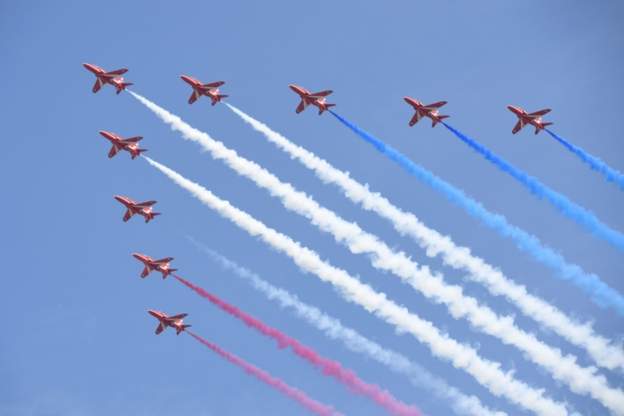
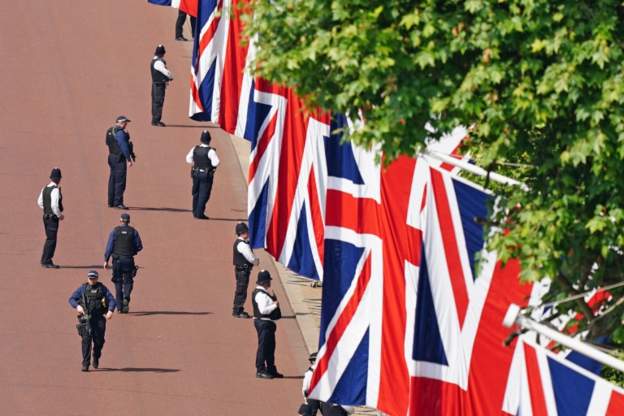
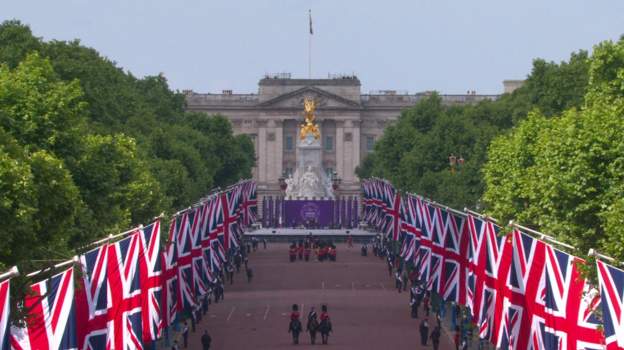
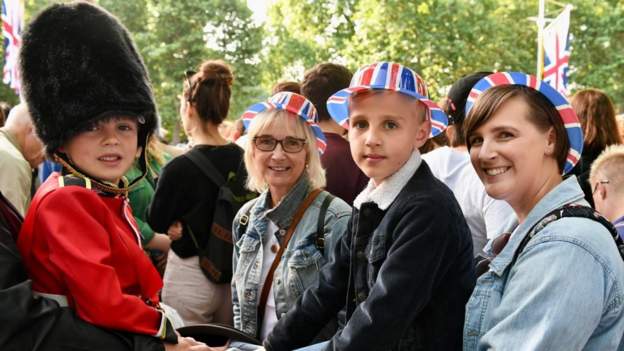
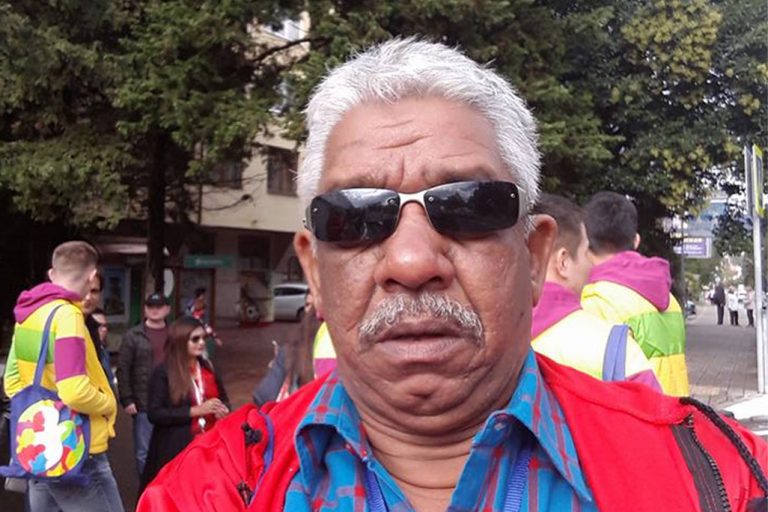
Crowds covered in Union Jack flags have gathered early on The Mall today to secure a prime spot for the biggest royal celebration in decades – as four days of events finally begin with Trooping the Colour.
Royal superfans have adorned themselves in red, white and blue blazers, flags and hats as they lined The Mall this morning to watch the Queen’s historic birthday parade kick off at 10am.
Trooping the Colour is a ceremony performed by regiments of the British Army. It has been a tradition of British infantry regiments since the 17th century, although its roots go back much earlier.
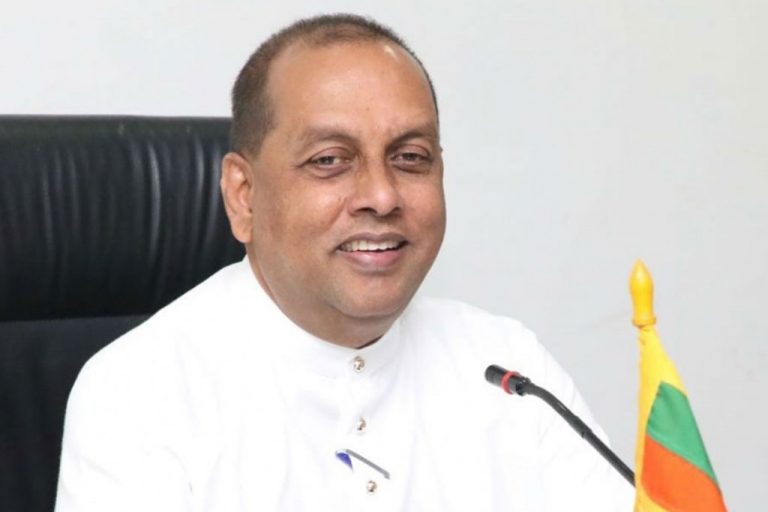
SLPP Member of the Colombo Municipal Council Mahinda Kahandagamage has been arrested by the Criminal Investigation Department (CID) this (02) afternoon.
Kahandagamage was accused of provoking mob attack launched by pro-Rajapaksa protesters on the peaceful protests held in GotaGoGama and MainaGoGama on May 09.
The Fort Magistrate Court had ordered the arrest of Kahandagamage and the SLPP Member accordingly has surrendered to the CID this afternoon.
Agriculture Minister Mahinda Amaraweera has instructed the Department of Forest Conservation to provide opportunities for the people living near the reserves to harvest jackfruit and breadfruit from the forests.
Accordingly, the Minister has instructed the relevant parties to issue licences to these groups free of charge.
The forest officials have pointed out to the Minister that there are about 3000 hectares of forest lands throughout the country, where jackfruit and breadfruit crops are being wasted with no use.
The Minister’s decision comes in as a ‘solution’ to the worst food crisis in the history of Sri Lanka.
Amaraweera, who was once part of the regime that should be held accountable for the crisis created upon the short-sighted banning of chemical fertiliser a year ago, had earlier told media that people should begin to grow manioc or sweet potato as a solution to the food crisis, and now is implying that the people who had walked out of the forest hundreds of years ago should walk back.
The Reserve Bank of India has permitted trade transactions with Sri Lanka to be handled in Indian Rupees (INR), outside the Asian Clearing Union mechanism.
The Reserve Bank of India (RBI) has permitted trade transactions with Sri Lanka to be handled in Indian Rupees (INR), outside the Asian Clearing Union (ACU) mechanism, due to the difficulty faced by exporters in obtaining revenues from the island country. The Indian government guaranteed a term loan of $1 billion granted to Sri Lanka by the State Bank of India to finance the acquisition of vital commodities and services such as food, medicines, gasoline, and industrial raw material.
KEY POINTS:
Financing of qualified goods and services exported from India, as defined by the agreement, would be allowed under the terms of the agreement, but only if they met certain criteria.
As long as they are eligible for export under the Indian Foreign Trade Policy, their acquisition is agreed to be financed by SBI.
These directives, according to the RBI, are effective immediately.
The credit facility under the agreement can be drawn down for up to 12 months from the agreement’s signing date.
About Asian Clearing Union:
The ACU was founded on December 9, 1974, at the request of the United Nations Economic and Social Commission for Asia and the Pacific, to promote regional cooperation.
Its headquarters are in Tehran, Iran. The agency’s principal goal is to make payments easier.
The agency’s principal goal is to make it easier for member countries to make multilateral payments for qualifying transactions, reducing the usage of foreign exchange reserves and transfer costs while also increasing trade among the countries involved.
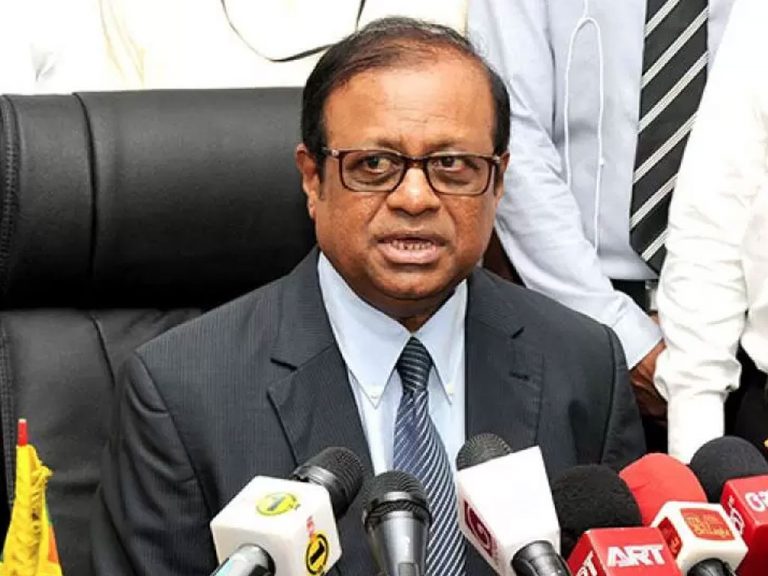
The GCE Advanced Level Examinations due on August this year may not be held as planned and therefore, may be held on October – November, said Education Minister Susil Premajayanth, speaking to a briefing held in Colombo today (02).
The Minister also noted that the Grade 05 Scholarship Examination for this year may not be held on time, but the examination will be held before the end of this year.
The Grade 05 Scholarship Examination is expected to be held after giving the students the maximum opportunity to study in the event that schools are being held until the third week of December, Premajayanth emphasised.
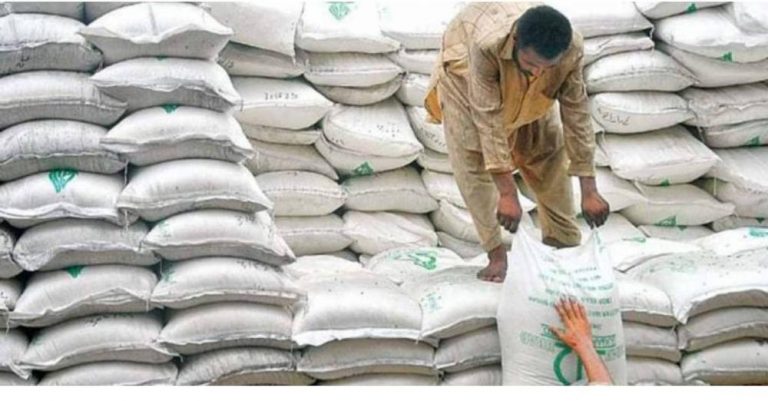
The Private sector is to be given the sole responsibility of importing fertiliser for farmers for the next maha season cultivation starting in September this year while the state will not be involved in such imports, the Agriculture Ministry announced.
The Finance Ministry has been entrusted with the task for providing a sum fertiliser subsidy to all farmers under the present stressful situation , minister Mahinda Amarweera said.
This will help to prevent alleged corrupt practices of ruling party politicians in importing and distributing fertiliser, he said adding that hereafter no one can point finger at politicians and officials towards this end.
Prime Minister Ranil Wickremesinghe, agriculture experts and officials have warned of a food crisis in the coming months if the new administration is failed to find solutions to dollar crisis. .
Food commodity importers recently warned of higher food prices and shortages of food items after the ban on open account and DA/DP transactions with a view of overcoming the Forex crisis by raising rates and preventing private credit.
However the Central Bank on Monday 30 announced that it will facilitate task of providing dollars from banks for food imports following the ban on open account imports.
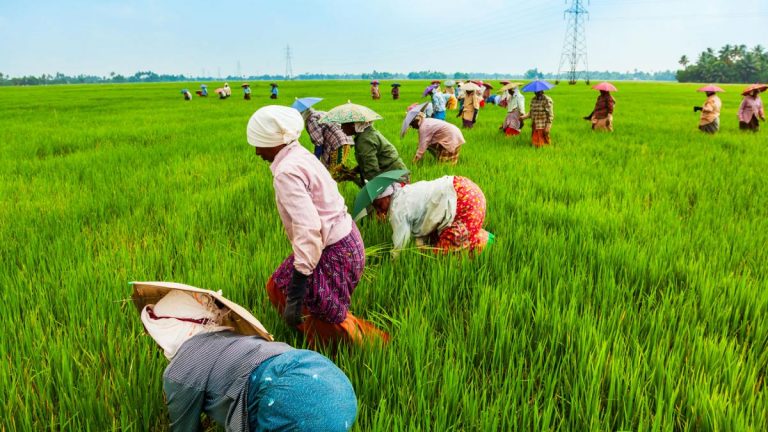
With the Sri Lankan economy in crisis, prices spiralling and fuel running out with no fertiliser for cultivation , farmers who should be planting their crops at the start of the rainy season are struggling – prompting fears of a looming food crisis.
Queues stretch at government-run Sathosa shops and retail outlets to buy essential commodities in short supply, such as rice, dal and flour and milk powder because the prices in these outlets are still low.
In private groceries and supermarkets, the prices are three to four times higher. People who can afford to do so are buying from these shops. But quantities per customer are restricted.
Vegetables are aplenty, but because diesel is in short supply, transport costs have led to a hike in prices. In the villages, families subsist on what they grow.
Many farmers in Sri Lanka have not been able to access diesel for weeks, and due to this, they are unable to transport their crops to the economic centers.
This has forced many wholesale traders to idle at economic centers on a daily basis, awaiting the arrival of a tractor load of fresh crops to be sold elsewhere. .
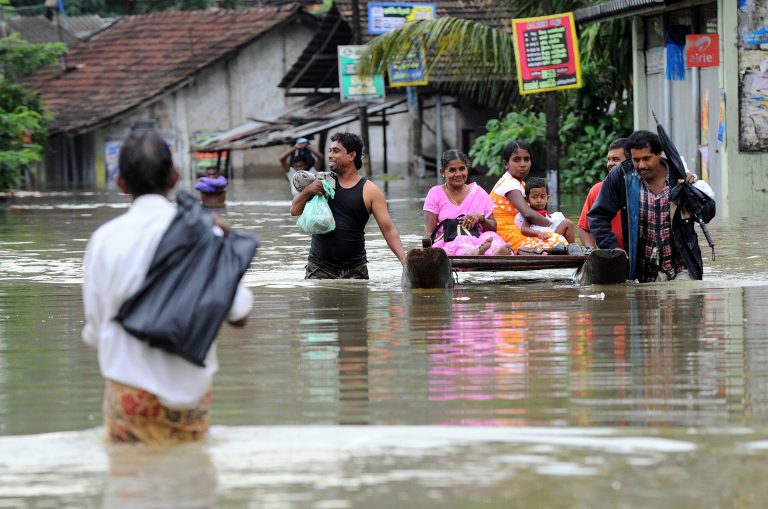
The Director-General of the Disaster Management Center, Major General Sudantha Ranasinghe said that 22338 persons belonging to 5357 families have been affected due to the inclement weather.
This was revealed to the media today (02).
Accordingly, 43 Divisional Secretariat Divisions in 7 districts are currently facing a disaster situation and 1 death and 1 injury has been reported.
Ranasinghe said that 690 persons belonging to 192 families are staying in 10 relief centers while 2433 out of another 647 families are staying based on friends and relatives.
174 houses were partially or slightly damaged.
He said that funds would be provided to all those affected through the Divisional Secretariats and District Secretaries and that 12 more teams would be deployed in the Navy and that the Army and the Air Force would assist when needed.
He added that the risk of debt persists.
Victims can call 117 to report any problems.
Meanwhile, a status report on the disaster situation is submitted to the Prime Minister’s Office every day and instructions have been given to allocate funds on the instructions of the Prime Minister, said Sudantha Ranasinghe.
President Gotabhaya Rajapaksa says that the Prime Minister of India Narendra Modi has agreed to provide chemical fertilizer under Indian loan assistance. He said this during a discussion with officials regarding the challenges facing the irrigation sector.
Accordingly, the President states that he is ready to provide the chemical fertilizers required for cultivation during the Yala season.
Earlier the government stated that 65,000 metric tons of fertilizer would be imported from India.
Gotabhaya Rajapaksa states that action will be taken to supply fertilizer to farmers within 20 days after unloading the stocks.
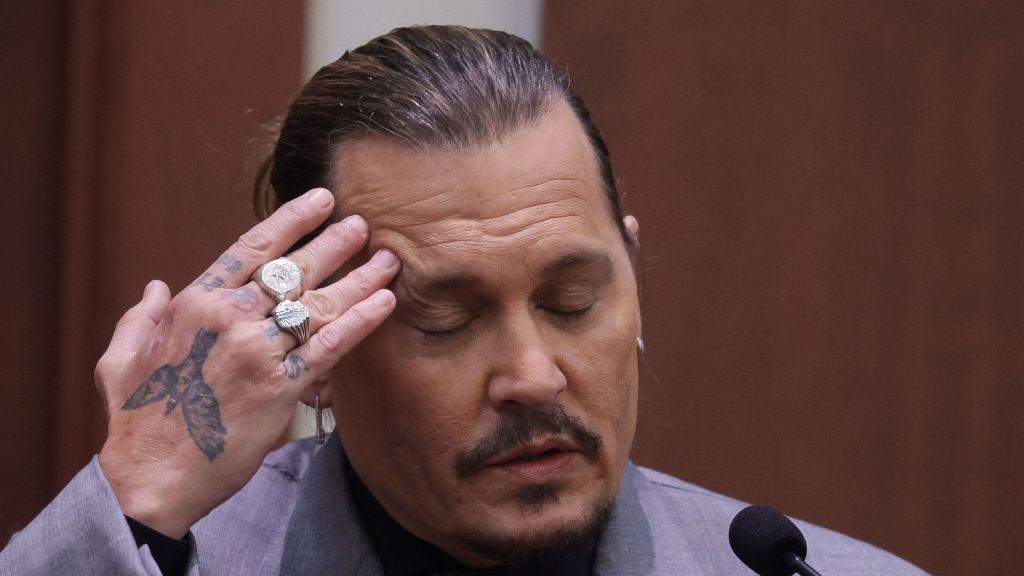
Johnny Depp has won his multimillion-dollar US lawsuit against former wife Amber Heard after a Virginia jury ruled a 2018 article published in The Washington Post was defamatory.
He was awarded $15m by the court – comprising $10m compensatory damages and a further $5m in punitive damages – but the judge capped the punitive damages total in accordance with legal limits, resulting in a total of $10.35m.
Amber Heard was awarded $2m in her counter-suit against Depp.
Despite the seven-person jury ruling in favor of Heard on one count in her counter-suit against Depp, the actor depicted the decision as a vindication, and his former wife said it was “a disappointment”.
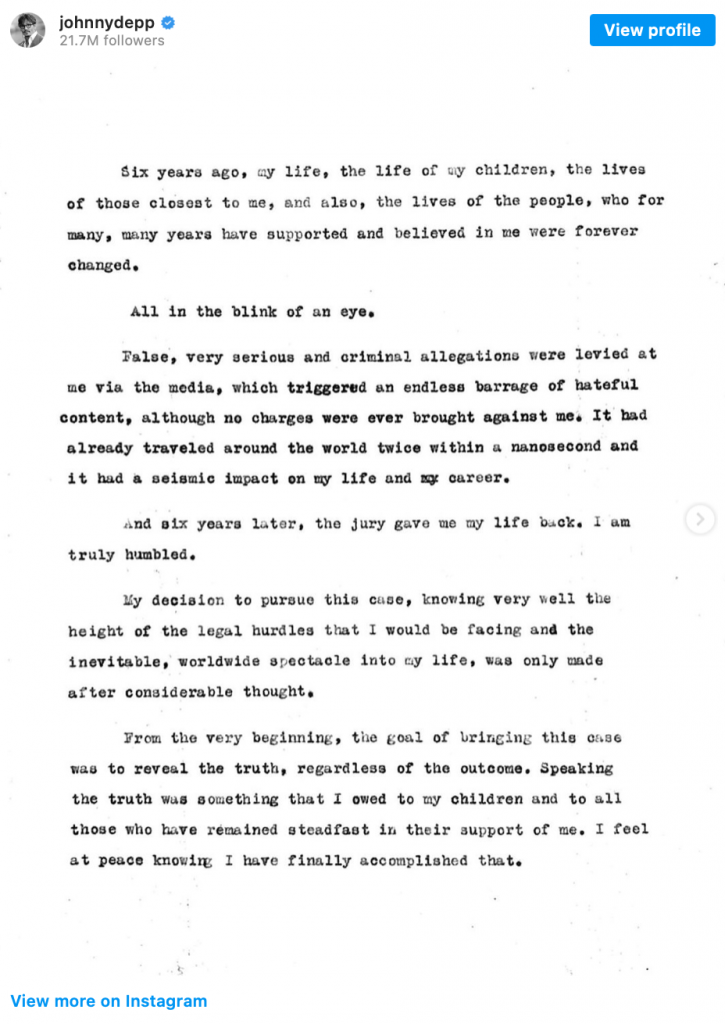
Depp said he was “truly humbled” by the jury’s verdict, saying the allegations had a “seismic impact” on his life and career.
“From the very beginning, the goal of bringing this case was to reveal the truth, regardless of the outcome,” he said.
“Speaking the truth was something that I owed to my children and to all those who have remained steadfast in their support of me.
“I feel at peace knowing I have finally accomplished that.”
Heard, who appeared downcast in court as the verdict was read out, said she was “heartbroken” at the conclusion.
She claimed it “sets back the clock to a time when a woman who spoke up and spoke out could be publicly shamed and humiliated”.
She added: “I’m sad I lost this case. But I am sadder still that I seem to have lost a right I thought I had as an American – to speak freely and openly.”
Depp was not in court to hear the jury’s decision and was instead spotted at a pub in Newcastle, following a series of appearances on tour with rock legend Jeff Beck this week.
Depp had sued Heard for $50m (£38.2m) over a first-person article published in The Washington Post in December 2018, in which she referred to herself as “a public figure representing domestic abuse”.
Heard‘s column did not mention Depp by name, but he argued it was an example of “defamation by implication” because parts of the column referred to allegations of abuse she made against him following their break-up in 2016.
Heard had issued a counter-claim for $100m (£76.4m) over statements calling her allegations a “hoax” made by her ex-husband’s attorney which were published in Mail Online stories in 2020.
US litigation lawyer Ryan Baker told Sky News that he was not surprised that Depp won overall as his lawyers did a “tremendous job” at undermining Heard’s credibility “time and time again”.
Following the verdict, Depp’s lawyers gave a brief statement outside the court in Fairfax, Virginia.
They said Heard’s claims were clearly “defamatory and not supported by any evidence” and that they were “so grateful to the jury for their careful deliberations”.
They added they were “truly honoured” to work with Depp on the case and that it was “now time to turn the page and look to the future”.
At the end of the six-week trial in Fairfax, Virginia, the actor’s legal team asked the jury “to give Mr Depp his life back”, saying the case was not about money but reputation, and “freeing him from the prison in which he has lived for the last six years”.
In his own closing argument, Heard’s lawyer Ben Rottenborn said the lawsuit was not about Depp’s reputation but was part of an ongoing smear campaign launched by the actor after Heard filed for divorce.
“In Mr Depp’s world, you don’t leave Mr Depp,” he said. “If you do, he will start a campaign of global humiliation against you.”
Mr Rottenborn said it was “ridiculous” that Depp was trying to “fool” the jury into believing he was never once abusive towards Heard.
During six weeks of testimony at Fairfax County Circuit Court in Virginia, the jury heard from friends – including supermodel Kate Moss– family members, medics, therapists and staff past and present who worked with and spent time with the former couple. Depp and Heard also took the stand twice each themselves, with both spending several days giving differing accounts of their relationship to the jury.
Shocking insights into their huge rows were detailed in court. Aside from the alleged physical violence, claims against Depp included an accusation that he held his dog out of a moving car window and that he painted messages in blood on the wall of a house in Australia after infamously severing his finger. He, in turn, accused Heard of defecating in their bed and faking bleeding injuries using nail polish.
As the plaintiff, or the person who launched the legal proceedings, Depp was the first of the pair to testify, telling the jury he is “obsessed with the truth” and claiming it was he who was the victim of domestic abuse during his relationship with Heard, not the other way round. He called his ex-wife’s allegations against him “heinous and disturbing”, saying they had “permeated” the entertainment industry and that he hoped the trial would clear his name.
When Heard took the stand, she made several allegations of physical and sexual abuse against Depp, breaking down in tears as she explained some in graphic detail. She told the court her ex-husband had been jealous of her co-stars including Eddie Redmayne, Billy Bob Thornton and James Franco, and that during one incident of alleged abuse she feared for her life.
Franco and tech billionaire Elon Musk, who dated Heard after her relationship with Depp ended, were due to testify during the trial – as was Depp’s friend Paul Bettany – but the high-profile stars were dropped from taking part due to time constraints.
In the opening statements, Depp’s lawyers said Heard was preparing for “the performance of a lifetime” during the hearing, while her legal team said the case would expose the “real” person behind the “fame” and “pirate costumes”.
A financial expert estimated Depp had suffered lost earnings of about $40m as a result of Heard’s allegations and plenty of his security guards and staff members corroborated his claims that on occasions, his ex-wife was violent towards him.
However, Heard’s witnesses said they saw evidence of physical abuse, with a make-up artist saying she had to cover up a lip injury and the actress’s sister saying she witnessed a fight between the former couple.
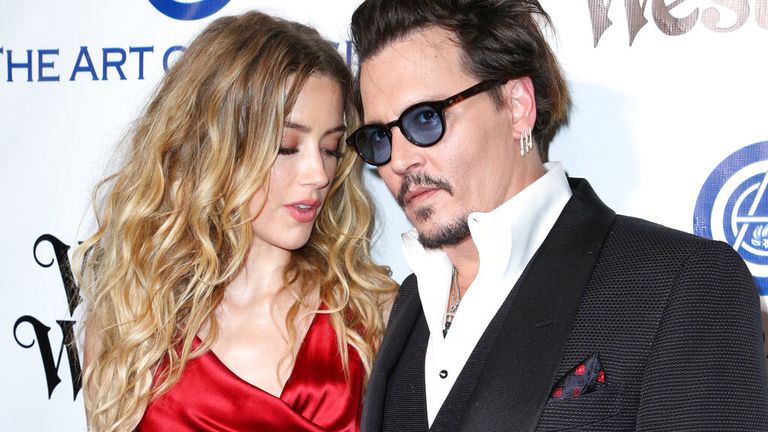
Depp and Heard started dating after meeting on the set of the 2011 film The Rum Diary and married in Los Angeles in February 2015. They split up in May 2016, with Heard filing for a restraining order shortly afterwards.
Depp asked the Court of Appeal to grant permission for him to challenge the ruling, with the aim of having its findings overturned and a retrial ordered, but the appeal was denied in March 2021.
Since the judgment in the UK case, Depp has been seen at a few industry events and picked up a lifetime achievement award from a major film festival in Spain – and more recently a medal of honour for his contributions to art in Serbia. He is also promoting his work as an artist.
However, film roles appear to have dried up for the former Pirates Of The Caribbean star, with his last movie Minamata, in which he played war photographer Eugene Smith, released in 2020. He will not be a part of a planned sixth Pirates Of The Caribbean film and was also dropped from the Harry Potter spin-off Fantastic Beasts 3, with Mads Mikkelsen later replacing him as Gellert Grindelwald.
Heard, who welcomed a baby daughter via surrogate in 2021, starred in Zack Snyder’s Justice League in 2021 and is set to appear in Aquaman 2 in 2023.
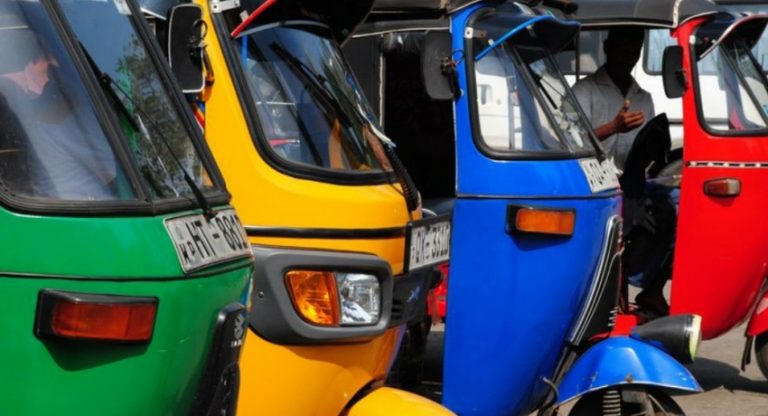
The new administration has been urged to intervene with the regulation of passenger transportation services for three-wheelers.
A request has been made to introduce a law to display the TAXI sign board, displaying the revised taxi fares which everyone can see clearly and to encourage the process of manufacturing and assembling solar powered electric three-wheelers locally, the All-Island Three-Wheeler Drivers’ Union President Lalith Dharmasekera said.
While addressing the media, he said there was no methodology to control the three-wheeler fares, but they could intervene with the process of displaying the fares.
“With the recent fuel price hike, the association has decided to increase the first km of the three-wheeler fare up to Rs.100 and Rs.80 for the second km onwards.”
Displaying the three wheeler fares has been mentioned in the Consumer Affairs Act, but it has been limited only to it,” “he said.
Due to improper implementation of the law, some taxi service agencies used to increase their fares to Rs.120 for the first km and Rs.100 for the second through their mobile applications, while some three-wheeler drivers who do comply with the taxi metres to charge fares but they do as they wish, he said.
Further, Dharmasekera said all arrangements are in place to locally manufacture and assemble solar powered electric three-wheelers.
He said with the introduction of such technology for three-wheelers, the government would be able to stop the flow of foreign exchange out of the country and it could also be a solution to the current fuel crisis.
There are about 1.2 million registered three-wheelers in the country, and at least 850,000 three-wheelers are engaged in passenger transportation.
However, there was no national policy on passenger transportation using three-wheelers and the service have not been registered at the National Transport Commission (NTC), he said.
“There is no legal framework to operate the three-wheeler passenger transportation service, though it has been gazetted since 2003.”
Even, during the COVID-19 moratorium period, no consideration was given for the people who used to earn their living by the service,” he said