Home Blog Page 2211

President Gotabhaya invites Tamil Diaspora to join to develop the North

0

President Gotabhaya Rajapaksa has invited the Tamil Diaspora to invest in development activities in the Northern Province.

The President made this request when he called on the Assistant Secretary of State for Political Affairs of the United States Department of State Victoria Nuland who is on a visit to Sri Lanka yesterday (23).

Gotabhaya Rajapaksa briefed Nuland on the progress made at yesterday’s All Party Conference, its progress and the discussions to be held with the TNA on Friday.

Appreciating the move, the US Assistant Secretary of State pointed out the importance of holding talks with the Diaspora in Canada, the United States and European countries, and President Gotabhaya Rajapaksa has stated that he is keen to hold discussions with the Diaspora.

Following is a note posted on the President’s official Facebook page in this regard.

President Gotabhaya Rajapaksa’s new approach is a step forward in considering the situation facing the country over the decades and the efforts made to find a solution to it.

Import Licenses aggravate Sri Lanka’s Economic Crisis – Advocata

0

367 goods determined as “non-essential” by the Ministry of Finance are allowed to import only by obtaining import license from the controller general of imports and exports control.

This move tightens already existing import restrictions on a series of imported goods ranging from electronic goods to fruits such as apples and oranges.

This policy change comes into effect in a market that is already facing acute shortages of essential goods. Imposing such a system of licensing will have a significant negative impact on an economy facing a severe crisis.

This step is the latest in an ever-tightening list of restrictions that have been imposed over the past two years. There is no evidence to suggest that this latest move will address the problem of the trade deficit any better than the previous policies in the same vein.

The authorities still seem to hope that an inflow from tourism will solve the balance of payments problem but current policies are threatening the long term sustainability of the export sector.

The proposed license regime will add to the costs of doing business. Net economic losses in the wider economy will increase as this restricts competition.

These economic inefficiencies will be transferred as costs that will have to be borne by consumers through higher prices, fewer jobs and reduced economic activity. This will add to the country’s economic woes and lead to new black markets and corruption.

The introduction of a licensing regime on imports has a negative impact on exports. This is due to some important items needed to produce exports need to be imported and because the profitability of import substitutes increases due to scarcity.

Advocata’s Academic Chair Dr. Sarath Rajapatirana comments that “Research done by Jagdish Bhagwati shows that a country’s trade strategy must be an export-oriented trade strategy. Implying equal incentives for export promotion as for import substitution”.

Therefore the current policy is counterintuitive. Investments will move away from exports to import substitutes and non-tradable goods sectors. Those who get import licenses will make high profits that will also induce what is called “rent-seeking”: A negative aspect of import licensing.

Import restrictions have caused market power to become concentrated among a few players in the supply of commodities such as tiles, rice, maize etc allowing them to enjoy supernormal profits, to the detriment of SME’s and consumers.

Costs of creating an import licensing regime include, losses in jobs as businesses will be put out of business, losses in output and misallocated resources.

The Advocata Institute calls for the immediate revocation of the policy decision. The government has taken some steps to address the macroeconomic imbalances, this needs to continue and be supported by comprehensive economic reform.

Macroeconomic reforms remain the key to addressing the foreign exchange crisis. Short term alternatives will further worsen economic conditions for both businesses and consumers alike.

With sound macro economic policy there will be no necessity for import controls. Advocata urges the government to eliminate import controls on consumer goods and if import restrictions are subject to some tariffs, apply the same rate to raw materials A lower rate tariffs on raw material will raise effective rate of protection and distort production and worsen shortages.

Existing import controls can jeopardize the future export potential of the country whilst significantly harming consumers.A large number of jobs will be lost as businesses are already experiencing the impact of shortages.Licensing creates a breeding ground for racketeering and corruption

UNP leader Ranil Wickremesinghe says the current crisis will continue for 5 years

0

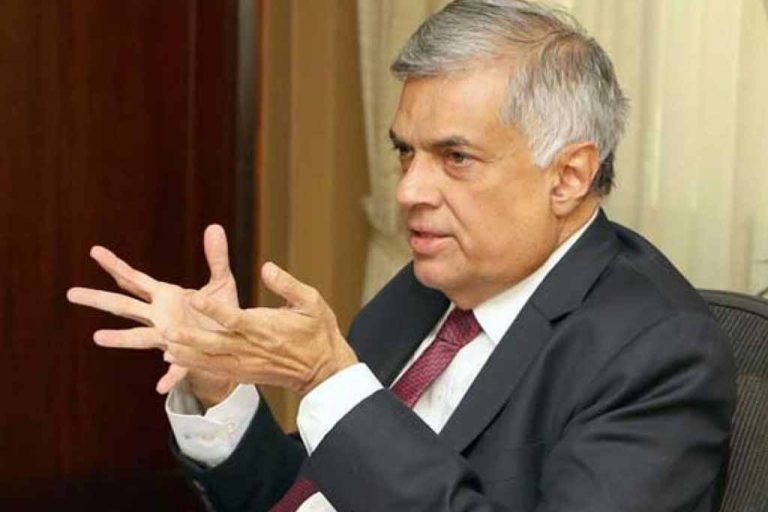
United National Party (UNP) leader and former Prime Minister Ranil Wickremesinghe fears the current crisis will continue for 5 years.

Speaking at the All Party Conference heldon Wednesday 23 , Wickremesinghe said that the two issues Sri Lanka is facing are to stabilize the economy in the next 2 years and to consolidate economic recovery.

“The reversal of economic policies has shaken the confidence between both the foreign and local investors.

This has resulted in many of our youth leaving the country. The only way to reverse the damage is if there is a consensus regarding the principles in relation to the country’s economic policy. Political parties must operate within this framework,” he said.

He said that the parties in Parliament must reach a national consensus on the short-term, medium term, and long-term policies for the country.

“This must be an open dialogue, where the Government should take the lead while the Opposition must be ready to respond.

To date we have not seen any transparency or commitment from the Government. They have failed to provide us with the relevant data nor have the tabled the full IMF report in Parliament,” Wickremesinghe said.

Wickremesinghe also said that the Central Bank and the Ministry of Finance must adhere to a single strategy and speak publicly in one voice

CTCLSA calls for  restructure of domestic debt not only foreign borrowing 

0

 In the wake of mounting domestic  borrowings , stockbroking firm CTCLSA  has suggested the government to restructure domestic debt along with foreign  debt restructuring as both issues aggravated to critical level. 

   The Finance Ministry has tightened domestic borrowing while controlling expenditure of ministries, departments and state institutions owing to its rising debt payments this year.

As per the existing budgetary estimates, the government debt to GDP ratio is to decline to 101.7 per cent of GDP in 2022 from 102.8 per cent in 2021.

The Sri Lanka Government debt is projected to trend around Rs. 1.95 trillion in 2022 and Rs. 2.2 trillion in 2023 from Rs.1.65 trillion in 2021, according to econometric models and provisional estimates of the Finance Ministry.

The domestic debt service payment this year is around Rs.80.72 billion and it is expected to increase to a high level if the government fails to control its domestic borrowings.

Restructuring of foreign debt must be accompanied by a similar exercise on domestic debt to derive fuller benefits opines stockbroking firm CTCLSA.

 Following President Gotabaya Rajapaksa, indicating seeking International Monetary Fund’s (IMF) assistance to fix the ongoing economic crisis, CTCLSA believes the IMF may suggest a Debt Restructure for Sri Lankan debt given its classification of the same stands at an “unsustainable” state.

In a research note, CTCLSA said with Sri Lanka’s Public debt to Gross Domestic Product (GDP) ratio standing at 119% as of 31 December 2021, a restructure of both domestic and external debt would be ideal for the economy to move ahead with acceptable reforms that could avert any similar crisis in the foreseeable future.

However, IMF data from 1980-2020 for Domestic Debt Restructures (DDR) and External Debt Restructures (EDR) suggest that if restructured by averting a banking crisis, the economy under restructure would manage to avert any real contraction in GDP following such reform.

CTCLSA argued that a domestic debt restructuring can be designed to limit bank losses. 

For example, the impact of a sovereign domestic debt restructuring on banks’ balance sheets has in some cases been limited when the restructuring did not involve any principal haircut but was designed as reprofiling with moderate loss. 

CTCLSA said most of the Sri Lankan foreign debt is in the form of International Sovereign Bonds (ISBs,) whilst the domestic debt is in Treasury Bonds.

Therefore ministries, departments and state institutions have been directed to control spending for development projects by cutting down overheads throughout 2022, ministry guidelines revealed.

A ceiling on domestic borrowing is now under consideration due to adverse effects on economic growth and effective usage of public debt is essential for Sri Lanka at present, a senior official of the ministry said. 

A large amount of funds was mobilised from the domestic money market by the Central Bank (CB) on behalf of the government to meet debt service requirements as well as to meet essential expenditure of the government.

The CB also provided required financing to the government arising from the shortfall in government revenue and increased expenditure.

 Total domestic borrowings will be raised by way of issuing Treasury Bonds, Treasury Bills, Sri Lanka Development Bonds (SLDBs) and Provisional Advance of the CB.

According to the latest data released by the Finance Ministry and published by the CB, the country’s total debt stock had ballooned to Rs.17.05 trillion by the end of October 2021, from Rs.15.12 trillion at the end of 2020, an increase of Rs.1.93 trillion during the nine months

Fourth Session of the Sri Lanka – United States Partnership Dialogue

0

The following statement is released by the Governments of Sri Lanka and the United States of America on the occasion of the Fourth Sri Lanka – U.S. Partnership Dialogue held on 23 March, 2022 in Colombo. 

Sri Lanka and the United States convened the Fourth Sri Lanka – U.S. Partnership Dialogue on 23 March, 2022, in Colombo, Sri Lanka, renewing their shared commitment to economic prosperity, sustainable development, democracy, human rights, and the rule of law.  The meeting was co-chaired by the Minister of Foreign Affairs of Sri Lanka Prof. G.L. Peiris and the Under Secretary for Political Affairs of the U.S. Department of State Victoria Nuland. 

Both delegations reaffirmed their commitment to the bilateral relationship, firmly rooted in shared values as fellow democracies, and their intent to work together to further strengthen the partnership.   

Sri Lanka expressed its deep appreciation to the United States for the donation, in partnership with COVAX, of 3.4 million vaccines, and the provision of over $18 million in health equipment and other relief to address the COVID-19 pandemic in the past year. 

Acknowledging that the U.S. is already the largest market for Sri Lankan exports, both delegations reiterated their intent to explore new opportunities to enhance market access, bilateral trade, investment, and tourism.  The United States expressed its commitment to enhancing opportunities for the economic empowerment of women.  To that end, Sri Lanka welcomed the role of the U.S. International Development Finance Corporation (DFC), which has increased its portfolio to $265 million in loans designed to support Sri Lanka’s small and medium enterprises, particularly women-owned businesses.  Sri Lanka also appreciated the provision of U.S. funding to launch the first business accelerator in Sri Lanka, specifically aimed at women entrepreneurs. 

Both countries committed to working together to address climate change and other environmental challenges.  The United States welcomed Sri Lanka’s goal to produce 70 percent of electricity from renewable energy by 2030, and to attain carbon neutrality by 2050.  Ongoing U.S. grant assistance to help meet these goals, including a five-year $19 million Sri Lanka Energy Program and support towards a floating solar plant, were noted with appreciation.   

The United States informed its intent to continue supporting the sustainable development of Sri Lanka through the U.S. Agency for International Development.  The U.S. delegation reaffirmed its commitment to promote school nutrition and literacy among Sri Lankan children, in consultation with the Sri Lankan Government.  Sri Lanka appreciated the successful nutrition campaign conducted by Save the Children in 2021 which benefited over 106,000 primary grade students.  

Sri Lanka and the United States resolved to continue cooperation on maritime security and work together to ensure a safe maritime domain in the Indian Ocean through the rules-based international order.  In this context, the U.S. strategy towards a free, open, and prosperous Indo-Pacific region, which promotes freedom of navigation and overflight, was noted as an important initiative.  Sri Lanka welcomed the impending arrival of the third High Endurance U.S. Coast Guard Cutter transferred through the U.S. Excess Defense Articles program.  The United States noted the recently announced King Air program to strengthen Sri Lanka’s maritime monitoring capacity and respond to humanitarian and post-disaster needs.  Sri Lanka welcomed U.S. support in the prevention of smuggling and other illegal activities.      

Both delegations welcomed ongoing bilateral defense and security sector cooperation, including U.S. support for humanitarian demining and disaster relief, joint military engagements, human rights training for Sri Lankan officers, and exchange of visits, including by U.S. ships and military officials. The United States resolved to explore opportunities to further expand counter-terrorism cooperation with Sri Lanka.

The United States welcomed action taken by Sri Lanka to promote reconciliation and human rights in pursuit of development and prosperity.  Sri Lanka outlined its progress in reconciliation, in promoting and protecting human rights, and in strengthening democracy, democratic institutions and practices, good governance, justice and the rule of law.  The United States acknowledged progress in these areas, including efforts to reform the Prevention of Terrorism Act (PTA), the release of long-term PTA detainees, the justice reform agenda, and engagement with civil society representatives.  The United States encouraged Sri Lanka to continue making progress on its commitments to reconciliation and human rights.   

Both delegations expressed strong support for ongoing cooperation between the two countries in education and culture.  The United States emphasized the value of educational exchanges, highlighting the 70th anniversary of the U.S.-Sri Lanka Fulbright Program and its contribution to Sri Lanka’s development. The United States expressed interest in working together to further expand opportunities for university partnerships and overseas study for Sri Lankan students that would benefit both countries.  Both delegations welcomed ongoing efforts to preserve and celebrate Sri Lanka’s rich cultural heritage through cultural heritage funding received from the U.S. over the last 17 years.  The delegations decided to continue collaboration to provide English Language teaching, teacher training, curriculum development, and other support to strengthen Sri Lanka’s education sector.  

Sri Lanka and the United States emphasized the importance of the bilateral relationship, and decided to continue cooperation on a broad range of areas to further strengthen the partnership for mutual benefit. 

Ambassador Kananathan presents Credentials in Guinea

0

Sri Lanka High Commissioner in Kenya Veluppillai Kananathan presented the Letter of Credence appointing him as the Ambassador of Sri Lanka to Guinea with residence in Kenya, to His Excellency Mamady Doumbouya, President of Guinea at the Presidential Palace in Conakry on 11th March, 2022.

After the presentation of credentials ceremony, President Doumbouya invited the Ambassador of Sri Lanka to a brief meeting to exchange views on the status of bilateral relations and other issues of common interest. At the outset the President of Guinea said that he was delighted to receive Ambassador Kananathan as the first Ambassador from Sri Lanka presenting Credentials in Guinea and remarked it as ‘historic’ in the bilateral relations between the two countries.

Ambassador Kananathan conveyed the greetings and best wishes of President Gotabaya to President Doumbouya. In response, President Doumbouya thanked the Ambassador and requested him to convey his felicitations and sincere good wishes to President Gotabaya Rajapaksa.

After sharing views on the prospect of maintaining close relations between the two countries, the President and the Ambassador underlined the need to activate the diplomatic relations between the two countries into a performing cooperation involving promising economic activities to reach its true potential.

Ambassador Kananathan informed the President of Guinea that the Sri Lanka government headed by President Gotabaya Rajapaksa in Sri Lanka had successfully handled the COVID-19 pandemic including the new variant in Sri Lanka with effective governance, strategy for epidemic prevention and control measures as well as inoculated more than 81% of the population against the COVID-19. President Doumbouya commended the effective and dynamic vaccination drive lead by President Gotabaya Rajapaksa in Sri Lanka and wished him every success in his efforts to swiftly revive the pandemic affected economy.

Further, Ambassador Kananathan briefed the President of Guinea on the progress achieved in addressing the post-conflict issues and the commitment of the Government of Sri Lanka to address all remaining issues expeditiously. He also said that the internal mechanisms established in this regard are performing well to reach the goals efficaciously. The President of Guinea responded saying that Guinea will support Sri Lanka at the multilateral forums in order to recognize Sri Lanka’s efforts to achieve the identified targets to resolve the post-conflict issues.

President Mamady Doumbouya recalling Ambassador Kananathan’s connections with Guinea as an entrepreneur in Africa and his past role as Adviser on Investments to the former President of Guinea Alpha Condé, thanked him for bringing in foreign investments in maize cultivation and sugar industry through the Investment Promotion Agency of Guinea (APIP). The President further said that as Ambassador to Guinea he could bring more investments to Guinea from Sri Lanka to invest in diverse fields under the most beneficial and lucrative terms and conditions presented for FDIs in Guinea, which will create a win-win situation.

The President remarked that as a friend of Guinea who was familiar with Africa and in particular with Guinea and well-informed of the potential areas for cooperation to be developed, Ambassador kananathan had the exceptional capacity to enhance the political and economic relations between Sri Lanka and Guinea for the benefit of both countries. The meeting ended with President assuring the Ambassador Kananathan of his government’s support and wishing him good luck to achieve the identified goals and objectives in the relations between Sri Lanka and Guinea.

High Commission of Sri Lanka

Nairobi

23 March, 2022

Burger King holds a quiet stake in its Russian franchisee even as it publicly distances itself, leaked records show

0

Burger King holds a quiet stake in its Russian franchisee even as it publicly distances itself, leaked records show

The fast-food giant is a partner in a Cyprus-registered joint venture with VTB Bank, known as Putin’s “piggy bank,” that shuffled money to and from an anonymous shell company in Seychelles.

By Scilla Alecci

Even as Burger King publicly cuts off support to its Russian operation, the fast-food giant has quietly kept a stake in it through an offshore joint venture, leaked documents show.

Burger King’s parent company, Toronto-based Restaurant Brands International Inc., acknowledged the stake after the International Consortium of Investigative Journalists sent questions about its Russian holdings. It then announced it is trying to sell the shares but said it can’t be done quickly.

The company owns its stake through a Cyprus-registered joint venture that includes VTB Bank, a sanctioned, state-owned Russian bank, and a Ukrainian investment firm that Kyiv prosecutors once accused of helping Ukraine’s extravagantly corrupt former leader.

Another shareholder was a Cypriot company belonging to Alexander Kolobov, a Russian restaurant mogul who runs Burger King’s operations in the country.

The documents, leaked to ICIJ as part of the 2021 Pandora Papers project, show that all four shareholders of the joint venture owned their stakes at times through shell companies in tax havens.

The documents also reveal that the Cyprus joint venture previously made a loan to, and received a $1 million payment from, an anonymous shell company registered in the Seychelles, one of the most notoriously secretive jurisdictions in the offshore system.

After ICIJ sent questions about its Russian operations last week, Restaurant Brands International posted a statement on its website saying it wants to sell its stake in the business.

“While we would like to do this immediately, it is clear that it will take some time to do so based on the terms of our existing joint venture agreement,” the statement said.

In an emailed response to ICIJ, the company said, “We have asked the master franchisee to suspend the Russian business with immediate effect. They have refused and due to the franchise structure and current agreements, we do not have the ability to force them to close.”

The leaked records show that the joint venture, Burger King Russia Ltd., partly owns the Russian franchisee, Burger Rus LLC. The Toronto-based parent company said it has no control over it.

The revelations of Burger King’s quiet equity stake compounds the fast-food giant’s complications in the Russian market. While rival McDonald’s and other fast-food multinationals have ceased operations in the country in response to Russia’s invasion of Ukraine, Restaurant Brands International says it can’t do the same due to its “fully franchised” Russian operations. It has instead suspended “corporate support” for the restaurants and redirected profits from its 800 Russian outlets to Ukrainian refugee relief efforts.

Burger King owns its 15% stake in the Cyprus joint venture, Burger King Russia, through a European unit, based in Switzerland.

Another shareholder, Investment Capital Ukraine (ICU) owned its 35% stake in Burger King Russia through another Cyprus-registered firm, according to the records. ICU announced plans to sell its stake on March 5.

“Given the current situation, ICU has concluded that we will be exiting Russian investments,” a spokesperson told ICIJ.

The sanctioned VTB Bank, Russia’s second largest, had owned its stake in the joint venture through a company registered in the tax haven of Guernsey, an island in the English Channel.  The Pandora Papers show VTB, known as Russian President Vladimir Putin’s “piggy bank,” later transferred the stake to a Russian-registered company. Cyprus’ registry data shows the VTB-controlled company holds about 20% of the joint venture.

The leaked documents illustrate the political and financial perils Western multinationals face when investing in the Russian market, where rule of law is weak and corporate transparency hard to come by.  They describe how Burger King’s Russian operations started and thrived, thanks to its partnership with shell companies in shadowy offshore jurisdictions. They also show the complexity of business deals that rely on politically connected partners like VTB, the state-owned bank whose role is to connect Russia to international markets.

Burger King’s partnership with VTB puts the fast-food chain into a “very difficult place” because the U.S. issued “full blocking sanctions” against the bank, said Maria Snegovaya, a Russian political scientist and visiting scholar at George Washington University.

“VTB can provide really great credit conditions for the company so they get a lot of money to invest to grow their business,” Snegovaya said. But it also “makes it more dependent on the Kremlin.”

VTB did not respond to ICIJ’s questions about the joint venture.

ICIJ

​US Under Secretary for Political Affairs Nuland meets with President Rajapaksa

0

The Under Secretary for Political Affairs of the U.S. Department of State Victoria Nuland met with President Gotabaya Rajapaksa this (23) afternoon on her two day official visit to Sri Lanka.

The Under Secretary was briefed on the remarks made during the All Party Conference convened by the President this morning and the progresses made. She was also informed about the upcoming Friday meeting with the Tamil National Alliance (TNA) to which the Under Secretary expressed her admiration.

Nuland raised the importance of negotiating with the Diaspora in Canada, the United States of America and other European countries. In response, President Rajapaksa said he is eager to hold discussions with the Diaspora while inviting them to invest in the development projects undertaken in the Northern Province.

Under Secretary Nuland added that steps would be taken to introduce green technology of the US to Sri Lanka and to support the development of the cyber and information technology sectors.

Shedding light on the educational facilities in the country, the Under Secretary emphasised that higher education opportunities could be expanded with the assistance of the private sector.

The President told the Under Secretary that he had decided to seek the International Monetary Fund’s (IMF) assistance to avoid the impact of the Covid-19 pandemic and other events on the country’s economy. Appreciating the decision, Nuland assessed the Sri Lankan government’s move of amending the Prevention of Terrorism Act (PTA).

The Sri Lankan President called on the US delegation to assist in expanding the potential for renewable power generation.

MIAP

Customs seize four containers of cocaine

0

Customs officers have seized 350 kilograms of cocaine amounting to Rs. 06 billion loaded in four containers at the Colombo Port.

These containers of cocaine had arrived at the Colombo Port from Panama via Belgium and Saudi Arabia and was ready to be shipped backed to India.

The papers claimed the containers contained scarp metal but a search carried out by the Ports Authority of Sri Lanka Customs revealed that the containers of cocaine had been imported under the pretext of scarp metal.

The cocaine stocks will be handed over to the Police Narcotics Bureau upon preliminary investigations.

Finance Minister Rajapaksa to table amended budget ahead of Sinhala-Tamil New Year

0

The government will be providing relief to the people for the upcoming Sinhala and Tamil New Year festive season said Finance Minister Basil Rajapaksa.

Accordingly, the relevant measures will be taken in the next few days and it will be possible to curb the pressure exerted on the public to a certain extent, he noted.

The Finance Minister is set to table an amended budget in this regard and the budget will be tabled ahead of the festive season if the government and the Cabinet approve it.

Addressing the All Party Conference convened by President Gotabaya Rajapaksa today (23) the United National Party (UNP) and the Sri Lanka Freedom Party (SLFP) urged that the budget tabled in Parliament this year be amended or relief be provided to the people. The Finance Minister responded that he could agree to the request.

MIAP