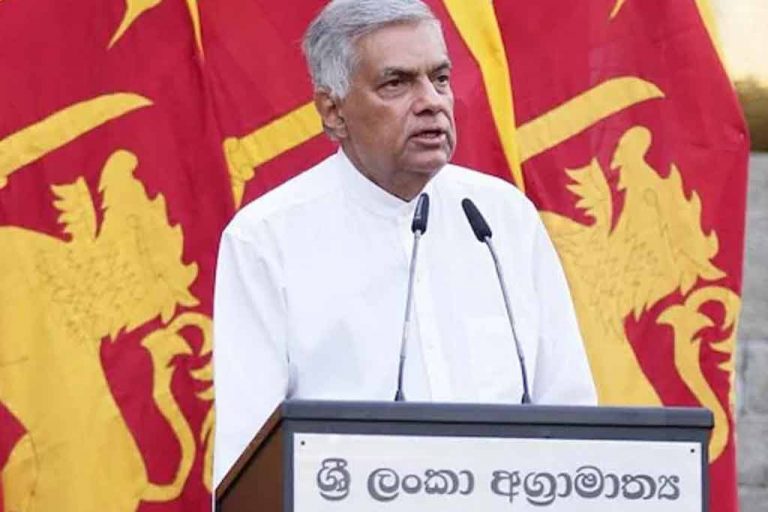
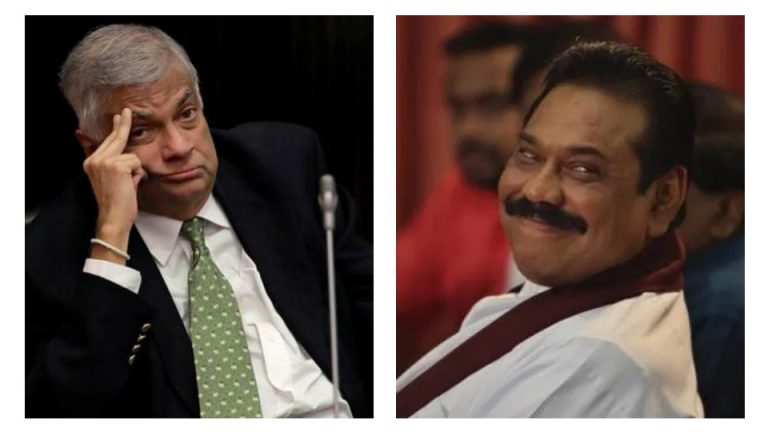
Prime Minister Ranil Wickremesinghe says the next few months will be the most difficult period for Sri Lankans.
He said there was no alternative but to print money to pay the salaries of public servants this month and the rupee would depreciate further during printing.
He also said that there was a shortage of medicines for heart patients, including equipment for surgeries, adding that there was a shortage of 14 essential medicines and it was unfortunate that the Medical Supplies Division was not able to supply at least two of them at present.
He said those two drugs were, one given to heart patients and the second is a rabies drug and that there was no alternative medicine for rabies drug.
Following is the full text of the Prime Minister’s address to the nation.
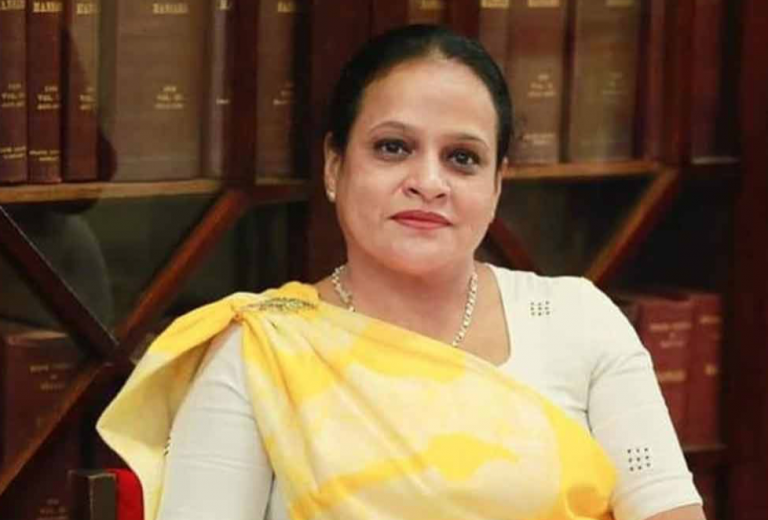
According to political sources, Rohini Kaviratne, who has been nominated by the Samagi Jana Balawegaya for the post of Deputy Speaker of Parliament, will be elected unopposed.
Hambantota District Parliamentarian Ajith Rajapaksa from the SLPP had previously stated that he would run for the post. If so, a vote will have to be taken for the post of Deputy Speaker.
However, no election will be held in Parliament today (17) and Rohini Kaviratne will be elected unopposed to the relevant post, sources said.
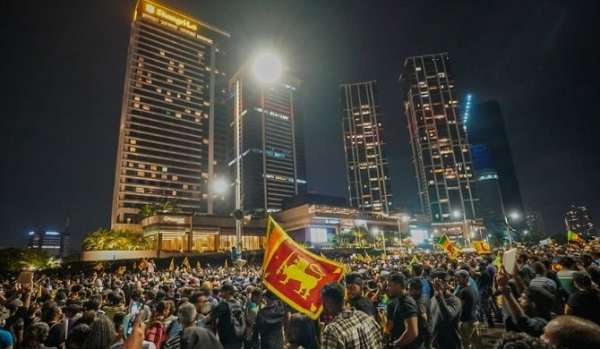
The protest, which had been going on peacefully for more than a month at the Galle Face Green by the people, was attacked on May 9 by a group of supporters of then Prime Minister Mahinda Rajapaksa and led by a group of leaders of the SLPP.
Eight days have passed since the attack, but only one person has been arrested so far. He is also a minor employee of the Moratuwa Municipal Council.
But nearly 400 protesters who have fought back in response to the attack have already been arrested.
Society is also pressing for the law to be enforced against the perpetrators and the thugs who carried out the attack. In that situation, the new Prime Minister Ranil Wickremesinghe has assigned his party’s Deputy Leader Ruwan Wijewardene to look into the matter.
According to reports, Ruwan Wijewardene also inquired about this on a daily basis but to no avail.
There is a power here that is preventing the arrest of the people involved and the question is who he is. Sources said that the life expectancy of the new government will depend on the control of the person who prevents these arrests. This is because the way in which the law of the land is being enforced is being shamelessly exposed to all the people of the country through this incident.
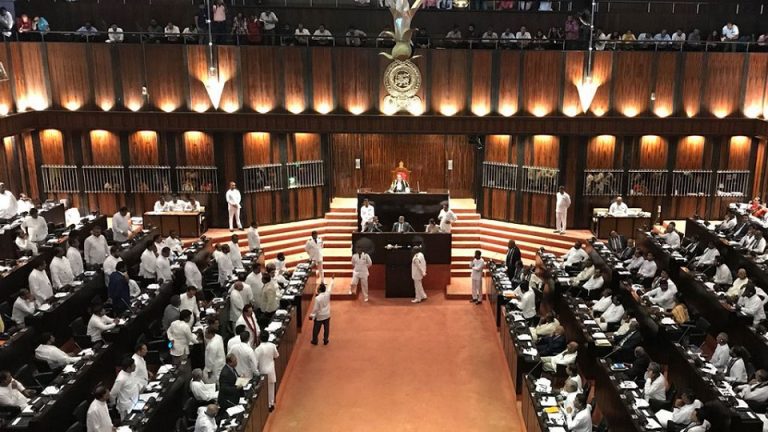
Parliament is due to convene today (17) for the first time since the appointment of a new Prime Minister in the face of the current political crisis.
A change in the allocation of seats for Members of Parliament will also be made today and Ranil Wickremesinghe, who has been in the Opposition so far, will be sitting with the Members of the Sri Lanka People’s Front today in the seat held by the Prime Minister of the ruling party.
Former Prime Minister Mahinda Rajapaksa will also be allotted a front row seat in the ruling party.
Meanwhile, a special meeting of the Committee on Parliamentary Affairs has been convened today at 8.30 am.
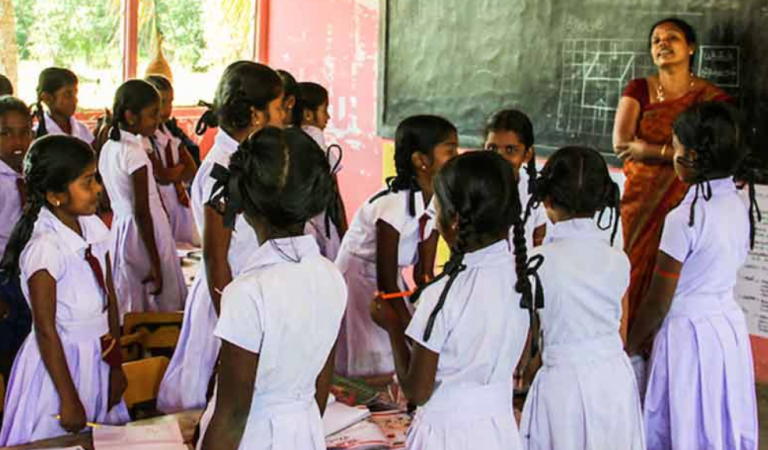
The Ministry of Education states that the activities of all schools on the island will commence as usual from today (17).
On May 9, supporters of former Prime Minister Mahinda Rajapaksa launched an attack on the Gulface protest, prompting curfews and disrupting school operations.
However, the curfew was lifted at 5.00 am today and school activities are scheduled to resume as usual, said Lalitha Egodawila, Additional Secretary for School Affairs at the Ministry of Education.
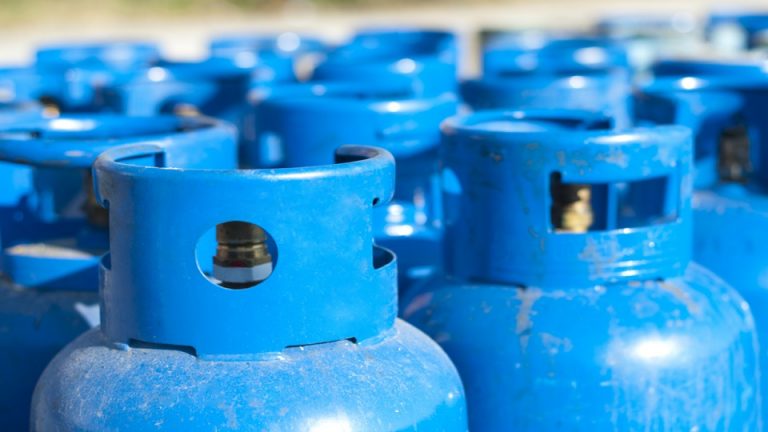
Despite initial supply issues,the new administration headed by Prime Minister Ranil Wickremasinghe has taken immediate action to ease worries of a fuel and LP gas shortage of consumers who are being forced to wait in long queues to buy gas cylinders or fuel ,official sources said.
Special committee headed by former minister Sagala Ratnayake appointed by the new PM announced that they will be able to issue uninterrupted gas and fuel supplies to the market and fuel filling stations soon .
Thiswas revealed at a special discussion held with the participation of former minister Sagala Ratnayake , Minister Kanchana Wijesekera , top officials of the Central Bank, Finance Ministry, Ceylon Petroleum Corporation (CPC), Litro gas company and the Bank of Ceylon.
It has been revealed that there was an issue of making payments for fuel shipments at present due to dollar shortage at present but all attempts will be made to clear fuel shipments which will be arriving in the country and which already anchored at the Colombo port.
A stock of Diesel from an oil tanker is unloading at the port and another Diesel shipment is expected to arrive in the island on May 19.and a LP gas shipment will reach Colombo port on May 17.
Litro noted that this tanker carrying 3500MT of gas reached the country on Monday (16).The Chairman of Litro Engineer Vijitha Herath said that US $7 Million will be paid for the shipment on Tuesday (17).
He further said that the distribution of the gas will start on Wednesday (18) after unloading commences tomorrow (17).
The Litro gas company official noted that it will be able to issue 100,000 gas cylinders to the market daily in the coming days and prevent any shortages.
However, he claimed that the company is facing heavy losses at the moment and that if it continues, it might have to suspend operations in the near future.
He noted that the company incurs a net loss of Rs. 2,000 per cylinder due to high global market prices.
Statement by the Federation of University Teachers’ Associations on the Appointment of Ranil Wickremesinghe as Prime Minister
As the national trade union representing university academics, which has stood firmly behind the ongoing people’s struggle for democracy and economic stability, the Federation of University Teachers’ Associations (FUTA) strongly condemns the non-consultative and self-serving appointment of Mr. Ranil Wickremasinghe as Prime Minister of Sri Lanka by President Gotabhaya Rajapaksa on 12 May 2022. On the Prime Minister’s position becoming vacant because of the resignation of Mr. Mahinda Rajapaksa on 09 May 2022, it was incumbent on the President, as stated in the Constitution, to appoint as Prime Minister the Member of Parliament “who in his opinion is most likely to command the confidence of Parliament.” This does not mean that he can appoint anyone whom he wishes to, for personal or political reasons. In fact, it is apparent that whether or not Mr. Wickremasinghe commands a majority in Parliament is being explored after his appointment as Prime Minister. This is totally unacceptable.
We wish to remind both Mr. Gotabhaya Rajapaksa and Mr. Ranil Wickremasinghe that all momentous changes in the political establishment in recent weeks have been prompted by the demands of the people’s protest movement. The former Prime Minister, among others, was forced to resign only because of the unrelenting demands of the people. The possibility of the appointment of an all-party interim government was created only because of the protest movement. What is clear to the citizenry now is that this democratic opening was hijacked by the President to appoint his own favoured candidate.
We are not satisfied that the President pursued talks with all the political parties to the maximum extent to explore the possibility of an all-party or multi-party interim government. Hence, the unprecedented move by President Gotabhaya Rajapaksa can only be interpreted as an undemocratic and corrupt political deal between himself and Mr. Ranil Wickremesinghe, further evidenced by the ready support of the President’s party for Mr. Wickremasinghe. This manipulation of the political process in blatant disregard of the people’s struggle to address the political and economic crises further escalates the President’s confrontation with the citizenry.
Mr. Wickremesinghe has gone on record to state that he never requested that he be so appointed. He claims that he was invited by the President, with no other support from his own party and no written pledges of support from any other. Moreover, Mr. Wickremasinghe has an extraordinarily poor electoral track record with the highest number of consecutive electoral defeats for his party, being unable even to secure his own election at the last General Election. In addition, there are widespread allegations that he has continued to protect and serve the Rajapksa interests, and has been implicated in the infamous Central Bank fraud, either directly or via its covering up, to name only a few of his disqualifications. He stands for precisely what the present protest movement seeks to eliminate from this country’s political framework.
FUTA reiterates the people’s demand for the immediate resignation of the President and the establishment of an interim government that is both democratically credible and constitutional. Any such interim government should take immediate steps to abolish the Executive Presidency and other demanded political reforms which would guarantee accountable governance. If President Rajapaksa continues to undermine the democratic demands of the people and persists with political deals to prolong the inevitable and overdue end of his reign, that will surely lead to disastrous consequences both on the economic and political fronts.
FUTA appeals to all international actors to ensure that engagement with Sri Lanka heeds the people’s demands which have been clearly articulated by the tremendous democratic struggle that is being led by the vibrant and dynamic youth movement termed the ‘Aragalaya’ [the struggle]. While international support to address the extreme economic hardships borne by the people is welcome, we urge that the people’s sovereign will not be undermined by legitimizing the present undemocratic political deal and the machinations that will inevitably follow.
The argument that at the moment Mr. Wickremesinghe alone holds the respect of international actors is false, and is based on perception stemming from class and ideological bias. Such oversimplifications add insult to injury to the democratic demands of the people of Sri Lanka who are more than ever convinced that only legitimate and accountable governance will guarantee economic and other forms of stability required to move forward with confidence and dignity.
FUTA remains committed to working alongside other trade unions and people’s movements to address the current crisis. Out of the historically significant protest movement and resistance of the people, especially the youth, a visionary and democratic political leadership must find solutions to the long festering problems of Sri Lanka. — Rohan Laksiri
General Secretary Federation of University Teachers’ Associations (FUTA).
Aruni Goonathileke Chairman of HNB in a public group says no one will accept Ranil Wickramasinghe as Prime Minister.
Next she says that she feels like asking Mahinda Rajapakse who is hiding in Trincomalee after creating mayhem to return re take the Prime Minister post.
This must surely be a April fools joke. Or is she fearing her lending at Peoples Bank to bankrupt businessmen will get exposed?
It is best for officials of regulated institutions like Banks to stay away from such political comments and insinuations publicly that can embarrass the institutions.
Sri Lanka is sliding inexorably into default as the grace period on two unpaid foreign bonds nears an end, the latest blow to a country rattled by economic pain and social unrest.
The island nation could be formally declared in default if it fails to make an interest payment to bondholders before Wednesday, when the 30-day grace period for missed coupons on dollar bonds ends. That would mark its first default.
Sri Lanka’s government announced in mid-April it would stop paying back its foreign debt to preserve cash for food and fuel imports as it struggled with a dollar crunch that’s led officials to implement capital controls and import curbs. A few days later, it failed to service a $78 million coupon on its dollar bonds due in 2023 and 2028, leading S&P Global Ratings to declare a selective default.
“Without an agreement, there will be a formal default,” said Carlos de Sousa, a money manager at Vontobel Asset Management in Zurich. “Legally that matters. But for markets, Sri Lanka is already de facto in default, so the price effect of such an event is probably not going to be significant.”
Sri Lankan dollar notes due in 2029 were down 1.2% to 38.7 cents on the dollar Monday, after touching an all-time low of 37 cents on the dollar last week, indicative pricing data compiled by Bloomberg showed. The extra yield investors demand to hold the notes over US Treasuries is at 37 percentage points, according to JPMorgan Chase & Co. That’s far above the 1,000-basis point threshold to be considered distressed.
While a default is widely expected by investors, it has important implications. Many of Sri Lanka’s bonds have so-called cross-default clauses, which drag all the outstanding dollar debt into default if there’s a missed payment in a single bond. On the debt due in 2023 and 2028, the clause is triggered if any payment that exceeds $25 million is not met.
“At this point most bondholders who are unwilling or unable to hold distressed credits should already have cleared out,” said Patrick Curran, a senior economist at Tellimer.
Sri Lanka has been rattled by power cuts, food shortages, and a currency in free fall, which fueled protests and pushed Prime Minister Mahinda Rajapaksa to resign. His brother, President Gotabaya Rajapaksa, last week appointed a long-time opponent to run the government in a bid to bring a modicum of stability to the country amid bailout talks with the International Monetary Fund.
As of Sunday night, the country hadn’t yet named a finance minister. The central bank governor has threatened to quit if political stability doesn’t return soon. The monetary authority is due to review policy May 19.
“The prime minister quitting was something that was really needed,” said Dean Tyler, the London-based head of global markets at BancTrust, who sees the recovery value of the notes between 35 and 45 cents per dollar. “Hopefully, it will start to clear the air and clear the streets.”