December 22, Colombo (LNW): Teachers’ trade unions have warned that they will resort to industrial action if the government fails to deliver a clear response on the proposed extension of school hours by January 05, 2026.
Union representatives met Prime Minister Dr Harini Amarasuriya earlier today at the Ministry of Education, where discussions centred on wider education reforms and the controversial plan to lengthen the school day.
The meeting followed growing unease among educators, who argue that any changes must be preceded by proper consultation and clear safeguards for teachers and students alike.
Union officials said they had previously prepared to launch protest action on December 12 but decided to postpone it in the hope that dialogue with the authorities would lead to a resolution.
They noted that during today’s talks, the Prime Minister listened to their concerns and indicated that the issues raised would be reviewed before a final decision is taken.
Despite this assurance, the unions stressed that patience is wearing thin and that meaningful engagement and a firm position from the government are essential to avoid disruption to schools in the coming months.
Teacher Unions Set Deadline Over Proposed Extension of School Hours

UN Praises Sri Lanka’s Disaster Response: Govt Reaffirms Commitment to Recovery
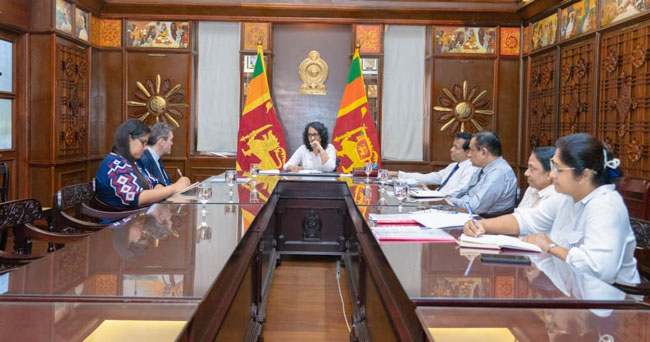
December 22, Colombo (LNW): Prime Minister Dr Harini Amarasuriya met with the United Nations Resident Coordinator in Sri Lanka, Marc-André Franche, at the Prime Minister’s Office on 20 December 2025 to review the country’s response to the recent natural disasters and the progress of relief efforts.
According to an official statement, Mr Franche expressed strong appreciation for the speed and coordination shown by the Government in reaching affected communities and delivering emergency assistance. Drawing on comparisons with crisis responses in other parts of the world, he observed that Sri Lanka has received an unusually high level of international backing, reflecting confidence in the country’s response mechanisms.
He also assured the Prime Minister that he would fully apply both his official role and personal dedication to mobilise continued international support, ensuring that Sri Lanka receives the help required during the recovery phase.
Prime Minister Amarasuriya, in turn, thanked the United Nations for its sustained cooperation and support. She noted that the combined efforts of political leadership and public officials, from district-level administrators to frontline personnel, had played a decisive role in managing the situation effectively.
She further reaffirmed the Government’s commitment to ensuring transparency and efficiency in the use of international assistance, while prioritising the swift restoration of normal life for families and communities impacted by the disaster.
The discussion was also attended by Secretary to the Prime Minister Pradeep Saputhanthri and Secretary to the Ministry of Education Nalaka Kaluwewa.
Prime Minister Pledges People-Centred Economic Reforms and Expanded Public Service Recruitment
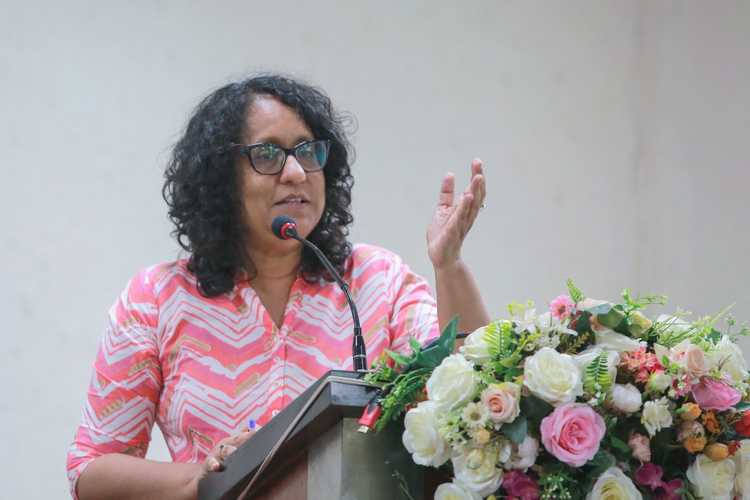
December 22, Colombo (LNW): Prime Minister Dr Harini Amarasuriya has said the government is committed to steering the economy in a way that improves everyday life for citizens, rather than promoting privilege for a select few.
Speaking at a scholarship award ceremony in Kilinochchi, she explained that the administration’s new policy framework is designed to produce practical results for communities across the country. She stressed that the success of these plans depends heavily on close cooperation between central ministries and provincial administrations.
The Prime Minister also revealed that preparations are under way to tackle long-standing staff shortages in the public sector, including a significant number of unfilled teaching posts, with recruitment measures expected to be implemented in 2026.
Dr Amarasuriya was addressing an event held at the Nelum Piyasa Hall within the Iranamadu Army Camp, organised to honour high-achieving students from the Northern Province. Students who recorded exceptional results at the 2024 G.C.E. Advanced Level Examination were recognised, with scholarships awarded through the Presidential Fund to support their future studies.
Sri Lanka Among Countries Hit as Washington Plans Broad Diplomatic Reset
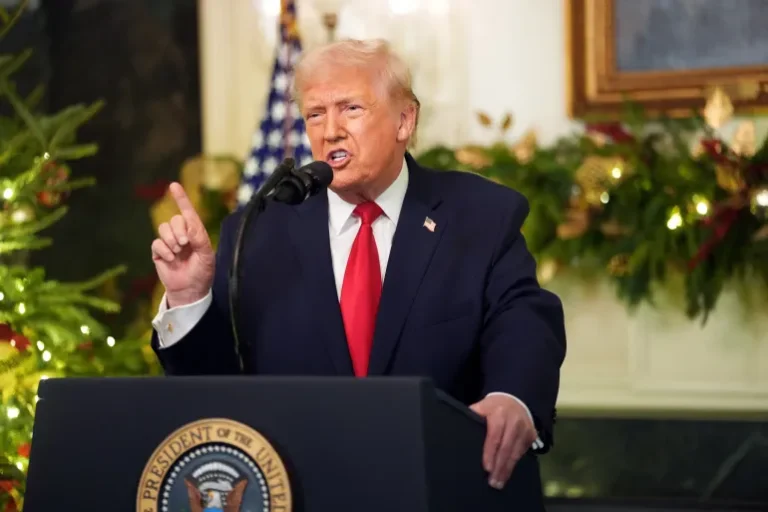
December 22, Colombo (LNW): Sri Lanka has been included in a sweeping diplomatic shake-up by the Trump administration, which is preparing to rotate out nearly 30 senior American envoys as part of a wider effort to realign the United States’ overseas presence with President Donald Trump’s “America First” agenda.
According to officials familiar with the matter, the US Ambassador in Colombo is among a group of career diplomats who were recently told that their assignments would conclude early next year. Similar notifications were issued to chiefs of mission across close to 30 countries, with most of the affected diplomats having assumed their roles during the previous administration.
While many of these envoys had initially weathered the early months of Trump’s second term—when political appointees were the primary focus of removals—the latest round marks a broader recalibration. Messages from Washington began reaching embassies midweek, signalling that a more comprehensive personnel review was under way.
US ambassadors formally serve at the president’s discretion, though they commonly remain in post for several years. Those being recalled are not being dismissed from the foreign service; instead, they are expected to return to Washington and may be reassigned to other roles if they choose.
The State Department has avoided confirming exact figures or naming specific countries, but has played down the significance of the changes. Officials described the move as routine for any new administration, emphasising that ambassadors act as the president’s personal representatives abroad and are expected to reflect his policy priorities.
Africa appears to be the region most heavily affected, with more than a dozen ambassadorial posts earmarked for change, spanning countries from West, East and Southern Africa. Asia follows, where several Pacific and South-East Asian missions are set to see new leadership. A smaller number of posts in Europe, the Middle East, South and Central Asia—including Sri Lanka—and the Americas are also involved.
Diplomatic observers say the reshuffle underlines the administration’s determination to ensure closer political alignment at senior levels overseas, even as continuity is maintained within the professional foreign service.
Spike in Online Scams Prompts Cybersecurity Warning

December 22, Colombo (LNW): Sri Lanka’s national cyber response body has sounded the alarm over a noticeable rise in online fraud, particularly involving bogus sellers offering goods through digital platforms.
Officials from the Sri Lanka Computer Emergency Readiness Team (SLCERT) say an increasing number of complaints point to individuals posing as legitimate traders to deceive buyers and extract money.
Chief Information Security Engineer Nirosh Ananda stressed that consumers should take extra care to verify the authenticity of sellers and businesses before making any online payments, especially when deals appear unusually attractive.
He also revealed that SLCERT has recently received reports of scams exploiting public sympathy, with fraudsters falsely claiming to collect or distribute financial aid for communities affected by natural disasters.
Such schemes, he warned, often use emotional appeals to pressure victims into making quick transfers without proper checks.
SLCERT has advised the public to exercise caution when buying or selling items online, avoid sharing sensitive financial information, and rely on trusted platforms and verified sources. Authorities encourage anyone who suspects fraudulent activity to report it promptly so further losses can be prevented.
Police Investigate Conflicting Complaints Involving Ruling Party MP and Constable
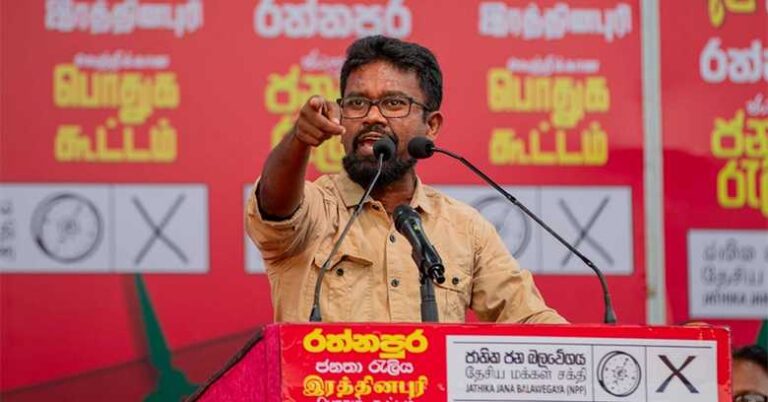
December 22, Colombo (LNW): Sri Lanka Police have launched an investigation following opposing complaints linked to an alleged confrontation between a police constable and a group that reportedly included a Ratnapura District Member of Parliament representing the National People’s Power (NPP).
In a statement released by the Police Media Division, it was revealed that the incident was first reported at around 8.40 p.m. on December 20. A constable from the Sooriyakanda Police Station, who had just completed his duty and was travelling home, contacted the 119 emergency hotline and lodged a complaint with the Kolonna Police.
He claimed that he had been attacked near the Kalugala Temple by a group led by NPP MP Shantha Pathma Kumara Subasingha, and that his motorcycle had been forcibly taken during the encounter.
Later the same evening, at approximately 10.10 p.m., MP Subasingha himself made a complaint to the Kolonna Police, offering a different account of events. According to his statement, he was travelling in a hired vehicle from Kalugala towards Halwinna when a police constable allegedly obstructed the road by positioning a motorcycle across it. The MP further alleged that the officer stopped the vehicle and attempted to assault him.
Police confirmed that the motorcycle belonging to the constable was later discovered abandoned on the roadway close to the Kalugala Temple and was taken into police custody for further examination.
Following the incident, the injured constable was admitted to Kolonna Hospital and subsequently transferred to Embilipitiya Hospital for further treatment. Medical records reportedly indicated the presence of alcohol on the officer’s breath. Although urine tests did not reveal any narcotic substances, police said arrangements are being made to obtain blood samples, which will be sent to the Government Analyst to determine whether alcohol had been consumed.
Authorities stated that comprehensive investigations into the incident are now under way and are being handled by the Embilipitiya Divisional Crimes Investigation Bureau, operating under the direct supervision of the Senior Superintendent of Police for the Embilipitiya Division.
Authorities reassure there is no immediate flood threat despite elevated river levels
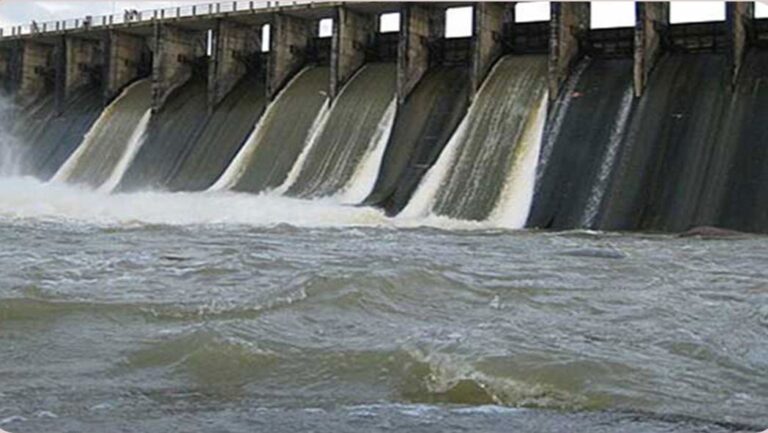
December 22, Colombo (LNW): Irrigation officials have moved to reassure the public that there is no immediate flood threat, even though water levels in parts of the Mahaweli river system remain above average following recent rainfall.
According to the Department of Irrigation, the Manampitiya River, which feeds into the Mahaweli, is currently running high but shows no signs of escalating into a flood situation. Director of Irrigation in charge of Hydrology and Disaster Management, L. S. Sooriyabandara, said controlled water releases are taking place as a routine safety measure, with sluice gates opened at several reservoirs within the Mahaweli basin.
He noted that while the Thanthirimale Reservoir in Anuradhapura District has recorded increased water levels, conditions remain stable and do not suggest a heightened flood risk. Monitoring teams continue to track inflows and outflows to ensure water is managed gradually and safely.
Rainfall over the past 24 hours has been relatively moderate, with the highest figure recorded in Ampara District at 25 millimetres. Officials said this amount is insufficient to trigger sudden rises in river levels but will continue to be closely observed if further rain develops.
At present, spill gates at 36 major reservoirs managed by the Department of Irrigation have been opened to regulate excess water. However, authorities emphasised that discharge levels are well within safe limits. In addition, 52 medium-scale reservoirs are also releasing water in a controlled manner, with no danger posed to communities living near rivers or in low-lying areas.
The department stressed that ongoing surveillance and timely adjustments are in place to prevent any unexpected flooding, and the public has been advised to remain calm while staying alert to official updates.
Digitised Payments and the Anti-Corruption Law of Sri Lanka
By: Nalinda Indatissa, PC.
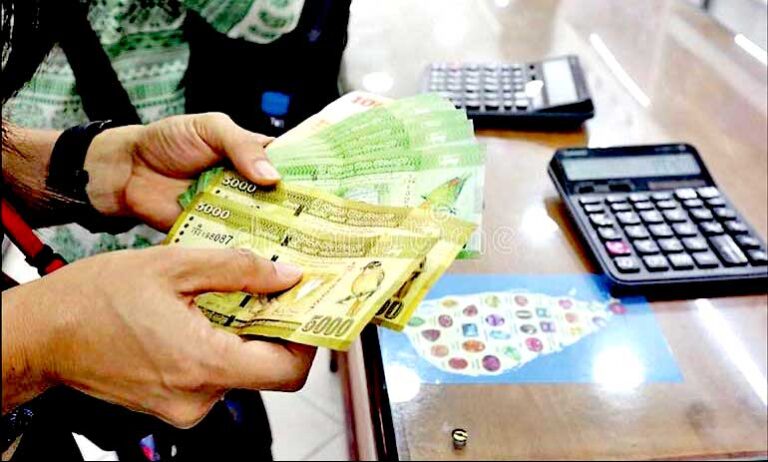
Sri Lanka’s Anti-Corruption Act, No. 9 of 2023 was enacted to prevent corruption, detect it early, and punish offenders effectively. However, laws alone are not enough. They must be supported by systems that make corruption difficult.
One such system is a fully digitised payment system for all transactions—governmental and private.
1. Purpose of the Anti-Corruption Act
(Section 2 – Objects of the Act)
The Act aims to:
Prevent corruption
Promote transparency
Ensure accountability
Strengthen public confidence
A digitised payment system directly supports these goals by making money movements visible and traceable.
In simple terms:
The law wants transparency; digitisation delivers transparency.
2. Bribery and Corruption Depend on Cash
Most bribes are paid in cash because:
Cash leaves no record
Cash is hard to trace
When payments are digitised:
Bribes become harder to give and receive
Illegal payments leave electronic evidence
Digitisation makes bribery risky and detectable, which discourages corruption.
3. Unexplained Wealth Becomes Easier to Prove
The Act allows prosecution where a person:
Has wealth beyond known income
Cannot reasonably explain the source
Digitised payments help by clearly showing:
Lawful income
Actual spending
Hidden or suspicious transactions
This strengthens one of the most powerful provisions of the Act.
4. Electronic Records as Legal Evidence
The Act gives investigators wide powers to:
Obtain bank records
Trace financial transactions
Use documents and electronic data as evidence
Digitised payments:
Automatically generate reliable records
Reduce dependence on witnesses
Strengthen cases in court
Courts decide cases on facts, not rumours.
5. Protection of Public Funds
Many corruption offences involve:
Government payments
Procurement
Licences and approvals
When all government payments are digitised:
Money goes directly to the State
Officers cannot demand “extra payments”
Leakages are reduced
This protects public money, which belongs to the people.
6. Duty to Declare Assets
Public officers must declare:
Income
Assets
Liabilities
Digitised transactions help verify:
Whether declarations are true
Whether income matches lifestyle
False declarations become easier to detect.
7. Prevention Is Better Than Punishment
The new law focuses not only on punishment, but also on prevention.
Digitised payments:
Reduce human discretion
Remove middlemen
Create automatic accountability
Corruption is stopped before it starts.
Conclusion
The Anti-Corruption Act, No. 9 of 2023 provides the legal strength.
A digitised payment system provides the practical strength.
Together, they:
Reduce corruption
Improve enforcement
Protect honest officers
Restore public trust
Cash hides corruption. Digitisation exposes it.
If Sri Lanka is serious about enforcing its anti-corruption law, digitised payments must be treated as a legal necessity, not a luxury.
A few showers expected in several districts: Mainly fair weather to prevail elsewhere (Dec 22)

December 22, Colombo (LNW): A few showers may occur in Uva province and in Ampara, Batticaloa, Matale, Nuwara-Eliya and Hambantota districts, the Department of Meteorology said in its daily weather forecast today (22).
Mainly fair weather will prevail in the other areas of the island.
Fairly strong winds of about 40 kmph can be expected at times over Eastern slopes of the central hills and North-western province and in Ampara, Hambantota and Monaragala districts.
Misty conditions can be expected at some places in Western, Sabaragamuwa and Central provinces and in Galle and Matara districts during the early hours of the morning.
Marine Weather:
Condition of Rain:
Showers may occur at several places in the sea areas off the coast extending from Batticaloa to Galle via Hambantota.
Winds:
Winds will be north-easterly. Wind speed will be (30-40) kmph. Wind speed can increase up to (50-55) kmph at times in the sea areas off the coast extending from Balapitiya to Mannar via Colombo, Puttalam and from Matara to Pottuvil via Hambantota.
State of Sea:
The sea areas off the coast extending from Balapitiya to Mannar via Colombo, Puttalam and from Matara to Batticaloa via Hambantota will be rough at times. The other sea areas around the island will be moderate.
A Trillion-Rupee Hangover: Sri Lanka’s Ditwah Recovery Tests Fiscal Reality
By: Faraz Shauketaly
We’re looking at a number so large it’s enough to make even the most seasoned accountant reach for the smelling salts.
One trillion rupees. Yes, you read that correctly. Twelve zeros.
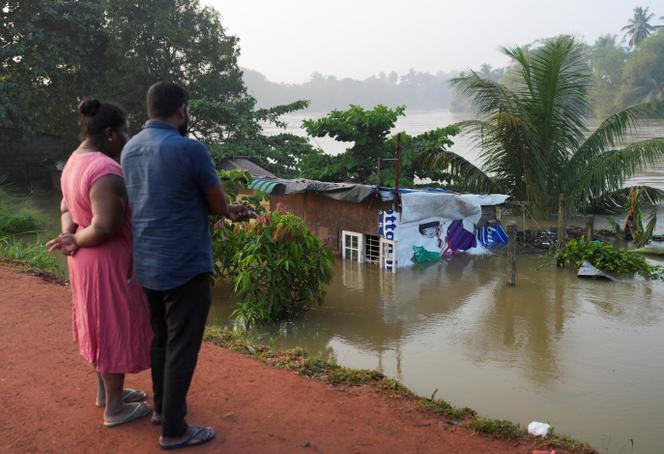
It seems the “Ditwah” relief and recovery effort is set to cost us roughly 3.5 billion US dollars over the next three years.
Now, in a country that’s still nursing the bruises of a sovereign default, that is quite a bit of “change” to find under the sofa cushions.
The December Dash
Our Deputy Treasury Secretary, Mr. A. K. Seneviratne, recently graced the Committee on Public Finance with some rather eye-watering details. For this month alone—December 2025—we’re looking at a 75 billion rupee bill.
Parliament has already scrambled to re-allocate 50 billion of that.
One can’t help but wonder if the legislative process is starting to feel more like a game of musical chairs, where the chairs are made of taxpayer money and the music never seems to stop.
The Road Ahead (Literally)
Looking into 2026, the spending spree continues. Parliament has given the nod to an extra 500 billion rupees. A cool 115 billion of that is earmarked for “strengthening slopes” on our key roads.
Given the state of some of our highways, one hopes we’re actually strengthening the hillsides and not just the bank accounts of the contractors.
Meanwhile, our friend at the Road Development Authority, Mr. Wimal Kandamby, tells us that rebuilding bridges could take 18 months or longer.
In Sri Lankan time, that’s practically an eternity—long enough for a bridge to be planned, opened, and probably have its first pothole before the ribbon is even cut.
Breaking the Law?
Now, here’s where it gets really interesting. We have something called “public finance law”—a quaint little set of rules designed to stop the government from spending us into oblivion. It sets a cap on primary spending at 13% of GDP.
But, in what can only be described as a masterpiece of fiscal gymnastics, Mr. Seneviratne has admitted we’ll blow past that limit by about 1.4% in 2025.
He assures us, with a straight face, that we’ll be back within the rules by 2027.
It’s a bit like a man promising to start his diet on Monday while currently sitting in the middle of an all-you-can-eat buffet.
Taxing Our Way Out
And how are we paying for all this? Well, through “recent tax reforms,” of course. These are expected to claw back an extra 0.3% of GDP from your pockets. It seems that whenever the government has a “Ditwah” problem, the taxpayer gets the “Ditwah” bill.
The Treasury officials were given a bit of a roasting at the Committee on Public Finance. They’re trying to maintain “fiscal discipline” while simultaneously re-allocating billions like they’re dealing cards at a casino.
Final Thoughts
One has to ask: is this a genuine recovery effort, or is it another case of the state doubling down on “unproductive” capital spending while the anti-austerity crowd cheers from the sidelines?
We’ve seen grand projects before that ended up as nothing more than expensive monuments to ego. Let’s hope this one trillion rupee “investment” actually results in bridges that stay up and slopes that stay put.