Home Blog Page 2314

Traffic at  Colombo Port  diverts to Indian ports due to current crisis

0

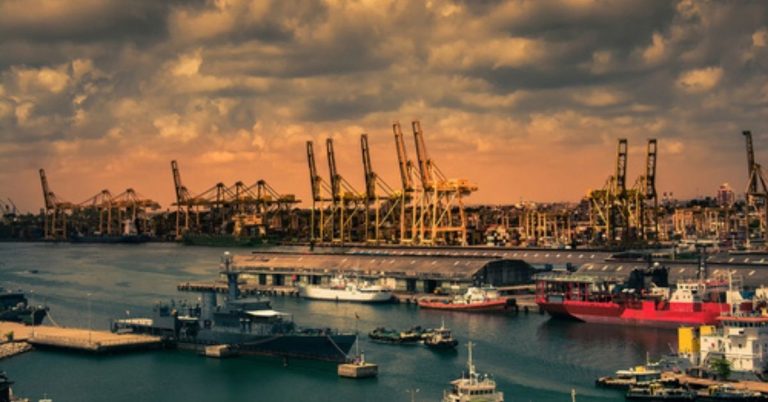
Sri Lanka’s  Colombo Port is gradually losing regular traffic due to  diversion of ships normally calling at the island nation’s harbor , the busiest transshipment port in the Indian ocean due to man-made  present political and economic crisis , international news agencies reported.          

More ships have been turning to Indian ports in recent months as a result of political and economic uncertainty in Sri Lanka, as well as congestion at the Colombo port, Maritime Gateway reported.

According to industry groups, roughly 5-10% of regular traffic from Colombo has been diverted to Indian ports in the last month, with Chennai, Ennore, Mundra, and Thoothukudi’s VO Chidambaranar Port benefiting the most.

Due to the situation in Sri Lanka, traffic at the Kochi International Container Transshipment Facility (ICTT) in Vallarpadam, India’s first transhipment terminal, increased by 62% to 13,609 twenty-foot equivalent units (TEU) in March 2022, compared to 8,394 TEU in March 2021.

“In recent times, we have seen considerable diversion of transhipment traffic from Colombo to Kochi. There are vessels that are skipping Colombo cargo, because of the longer time taken for transhipment,” said Cochin Port Trust Chairperson M Beena.

“Kochi is a natural alternative to Colombo now,” she said. The transhipment container traffic in Kochi saw an increase from 36,183 TEU in 2019- 20 to 86,000 TEU in 2020-21 and 156,000 TEU in 2021-22. Chennai and Kamarajar (Ennore) ports jointly saw a 26 per cent hike in cargo traffic to 87.3 million metric tonnes in 2021-22, according to reports.

“The Colombo port is almost at a standstill. There are no trailers to evacuate containers and cargo from the port. 

In the last one month, we are seeing a considerable shift in normal traffic to the ports in Tamil Nadu — Thoothukudi and Chennai now, due to the congestion in Sri Lanka,” said S Narasimhan, president, India-Asean-Sri Lanka Chamber of Commerce and Industry. 

Narasimhan said he expects more traffic to get diverted to Kochi transshipment terminal and ports in Tamil Nadu in the coming months.

Sri Lankan LGBTIQ Community joins protests against Government

0

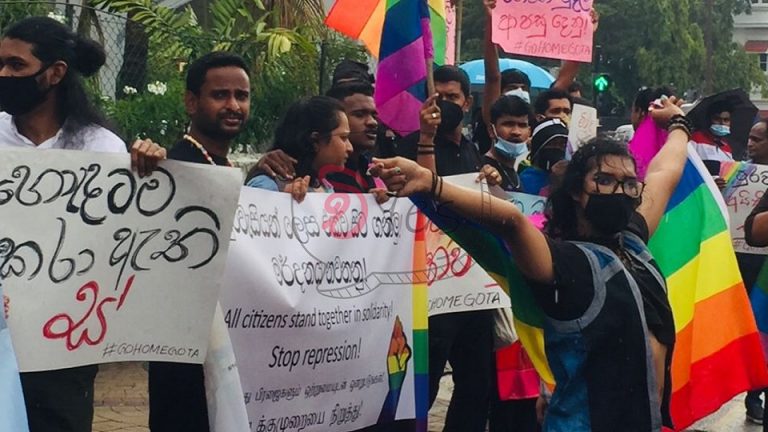
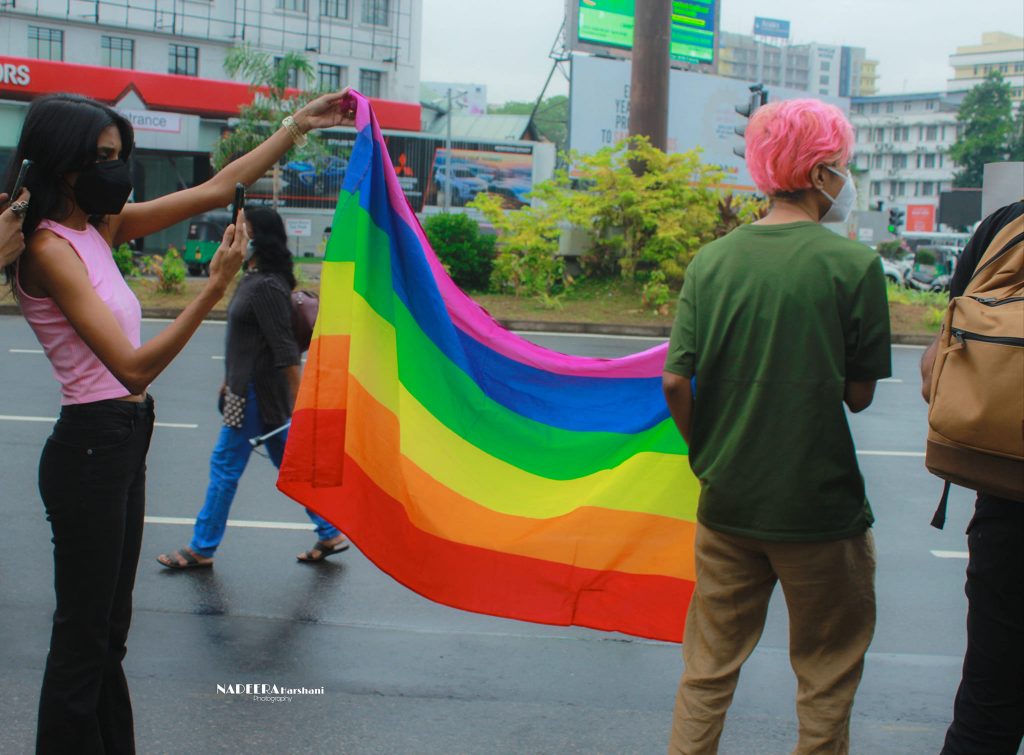
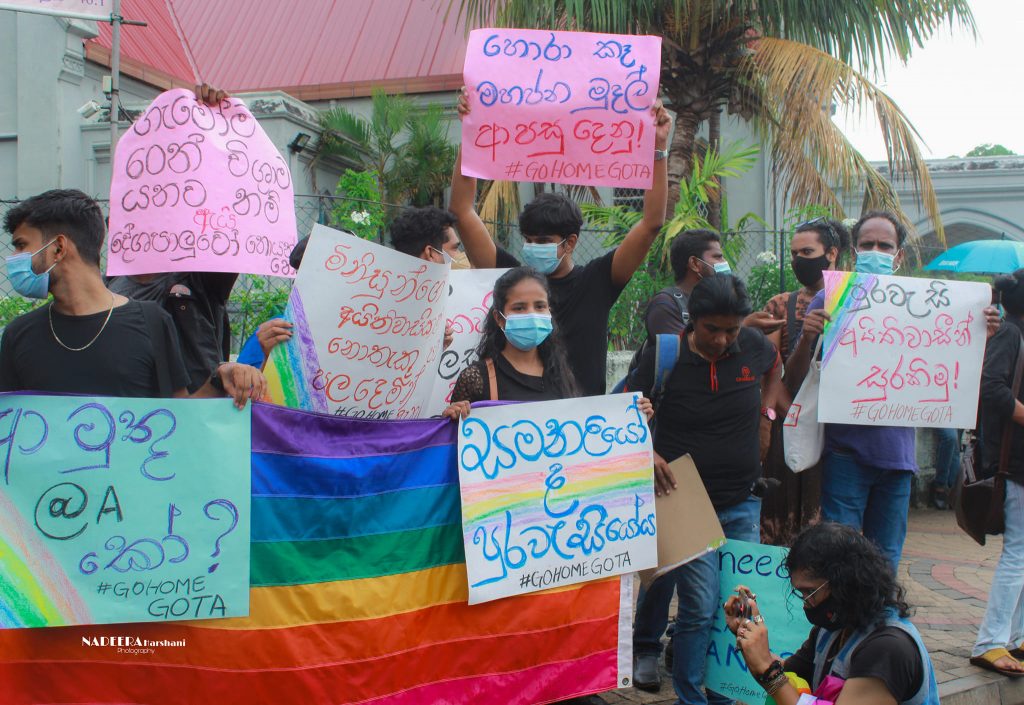
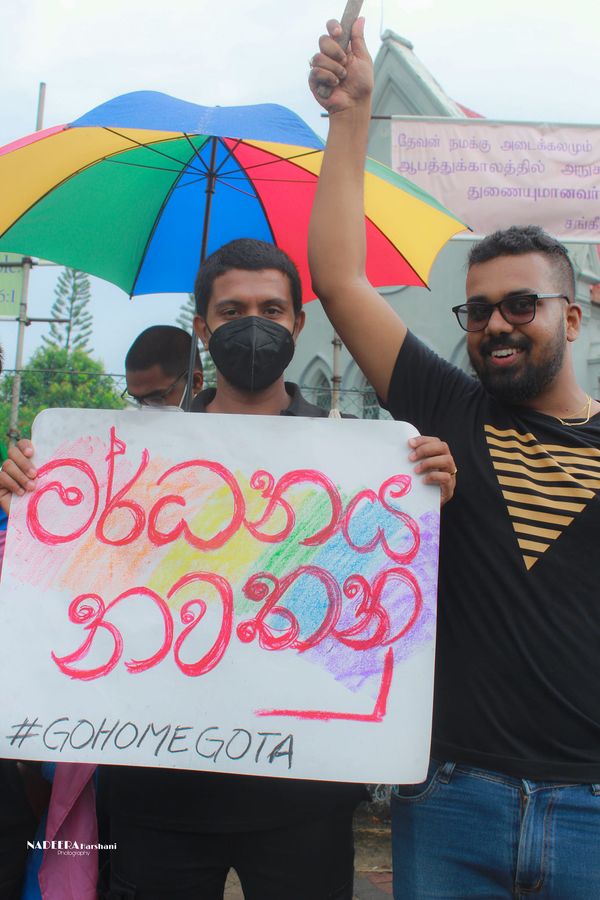
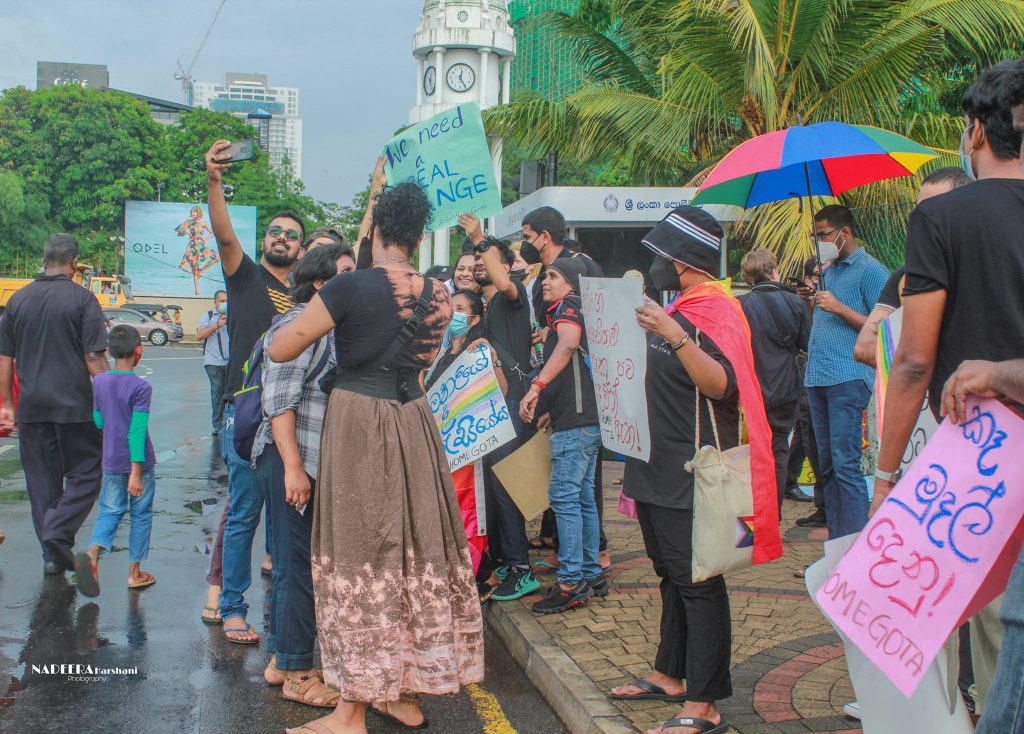
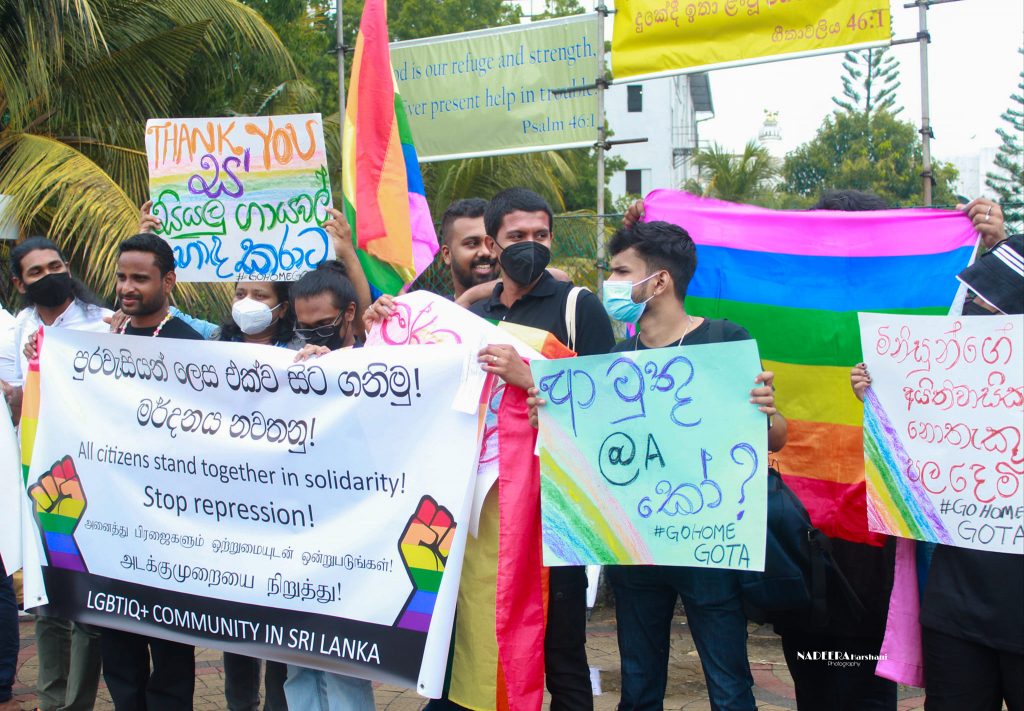
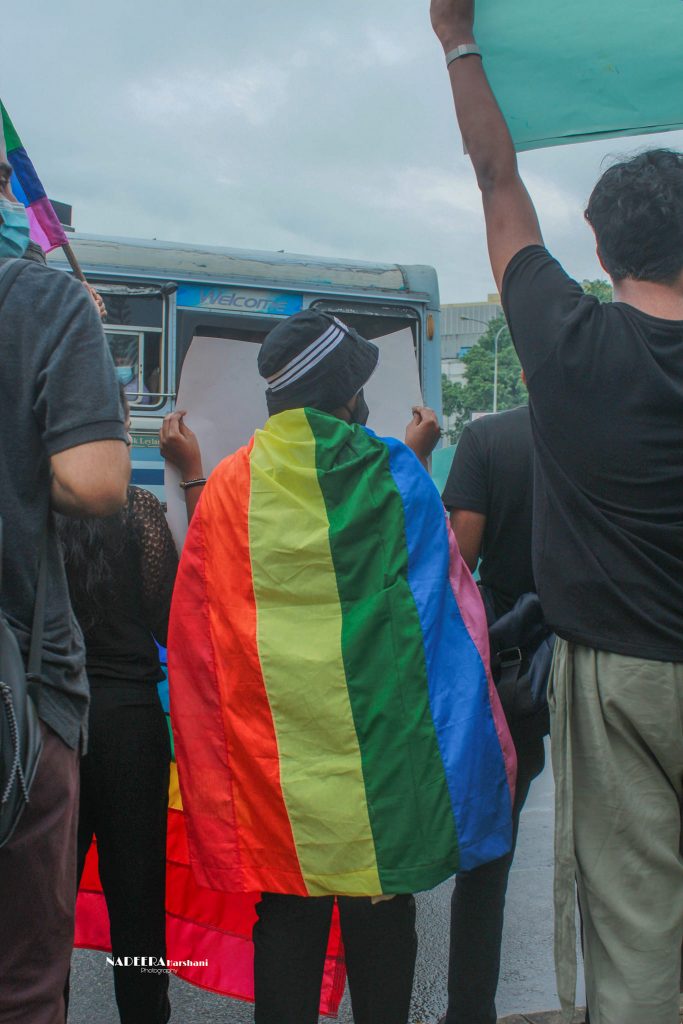
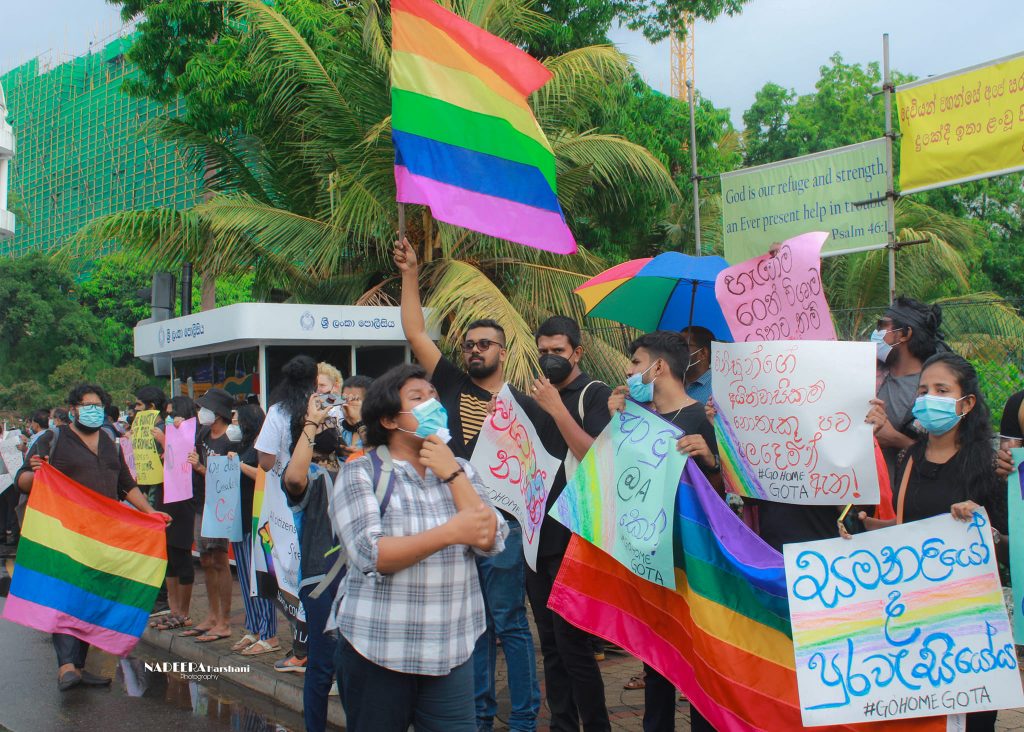
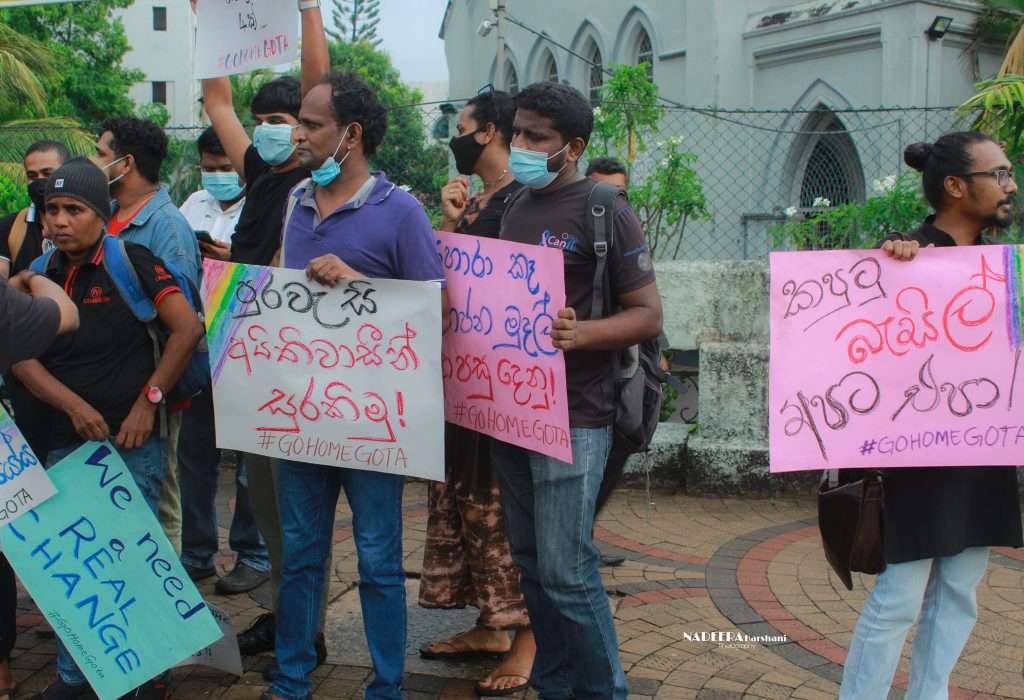
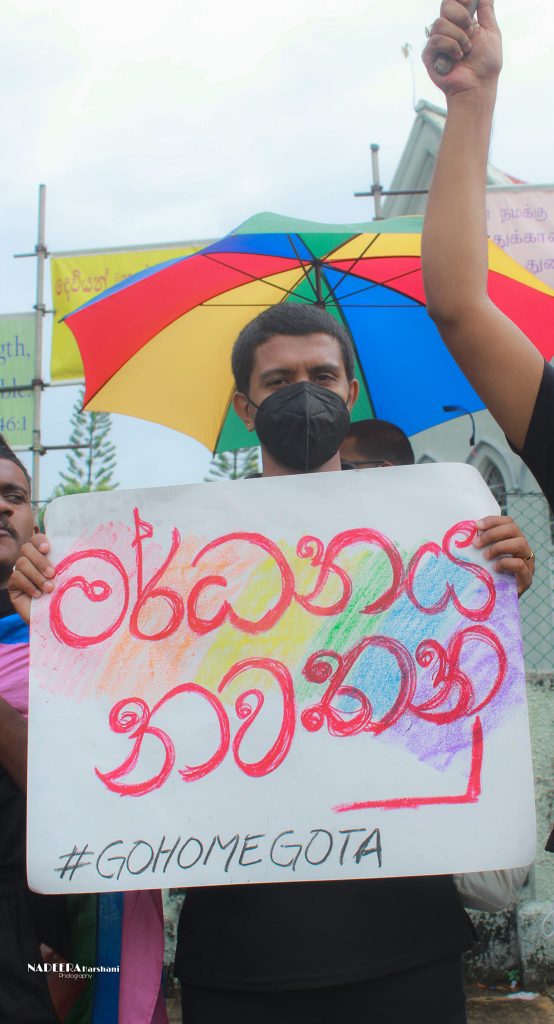
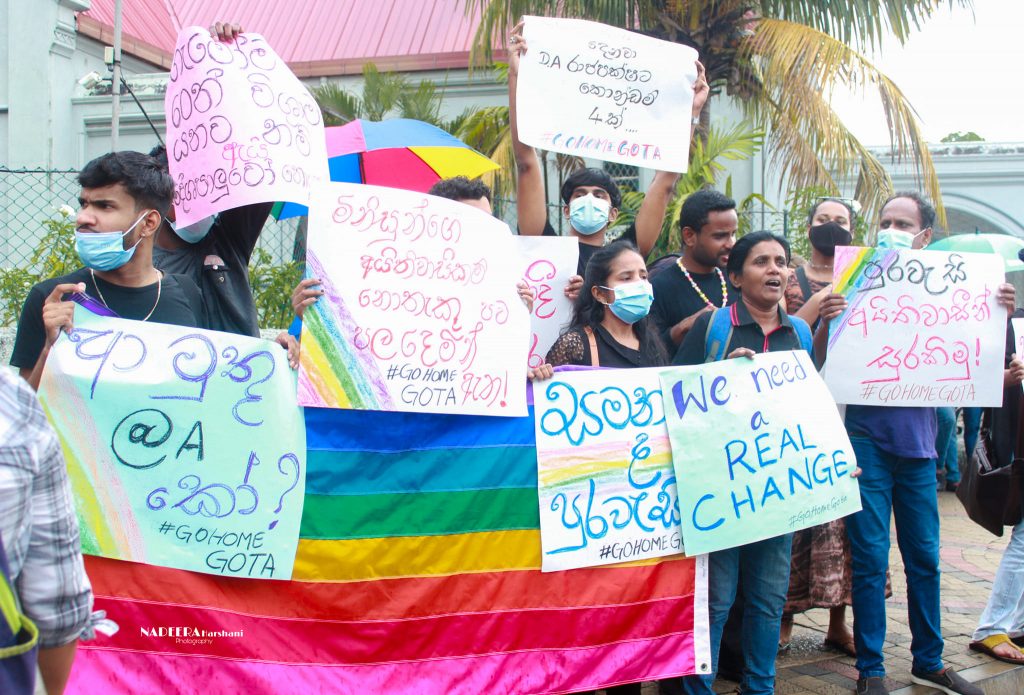
In the wake of the prevailing crisis of the country, the Sri Lankan LGBTIQ community has joined forces in demonstrating their objection to the President and the Government.

The Sri Lankan LGBTIQ Community today (08) staged a peaceful demonstration at the Lipton Circle, Union Place, Colombo starting from 3.30 pm.

The economic, social and political instability in the country has affected every citizen as well as the community of diverse sexual orientations, gender identities, expressions and sex characteristics, the protesters pointed out.

The Lesbian, Gay, Bisexual, Transgender, Intersex and Queer (LGBTIQ) Community of Sri Lanka throughout the course of time has been subject to discrimination, harassment and violence on multiple platforms since the colonial interpretation of criminalisation driving those of diverse sexual identities into being criminals before law via the Penal Code and the Vagrants Ordinance. Despite a progressive social and political atmosphere being grown towards the visibility of these groups, there are ongoing reports on LGBTIQ individuals being subject to marginalisation on or off the state structure, including, but not limited to, arbitrary arrests, domestic violence, declining job opportunities, harassment in public places, challenges in access to services and etc. Simply put, these groups are challenged in enjoying their rights and privileges equally due to their sexual orientation, gender identity, gender expression or sex characteristics.

Them being an intersection of society, the current crisis in the country has severely affected the LGBTIQ Community, thus the protest demonstrates that their struggle is not an isolated one, but a part of a larger human rights struggle.

Editor (LGBTIQ)

Photos: Nadeera Harshani Photography

There will be no power disruptions during the Sinhala and Tamil New Year – PUCSL

0

Janaka Ratnayake, Chairman of the Public Utilities Commission has stated that there will be no power cuts on April 13, 14 and 15, the Sinhala and Tamil New Year.

Apparel industry apex body  demands an end to Govt’s procrastination

0

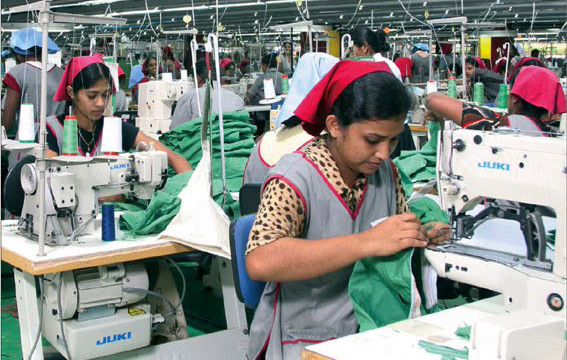
The Government’s inaction in finding and implementing a constructive solution to the current crisis urgently risks the imposition of potentially heavy costs the country will continue to pay over the long-term, including access to global markets, The Joint Apparel Association Forum (JAAF), the apex body of Sri Lanka’s apparel industry claimed.

In a statement, the apparel industry has urged all stakeholders to put aside differences and work together to resolve the current crisis, which has imposed severe hardships on people and hampered the economy. 

If the current macroeconomic crisis continues for longer without taking urgent action to address it, the social and economic consequences imposed upon Sri Lanka’s people will be incalculable, the industry warns.

The country is still recovering from the adverse effects of the worst pandemic in decades that erased years of growth.  

Apparel is Sri Lanka’s single largest foreign income earner, contributing 6 per cent to the country’s overall GDP. The sector provides direct employment to 350,000 people and to another 700,000 indirectly.

“The current crisis has been brewing for several months, and the Government’s procrastination has created considerable hardship for ordinary people,” said a JAAF spokesperson. 

“Power and fuel outages have already led to the shut-down of many small establishments and escalated the cost of production for others.” Efforts to stifle peaceful protests have precipitated a political crisis, further complicating the situation, JAAF adds.

“Before the situation gets worse, we require immediate, decisive action to implement workable short and medium-term solutions to critical challenges,” the spokesperson emphasised. “Given the magnitude of the crisis, all stakeholders in the country’s welfare and the people’s well-being should work together in the larger interest of the people and the nation.”

JAAF fully supports the immediate appointment of financial and legal advisors to commence discussions with Sri Lanka’s creditors. 

This will allow debt servicing obligations to be paused, relieving the pressure on the system. Parallelly, Sri Lanka should engage with the IMF as a matter of urgency to seek bridging financing for essential imports – particularly for fuel, LPG and medicines. 

Seeking the assistance of the World Bank to reallocate unutilised funds from existing projects towards emergency relief programmes can also be an immediate safety net to those most affected by the crisis.

The crisis is hurting Sri Lanka’s international reputation as a reliable sourcing destination and exporter; buyers of the country’s merchandise exports (apparel is almost half of that), investors and business partners are getting worried.

“It will be a steep, uphill battle to retain buyer relationships, which have been built with great effort over decades,” the spokesperson said. “We simply cannot afford to lose even a single one of these relationships. 

The negative impact on the industry and the economy and the export sector will be almost catastrophic, and lead to loss of livelihoods and employment, and limit the country’s ability to fund essential imports, and badly damage its access to long-term external finances.”

Extended power cuts and inconsistent adherence to announced power interruption schedules have disrupted production planning and manufacturing, most severely impacting small and medium enterprises (SMEs). 

The mandatory conversion of foreign exchange is complicating raw material imports, as banks are unable to meet their commitments to apparel exporters.

Devaluation of 40% destroyed the country

0

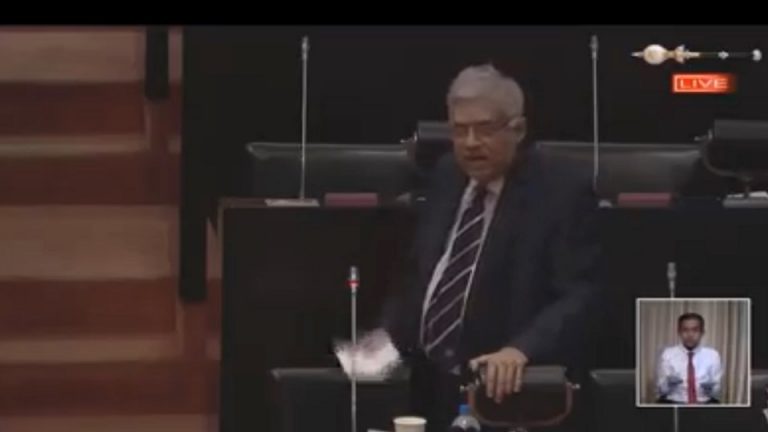
Former Prime Minister Ranil Wickramasinghe asked parliament today who the hell authorized the Central Bank to devalue the Lankan Rupee by 40% in one day? The people responsible for the irresponsible and negligent decision must be found out and punished. This stupid decision he noted ruined the Country.

230-235 for a USD was acceptable. Now it is on a path of no return. It is the dumbest decision to have been made by the Central bank. The officials responsible must be punished he repeated. He also asked who took the decision not go to the IMF last year? Parliament needs answers.

Parliament must take over the responsibility because the government has failed the people . He noted food inflation may be now 40% . This new year most people will not be able to put 2 meals on the table. What a tragedy he concluded.

Ali Sabri has re-assumed post of Finance Minister at Basil’s request

0

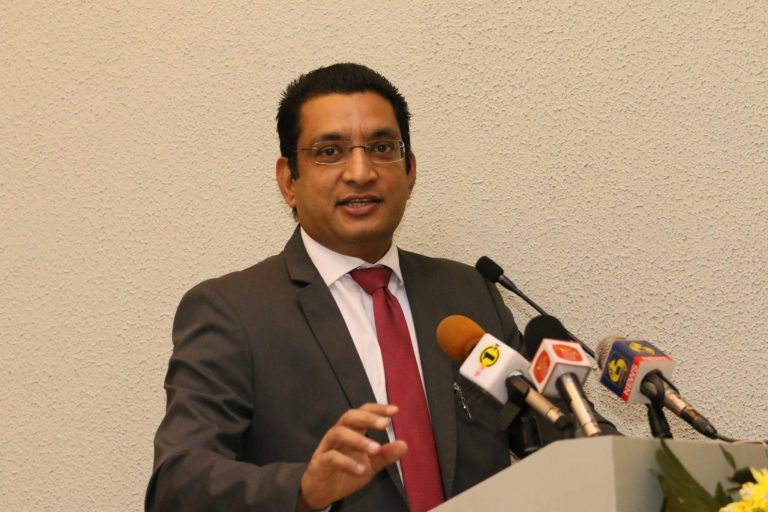
It is reported that Mohamed Ali Sabri, who had submitted his resignation letter to the President within a day of assuming the post of Finance Minister, has agreed to take over the post of Finance Minister again at the request of former Finance Minister Basil Rajapaksa.

The talks with the International Monetary Fund (IMF) scheduled to begin on the 11th are extremely crucial for the country in the light of the current serious economic crisis. However, if Sri Lanka does not have a Finance Minister, the talks will not be able to take place on that day and the approach to finding a solution to the country’s economic crisis will drag on for another considerable time.

According to sources, Basil Rajapaksa has discussed the matter at length with Mohamed Ali Sabri and requested him to continue the initiative he has taken to initiate talks with the IMF on behalf of the country.

Although Ali Sabri is not an expert on economics, he is an expert in the legal field and has good relations with the international community, as well as a non-racist vision. He also promised to provide maximum assistance.

Sources said that Ali Sabri had decided to accept the post of Finance Minister despite the fact that no one was running for the post and that certain sections of the government were working to prevent him from accepting it.

His resignation letter has not been accepted by President Gotabhaya Rajapaksa and he does not need to be sworn in as the new Minister of Finance and he is still the Minister of Finance.

Firms struggle amid Sri Lanka’s economic crisis

0

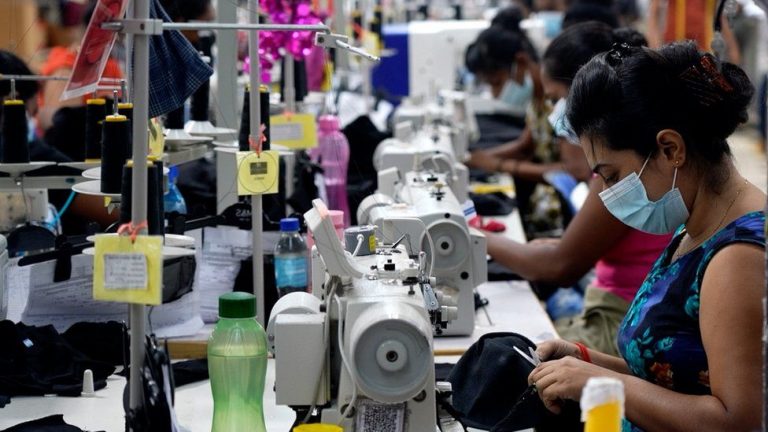
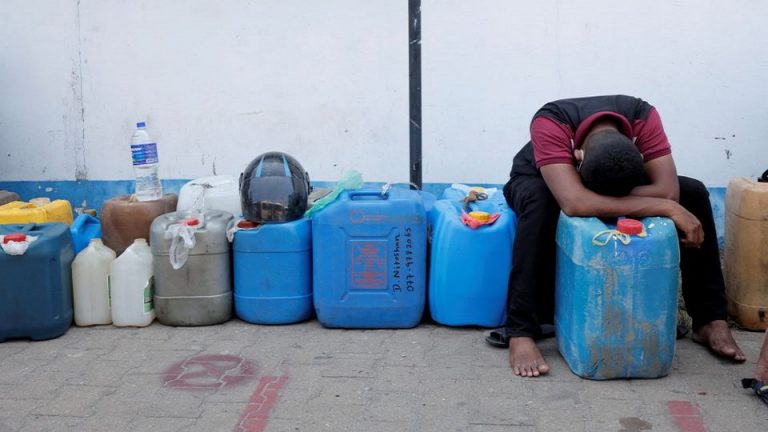
It is a daily struggle for Ranjith Koralage, the boss of a Sri Lankan clothing manufacturer, to find enough diesel to run his company’s machines and steam rollers. 

The chief of Kolonna Manufacturing, which is based in Sri Lanka’s central province, has been running from station to station looking for 400 litres of fuel for the generator – just enough for one day. 

With long power outages, interruptions have become the order of the day in factories across Sri Lanka. Thankfully, a generator brings power back up in some factories. But the fix is temporary with limited fuel. 

Mr Koralage told the BBC: “Today we survived somehow, but I don’t know about tomorrow.” 

His export unit makes knitted garments for Victoria’s Secret, Puma and Levi’s, and is among dozens of clothing factories struggling to meet production targets. 

Garments are the second largest foreign exchange earner for the Sri Lankan economy. The sector had just recovered from the pandemic, with export earnings increasing by 22.1% to $514m (£393m) in January 2022 compared with a year ago. 

Kolonna’s order book is full for the next three to six months. But now disruptions are adding to existing worries around losing business to rivals in Indonesia, Bangladesh and Vietnam. 

“If [the] government doesn’t provide fuel we have to stop production, that affects customers’ deliveries. Our clients are already asking us daily if we will be able to complete the orders in time or not,” Mr Koralage says.

Sri Lanka is facing its worst financial crisis in decades, with foreign exchange reserves shrinking by more than 16% to $1.93bn in March, central bank data showed on Thursday.

Kolonna Manufacturing is a prime example of the model of economic development that Sri Lanka wanted: a factory in the island nation’s hinterland that creates local jobs. It employs 800 workers, all from the region, including its chief executive Mr Koralage. 

The unit makes garments for export and generates almost $140,000 a year for the local villages. 

But it is now stuck in a vicious cycle. The dollar shortage has left the country struggling to pay for imports including food, medicine and fuel. 

Even Sri Lanka’s power plants are struggling to maintain operations. Long, rolling, power cuts are crippling businesses, especially export-oriented ones that are capable of earning the much-needed dollars. 

Exporters like Kolonna typically lock in orders at fixed prices and have limited capacity to absorb rising costs. While a weaker Sri Lankan rupee benefits exporters, rising costs are draining all positives. 

This affects both the business and its employees. Mr Koralage says as the cost of living goes up, retaining skilled workers will be another yet challenge.

BBC

Peru declares state of emergency on highways as protests continue

0

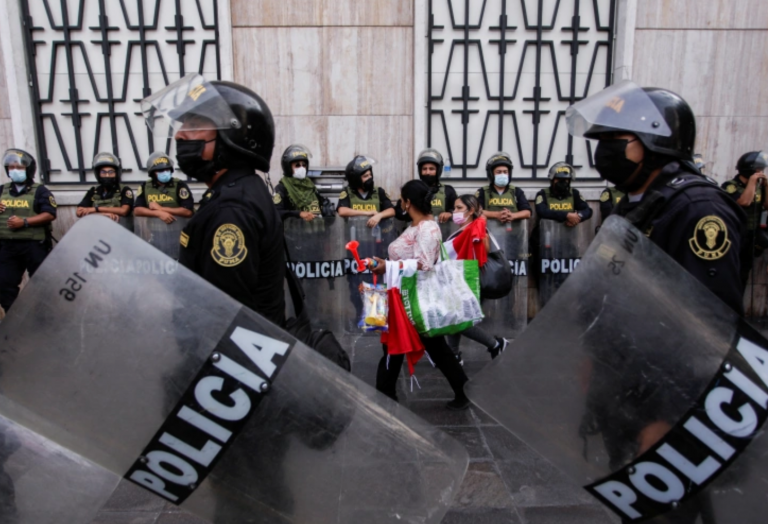
Peru has declared a one-month state of emergency to allow the armed forces to supervise its highways, as the government of President Pedro Castillo tries to stem nationwide protests over rising fuel and food prices.

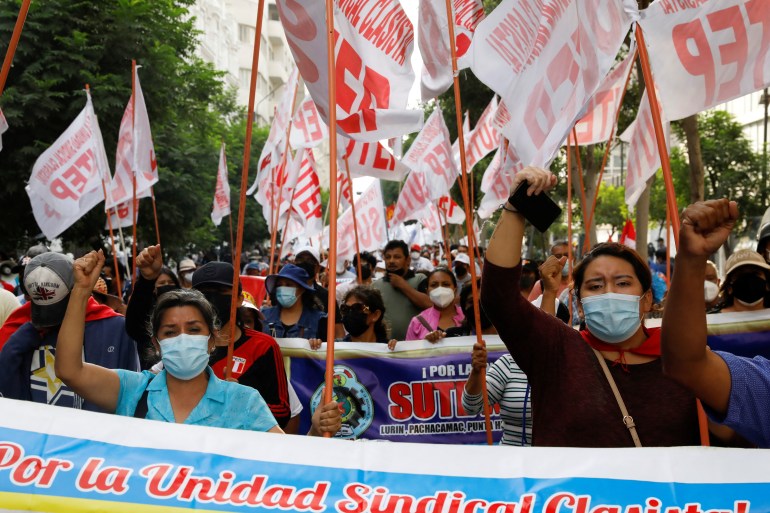
Hundreds of truckers and farm workers have been blocking roads across the country for more than a week in anger over rising costs, which have spiked since Russia invaded Ukraine.

The decree, published in the official newspaper on Thursday, allows for the army to be deployed to clear the blockades while also suspending certain constitutional rights such as freedom of movement and assembly.

“The police will keep control of internal order, with help from the armed forces,” it read.

Clashes between protesters and police in Ica, about 300km (185 miles) south of the capital, Lima, left one farm worker dead and 15 people injured, mostly police officers.

Demonstrators rally in Peru
Protests against rising costs continue to be held in the Peruvian capital, Lima [Alessandro Cinque/Reuters]

Castillo’s government has faced growing public anger over the crisis, especially after he imposed a mandatory, 24-hour lockdown in Lima and a neighbouring port city earlier this week in a bid to “re-establish peace”.

The left-wing president, who was sworn into office in July of last year, backtracked on the measure after opposition politicians and human rights groups slammed it as a “disproportionate” infringement on freedom of movement.

Thousands of people had taken to the streets in defiance of the measure before Castillo cut the lockdown short on Tuesday evening, calling on Peruvians to “be calm”.

The government has cut taxes on fuel, raised the minimum wage and proposed exempting essential food items from sales tax.

The episode marks the first time in Castillo’s eight months in power that he has faced a social protest movement.

AL JAZEERA

Mystery of alleged Chinese hack on eve of Ukraine invasion

0

Allegations of Chinese cyber activity as the recent conflict broke out in Ukraine have been emerging. 

The details appear unusually murky but one Western intelligence official believes the aim was espionage – and the cyber-attack may have been broader than previously reported.

The Times first reported that hackers, alleged to be based in China, began targeting Ukrainian websites on 23 February, the day before the invasion. 

That led to questions as to whether they had advance notice of Moscow’s plans and if their intention was somehow to support Russia. 

A broad set of Ukrainian government and commercial organisations were said to have been targeted by hackers, including organisations linked to nuclear power.

It is unclear how far this activity was scanning for vulnerabilities online and how many websites were actually compromised.

But the aim looks to have been espionage – stealing secrets – rather than the kind of sabotage operations which Russia was accused of carrying out just before the invasion, and when it started.

The Times cited intelligence documents – but the Ukrainian security service denied they had handed anything over and seemed to downplay the revelations, adding to confusion. 

Some analysts wondered if they were worried about antagonising Beijing. 

On Monday, the Chinese embassy in the UK rejected the claim and described the Times report as “sheer irresponsible talk and not credible at all”.

Sri Lanka calls for $1 bln debt restructure as crisis rages: REUTERS Report

0

COLOMBO, April 7 (Reuters) – Sri Lanka must urgently seek funds from multilateral lenders and aim to restructure a debt payment due in July, its outgoing finance minister said on Thursday, pleading for political stability amid the country’s worst economic crisis in decades.

The opposition and some partners of the ruling coalition rejected calls this week for a unity government from President Gotabaya Rajapaksa after he disbanded his cabinet, hoping to quell weeks-long street protests over shortages of fuel, power, food and medicine.

With its foreign exchange reserves shrinking quickly, massive debt payments due and the rupee currency slumping, analysts say the government – controlled by Rajapaksa and his elder brother Mahinda, the prime minister – is running out of options.

Reserves dropped 16% to $1.93 billion in March, central bank data showed on Thursday.

“We must look at how to structure the $1 billion international sovereign bond payment maturing in July,” said Ali Sabry, who submitted his resignation to Rajapaksa on Tuesday.”We must go to the IMF, there is no other solution that I can see.”

Sabrywas moved to finance from the justice ministry on Monday to replace President Rajapaksa’s younger brother Basil Rajapaksa.

It was not immediately clear if Rajapaksa had accepted Sabry’s resignation, submitted days ahead of scheduled talks with the IMF for emergency loans.

As the island nation attempts to fast-track the formulation of proposals to present to the IMF President Rajapaksa on Thursday appointed K.M.M Siriwardana, a deputy governor at the central bank who previously worked with the Fund, as treasury secretary.

The $1 billion bond maturing on July 25 was trading at 54 cents in the dollar, its lowest level since spring 2020 when the COVID-19 rout hit global financial markets, data from MarketAxess showed .

Other Sri Lankan dollar-denominated sovereign bonds traded at even more stressed levels, with most changing hands around 40 cents in the dollar.

“We must have political stability to find solutions to the financial crisis,” Sabry said.

“We must discuss with the World Bank and we must have a bridge-financing plan with the ADB. If we don’t have stability, who will conduct these talks?,” he said, referring to the Philippines-based Asian Development Bank.

Opposition lawmakers continued to call for the president to step down. At least 41 parliamentarians withdrew from the ruling coalition this week, though they could still support the government in the house and the opposition has not called for a no-confidence vote. read more

Foreign Minister G. L. Peiris told diplomats in a briefing that the government still held a majority in parliament and that “despite the agitation”, there was no consensus on who could replace the president, prime minister and parliament.

DEEP IN DEBT

Critics have accused the government of mismanagement, but the tourism-reliant economy has also been hit hard by the COVID-19 pandemic.

Help from the IMF would likely come with some tough political choices – policy reforms that could add to the pain in the short term in hopes of getting the economy back on more solid footing in a few years.

J.P. Morgan analysts estimated this week that Sri Lanka’s gross debt servicing would amount to $7 billion this year, with the current account deficit coming in around $3 billion.

As the search for a replacement for Sabry at the finance ministry continues, P. Nandalal Weerasinghe took over as the central bank governor, succeeding Ajith Nivard Cabraal, who quit on Monday.

A court in the commercial capital Colombo on Thursday barred Cabraal from leaving the country until March 18, Rajith Keerthi Tennakoon, a well-known anti-corruption activist who accused Cabraal of misusing public funds during his tenure, told Reuters. Tennakoon had petitioned the court.

Reuters could not immediately contact Cabraal and his lawyer did not answer calls.

Weerasinghe, a former senior central bank deputy governor who has also worked with the IMF, will hold a monetary policy meeting on Friday. It was originally scheduled to be held on Monday.

An analyst said the central bank was expected to hike key interest rates by 300-400 basis points – following a 100 bps increase in early March – to tame inflation that hit 18.7% in March.

“We also expect the newly appointed governor to outline potential measures to be included in the IMF reform plan, views on potential debt restructuring, and currency management,” said Lakshini Fernando of Asia Securities.

REUTERS