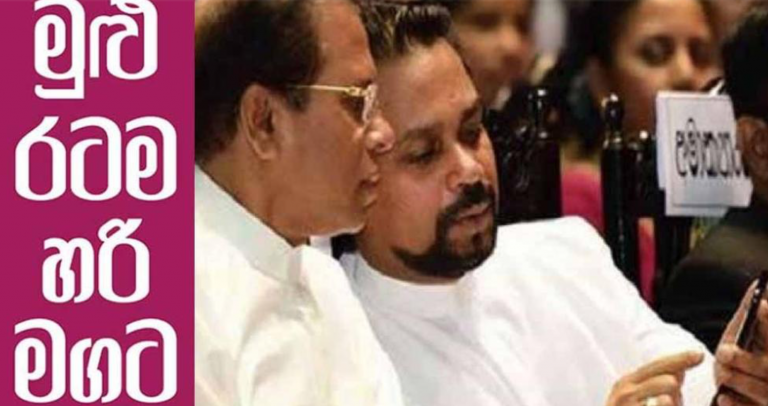
The UNP’s Working Committee meeting held on Friday (21) at the party headquarters saw fireworks fly between members of the old guard and Party Leader, Ranil Wickremesinghe, over the composition of the Party.
Former Assistant Leader, Ravi Karunanayake, raised concerns with the Party’s decision to proceed with Party activities via online platforms. Speaking at the meeting Karunanayake said that social media campaigns would not win support for the party.
Responding to these claims Wickremesinghe stated that the youth in the country no longer support the political system and that the UNP must not only find new ways of communicating with the youth, but also new faces. This led to further criticism from Karunanayake who attacked Wickremesinghe for appointing several new young faces to prominent positions in the party.
In a surprise move Karunanayake claimed that the party was ignoring its senior members for younger members who lacked experience.
Karunanayake was further enraged when it was learnt a former Working Committee member had not had his membership to the committee renewed for 2022.
Sources within the Working Committee explained that this member had been actively causing divisions within the party and was taking no active role in rebuilding the party’s grassroot organisation. The source further explained that the Committee had taken decision that any member who was not actively contributing to the party would no longer be given positions of responsibility.
Karunanayake was among a number of former UNP MPs who were unable to retain their Parliamentary seats at the 2020 General-Election. The UNP has since seen a restructuring of the party with a number of young members being put forward by the leadership in the party.
From left: Centre for Open & Distance Learning Director D.E.W.V. Nanayakkara, University of Moratuwa Deputy Vice Chancellor P.K.S. Mahanama, University of Moratuwa Vice Chancellor N.D. Gunawardena, DP Education Founder and Vallibel One Group Chairman Dhammika Perera, University of Moratuwa Former Vice Chancellor and Senior Professor Malik Ranasinghe University of Moratuwa Vice Chancellor N.D. Gunawardena, and DP Education Founder and Vallibel One Group Chairman Dhammika Perera exchanging the MoU
A key milestone in Sri Lanka’s ICT education was marked by University of Moratuwa (UoM) and Dhammika & Priscilla Perera Foundation (DP Foundation) by signing a Memorandum of Understanding (MoU) on 4 January, to collaborate on the facilitation of open online ICT course development and delivery.
The objective of this project is to provide opportunities in free learning and unlimited access to ICT knowledge for ICT enthusiasts in Sri Lanka. DP Foundation, through its DP Education arm, will facilitate UoM on this new initiative by providing the required funding, infrastructure and human resources for online course production.
Currently, ‘University of Moratuwa – BIT Online’ YouTube channel is active for learners to access subjects such as Mathematics for IT, Web Programming, Database Management Systems and ICT Applications, etc.
DP Foundation, which is a philanthropic initiative of Dhammika and Priscilla Perera, has developed Sri Lanka’s largest free online learning platform DP Education to produce a knowledge-based society and improve the skill set of every Sri Lankan.
The required fertiliser could not be properly distributed to the farmers during the first season as the Green Agriculture initiative commenced, said Agriculture Minister Mahindananda Aluthgamage, claiming that this was mainly due to the omissions of the officials entrusted with the program.
The Minister made this observation speaking to media in Kandy.
Although it was decided to ban chemical fertiliser completely in the move of popularising organic fertiliser, the farmers could not be properly informed about the process due to these officials’ conduct, he alleged.
Aluthgamage added that the distribution of fertiliser during the upcoming Yala season will be carried out properly after understanding the shortcomings that occurred during the Maha season. The President has instructed to implement the relevant decisions to popularise organic farming without causing any inconvenience to the people, the Agriculture Minister told media.
Claiming that there are no problems in paddy cultivation during the Maha season as suggested by certain parties, Aluthgamage stressed that this year’s empty harvest will be less than usual and that the farmers will be facing no problems in the event that the harvest will be bigger despite the lower area of cultivation grounds.
The Minister went on saying that a study carried out on the problems arisen in several districts revealed that the overall yield has declined by about 20 per cent. The matter, therefore, will be discussed at the Cabinet meeting to be held next Monday and a decision will taken regarding the price to be declared for farmers and the compensation to be paid for the crop damage, he added.
There will be no power outages today (22) said the Ceylon Electricity Board (CEB). According to Andrew Navamani, Media Spokesperson for the CEB, the number of units generated at present is sufficient to meet Saturday’s demand, given that it is in a lower level.
Fuel oil at Sapugaskanda Plant will be available for power generation only until 2 pm today and therefore, the operations at the Power Plant will be inactive thereafter.
There could be a possibility of power outages being occurred due to other reasons and the CEB will make every effort to prevent such occurrences, Navamani added.
The price of a crude oil barrel in the global market has soared up to US$ 89 marking the highest price after seven years, revealed Energy Minister Udaya Gammanpila.
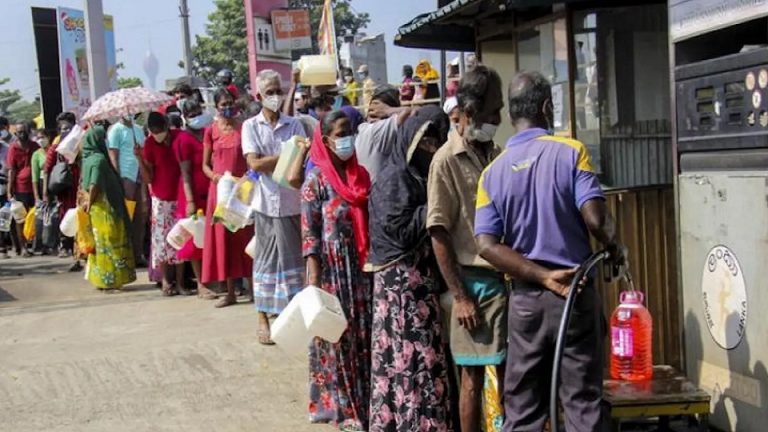
Despite two attempts to increase the price of fuel, litre of diesel is still being sold at a loss of Rs. 30, Gammanpila revealed, adding that however, there are no current plans to increase fuel prices again in the coming days.
As of now, a sum of US$ 500 million has to be spent on a monthly basis for fuel import, which is equivalent to one-third of the total export earnings in the country, the Energy Minister revealed, urging the people to realise the severity of the situation and use fuel sparingly.
Meanwhile, the demand for fuel is likely to grow in winter countries in February, leading to forecast that the price of a crude oil barrel could soar up to US$ 100. As Sri Lanka is currently suffering from a dollar deficit, the Subject Minister may have no choice but to increase the fuel prices again, should the crude oil prices soar.
Accordingly, it has been forecast that the fuel price in Sri Lanka may soar in February.
The amount of money Guatemalans living abroad send home to their families reached record levels in 2021. Remittances rose to more than $15bn (£11bn) in 2021, an increase of 35% on the previous year.
The unprecedented rise prompted experts to question the political will to tackle the migration crisis when remittances from the US contribute so much to the Guatemalan economy.
The Biden administration has maintained pressure on the governments of Central America to resolve the causes of migration, launching a plan to invest $4bn over four years in the Central American country, along with neighbouring Honduras and El Salvador.
“[The political elite] don’t go for migration, they won’t stop it,” said Paul Briere, a former congressional representative in Guatemala who once headed the country’scongressional commission on migration. “They won’t make the effort to stop migration, they won’t make the effort to combat corruption, they will not make the effort to combat inequality, they will not make the effort to combat poverty, because they need that to be the situation. They need these people to leave Guatemala.”
Guatemala continues to have an extremely low minimum wage when compared with the cost of living, forcing many to depend on remittances for survival while elites benefit from low labour costs.
“The worst thing is that we are becoming a remittance dependent country,” Briere said. “It is a perverse system. [Migrants] are our largest export item, when it should be, in my opinion, an embarrassment.”
“It is an indicator of the grand exodus from the country to the United States that has existed in the last 20 years,” added Pedro Pablo Solares, a lawyer and migration expert.
Remittances have especially contributed to maintaining the Guatemalan economy during the Covid pandemic. In December 2021, the Guatemalan Chamber of Industry issued a press statement celebrating the “historic” economic growth of 7.5% in 2021, of which remittances were the largest growing sector. The next largest growth area was exports which increased by 15.4%.
Since 2014, the number of Guatemalans seeking to migrate has increased significantly in part due to the structural inequalities and the lack of job opportunities. According to Mario Arturo Garcia, a Guatemalan remittances analyst, in the past few years banks have seen increases of between 200,000 to 250,000 new users each year and between 2 and 2.5 million remittance transactions every month.
Elsy Gonzalez on a video-call with her husband Emerito Bonilla, who lives in Maryland in the US.Photograph: Marvin Recinos/AFP/Getty Images
For Guatemalan families living in poverty the money sent home means they are able to survive and provide housing and education for their children.
Brenda Pérez, 25, lives in the village of Llano de Pinal on the outskirts of Guatemala’s second largest city, Quetzaltenango, with her two daughters, aged nine and five. Her husband, Carlos, migrated to the US in 2019 hoping to earn enough money to build his family a home and provide his two daughters with an education.
“The money he sends has helped us a lot,” said Pérez. “Here we could not do anything, because of how little we are paid.”
Before he left, Pérez’s husband earned 25 quetzales (about £2.40) a day working in agriculture, when there was work to do. Since migrating he has sent about 3,000 quetzales home every month from his job in a restaurant. Pérez has supplemented the money her husband sends with weaving that she sells for between 25 and 60 quetzales.
The money sent from the US has also helped the family pay for an internet connection so that the girls can attend school online as well as buy food which has risen in price.
“The price of everything has risen a lot,” said Pérez. “Even electricity has become more expensive.”
While frustration with the increase in cost of living grows in Guatemala, remittances and migration relieve some of the pressure on the government. They mean that the Guatemalan state does not have to meet the social needs for education, quality infrastructure, or healthcare in the country, all of which receive low state investment.
“The issue is that if people don’t have that escape valve, to emigrate, then obviously the internal conflict in Guatemala is on the rise,” Briere said. “Because by not providing even basic services to people, it obviously generates a greater discontent with local authorities and with the central government.”
The Information and Communication Technology Agency (ICTA) of Sri Lanka announced that the World Bank Group and ICTA will kick-off a joint technical study.on Digital Development The findings of this joint technical and advisory study are expected to assist Sri Lanka’s government in prioritizing the potential areas of digital transformation that need World Bank support, including financing and technical advisory assistance.
The study will be carried out under the thematic areas of Digital Governance, Digital Government/Services, Digital Economy, and Digital Connectivity.
The World Bank will adopt a whole of government approach, focusing on the digital transformation requirements of the entire government and provide technical and financial support to implement the cabinet approved digital transformation strategy effectively. Especially in digital government, digital economy, legal framework and policy, institutional governance, accountability, and monitoring & evaluation framework.A joint project committee including representatives from the World Bank, Ministry of Technology, and ICTA will be appointed to undertake the study. Technical discussions and reviews will be held with members of the World Bank mission, ICTA, and respective government stakeholders. I
In addition, representatives from the World Bank mission will engage with ICTA and all relevant stakeholders to understand the current challenges in the technology transformation process and recommend steps to formulate interventions.
The outcomes of this initiative are expected under three main tracks. The first track, Strengthening Digital Governance, focuses on assessing the current processes to drive Digital Transformation across the public sector, change management, capability development, monitoring and evaluation, and institutional capacity building.
The second track, Accelerate Delivery of Digital Govt. and Services, focuses on prioritizing initiatives to develop a roadmap, including capacity development needs of ICTA and relevant agencies.
The final track, Resilient and Competitive Digital Economy, will focus on the need for businesses to adopt digital tools, services and digital skills development.Director, Monitoring and Evaluation ICTA, stated, “we are excited that the World Bank Group has teamed up with ICTA to do this critical study, and for the support extended to ICTA to implement and achieve the intended outcomes of the national digital transformation strategy.
We are confident that the outcome of this initiative would help us expedite the national digital transformation process and improve the efficiency and effectiveness of government service delivery. In addition, it intendeds creating jobs and enhance the revenue from the IT-BPM industry and improve the wellbeing of the citizens across all the regions of the country.”
The World Bank mission team will be led by Ms. Serene Ho Fung Ying – Senior Digital Development Specialist, and consist of Siddhartha Raja – Senior Digital Development Specialist, Jonathan Marskell – Senior Program Officer, and Aneesa Mendis – Consultant, Agenda Singh – Senior Digital Development Specialist, Sebastian Foo – Senior Consultant, Ami Dalal -Senior Investment Officer IFC, Gohar Malumyan – Consultant, and Roshani George – Team Assistant.
Discussions will be held with representatives from the Ministry of Technology, Information and Communication Technology Agency (ICTA), Telecommunications Regulatory Commission of Sri Lanka (TRCSL), and other agencies/industry organizations.
It is reported that the Minister of Public Security Sarath Weerasekera who was receiving treatment at the Narahenpita Police Hospital for covid infection has been transferred to the National Institute of Infectious Diseases (IDH), Angoda.
Ananda Wijewickrama, a specialist at the National Institute of Infectious Diseases, has told the media that the minister’s condition is stable.
Wimal Weerawansa, Minister of Industry says that the main crisis facing the country’s industry is the difficulty in obtaining imported raw materials rather than a two-hour power cut.
“There is a crisis in issuing letters of credit and opening the LCs. As such, many industrialists are facing great difficulties. During the discussion I made a proposal in the Cabinet, There are not many countries that import this raw material, there are several, we can negotiate with those one or two countries and get a special credit line for the raw material is the best solution at the moment. The issue of obtaining these imported raw materials is the main challenge that has arisen today regarding the survival of the industry rather than the two-hour power cut. ”
Minister Wimal Weerawansa stated this while expressing his views to the media yesterday (21).
India and Sri Lanka extended the existing S&T cooperation for 3 more years, with focus on new areas like waste-water technologies, biotech, sustainable agriculture, aerospace engineering, robotics, big data analytics, and artificial intelligence, as well as industrial collaborations at the India-Sri Lanka 5th Joint Committee on S&T Cooperation held on January 20, 2022.
“India and Sri Lanka have a great legacy of intellectual, cultural, and religious interaction and relationship of more than 2500 years old. Trade and investment and cooperation in education and other sectors have gone up in recent times, and in this line, cooperation in S&T becomes very critical,” said Mr. S. K. Varshney, Advisor, and Head, International Cooperation, Department of Science and Technology (DST), Ministry of Science and Technology, India, who led the delegation from the country and was the Indian co-chair.
“This platform will provide an opportunity for discussing various other facets which are possible for collaboration in the domain of S&T. There are lot of opportunities available for bilateral cooperation. India offers fellowships like India S&T fellowship, e-ITEC and both the countries can work through a number of multilateral platforms like BIMSTEC, which they are part of,” he added.
Mrs. Deepa Liyange, Secretary, State Ministry of Skills Development, Vocational Education, Research & Innovations, Sri Lanka, the co-chair from Sri Lanka, reiterated the well-established bilateral relationship between both the countries and welcomed India’s cooperation in S&T sectors and research areas for boosting scientific knowledge in the country.
Mr. Vinod K. Jacob, Deputy High Commissioner from India in Sri Lanka, highlighted that as part of India’s “Neighborhood First” policy which guides the country’s cooperation with Sri Lanka, this meeting would help build on existing collaborative work and help these reach greater heights. He further mentioned that under the e-ITEC program, since April 2020, 550 Sri-Lankan nationals have benefitted from training in various Indian institutions in areas like biotech, medical research, renewable energy, and so on.
“S&T is a key enabler of socio-economic and sustainable development. The tools in science will enable the world in achieving the 2030 agenda of sustainable development, and it is high time we create conducive environment for S&T and innovation. A strong bilateral cooperation is extremely important for a country’s progress, and Sri Lanka looks forward to a fruitful joint cooperation programme,” Mr. Niluka Kadurugamuwa, Deputy High Commissioner from Sri Lanka in India, pointed out.
The delegates exchanged information on the ongoing S&T activities in the two countries. The Indian side presented the overall STI Policy and priority areas by showcasing the core mandates of DST, multi-stakeholder base of DST, India’s recent progress in S&T, as well as focus on securing India’s future in technology through missions like NM-ICPS, NM-QTA, Methanol mission, new initiatives like VAJRA, TARE, Vigyan Jyoti, Accelerate Vigyan. India’s international S&T engagements were also elaborated upon. The Sri-Lankan side also highlighted the scope and status of S&T in their country and its application in various areas of national importance. Organizations like National Science Foundation, Sri Lanka, Council of Scientific and Industrial Research, India and Industrial Technology Institute, Sri Lanka detailed on activities performed by the respective Scientific Agencies and areas of potential collaboration between both the countries.
The delegates reviewed the ongoing collaborative activities in the 9 areas spanning food technology; plant base medicines; meteorology; space research & applications, robotics & automation; industrial electronics, renewable energy; waste management; information and communication technology and discussed about the future activities.
The board mutually agreed to extend the Programme of Cooperation (POC) for another 3 years between both countries and identified new areas such as like waste-water technologies, industry and biotech, sustainable agriculture, aerospace engineering, robotics, big data analytics, and artificial intelligence to be included in the POC. The need to invite new joint proposals in S&T areas was underlined, and the group recommended conducting more webinars in the wake of the current pandemic situation for enhancing collaborative research and making collaborations stronger.
(Contents of this Press Release have been drawn from the Press Release issued by Ministry of Science & Technology, New Delhi on 20 January 2022.)