Indian Navy Ship Sharda, entered Colombo harbour on 23 March 2022 with the Advanced Light Helicopter (ALH) embarked onboard.
The Commanding Officer of the Offshore Patrol Vessel Sharda, Commander Yatish Badoutiya, called on the Commander Western Naval Area, Rear Admiral AUC De Silva during the visit. Further, in line with the Government of India’s ‘Neighbourhood First Policy’ the Deputy High Commissioner of India, Mr Vinod Jacob handed over SLNS Sagara spares, provided on grant by GoI to Deputy Chief of Staff, Sri Lanka Navy Rear Admiral AUC De Silva, in a ceremony onboard the ship on 24 March 2022. The timely availability of spares would ensure optimal operational availability of the SLN platform.
The ship also embarked Sri Lanka Navy manufactured 10 Tonnes Wave Rider Boat for transshipment to Seychelles for their Defence Forces. The efforts of the Indian Navy are in keeping with its core ideology of ‘Bridges of Friendship’, towards strengthening it’s relations with friendly neighbours.
Landmark Case Highlights ‘Sodomy’ Law’s Impact on Women
In a major judgment issued this week, a United Nations treaty body called on Sri Lanka’s government to repeal its law criminalizing adult, consensual same-sex conduct – including between women.
The case was brought under the Convention on the Elimination of All Forms of Discrimination against Women (CEDAW) by Rosanna Flamer-Caldera, an LGBT rights activist who faced harassment and discrimination for her sexual orientation and human rights advocacy on behalf of sexual and gender minorities.
The judgment by the UN Committee on the Elimination of Discrimination against Women concerned Sri Lanka’s Penal Code, a relic of British colonial rule that dates to 1883. Section 365 punishes “carnal intercourse against the order of nature” with up to 10 years in prison and a fine. Section 365A punishes “any act of gross indecency” with up to two years in prison and a fine.
These provisions are widely understood to criminalize consensual sex between same-sex partners. Section 365A originally criminalized same-sex relations between men; however, the provision was amended in 1995 after the law was criticized for being discriminatory on the basis of sex, to include same-sex relations between women.
Many countries only criminalize same-sex relations between men, and at least 38 countries criminalize same-sex conduct regardless of sex or expressly criminalize sexual conduct between women. At least 10 countries have, since 1986, explicitly enacted laws that criminalize sex between women as well as men, sometimes perversely framing this as a gesture toward equality – such as in the case of Sri Lanka.
Around the world, laws that criminalize same-sex relations are being repealed as courts and governments recognize they are discriminatory and harmful – including the Indian Supreme Court striking down penal code section 377 in 2018.
In a 2016 report, Human Rights Watch documented that Sri Lanka’s penal code casts a shadow over LGBT people’s lives, impacting their ability to access health care and housing, and creates pressure to conceal and conform their identities.
The CEDAW committee judgment noted that “the criminalization of same-sex sexual activity between women in Sri Lanka has meant that [Flamer-Caldera] has had difficulties with finding a partner, has to hide her relations and runs the risk of being investigated and prosecuted in this context.”
With this call for change from the CEDAW committee, Sri Lanka should urgently repeal its outdated and discriminatory law.
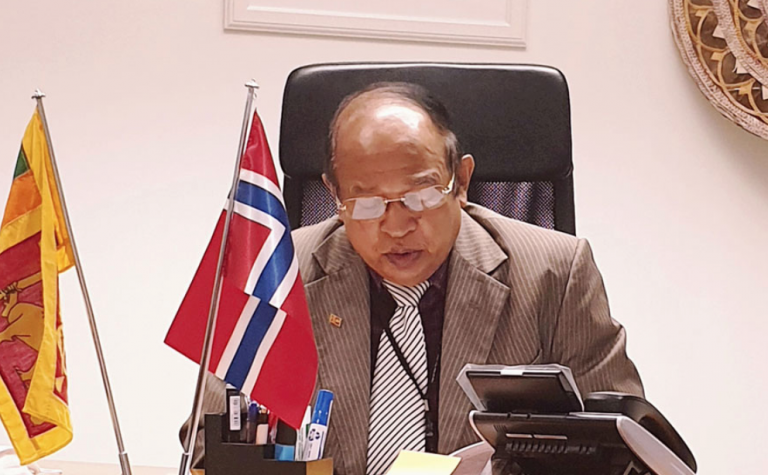
The Sri Lankan community in Norway alleges that Godfrey Cooray, the current Sri Lankan Ambassador to Norway, has pressured the Sri Lankan Ministry of Foreign Affairs to close the Sri Lankan Embassy in Oslo, Norway.
It is said that the reason for this is that a 30 year old woman named Sujeewa, whom Godfrey Cooray had taken from Sri Lanka to work at the Ambassador’s house, could not bear his harassment and ran away from the embassy and complained to the Norwegian government authorities.
The Norwegian government is currently investigating but the allegations of serious human rights abuses that have been made cannot be denied even under diplomatic privileges.
Accordingly, the Sri Lankan community in Norway alleges that the ambassador himself provided false information to Sri Lanka to close the embassy as the only tactic to get rid of these allegations.
As a result, thousands of Sri Lankans are at risk of losing their jobs.
It is now being revealed that Godfrey Cooray, during his tenure as ambassador, has been pursuing a private business rather than serving the country as a diplomat.
Meanwhile, it is reported that a woman named Sujeewa has been given special protection by the Norwegian authorities.
(We would also like to point out that LNW would provide the opportunity for comments from any party, including Godfrey Cooray.)
UN convenes stakeholder groups to review progress and urgent follow-up action to step up sustainable development in the region
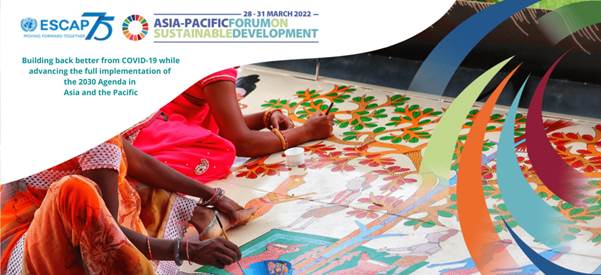
The Ninth Asia-Pacific Forum on Sustainable Development (APFSD) will be held from 28 to 31 March in Bangkok, with governments, civil society, private sector, academia, youth, UN bodies and other stakeholder groups set to address the theme “Building back better from COVID-19 while advancing the full implementation of the 2030 Agenda in Asia and the Pacific,” ahead of the High-Level Political Forum at the United Nations Headquarters in July.
This year, delegates will undertake an in-depth review of five Sustainable Development Goals including Goal 4 (quality education), 5 (gender equality), 14 (life below water), 15 (life on land) and 17 (partnerships for the Goals). Organized by the United Nations Economic and Social Commission for Asia and the Pacific (ESCAP), the forum will provide an inclusive platform for countries to share regional best practices and lessons learnt, support the presentation of their voluntary national reviews and assess progress made towards implementing the 2030 Agenda for Sustainable Development.
COLOMBO/NEW DELHI, March 24 (Reuters) – Sri Lanka will seek World Bank assistance to stave off a severe economic crisis in addition to an International Monetary Fund (IMF) rescue plan to be discussed next month, two sources said.
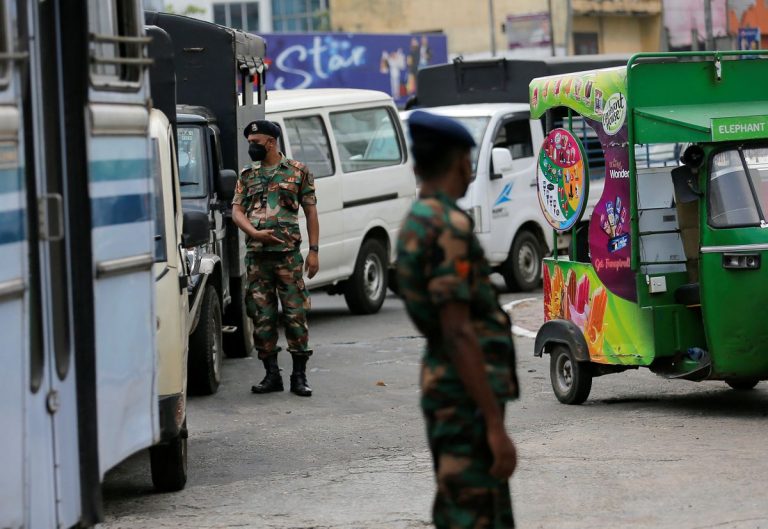
A 70% drop in foreign exchange reserves since January 2020 has left Sri Lanka struggling to pay for essential imports, including food and fuel, leading to the growing unrest and even military deployments at gasoline stations. read more
Holding paltry reserves of $2.31 billion as of February, the country must repay about $4 billion in debt over the rest of this year, including a $1 billion international sovereign bond that matures in July.
To seek a way out of the crisis, Finance Minister Basil Rajapaksa will fly to Washington DC next month to hold talks with the IMF and also officials from the World Bank, two sources with direct knowledge of the plans told Reuters.
“What we need is budgetary support,” one of the sources said, referring to the financial assistance that the Sri Lankan government will ask the World Bank for.
The source was unable to provide the size of World Bank assistance that Sri Lanka could seek.
The World Bank typically extends support to boost exports, improve economic competitiveness and aid growth, analysts said.
In heavily indebted Argentina, for example, the World Bank is working on approving a $2 billion loan package for 2022 that includes support for infrastructure, health, social inclusion and environment projects.
Both sources, who declined to be named, since discussions were confidential, said such assistance would likely come after Sri Lanka entered into an IMF-supported loan programme.
In response to questions from Reuters, the World Bank said it was not currently in talks with Sri Lanka to provide budget support.
“We are engaging with the authorities to identify a comprehensive structural reform program needed to ensure sustainable growth, and around which such support may be possible in the future,” the World Bank said.
Sri Lanka’s Finance Ministry did not respond to a request for comment.
‘DAMN TOUGH’
The amount of funding would depend on the specific goals set by an IMF programme as well as Sri Lanka’s trade and fiscal deficits, analysts said, estimating an annual requirement of up to $3 billion from several multilateral and bilateral sources.
“If they have a credible IMF programme then there will be a period, perhaps six months to a year, maybe two, when it will be damn tough,” the second source said.
“So how will people survive? That is where institutions like the World Bank will come in with budget support.”
An IMF programme will likely focus on external debt restructuring, greater exchange-rate flexibility and better targeted subsidies, which may hit the poor, analysts said.
Transparent energy pricing is also likely to drive up fuel and electricity costs.
The World Bank could promote direct subsidy transfer, push green energy and develop human capital through improvements in health, education, and social protection, the second source said.
Register Reporting by Uditha Jayasinghe and Devjyot Ghoshal; Editing by Sanjeev Miglani and Bradley Perrett
Restrictions have been placed on a wide range of essential items sold through Sathosa outlets. A circular has been issued instructing Sathosa branch managers in this regard.
According to the relevant circular, the maximum amount of rice that can be sold per consumer is 05 kg. Imported Nadu can be purchased for Rs. 100 and imported Ponni Samba for Rs. 130 through Sathosa outlets.
In addition, one consumer can buy 1 kg of sugar and 500 g of dhal. The price of one kilogram of sugar is 160 rupees.
However, consumers say that some stores do not even have that amount to buy. It is reported that many other essential food items including wheat flour are not available in the CWE outlets.
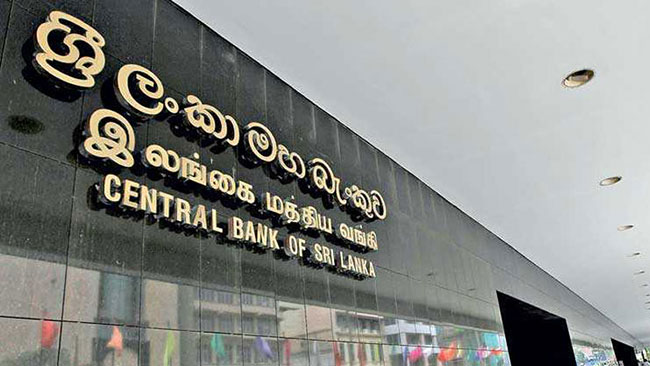
The Central Bank of Sri Lanka (CBSL) has stated that the decision to increase the percentage of foreign exchange earned in foreign exchange from 25% to 50% is only applicable to banks.
The Central Bank emphasizes that this decision does not apply to the exchange earnings of migrant workers and the export earnings of exporters.
An earlier order had mandated the sale of 25% of the dollar reserves to commercial banks to the Central Bank, which had decided to increase that percentage to 50% with effect from March 21. The decision was taken as a solution to the huge dollar crisis facing the country.
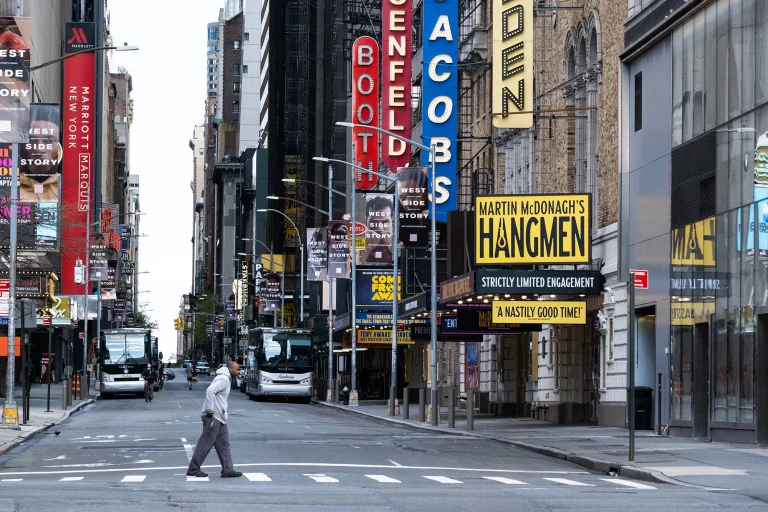
The Big Apple’s population has been hollowed out during the COVID-19 pandemic — with Manhattan suffering the biggest population decline among all US counties, according to grim census data released Thursday.New York County saw its population plunge by 110,958 or 6.9% between July 2020 and July 2021 — coinciding with the coronavirus pandemic.
New York City accounted for four of the top US counties with population losses.
Hudson County in neighboring New Jersey also landed in the top 10, which means the NY metropolitan region accounted for five of the top 10 counties with population losses.
Brooklyn’s population declined by 86,341 residents or 3.5%, the sixth worst percentage in the nation.
The number of residents in “the boogie down” Bronx sunk by 41,490 or 3.2% — the eighth highest percentage drop.
Queens County followed in ninth place with a 3.1% decrease, or 64,648 population loss.
New York City saw a decline in population from July 2020 to July 2021.New York County saw its population plunge by 110,958 between July 2020 and July 2021.
Only Staten Island, Richmond County, escaped the top ten list.
Meanwhile 20,192 people fled Hudson County, or 3.1%. During the 12-month period, the city’s population as a whole plummeted by 3.5 percent or 305,665 people.
Gotham’s one-year population loss erased nearly half of the 629,057population increase it gained the previous decade, noted E.J. McMahon, an analyst for the Empire Center for Public Policy.
Los Angeles County, the nation’s largest county with 9.8 million residents, had the largest numerical loss of people, 159,620.
New York City’s decline was largely driven by residents who moved elsewhere during the worst of the COVID-19 outbreak — a domestic migration outflow of 342,449 people — more than triple its annual migration losses from 2010 to 2020, McMahon’s analysis found. Offsetting that decline was a small “natural increase” of 29,000 people.
Even during the pandemic, births slightly outnumbered deaths in the city.
Manhattan had the worst population decline among all US counties, per the data.
In many US counties with older populations, deaths had outnumbered births. The city also gained 12,695 immigrants during this period — a tiny bump compared to pre-pandemic years.
“Consistent with news accounts of New Yorkers flooding into the Hamptons, Suffolk County had the largest net domestic migration inflow in absolute terms, gaining 2,138 residents (1.4 per 1,000) after experiencing an annual net migration outflow of 8,000 in the previous decade,” McMahon said.
McMahon said the city’s post-pandemic future will depend on whether certain trends during the COVID-19 outbreak take hold, such as remote work instead of going to the office. More city firms are posting remote jobs where employees can work from anywhere.
“Will New York’s post-pandemic population trends become permanent, pointing to a new era of decline for New York City and a mix of modest growth and stagnation elsewhere? Will remote working lead to a repopulation of previously shrinking rural communities in New York?” he asked.
Many people from NYC moved into Suffolk County on Long Island.
“Those remain open questions. No doubt some New York City residents flocking to suburbs and rural counties between 2020 and 2021 were already mulling such moves before the pandemic hit, then accelerated their plans when COVID-19 lockdowns began. If that was the case, Census estimates in the next two years will reflect much smaller changes.”
The Empire Center’s analysis shows that more city residents move to neighboring states such as New Jersey and Connecticut than relocated north to the Catskills and mid-Hudson Valley.
Many other Big Apple residents moved further away, to metropolitan areas of the southeast and west that already were growth hot spots, he said.
New York City gained 12,695 immigrants, a small increase compared to pre-pandemic years.
The new Census data highlighted the growth of smaller, less expensive metro areas at the expense of bigger cities such as New York and Los Angeles and San Francisco.
San Francisco County had the second highest percentage loss afterManhattan — 6.7%
But smaller New York’s upstate metro areas have not benefited from the exodus of people from the nation’s most densely populated city.
“The benefits of this trend seem to be eluding the metro areas of upstate New York. While rural communities in some regions have rebounded, the more developed counties containing the cities of Albany, Buffalo, Rochester and Syracuse — and, for that matter, Binghamton, Niagara Falls and Utica — did not grow at all last year,” McMahon said.
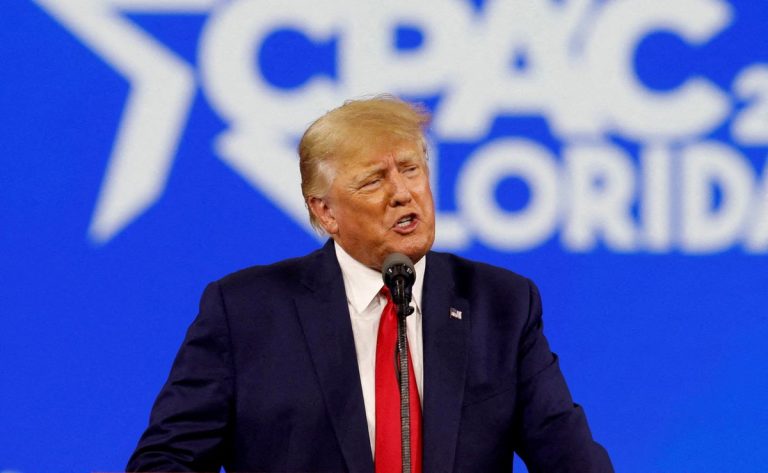
WASHINGTON, March 24 (Reuters) – Donald Trump on Thursday sued his rival in the 2016 U.S. presidential election, Hillary Clinton, and several other Democrats, alleging that they tried to rig that election by tying his campaign to Russia.
The lawsuit covers a long list of grievances the Republican former president repeatedly aired during his four years in the White House after beating Clinton, and comes as he continues to falsely claim that his 2020 election defeat by Democratic President Joe Biden was the result of widespread fraud.
“Acting in concert, the Defendants maliciously conspired to weave a false narrative that their Republican opponent, Donald J. Trump, was colluding with a hostile foreign sovereignty,” the former president alleged in a 108-page lawsuit filed in a federal court in Florida.
The suit alleges “racketeering” and a “conspiracy to commit injurious falsehood,” among other claims.
A Clinton representative did not respond to a request for comment.
The suit seeks compensatory and punitive damages. Trump said he was “forced to incur expenses in an amount to be determined at trial, but known to be in excess of twenty-four million dollars ($24,000,000) and continuing to accrue, in the form of defense costs, legal fees, and related expenses.”
Jeff Grell, a lawyer who specializes in racketeering cases, said Trump may have waited too long in bringing his racketeering claims. Civil racketeering claims are governed by a four-year statute of limitations, Grell said, but there is usually a big dispute about when that four-year period begins to run.
Grell said defendants may also argue various defenses, such as that Trump’s lawsuit ignores the immunity granted to government agents, the lawsuit doesn’t set forth a pattern of racketeering — which is required for liability — or the lawsuit seeks to chill the exercise of free speech.
Such defenses are usually resolved only after protracted litigation, Grell said.
The defendants in Trump’s lawsuit include Christopher Steele, a former British intelligence officer.
A dossier written by Steele, which was circulated to the FBI and media outlets before the November 2016 election, set out unproven assertions that Russia had embarrassing information about Trump and some of his Republican campaign’s advisers and that Moscow was working behind the scenes to defeat Clinton.
A 966-page report issued by a Republican-led U.S. Senate committee in 2020 concluded that Russia used Republican political operative Paul Manafort and the WikiLeaks website to try to help Trump win the 2016 election.
Manafort worked on Trump’s presidential campaign for five months in 2016.
Russia’s alleged election interference, which Moscow denies, sparked a two-year-long U.S. investigation headed by Special Counsel Robert Mueller.
In 2019, Mueller released an exhaustive report that detailed numerous links between the Russian government and the Trump campaign but did not charge any Trump associate with a criminal conspiracy.
Mueller said in his report that “the Russian government perceived it would benefit from a Trump presidency and worked to secure that outcome, and that the campaign expected it would benefit electorally from information stolen and released through Russian efforts.”
RegisterReporting by Jan Wolfe in Washington and Jonathan Stempel in New York Editing by Scott Malone, Chris Reese and Leslie Adler
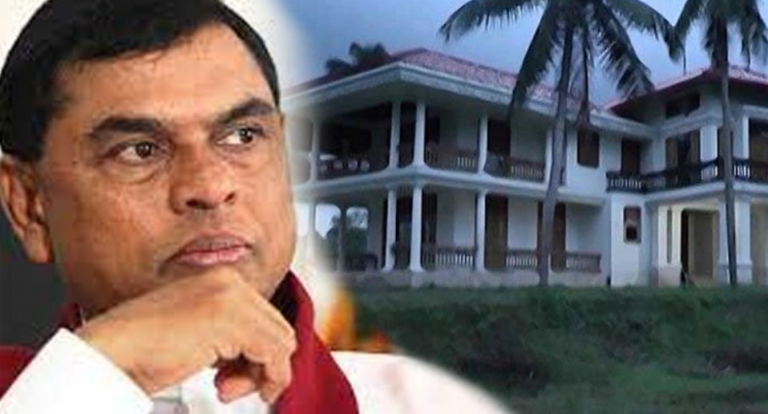
The Attorney General’s Department has informed the Gampaha High Court today (25) that it will not hold further hearings in the case against Finance Minister Basil Rajapaksa on buying a plot of land in the Malwana Mapitigama area in Malwana, Dompe and constructing a huge house on it and embezzling government funds.
Addressing the court, Deputy Solicitor General Shanil Kularatne said that the decision was taken on the basis that the first witness had not lodged a complaint with the Financial Crimes Investigation Division and that the signature on the statement given was not acceptable.
Accordingly, the Deputy Solicitor General has stated that no evidence will be taken in this case in the future and that the case will be closed.
The witnesses who appeared before the High Court on summons have been released by the High Court. The President’s Counsel, who appeared for the suspects, has requested that his clients be acquitted as the plaintiff has concluded the case and the verdict on that request is due on May 13.