By: Staff Writer
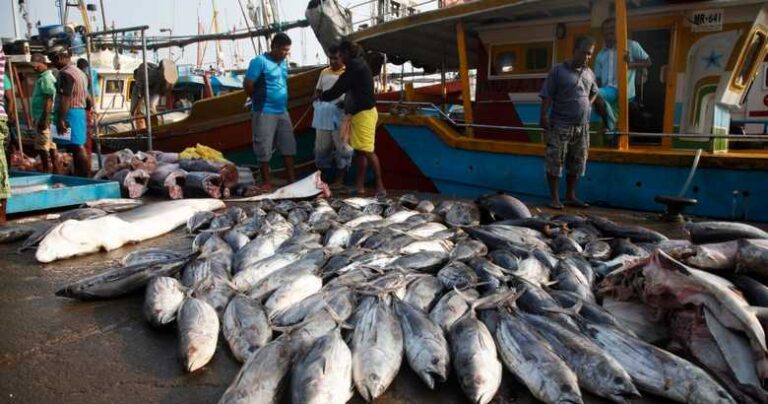
December 15, Colombo (LNW): Sri Lanka’s fisheries harbour construction sector is once again under scrutiny amid mounting allegations of systematic tender manipulation, official collusion and large-scale misuse of public funds within the Lanka Fisheries Harbours Corporation (LFHC) and the Ministry of Fisheries. Multiple incidents over several years suggest that weaknesses in procurement systems have been deliberately exploited by a small group of officials working in tandem with favoured private contractors.
The most troubling pattern, according to industry analysts and internal sources, is that nearly all major construction projects of the LFHC have, for a prolonged period, been awarded to a single private company. This concentration has raised serious red flags, particularly because the bids submitted by this company consistently fall within about 95% of the official cost estimates prepared by the Corporation itself.
Experts argue that such precision cannot be coincidental. They point to two highly concerning possibilities: either confidential cost estimates are being unlawfully leaked to the bidder, or the technical specifications or pricing frameworks for tenders are effectively being drafted with the involvement of the same company, then circulated through engineers within the authority who allegedly maintain close personal links with it.
These suspicions are reinforced by claims that loopholes in government procurement procedures have been systematically manipulated with the tacit support of certain senior officials. The Beruwala slipway tender has been cited as a notable example. Although the contract was not formally awarded to the controversial firm, it was allegedly later compensated through a 5% discount, raising questions about the integrity of the evaluation process.
Insiders further allege that external influence networks are deeply embedded within the fisheries harbour system. It is widely known among employees that one senior engineer has, for years, been provided with a vehicle, fuel and a driver by the same company. Several other engineers allegedly linked to this network are said to sit on tender boards, undermining impartial decision-making.
Financial losses linked to these practices are substantial. At the Gandara Fisheries Harbour, delayed bill settlements and variation payments reportedly enabled the contractor to extract over Rs. 500 million in additional public funds. Meanwhile, the Wella Mankara harbour project revealed structural defects and deficiencies even at the opening stage, highlighting serious failures in supervision and quality control.
These concerns are not isolated. The arrest of a former LFHC Chairman in June 2025 over an unsolicited sand mining proposal, inflated consultancy fees linked to politically connected firms, irregular leasing of harbour premises, unauthorized procurement of equipment, and the widely criticised Oluvil Harbour project together point to entrenched governance failures
Tender Manipulation Web Tightens Grip on Fisheries Harbours
Government’s Relief Promises Tested as Cyclone Costs Mount Nationwide
By: Staff Writer
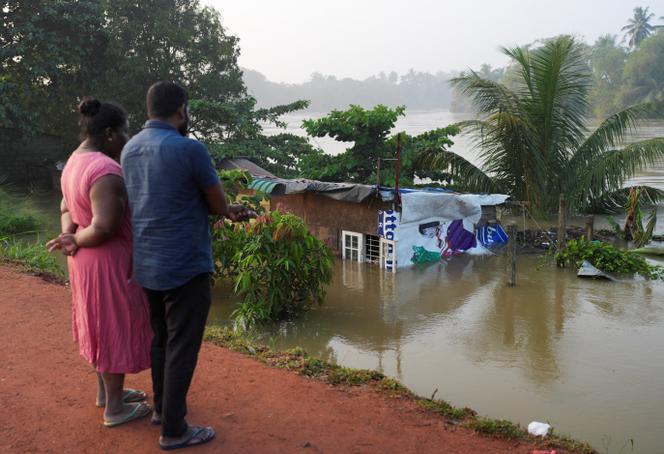
December 15, Colombo (LNW): The cyclone’s devastation has triggered a critical policy debate in Sri Lanka: whether relief commitments can keep pace with economic reality. While government officials insist that funding mechanisms are in place, opposition voices warn that compensation costs may spiral beyond manageable limits.
A senior Treasury official has outlined preliminary estimates showing that post-cyclone compensation could exceed Rs. 100 billion, even before infrastructure reconstruction costs are fully accounted for. These figures highlight a growing tension between fiscal discipline and social responsibility.
The total expenditure comes up to Rs 103 billion to be spent to pay compensation for damges and lively hood support for cyclone and flood victims.
At the household level, relief commitments appear modest but accumulate rapidly. Cleaning grants for damaged homes amount to Rs. 1.8 billion, while essential household assistance raises the bill beyond Rs. 5 billion. Temporary relocation support further adds Rs. 312 million, with the risk of escalation if displacement continues.
Rural recovery presents an even steeper challenge. Crop damage compensation alone is estimated at Rs. 7 billion, while losses to vegetable cultivation and livestock add Rs. 40 billion combined. These sectors support millions of livelihoods, making delayed compensation economically and politically risky.
Income restoration remains the single largest cost. Treasury projections indicate Rs. 44 billion would be required to assist families who lost livelihoods. Business recovery costs—including Rs. 200 million for SME rebuilding and Rs. 5 billion for destroyed commercial properties—underscore the long-term economic disruption caused by the disaster.
To bridge immediate gaps, the government has released Rs. 550 million in additional relief funding, sourced from the Rs. 30 billion disaster management budget. Officials maintain that comprehensive guidelines are in place and disbursement has already begun.
Beyond domestic funding, the United Nations has launched a Humanitarian Priorities Plan, aiming to raise USD 35 million to support 658,000 of the most vulnerable people, complementing state-led efforts. Insurance regulators have also coordinated with insurers to fast-track compensation, with minor claims already being settled.
While some opposition parties have criticized early preparedness, multiple sources confirm that relief systems are operational. Still, the cyclone has exposed a structural dilemma: Sri Lanka’s disaster response now hinges not only on speed and compassion, but on sustained fiscal resilience.
Police Detain Nearly 1,000 in Nationwide Anti-Drug Sweep

December 15, Colombo (LNW): As part of the “Nation United – National Drive” initiative targeting illegal narcotics, Sri Lankan authorities arrested 981 individuals yesterday (14) during coordinated operations across the country.
The Police Media Division reported that 987 separate raids were carried out, resulting in the detention of suspected drug offenders. In addition, 12 individuals identified as drug users were directed to rehabilitation programmes, while 28 others remain under investigation.
During the sweep, officers confiscated significant quantities of illegal substances, including 890 grams of crystal methamphetamine, commonly known as ‘Ice’, and 513 grams of heroin, alongside other narcotics.
Sri Lanka Confirms No Nationals Harmed in Sydney Shooting
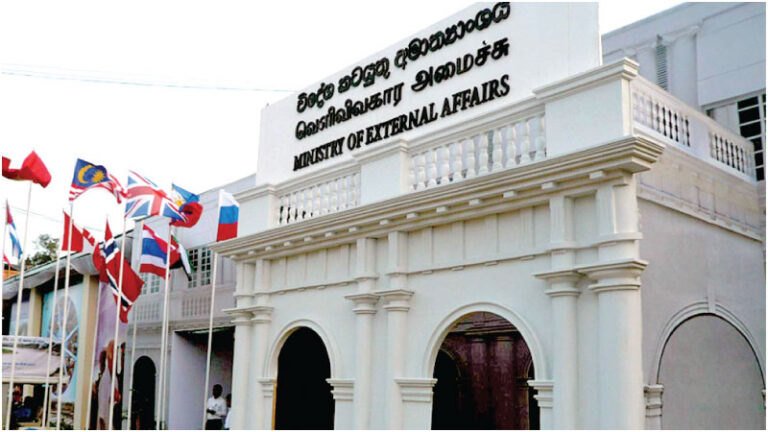
December 15, Colombo (LNW): The Ministry of Foreign Affairs, Foreign Employment & Tourism has assured that no Sri Lankan citizens were affected in the shooting incident that took place during a Hanukkah celebration near Bondi Beach, Sydney, on Sunday.
The Ministry stated that it is actively monitoring the situation and maintaining close contact with Australian authorities to obtain the latest updates on the unfolding investigation.
According to Australian police, at least 16 people lost their lives and over 40 others were injured when two armed individuals opened fire at a festival attended by around 1,000 participants. Among those wounded were two police officers.
Authorities confirmed that one suspect was killed at the scene, while the second, reportedly a relative of the first, remains in critical condition in hospital. The Sri Lankan government emphasised that it continues to coordinate with Australian officials as inquiries progress.
Ex-CEYPETCO Chairman Detained Over Alleged Tender Irregularities
December 15, Colombo (LNW): Dhammika Ranatunga, the former Chairman of the Ceylon Petroleum Corporation (CEYPETCO), has been taken into custody by the Commission to Investigate Allegations of Bribery or Corruption (CIABOC).
He faces allegations of causing financial losses amounting to approximately Rs. 800 million to the state-run corporation by cancelling three long-term fuel supply contracts for 2017–2018 and opting instead for short-term spot tenders, which reportedly involved higher costs.
Ranatunga is set to appear before the Colombo Chief Magistrate’s Court in connection with the case.
Sri Lanka Condemns Bondi Beach Attack, Extends Condolences to Australia
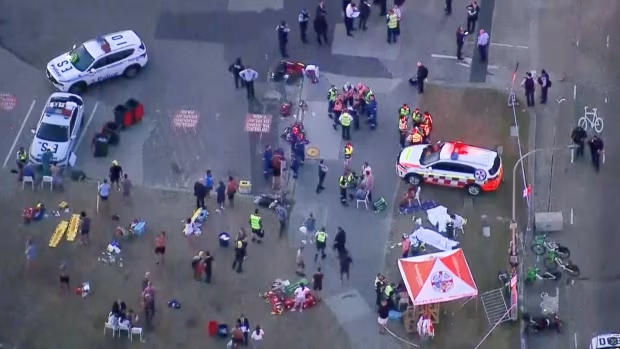
December 15, Colombo (LNW): Sri Lanka has expressed profound sorrow over the recent terrorist attack at Bondi Beach in Australia, which targeted a Jewish Hanukkah celebration.
In an official statement, President Anura Kumara Dissanayake condemned the act of violence, extending heartfelt condolences to the Australian government, the nation’s people, and the families of the victims. He also conveyed sympathy to those injured, emphasising Sri Lanka’s solidarity with Australia and reaffirming that hatred and violence have no place in any society.
The attack claimed the lives of 15 people, including a 10-year-old girl. Australian Prime Minister Anthony Albanese has pledged to advocate for stricter gun control measures in response.
Police reports indicate the perpetrators were a 50-year-old man, who died at the scene, and his 24-year-old son, currently in critical condition in hospital. The father reportedly held a recreational firearms licence.
Authorities have praised the bravery of bystanders who helped save lives during the incident, along with off-duty police officers who rushed to assist once the shooting began.
Sri Lanka strongly condemns the terrorist attack at Bondi Beach targeting a Jewish Hanukkah gathering. We extend our deepest condolences to the Government and people of Australia, and to the families of those who lost their lives. Our thoughts are with the injured. Sri Lanka…
— Anura Kumara Dissanayake (@anuradisanayake) December 15, 2025
EDB Launches Survey to Assess Disaster Impact on Exporters
December 15, Colombo (LNW): The Export Development Board (EDB) has initiated a nationwide effort to collect data on Sri Lankan exporters impacted by recent disasters.
EDB Chairman Mangala Wijesinghe highlighted that many exporters have struggled with power interruptions, damaged roads, and disruptions in logistics and transport networks.
He expressed optimism that, with ongoing recovery efforts, the export sector is likely to resume normal operations by January or February 2026.
Nawalapitiya-Kandy Road Reopens After Cyclone Ditwah Damage
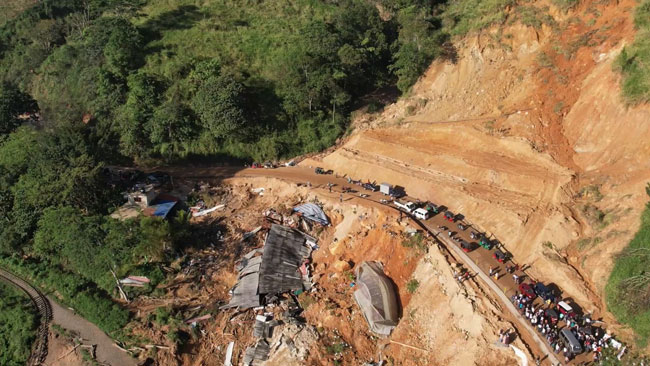
December 15, Colombo (LNW): The main Nawalapitiya-Kandy roadway, closed for 18 days due to damage caused by Cyclone Ditwah, has been reopened to traffic today (15).
Authorities cleared large earth deposits caused by a landslide and carried out temporary reconstruction to make the route safe for vehicles while plans for a permanent solution are finalised. Officials have warned that the area above the road remains susceptible to further landslides.
The Road Development Authority (RDA) has urged drivers to exercise caution and adhere to speed restrictions, particularly as certain limitations on heavy vehicle movement are still in effect.
The repair operation involved close coordination between the RDA, the 6th Corps of Engineers Regiment, local police from Nawalapitiya and Ethgala, the Pasbage Korale Pradeshiya Sabha, and other local stakeholders.
Speaking to reporters, MP Thushari Jayasinghe confirmed that most of the damaged roads in the Pasbage Korale area have now been restored. She also noted that work on the Ulapane-Kandy road is ongoing, with an expected reopening within the next week.
Major Indian Study Finds No Link Between COVID-19 Vaccines and Sudden Deaths in Young Adults
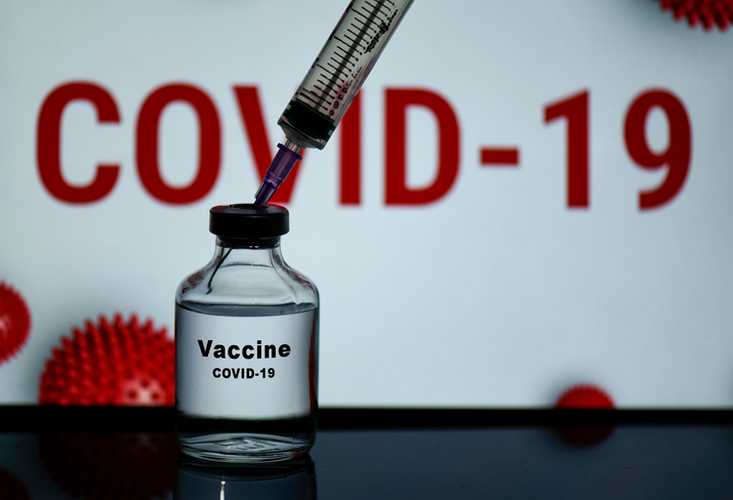
December 15, Colombo (LNW): A comprehensive year-long study carried out by the All India Institute of Medical Sciences (AIIMS) in New Delhi has found no scientific evidence connecting COVID-19 vaccination to sudden deaths among young adults, reinforcing confidence in the safety of the vaccines.
The research, published in the Indian Journal of Medical Research, examined cases involving individuals aged 18 to 45 who died unexpectedly. Investigators employed multiple methods, including verbal autopsies, advanced imaging, full post-mortem examinations and detailed tissue analysis, to determine the causes of death with a high degree of accuracy.
The findings showed no statistically meaningful relationship between vaccination status and sudden mortality in this age group. Instead, the majority of deaths were attributed to recognised medical conditions, with heart-related diseases identified as the most common cause. Respiratory illnesses and other non-cardiac factors were also present in a number of cases.
Researchers further noted that prior COVID-19 infection and vaccination patterns were broadly similar across age groups, providing no indication of a causal link between immunisation and unexpected deaths. The conclusions align with international scientific evidence supporting the safety and effectiveness of COVID-19 vaccines.
Professor Sudheer Arava of AIIMS said the study is especially relevant amid the spread of unverified claims suggesting a connection between vaccines and sudden fatalities. He emphasised that the data clearly refute such assertions and highlighted the importance of relying on rigorous scientific research rather than speculation.
Medical experts added that sudden deaths in younger people, while deeply distressing, are often linked to undiagnosed or underlying health conditions, particularly those affecting the heart. They stressed the value of routine health checks, healthier lifestyles and early medical care in reducing such risks.
Professor Arava also urged the public to seek information from credible scientific sources and to remain cautious of misinformation that could undermine trust in proven public health interventions, including vaccination programmes.
Ditwah Damage: Railway Repairs to Cost About $400 Mn
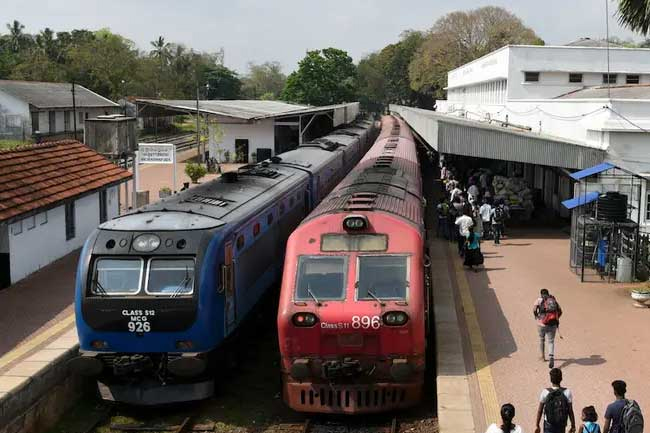
December 15, Colombo (LNW): The reconstruction of railway infrastructure damaged by the recent disaster is expected to require an investment of around US$ 400 million, according to Commissioner General of Essential Services Prabhat Chandrakeerthy.
He said the extent of destruction to rail tracks and related facilities means that full restoration will be a lengthy process, with work needing to be carried out in stages across multiple affected areas.
Providing an update on the health sector, Chandrakeerthy noted that close to 90 per cent of the 236 medical institutions impacted by the disaster have already resumed operations. Temporary arrangements have been made for facilities such as Spring Valley and Kandegedara hospitals, which have been relocated to alternate premises.
He added that Mahiyanganaya and Chilaw hospitals, both of which suffered extensive damage, have now returned to normal service delivery. However, the disaster caused serious losses to medical equipment, including high-value items such as CT scanners, which were badly damaged and will take time and significant resources to replace.
Authorities say recovery efforts remain ongoing, with priority being given to restoring essential transport and health services while longer-term reconstruction plans are finalised.