Home Blog Page 2385

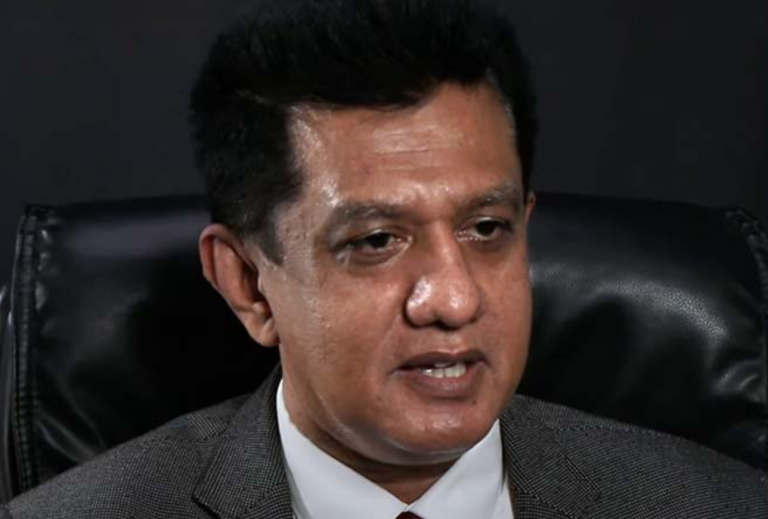
Sri Lanka is facing a serious economic crisis – Prof. Charitha Herath

0

Government MP Prof. Charitha Herath says that Sri Lanka is facing a serious economic crisis.

The professor, who is also the chairman of the parliamentary ‘COPE’ committee, said this in an interview with Advocata Plus’ Dhananath Fernando.

“Whatever we say from the outside about the economic crisis, policy makers must make the final decision. They are the ones who need to initiate economic reforms.

These conversations with political elites are not about their politics. Find out what decisions they hope to make to overcome this economic crisis.” He said.

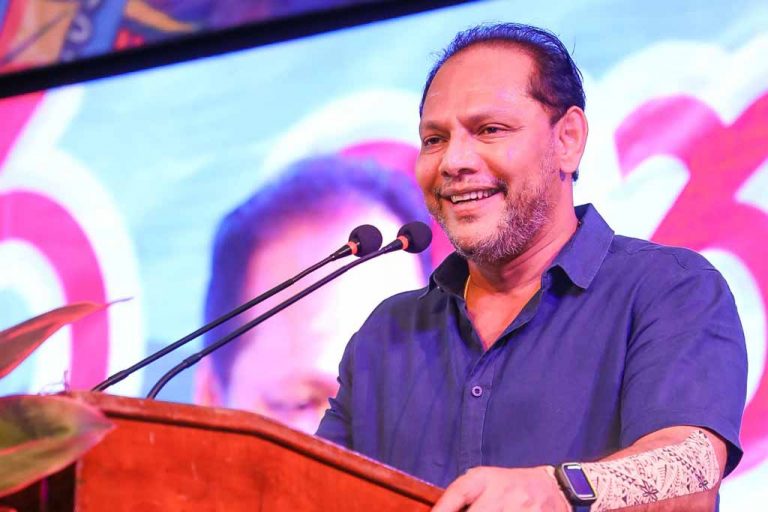
SLFP is ready to leave the government if the Central Committee of the party gives its approval – Dayasiri

0

Secretary-General of the Sri Lanka Freedom Party, Minister of State Dayasiri Jayasekara states that he is ready to leave the government at any time if the Central Committee of the party gives its approval.

He has stated this while expressing his views to the media in Colombo yesterday.

A special meeting of 11 government partners is being held today and the Sri Lanka Freedom Party is also scheduled to participate in this meeting. Mr. Dayasiri Jayasekara says that these discussions are being held under the leadership of the Chairman of the SLFP Maithripala Sirisena.

Sri Lanka to pay compensation for failed organic farm drive

0

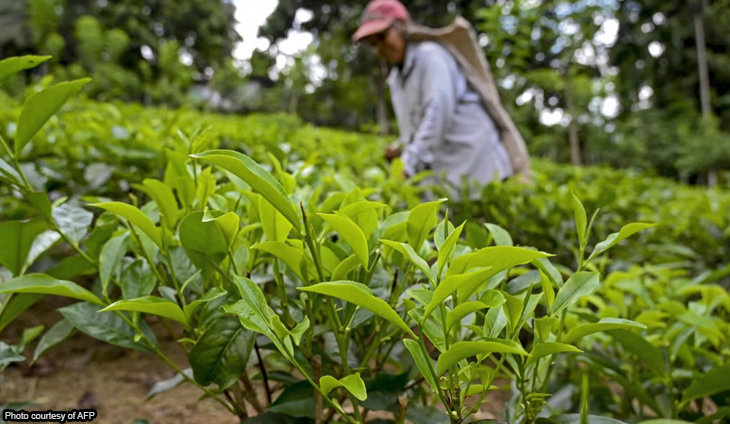
A million farmers whose crops failed under a botched scheme to establish the world’s first 100-percent organic farming nation will be compensated.

Sri Lanka has announced compensation for more than a million rice farmers whose crops failed under a failed scheme to establish the world’s first 100-percent organic farming nation.

Sri Lanka’s Cabinet of Ministers has decided to award Rs. 50,000/- per hectare for all cultivation that were damaged during the 2021 Maha Season.
Minister of Agriculture, Mahindananda Aluthgamage elaborated on the decision, stating that the Government will pay 50,000 Rupees each for 1.1 Million farmers who cultivated in 800,000 hectares during the Maha cultivation season.

Moreover, he said that the Government also took steps to purchase a kilogram of rice for Rs. 90, 92 and 95, thereby giving it a good price.
The island nation is currently reeling from a severe economic crisis that has triggered food shortages and rolling blackouts as the COVID pandemic sent the tourism-dependent economy into a tailspin
Agricultural chemicals such as fertiliser were among the imports banned last year as authorities tried to save dwindling foreign currency reserves. The restrictions were lifted months later after farmer protests and crop failures.

The Cabinet of Ministers had previously granted approval to prepare an appropriate scheme of compensation in consultation with the General Treasury to pay a compensation of rupees 25/- per one kilogram of paddy in order to secure the income level of farmers who affect due to declining of paddy harvest during the Maha season 2021 / 2022.
Accordingly, a methodology has been prepared to pay the compensation that is calculated based on the relevant criteria as an evaluation incentive limited to an extent of the agricultural area of 05 acres to the maximum so that small – scale farmers, as well as small and medium level farmers, would be able to obtain the relevant incentive allowance.

The Cabinet of Ministers approved the resolution furnished by the Minister of Agriculture for implementing the said methodology and for remitting the required funds to the Department of Agrarian Development by the State Minister of Organic Fertilizer Production.

Sri Lanka kick starts an ambitious Green Hydrogen project 

0

 Sri Lanka is to embark on an ambitious project of producing Green Hydrogen which is considered as an environment friendly energy source in collaboration with a Norwegian Company Greenstat Hydrogen Ltd based in India.

Energy Minister Udya Gammanpila disclosed that Petroleum Development Authority of Sri Lanka (PDASL) signed an MOU with Greenstat Hydrogen on Monday 28 to launch a pilot project for generating green hydrogen in Sri Lanka.

He noted that Green Hydrogen is produced by using renewable energy such as solar and wind power and this will be a long term solution to the country’s energy crisis.

The Government has taken a policy decision towards the goal of decarbonisation by the year 2050. 

To achuve this objective, Sri Lanka will have to convert from fossil fuel to green energy roduction supply slowly but surely, he added. 

Greenstat Hydrogen India Ltd., which is an affiliated body of Greenstat AS of Norway, will conduct a feasibility study on a pilot project for generating green hydrogen using a combination of floating solar and wind, he revealed.

The Cabinet of Ministers granted approval for the proposal submitted by the Energy Minister Udaya Gammanpila to enter into an agreement between PDASL and Greenstat Hydrogen India Ltd. to conduct the feasibility study. There will be no cost for the  Government in the implementation of this pilot project

The Government has taken a policy decision towards the goal of decarbonisation by the year 2050. To realise this goal, the country needs to gradually convert from fossil fuel to green energy production and consumption by changing energy supply 

networks. Accordingly, steps should be taken to minimise gas emissions in the industries where there is electricity, transport, and thermal power utilisation. In these circumstances Greenstat Hydrogen India Ltd., which is an affiliated body of Greenstat AS of Norway, has agreed to conduct a feasibility study on a pilot project for generating green hydrogen utilising a combination of floating solar and wind. 

Norwegian Ambassador to Sri Lanka Trine Jøranli Eskedal said: “I am pleased to see Norwegian companies showing an interest in key sectors in Sri Lanka, and I hope this study will contribute to highlighting Sri Lanka’s potential for transitioning towards renewable energy and renewable fuel sources.”

“We are thrilled to become a close partner with the authorities of Sri Lanka, and we believe the country has a great potential to not only to serve its own needs of green hydrogen (emission free energy carrier), but also become a net exporter in the future. 

“It is with great pleasure and excitement Greenstat Hydrogen India today signed the agreement with the Sri Lanka Petroleum Development Authority, on this ground-breaking collaboration,” Greenstat Hydrogen India Chairman Sturle H. Pedersen said on the collaboration.

He said Greenstat has great expectations of the project becoming a crucial instrument for Sri Lanka to establish a green hydrogen roadmap as well as gaining experience with green hydrogen technologies. 

On 1 February, the Cabinet of Ministers granted approval for the proposal submitted by the Energy Minister Udaya Gammanpila to enter into an agreement between PDASL and Greenstat Hydrogen India Ltd. to conduct the feasibility study. The project would not involve funding from the Government of Sri Lanka.

Tourism Minister vows to take stern action on those harassing tourists

0

Government will be taking stern action against persons who are harassing tourists visiting the island.

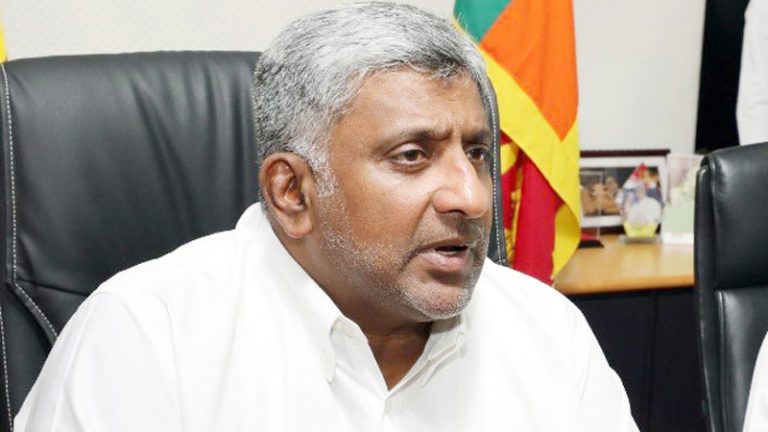
Tourism Minister Prasanna Ranatunga has written to Inspector General of Police (IGP) Chandana D. Wickramaratne calling for the law to be strictly enforced on those found to be harassing tourists in Sri Lanka.

A number of incidents where tourists were harassed were reported on social media.The Minister noted that such incidents could affect the tourism industry which is gradually recovering following the Covid pandemic.

He also said that such incidents could harm the image of Sri Lanka and so legal action must be taken against the perpetrators.

The Tourism Minister requested the IGP to pay close attention to the situation and take appropriate action.

Earlier this month,the police launched investigations into similar incidents where two German women were sexually abused by locals in two separate incidents in Kollupitiya, Tangalle.

Minister Ranatunga requested the IGP to pay special attention to this matter as the damage caused to the country’s image and the tourism industry due to such incidents could be rectified only by enforcing the law against those involved in these incidents.

Meanwhile, the Tourism Development Authority said that a total of 175,909 tourists have arrived in the country from January 1 to February 27 this year.

Among them, 28,392 tourists have arrived in the country from Russia while 24,141 tourists from India, 17,749 from the UK, 13,039 from Ukraine and 12,779 from Germany.

According to Tourism Ministry statistics, a 14% growth in tourist arrivals was reported from Januarydue easing of travel restrictions along with tourism promotion campaigns , continued service from more airlines, successful vaccination program and growing traveller confidence.

February arrivals also recorded new high surpassing the previous high of 89,506 posted in December 2021 since the onset of the pandemic in March 2020. In February, an average of 3,466 tourists arrived in the country on a daily basis.

Despite a surge in its COVID cases and declaring war, Russia continues to dominate as the top tourist source market for Sri Lanka with 28,392 tourists so far, followed by India with 24,141, UK 17,749, Ukraine 13,039 and Germany 12,779.

In addition, tourists also visited the island from countries such as France, Poland, Australia, Kazakhstan and Maldives in February.

The first week of February recorded 22,411 tourist arrivals and it was increased in the second and third weeks to 24,871 and 25,766 respectively.

However, the fourth week showed a sharp drop with 20,534 just yesterday’s data pending, which could be attributed to the Russian invasion of Ukraine. In February, a total of 14,914 Russian travellers and 5,267 Ukrainian tourists were received.

Sri Lanka revised down the tourist arrivals forecast for 2022 to 1.1 million from an earlier ambitious goal of luring 2.3 million, a move influenced by the surge in ‘Omicron’ variant in major source markets.

However, Tourism Minister Prasanna Ranatunga expressed the belief of attracting 150,000 travellers monthly in the next six months.

Evacuation of approximately 40 Sri Lankans in Ukraine underway

0

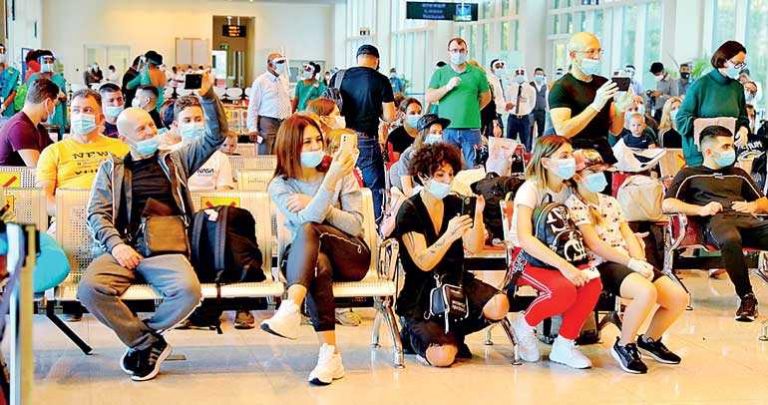
The Foreign Ministry is continuing to closely monitor developments in Ukraine and is engaged in the evacuation of approximately forty (40) Sri Lankan nationals, including two (02) students in Ukraine via the Ukraine – Polish border. 

The process is facilitated by the Sri Lanka Embassies in Warsaw and Ankara, the latter being concurrently accredited to Ukraine, the Foreign Ministry said Tuesday March 01.

The Ministry has strengthened the provision of resources to the Sri Lanka Embassy in Warsaw in order to ensure the effective facilitation of the evacuation process. 

The Ambassadors of Sri Lanka in Ankara and Warsaw continue to maintain close contact with the Sri Lankan nationals leaving Ukraine, in order to enable their safe passage and return to Sri Lanka.

The Foreign Ministry is also engaged in monitoring the status of Sri Lankan nationals in countries which share land borders with Ukraine.  Sri Lanka’s accredited missions are in contact with the relevant Honorary Consuls and Sri Lankan nationals in the respective countries.

The Sri Lanka Embassy in Moscow which is concurrently accredited to Belarus continues to be in close communication with the approximately 1,600 Sri Lankan nationals, including 1,556 students studying in over eight (08) universities / higher education institutes in Belarus.  

Sri Lanka’s Ambassador in Moscow is in direct contact with the relevant university authorities, student and parent groups, as well as other concerned institutions in Belarus, with regard to the safety and welfare of the Sri Lankan students.  Regular status updates are being provided to the parents, as deemed necessary.

The Ministry requests Sri Lankan nationals in the region to be in close contact with the relevant Sri Lanka Missions.

The Sri Lankan Embassy in Ankara says that 20 Sri Lankans stranded in Ukraine are expected to leave Ukraine near the Ukraine – Poland border.

Sri Lanka’s ambassador to Turkey, Georgia and Ukraine, M.R. Hassan stated that they will be traveling through Poland to visit Sri Lanka.

The border authorities have also been informed about the Sri Lankans, according to the Embassy.

Ambassador M.R. Hassan added that talks are underway to repatriate Sri Lankan students stranded in Ukraine via Poland as well.

Sri Lanka’s Foreign Ministry has asked citizens in Ukraine to be vigilant and be in touch with the embassy in Turkey and other citizens to avoid travel to the country amid fears of a Russian invasion.

“The Foreign Ministry requests all Sri Lankan nationals in Ukraine to exercise vigilance and to be in contact with the Sri Lanka Embassy in Ankara,” a Foreign Ministry statement said.

“The Ministry also advises all Sri Lankan nationals to avoid non-essential travel to Ukraine at present.”

Six out of 14 Sri Lanka students in Ukraine had left the country and the embassy in Ankara was in touch with the balance eight.

Long delayed resurrection of Embilipitiya gets underway.

0

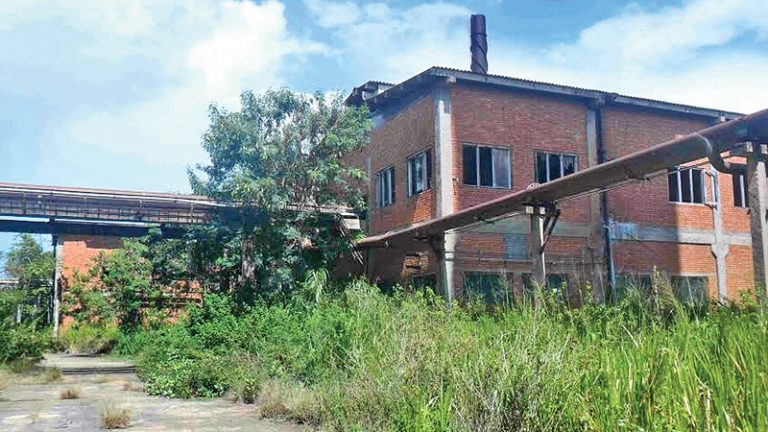
In the wake of rising paper prices in the world market and current scarcity of paper due to dollar crisis, the Sri Lankan government is – at last – set to revive a defunct state paper mill at Embilipitiya after all the previous attempts made during the previous regime failed due to change of government.

Embilipitiya Paper Mill, belonging to National Paper Company Limited has been closed up to date since the year 2012.

Although the land in which the factory was situated and the buildings of the factory had been approved to be given to a local investment company named Korean Spa Packaging (Pvt.) Limited for 30 years followed by a decision of the Cabinet of Ministers in 2018,

The same decision could not be implemented since no actions had been taken to.release the said land to National Paper Company Limited properly, Information department revealed.

Actions are being in process now to hand over the said land in extent of 111 acres 02 roods and 33 perches to National Paper Company Limited on a long time lease basis.

The Cabinet of Ministers granted approval to the proposal furnished by the Minister of Trade for re – initiate the production work of Embilipitiya Paper Mill under Public – Private Partnership (PPP) methodology subsequent totering into an agreement comprised of conditions agreed in between National PaperCompany Limited and Korean Spa Packaging (Pvt.) Limited.

In 2018 The Ministry of Industries and Commerce has taken measures tol lease the mill to Korean SPA Packaging (Pvt) Ltd (KSPA) with Rs. 1.2 billion investment to produce paper and packaging material by upgrading machinery and infrastructure on a cabinet approval received during the previous regime a senior Ministry official disclosed.

KSPA is a multibillion rupee turnover company engaged in the corrugated and flexible packaging industry catering to the packaging needs of various industries including tea and garment industries in the country since 1993.

KSPA is a multibillion rupee turnover company engaged in the corrugated and flexible packaging industry catering to the packaging needs of various industries including tea and garment industries in the country since 1993.

Embilipitiya Paper which was first set up in 1978, closed in 2003 and resumed in 2011 under an Australian firm in a deal tainted with corruption allegations in 2011.

Auslanka Paper Company (Pvt) Ltd was the local entity incorporated with Perth Engineering and Maintenance (WA) (Pvt) Ltd, an Australia based firm, to revive the paper mill at Embilipitiya on a 30 year lease period at a price of Rs.600 million.

The company however abandoned the business in 2012 without repaying a bank loan facility of over Rs.400 million.

At that time the Finance Ministry received a complaint of a Rs.100 million commission paid by Auslanka to a top official of the State Resources and Enterprise Development Ministry. A probe into this corrupt deal had been terminated inconclusively in 2013.

The Embilipitiya paper mill was first set up in 1978. The mill was closed in 2003 and factory assets worth millions of rupees were sold to settle the workers’ dues.

The Paper Mill resumed operations in 2008 with a capital investment of Rs.35 million as envisioned in the Mahinda Chintana to make state resources productive.

However, due to the poor quality of the machinery and the high cost of re-investing in machinery the plant was compelled to close again in 2010.

Despite its closure, the Government continued to pay staff salaries amounting to Rs.4.3 million monthly until November 2013.
.
Over Rs.350 million was paid as compensation to 171 former employees at a ceremony at the Sri Lanka Foundation Institute at that time. .

Putinism is breeding in the heart of the Republican party

0

Robert Reich

Make no mistake: Putin’s authoritarian neo-fascism has rooted itself in America. The cold war has already come home

The world is frighteningly locked in a battle to the death between democracy and authoritarianism. On Sunday Vladimir Putin issued a new threat to the west – telling his defense minister and his top military commander to place Russia’s nuclear forces on alert.

It is a new cold war.

The biggest difference between the old cold war and the new one is that authoritarian neo-fascism is no longer just an external threat to America and Europe. A version of it is also growing inside western Europe and the US.

It has even taken over one of America’s major political parties.

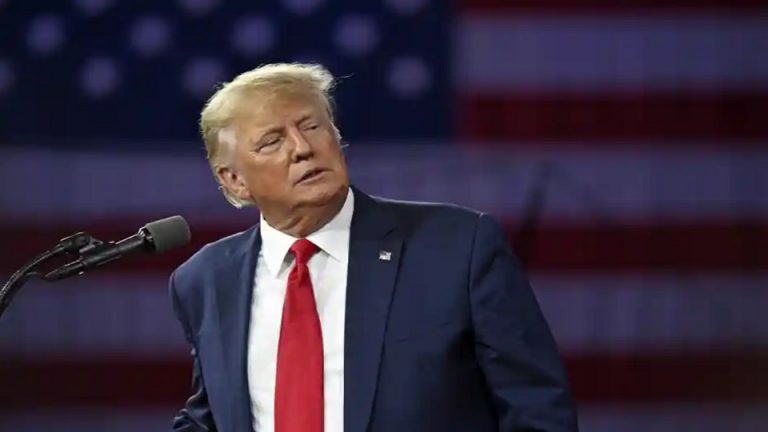
The Trump-led Republican party does not openly support Putin, but the Republican party’s animus toward democracy is expressed in ways familiar to Putin and other autocrats.

Trump Republicans continue to refuse to acknowledge the outcome of the 2020 election, claiming without evidence that it was “stolen” from Trump. In many states, on the basis of this big lie, they are making it more difficult for people who don’t share their beliefs to vote.

In several states they are laying the groundwork for ignoring the popular vote altogether and throwing a future presidential election to Trump or another strongman. They have stopped even pretending to be the party of free speech: they are banning books from schools and prohibiting teachers from talking about America’s struggles against racism and homophobia.

Putin’s attack on Ukraine, starting 24 February, and the attack by followers of Donald Trump on the United States Capitol on 6 January 2021 are different, of course, but they resemble one another in their contempt for democratic institutions and their attempts to justify violence by asserting a threat to a dominant racial or ethnic group.

Each also represents the logical culmination of leadership by a dangerous narcissist who flagrantly lies about his intentions and his opponents and who sees the world only in terms of his personal power.

Donald Trump has long admired Vladimir Putin who, evidence shows, personally authorized a secret spy agency operation to support a “mentally unstable” Trump in the 2016 US presidential election. Believing that a Trump White House would help secure Moscow’s strategic objectives, Russia’s spy agencies were ordered to use “all possible force” to ensure Trump’s victory.

Again in the 2020 election, according to a recently unclassified report by the US office of the Director of National Intelligence, Putin authorized “influence operations” aimed at “supporting Trump” and “denigrating President Biden’s candidacy”.

Presumably Putin supported Trump in 2016 and in 2020 in part because of Trump’s disdain for Nato. As president, Trump did all he could to undermine the organization, even suggesting the US should withdraw from it. Is it pure coincidence that once Trump was out of office and Nato remained intact, Putin attacked Ukraine?

Defending democracy and standing up against authoritarian neo-fascism requires courage. In 2019, the Ukrainian president, Volodymyr Zelenskiy, refused Trump’s demand for help in rigging the 2020 election in the United States, even after Trump threatened to withhold money Congress had appropriated to help Ukraine resist Russian expansion.

Today, Zelenskiy won’t be bullied by Putin. He turned down America’s offer to evacuate him, saying: “I need ammunition, not a ride.”

Zelenskiy’s courage in the face of overwhelming brute force has fortified Ukrainians now defending their country against invaders.

Contrast this with the toadies at the Republican National Committee who in February censured Republican representatives Liz Cheney of Wyoming and Adam Kinzinger of Illinois for participating in Congress’s select committee investigating the events of 6 January, and who called the attack on the Capitol “legitimate political discourse”.

Also contrast Zelenskiy’s courage with most elected Republicans who still refuse to stand up to Trump. On Sunday, on national television, Senator Tom Cotton refused four times to condemn Trump for calling Putin “smart” and “savvy” and Nato and the US “dumb”.

Make no mistake: Putin’s authoritarian neo-fascism has rooted itself in America.

It may be possible to prevent Putin’s aggression from spreading to the rest of Europe. But it is not possible to win a cold civil war inside America without destroying the United States – another of Putin’s objectives when he ordered his spy agencies to help Trump.

In the months and years ahead, those of us in the west who believe in democracy, the rule of law, human rights and truth, must do everything we can to win back our fellow countrymen to these same overriding values.

The Guardian

Home Office challenge to Sri Lanka country guidance fails

0

The Home Office has been refused permission to appeal against the latest Sri Lankan country guidance decision. The case is KK and RS (Sri Lanka) v Secretary of State for the Home Department [2022] EWCA Civ 119.

Background

Last year, in KK and RS (Sur place activities: risk) Sri Lanka CG [2021] UKUT 130 (IAC), the Upper Tribunal gave guidance on Sri Lankan asylum claims based on actual or imputed political opinion. It confirmed the continuing applicability of the previous country guidance — GJ and others (post-civil war: returnees) Sri Lanka CG [2013] UKUT 319 (IAC) — as well as clarifying what exactly a “significant role” in Tamil separatism means and addressing the likely attitude of the Sri Lankan government to involvement with diaspora organisations such as TGTE. It also considered the position for those who would wish to express separatist views on return to Sri Lanka, but would refrain from doing so for fear of persecution (the HJ (Iran) point).

The appellants KK and RS both won their individual asylum appeals. The Home Office was refused permission to appeal by the tribunal and was granted an oral hearing at the Court of Appeal to renew its application for permission. All six grounds of appeal failed.

“Amendment” of GJ

One of the risk categories in GJ was those who had, or were perceived to have, a “significant role” in post-conflict Tamil separatism. Somewhat unhelpfully, however, the Upper Tribunal didn’t define what a “significant role” actually was. That left room for the Home Office to argue in subsequent cases that Sri Lankans who support a pro-separatist organisation but haven’t joined it, taken on a formal role, or acquired a public profile, aren’t “significant” enough to be at risk.

The Upper Tribunal in KK and RS said that was wrong. It clarified that a “significant role” requires neither a formal position nor a high profile. What matters is the nature and extent of the person’s political activities, set against the background of their and their family’s history in Sri Lanka. 

In the Court of Appeal, the Home Office said that the tribunal was wrong to “amend” the country guidance in GJ by explaining what “significant role” meant. Relying on comments from former Upper Tribunal President Blake in another case, it argued that there had to be “durable and well-established changes” in Sri Lanka before the KK and RS tribunal could add to what was said in GJ.

Lord Justice Underhill, giving the leading judgment, called this argument “misconceived”. Once the Upper Tribunal has decided to give new country guidance, it is “free to give whatever guidance it believes will be useful and is justified by the evidence which it hears”, whether the situation has changed or not.

An essentially identical argument about the tribunal’s decision to give guidance on the HJ (Iran) principle failed for the same reasons.

Motivation and “hangers on”

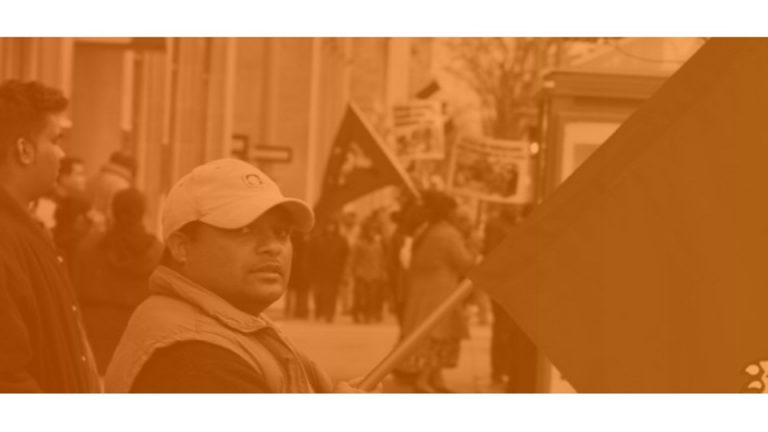
A recurring theme in sur place asylum claims is the Home Office alleging that the claimant is merely an opportunistic “hanger on” – in other words, that they don’t really support the cause they’re protesting about. In Sri Lankan cases, it’s frequently argued that a person photographed displaying a banner outside the High Commission doesn’t actually believe in Tamil separatism, and is just pretending that they do in order to get asylum.

The Upper Tribunal in KK and RS said it doesn’t matter. If the government of Sri Lanka perceives the person to have a significant role, then it “will have little or no inclination to enquire into an individual’s good faith or lack thereof”. The person will be at risk, and entitled to asylum, even if they are a hanger on.

Unsurprisingly, the Home Office wasn’t happy with this conclusion and tried to convince the Court of Appeal that it was contrary to the evidence. Underhill LJ disagreed. He pointed out that a government whose aim was to “identify those who are an actual or perceived threat to the integrity of the Sri Lankan state” might be “distinctly sceptical” of a returnee’s claim that it was all an act, and added:

It must be recalled that the question only arises where a person is known to have taken part in activities which, by reference to the other factors specified by the Tribunal (including the nature, extent and duration of those activities), show them playing a significant role in separatist activity… If a person’s activities pass that threshold, it is not difficult to see that the [government of Sri Lanka] might not wish to take the trouble of trying to ascertain how sincere they were; and in any event that was a conclusion which the Tribunal was unarguably entitled to reach.

He acknowledged, as did the tribunal, that a hanger on may well not be at risk if the Sri Lankan authorities already have information showing the person to be insincere. The point, however, is that they are unlikely to go looking for that information.

Expression of separatist views on return

The judgment being appealed had found that anyone publicly expressing separatist views in Sri Lanka is likely to be detained and persecuted. The Home Office argued that this was wrong, and pointed the Court of Appeal to evidence of specific instances in which, it claimed, the government of Sri Lanka had tolerated such views.

Underhill LJ gave this fairly short shrift, criticising the Home Office for “island-hopping” in its reliance on isolated snippets of evidence in an attempt to undermine a conclusion that was “conspicuously thorough and cogent”.

Conclusion

The country guidance in KK and RS stands. Although this judgment dismissing the appeal against it has been reported, Underhill LJ was at pains to point out that it is the Upper Tribunal’s judgment that immigration judges should refer to.

The Upper Tribunal had provided welcome clarification of what it means to have a “significant role” in Tamil separatism, and it is a relief that the Court of Appeal endorsed its decision to do so. The country guidance on “hangers on” was equally helpful, although in practice Presenting Officers frequently fail to read beyond the headnote and continue to allege bad faith as an answer to claims of sur place activity. It is to be hoped that Underhill LJ’s comments will put an end to this practice. 

Free Movement

A seven and a half hour power cut tomorrow: PUCSL

0

A power cut of seven and a half hours has been approved for tomorrow, revealed the Public Utilities Commission of Sri Lanka (PUCSL).

Accordingly, the power cut will occur in the period of 08 am – 11 pm, it added.

Tomorrow, therefore, is likely to be a darkened day, the PUCSL noted.

MIAP