Home Blog Page 24

Sri Lanka Briefs Diplomatic Community on Disaster Response, Tourism Safety & Recovery Plans

0

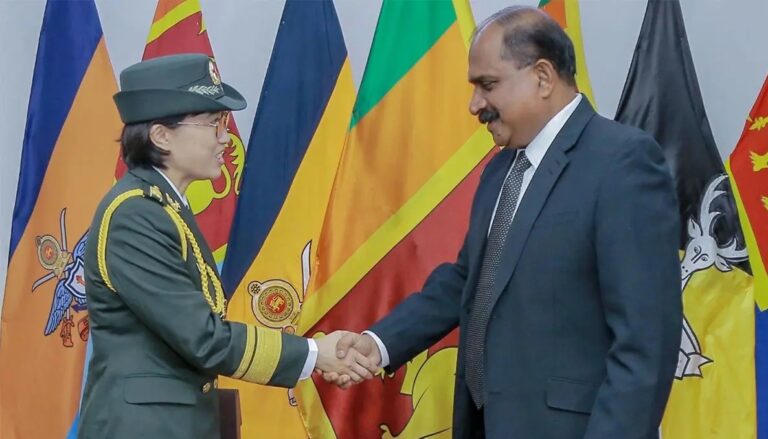
A special briefing for the diplomatic community in Sri Lanka was held at the Ministry of Foreign Affairs, Foreign Employment and Tourism, chaired by Prime Minister Dr. Harini Amarasuriya and Minister Vijitha Herath.

Senior officials from the Disaster Management Centre (DMC) and the Sri Lanka Tourism Development Authority (SLTDA) were also in attendance.

Prime Minister Amarasuriya expressed deep appreciation to the diplomatic community for their swift support following the recent floods and landslides. She noted that although Sri Lanka experienced one of its most severe disasters in recent years, rapid government response and public resilience had enabled significant progress in relief and recovery operations.

The Prime Minister confirmed that no tourists were harmed during the disaster and that all previously inaccessible areas are now reachable. Massive cleanup and decontamination efforts are ongoing, and communications have been restored across affected regions.

She highlighted that relief, evacuation, and emergency assistance were carried out through the collective efforts of the tri-forces, police, health workers, volunteers, and local authorities. Remaining challenges include infrastructure restoration, resettlement, and long-term disaster mitigation. She welcomed the humanitarian, technical and financial support offered by Sri Lanka’s international partners.

DMC Director General Maj. Gen. (Retd) Sampath Kotuwegoda presented detailed updates, noting that 22 districts were severely affected, with some areas recording up to 540 mm of rainfall and winds of 70 km/h. Early assessments show that 2.3 million people were exposed1.8 million directly affected, and 1.1 million hectares of land impacted. This includes 40,152 pregnant women, who have been prioritised for assistance.

He highlighted areas where further international support—such as improved early-warning systems and climate-response technology—would be valuable.

SLTDA Chairman Buddhika Hewawasam assured diplomats that major tourist zones remain operational, and safety assessments and contingency plans are in place for the peak season.

Chairman of the Hotel Association of Sri Lanka, Ashoka Hettigoda, noted that coastal hotels from Marawila to Passikudah remain fully operational, many at 60–65% occupancy, while hotels in Nuwara Eliya are partially functioning. He emphasised that ongoing tourism support is the best assistance the international community can offer Sri Lanka at this time.

Diplomats extended condolences to affected communities and reaffirmed readiness to support both immediate relief efforts and long-term rebuilding. They commended the government’s transparent and coordinated crisis management.

Prime Minister Amarasuriya thanked all representatives for their cooperation and reiterated the government’s commitment to a resilient, inclusive recovery. She stressed that strengthening disaster preparedness, climate resilience, and institutional capacity would be central to Sri Lanka’s future development agenda.

The meeting was also attended by Deputy Minister Arun Hemachandra, Secretary to the Prime Minister Pradeep Saputhanthri, and Foreign Ministry Secretary Aruni Ranaraja.

Large Consignment of Narcotics Seized After Abandoned Boat Found in Kalpitiya

0

The Sri Lanka Navy has recovered a large consignment of narcotics, including 63.5 kilograms of Crystal Methamphetamine (Ice) and more than 14.5 kilograms of heroin.

According to the Navy Spokesperson, the drugs were discovered on a boat that had been abandoned by its crew on the beach at Ippantivu, Kalpitiya.

2026 Budget Passed with 157-Vote Majority; Major Relief Package Announced for Disaster-Affected Families

0

The Third Reading of the 2026 Appropriation Bill was passed in Parliament yesterday (05), securing a majority of 157 votes. A total of 158 MPs voted in favour, while one MP voted against and two abstained.

All Ceylon Tamil Congress (ACTC) MP G.G. Ponnambalam cast the sole vote against the Budget, while S. Shritharan and Thurairasa Ravikaran of the Illankai Tamil Arasu Kadchi (ITAK) abstained.

The final vote began at 7.30 p.m., bringing this year’s Budget process to a close. President Anura Kumara Dissanayake delivered a special statement in Parliament prior to the vote.

The Committee Stage debate, forming the Third Reading, commenced on November 15 and was scheduled for 17 days, including three Saturdays. Several sittings were adjourned due to the severe weather conditions affecting the country.

Parliament’s Department of Communication also confirmed that a supplementary estimate of Rs. 50 billion has been submitted to provide urgent relief to those affected by Cyclone Ditwah.

The Second Reading debate was held from November 8–14 and passed with a 118-vote majority, with 160 MPs voting in favour42 against, and 8 abstaining. The 2026 Appropriation Bill, the 80th National Budget, was presented to Parliament on November 7 by President Dissanayake in his capacity as Minister of Finance.

In his address, the President also announced a wide-ranging relief package for families affected by the recent disaster. Key measures include:

  • Rs. 25,000 monthly allowance per family for three months for displaced families resettling in homes.
  • Rs. 50,000 monthly allowance for families remaining in displacement camps.
  • one-time Rs. 50,000 grant for households to purchase essential items.
  • Rs. 25,000 in total for each affected student (Rs. 15,000 from the Treasury and Rs. 10,000 from the President’s Fund).
  • Rs. 5 million to rebuild homes completely destroyed.
  • Rs. 5 million additional support for those who lost land, where government land is unavailable.
  • Up to Rs. 2.5 million for repairing partially damaged homes.
  • Rs. 200,000 for registered animal farms destroyed by adverse weather.
  • Rs. 150,000 per hectare for grain crops such as paddy and maize.
  • Rs. 200,000 per hectare for replanting damaged vegetable cultivations.

The President also revealed that the government has requested USD 200 million in relief financing from the International Monetary Fund (IMF), and has asked the IMF to increase the upcoming February 2026 tranche of USD 341 million, with discussions to follow.

Showers will occur in Western, Sabaragamuwa, Southern and North-western provinces after 1.00 p.m

0

The Northeast monsoon condition is gradually establishing over the island.

Several spells of showers will occur in Northern, North-Central, Eastern and Uva provinces and in Matale district.

Showers or thundershowers will occur in Western, Sabaragamuwa, Southern and North-western provinces after 1.00 p.m.

Misty conditions can be expected at some places in Western, Central, Sabaragamuwa, Uva, North-western and North-central provinces and in Hambantota district during the early hours of the morning.

Severe Lightning Advisory Issued for Western, Sabaragamuwa Provinces and Galle, Matara Districts Until 11 PM

0

The Department of Meteorology has issued a severe lightning advisory effective until 11.00 PM tonight, warning residents in several regions to remain vigilant due to the risk of strong lightning activity.

According to the advisory, the warning applies to the Western and Sabaragamuwa Provinces, as well as the Galle and Matara Districts.

The department urges the public to exercise caution and take necessary safety measures during this period.

Authorities have specifically alerted residents in Colombo, Gampaha, Galle, Matara, Kalutara, Kegalle, and Ratnapura, advising them to stay indoors during thunderstorms and avoid open areas, tall trees, and electrical appliances.

The Meteorology Department further requested the public to follow official updates and adhere to safety instructions to minimize risks associated with severe lightning.

Tourism Industry Unites to Reassure World Sri Lanka Is Ready

0

In an unprecedented show of industry solidarity, Sri Lanka’s leading tourism organisations The Hotels Association of Sri Lanka (THASL) and the Sri Lanka Association of Inbound Tour Operators (SLAITO) have teamed up with Sri Lanka Tourism to launch an urgent global reassurance drive, affirming that the country’s tourism sector is functioning normally despite the destruction caused by Cyclone Ditwah.

The two powerful industry bodies have formally requested Sri Lanka Tourism to roll out a coordinated social media and public relations campaign aimed at dispelling negative perceptions overseas.

The campaign is intended to confirm that hotels, transport networks, attractions, excursions, and most tourism zones remain fully operational. This comes ahead of a key diplomatic briefing scheduled for tomorrow (6), where authorities will update all foreign missions on the rapid restoration of tourism services.

At a joint media briefing yesterday, SLTDA Chairman Buddhika Hewawasam, THASL President Asoka Hettigoda and SLAITO President Nalin Jayasundera emphasised that Sri Lanka’s tourism sector has historically proven its resilience during crises  and the aftermath of Cyclone Ditwah is no exception. They stressed that the upcoming season remains strong, buoyed by industry cooperation, steady arrival numbers, and confidence expressed by global travel partners.

Hewawasam said the Tourism Ministry is conducting a full diplomatic outreach campaign spearheaded by Tourism and Foreign Affairs Minister Vijitha Herath. A second round of consultations with ambassadors and high commissioners will be held on Friday, including virtual engagement with Sri Lankan missions abroad. The objective is to give foreign governments an accurate assessment of infrastructure readiness, hotel operations, and traveller safety.

According to Hewawasam, foreign missions have already praised the authorities for their efficient handling of stranded tourists and quick restoration of essential services. He added that arrival statistics up to 30 November align with expected seasonal patterns. “There have been no significant cancellations. Only a marginal 1–5% decline from last-minute regional bookings was seen, primarily from India,” he said.

He highlighted that charter flights, scheduled airline operations, and cruise tourism have not been disrupted. This week, TUI’s Mein Schiff 06, carrying over 2,000 passengers, docked in Colombo  a strong signal of continued confidence.

THASL President Hettigoda confirmed that hotels in major tourist corridors including Negombo, Pasikudah, the Cultural Triangle and Jaffna are operating at 65–70% occupancy. Access to Kandy and Nuwara Eliya is improving, with single-lane travel restored. He emphasised that wildlife parks, cultural landmarks, and marine excursions are operating normally and that no shortages of essentials have been reported in tourist areas.

To further strengthen international messaging, THASL, SLAITO and the Sri Lanka Tourism Promotion Bureau (SLTPB) will launch a global digital campaign projecting that 90% of the island’s tourism offerings remain fully accessible.

SLAITO President Jayasundera said global tour operators have not withdrawn their commitments and continue promoting Sri Lanka as a top-tier destination. He added that southern destinations, including Yala and Udawalawe, remain unaffected, with visitors offering highly positive feedback.

He stressed that cancellations remain “negligible” compared to strong winter-season bookings, underscoring the industry’s confidence that Sri Lanka’s recovery is well underway.

Sri Lanka’s Rubber Sector Faces Fresh Strain amid EU Green Push

0

Sri Lanka’s rubber industry—long considered one of the country’s most stable plantation sectors—is grappling with falling yields, declining exports, and severe post-disaster setbacks, even as the Government secures new international funding to revive the sector through sustainable practices. This week’s Cabinet approval of an €8 million European Union (EU) grant has placed renewed focus on an industry struggling to recover both economically and environmentally.

The project, titled Agri-Green Initiatives for Green Economic Growth, will be implemented across the country’s major rubber-growing provinces, including Sabaragamuwa, Western, Central, Uva, Eastern, North-Central and Southern regions. With the German development agency GIZ designated as the lead implementing authority, the programme aims to modernise farming methods, improve soil and water conservation, and support climate-resilient replanting.

The urgency is clear: Sri Lanka’s natural rubber output has dropped significantly over the past decade. Production fell from more than 150,000 metric tonnes a decade ago to around 78,000–82,000 tonnes in recent years, due to poor replanting cycles, ageing trees, labour shortages, and land fragmentation. Compounding the problem, Cyclone Ditwah devastated plantations in Sabaragamuwa and Kalutara two of the island’s most productive regions—damaging tapping fields, uprooting mature trees, and disrupting smallholder livelihoods.

Rubber exports, a key foreign-exchange earner, have also suffered. Earnings that once exceeded US$ 1 billion annually have slipped to US$ 700–800 million, reflecting both lower global demand and Sri Lanka’s weakening supply capacity. Processed rubber products such as tyres, industrial goods, and gloves still contribute significantly to export revenue, but manufacturers warn that shrinking domestic raw rubber supplies are forcing increased reliance on imports—undermining the industry’s competitiveness.

The EU-funded initiative therefore comes at a critical moment. According to the Government, the programme is expected to introduce climate-smart agricultural practices, promote efficient land management, and encourage sustainable production and consumption patterns. It also aims to strengthen food security within plantation communities while reducing environmental degradation linked to outdated farming methods.

Importantly, the initiative places strong emphasis on engaging youth and women—two groups largely absent from traditional plantation work but essential for the sector’s long-term survival. With more than 70% of rubber tapping now done by ageing workers, labour shortages have become one of the industry’s most acute challenges. Training programmes in green agriculture, value-addition, and digital monitoring systems are expected to open new income pathways within rubber-based supply chains.

Still, industry analysts caution that sustainability funding alone cannot resolve Sri Lanka’s structural issues. Replanting rates remain far below required levels, many smallholders lack access to credit, and post-disaster rehabilitation has been slow. Without coordinated national action to restore damaged estates, upgrade processing facilities, and address labour gaps, the sector may continue to contract despite international support.

As Sri Lanka attempts to rebuild after Cyclone Ditwah, the EU’s €8 million grant offers a timely lifeline. Whether it becomes a turning point for the rubber industryor merely a temporary relief measure will depend on how effectively the country can align green development goals with the urgent realities facing growers and exporters.

Global Partners Aid Sri Lanka’s Stolen Asset Recovery Drive

0

Sri Lanka’s renewed effort to recover billions allegedly siphoned out of the country through corruption-linked transactions has entered a critical phase, as the government scrambles to strengthen its legal, institutional, and diplomatic tools. With public pressure intensifying amid economic hardship, authorities are accelerating cooperation with international agencies to trace, freeze, and repatriate assets believed to be parked in offshore accounts and property portfolios.

 At the centre of the latest push is the Stolen Asset Recovery Initiative (StAR), jointly run by the World Bank and the United Nations Office on Drugs and Crime (UNODC). Senior StAR officials, during a high-level meeting at the Ministry of Justice, conveyed their willingness to provide technical expertise, global intelligence support, and legal guidance for Sri Lanka’s long-stalled recovery efforts. The meeting was chaired by Justice and National Integration Minister Harshana Nanayakkara, who described the assistance as “a crucial step in strengthening the rule of law.”

 Sri Lanka enacted the Proceeds of Crime Recovery Act (POCRA) with the aim of enabling the state to pursue illicit wealth even when it has moved overseas. However, implementation has been sluggish. Fragmented investigations, weak interagency coordination, political interference, outdated regulations, and the absence of a dedicated task force have repeatedly undermined asset-tracing operations. StAR’s involvement is expected to help close these structural gaps.

 During the discussions, StAR agreed to support several frontline agencies — including the Bribery Commission, the Police Proceeds of Crime Division, the Attorney General’s Department, the Financial Intelligence Unit (FIU) and the Ministry of Justice. Technical support is expected to cover forensic financial analysis, mutual legal assistance requests, drafting recovery strategies, and navigating complex cross-border legal barriers.

The government is also preparing to appoint a specialised inter-agency task force, tasked with integrating intelligence flows, coordinating foreign legal communication, and fast-tracking asset-freezing motions. StAR has further offered assistance in refining key legislation such as the Anti-Corruption Act and the Assets and Liabilities Act, both of which remain central to tracing wealth gained through bribery, kickbacks, and procurement fraud.

Despite these advancements, the scale of the challenge remains immense. International watchdogs estimate that Sri Lanka may have lost billions of dollars to illicit financial flows over decades — money believed to be hidden in Western bank accounts, shell companies in tax havens, luxury real estate, and foreign investments. Recovering such assets is often a multi-year battle requiring strong political will and airtight documentation.

For Sri Lanka, which is still recovering from economic collapse and recent natural disasters, the stakes are high. Effective stolen-asset recovery could bolster state revenue, restore public trust, and deter future corruption. But unless institutional weaknesses are addressed and political commitment remains consistent, the latest efforts risk becoming yet another unfulfilled promise.

UN Needs Assessment Drives Targeted Recovery after Cyclone Ditwah

0

The United Nations has taken a central role in mapping Sri Lanka’s urgent humanitarian and reconstruction needs after Cyclone Ditwah, launching a Joint Rapid Needs Assessment (JRNA) expected to shape how the country rebuilds its shattered communities.

Developed in coordination with the Disaster Management Centre (DMC) and a wide network of humanitarian partners, the initiative aims to deliver a precise, data-driven understanding of the cyclone’s damage an essential step as the country grapples with destroyed homes, disrupted livelihoods, and battered infrastructure.

According to the UN Office of the Resident Coordinator, the assessment includes geospatial analysis to track the extent of flooding, infrastructure destruction, and displacement across affected districts.

This satellite-supported mapping is being combined with field-level data collection coordinated across multiple organisations, allowing authorities to identify immediate humanitarian gaps and long-term recovery priorities with greater accuracy than in previous disasters.

The Humanitarian Country Team (HCT) comprising UN agencies, international NGOs and donorsis meeting regularly to coordinate assessments and channel support to critical sectors.

 These include food security, agriculture and livelihoods; nutrition; education; water and sanitation; health services including sexual and reproductive health; protection of vulnerable populations; shelter and non-food items; camp coordination; and early recovery measures.

 This sectoral approach ensures that both life-saving needs and medium-term reconstruction requirements are evaluated simultaneously.

Already, UN agencies have begun delivering emergency relief items to the hardest-hit communities. Supplies dispatched include energy biscuits, therapeutic foods, micronutrient supplements for children, safe drinking water, tarpaulins, hygiene kits, and maternity and dignity kits for women affected by the disaster.

These interventions are designed to stabilise communities while the full assessment is compiled, preventing further deterioration in living conditions as families wait for more extensive rebuilding support.

The JRNA’s greatest value lies in its ability to guide effective reconstruction. By producing a clear, evidence-based picture of losses whether to homes, schools, farmland, health services, or local economies—the initiative helps the Government and donors avoid duplication, ensure equitable aid allocation, and prioritise areas requiring urgent rebuilding.

Analysts note that Sri Lanka’s post-disaster responses in the past have suffered from uneven targeting and slow deployment, making this coordinated UN-led approach critical to avoiding similar pitfalls.

Moreover, the assessment’s integration of protection, education, and health considerations ensures that rebuilding is not limited to physical structures but extends to restoring community services and supporting vulnerable groups, including women, children, and displaced families. The inclusion of early recovery planning also signals a shift from short-term relief towards structured, long-term reconstruction.

 As Cyclone Ditwah leaves a costly trail of destruction, Sri Lanka faces a long recovery horizon. The UN’s rapid, data-driven needs assessment provides the foundation for a more transparent, coordinated, and impactful rebuilding effort, one that, if properly implemented, could strengthen resilience and improve disaster-response systems for the future.

President Orders Immediate Restoration of Damaged Roads and Bridges After Cyclone Ditwah

0

President Anura Kumara Dissanayake has directed officials to prioritize the restoration of damaged road infrastructure to ensure the swift normalization of public life and the uninterrupted flow of transport services following the recent disaster.

The President issued these instructions during a meeting held yesterday (04) at the Presidential Secretariat with senior officials from the Ministry of Transport & Highways and the Ministry of Finance. The discussion focused on assessing the extent of damage caused to the country’s bridges and highways by Cyclone Ditwah and determining urgent measures required for rapid restoration.

Officials reported that approximately 247 km of A- and B-grade roads have been damaged due to landslides, flooding, and rising water levels, while 40 bridges have been destroyed. They further confirmed that 175 of the 256 damaged road sections have now been reopened to vehicular traffic.

The meeting also addressed estimated repair timelines, funding allocation, and priority areas for immediate reconstruction.

Among those present were Minister of Transport, Highways and Urban Development Bimal Ratnayake; Secretary to the President Dr. Nandika Sanath Kumanayake; Secretary to the Ministry of Finance, Planning and Economic Development Dr. Harshaana Suriyapperuma; Senior Economic Advisor to the President Duminda Hulangamuwa; Secretary to the Ministry of Transport, Highways and Urban Development Kapila Perera; Senior Additional Secretary to the President Russel Aponsu; Road Development Authority Chairman T. Paaskaran; Director General K.W. Kandambi; and other senior officials.