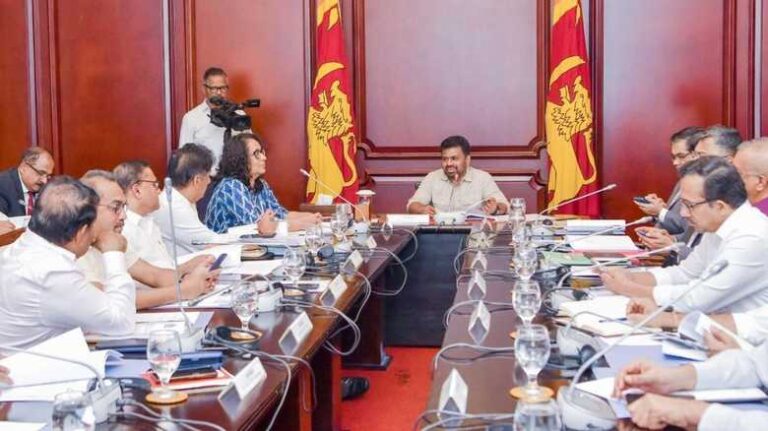
December 16, Colombo (LNW): The National Council for Disaster Management has endorsed a major housing initiative aimed at resettling families who were left homeless by recent disasters, as well as those currently living in areas identified as highly vulnerable to landslides.
The decision was taken at a council meeting held yesterday and chaired by President Anura Kumara Dissanayake.
Minister of Housing and Water Supply Dr. Susil Ranasinghe said the National Housing Development Authority has been assigned responsibility for designing and carrying out the proposed housing schemes. The projects will focus on providing safe and permanent homes for displaced families and relocating residents from dangerous locations.
He noted that District Secretaries and local government bodies have already submitted assessments to the Commissioner General of Essential Services, detailing housing needs and identifying suitable state or alternative lands for resettlement in high-risk districts.
Following these evaluations, the National Housing Development Authority, together with the Urban Development Authority, has been instructed to move swiftly and begin the initial stage of construction for families who have lost their homes and those requiring urgent relocation to safer areas.
Green Light Given for New Housing for Disaster-Affected Families
Sri Lanka Posts Strong Third-Quarter Economic Expansion in 2025

December 16, Colombo (LNW): Sri Lanka’s economy gathered notable momentum in the third quarter of 2025, recording a solid growth rate of 5.4 per cent, based on the latest national accounts data released by the Department of Census and Statistics.
Measured at constant 2015 prices, the country’s Gross Domestic Product rose to Rs. 3,325.6 billion, compared to Rs. 3,154.1 billion during the corresponding period last year, pointing to a steady recovery despite ongoing global and regional economic pressures. At current market prices, overall output expanded to around Rs. 8,400 billion, reflecting a year-on-year increase of 12.6 per cent.
Economic activity was broad-based, with all major sectors contributing to growth. Industry emerged as the strongest performer, expanding by 8.1 per cent, while agriculture grew by 3.6 per cent and services by 3.5 per cent. Net taxes on products also recorded a sharp rise of 13.9 per cent, further lifting overall output.
Industrial growth was driven largely by a rebound in construction, which posted double-digit growth of over 12 per cent, alongside strong gains in mining and quarrying. Manufacturing output also surged, led by significant increases in petroleum-related products and basic metal production, signalling renewed industrial capacity and demand.
Meanwhile, the agriculture sector benefited from improved yields in several key areas. Plant propagation recorded exceptional growth, while coconut cultivation, sugar cane and other non-perennial crops also performed strongly, helping stabilise rural incomes and food supply.
Japanese Disaster Relief Medical Team Concludes Flood Response Mission in Sri Lanka
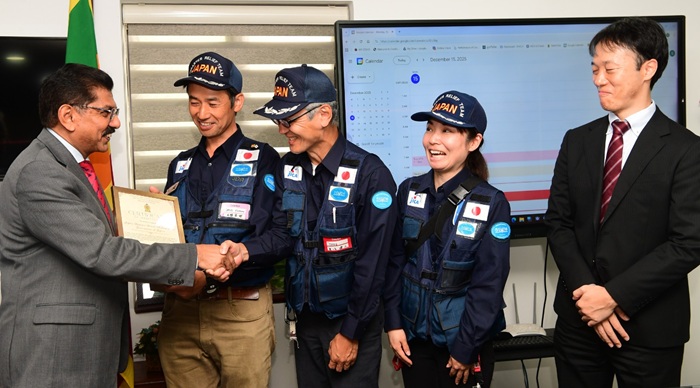
December 16, Colombo (LNW): A Japanese emergency medical unit has wrapped up its humanitarian deployment in Sri Lanka and returned home after delivering vital healthcare services to flood-affected communities.
The 31-member team, deployed under Japan’s Disaster Relief (JDR) programme, arrived in the country in early December and spent close to two weeks operating a temporary field hospital at the Chilaw Police Grounds. During this period, the team provided a wide range of medical services to residents in Chilaw and neighbouring areas, including outpatient consultations, diagnostic testing, pharmacy support and essential clinical treatment.
On Monday morning, Health Secretary Dr Anil Jasinghe met the delegation at the Ministry of Health and Mass Media to formally recognise their contribution. In a statement, the Ministry said the professionalism, coordination and technical expertise of the Japanese team played a key role in strengthening Sri Lanka’s emergency health response during a critical period.
Team leader Iwase Kiichiro expressed appreciation to Sri Lankan authorities for their cooperation, describing the mission as another chapter in the long-standing partnership and goodwill between Japan and Sri Lanka.
The group comprised doctors, nurses, pharmacists, laboratory technicians, radiology specialists and disaster response coordinators, and operated in line with internationally accepted emergency medical standards. The Ministry of Health also maintained close oversight of the field hospital throughout the mission to ensure seamless coordination with local health services.
Officials said the presence of the JDR medical team helped ease pressure on local hospitals and ensured timely treatment for thousands affected by the flooding, underscoring the value of international cooperation in times of crisis.
MSF Boosts Emergency Shelter Support for Displaced Families in Sri Lanka
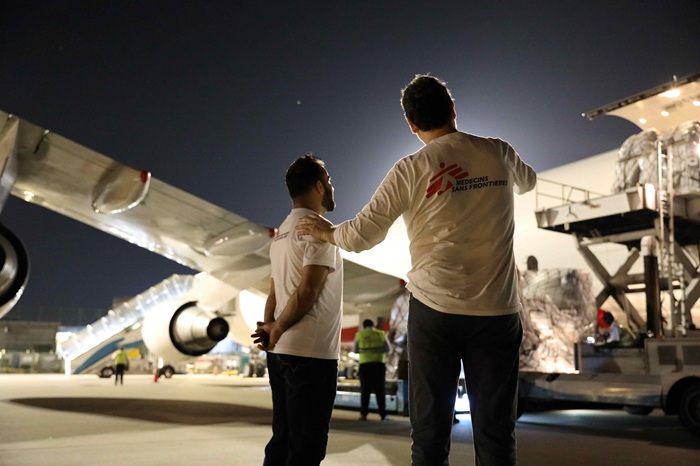
December 16, Colombo (LNW): Doctors Without Borders/Médecins Sans Frontières (MSF) has stepped up its humanitarian assistance to Sri Lanka by handing over a large shipment of emergency shelter materials to the Disaster Management Centre (DMC).
The consignment, delivered earlier this week, includes 1,000 insulated family tents and 1,500 heavy-grade plastic sheets designed to withstand cold and wet conditions. MSF said the shelters are intended to offer displaced households a safer and warmer living space, particularly in hill country areas where temperatures drop sharply.
In a statement, the organisation noted that improved shelter is vital to protecting vulnerable families from severe weather and preventing the spread of illness in temporary settlements.
The latest delivery forms part of MSF’s ongoing response to the widespread flooding and landslides triggered by Cyclone Ditwah, which have disrupted the lives of more than 1.8 million people nationwide. Alongside shelter support, MSF teams are working with local authorities and community partners to address urgent needs related to sanitation, health services and essential supplies.
To date, the organisation has also provided 500 emergency relief packs and an equal number of dry food ration kits to families forced from their homes. Preparations are under way to distribute maternity kits and dignity kits in the coming days, aimed at safeguarding maternal health and personal wellbeing in evacuation centres.
David Croft, MSF’s Emergency Coordinator in Sri Lanka, said the provision of winterised tents was a key priority as families face prolonged displacement. He added that MSF remains committed to adjusting its support in line with evolving needs and strengthening cooperation with national and local agencies to ensure aid reaches those most affected.
Ex-Minister C.B. Rathnayake Released on Bail After CIABOC Probe
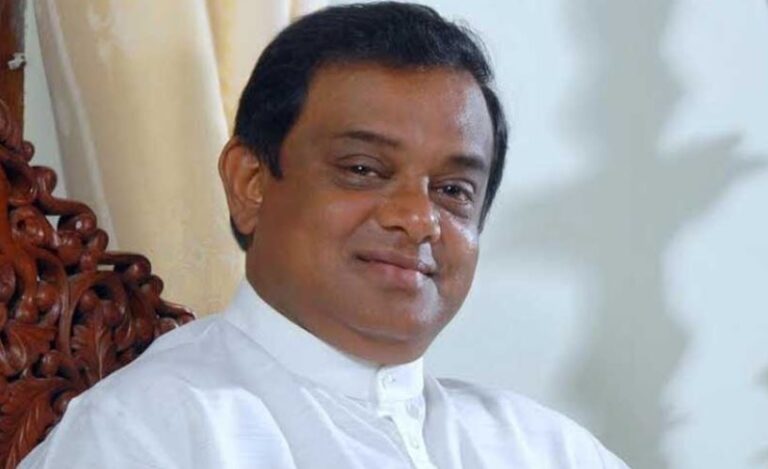
December 16, Colombo (LNW): Former minister C. B. Rathnayake, who was taken into custody by the Commission to Investigate Allegations of Bribery or Corruption in connection with an ongoing inquiry, has been granted bail by the Colombo Chief Magistrate’s Court.
The court ordered his release on two sureties of Rs. 2 million each, while also enforcing a ban on overseas travel as a condition of bail.
Rathnayake had been held on remand following his arrest earlier this month, after reporting to CIABOC to give a statement related to the investigation.
The inquiry is continuing, and the former minister is required to comply with all court-imposed conditions as proceedings move forward.
At the Cul-de-Sac of Politics, the Noise Only Grows Louder

By: Roger Srivasan
Standfirst: When discarded politicians resort to prophecy and theatrics, it is not strength but desperation that speaks.
A handful of disingenuous and long-discarded venal politicians now find themselves stranded at a cul-de-sac of relevance. After decades spent practising the traditional political art of tergiversation, they linger uneasily as accountability closes in — with prison doors no longer a distant abstraction but an increasingly proximate reality. Udaya Gammanpila, Wimal Weerawansa, and their fellow travellers are emblematic of this fading political order.
Stripped of credibility, substance, and public trust, they have turned to noise. Policy has given way to theatrics; persuasion has been replaced by prophecy. It is the predictable reflex of those who sense that the political ground beneath them has irrevocably shifted.
Gammanpila, in particular — an imbecilic stand-up comedian masquerading as a statesman — has recently embraced political fortune-telling. With performative certainty, he predicts that President Anura Kumara Dissanayake will “languish behind bars” once Namal Rajapaksa supposedly ascends to the presidency in 2029, with prison terms conveniently mapped out from 2030 to 2035.
Such utterances are not analysis; they are cheap political grandstanding. They belong less to the domain of governance than to the theatre of farce. Far from unsettling the nation, they merely expose the intellectual vacuity and mounting desperation of their author and his cohort.
Anura Kumara Dissanayake is a man of indomitable spirit. His political life has been forged in resistance, not privilege; tested by adversity, not insulated by impunity. Theatrical threats and nostalgic fantasies of dynastic restoration neither intimidate him nor deceive an electorate that has grown weary of deception and decay.
As the net of accountability tightens, the decibel level predictably rises. At the cul-de-sac of politics, noise becomes the last refuge of the politically spent. But noise cannot halt justice, nor can grandstanding reverse the verdict of a people determined to move forward.
History, unlike political prophecy, is not amused.
NBRO Says Landslide Threat Has Eased After Cyclone Rains

December 16, Colombo (LNW): The National Building Research Organisation has announced that areas previously flagged as vulnerable to landslides and rockfalls have now returned to stable conditions following the severe weather triggered by Cyclone Ditwa.
NBRO Director General Eng. Dr Asiri Karunawardena said more than 1,200 locations across the Central, Sabaragamuwa and Kurunegala provinces were classified as high risk during the period of intense rainfall. He confirmed that those sites have since stabilised and no longer pose an immediate danger.
With the situation improving, the organisation has shifted its attention to surveying fresh locations that could become hazardous if weather patterns change. As a precaution, teams have already begun clearing unstable rocks from slopes known to be prone to falling debris.
Monitoring remains active in districts such as Kandy, Badulla, Nuwara Eliya, Matale, Kegalle and Kurunegala, where ground conditions are being closely observed.
Dr Karunawardena stressed that although the immediate threat has diminished, continued surveillance and early intervention are vital to minimise the risk of future geological incidents.
Special Leave Approved for Public Servants Affected by Recent Disasters

December 16, Colombo (LNW): The Government has authorised a special leave arrangement for public sector employees who were unable to attend work as a result of flooding, landslides and transport disruptions caused by recent adverse weather.
A circular issued on Monday by the Secretary to the Ministry of Public Administration, Provincial Councils and Local Government has been sent to ministry secretaries, provincial chief secretaries and heads of government institutions outlining the decision.
Under the directive, state employees who could not report for duty due to the breakdown of public transport links, blocked roads or other disaster-related obstacles linked to Cyclone Ditwah will be eligible for this concession.
Affected officers must submit a written application to the head of their institution explaining the reason for their absence. The request should be supported by a recommendation from the relevant Grama Niladhari and endorsed by the Divisional Secretary.
Institutional heads have been instructed to carefully review each application and, if satisfied with its validity, forward it to the respective head of department for approval covering the actual period of absence.
The Ministry clarified that this special leave facility will be limited to absences recorded during November and December only, and will not extend beyond this timeframe.
Education Ministry Reaffirms Ban on Third-Term Exams for Middle Grades
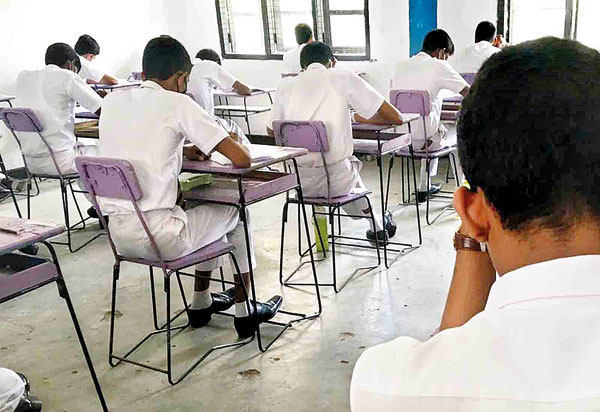
December 16, Colombo (LNW): The Ministry of Education, Higher Education and Vocational Education has once again underlined that schools must not hold third-term examinations for students in Grades 6 to 10 during the 2025 academic year.
In a fresh communication circulated to provincial authorities and school heads, the Ministry stressed that this decision is not optional and must be enforced uniformly across all schools.
Officials were reminded that earlier guidelines on the matter remain fully in force and that any deviation from them will not be permitted.
Rainy weather influenced by easterly wave to persist: Fairly heavy falls above 50 mm expected (Dec 16)

December 16, Colombo (LNW): Under the influence of the Easterly wave flow affecting the weather over the island, the prevailing showery conditions over the Northern and Eastern provinces are expected to continue during the next few days, the Department of Meteorology said in its daily weather forecast today (16).
Showers will occur at times in Northern, North-Central, Eastern, Uva and Central provinces. Fairly heavy falls above 50 mm are likely at some places in Northern and Eastern provinces and in Polonnaruwa district.
Showers or thundershowers may occur at several places in the other areas of the island after 1.00 p.m.
Fairly strong winds of about (30-40) kmph can be expected at times over Eastern slopes of the central hills, Northern, North-central and North-western provinces and in Trincomalee, Hambantota and Monaragala districts.
Misty conditions can be expected at some places in Sabaragamuwa, Central provinces and in Galle and Matara districts during the early hours of the morning.
The general public is kindly requested to take adequate precautions to minimise damages caused by temporary localised strong winds and lightning during thundershowers.
Marine Weather:
Condition of Rain:
Showers will occur at several places in the sea areas off the coast extending from Kankasanthurai to Pottuvil via Trincomalee.
Showers or thundershowers may occur at a few places in the other sea areas around the island during the evening or night.
Winds:
Winds will be north-easterly. Wind speed will be (30-40) kmph.
Wind speed can increase up to (50-55) kmph at times in the sea areas off the coast extending from Chilaw to Kankasanthurai via Puttalam and from Hambantota to Pottuvil.
State of Sea:
The sea areas off the coast extending from Chilaw to Kankasanthurai via Puttalam and from Hambantota to Pottuvil will be rough at times.
The other sea areas around the island will be moderate.
Temporarily strong gusty winds and very rough seas can be expected during thundershowers.