Home Blog Page 2485

Railway Station Masters’ Association decides to go on a strike again!

0

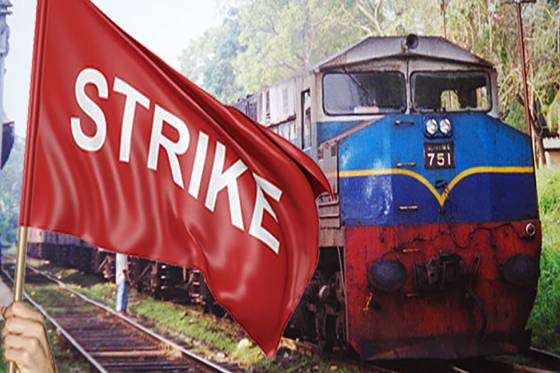
The Railway Station Masters’ Association has decided to go on strike again. The union says it will withdraw from all operations with immediate effect.

The Railway Administration has decided to suspend the Vice President of the Station Masters ‘Association and the Station Masters’ Association says that this decision is an arbitrary decision. Accordingly, the station masters say that the strike will continue until the Deputy Chairman is reinstated.

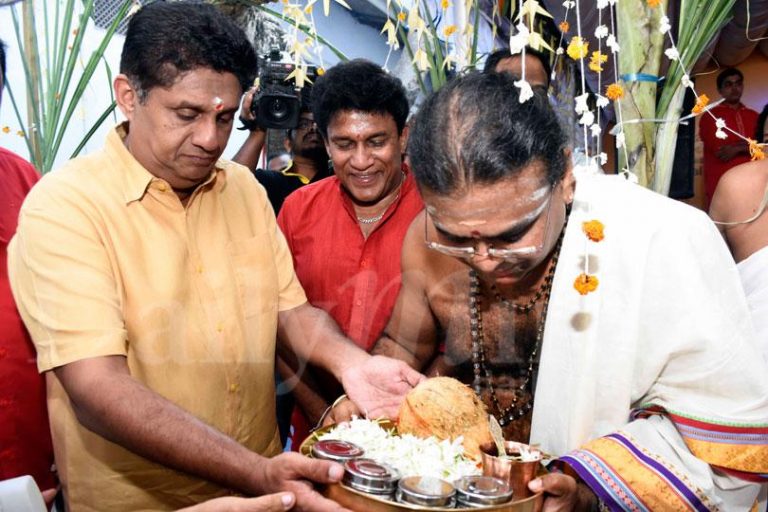
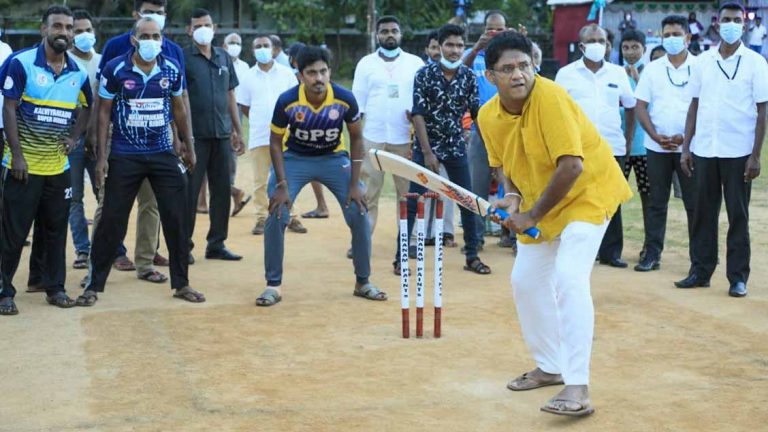
Sajith Premadasa plays cricket with a group of young people in the North

0

Opposition Leader Sajith Premadasa is currently touring the North and East. A number of programs including ‘Wipakshayen Husmak’ and ‘Sakwala’ launched under the leadership of the Leader of the Opposition are being implemented in those areas.

These programs include the donation of health equipment to hospitals that operate under minimum facilities and the donation of computer technology equipment to rural schools.

During these programs, he also devoted his time to playing cricket with a group of young people in Manipay.

Hindu bigots are openly urging Indians to murder Muslims

0

And the ruling party does nothing to stop them

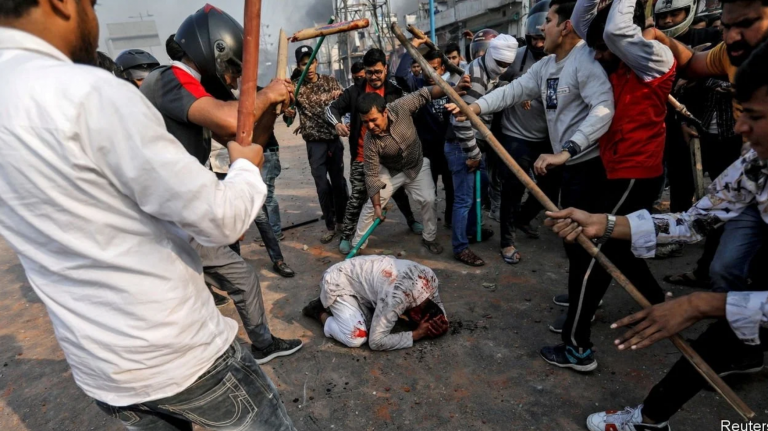
All Hindus must pick up weapons and conduct a cleanliness drive,” bellowed a Hindu priest at a three-day “religious parliament” in north India last month. Another speaker fired up the large crowd even more crudely: “If a hundred of us become soldiers and kill two million of them, we will be victorious.” By “them”, she meant India’s 200m Muslims.

Those priests baying for blood are not isolated bigots. Under the Hindu-nationalist government of Narendra Modi, the world’s most populous democracy has seen a growing wave of intolerance. In Gurgaon, a satellite city of Delhi, Muslims have been denied the use of open space to pray because it “offends sentiments”. They have also been denied permission to build mosques. Elsewhere Muslims accused of transporting cattle for slaughter, or of being in possession of beef, are sometimes lynched. Muslim businesses are boycotted. In recent months young Hindu radicals have persecuted high-profile Muslim women by creating apps to “auction” them off.

Muslims are not the only target of Hindu chauvinism. In Varanasi, a Hindu temple town, posters warn non-Hindus to stay away. Attacks on Christians, a tiny minority, have risen in recent years. Last week, after Mr Modi, the prime minister, was briefly delayed on an overpass in Sikh-majority Punjab, people associated with his ruling Bharatiya Janata Party (bjp) warned darkly of a repeat of 1984, when thousands of Sikhs were killed in pogroms after the assassination of Indira Gandhi by her Sikh bodyguards. In an index of societal discrimination against minorities compiled by Bar Ilan University in Israel, India scores worse than Saudi Arabia and no better than Iran. It is impossible to know the number of hate crimes in the country: independent trackers were shut down in 2017 and 2019, and the government stopped collecting data in 2017.

Another reason to worry is the silence of the government. From the prime minister downwards, no senior figure has condemned the drumbeat of incitement. When asked about it by the bbc, one bjp politician ripped off his microphone and stomped off. Academics, bureaucrats and retired army officers have sent anxious pleas to Mr Modi to appeal for calm. Yet only one unimportant official—the vice-president—has spoken up.

With big elections due next month, the mood could grow even more fissile. Senior bjp officials stop short of urging people to kill minorities, but they do incite hatred. Yogi Adityanath, the Hindu-nationalist chief minister of Uttar Pradesh, India’s biggest state, declared that the vote was about the 80% against the 20%—that is, Hindus against Muslims.

Some pundits fear the bjp is resorting to divisive rhetoric because it can no longer rely on divisive promises, such as stripping the Muslim-majority former state of Jammu and Kashmir of its special status and starting work on a temple where a mosque once stood in the holy city of Ayodhya. Having honoured those commitments, it needs something new. And with the economy battered by the pandemic, a hostile China poking at the border and slim prospects for the millions who join the labour force every year, it is succumbing to its worst instincts.

The Indian government should realise that by pumping up the ridiculous notion that India’s 300m or so non-Hindus represent a threat to the 1.1bn majority, it is unleashing forces that may become uncontrollable. Sectarian bloodshed can generate a momentum of its own. India has suffered enough in the past for the risks to be obvious: hundreds of thousands died during its post-colonial partition, possibly more. Subsequent decades have seen episodic pogroms. But until recently, although rogue politicians often stirred up hatred for electoral advantage, the secular state mostly acted as a restraint. No longer.

The West, distracted by Russia and China, has paid little attention. Yet a stable, democratic India would be a counterweight to authoritarian China. A Hindu chauvinist India would not only be nastier for its inhabitants; it could also spread instability, prone to even worse relations with its Muslim neighbours. India’s friends, starting with America, should use their influence to persuade Mr Modi and his acolytes to check the spread of hate before it explodes into widespread violence. Mr Modi should want to prevent such a calamity, too. Does he? ■

This article appeared in the Leaders section of the print edition under the headline "Stop inciting murder"

THE ECONOMIST
There could be a 24-hour power cut in the future ! – Ranjan Jayalal

0

The trade unions point out that there could be a 24-hour power cut in the future due to the improper management of the current government and the CEB.

The General Secretary of the Ceylon Electricity Board Ranjan Jayalal says that hydropower generation will be completely cut off in the future. He says that the reservoirs used to generate electricity will not have enough water capacity for the rest of this year and even if it rains, they will not be able to store enough water for a month.

Ranjan Jayalal points out that although all the reservoirs were filled due to the recent heavy rains, the water capacity was not sufficient for even two weeks and the reservoirs were overflowing with silt.

The CEB is not prepared for any alternative course of action, although it should be prepared as the rains usually reach a minimum period of five years. Generating electricity using diesel is now in crisis and the only option left is to meet the demand from coal-fired power plants as much as possible. However, there are occasional breakdowns at the Norochcholai coal power plant and the purchase of coal has also gone into crisis.

Jayalal says that despite all the warnings to the electricity authorities to prepare alternative measures to prevent the country from going dark, they are not ready to heed it and in this situation, an era will dawn in which the whole country will be left without electricity for 24 hours.

Today marks the 1000th day of the Easter Sunday Bombings

0

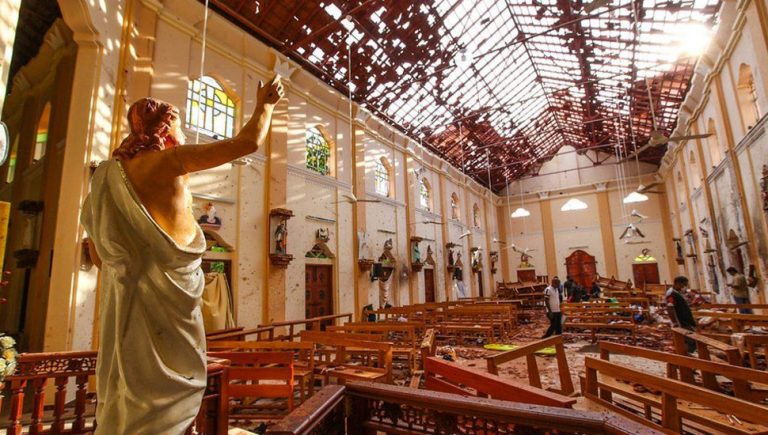
Today (14) marks the 1000th day of the series of bombings that took place on Easter Sunday, April 21, 2019. The death toll from this brutal series of bombings was close to 270.

Today, the 1000th day of the attack, national service will be held under the patronage of Cardinal Malcolm Ranjith, Archbishop of Colombo. It will be held at Thewatta Basilica, Ragama at 10.00 am.

Special religious programs will also be held in all Catholic churches today, emphasizing that justice has not yet been done to the victims of this attack.

On April 21, 2019, St. Sebastian’s Church in Katuwapitiya, Negombo, St. Anthony’s Church in Kochchikade, Kotahena, Zion Church in Batticaloa, Kingsbury, Shangri-La, Cinnamon Grand and Dehiwala Tropical Inn Accommodation were bombed by suicide bombers. When police raided the house of one of the bombers in the Dematagoda area, another suicide bomber struck.

Sri Lanka is flirting with default

0

Gotabaya Rajapaksa’s government is reluctant to go to the IMF

Thanks, but no thanks

Almost three years since terrorists blew up hotels along Colombo’s lovely beaches and two years since covid-19 shut down international travel, tourists have begun returning to Sri Lanka, providing sorely needed foreign exchange. The country’s stockmarket has been bounding along, up by more than 80% in 2021, trailing only commodity-rich Mongolia among global bourses. Corporate profits have been strong, too. gdp growth last year was somewhere between 3.5% (by private estimates) and 5% (by the government’s). This suggests a thriving economy. Yet alarm bells are clanging.

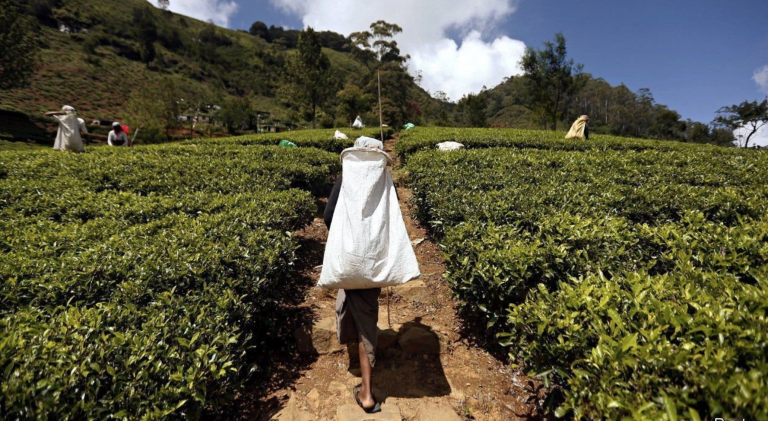
Encouraging though the renewed tourist arrivals may be, they are still barely a fifth of the pre-pandemic peak. Exports grew strongly in the fourth quarter of 2021 but are still too meagre to prevent a looming financial crisis. Years of heavy foreign debt and current-account deficits have taken a toll. Foreign reserves have collapsed (see chart). Supplies of oil, cooking gas, milk, wheat and medicine are running short. A rapidly depreciating currency has helped the country’s exporters, including clothing manufacturers and tea growers. But it has made servicing foreign-denominated debt more costly and has stoked inflation, which jumped during 2021 to 12% and appears to be accelerating.

The numbers are sobering. Interest obligations on government debt in 2021 amounted to 72% of total revenues, while public-sector salaries and pensions came to 80%. Multiple downgrades have in effect locked it out of the international private-credit market. On January 12th s&p, a credit-rating agency, downgraded Sri Lanka’s debt further, citing “increasingly likely default scenarios without unforeseen significant positive developments”.

So Sri Lanka finds itself looking down the barrel of a gun. On January 18th $500m in foreign-currency-denominated debt will come due. Another $5.4bn in principal and interest will need to be paid by the end of the year. Similar payments are required for years to come. That has provoked a series of complex financial manoeuvres. In January the central bank disclosed that it had sold off half the country’s $382m of gold reserves. Rumours abound that the rest has been liquidated too. One obligation—an oil bill of $251m owed to Iran—was paid in tea. The government has also taken a series of heavy-handed actions to preserve foreign currency. It has banned the import of cars. It briefly tried to ban foreign chemical fertiliser in the name of going organic, until crashing agricultural yields forced it to change its mind.

Other measures include a currency swap with China, nominally expanding the central bank’s foreign-currency reserves from $1.6bn to $3.1bn. It is unclear whether the money can be used for anything except Chinese goods. A similarly complex deal has been announced with India, along with—perhaps not coincidentally—the resolution of a long-running dispute over India’s stake in a Sri Lankan oil-storage facility. State assets, including prime property, have been put up for sale. No one has so far been keen to buy them.

A bigger problem is that Sri Lanka’s increasingly desperate deals do not address the real reason for its current travails. After Gotabaya Rajapaksa was elected president in 2019, he abandoned the fiscal and monetary-policy conditions imposed by the imf three years earlier after another financial upheaval. Taxes were cut and interest rates pushed down. The approach was not without merit. It may have softened the harsh consequences of the post-covid global economy and reawakened the animal spirits of businesses that are now reflected by the soaring stockmarket. But it has proved to be unaffordable. Deficit financing on this scale is unfeasible.

Were the imf to arrange a restructuring of the country’s finances, interest rates and taxes would probably rise, government spending decline, and bondholders would have to take losses. In exchange there would be stability and new funds. But Mr Rajapaksa’s government has vocally opposed imf intervention, calling it an infringement of sovereignty. Still, some kind of restructuring seems inevitable, either under the oversight of a multilateral agency or with a more comprehensive government plan that has yet to be presented. The alternative is default—and the risk of higher inflation, fewer imported goods and an end to the current recovery. 

THE ECONOMIST

If 3000 metric tons of diesel is not delivered, there could be a power cut today as well! – CEB

0

The Ceylon Electricity Board says that if 3000 metric tons of diesel is not delivered today (14) as promised by the Ceylon Petroleum Corporation, there could be a power cut today as well.

Power outages occurred in several areas yesterday due to the failure of several generators at thermal power plants due to lack of fuel.

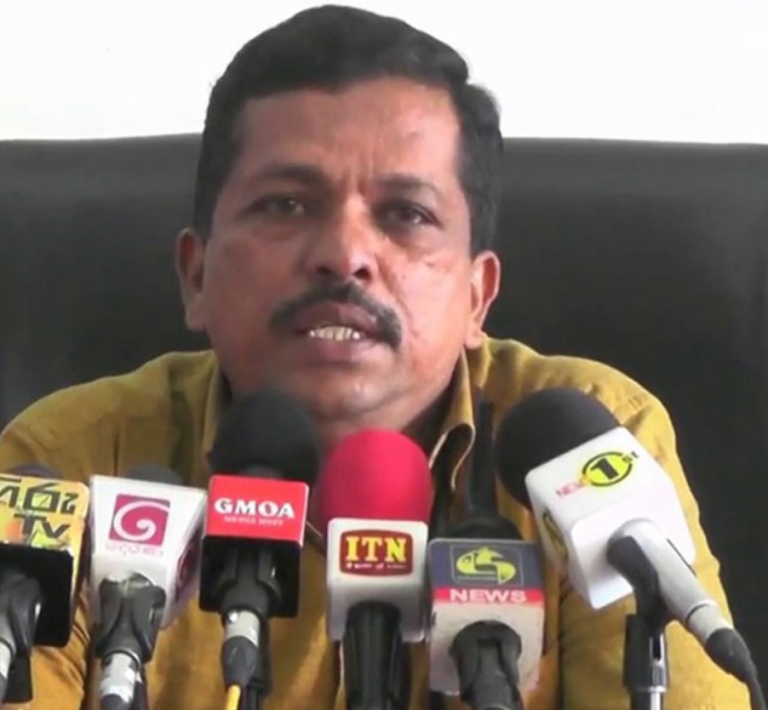
CEB General Manager and Media Spokesman Andrew Navamani stated that if the stock of diesel is provided, power outages can be minimized to some extent. The Ceylon Petroleum Corporation (CPC) has promised to supply 3,000 metric tons of diesel.

However, CEB sources said that the power crisis could escalate in the future due to the shortage of fuel.

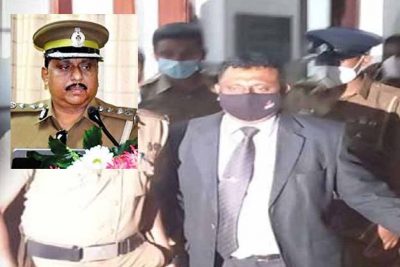
Welikada Killings: Emil Ranjan who is sentenced to death accommodated at the Prison Hospital!

0

Former Superintendent of Prisons Emil Ranjan Lamahewa, who was sentenced to death for the shooting death of eight inmates at Welikada Prison, has been accommodated at the prison hospital, reports say.

When inquired about this, prison spokesman Chandana Ekanayake had stated that former prison superintendent Emil Ranjan had been sent to the prison hospital as he could have received threats from other inmates.

Accordingly, he has been given special protection and has been admitted to the prison hospital.

Welikada Prison Hospital is a very comfortable place compared to other units in the prison. That is why, especially when politicians, top government officials, and businessmen are imprisoned, they rush to the prison hospital for health reasons.

This time it seems that the Prisons Department is taking special care of its former colleague and taking steps to provide him with prison hospital treatment even though he is not ill.