Home Blog Page 2490

Some people want to imprison me over the Easter attack – Maithri(VIDEO)

0

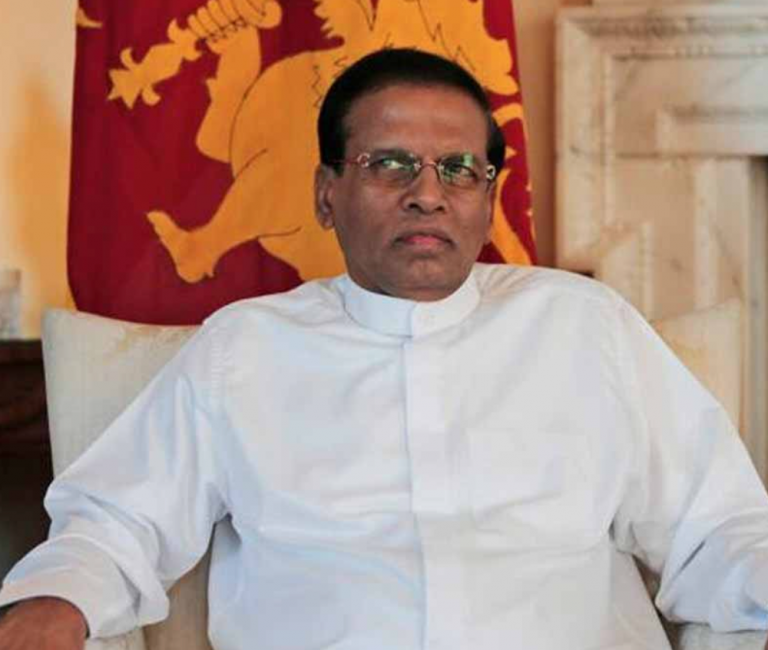
Former President and Sri Lanka Freedom Party (SLFP) leader Maithripala Sirisena has said that some people want to imprison him over the Easter attack and that he will talk about the Easter Commission when the opportunity arises.

Former President Maithripala Sirisena said this addressing the SLFP Ratnapura District Convention held at Pelmadulla yesterday (11).

Hand grenade found at All Saints Church in Borella (VIDEO)

0

A hand grenade was found at the All Saints Church in Borella yesterday (11) afternoon.

Police say that three suspects were arrested in this connection yesterday.

Police Media Spokesman Nihal Thalduwa stated that the main suspect in the case is also among those arrested.

The hand grenade was found near a statue near the main entrance to the church.

Opposition Leader Sajith Premadasa celebrates his 55th birthday today

0

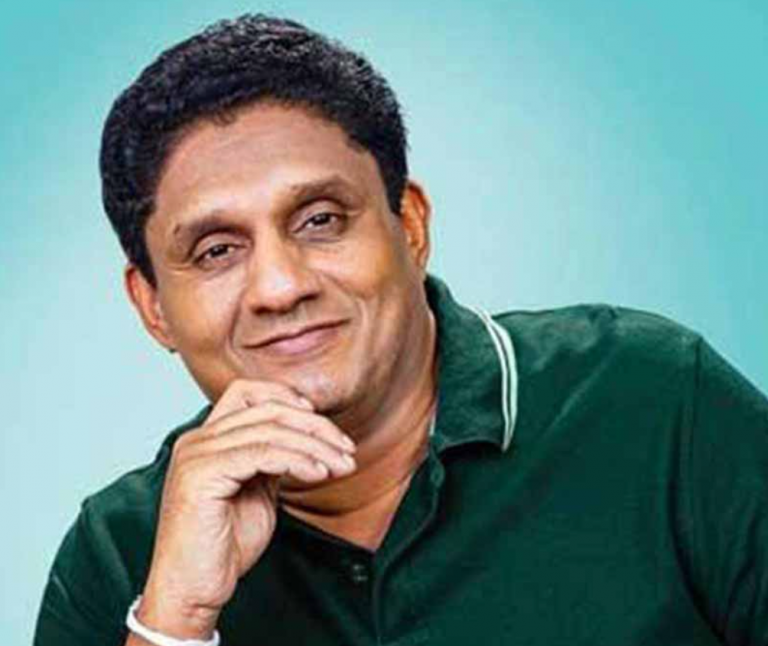
The 55th birthday of the Leader of the Samagi Jana Balawega and the Leader of the Opposition in Parliament Sajith Premadasa falls today (12).

He was born on January 12, 1967.

He is currently touring the North and East with the message of reconciliation.

We at Lanka News Web also wish him a Happy Birthday, for giving a new meaning to his role as Leader of the Opposition and rendering great service to the people of Sri Lanka through his various contributions to the health system and the education sector.

Sri Lanka bows down before China agreeing to accept new stock of fertilizer

0

Sri Lanka has to bow down before China to avoid diplomatic row by agreeing to accept another fresh stock of organic fertilizer from the Chinese company, Qingdao Seawin Biotech Group Co after rejecting its first stock 20,000 metric tonnes of organic fertilizer over charges of containing harmful bacteria.

 The People’s Bank has paid USD 6.9 million to the China-based fertilizer company for the losses caused due to Sri Lanka rejecting two of its shipments.

The decision was taken after the Colombo Commercial High Court dissolved the enjoining order preventing the payment on Letter of Credit to Qingdao Seawin Biotech Group Co., Ltd.

On Monday (03), the enjoining order in question was dismissed as all parties had agreed for a settlement to ship a new stock of standardized fertilizer despite two previous shipments being rejected by Sri Lanka. 

Sri Lanka will be compelled to pay US$ 8.3 Million for the ship transporting rejected Chinese Fertilizer. This payment is to be included $6.75 Million as well as another $ 1.6 Million to the shipping company for delay charges.                                                                     

Agriculture Minister Mahindanda Alugthgamage defended the payment of 6.9 million US dollars to Qindao Seawin Biotech Group on January 09, saying the firm is expected to re-supply a rejected fertilizer shipment with a fresh one complying with domestic quarantine rules.

He said that the Chinese company had kept a $5 million bond. They have agreed to supply fertilizer under the correct standards.

The People’s Bank of Sri Lanka says it has paid USD 6.9 million to the China-based fertilizer company, Qingdao Seawin Biotech Group Co., Ltd for the losses caused due to Sri Lanka rejecting two of its shipments.

The decision was taken after the Colombo Commercial High Court dissolved the enjoining order preventing the payment on Letter of Credit to Qingdao Seawin Biotech Group Co., Ltd.

All arrangements have been made to import a fresh stock organic fertilizer from the same Chinese company by March this year to meet the Yala season fertilizer requirement, Chairman of Colombo Commercial Company Methsiri Wijegunawardena said.  

He added that the Chinese company has been requested to remanufacture the fertilizer to comply with the required standards of the Sri Lanka Standards Institute (SLSI). 

In September 2021, the Government suspended the importation of organic fertilizer from Qingdao Seawin Biotech Group Co., Ltd.

At that  time, Minister of Agriculture Mahindananda Aluthgamage said the decision had been taken after tests on samples of the fertilizer had identified harmful bacteria.

Following this, the Government also rejected a new consignment of the fertilizer that was en route from China, denying entry for the transporting vessel to Sri Lanka.

As a result, in October, the People’s Bank of Sri Lanka was blacklisted by the Economic and Commercial Office of the Chinese Embassy in Colombo.

The Embassy said the bank was blacklisted for failing to make the payment according to the Letter of Credit (LOC) and contracts between the two parties causing huge losses to Chinese companies in international trade in Sri Lanka.

It was the first consignment of Colombo’s plans to purchase 99,000 tonnes of organic fertilizer from Qingdao Seawin Bio-tech group, a Chinese company specializing in seaweed-based fertilizer, at a cost of $49.7m (£36m).

The issue was the stock fertilizer was the quality of the fertilizer – which scientists said, instead of helping, could prove harmful to crops.

The decision to suspend the fertilizer stock has triggered an angry rebuttal from Qingdao Seawin.

“The unscientific detection method and conclusion of National Plant Quarantine Service (NPQ) in Sri Lanka obviously do not comply with international animal and plant quarantine convention,” the company thundered in a statement.

As the controversy escalated, a court ordered the state-owned People’s Bank to stop payment of $9 million for the cargo already awaiting entry.

The Chinese embassy in Colombo responded by blacklisting the bank for not honoring the payment to the company

The Qingdao Seawin has also demanded eight million dollars’ compensation from the Sri Lankan National Plant Quarantine Service for the loss of reputation it has suffered following the controversy.

Two Chinese firms take over ECT project phase11 sparking controversy

0

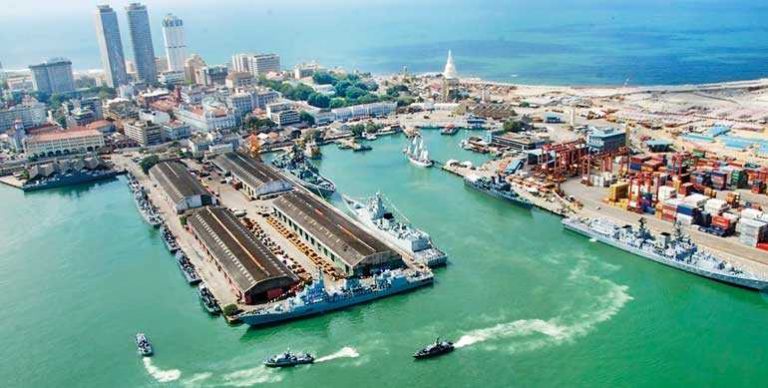
Two Chinese companies have bagged deals of Eastern Container Terminal (ECT) development project phase11 arousing suspicions of underhand dealings, Sri Lanka Ports Authority (SLPA) trade unions alleged.

International competitive bids had been called and six bids had been received for the supply of cranes and civil works of the project.

The Cabinet of Ministers approved the proposal presented by the Minister of Ports and Shipping to award the procurement of 12 ship-to-land cranes and 40 automatic gantry cranes mounted on rails to the Chinese company, Shanghai Shenuma Heavy Industries.

Asked why there were no Indian bidders since  India is associated with another terminal in Colombo, a senior official said not a single Indian company had offered a bid and added that even Indian and US ports use Chinese cranes.

The total cost for the purchase of these cranes would be US$ 250 million in accordance with the contractual agreement, General Secretary of the All Ceylon General Port Employee Union, Niroshan Gorakanage disclosed.

However he noted that the SLPA is now trying to release an advance payment of $50 million to the contractor after it has opened a Letter of Credit (LC) at a state owned bank.

The Chinese company will have to supply the relevant cranes in the year 2024; he said adding that it is not clear as to why the authority is in a hurry now to make this payment from its dollar account at the state bank at the time of dollar scarcity.

He alleged that there was a suspicion about underhand dealing in this transaction and this money may go to any outside party as a 20 per cent commission.

The SLPA has the authority to make an advance payment as it has agreed to adhere to the terms and conditions of the Chinese company, a senior official of the Ministry of Ports and Shipping who wished to remain anonymous told the Business Times.

He categorically stated that the tender procedure had been carried out in a transparent manner and there were no irregularities in awarding the tenders.

When asked to clarify this matter a former finance ministry top official pointed out that a contractor may request an advance payment to help them meet significant start up or procurement costs before the construction commencement.

But the client should require an advance payment bond which secures the payment against default by the contractor, he opined.

However no such requirement has been stipulated in the tender documents or in contractual agreement, informed sources confirmed.

In regard to the Colombo Port Eastern Container Terminal – Phase II- Civil Works, the Cabinet had approved the development of the Eastern Container Terminal in stages as a terminal totally operated by the Sri Lanka Ports Authority.

Foolproof stickers to affix in all local liquor bottles soon

0

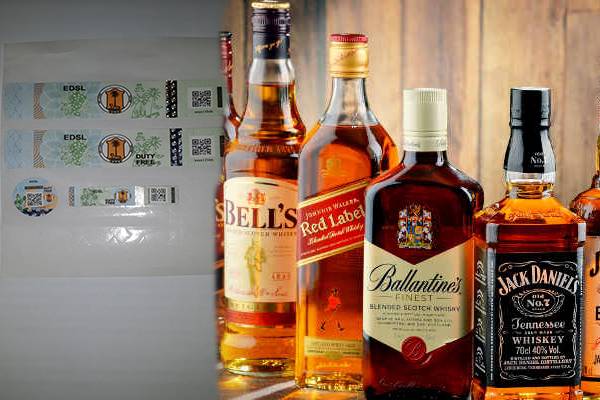
The much delayed controversial fool proof sticker and labeling system for local and imported alcoholic beverages is now fully operational and affixing these stickers on manufactured liquor bottles and cans will be completed by March, M..J. Gunasiri, Commissioner General of Excise confirmed.

The implementation of this system came into effect on January 3 with a number of Excise Department officers currently monitoring the process of affixing these stickers on liquor bottles at several manufacturing companies, he said.

The department will collect Rs. 2 the cost of the sticker from every liquor bottle or a can of beer as the government will have to increase taxes resulting in a price hike to earn a revenue of Rs. 20 billion per annum, he said.

Liquor sticker and its (labelling) management system was initially implemented to all imported liquor with effect from July 20, 2020 and it will be made compulsory to all alcoholic beverages by March 1 this year, he disclosed.

With the implementation of the new system, the department expects high revenue by preventing excise duty evasion, he said adding that despite the COVID-19 pandemic lockdown for around three months, it has earned Rs. 138 billion last year compared to Rs. 121 billion in 2020.

This project will coordinate around 70 licensed liquor manufacturers and 18 alcoholic beverage importers in the process of affixing fool proof stickers and digital security printed labels on bottles and cans.

The selection of stickers or labels will be made by considering the production capacity and technical capability of the manufacturing entities, Mr. Gunasiri revealed.

He noted that several leading manufacturers informed the department that the per hour production capacity at its manufacturing facilities are much higher than the sticker applicators’ per-hour manual pasting capacity and requested the authorities to go for a digital method.

This request has now been fulfilled while the process of developing mobile app and QR code for the foolproof sticker has been completed by using 30 special machines to this code bought by the department, he said.

The implementation of the liquor sticker scheme is aimed at guaranteeing the consumer purchases authentic products and it will be useful in tackling tax evasion on alcohol products as well as preventing the illicit and counterfeit alcoholic beverages.

The department has already banned the sale of all brands of imported liquor without the new foolproof sticker .

Meanwhile awarding of this tender to the Madras Company, rejecting several other bidders who have quoted lesser prices, came under severe criticism at that time from local manufacturers.

They have protested over the selection of this printer with allegations of its involvement in two scandals in India and Kenya in 2017 and 2018 and the impracticality of the foolproof liquor scheme.

The Indian company’s bid for the deal was US$5.99 to print 1000 stickers during the second tender although its initial bid was $3.19; other bidders claimed adding that one of them has placed a bid of $4.57 per 1000 stickers and the lowest bid was $2.8 per 1000.

Thereafter the then government had been compelled to pay an additional amount of $1,075,200 (or slightly over $1 million) for 384 million stickers obtained in the first year, the Auditor General’s relevant report revealed.

Currently local manufacturers are vehemently opposing the government’s decision to introduce the foolproof sticker with QR code for all liquor products without addressing practical issues in the implementation of this scheme.

Several leading liquor manufacturers said that the department’s scheme of manual pasting of stickers is not practical for their speedy production process and they have suggested a digital coding system sometime back with the consent of the former Finance Minister in 2019.

Indonesia to kick off booster campaign, but most will have to pay

0

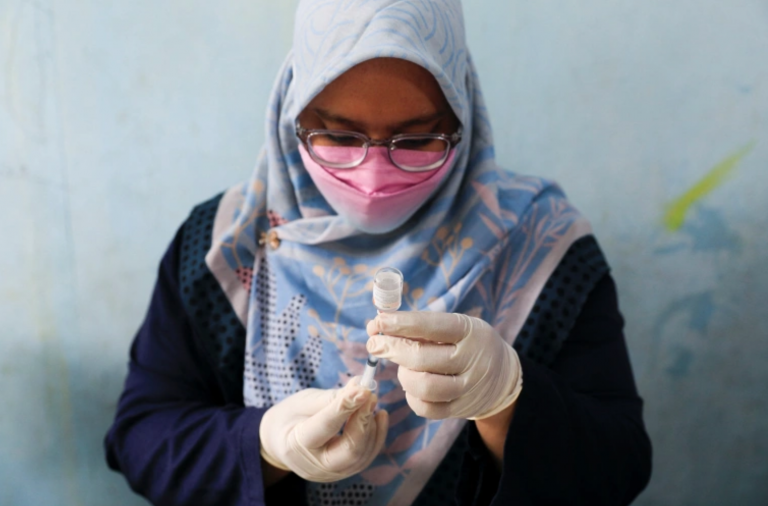
Medan, Indonesia – Indonesia officially kicks off its vaccine booster programme on Wednesday, with free jabs for the elderly and those without the means to pay, according to the Ministry of Health.

But the decision to make the majority of Indonesia’s 270 million inhabitants pay for the boosters out of their own pockets has fuelled controversy.

“Why has the government suddenly come up with the idea of boosters? If it is because the government is worried about waning antibodies, then it is OK as that is relative to the pandemic,” Pandu Riono, an epidemiologist and professor at the University of Indonesia, told Al Jazeera.

“But if it is related to the pandemic, then the vaccines should be free.”

The government has yet to confirm how much the vaccine booster shots will cost, although estimates have circulated online using data from the UNICEF Vaccine Market Dashboard, which lists the price of vaccines across different countries.

Potential prices range from as low as $2.75 for a shot of AstraZeneca to $23 for a Pfizer booster.

“There is talk that the vaccines will be around 300,000 Indonesian rupiah ($21) but in practice, they could potentially charge more in a private clinic so the price could go up to to 1 or 2 million ($70-140) per shot,” Alexander Arifianto, a research fellow at the Indonesia Programme at the S Rajaratnam School of International Studies in Singapore told Al Jazeera.

“Putting a price tag on the booster will add to vaccine hesitancy. The more it costs, the more people will be hesitant to have it.”

Most people have been given the Chinese-made Sinovac vaccine after Indonesia participated in the manufacturer’s late-stage trials.

There are also large discrepancies in vaccine coverage between different areas of the archipelago.

Populations in Jakarta and Bali are almost fully vaccinated, while areas such as Aceh and West Papua have managed to vaccinate only about 20 percent of residents, according to data from the Ministry of Health.

“I’m not sure that the paid vaccine programme is going to help Indonesia reach a large number of people. With less than 50 percent of [all] Indonesians fully vaccinated, the government needs to encourage the rest of the population to get vaccinated first,” said Arifianto.

With so many people still awaiting the all-important first shots, “Indonesia will continue to be vulnerable”, he said.

He adds that while expecting people to pay out of pocket for the booster is a serious concern, a more pressing problem for the government is sourcing the necessary vaccines.

“Middle-income nations like Indonesia have struggled to get vaccines like Moderna and Pfizer because [the makers of those vaccines] have prioritised countries that can pay upfront quickly,” he said.

When the booster scheme was announced early this month, Health Minister Budi Gunadi Sadikin told the media that Indonesia would need 230 million doses of booster shots and that it currently had roughly half that number in stock. It is unclear where Indonesia is planning to source the additional shots.

Al Jazeera

North Korea fires second suspected missile in six days

0

North Korea has fired a suspected ballistic missile, less than a week after it launched what it claimed was a hypersonic missile. 

South Korea said it detected the launch at 07:27 local time on Tuesday (22:27 GMT on Monday).

Japan’s coast guard also reported the launch, saying North Korea had fired a “ballistic missile-like object”.

It comes shortly after six countries issued a statement urging the North to cease its “destabilising actions”.

“Our military detected a suspected ballistic missile fired by North Korea from land towards the East Sea,” South Korea’s Joint Chief of Staff (JCS) said, adding that intelligence authorities from South Korea and the US were in the process of conducting a detailed analysis. 

The latest launch underscores North Korean leader Kim Jong-un’s pledge to bolster the country’s defences as part of its policy priorities for 2022, which were outlined during a key meeting in December.

On Monday, the US mission to the United Nations, joined by France, the Irish Republic, Japan, the United Kingdom, and Albania, issued a joint statement condemning last week’s apparent test.

“These actions increase the risk of miscalculation and escalation and pose a significant threat to regional stability,” said US ambassador to the UN Linda Thomas-Greenfield.

The group called for North Korea “to refrain from further destabilising actions… and engage in meaningful dialogue towards our shared goal of complete denuclearisation.”

BBC

Launch of a special Hindi language course for Sri Lanka Police on World Hindi Day

0

On the occasion of the World Hindi Day on January 10, 2022, the High Commission of India launched a ‘Hindi Proficiency Course’ for Sri Lanka Police personnel. The launch event was held at the Swami Vivekananda Cultural Centre (SVCC), the cultural arm of the High Commission and was attended by Major General (Retd.) Jagath Alwis, Secretary, Ministry of Public Security as the Chief Guest and Mr. C.D. Wickramaratne, Inspector General of Police as the Guest of Honour. Mr. Vinod K. Jacob, Acting High Commissioner of India to Sri Lanka also graced the occasion. The program was attended by 70 senior Police officers and officials of the Sri Lanka Police services.

2.     During the event, Acting High Commissioner read out special messages of the Prime Minister of India, Shri Narendra Modi and the Minister of External Affairs Dr. S. Jaishankar. Video messages of Minister of State for External Affairs and Culture, Mrs. Meenakshi Lekhi, and the High Commissioner of India to Sri Lanka, Shri Gopal Baglay, were also shared with the audience. 

3.      In his message, extending his wishes on the World Hindi Day, Prime Minister Shri Narendra Modi highlighted the popularity of Hindi language and its increasing usage in Information and Communication technology. Minister of External Affairs, Dr. S. Jaishankar also extended his good wishes and expressed happiness on the organization of various events by Indian Missions abroad commemorating the World Hindi Day. MoS Mrs. Meenakshi Lekhi underlined that Hindi, as a language of peace and compassion, plays an important role in connecting India with other countries and their people. Through his special video message, High Commissioner Shri Gopal Baglay, greeted Major General (Retd.) Jagath Alwis, Mr. C.D. Wickramaratne and other distinguished officers and staff of Sri Lanka Police. He expressed happiness on Sri Lanka Police personnel’s enthusiasm in learning Hindi language, both for their official work as well as personal interest. 

4.      Speaking on the occasion, Acting High Commissioner Shri Vinod K. Jacob recalled that the cultural and linguistic relations of Sri Lanka and India date back to more than two millennia, and in contemporary times, Hindi further strengthens these relations. He underscored that every year a large number of scholarships are offered by the Government of India to students of Sri Lanka to pursue their Hindi studies in reputed institutions and universities of India. SVCC plays a vital role in promotion of Hindi language all over the island. He also highlighted that Hindi is being taught in about 10 universities and 80 government schools in Sri Lanka. He recalled that recently, late Professor Indra Dassanayake was posthumously honoured with a “Padma Shri” award, one of the highest civilian honours of India, by the President of India in recognition for her contribution to the dissemination of Hindi language and literature in Sri Lanka. This reiterates the importance the Government of India attaches to its cultural ties with Sri Lanka and indicates its commitment to strengthen the India-Sri Lanka people-to-people bond.

5.       Major General (Retd.) Jagath Alwis, Secretary, Ministry of Public Security, expressed his happiness at the launch of the Hindi Course for Sri Lanka Police to mark the World Hindi Day. He thanked the Government of India and the High Commission of India for the assistance provided to the Sri Lanka Police from time to time. He also highlighted that the special Hindi course will help in strengthening the cultural relations between the two countries and also in promotion of tourism between the two countries.

6.       The Hindi students of SVCC presented a cultural program at the event and sang popular Hindi and Sinhala songs. The inaugural program was followed by the first lecture of the Hindi course for Sri Lanka Police personnel. 

Central Bank clarifies misinterpretations on the reduction of gold reserves

0

Clarifying the media reports on the selling of gold reserves,the Central Bank says the changes in the composition of official reserves is in accordance with the current reserve management needs and priorities, considering all aspects of the reserve management requirements.

 Issuing a media release the CB claims that its gold holdings by end 2008 was only US$ 92 million (3.6 per cent of gross official reserves of US$ 2.6 billion), but was gradually increased by end 2014 to $ 893 million (10.9 per cent of gross official reserves of $ 8.2 billion). 

Hence, it is evident that the share of gold holdings in the reserve may change from time to time, reflecting the needs of the CB to buy, hold or liquidate its gold holdings in accordance with the prevailing reserve management priorities. 

In that background, while the CB’s gold holdings by end 2021 may have decreased to $ 175 million (5.6 per cent of gross official reserves of $ 3.1 billion) based on the need to enhance the liquidity of the reserve portfolio, the CB may, at a future date, consider increasing its gold holdings when the foreign reserve levels grow to values that may warrant a change in the composition of the reserve portfolio.

International reserve management of a central bank is a dynamic and technical process which is usually designed to ensure that a country’s foreign assets are readily available and controlled to achieve a defined range of objectives. 

Accordingly, the adoption of appropriate reserve management policies relating to the asset composition, currency mix, liquidity needs, tenor, profitability, safety, etc. of investment instruments could vary from country to country and would depend on the country specific circumstances and economic priorities.