December 11, Colombo (LNW): The Government has entered into a new financing arrangement with the International Development Association of the World Bank Group, unlocking US$150 million to overhaul and modernise the country’s primary healthcare network.
The initiative, which will run from 2024 through 2028, will be rolled out nationwide and is designed to sharpen the country’s response to non-communicable diseases, expand services for older citizens, bolster palliative and home-based care, and strengthen community-level health capacity.
Officials also noted that the project places particular emphasis on preparing the health sector for increasingly frequent climate-related shocks.
One obstacle repeatedly highlighted in early assessments is the shortage of suitable transport for frontline health workers. Public Health Midwives, nurses, inspectors and surveillance teams often struggle to reach remote households, especially during adverse weather, limiting the consistency of community outreach.
In response, the Cabinet has endorsed a proposal from the Minister of Health and Mass Media to purchase a substantial fleet of vehicles to support district-level operations. The approved list includes:
– 26 lorries for transporting clinical waste
– 26 double-cab vehicles
– 5 ten-seater vans
– 2 buses with 42 seats
– 2,891 scooters for Public Health Midwives
– 200 scooters for Public Health Nurses
– 1,350 motorcycles for public health inspectors
– 200 scooters for laboratory services
– 20 refrigerated trucks for the Medical Supply Division
– 8 forklifts for the Medical Supply Division
– 1 crew cab for the Divisional Health Office in Puttalam
– A new ambulance complement for the Jaffna district
Health officials say the expanded fleet will significantly speed up fieldwork, improve consistency in home-visits, and ensure more reliable delivery of medical supplies. They also expect the effort to enhance the reach of community health teams and strengthen the country’s primary care foundation at a time when the demand for accessible, preventive services is rapidly increasing.
Government Secures Major World Bank Facility to Boost Grassroots Health Services
Government Clears Recruitment Drive to Strengthen Public Sector Workforce
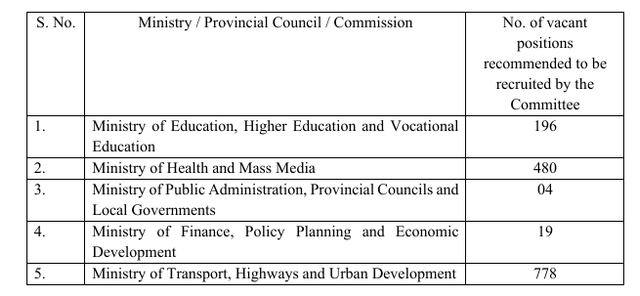
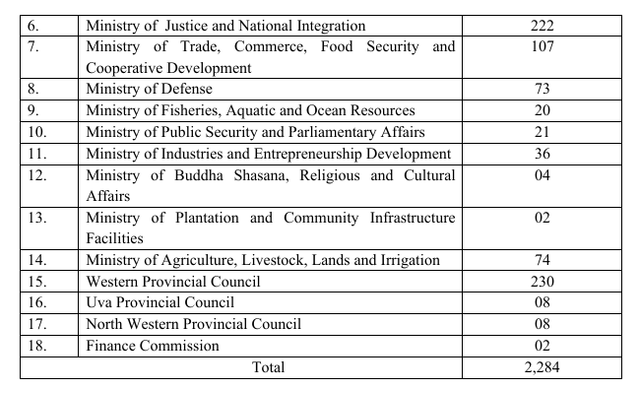
December 11, Colombo (LNW): The government has authorised a major round of public-sector hiring, giving the green light for 2,284 new appointments to address long-standing staffing gaps across several ministries and state institutions.
This decision follows an earlier Cabinet move to adopt recommendations from a review panel tasked with examining the efficiency and coherence of government recruitment. In line with that mandate, a high-level committee—led by the Secretary to the Prime Minister—was established to assess workforce needs, prioritise essential roles and create a realistic timetable for filling vacancies.
The group is said to have carried out an extensive evaluation of current staffing patterns, identifying areas where shortages were beginning to undermine service delivery.
Ministries subsequently submitted detailed requests highlighting vacancies within their own departments and affiliated agencies. After examining these submissions, the committee endorsed a proposal from the Prime Minister to begin a targeted intake of new personnel.
Government Unveils Fresh Credit Lifeline for MSMEs Hit by Recent Disasters

December 11, Colombo (LNW): The government has announced a revamped financial support initiative aimed at helping micro, small and medium-sized enterprises regain their footing after the recent wave of natural disasters.
The new facility, titled RE–MSME PLUS, brings together several existing state-backed lending programmes—previously known as SMILE-III, E-FRIEND-II and RE-MSME—into a single, more flexible scheme intended to fast-track recovery and encourage investment.
According to officials, Cabinet approval has been granted to launch the upgraded scheme early next year. The authorities expect that roughly 130,000 business owners will benefit from a mix of rapid-release financial assistance and longer-term concessional support.
The initiative is designed not only to offer relief but also to strengthen the resilience of small-scale industries that form the backbone of the local economy.
Under the planned arrangement, eligible enterprises will have access to government-funded loans at an annual interest rate of just 3 per cent over a three-year period. The scheme will also include a grace period of up to six months, with borrowing limits set at Rs. 250,000 for micro-level ventures and Rs. 1 million for small and medium-scale businesses.
Officials say these terms are meant to ease cash-flow pressures and give affected entrepreneurs enough breathing space to rebuild operations.
Cabinet has also endorsed the continuation of the RE–MSME – Disaster Relief programme, with the President—acting in his role as Minister of Finance—greenlighting both initiatives. Authorities hope the combined effort will accelerate recovery in sectors hit hardest by the recent adverse weather, while encouraging businesses to adopt more sustainable and disaster-resilient practices in the long run.
UN Rallies Global Support for Sri Lanka’s Post-Cyclone Rebuilding Drive
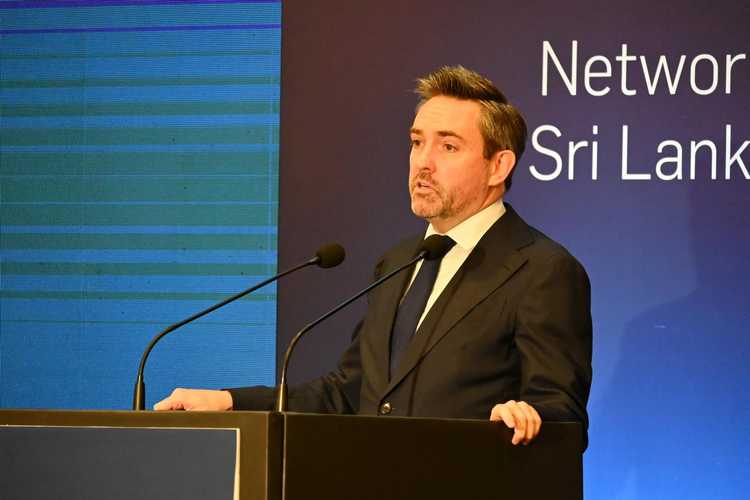
December 11, Colombo (LNW): The United Nations has launched a fresh appeal to bolster Sri Lanka’s post-cyclone recovery, aiming to gather roughly US$35 million over the next few months to help restore essential services and support affected communities.
At a briefing in Colombo on Thursday, the UN’s top representative in the country, Marc-André Franche, explained that the organisation had worked closely with the Disaster Management Centre to map out urgent needs across seven key areas, following the havoc wrought by Cyclone Ditwah. Roads, housing, health services and livelihoods are among the sectors identified for swift assistance.
Franche stressed that the Sri Lankan government remains at the forefront of the relief operation, with the UN and a network of local and international partners stepping in to reinforce national efforts where required.
He also revealed that contributions totalling nearly US$10 million have already come through from a group of supporting nations, including Australia, Canada, members of the European Union, Switzerland, the United Kingdom and the United States. According to him, a further US$26 million will be sought through a coordinated push designed to ensure that aid reaches the most vulnerable communities efficiently.
In addition to immediate relief, Franche hinted that the UN hopes this funding drive will help Sri Lanka build greater resilience against future climate-driven disasters, noting that the scale of destruction caused by Cyclone Ditwah underscores the urgency of long-term preparedness.
Health Authorities Warn of Eye Infection Risk in Flood-Affected Areas

December 11, Colombo (LNW): The Health Promotion Bureau has issued a warning that eye infections, particularly conjunctivitis, could spread more easily in the wake of recent floods due to overcrowding in temporary shelters and public spaces.
Officials stressed the importance of good hygiene to protect against infection and limit transmission. Conjunctivitis, commonly known as sore eyes, is highly contagious and can be passed through direct contact, shared items, or contaminated surfaces. Typical symptoms include redness, swelling, itching, excessive tearing or discharge, light sensitivity, and crusting around the eyes.
The Bureau advised the public to adopt the following precautions:
– Wash hands thoroughly and regularly with soap and water
– Disinfect frequently touched surfaces
– Cover coughs and sneezes
– Clean contact lenses carefully and avoid using unclean lenses
– Seek medical attention if symptoms persist beyond a week
Authorities also warned against rubbing the eyes or sharing personal items such as towels, pillows, or eye drops, as these practices greatly increase the risk of spreading infection.
Members of the public were urged to share this advisory widely to help prevent further outbreaks in communities still recovering from the floods.
Sri Lanka Moves to Streamline Tax System and Boost Revenue

December 11, Colombo (LNW): Sri Lanka’s Finance Ministry and the Inland Revenue Department have convened a high-level meeting to discuss measures aimed at expanding the tax base, simplifying the filing process, and cutting red tape, according to an official statement from the ministry.
The session was led by Deputy Minister of Economic Development, Nishantha Jayaweera, and attended by Inland Revenue Commissioner General Rukdevi Fernando alongside senior department officials.
Officials were instructed to promote voluntary tax compliance and intensify public awareness campaigns to ensure taxpayers are better informed. The Deputy Minister emphasised the need to reduce obstacles in filing returns and to simplify forms wherever possible.
A key focus of the discussion was the formulation of a practical strategy for the Inland Revenue Department to achieve the government’s revised revenue targets for 2025. The 2026 budget raised the projected tax revenue for 2025 from Rs. 4,590 billion to Rs. 4,725 billion, marking a 2.9 per cent increase.
This upward revision reflects expected growth in income tax collections as well as levies on goods and services, including vehicle import duties. The income tax target was set 3.7 per cent higher at Rs. 1,210 billion, while levies on goods and services were increased by 6.5 per cent to Rs. 2,953 billion.
Revised A-Level Timetable Announced Following Weather Disruptions
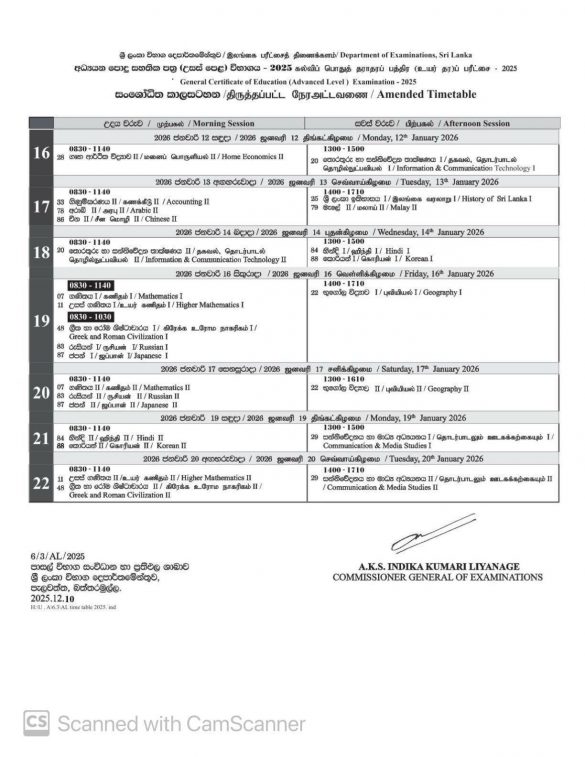
December 11, Colombo (LNW): The Department of Examinations has unveiled a new schedule for the remaining papers of the 2025 G.C.E. Advanced Level exams, which were postponed due to severe weather affecting multiple regions of the country.
The rescheduled examinations are set to take place between January 12 and 20, 2026. The Department has issued the updated timetable alongside an official notice to ensure all candidates are informed.
The Commissioner General of Examinations confirmed that special arrangements will be made for students impacted by the recent adverse conditions. School candidates unable to sit their exams at their designated centres are urged to notify their school Principal immediately.
Principals must then inform both the Zonal Director of Education and the Commissioner of Examinations (School Examination Organisation and Results) of any disruptions.
Private candidates who face difficulties attending their scheduled centres are requested to contact the Department directly via the following:
Hotline: 1911
Telephone: 011 278 4537 / 011 278 6616 / 011 278 4208
Fax: 011 278 4422
Email: [email protected]
UK-Based Relief Drive Mobilises Support for Sri Lanka’s Flood Survivors

By: Isuru Parakrama
December 11, Colombo (LNW): A UK-based humanitarian initiative has been launched to support thousands of Sri Lankan families affected by the severe flooding triggered by Cyclone Ditwah, which swept across multiple districts with devastating force.
Global Exchange Ltd, a long-established money transfer service operating since 1995, has begun accepting cash donations to help fund official relief efforts in the island nation, where torrential rains, mass displacement and widespread damage have overwhelmed local authorities and communities.
The campaign, branded under the company’s Smart Money service, urges the Sri Lankan communities and the wider British public to stand in solidarity with those whose lives have been upended by the sudden onset of floods.
With entire neighbourhoods submerged, transport links paralysed and homes destroyed, the need for rapid humanitarian assistance has become increasingly urgent. In response, Global Exchange has committed to forwarding all contributions directly to designated flood-relief accounts managed by Sri Lanka’s Treasury, ensuring donations reach government-authorised emergency support channels without delay.
Donors are asked to provide only basic details—namely their name and telephone number—when handing over contributions. To encourage maximum participation, the company has waived all commission fees associated with the transfers, emphasising that every pound donated will go entirely towards relief efforts.
Funds collected through the programme will be remitted to two official government accounts: one at the Bank of Ceylon’s Thaprobane branch and another at People’s Bank in Union Place, both held under the Deputy Secretary to the Treasury.
The firm is authorised and regulated by the Financial Conduct Authority and registered as an HMRC Money Service Business, adding additional layers of oversight to reassure contributors of the legitimacy and accountability of the initiative.
With Cyclone Ditwah’s impact continuing to reverberate across Sri Lanka, the economic and social implications are becoming more visible. Flood-affected districts—many already grappling with the country’s broader economic challenges—now face extensive crop losses, damaged infrastructure and disruptions to education as schools remain closed in several regions. Families living in low-lying or marginalised communities have found themselves disproportionately affected, with the destruction of homes and livelihoods compounding existing vulnerabilities. For diaspora communities in the UK, the appeal has resonated deeply, with many maintaining close family ties to areas hardest hit by the floodwaters.
For further information or to make a donation, supporters may contact Global Exchange on 0208 902 3366.

Egg Prices Set to Remain Stable, Producers Deny Price Hike Claims Over Festive Season

December 11, Colombo (LNW): The All Ceylon Egg Producers’ Association has rejected suggestions that the cost of eggs will surge during the forthcoming festive period, insisting that such forecasts are unfounded.
R.M. Sarath Ratnayake, President of the Association, criticised what he described as “misleading rumours” circulated by a small group seeking to push for increased egg imports.
He emphasised that domestic producers are fully equipped to meet demand and can continue supplying eggs at under Rs. 45, ensuring that consumers will not face inflated prices this season.
SL’s Main River Systems Flow Steadily, Show No Signs of Flood Risk

December 11, Colombo (LNW): Sri Lanka’s main river systems are flowing steadily and show no signs of posing a flood risk, according to a hydrological assessment released at 6.30 a.m. today (11).
The latest readings indicate that all major waterways remain comfortably within their safe limits, offering reassurance to communities still anxious after recent severe weather.
The Hydrology and Disaster Management Division reports that the Kelani, Kalu, Mahaweli, Gin, Nilwala and Walawe basins are all registering levels well below their respective alert thresholds.
Measurements taken between 5.00 and 6.00 a.m. reflected largely stable conditions, with only a few locations recording negligible rises amounting to mere millimetres.
On the Kelani Ganga, gauges at Nagalagam Street, Hanwella, Glencourse and Kithulgala continued to show normal flows. The Kalu Ganga, while displaying slight increases at Putupaula, Ellagawa and Ratnapura, remains safely beneath any warning markers. The Gin, Nilwala and Mahaweli rivers exhibited a similar pattern, with no stations reporting concerning behaviour.
Rainfall has been relatively subdued over the past 21 hours. The highest totals—29.4 mm at Maguru Ganga and 14.7 mm at Baddegama—were modest and unlikely to affect river levels significantly.
The update, compiled by Hydrology Assistants and validated by Eng L. S. Sooriyabandara, Director of Hydrology and Disaster Management, notes that routine monitoring will continue throughout the day.
Authorities, however, emphasise that current conditions present no immediate risk of flooding, allowing residents in vulnerable areas a brief but welcome respite.