By: Staff Writer
November 30, Colombo (LNW): The Sri Lankan water supply sector is facing renewed scrutiny amid allegations of large-scale corruption and irregularities in contracts awarded to Chinese state-owned enterprises (SOEs). The People’s Movement against Corruption (PMAC) has urged the Government to launch a thorough investigation following the disclosure of documents obtained through a Right to Information (RTI) request.
The documents reveal that from 2013 onwards, major contracts under the National Water Supply and Drainage Board (NWSDB) were awarded to Chinese firms including China Machinery Engineering Corporation (CMEC), China Harbour Engineering Company Ltd., and China Geo Engineering Company.
Funding for these projects came from the Sri Lankan Government, the Asian Development Bank (ADB), the French Development Agency (AFD), and the China Development Bank. While some projects are ongoing, the disclosed records indicate that numerous contracts were awarded at significantly inflated costs compared to initial estimates.
Key examples include the $70 million Ambatale Water Supply System Improvements and Energy Saving Project funded by the AFD, and the $157.43 million Jaffna-Kilinochchi Water Supply and Sanitation Project funded by the Sri Lankan Government and ADB.
Both projects list CMEC as the lead contractor, with a relatively obscure local company, Business Promoters & Partners Engineering Ltd., included as a joint venture partner. PMAC noted that the role of this local intermediary remains unclear, raising concerns about unnecessary local involvement.
Perhaps the most striking case is the $229.5 million Gampaha, Attanagalla, and Minuwangoda Integrated Water Supply Scheme, initially proposed as an unsolicited tender.
Funded primarily by a $195.075 million loan from China Development Bank and a $34.425 million loan from the Bank of Ceylon, the project’s final cost exceeded the original $172 million estimate by 34.8%.
Independent PMAC analysis suggests that lack of competition, unexplained delays, and irregular payments contributed to the cost surge, a concern previously flagged by the Auditor General in 2016 and 2018.
Other projects include the $120 million Tambuthegama Water Supply Project, contracted to China Geo Engineering, and the Greater Colombo Water and Wastewater Management Investment Programme, awarded jointly to China Harbour Engineering and China Geo Engineering through an ADB loan of Rs. 13,917 million.
Past COPE reports highlighted additional irregularities in NWSDB contracts, including billions in unrecovered contractor advances and unauthorized write-offs.
PMAC is calling for an immediate forensic audit and criminal investigation into all NWSDB projects awarded to Chinese SOEs, especially those granted through unsolicited bids or subject to unexplained cost escalations.
The revelations underscore serious governance and fiscal accountability concerns, with implications for Sri Lanka’s water supply infrastructure and long-term sector sustainability.
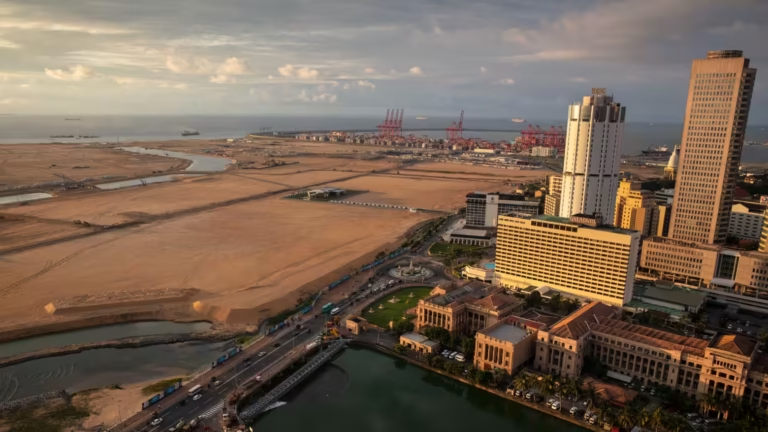
Questionable Chinese Contracts Jeopardize Sri Lanka’s Water Infrastructure
Sri Lanka Faces Rising Debt Burden despite Global Moratorium
By: Staff Writer
November 30, Colombo (LNW): Sri Lanka’s external debt story is entering a new and more complex phase, even as the country continues to benefit from a temporary moratorium offered by several bilateral lenders.
Despite this breathing space, the nation’s overall external payment obligations remain steep and in some areas are actually rising underscoring deep structural vulnerabilities in the country’s foreign financing landscape.
According to fresh disclosures by Central Bank Governor Dr. Nandalal Weerasinghe, Sri Lanka’s external interest payments alone amount to approximately US$2.75 billion in 2024, a figure that includes foreign currency liabilities the Government absorbed from the People’s Bank and Bank of Ceylon during the height of the economic collapse. These payments, he stressed, reflect only interest and related obligations—not full debt amortisation.
The Governor confirmed that the country will need to meet about US$2.75 billion annually in external servicing commitments through 2027, even under the concessionary arrangements already agreed upon. However, beginning in 2028, the burden will climb again, with annual repayments projected to fall between US$3.2 billion and US$3.5 billion, and in certain years of the next decade, touching nearly US$4 billion.
The revelation is significant because it highlights the difference between the debt moratoriums granted largely by bilateral creditors and the extensive obligations Sri Lanka still carries with multilateral lenders, international financial institutions, and commercial transactions, all of which must be serviced without interruption.
The country may not be repaying bilateral lenders temporarily, but institutions such as the IMF, ADB, World Bank, and other development partners continue to require timely payments.
In 2024, Sri Lanka paid US$1.674 billion in external debt servicing, according to figures cited from the 2025 Budget Speech.
That requirement rises sharply to US$2.435 billion in 2025, of which US$1.948 billion had already been settled by September. A further US$487 million is due by 31 December much of which is believed to have already been cleared. This marks a year-on-year increase of roughly US$750 million, despite the ongoing debt relief efforts.
These rising obligations raise critical questions about the long-term sustainability of Sri Lanka’s economic recovery. While the debt moratorium has temporarily softened bilateral repayments, the spike in multilateral and commercial servicing commitments has limited the country’s ability to redirect resources toward development, social services, and economic recovery programmes.
The Central Bank insists that adherence to fiscal discipline, strengthening foreign reserve buffers, and maintaining tight monetary controls are essential to preventing another balance-of-payments crisis. Analysts warn, however, that unless export performance, foreign investment flows, and tourism earnings expand significantly, the country risks slipping back into dependency on emergency financing.
As Sri Lanka prepares for a decade of elevated payments despite temporary relief—the core issue becomes clear: a moratorium can delay repayment, but it cannot erase structural weaknesses. Without a renewed growth model and a diversified foreign-exchange strategy, the country’s external debt challenge may simply be deferred, not resolved.
Tourism Falters as Government Missteps Undermine Data-Driven Growth
By: Staff Writer
November 30, Colombo (LNW): Sri Lanka’s tourism sector touted as a cornerstone of post-crisis recovery is now facing a new credibility test, not because of a lack of data, but because of a Government unable to translate evidence into action.
The country’s largest-ever tourism survey, unveiled by the Sri Lanka Tourism Development Authority (SLTDA) and Australia’s Market Development Facility (MDF), offers unprecedented insight into traveller behaviour.
But the findings expose a politically driven leadership vacuum, weak execution, and ineffective global promotion campaigns that are costing the nation millions in potential revenue.
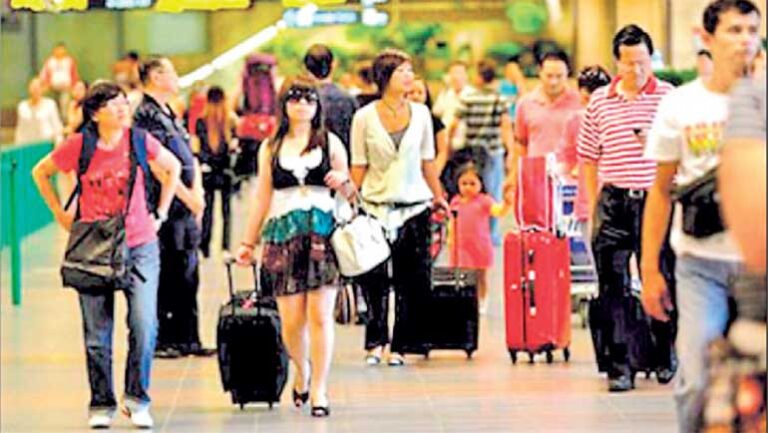
The 12-month airport exit survey, covering 11,731 inbound visitors and 5,000 outbound Sri Lankans, identifies a dynamic tourism landscape shaped by young, digitally oriented travellers. Forty-six percent of tourists are aged 20–35, 46% use online travel agencies, and 62% travel independently.
These are audiences who make decisions based on digital visibility, online credibility, and brand consistency. But Sri Lanka’s official tourism platforms still controlled by politically appointed leadership remain fragmented, outdated, and poorly managed.
Despite the availability of world-class data, the Government has failed to launch a coherent 2025 global marketing campaign. Senior officials admit privately that key agencies are suffering from frequent leadership turnover, political interference, and inexperienced appointees with no background in tourism.
Critics argue that the administration’s promotional strategy lacks scale, creativity, and continuity allowing regional competitors like Thailand, Malaysia, and Vietnam to dominate the high-spending traveller market.
The survey also reveals that 58% of arrivals are women, with strong interest in culinary, cultural, and nature-based tourism.
But Sri Lanka’s promotional messaging continues to recycle outdated imagery, with no sustained strategy to target niche female-travel segments. Meanwhile, Galle, Ella, and Sigiriya remain over-promoted while new destinations receive little attention, reflecting a lack of political will to decentralise tourism benefits.
Even more concerning, tourism earnings for the first ten months of 2025 have failed to outperform 2024, despite higher arrivals. Industry stakeholders attribute this decline to weak policy direction, slow approvals for investment, and the Government’s inability to align marketing with market realities. “We have the data, but not the leadership,” one industry CEO remarked at the launch.
The SLTDA’s partnership with MDF has produced a sophisticated analysis of booking patterns, demographics, spending, and regional variations highlighting Sri Lanka’s potential as a multi-niche destination.
Yet without politically insulated leadership and a capable tourism administration, these insights risk becoming another report shelved by political offices that prioritise short-term optics over long-term strategy.
The Government now faces a defining moment: either transform the sector with evidence-based policy and professional expertise, or allow tourism—one of the few sectors with genuine foreign-exchange potential to remain trapped in the cycle of political mismanagement. The data is clear, but the political will is not.
National Weather-Related Death Toll Rises to 212 as Search Efforts Press On
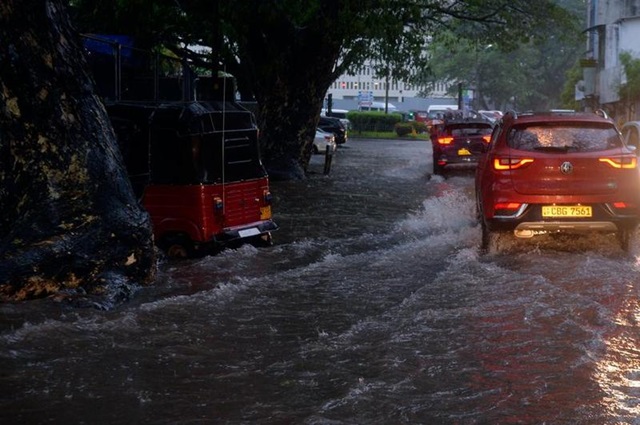
November 30, Colombo (LNW): The Disaster Management Centre has confirmed that the number of fatalities resulting from the severe weather that has swept across the country in recent days has increased to 212.
The Badulla District remains the hardest hit, with 71 deaths reported, marking it as the most affected area in this unfolding crisis.
Authorities have also stated that at least 218 people are still missing, with search teams and relief workers continuing operations across several districts under challenging conditions.
Officials note that rescue efforts remain ongoing, as shifting weather patterns and difficult terrain continue to complicate attempts to locate those who have yet to be accounted for.
SLAF Relief Helicopter Crashes During Emergency Mission

November 30, Colombo (LNW): A Sri Lanka Air Force Bell 212 helicopter engaged in ongoing disaster-relief duties has been involved in an accident, police have confirmed.
The aircraft, which had been dispatched to support emergency response efforts in the Wennappuwa–Lunuwila area, went down while carrying out its assigned operations.
Authorities are currently assessing the situation.
Galle Port Tourism Push Tests NPP Government’s Delivery Capacity
By: Staff Writer
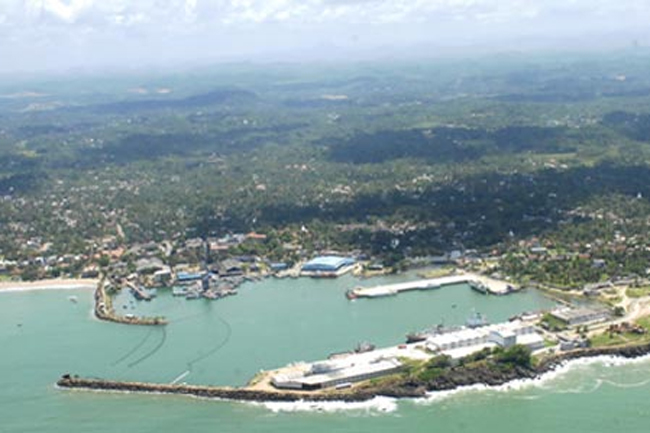
November 30, Colombo (LNW): Sri Lanka’s long-delayed plan to transform the historic Port of Galle into a modern tourism hub is once again moving into the spotlight, with the NPP government preparing to issue a formal call to investors “very soon,” according to Ports and Civil Aviation Minister Anura Karunathilaka.
The government’s renewed push comes at a time when Sri Lanka’s tourism sector is desperate for new infrastructure capable of attracting high-spending cruise travellers and luxury yacht segments.
But questions persist over whether the administration has the administrative capacity, policy coherence, and speed required to deliver a project that has been stalled for more than a decade.
Speaking in Parliament, Minister Karunathilaka confirmed that discussions have already taken place with multiple investors expressing interest in the Galle Port development. “We are focusing on developing Galle Port as a hub for tourism,” he said, noting that several proposals are now under consideration. The government expects to formally invite expressions of interest shortly.
The proposal, originally designed by the Sri Lanka Ports Authority (SLPA), includes constructing a 150-metre cruise berth, expanding the land area through 40 hectares of reclamation, and developing a modern marina to accommodate yachts, boutique cruise vessels, and related tourism infrastructure.
The project, earlier estimated at USD 175 million, has remained dormant under successive administrations due to financial constraints, red tape, and shifting political priorities.
Tourism analysts note that the feasibility of the project is strong: southern Sri Lanka is already a major hotspot for high-value travellers, and cruise tourism is among the fastest-growing segments globally.
A fully developed Galle Port could generate thousands of jobs, stimulate hotel and restaurant growth, increase foreign exchange inflows, and position the southern coast as a premium nautical tourism destination.
However, investors remain cautious about the NPP government’s ability to execute large-scale projects efficiently. Industry stakeholders privately express concern about slow procedural clearance, inconsistent policy signals, and the government’s difficulty in coordinating between ministries—issues that have delayed several investment proposals in recent months. While investor interest remains alive, confidence hinges on whether the administration can streamline approvals, ensure transparent procurement, and present a bankable, long-term tourism strategy.
Critics argue that the government’s struggles with bureaucratic lethargy and inexperienced administrative teams could once again stall the Galle Port initiative, despite its clear economic advantages. Others worry that without strong inter-agency coordination, the project could fall victim to the same institutional bottlenecks that hampered earlier attempts.
Still, supporters believe the NPP government has a unique chance to prove its investment credibility by finally delivering a flagship tourism project that has been promised for years. If implemented successfully, the Galle Port development could reshape Sri Lanka’s tourism landscape, diversify foreign revenue streams, and attract a new class of luxury travellers.
But the ultimate question remains: can the government move fast enough to make it happen?
External Stability under Scrutiny as NPP Faces First Real Test
By: Staff Writer
November 30, Colombo (LNW): Sri Lanka’s external sector delivered mixed signals in October 2025, raising critical questions about the long-term sustainability of the recovery narrative promoted under the new NPP administration.
Central Bank data for the month indicates that while headline indicators show resilience built during stabilisation efforts, underlying pressures—particularly from the surge in imports—are intensifying.
The country posted a current account deficit for the second consecutive month, reversing the gains seen earlier in the year. However, on a cumulative basis, Sri Lanka maintained a US$1.7 billion surplus during January–October, reflecting the lingering benefits of tightened monetary policy, controlled demand, and improved service revenues. Analysts note that the challenge for the new NPP government is to convert these accumulated cushions into long-term external stability while managing a politically sensitive economic reform agenda.
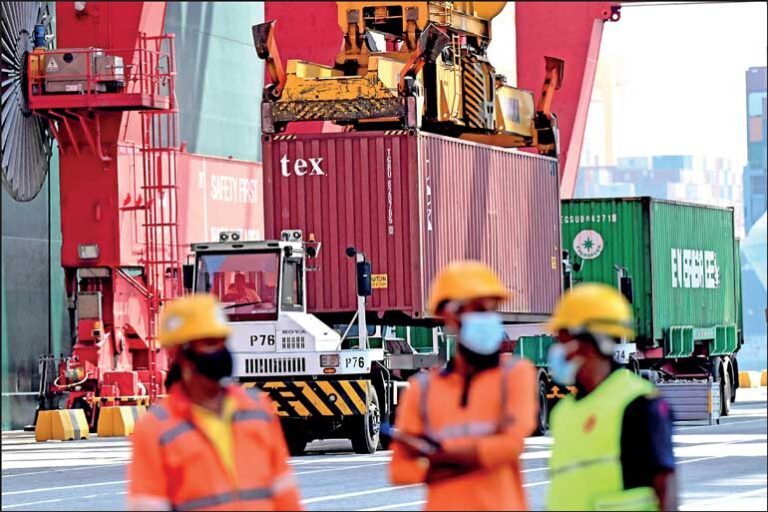
A major stress point emerged in the merchandise trade deficit, which widened year-on-year following a sharp rise in imports. The most striking contributor was the US$261 million spent on vehicle imports in October alone, pushing cumulative vehicle imports to US$1.46 billion in ten months.
This surge is widely interpreted as an outcome of liberalisation measures and pent-up demand after years of import restrictions. However, it also exposes the risks of re-expansion without corresponding export-growth strategies.
Compounding the concern, Sri Lanka’s terms of trade deteriorated, indicating import prices are rising faster than export prices—an imbalance that places pressure on the currency and external stability.
Despite these pressures, service-sector inflows continued to support the external account. Tourism earnings rose moderately, with both month-on-month and year-on-year visitor arrivals increasing. For January–October, cumulative earnings grew 4.9%, showing strong recovery though still below full potential.
Meanwhile, workers’ remittances recorded their highest monthly inflow since December 2020, boosting cumulative inflows by 20.1% year-on-year a critical lifeline for household incomes and foreign exchange stability.
Foreign investor sentiment remained divided. Government securities attracted net inflows, but the Colombo Stock Exchange recorded net outflows, signalling cautious investor confidence during a politically transitional year.
Sri Lanka’s gross official reserves stood at US$6.2 billion, including the PBOC swap a level viewed as stable but not yet comfortable given the upcoming external debt obligations. The rupee depreciated 5% year-to-date, manageable but indicative of persistent market uncertainties.
For the NPP government, October’s data presents both an opportunity and a warning. The administration’s governance model focused on transparency, tighter fiscal controls, and reduced leakages has improved credibility among development partners.
However, the return of import-driven external pressures shows that stabilisation alone cannot secure sustained external resilience. Without stronger export diversification, a clearer industrial strategy, and disciplined trade policy, the economy risks sliding back into pre-crisis vulnerabilities.
Sri Lanka’s Credit Surge and FX Inflows Bolster Economic Revival
By: Staff Writer
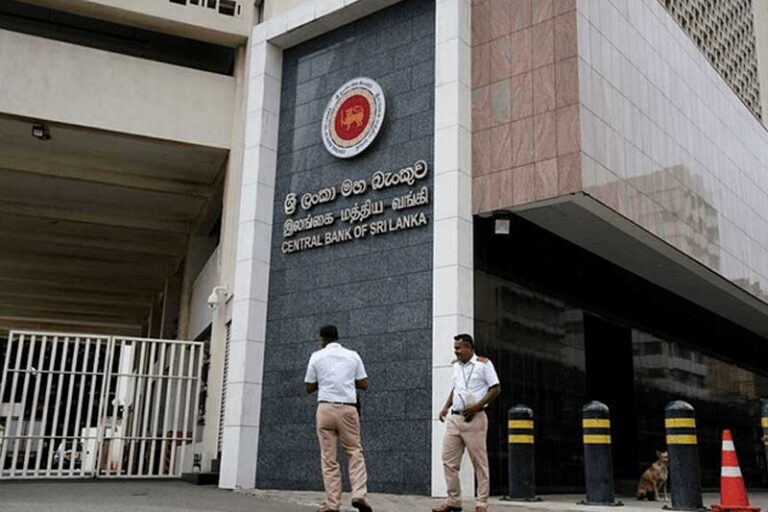
November 30, Colombo (LNW): Sri Lanka appears to be regaining economic confidence, as a recent surge in private-sector credit and stable foreign currency inflows point toward sustained growth momentum and improved external stability. According to central bank data, private-sector credit expanded by a staggering Rs 1,365 billion during the first nine months of 2025 underscoring renewed domestic demand and business activity.
At the same time, foreign exchange reserves have remained resilient. The Central Bank of Sri Lanka (CBSL) confirmed that gross official reserves stayed above US $6 billion throughout the year.
The bank also signalled that additional inflows expected in December notably from the International Monetary Fund (IMF) and the Asian Development Bank (ADB) could push total reserves beyond US $7 billion by year-end.
Foreign-exchange inflows this year have been robust, driven by tourism, remittances, and export conversions. For the first half of 2025, services-sector inflows including tourism and remittances reached about US $2.1 billion, while total remittances surged nearly 19% year-on-year to US $3.7 billion.
These inflows helped offset widening trade deficits caused by rising imports.However, rising imports especially the revival of vehicle imports are testing those gains. By August 2025, the forex cost of vehicle imports had reached US $917 million, reflecting heightened consumer demand and increased credit-driven car-buying.
The trend has contributed to a broader import bill that outpaced export growth, widening the merchandise trade deficit.
Industry watchers caution that the credit boom — while a positive sign for economic activity — carries risks if not carefully managed. Elevated private-credit growth can fuel inflation or lead to non-performing loans, especially if global headwinds disrupt foreign-exchange inflows.
Still, the combination of domestic credit expansion and healthy foreign-exchange earnings has helped stabilise the rupee and narrow the bid-ask spread in foreign-exchange markets. CBSL’s active purchasing of foreign currency from the domestic market has bolstered liquidity, even as banks and finance companies absorb debt servicing pressures.
With the anticipated IMF and ADB disbursements expected before year-end, along with seasonal remittances and tourism receipts, many analysts now believe Sri Lanka may close 2025 with its highest foreign-reserve levels since the 2022 crisis.
This in turn could provide the breathing room needed to support economic growth of about 4.5% for the year, while allowing policymakers to build monetary and fiscal cushions ahead of potential global shocks.
If managed prudently, the current confluence of domestic demand, credit expansion and foreign-exchange resilience could mark a turning point — transforming the economic rebound into a more durable recovery.
Sri Lanka’s Ceylon Tea Risks Decline without Urgent Sector Reform

By: Staff Writer
November 30, Colombo (LNW): Sri Lanka’s Ceylon Tea, once celebrated as the world’s premier high-grown brew, is confronting a moment of truth. Global demand for premium teas is rising, but the country’s market share is steadily slipping as competitors move faster, brand smarter, and innovate more aggressively. While Kenya, India, and even emerging origins like Rwanda expand supply chains and build new markets, Sri Lanka is lagging—constrained by outdated practices, political indecision, weak marketing, and an administration struggling to communicate a clear industry strategy.
Exporters warn that Ceylon Tea’s biggest handicap is its declining visibility in global markets. Industry stakeholders say Sri Lanka has not run a major international promotional campaign in nearly a decade, and the once-powerful “Ceylon Lion” logo is losing currency among younger global consumers who prioritise sustainability, traceability, and wellness-oriented products. Competitors, meanwhile, are flooding shelves with organic, ready-to-drink and specialty teas—segments where Sri Lanka’s presence remains minimal.
The new NPP-led government has promised a revival plan, but insiders claim progress is slow. The Agriculture Ministry is yet to articulate a structured roadmap for replanting, modernizing processing facilities, or repositioning Ceylon Tea as a premium wellness beverage. Several senior planters privately express concern that the minister overseeing the sector lacks the communication skills, technical exposure, and international engagement capacity required to negotiate trade agreements, attract investors, or push Sri Lankan branding campaigns abroad. The challenge is compounded by lethargic bureaucratic machinery within the ministry, with files stuck for months and export approvals frequently delayed.
Yet, opportunities remain. Global tea consumption patterns show strong momentum in high-value niches such as single-origin luxury teas, organic varieties, wellness infusions, and sustainable plantation products. Sri Lanka is uniquely positioned to capture these segments—if the government can modernize the Tea Board, upgrade research institutions, introduce a national replanting program, and restore confidence among exporters through policy stability.
Industry experts say the government must urgently empower professionals, appoint skilled technical teams, and collaborate closely with private-sector exporters who currently account for over 95% of tea shipments. Without a diplomatic, English-proficient frontline capable of marketing Ceylon Tea in Europe, the Middle East, and East Asia, Sri Lanka risks becoming irrelevant in a market it once dominated.
Ceylon Tea’s future is not doomedbut it needs decisive leadership, global marketing firepower, and a functioning ministry. Without that, the world’s most famous tea may fade to a nostalgic memory while faster-moving rivals claim its place.
Death Toll Rises to 193 as Cyclone Ditwah Leaves Trail of Destruction
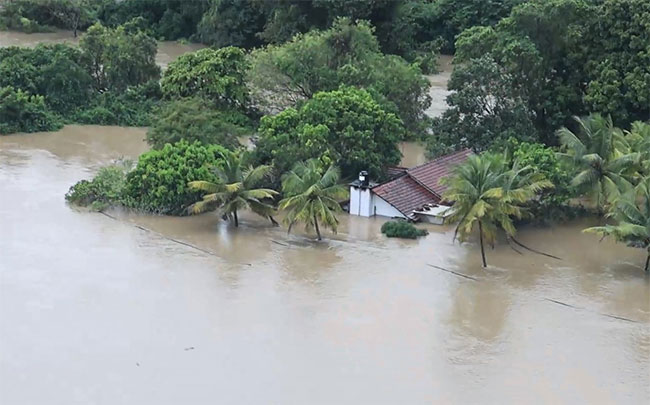
November 30, Colombo (LNW): The Disaster Management Centre has confirmed that the number of people who have lost their lives in the severe weather battering the country in recent days has risen to 193. The Badulla District has suffered the greatest tragedy, with 71 fatalities reported so far.
Authorities are still searching for at least 228 individuals who remain unaccounted for, as rescue teams continue operations across several hard-hit districts. The scale of the disaster has widened steadily, with the latest figures showing that 968,304 people from 266,114 families in 25 districts have now been impacted by the effects of Cyclone Ditwah. According to officials, numerous communities are still struggling with persistent flooding, landslides and relentless downpours.
The DMC added that 147,931 people belonging to 41,005 families have sought refuge in 1,094 emergency shelters established nationwide, many of which are operating around the clock to accommodate the steady influx of displaced residents.
In its most recent update, the Department of Meteorology reported that Cyclone Ditwah is positioned near latitude 11.1°N and longitude 80.6°E, approximately 170 kilometres north-northeast of Jaffna, and is expected to continue drifting northwards, gradually moving away from Sri Lanka.
However, the system is still exerting a significant influence on maritime conditions. Very strong winds of 50–60 km/h, with gusts reaching up to 70 km/h, are forecast over the sea areas stretching from Trincomalee to Puttalam via Kankesanthurai and Mannar, rendering these waters extremely rough at times. Winds over other sea regions are anticipated to range between 30–40 km/h.
Meanwhile, fairly strong winds of around 50 km/h may affect the coastal waters from Puttalam to Colombo via Negombo, and from Trincomalee to Hambantota via Pottuvil, making these areas fairly rough periodically. The remaining sea regions surrounding the island are expected to experience moderate conditions, the Met Department noted.