November 24, Colombo (LNW): The low-level atmospheric disturbance in the vicinity of Sri Lanka is likely to develop into a low-pressure system by tomorrow (25), and therefore, the prevailing showery conditions over the island are expected to continue during the next few days, the Department of Meteorology said in its daily weather forecast today (24).
Cloudy skies can be expected over most parts of the island.
Showers or thundershowers will occur at times in Northern, North-central and Eastern provinces. Showers or thundershowers will occur in the other areas of the island after 1.00 p.m.
Heavy falls above 100 mm are likely at some places in Northern and Eastern provinces. Fairly heavy falls above 75 mm are likely at some places in the other areas of the island.
The general public is kindly requested to take adequate precautions to minimise damages caused by temporary localised strong winds and lightning during thundershowers.
Marine Weather:
A low-pressure area has formed over South Andaman Sea area. It is likely to move west-northwestwards and intensify into a depression over South-east Bay of Bengal today (24). Navel and fishing communities are requested to be attentive to the future forecasts and bulletins issued by the Department of Meteorology in this regard.
Condition of Rain:
Showers or thundershowers will occur at several places in the sea areas around the island.
Winds:
Winds will be North-easterly or Variable in direction and speed will be (25-35) kmph. Wind speed can increase up to (50-55) kmph at times in the sea areas off the coast extending from Trincomalee to Chilaw via Kankasanthurai and Mannar.
State of Sea:
The sea areas off the coast extending from Trincomalee to Chilaw via Kankasanthurai and Mannar will be fairly rough at times. The other sea areas around the island will be slight to moderate.
Temporarily strong gusty winds and very rough seas can be expected during thundershowers.
Low-Level Atmospheric Disturbance to Develop into a Low-Pressure System: Prevailing Showery Conditions Likely to Continue (Nov 24)

MP Jeevan Thondaman Weds in Traditional Ceremony in Chennai

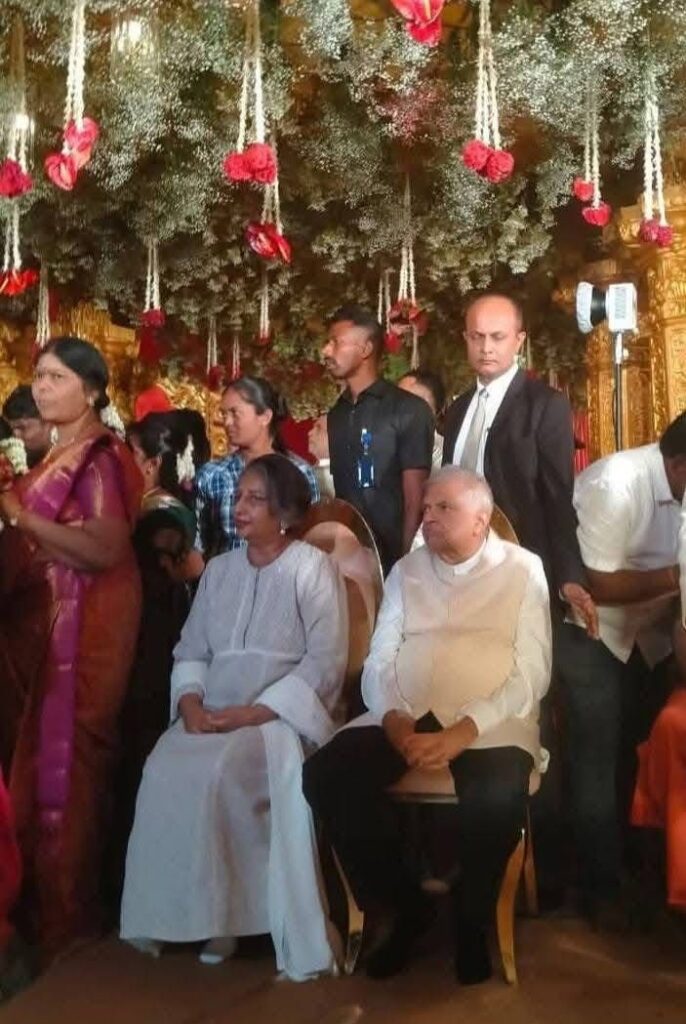
November 23, Colombo (LNW): Ceylon Workers Congress (CWC) General Secretary and parliamentarian Jeevan Thondaman tied the knot today (23) in Chennai, India, marking the occasion with a traditional and widely attended celebration.
He married R. Seethasree Nachiyar, with the ceremony held at the Arumugam Pillai Seethai Ammal College grounds, which had been transformed for the event with elaborate cultural décor and ceremonial rituals.
The wedding drew a distinguished gathering, including former Sri Lankan President Ranil Wickremesinghe, several Sri Lankan MPs, and notable figures from India’s political, business and film spheres.
Representatives of the Ceylon Workers’ Congress were also present, reflecting the close ties between the families and the organisation.
LNW adds congratulations to the newly wedded couple!
Casting the Net Wider: Sri Lanka’s Need for World-Class Ambassadors

By Roger Srivasan
Since independence from Britain, Sri Lanka has rarely witnessed a government whose rise has been greeted with such palpable relief as that led by Anura Kumara Dissanayake. To many citizens, this administration represents not merely a political transition, but a long-awaited return to integrity, accountability, and competence.
In this spirit of national renewal, it is imperative that Sri Lanka recalibrates its foreign policy ethos. Diplomacy, at its core, is the fine art of fostering understanding between nations — the subtle craft of negotiation, persuasion, and representation. A diplomat is therefore the nation’s face and voice abroad: an emissary entrusted to articulate national interests with clarity, tact, and intellectual finesse.
Why Diplomats Cannot Be Chosen Lightly For too long, appointments to diplomatic posts have been clouded by political patronage, where loyalty to personalities eclipsed loyalty to the nation. But diplomacy is not a ceremonial afterthought; it is the frontline of national reputation, investment, defence partnerships, and global engagement. To select diplomats carelessly is to weaken the very architecture of the state.
A modern Sri Lanka must choose its representatives with surgical precision. The world of international relations demands individuals who are:
• Impeccably educated, widely read, and globally aware
• Eloquent and articulate, especially in English
• Debonair in presence, persuasive in manner, and composed under pressure
• Fluent in foreign policy concepts and geopolitical dynamics
• Uncompromisingly loyal to the state, not to a party or faction
The truth is stark: home-grown candidates alone may not always possess the full suite of attributes required for the diplomatic stage. Sri Lanka must therefore widen its search — not confine itself to a narrow pool of local hopefuls or party faithful. The government must cast its net globally, seeking those with the education, exposure, and professional maturity to represent the country with distinction.
The Ideal Ambassador An ambassador is the living embodiment of a nation’s dignity — a rapier concealed in a velvet glove: refined in tone, ruthless in precision. He or she must combine intellect with charm, firmness with courtesy, and patriotism with cosmopolitan insight. A single envoy can open doors — or close them morever. Therefore… If Sri Lanka is to reclaim its rightful place in the community of nations, it must adopt a diplomatic philosophy rooted in merit, excellence, and global competence. Only then will the government’s foreign policy — and the country’s reputation — stand on a foundation worthy of a modern, forward-looking Sri Lanka.
Massive Cannabis Plantations Destroyed in Yala Sanctuary

November 23, Colombo (LNW): Police have uncovered and dismantled three extensive cannabis plantations in the Gonagan Ara region of the Yala Sanctuary during a four-day operation, officials confirmed.
Authorities reported seizing more than 200,000 cannabis plants along with over 50 kilograms of processed cannabis. The illegal crops had reportedly spread over areas measuring five acres, three acres, and two acres within the protected wildlife reserve.
All three sites were completely eradicated during the raid, with officers emphasising that the operation formed part of ongoing efforts to curb illegal drug cultivation in environmentally sensitive areas.
Sri Lanka Seeks Stronger Ties with China Amid Global Uncertainty
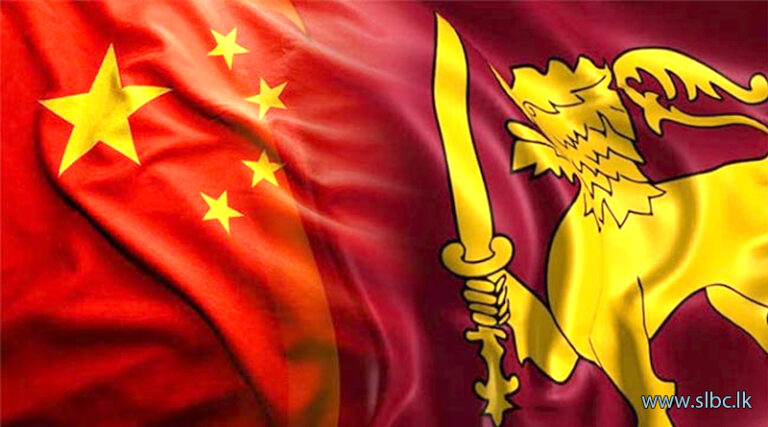
November 23, Colombo (LNW): Sri Lanka is prepared to strengthen its partnership with China on the principles of equality and mutual respect, Foreign Minister Vijitha Herath has said.
Speaking at a special event in Colombo, Minister Herath emphasised the country’s desire to expand bilateral cooperation in ways that deliver tangible benefits for both nations, particularly in the context of a rapidly changing global landscape.
The Foreign Minister also commented on China’s 15th Five-Year Plan, noting that its recommendations provide a clear roadmap for the country’s next phase of development and have boosted international confidence.
“China’s remarkable progress in areas such as poverty alleviation, scientific innovation and industrial upgrading demonstrates the value of long-term planning and consistent policy implementation,” Herath stated.
He added that Sri Lanka looks forward to translating these lessons into practical cooperation, recognising the significance of China’s steady economic growth and technological achievements as a model for future development initiatives at home.
Nine Reported Dead as Heavy Rains Trigger Floods and Landslide Alerts Across Sri Lanka
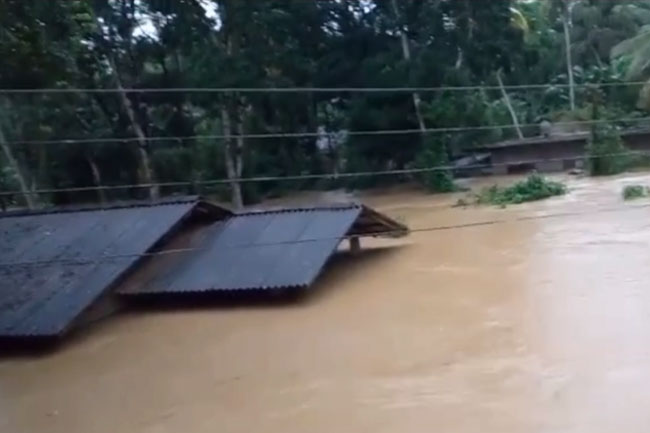
November 23, Colombo (LNW): The Disaster Management Centre (DMC) has reported that the death toll from ongoing severe weather has climbed to nine, as widespread rainfall continues to disrupt life across the country.
DMC Director Pradeep Kodippili said the prolonged downpours have caused flooding in multiple areas, while numerous incidents of rocks tumbling onto roads have been reported, creating hazards for motorists and residents alike.
Meanwhile, the National Building Research Organisation (NBRO) has extended landslide warnings for ten districts. Senior Geologist Dr Wasantha Senadeera confirmed that alerts remain in effect for several Divisional Secretariat Divisions in Colombo, Kalutara, Galle, Kandy, Kegalle, Matara, Ratnapura, Badulla, Hambantota, and Nuwara Eliya.
The Meteorological Department noted that persistent atmospheric disturbances have brought continuous rainfall to many parts of the island, with heavy showers expected to continue into the evenings. Strong winds have also caused trees to topple onto power lines along the Mapalagama–Galle main road, resulting in traffic disruptions in Nagoda.
In Matara district, flooding was reported across several areas of Deniyaya town, prompting security forces to assist residents whose daily routines were interrupted. The Baddanwala section of the Matara–Kotapala road was completely submerged, blocking passage. The Uruboku Oya also overflowed near Katuwana town overnight, inundating the town and surrounding communities.
The Matara District Relief Services Centre reported that 363 people from 100 families have been affected by the adverse weather. Additional low-lying areas and roads in Bulathsinhala, Kalutara, have also been submerged, compounding the impact of the ongoing heavy rainfall. Authorities continue to monitor the situation closely and advise residents to exercise caution.
“Nation United” Anti-Drug Raids Net Over 1,000 Arrests in a Single Day
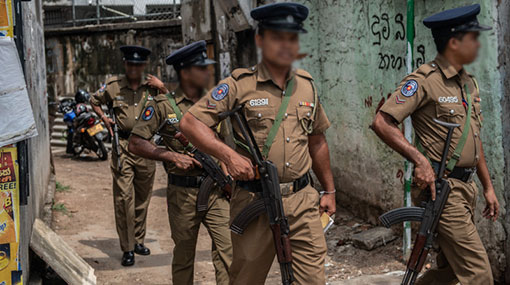
November 23, Colombo (LNW): More than a thousand people were taken into custody across the island yesterday (23) as part of the Government’s intensified “Nation United – National Drive” campaign, a sweeping operation aimed at eliminating the illegal drug trade.
According to police, the coordinated raids—carried out in multiple districts over several hours—resulted in the seizure of a significant haul of narcotics. Officers recovered around 319 grammes of heroin, over 1.5 kilogrammes of crystal methamphetamine (‘Ice’), approximately 2.5 kilogrammes of hashish, as well as quantities of cocaine and various other illicit substances.
Twenty-one suspects have been placed under detention orders to facilitate extended investigations, while a further twenty-nine individuals have been directed to rehabilitation programmes.
Police officials noted that similar operations will continue in the coming weeks as part of a sustained national effort to curb drug-related crime and strengthen community safety.
Why Sajith Made a Foolish Move?
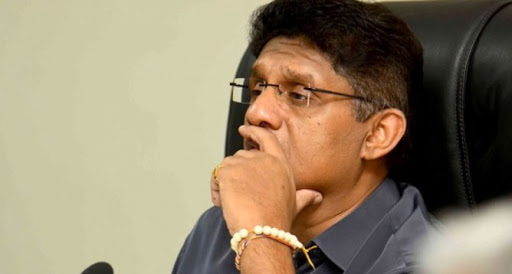
By Adolf
The recent political developments surrounding the opposition landscape reveal a strategic misstep by the Samagi Jana Balawegaya (SJB)—one that could weaken its positioning at a pivotal moment. The Nugegoda rally, organised jointly by three parties, exposed a fundamental problem: the SJB failed to assume its natural role as the principal opposition force. Instead of leading, it ceded the space to smaller parties that together command only a modest share of public support. This was, politically, a foolish move. Sajith Premadasa failed to read the public mood . He could pay the price for his indecision. In the last local government elections, the three parties that joined forces at Nugegoda collectively secured just 17.58% of the vote. By contrast, the SJB remains the second-largest political party in Sri Lanka, with the organisational strength and voter base capable of mobilising large crowds and dominating the opposition narrative. In addition the best professional team . Yet, at a moment when the government is facing public dissatisfaction, for repeated lies and deception, economic strain, and governance-related criticism, the SJB chose hesitation over leadership.
This hesitation carries consequences
Firstly, it creates a leadership vacuum within the opposition, allowing smaller groups to project themselves as the real challengers to the government. Politics abhors a vacuum. If the largest opposition party does not set the agenda, others will—regardless of their support base. The Nugegoda event demonstrated this clearly: a coalition of weaker parties seized the moment because the SJB left the space open.
Secondly, the SJB’s delay emboldens rival factions within the opposition ecosystem. The post refers to concerns that the UNP, weakened and unable to organise large rallies on its own, still plays a disruptive role by complicating alliances and offering alternative platforms for dissatisfied voters. The SJB, unlike the UNP, does not suffer from severe organisational decline. Yet its reluctance to mobilise at scale gives the impression of an uncertain or lethargic leadership strategy.
Thirdly, the SJB’s failure to act risks fragmenting the anti-government vote once more. The last decade of Sri Lankan politics repeatedly showed how divided opposition forces—regardless of ideology—pave the way for the incumbent to win comfortably. The post hints at fears that the opposition vote may splinter into clusters, enabling the “Pohottuwa” to re-emerge stronger in the next cycle. A divided opposition, even if individually loud, is collectively ineffective.
Fourth, the SJB’s passive stance undermines its credibility among its own supporters. Opposition parties thrive on momentum, visibility, and the perception of inevitability. When a party appears disengaged, supporters drift. Some migrate to louder alternatives. Others disengage entirely. The SJB’s core strength—its nationwide organisational network—risks erosion if it does not provide direction, energy, and action.
Finally, the broader electorate expects the leading opposition party to articulate grievances and solutions boldly, especially during periods of public frustration. When the SJB avoids taking the centre stage, citizens turn to whoever is willing to speak forcefully about national issues—even if those voices come from smaller political entities.
In essence, the SJB made a foolish move not because it lacked resources, popularity, or legitimacy, but because it failed to play the role the moment demanded. Politics rewards those who seize opportunities, not those who hesitate. Unless corrected quickly, this misstep could permanently shift the balance within the opposition—and determine the outcome of the next national election. Sajith Premadasa should not lose the opportunity to lead the opposition. Whoever advised Sajith Premadasa to refrain from participating in the rally from his party SJB, definitely needs his head examined.
Government Rallies Divisional Secretaries to Drive New Phase of ‘Praja Shakthi’ National Programme
November 23, Colombo (LNW): The Government convened Divisional Secretaries from across the island yesterday (22) for a comprehensive orientation session on Praja Shakthi, its flagship initiative aimed at strengthening social empowerment and ensuring that economic progress is shared more evenly among communities.
The meeting, held at the Presidential Secretariat, focused on practical implementation at the grassroots and the wider reforms required within the public sector to support the programme.
Officials were briefed on the digital platforms underpinning Praja Shakthi, their responsibilities within the national digital economy agenda, and their role in supporting the “A Nation United” campaign, which targets bribery, corruption and narcotics. The session also emphasised the importance of administrative leadership in delivering services efficiently and with transparency.
Addressing the gathering, the Minister of Rural Development, Social Security and Community Empowerment, Dr Upali Pannilage, said Praja Shakthi represents a decisive shift from fragmented poverty alleviation schemes of the past. Instead of leaving the issue to a single institution, he said the programme seeks to create a unified national movement, backed by a Presidential Policy Council and an integrated operational structure involving multiple ministries, provincial councils and local authorities. He stressed that development must come from the ground up, driven by genuine community engagement and continuous monitoring of results.
Secretary to the President, Dr Nandika Sanath Kumanayake, noted that tackling multidimensional poverty remains a key priority under the Government’s new development model. He urged public officials to recognise the responsibility they bear in ensuring that state programmes genuinely reach citizens. Highlighting rising public expectations since recent political changes, he said the public service must evolve and adopt more efficient, people-focused practices.
Also speaking at the event, Deputy Minister of the Digital Economy Eranga Weeraratne emphasised that digitisation is essential to cutting administrative costs and improving citizen services. He noted that the Government has already committed substantial funds toward digital transformation in 2026 and expects Divisional Secretariats to align fully with this national effort.
Finance Ministry Secretary Dr Harshana Sooriyapperuma outlined that Rs. 180 billion has been earmarked for rural development in the 2026 Budget, including allocations for Praja Shakthi. He said Divisional Secretaries will play a crucial role in pushing economic growth from its current 5% to the targeted 7% over the medium term.
Senior government officials, ministry secretaries and advisers contributed to the discussion, underscoring the shared view that the success of Praja Shakthi depends on effective collaboration across institutions and a shift towards modernised, citizen-centred governance. The session concluded with a renewed call for Divisional Secretaries to embrace new methods, strengthen accountability and lead the transformation expected of the public service.
Opposition Alleges Judicial Independence at Risk Amid Allegations of Political Interference
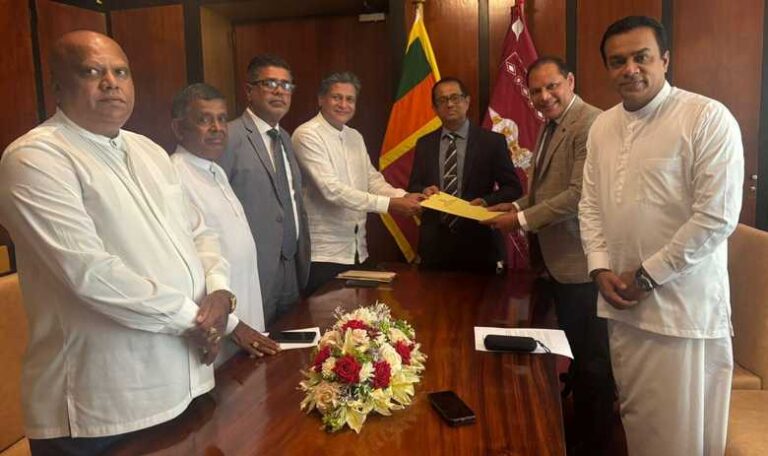
November 23, Colombo (LNW): Opposition MP Dilith Jayaweera has raised fresh concerns over what he describes as growing political pressure on Sri Lanka’s judicial system, warning that recent developments could erode public confidence in the courts.
In a strongly worded statement, Jayaweera argued that judicial independence—central to any functioning democracy—has come under strain since the present administration assumed office. He alleged that decisions regarding the appointment, transfer and removal of judges have been influenced by political actors, including instances where judges were reportedly removed at the request of the Inspector General of Police. Such interventions, he said, have no precedent and threaten the separation of powers.
“The judiciary is not an auxiliary of the police. It is a cornerstone of our constitutional framework and essential to protecting the sovereignty of the people,” he stated.
Jayaweera expressed particular concern that these developments could compromise the authority of the upper courts and diminish public trust in the justice system. As a response, he has formally asked the Speaker to establish a dedicated parliamentary committee to scrutinise the actions of the Judicial Service Commission relating to judicial appointments and career decisions.
He noted that several opposition MPs, including Opposition Leader Sajith Premadasa, have supported the initiative. Jayaweera stressed that Parliament carries a constitutional responsibility to shield the judiciary from undue influence and ensure it operates with full independence and integrity.