November 20, Colombo (LNW): A noticeable surge in cigarette use among school-aged children has been observed in recent years, according to Specialist Respiratory Physician Dr Duminda Yasaratne of the Peradeniya Teaching Hospital.
Speaking at a media forum convened by the Health Promotion Bureau, he warned that many youngsters are now picking up their first cigarette as early as 14 or 15, often out of curiosity or peer pressure.
Dr Yasaratne cautioned that taking up the habit at such a formative age dramatically heightens the risk of long-term lung problems, noting that early exposure can predispose teenagers to chronic respiratory conditions later in life.
He added that health professionals are increasingly troubled by the normalisation of smoking within certain youth circles, calling for more targeted awareness campaigns in schools and stronger community involvement to counter the trend.
Rise in Teen Smoking Sparks Fresh Health Concerns

Government Introduces Sharp Overhaul of Licence Fees for Foreign Drivers

November 20, Colombo (LNW): The Sri Lankan government has announced a sweeping revision of the charges applied to driving licences issued to foreign nationals, marking one of the most significant adjustments to the fee structure in recent years.
The updated rates were formalised through a newly issued gazette by Minister of Transport, Highways and Urban Development Bimal Rathnayake.
Under the revised scheme, the cost of a short-term one-month licence for visitors has leapt from the earlier Rs. 2,000 to Rs. 15,000 — a change officials say reflects the need to modernise administrative processes and ensure parity with international standards.
Longer-term permits have also seen substantial increases: licences valid for up to two months will now cost Rs. 21,000, while those extending to six months have been priced at Rs. 30,000. A twelve-month temporary permit for a foreign national will now set applicants back Rs. 45,000.
Renewals and replacements will come with uniform charges too, with both procedures fixed at Rs. 15,000. Ministry sources indicate that these revisions are intended to streamline processing while discouraging misuse of temporary credentials.
In a parallel move, Sri Lankans returning with foreign-issued driving licences will face a considerably higher fee for the issuance of a local licence — an increase from Rs. 3,300 to Rs. 30,000.
Foreign nationals seeking to convert an overseas licence into a Sri Lankan one will encounter an even steeper adjustment, with the charge rising from Rs. 15,000 to Rs. 60,000.
South’s New Push Against Drug Networks Set to Begin Today
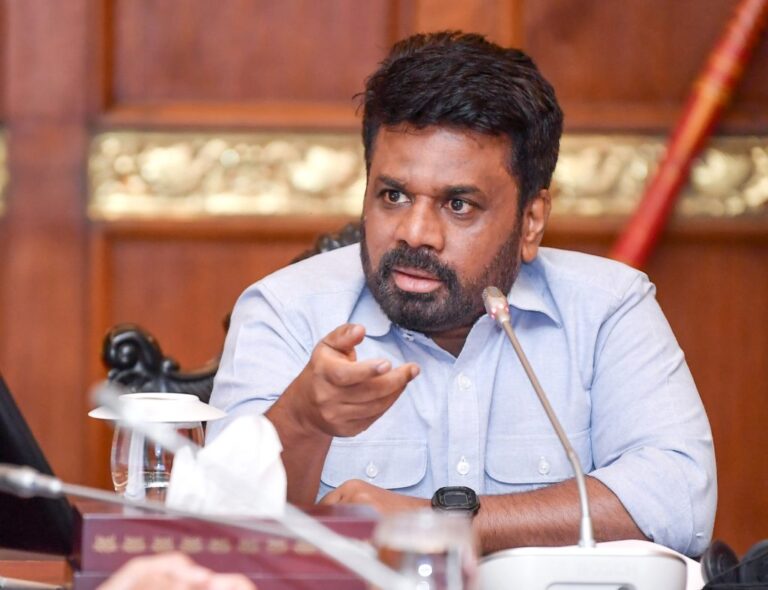
November 20, Colombo (LNW): Sri Lanka’s latest push to curb narcotics abuse is set to take centre stage in Hambantota today (20), as the Southern Provincial segment of the “A Nation United” campaign gets under way.
President Anura Kumara Dissanayake is expected to preside over the launch this afternoon at the Tangalle Public Stadium, marking a renewed national effort to clamp down on drug-related activity.
According to Public Security Minister Ananda Wijepala, this phase represents an intensified continuation of the government’s long-term strategy to dismantle drug networks and strengthen community resilience.
Officials involved in the initiative have hinted that this Southern rollout will incorporate a broader range of grassroots engagement, including youth outreach and collaborative work with local authorities, in hopes of creating a more sustained impact across the province.
The government maintains that the campaign’s expansion signals its determination to address what it considers one of the most pressing social challenges facing the country today.
Record Tax Haul Marks Milestone Year for Sri Lanka’s Revenue Authorities
November 20, Colombo (LNW): Sri Lanka’s Inland Revenue Department (IRD) has reported its most successful year on record, surpassing all previous tax-collection figures and offering a rare lift to the country’s strained public finances.
By November 17, the IRD had amassed roughly Rs. 2,002 billion in revenue—comfortably overtaking last year’s total of Rs. 1,942,162 million. Officials estimate the year-on-year rise at just over Rs. 60 billion, a development hailed as a significant boost to government coffers.
Commissioner General R. P. H. Fernando remarked that the department’s efforts had “materially strengthened the state’s financial footing”, noting that improved compliance, updated digital systems, and more targeted enforcement had contributed to the record figures.
Several senior officials suggested that the department’s outreach campaigns—aimed at encouraging voluntary compliance among small and medium-sized enterprises—also played a quiet but meaningful role.
In a parallel achievement, Sri Lanka Customs confirmed last week that it had exceeded its revenue target for 2025 well ahead of schedule. By November 12, the agency had collected approximately Rs. 2,117.2 billion, edging past its target of Rs. 2,115 billion. Some observers say the strong performance from both agencies may indicate early signs of stabilisation in trade activity and domestic economic behaviour.
Government representatives are expected to reference these results when presenting updated fiscal projections later in the year.
Fresh Low Pressure Area likely to Form Over Southeast Bay of Bengal: Public Urged to Exercise Caution (Nov 20)

November 20, Colombo (LNW): A fresh low pressure area is likely to form over southeast Bay of Bengal around 22nd of November, and this may intensify further and likely to move near the Northern coast of Sri Lanka, the Department of Meteorology said in its daily weather forecast today (20).
General public is requested to be attentive to the future forecasts and bulletins issued by the Department of Meteorology in this regards.
Several spells of showers will occur in Northern, North-central provinces and Trincomalee district.
Showers or thundershowers will occur at several places in the other areas of the island after 1.00 p.m.
Misty conditions can be expected at some places in Sabaragamuwa, Central, Uva, Western and Southern provinces during the early hours of the morning.
The general public is kindly requested to take adequate precautions to minimise damages caused by temporary localised strong winds and lightning during thundershowers.
Marine Weather:
Navel and fishing communities are requested to be attentive to the future forecasts and bulletins issued by the Department of Meteorology, considering the fresh low pressure area pending development over southeast Bay of Bengal.
Condition of Rain:
Showers or thundershowers will occur at several places in the sea areas off the coast extending from Trincomalee to Puttalam via Kankasanthurai. Showers or thundershowers will occur at a few places in other sea areas around the island during the afternoon or night.
Winds:
Winds will be north-easterly or Variable in direction and speed will be (20-30) kmph. Wind speed can increase up to 40 kmph at times in the sea areas off the coast extending from Kankasanthurai to Puttalam via Mannar.
State of Sea:
The sea areas off the coast extending from Kankasanthurai to Puttalam via Mannar will be moderate at times. The other sea areas around the island will be slight.
Temporarily strong gusty winds and very rough seas can be expected during thundershowers.
Ceylon Dollar Bond Fund Shines amid Revival of Sovereign Confidence
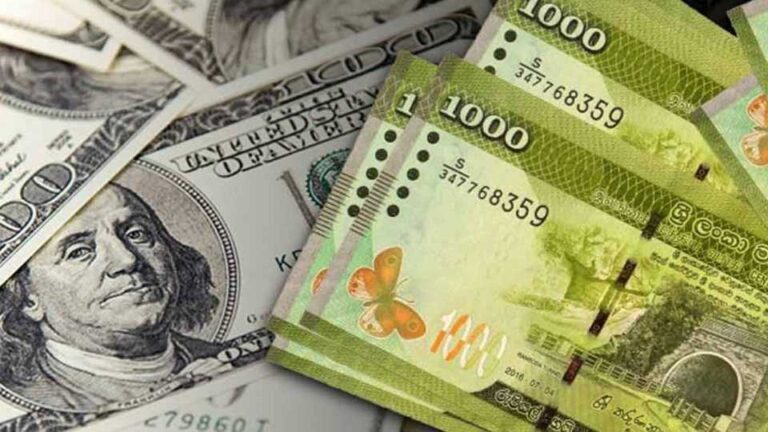
Sri Lanka’s dollar bond market once battered by default and investor flight appears to be regaining traction, with the Ceylon Dollar Bond Fund (CDBF) posting an impressive 12.3 percent U.S. dollar return year-to-date as of mid-September 2025.
Managed by Ceylon Asset Management (CAM) and backed by Deutsche Bank as its Trustee and Custodian, the fund’s performance underscores a measured comeback in investor confidence toward the country’s restructured debt, a high official of the Sri Lanka Insurance Corporation (SLIC), a stake holder of the fund revealed.
CDBF, an open-ended fund regulated by the Securities and Exchange Commission of Sri Lanka (SEC), invests exclusively in Sri Lankan International Sovereign Bonds (ISBs) and selected bank-guaranteed dollar securities listed on global exchanges.
It shields investors from rupee currency risk while allowing capital and income repatriation in foreign currencywhile .the social media is being carried out an extensive promotion campaign to lure investors.
CAM attributes the surge in returns to the rally in ISB prices following Sri Lanka’s successful debt restructuring in December 2024 and improving macroeconomic indicators.
“Sri Lanka’s macroeconomic stability has supported the fund’s strong performance,” said CAM Managing Director Dulindra Fernando, noting that rebuilding foreign reserves to US$ 6.2 billion, easing inflation, and stabilizing the rupee have restored investor optimism.
Foreign inflows from tourism, remittances, and FDIs have further bolstered sentiment, while the Central Bank’s effective policy management has guided the economy out of default.
The Central Bank Governor Dr. Nandalal Weerasinghe recently said Sri Lanka could see its sovereign rating upgraded from ‘CCC+’ to ‘B-’ by 2027, a milestone that could open the door to fresh capital inflows.
Over the past ten months, CDBF’s net asset value (NAV) has steadily appreciated, tracking the strengthening of restructured ISBs.
Market analysts note that the average yield on Sri Lankan sovereign bonds has narrowed from 15 percent in January to around 10 percent by October, reflecting reduced default risk.
According to Deutsche Bank, which safeguards the fund’s foreign assets, “the recovery in sovereign bonds has mirrored Sri Lanka’s improving fiscal discipline and investor confidence.”
Meanwhile, Sri Lanka Insurance Corporation (SLIC) a key shareholder in CAM acknowledged that the fund’s performance demonstrates “the potential for disciplined investment in restructured sovereign assets,” though it stressed the need for continuous regulatory vigilance to ensure investor protection.
According to Verité Research, the new GDP-linked Macro Linked Bonds (MLBs) could yield up to 10.3percent per annum if the country’s GDP growth surpasses 3 percent between 2025 and 2027. Analysts at Standard Chartered Bank assign a 67.5percent probability of meeting this growth-linked threshold, reinforcing the upside potential for investors in CDBF.
Hitherto, the Central Bank of Sri Lanka (CBSL) remains cautious. While acknowledging such funds’ role in attracting foreign capital, it maintains that its duty lies in ensuring systemic stability, not endorsing individual funds.
It emphasised that Personal and Business Foreign Currency Accounts cannot be directly invested in CDBF and that banks have been instructed accordingly.
But regulators caution that just because it is marketed so heavily to the Sri Lankan diaspora and South Asian investors does not mean dollar bond funds do not carry risk: returns can be affected by a rise in global interest rates, increased market volatility, or geopolitical changes.
For many investors, however, CDBF represents a symbol of Sri Lanka’s gradual return to international financial respectability.
As one Deutsche Bank analyst summarized, “The numbers tell a story not of exuberance, but of cautious recovery. The Ceylon Dollar Bond Fund’s success mirrors Sri Lanka’s own attempt to rebuild trust, dollar by dollar.
Sri Lanka beer market balances tax burden with tourist-driven demand
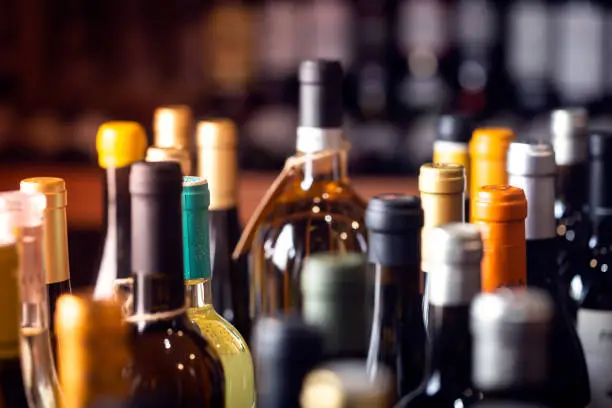
Sri Lanka’s beer sector is navigating a delicate balance between resilient demand and heavy taxation, as new data show modest production gains but flat sales revenue in 2025.
The industry, dominated by Lion Brewery (Ceylon) PLC and Distilleries Company of Sri Lanka (DCSL) – which last year acquired Heineken Lanka – remains one of the government’s largest tax contributors.
In the financial year ended March 2025, Lion Brewery alone generated RS 123.2 billion in revenue, paid nearly RS 97 billion in taxes – equal to about 3 percent of state tax revenue – and reported a net profit of RS 9.5 billion, official financial statement data showed. .
Yet these figures mask signs of strain. Following the January 2025 excise hike, which raised levies per litre to Rs 333 for beers with less than 5percent ABV, Rs 400 for 5–12 percent ABV, and Rs 446 for those with higher ABV, volumes dropped as legal liquor “sailed beyond affordability levels,” according to company reports. (ABV, or Alcohol by Volume, is the standard measurement of alcohol content, the percentage of pure alcohol in a beverage.)
The government added to the pressure in April by suggesting an automatic excise indexation device which would link duty increases with inflation in an effort to generate real-term revenues.
While praised by policymakers for its volatility, brewers warn that higher prices risk spurring a consumer exodus to illegal beverage alcohol and slashing industry volumes and state revenues.
Production trends suggest a tentative rebound. The Index of Industrial Production (beverages category) grew 6.4 percent year-on-year in the second quarter of 2025, with a sharp 15.9 percent surge in April offsetting weaker output in May.
However, the largest listed brewer’s June quarter results underline demand fragility: Lion’s revenue slipped 2percent year-on-year to Rs29 billion, though profit rose 10 percent on tighter cost control and product mix management.
A crucial offsetting factor has been the rebound in tourism, a major driver of on-trade beer consumption.
July 2025 tourist arrivals hit 200,244, up 6.6percent year-on-year, bringing total visitors past 1.3 million by end-July and nearing 1.5 million by mid-August. Hotels, bars, and restaurants report stronger beer sales, particularly in the premium and international lager categories where Heineken and Tiger – now marketed by DCSL – compete directly with Lion’s portfolio.
Analysts suggest the remainder of 2025 will hinge on the interaction of these forces. Base-case forecasts see low single-digit volume growth, supported by tourism and stabilising incomes, but mid-single-digit revenue growth largely driven by higher prices rather than stronger consumption.
The risks remain tilted to the downside. Another round of excise indexation before year-end, coupled with intensifying competition from DCSL-Heineken, could squeeze margins and volumes further.
At the same time, substitution toward untaxed or illicit alcohol threatens to undercut both legitimate brewers and state coffers.
For now, Sri Lanka’s beer industry stands as a fiscal workhorse and a tourist beneficiary, but its recovery is capped by taxation that may be approaching the limits of consumer tolerance
Expert Warns of dismantling tariffs and para-tariffs Risking Economic Stability
Sri Lanka must not rush into dismantling tariffs and para-tariffs under the newly introduced Economic Stabilisation Act, No. 45 of 2024, until the country rebuilds “safe and sustainable” levels of foreign exchange reserves, a leading industry expert has cautioned.
Ceylon United Business Alliance (CUBA) Industry Sub-Committee Chairman and former KPMG auditor M.R. Jeffrey warned that while the Act’s goal of modernising the tariff system is commendable, any unilateral opening of the economy would be dangerously premature in the current fragile environment.
Jeffrey argued that tariff reforms should not move ahead unless regional economies adopt similar frameworks, noting that Sri Lanka cannot afford to liberalise when neighbouring countries continue to shield their industries with robust protectionist policies.
“We are still under severe forex pressure,” he said. “If we remove protective duties now, cheap imports will flood the market, the rupee will come under renewed attack, and our domestic industries which we are struggling to revive will face further collapse.”
He stressed that under WTO Article XXVIII and the Common But Differentiated Responsibilities (CBDR) principle, Sri Lanka has every right to adopt a gradual and strategic path toward liberalisation rather than emulate the accelerated timelines expected of wealthier nations.
Para-Tariff Distortions: Politically Favoured Sectors vs. Neglected Industries
Jeffrey highlighted deep historical distortions in the country’s para-tariff structures, pointing out that earlier administrations provided extraordinary protection to sectors such as tiles, aluminium, and hardware often linked to politically connected interests with para-tariffs ranging from 40% to 75%.
In sharp contrast, one of Sri Lanka’s largest domestic consumption industries the $2 billion clothing sector received only 5% to 10% protection. He cited the example of imported denim fabric, which faces a mere Rs. 200 para-tariff per metre, despite Sri Lanka having the capability to produce it competitively.
“This imbalance distorts market competition, discourages local manufacturing, and rewards import-heavy business models,” he said. “Such a system is economically indefensible.”
Jeffrey added that Sri Lanka must abandon politically motivated tariff protection and move toward a uniform, transparent, and rational tariff band, similar to the 25–35% protection range used by most developing economies.
Call for WTO-Compliant Safeguards
Rather than blindly cutting tariffs, Jeffrey urged policymakers to adopt WTO-permitted non-tariff measures including stricter quality standards, licensing frameworks, and safeguard clauses that protect domestic industries without breaching international trade commitments.
He insisted that any future tariff liberalisation must be linked to a foreign reserve threshold, ensuring that reforms do not undermine economic stability.“Economic sovereignty begins with economic stability,” he emphasised.
The CUBA Industry Sub-Committee continues to advocate for evidence-based reforms across apparel, footwear, industrial materials, and related sectors.
Sri Lanka Tourism Booma, amidst Revenue Bust and : Mismanaged Agencies
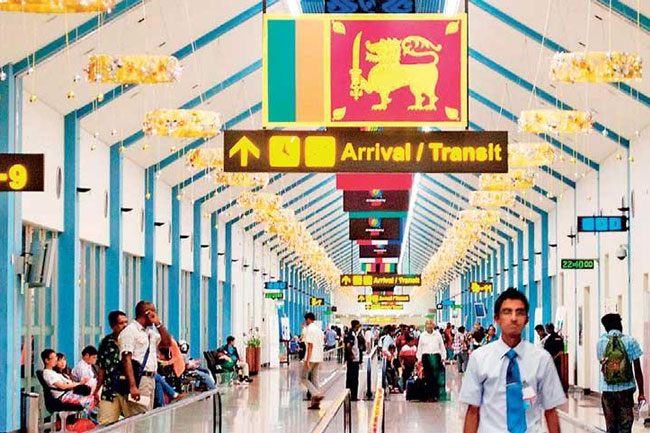
Sri Lanka may be celebrating record-breaking tourist arrivals, but behind the glossy numbers lies a stark truth: the state-run tourism promotion machinery is failing to convert footfalls into meaningful economic value. Despite October 2025 marking the highest visitor count ever recorded for that month, earnings remain anaemically low an indictment of amateur planning, inexperienced leadership, and institutions obsessed with arrival statistics rather than attracting high-spending travellers.
According to the Central Bank of Sri Lanka, tourism earnings in October rose by a negligible 0.3% year-on-year, reaching just US$186.1 million. The figure is shockingly low compared to US$287.4 million earned in October 2018, when fewer tourists generated far more revenue. This widening mismatch exposes the core weakness of Sri Lanka’s tourism strategy: empty promotional slogans instead of targeted, value-driven marketing.
The country welcomed 165,193 visitors in October, a 22% increase over last year and even higher than the 153,123 arrivals recorded in 2018. Yet the revenue picture remains bleak. The authorities’ fixation on arrival numbers has overshadowed a more crucial metric spending power. With average daily tourist spending stuck at an unimpressive US$171, Sri Lanka continues to attract low-budget travellers rather than the high-value segments it desperately needs.
The earnings trend across the year paints an equally troubling picture. July revenue fell 3% to US$318.5 million, August dropped 8.2% to US$258.9 million, and September managed only a timid 1% increase to US$182.9 million. Even January the best month of 2025 generated only US$400.6 million, the highest since 2020 but still far below global tourism benchmarks.
For the first ten months of 2025, the sector brought in US$2.65 billion, a modest 4.9% improvement from last year. Yet this figure is still 33% below the earnings of 2018, when Sri Lanka collected US$3.53 billion over the same period and ultimately recorded its highest-ever annual tourism earnings of US$4.38 billion.
Despite this glaring underperformance, the state tourism institutions continue to operate without strategic direction. Industry insiders point to leadership dominated by politically appointed individuals lacking professional expertise. Their plans often underwhelming, outdated, or hastily assembled—fail to target high-spending markets such as Europe, East Asia, or the Middle East. Instead, authorities boast of raw arrival numbers while ignoring the more important task of increasing per-tourist revenue.
With only two months left in the year, Sri Lanka faces an almost impossible climb to meet its US$5 billion revenue target. To get there, the country would need to generate over US$2.34 billion in November and December more than four times its current monthly earnings. Tourism experts dismiss this as “unrealistic” given the poor demand momentum and lack of strategic promotional efforts.Until Sri Lanka replaces its incompetent tourism leadership and adopts a serious, high-yield strategy, the nation will remain trapped in a self-inflicted paradox: millions of tourists arriving, but the economy barely feeling their presence
The Finnish Formula for Joy: Lessons for a Happier Sri Lanka
When people trust that institutions are fair, that the police are honest, and that their neighbours will not exploit them, they feel secure
The freedom from fear of catastrophe allows people to take healthy risks and pursue personal fulfillment
Finland’s education system is globally renowned not just for its academic results, but for its emphasis on equity, practical life skills, and teacher respect
Finally, the Finnish recipe includes a powerful meaning in life. This often stems from a strong work-life balance, high participation in hobbies, cultural activities, and volunteerism, and the time afforded by their efficient society to focus on family, friends, and personal passions
Finland has consistently been ranked the world’s happiest nation, a title it has held for several years running in the UN’s World Happiness Report. This remarkable achievement isn’t attributed to a single factor but is a deeply rooted societal construct built upon strong pillars of trust, security, nature, excellent education, discipline, respect for the law, mutual respect, and a profound sense of meaning in life. Understanding this “Finnish Recipe” offers profound insights into how a vibrant, culturally rich nation like Sri Lanka could embark on its own journey toward becoming a truly happy and prosperous society.
Unpacking the Finnish Pillars of Happiness
The core of Finnish happiness lies in a combination of pragmatic societal structures and cultural values that prioritise collective well-being and individual freedom.
Trust and Security: The Foundation of Society
At the heart of Finnish society is an extraordinarily high level of social trust. Finns generally trust their government, their institutions, and, perhaps most importantly, each other. This pervasive trust minimises friction and anxiety in daily life. When people trust that institutions are fair, that the police are honest, and that their neighbours will not exploit them, they feel secure. This security isn’t just about low crime rates, but also about economic security provided by a robust welfare state. The system ensures that basic needs—healthcare, education, and unemployment support—are met, creating a powerful safety net that reduces the paralysing stress of potential failure or misfortune. The freedom from fear of catastrophe allows people to take healthy risks and pursue personal fulfillment.
Nature and Sisu: A Profound Connection
Finns maintain an exceptionally close attachment to nature. Surrounded by vast forests and thousands of lakes, nature is not just a backdrop but an integral part of life. The concept of “Everyman’s Right” (Jokamiehenoikeus) allows anyone to walk, ski, cycle, or camp freely on any land, regardless of ownership, provided they don’t cause harm or disturb others. This connection is restorative, mitigating stress and promoting physical health. Furthermore, the national trait of Sisu—a unique Finnish term often translated as stoic determination, grit, and perseverance in the face of adversity—works hand-in-hand with this nature connection. Sisu is the inner strength that allows Finns to endure long, dark winters and tough times, knowing that they can rely on their own resilience and the restorative power of their environment.
Excellence in Education and Civilization
Finland’s education system is globally renowned not just for its academic results, but for its emphasis on equity, practical life skills, and teacher respect. Education is entirely free, from pre-school to university, ensuring that a child’s success is not dictated by their parents’ wealth. The system prioritises play, shorter school days, and minimal homework in the early years, fostering a lifelong love of learning and curiosity, rather than relentless competition. This, combined with a high level of civilization—meaning well-functioning public services, clean cities, and efficient infrastructure—creates an environment where daily life is predictable, comfortable, and conducive to personal growth.
Discipline, Respect, and Meaning in Life
The Finnish approach is underpinned by a quiet but firm discipline and respect for the law. High compliance with rules, from traffic laws to tax obligations, is seen not as an imposition, but as a necessary contribution to the well-being of the community. This mutual respect extends to honouring others’ personal space and time, leading to a less confrontational and more harmonious social atmosphere. Finally, the Finnish recipe includes a powerful meaning in life. This often stems from a strong work-life balance, high participation in hobbies, cultural activities, and volunteerism, and the time afforded by their efficient society to focus on family, friends, and personal passions. Happiness, for Finns, is less about fleeting euphoria and more about quiet contentment derived from a life that is stable, meaningful, and lived in harmony with others and nature.
The Sri Lankan Context: Challenges and Aspirations
Sri Lanka is a nation blessed with immense natural beauty, a rich cultural heritage stretching back millennia, deeply ingrained family values, and a naturally warm, hospitable people. Yet, recent years have seen profound economic and political challenges that have severely eroded public confidence and happiness. Widespread corruption, political instability, crippling debt, and a lack of social mobility have created an environment of anxiety and disillusionment.
To transition from this state of instability to a truly happy and sustainable nation, Sri Lanka must strategically adopt and adapt the core principles of the Finnish model, leveraging its own unique strengths.
The 10-Point Blueprint for a Happier Sri Lanka
Making Sri Lanka a happy nation requires a generational commitment to systemic reform and a profound cultural shift. It is not about simply copying Finland, but about translating its principles into a workable Sri Lankan context.
Rebuilding Trust and Establishing the Rule of Law (The Anchor)
- Zero Tolerance for Corruption: This is the most critical first step. Trust in institutions is impossible when corruption is endemic. Sri Lanka must establish truly independent bodies with real power to investigate and prosecute corruption at all levels, regardless of political affiliation.
- Strengthening the Judiciary and Police: The justice system must be perceived as fair, efficient, and equally applied to all citizens. The police force must transition from being perceived as an instrument of political power to a service dedicated to community safety and law enforcement with respect and integrity.
- Transparency in Governance: Government spending, procurement, and decision-making must be made fully transparent and accessible to the public, fostering accountability and rebuilding faith.
Investing in World-Class, Equitable Education (The Engine)
- Focus on Quality, Not Just Quantity: While literacy rates are high, the education system must be reformed to emphasise critical thinking, practical skills (financial literacy, vocational training), and emotional intelligence, rather than rote memorization.
- Dignifying the Teaching Profession: Teachers must be highly trained, well-paid, and respected as the key architects of the nation’s future, ensuring the best minds are drawn to the profession.
- Reducing the Burden of Examinations: Move away from the crippling, hyper-competitive exam-based system, which is a major source of stress, and adopt a more holistic assessment model, mirroring global best practices.
Prioritising Environmental Stewardship (The Soul)
- Reclaiming the “Pearl of the Indian Ocean”: Sri Lanka is defined by its beaches, forests, and unique biodiversity. A national policy must protect natural resources fiercely, enforce waste management, and combat deforestation and pollution, especially in coastal areas and sensitive ecological zones.
- Integrating Nature into Daily Life: Promote and protect urban green spaces, public parks, and access to natural areas, allowing the island’s inherent beauty to serve as a restorative force for its citizens, much like Finland’s forests.
Fostering Civic Discipline and Mutual Respect (The Glue)
- Promoting Civic Responsibility: Introduce mandatory, sustained public awareness campaigns focusing on simple civic responsibilities: traffic laws, proper waste disposal, queueing, and respecting public property. Compliance must be encouraged through education and fair, consistent enforcement.
- Celebrating Diversity: Actively promote and teach the value of the island’s multi-ethnic and multi-religious identity. Mutual respect and understanding across communities are fundamental to long-term national harmony and happiness.
- Securing Economic Stability and Social Safety Nets (The Shield)
- Beyond Growth: Focus on Equity: Economic policy must prioritise lifting the lowest income brackets and closing the vast wealth gap. Sustainable economic growth must be paired with job creation, fair wages, and worker rights.
- Strengthening the Safety Net: While a comprehensive welfare state like Finland’s is a long-term goal, Sri Lanka must immediately enhance targeted social safety nets for the poor, the elderly, and those with disabilities, ensuring no citizen is left without basic sustenance, thereby reducing catastrophic personal risk.
- Cultivating a Meaningful Work-Life Balance (The Purpose)
- Productivity Over Presence: Encourage employers to focus on output and efficiency rather than long, ineffective hours. Promote flexible work arrangements where feasible, allowing citizens time for family, leisure, and personal pursuits—the core ingredients of long-term contentment.
- The Power of Community and Seva (Service): Channel the inherent Sri Lankan culture of Seva (selfless service) and Dansala (community sharing) into structured volunteerism, which provides individuals with a tangible sense of purpose and contribution to their community.
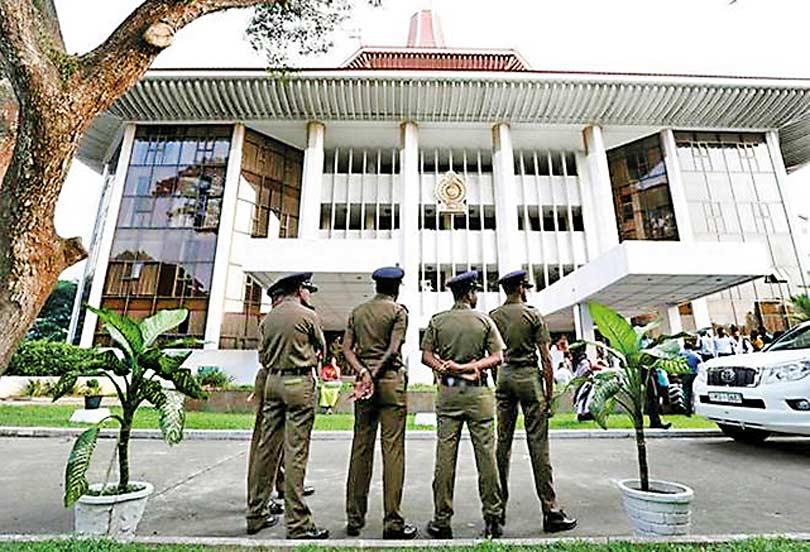
Strengthening the Judiciary and Police: The justice system must be perceived as fair, efficient, and equally applied to all citizens
Democratizing Public Services (The Convenience)
- Efficiency in Government: Simplify bureaucratic processes. Government services (e.g., obtaining documents, permits) should be efficient, digitized, and free from unnecessary delays and ‘red tape,’ reducing one of the most common daily frustrations for citizens.
- Investing in Public Transport: A modern, safe, and reliable public transportation system (trains, buses) is a great equalizer, improving economic access and reducing daily stress and traffic congestion, which severely impact quality of life in major urban centers.
Promoting Mental Health and Sith Sathuta (Inner Peace)
- Destigmatizing Mental Health: Launch national campaigns to de-stigmatize mental health issues.
- Accessible Counseling: Integrate mental health education and accessible counseling services into the public healthcare and school systems, teaching citizens the skills to manage stress and cultivate inner peace (Sith Sathuta), a concept deeply resonant with Buddhist and other spiritual traditions on the island.
Harnessing the Power of Youth and Innovation (The Future)
- Empowering the Next Generation: Create platforms for youth voices to be genuinely heard in policy-making. Harness their energy and digital literacy to drive innovation, entrepreneurship, and new, ethical business models.
- Reversing the Brain Drain: Create an attractive, stable environment (economically and politically) that incentivizes the highly skilled diaspora and local talent to stay or return, by offering competitive opportunities rooted in ethical governance.
Leadership by Example (The Call to Action)
- Servant Leadership: Leaders at all levels—political, business, religious, and community—must embody the values of integrity, humility, and service. A nation cannot thrive if its leaders do not lead by the moral example of austerity, honesty, and dedication to the common good.
Conclusion: The Journey to Freedom and Happiness
- The Finnish success story is a testament to the fact that happiness is not a commodity, but the natural outcome of a well-functioning, ethical, and equitable society. For Sri Lanka, the journey is one of restoration and re-centering. It requires moving away from the short-term gains of corruption and instability and towards the long-term dividend of national character.
The “Finnish Recipe” is not just a list of ingredients; it is a social contract based on the simple premise that every citizen deserves to live a life free from existential fear, with access to nature, education, and justice. By prioritizing Trust over personal gain, Equity over hierarchy, and Discipline over chaos, Sri Lanka can begin to harness its extraordinary potential.
The ultimate goal is not just economic recovery, but achieving true Nidahas—a profound freedom from suffering and anxiety, leading to a state of collective, sustainable happiness. This task belongs to every Sri Lankan, from the highest office to the individual citizen choosing to respect a traffic light or keep their street clean. By upholding the highest standards of civic virtue, Sri Lanka can transform its inherent warmth and natural beauty into the most enviable title of all: The Happiest Nation in the Indian Ocean.
“PEACE COMES FROM WITHIN. DO NOT SEEK IT WITHOUT”(Lord Buddha)
(The writer, Major General Dr. Boniface Perera is a battle hardened Infantry Officer who served the Sri Lanka Army for over 36 years, dedicating 20 of those to active combat. In addition to his military service, Dr. perera is a respected International Researcher and Writer, having authored more than 200 research articles and 16 books. He holds a PhD in economics and is an entrepreneur and International Analyst specialising in National Security, economics and politics. He can be reached at [email protected])