November 17, Colombo (LNW): Stargazers across Sri Lanka are set to witness the Leonids meteor shower over the next two nights, promising a dazzling celestial display.
The annual event is expected to be clearly visible to the naked eye, making it accessible to anyone with a clear view of the night sky—no telescopes or special instruments are necessary.
Dr Gihan Weerasekara, a senior lecturer in astronomy, advised that the peak viewing times will be around midnight tonight and again in the early hours of tomorrow, offering an excellent opportunity for enthusiasts and casual observers alike to catch the fleeting streaks of light.
Leonids Meteor Shower to Dazzle Skies Over Sri Lanka

GMOA Delegation Holds Talks at Presidential Secretariat Amid Industrial Action
November 17, Colombo (LNW): A delegation from the Government Medical Officers’ Association (GMOA), which launched a trade union protest earlier today, has arrived at the Presidential Secretariat to engage in high-level discussions.
The meeting is taking place under the direct oversight of President Anura Kumara Dissanayake, with several senior GMOA officials reportedly participating in talks aimed at resolving the doctors’ key demands.
Minister Nalinda’s Duplicity: The Cracks in the JVP–NPP Narrative
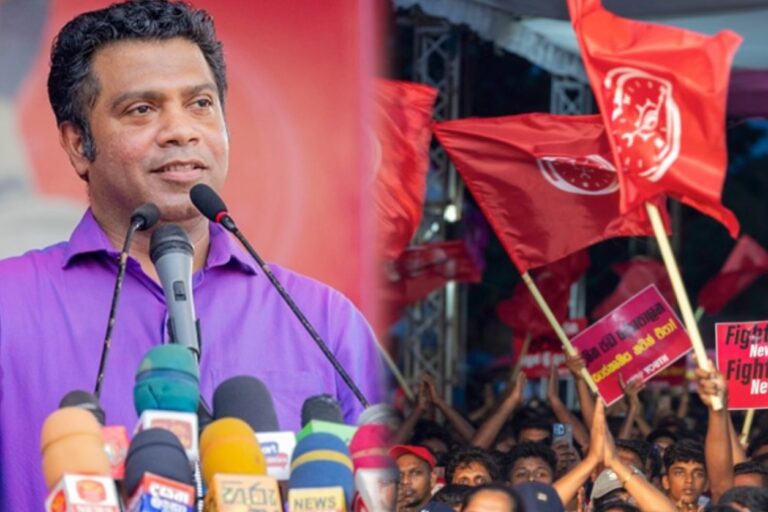
By Adolf
The duplicity within the JVP–NPP government has now become a running joke among the public. What was once marketed as a movement of integrity, simplicity, and sacrifice is steadily being exposed as a political project built on half-truths, selective narratives, and theatrics. A recent example was their claim that former President Ranil Wickremesinghe had 39 advisors. What they conveniently failed to mention was how many of those advisors worked without pay and often travelled at their own expense. Even more ironic is that Duminda Hulangamuwa, who supported Wickremesinghe, now serves as an “economic advisor” to President Anura. Does he travel at his own expense? And since when does a tax advisor become an economic advisor? These contradictions reveal a government more focused on smearing predecessors than delivering results.
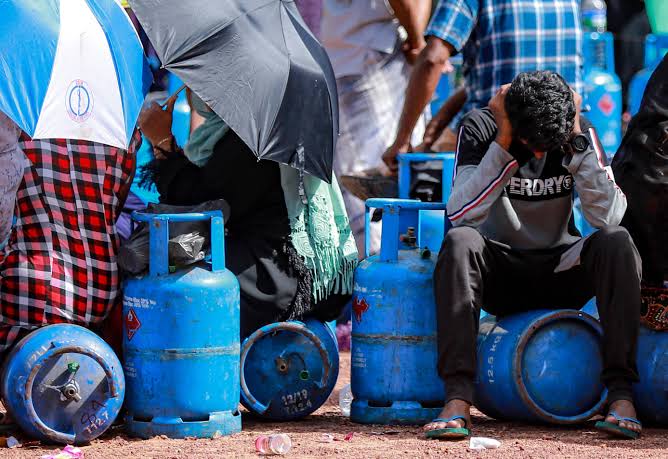
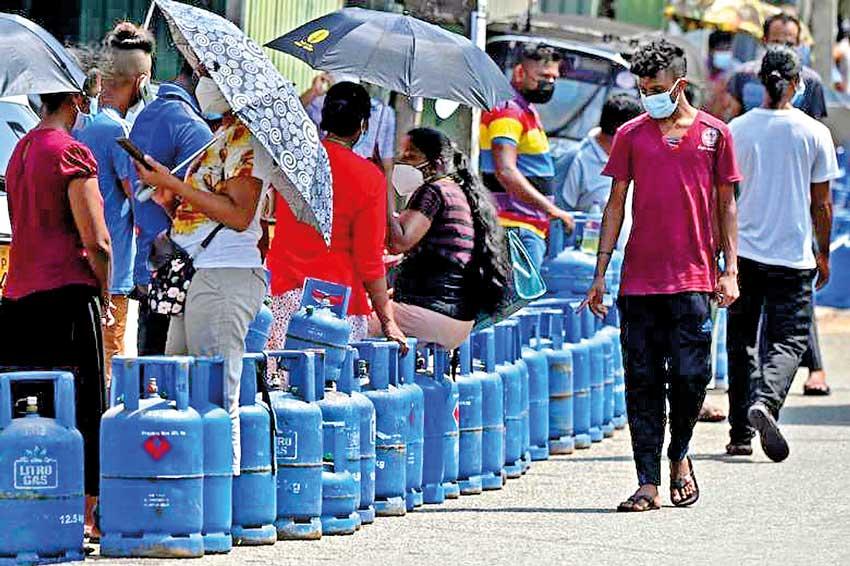
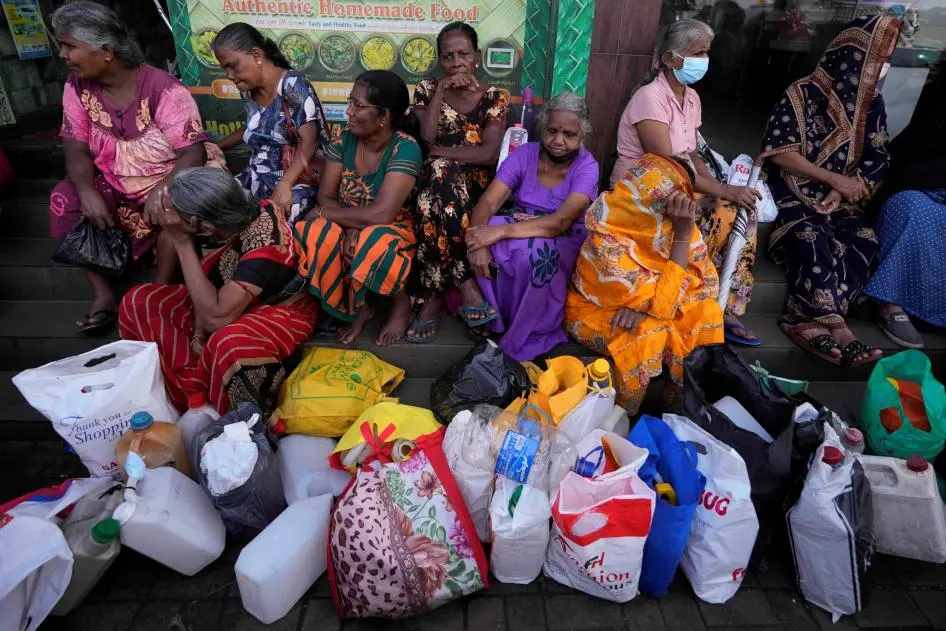
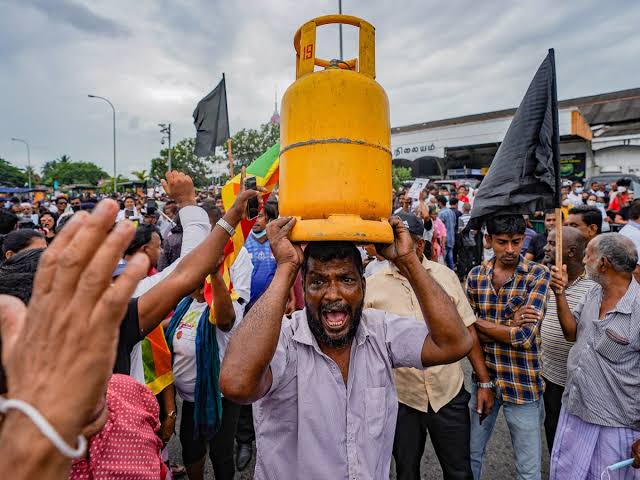
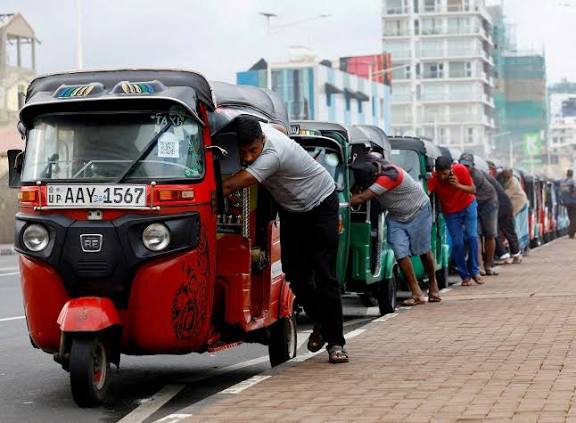
NPP government claim they fixed this also; what a joke?
From the outset, the JVP leadership projected themselves as champions of the ordinary citizen. They promised to live simply, travel simply, and lead by example. But, as MP Sujewa Senasinghe recently revealed, the reality is far different. Minister Nalinda and other senior figures who pledged to fly economy and avoid privileges have quietly upgraded their comforts, taking full advantage of state resources while lecturing the public on austerity.
The inconsistency is glaring. Sunil Handunnetti once dramatically claimed he wore torn underwear as a symbol of personal sacrifice. Today, he insists the poor must not depend on the government—an abrupt shift from populist humility to ideological detachment. This transformation isn’t merely ironic; it exposes the hollowness of their earlier public performances.
Another recent incident amplified this pattern of doublespeak. A team of policemen was dispatched—at state expense—to “verify” reports of a former president attending a university event. The government then claimed the visit was fabricated. But if it was fake, how did the former president attend the ceremony? The episode laid bare both administrative chaos and a political appetite for spectacle. This government seems far more interested in headline-chasing inquiries than in delivering steady, responsible governance.
Meanwhile, the NPP is losing cooperative elections across the country. These elections are closest to grassroots sentiment, and the results tell a clear story: frustration, disillusionment, and waning trust. Running the government strictly on the IMF’s austerity framework, combined with constant witch-hunts for public consumption, is eroding whatever goodwill they initially had. The theatrics may energize their diehard supporters, but they do nothing to tackle economic hardship or institutional drift.
The Prime Minister’s behaviour encapsulates this contradiction. He pledged to travel by bus and embody the “common man.” Instead, he began with a double cab and now travels in a Maybach Benz with a large security contingent. The contrast between words and actions could not be sharper. Anura Kumara Dissanayake is no different; his conduct mirrors the same pattern of preaching simplicity while embracing privilege.
If the NPP truly wishes to embody the values they claim to represent, they should learn from the poorest president the world ever had — José “Pepe” Mujica of Uruguay — who continued to drive his old Volkswagen Beetle even while serving as head of state. That was authenticity. What the JVP–NPP offers today is mere performance. Until they align their rhetoric with their behaviour, their credibility will continue to crumble — one contradiction at a time.
New Zealand Delegation Strengthens Ties with Sri Lanka During Insightful Week-Long Visit
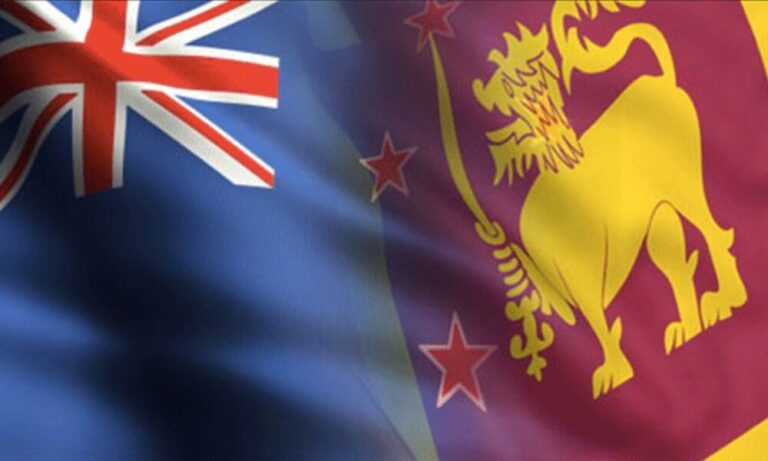
November 17, Colombo (LNW): A New Zealand delegation has returned home after a week in Sri Lanka that organisers describe as both eye-opening and promising for the future of bilateral cooperation.
The group of 14 emerging leaders, travelling under the auspices of the Asia New Zealand Foundation—a non-partisan organisation dedicated to enhancing New Zealanders’ understanding of Asia—spent several days engaging with Sri Lanka’s business community, cultural institutions and civil society.
The visit, which took the delegation from bustling Colombo to the mist-covered hills of Nuwara Eliya, was designed to give participants a closer look at Sri Lanka’s shifting economic landscape and its diverse cultural traditions. Through a series of meetings with policymakers, academics, entrepreneurs and community leaders, the group was offered a nuanced picture of a country charting a path forward after recent economic pressures.
Tim McCready, one of the delegates, said the immersive nature of the trip made a significant impression. He noted that while New Zealand and Sri Lanka enjoy long-standing ties—shaped by migration, education, and a mutual love of cricket—the full potential of the relationship becomes clearer when experienced on the ground. “You quickly realise there’s real appetite on both sides to do more together, whether that’s in trade, knowledge-sharing or people-to-people links,” he said.
Trade between the two nations continues to grow steadily. Last year, New Zealand sent goods valued at roughly US$335 million to Sri Lanka, dominated by dairy exports, while Sri Lankan imports into New Zealand—mainly tea, coffee, clothing and rubber-based products—were worth just over US$60 million. The opening of New Zealand’s High Commission in Colombo in 2021, and Sri Lanka’s new mission in Wellington earlier this year, has added fresh momentum to the relationship.
While in Colombo, the delegation was briefed by New Zealand High Commissioner David Pine and took part in a networking event that brought them into conversation with an eclectic mix of Sri Lankan professionals—from UN officials and journalists to policymakers, artists and corporate leaders. One delegate commented that the breadth of perspectives shed light on “a country buzzing with ideas and ambition”.
Among the most memorable moments of the trip was a visit to the Tea Leaf Trust in Nuwara Eliya, where the group met young people from tea-estate communities enrolled in the organisation’s one-year skills and personal development programme. Justine Roberts, another member of the delegation, described the experience as “deeply moving”, praising the programme’s impact on participants’ confidence and career prospects.
The group also spent time with Dilmah CEO Dilhan Fernando, who offered a candid look into the company’s long-standing commitment to ethical business and sustainable practice. Delegates said his emphasis on purpose-led leadership and long-term thinking resonated strongly in a global climate where corporate responsibility is under heightened scrutiny.
Another highlight was a visit to Hayleys, Sri Lanka’s largest conglomerate, where Chairman and Chief Executive Mohan Pandithage discussed how the company maintained its focus on staff welfare, community support and environmental goals during periods of national difficulty. Delegates noted the impressive scale of Hayleys’ operations and its consistent emphasis on sustainability across its business units.
As the group reflected on the week, several commented that the visit had not only broadened their understanding of Sri Lanka but also strengthened their conviction that the two island nations can build a more substantial and mutually beneficial partnership in the years ahead.
Kotahena Shooting: Police Arrest Woman Over Alleged Role
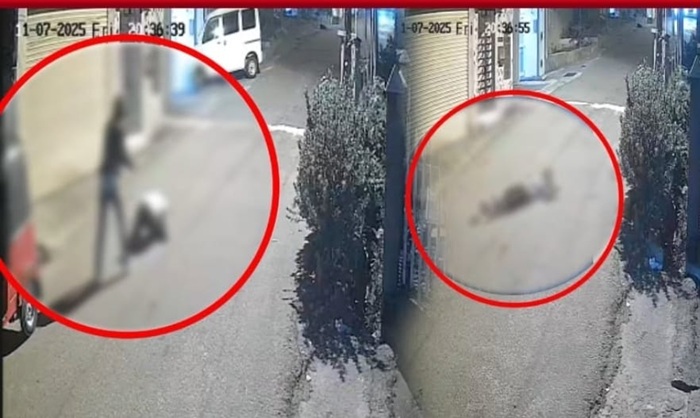
November 17, Colombo (LNW): Police have detained another suspect in connection with the fatal shooting that took place in Kotahena earlier this month, as investigators continue to unravel what they describe as a carefully coordinated attack.
The Colombo District Crime Division reported that the arrested woman, a 32-year-old resident of Aduruppuveediya in Colombo 13, is believed to have assisted the gunmen by arranging a vehicle and relaying information about the victim’s movements.
Officers say early inquiries suggest she had been in communication with an underworld figure based overseas who is thought to have orchestrated the operation.
The shooting occurred on November 07 along 16th Lane in Kotahena, when a group of assailants drove to the location, opened fire on their target, and escaped immediately afterwards. The victim, a 43-year-old man, later died from his injuries. Investigators have since established that he had links to Balachandran Pushparaj, widely known as “Pukudu Kanna,” a prominent figure in Colombo’s criminal underworld.
Earlier, Police arrested six suspects, including the alleged shooter, two male accomplices, and two female suspects.
Authorities say further arrests are likely as they piece together the wider network involved in the killing, with detectives continuing to examine communications, vehicle movements, and possible financial transactions tied to the case.
Government Expands Medical Support for Severe Drug Dependence
November 17, Colombo (LNW): Public Security Minister Ananda Wijepala has announced that ten hospitals across the country have now been assigned to treat individuals suffering from acute drug addiction, marking a significant step in the government’s effort to strengthen its national anti-narcotics strategy.
Speaking at the Kalutara District gathering of “A Nation United” — a nationwide initiative aimed at addressing social challenges through community engagement — the Minister said the decision reflects a growing need for specialised medical care for those battling severe substance dependence.
He noted that the government intends to broaden rehabilitation services and improve coordination between healthcare providers and law enforcement.
In addition, Minister Wijepala revealed that the new headquarters for the National Council on Drug Control is to be established in Torrington. According to him, the office will function as a central hub for planning, policy development, and inter-agency collaboration, with the aim of creating a more cohesive national framework to combat drug abuse.
Nation Pays Tribute at Armed Forces Commemoration and Poppy Day Ceremony
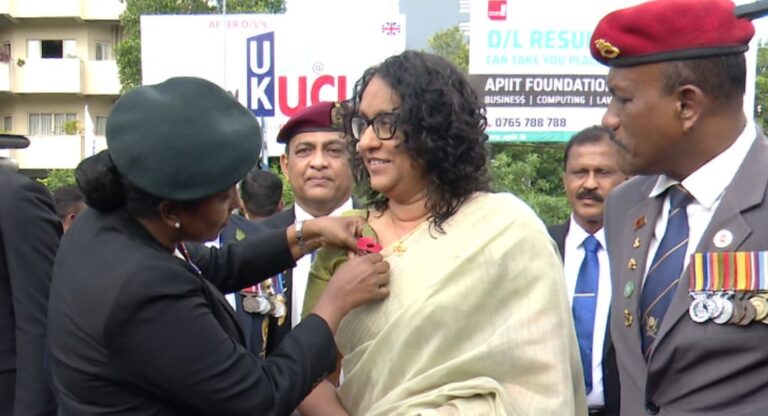
November 17, Colombo (LNW): Sri Lanka marked its annual Armed Forces Commemoration and Poppy Day this morning with a solemn ceremony led by Prime Minister Dr Harini Amarasuriya.
The event, organised by the Sri Lanka Ex-Servicemen’s Association, served as a tribute to generations of military personnel who have given their lives in defence of the country, from the era of the First World War to the challenges of the present day.
The remembrance ceremony took place at the War Heroes’ Memorial in Colombo’s Viharamahadevi Park, where floral tributes were laid and a moment of silence observed in honour of the fallen.
The atmosphere was dignified and reflective, with many attendees emphasising the continued importance of national unity and support for service members and their families.
A notable gathering of dignitaries took part, including Deputy Defence Minister Retired Major General Aruna Jayasekara, Defence Secretary Retired Air Vice Marshal Sampath Thuyacontha, commanders of the three armed services, senior officers both serving and retired, government officials, and relatives of those who made the ultimate sacrifice.
Participants remarked that the ceremony, held annually, not only commemorates the courage of past generations but also reaffirms the nation’s commitment to peace, reconciliation, and the wellbeing of military families.
Parliament Set for Further Scrutiny of 2026 Budget as Committee Debate Continues
November 17, Colombo (LNW): Parliament is due to resume its scrutiny of the 2026 Budget today (17), with lawmakers expected to turn their attention to the spending proposals of the Ministry of Justice and National Integration.
This marks the second day of the Committee Stage Debate, a detailed phase in which individual ministries’ allocations are examined and contested.
The Committee Stage discussions are scheduled to run until December 05, culminating in the final vote on the Budget’s third reading at 6 p.m. on the same day. The decisive division is expected to draw considerable attention, given the political undercurrents that emerged during earlier stages of the debate.
The Budget’s second reading was approved on November 07 with a comfortable majority of 118 votes. That vote produced several noteworthy shifts in parliamentary alignment. Mano Ganesan and three colleagues from the Tamil Progressive Alliance — a constituent party of the Samagi Jana Balawegaya — backed the Budget, citing their support for the proposed wage increase for plantation sector employees. The move was viewed by some observers as a pragmatic gesture towards long-standing demands from estate communities.
Adding to the day’s surprises, Jeevan Thondaman, General Secretary of the Ceylon Workers’ Congress and a member of the opposition, also voted in favour. His decision was interpreted as an endorsement of measures aimed at improving the livelihoods of plantation workers, a constituency central to his party’s mandate.
The 2026 Budget, presented to Parliament by President Anura Kumara Dissanayake on November 07, has been described as an ambitious effort to address structural economic challenges while offering targeted relief to underrepresented sectors. With several weeks of debate still ahead, MPs are expected to press for further clarity on revenue plans, public sector reform, and regional development priorities.
Govt Announces Plan for Select Committee to Steer Provincial Council Elections
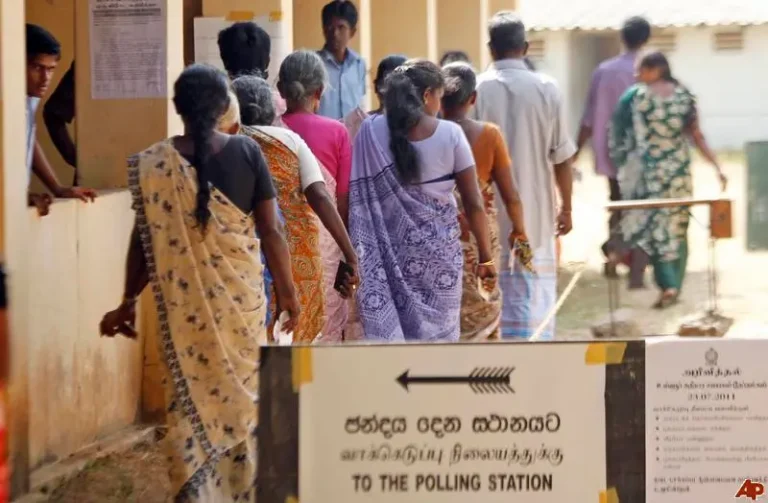
November 17, Colombo (LNW): Leader of the House, Minister Bimal Ratnayake, told Parliament on Saturday (15) that the government will establish a special select committee to guide the long-delayed Provincial Council elections, signalling renewed momentum to finally hold the polls.
Responding to a query raised by Opposition MP Dayasiri Jayasekara, Ratnayake confirmed that the minister in charge of the subject is preparing to submit a formal motion during the Committee Stage Debate of the Public Administration Ministry. This motion will outline the structure, scope, and mandate of the proposed committee, which is expected to examine both the electoral framework and the current voting system.
The announcement came during wider discussions on budget allocations for the President, Prime Minister, higher courts, government departments, Parliament and a number of independent commissions. Several MPs used the opportunity to press the government on its commitment to restoring elected provincial bodies, many of which have remained inactive for years.
Parliamentarians across the aisle noted that provincial representation has become a pressing public concern, especially in regions where essential administrative work has slowed without elected oversight. Ratnayake assured the chamber that the government intends to “move swiftly and transparently” once the select committee is approved, adding that all political parties will have an opportunity to contribute to the process.
Parliamentary Committee Reviews Proposals to Overhaul Public Sector Pay and Professional Standards
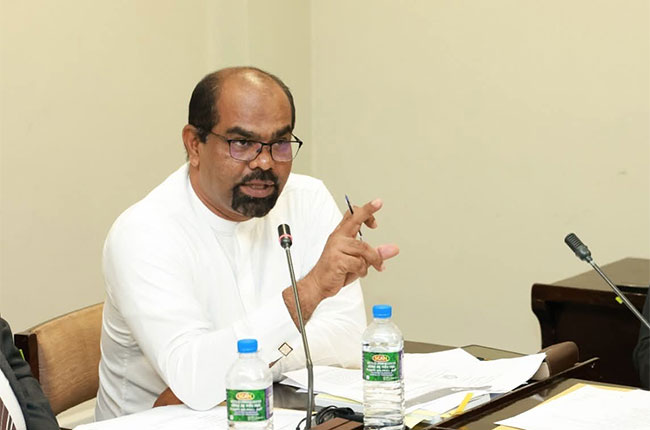
November 17, Colombo (LNW): A preliminary report outlining recommendations for a more coherent salary structure and measures to strengthen professionalism across Sri Lanka’s public sector has been submitted to the Ministerial Consultative Committee on Public Administration, Provincial Councils and Local Government. The document, prepared by a subcommittee headed by MP Chandana Sooriyarachchi, was tabled during a recent committee session held within the Parliament premises.
Chaired by Minister Prof. A. H. M. H. Abeyrathna, the meeting also provided MPs with an opportunity to raise long-standing concerns about administrative bottlenecks and operational shortcomings in Divisional Secretariats and Local Government bodies. Officials present were instructed to prioritise follow-up action, with several members noting that inefficiencies at ground level continue to affect public access to essential services.
Among the proposals brought forward was a call to re-examine pension entitlements for individuals who had served in the public sector for over a decade before entering Parliament. As former public servants who resign to take up legislative roles do not automatically receive a parliamentary pension, committee members argued that the matter warrants a more equitable approach. The Chair indicated that wider consultation would take place before any final position is adopted.
Additionally, several MPs highlighted growing uncertainty within the public service following amendments by the Public Service Commission to efficiency bar criteria, recruitment guidelines, and promotion pathways. Ministry officials acknowledged the concerns and signalled a willingness to revisit the changes in order to restore clarity for public employees.
The meeting was attended by Deputy Minister P. Ruwan Senarath, parliamentary committee members, and senior administrative officers, all of whom emphasised the importance of restoring confidence in the public sector through clear policy direction and fair professional standards.