November 13, Colombo (LNW): Estate workers in Badulla have publicly welcomed the government’s decision to raise plantation wages, expressing both relief and gratitude for what they describe as a long-overdue improvement to their livelihoods.
At the same time, they voiced frustration at opposition parliamentarians, accusing them of making grand promises in the past without delivering meaningful results.
Several residents remarked that while some MPs had previously vowed to push for a daily wage of Rs. 1,700, those same politicians are now locked in parliamentary squabbles over who deserves credit for the pay rise.
“We can’t feed our families with speeches or slogans. We survive on what we earn, not on political talk,” one worker commented, echoing the sentiment of many in the community.
The workers also pointed out that their hard work, along with the taxes paid by ordinary citizens, supports the nation’s progress. They expressed appreciation to the National People’s Power (NPP) government and the President for taking concrete action to improve living conditions for estate employees, rather than merely discussing reform.
To mark the occasion, several estate families gathered at a local temple to offer coconuts and prayers, symbolically seeking blessings for continued prosperity and for what they described as “the silencing of hollow political claims.”
The event, filled with gratitude and optimism, reflected both the pride and perseverance of a community that has long been at the heart of Sri Lanka’s plantation industry.
Badulla Estate Workers Praise Wage Increase, Condemn Opposition’s Empty Promises

Committee Submits Proposals to Replace Controversial Anti-Terror Law in Sri Lanka

November 13, Colombo (LNW): A special committee appointed to review Sri Lanka’s long-debated Prevention of Terrorism Act (PTA) has formally presented its recommendations to the Minister of Justice, Harshana Nanayakkara.
The submission marks a key step towards repealing the decades-old legislation, which has drawn widespread criticism from human rights groups for enabling prolonged detentions and restricting civil liberties.
The proposed reforms aim to introduce a more balanced framework that safeguards national security while ensuring greater protection of individual rights.
The report, prepared under the leadership of President’s Counsel Rienzi Arsakularatne, outlines a draft bill designed to replace the existing PTA with a new and more transparent legal structure.
The draft legislation, according to the Ministry of Justice, seeks to bring Sri Lanka’s counterterrorism measures in line with international standards and democratic principles.
Animal Welfare Group Urges Swift Action as Stray Dog Crisis Escalates in Sri Lanka
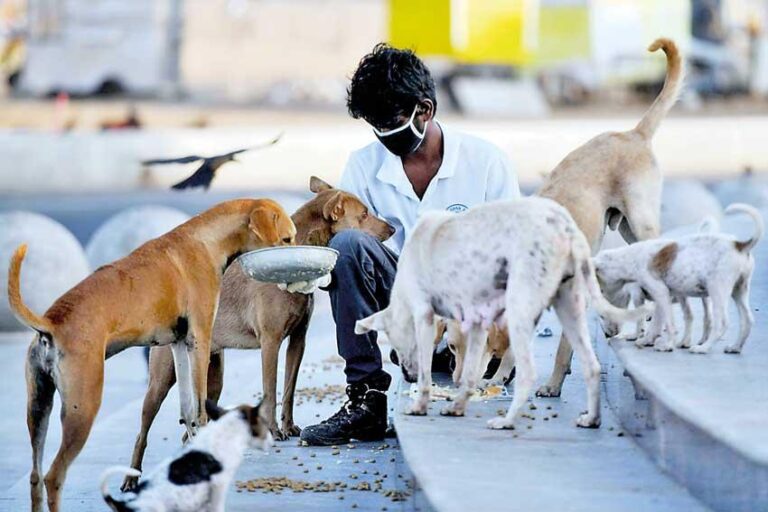
November 13, Colombo (LNW): The Animal Welfare Coalition (AWC) has voiced alarm over a growing public health and safety issue linked to Sri Lanka’s increasing population of stray dogs. According to the organisation, dog bite incidents have reached worrying levels, with estimates suggesting that more than a quarter of a million people are affected each year.
Speaking at a press briefing in Kandy, AWC Executive Committee Member Champa Fernando stressed that the country urgently needs a structured, nationwide sterilisation initiative to bring the situation under control. She noted that the problem has been brewing for years due to inconsistent policies and fragmented local programmes.
Her colleague, Gihan Dinushka, added that Sri Lanka’s stray dog population is believed to range between two and three million, although no official census has ever been conducted. “Based on our calculations, there is roughly one dog for every eight people. This ratio helps us plan community-based sterilisation and vaccination drives,” he explained.
The coalition also warned that the proliferation of street dogs has created wider social and environmental consequences. In addition to the rise in dog bite cases, road accidents—particularly those involving motorcyclists and three-wheel drivers—have become more common. Concerns about the spread of rabies are also mounting, especially in rural areas where veterinary services are limited.
While some have proposed the establishment of large-scale shelters as a quick solution, the AWC cautioned that such facilities often prove unsustainable and fail to address the root causes of the problem. Instead, the group urged the government to adopt a coordinated, humane, and scientifically guided approach, combining sterilisation, vaccination, and community awareness campaigns.
The AWC reaffirmed its willingness to provide technical expertise and collaborate with local authorities, emphasising that the situation requires immediate and decisive action to protect both animal welfare and public safety.
Five Sri Lankans Remanded Over Massive Drug Seizure in Maldivian Waters
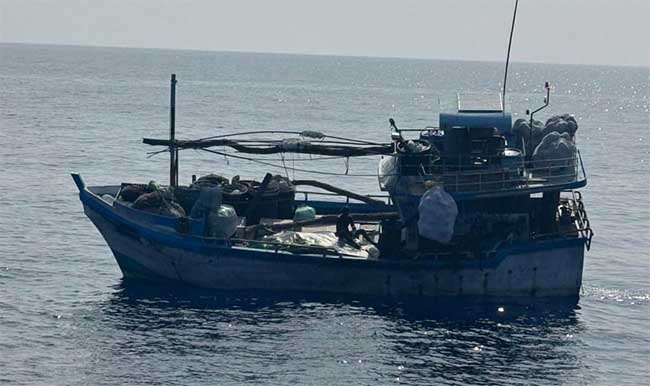
November 13, Colombo (LNW): A Maldivian court on Wednesday (12) ordered that five Sri Lankan nationals be held in custody until the conclusion of their trial, following the discovery of an enormous consignment of narcotics on a Sri Lankan fishing vessel intercepted within Maldivian waters last week.
Authorities revealed that the vessel, identified as Avishka Putha, had illegally entered the Maldives’ Exclusive Economic Zone before being searched under a court warrant. The operation led to the recovery of more than 350 kilograms of illegal drugs — the largest such haul reported in the Maldives in recent years.
The five crew members, who appeared before the Criminal Court, pleaded not guilty to the trafficking charges. However, the court ruled that the scale of the operation and the suspected involvement of a wider criminal network warranted their continued detention until the end of legal proceedings.
Meanwhile, Sri Lankan authorities have dispatched a specialist team to the Maldives to assist in the ongoing cross-border investigation. The probe is being jointly carried out by the Maldives Police Service, the Maldives National Defence Force (MNDF), the Sri Lankan Police, and the Sri Lankan Navy.
Officials from both nations have pledged close cooperation to uncover the full extent of the smuggling network, which is believed to span multiple countries across the Indian Ocean.
Global Gold Rally Sends Local Prices Soaring in Sri Lanka

November 13, Colombo (LNW): Gold prices in Sri Lanka have recorded a sharp rise, mirroring the surge in international markets where the price of the precious metal climbed past US$ 4,212 per ounce today (13), marking one of the highest levels seen this year.
Traders in Colombo’s Pettah gold market reported that the value of gold had jumped by approximately Rs. 10,000 within a single day, as investors worldwide flocked to the safe-haven asset amid ongoing global economic uncertainty.
As of this afternoon, the price of a 22-carat gold sovereign reached Rs. 310,800, up from Rs. 301,500 the previous day. Meanwhile, a 24-carat gold sovereign rose to Rs. 336,000 from yesterday’s Rs. 326,000.
Local jewellers attributed the surge to a combination of factors, including fluctuations in the US dollar, geopolitical tensions, and strong investor demand driving up global prices.
Market analysts suggest that if the international trend continues, local gold rates could see further increases in the coming days, with heightened activity expected ahead of the festive season.
Sri Lanka Expresses Solidarity with Türkiye After Deadly Military Plane Crash in Georgia
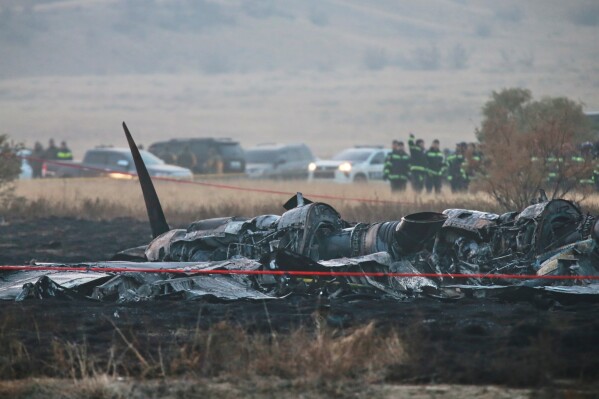
November 13, Colombo (LNW): Sri Lanka’s Minister of Foreign Affairs, Foreign Employment, and Tourism, Vijitha Herath, has conveyed his deep sympathies to the Government and people of Türkiye following the fatal crash of a Turkish military aircraft in Georgia earlier this week.
Posting on X, Minister Herath wrote:
“Heartfelt condolences to the Government and people of Türkiye on the tragic loss of military personnel in Georgia. Sri Lanka stands with Türkiye in this time of sorrow.”
The Turkish government confirmed that 20 service members were killed when a C-130 transport aircraft went down while travelling from Azerbaijan to Türkiye on Tuesday. It is the country’s deadliest military aviation disaster since 2020.
Georgian rescue teams, working alongside Turkish officials, have since recovered nearly all the victims’ remains from the crash site, located on a remote hillside.
Heartfelt condolences to the Government and people of Türkiye on the tragic loss of military personnel in Georgia. Sri Lanka stands with Türkiye in this time of sorrow. 🇱🇰🤝🇹🇷
— Vijitha Herath (@HMVijithaHerath) November 12, 2025
Minister Exposes Large-Scale Misuse of World Bank Funds in Plantation Development Project
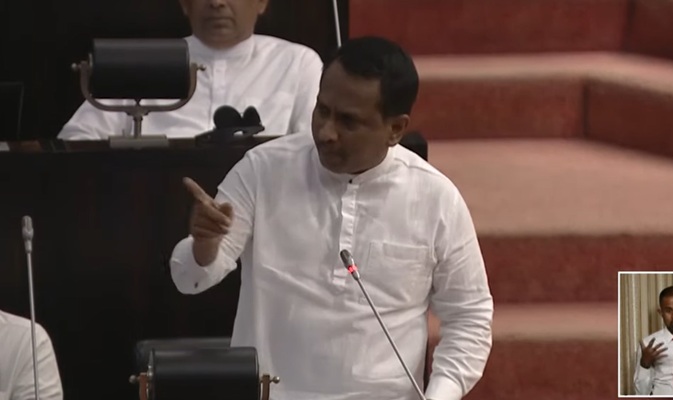
November 13, Colombo (LNW): Plantation and Community Infrastructure Minister Samantha Vidyarathna revealed in Parliament yesterday that significant sums allocated under a World Bank–backed agricultural modernisation initiative had been misappropriated by associates and relatives of former ministers, rather than being used for genuine development within the plantation sector.
According to the Minister, the Agriculture Sector Modernisation Project (ASMP), designed to revitalise Sri Lanka’s plantation industry, was exploited to channel funds to politically connected individuals. Among the beneficiaries, he claimed, were family members and aides of several ex-ministers, including payments of Rs. 14 million to a company owned by former Minister Daya Gamage’s wife, Rs. 8 million to the son of Gamage’s secretary, Rs. 18 million to former Minister Roshan Ranasinghe’s spouse, Rs. 18 million to former Navy Commander Wasantha Karannagoda, Rs. 37 million to the son of ex-Minister Lakshman Seneviratne, and Rs. 48 million to the brother of former Minister Mahinda Amaraweera.
Vidyarathna noted that a subsequent World Bank audit found no trace of the promised estate improvement projects, confirming that the funds had been misused. In response, the international lender has demanded the Sri Lankan government reimburse the amount immediately, warning that failure to do so could jeopardise future development assistance.
“We appealed for time to pursue legal action and recover the money through proper channels,” Vidyarathna said, “but the World Bank declined, insisting on immediate repayment.”
Consequently, the government was compelled to seek Cabinet approval to release US$ 508,863 to settle the outstanding debt. The Attorney General’s Department, he added, has now initiated legal proceedings to reclaim the misappropriated funds from the individuals concerned.
Sri Lanka Cricket Stands Firm: Pakistan Tour to Continue Despite Islamabad Tragedy

November 13, Colombo (LNW): Sri Lanka Cricket (SLC) has confirmed that its national team will continue the ongoing series in Pakistan as planned, rejecting rumours of a withdrawal following Tuesday’s suicide attack in Islamabad, which claimed 12 lives and left 27 injured.
The decision has been warmly received by Pakistani officials, who described it as a mark of faith in the country’s security and a tribute to cricket’s ability to unite people even in difficult times.
Speaking to local media, the Sri Lankan team manager stressed that all players remain committed to the tour, noting that “no one is returning home” and that the squad’s focus remains firmly on completing the series.
In a formal statement, SLC reiterated that, while players are free to voice personal concerns, any decision to depart prematurely would be subject to board review after the tour’s conclusion. The board also pledged to immediately arrange replacements if needed to ensure matches proceed smoothly.
Following the Islamabad attack, several players reportedly expressed unease, prompting immediate dialogue between SLC, the Pakistan Cricket Board (PCB), and senior security officials. The discussions assured the Sri Lankan delegation of strengthened protective measures, coordinated at the highest levels of government.
Pakistan’s Interior Minister and PCB Chairman, Mohsin Naqvi, personally directed the security overhaul and is expected to meet the Sri Lankan contingent to reassure them of the safety protocols in place. Officials confirmed that additional layers of protection have been introduced around team accommodation, travel routes, and match venues.
Despite the tragedy, the opening One Day International in Rawalpindi was played as scheduled, with Pakistan narrowly edging Sri Lanka by six runs. Subsequent fixtures have been slightly rescheduled — now set for November 14 and 16 — to accommodate enhanced logistical arrangements.
Pakistan’s Information Minister, Attaullah Tarar, extended gratitude to the Sri Lankan side for their resolve, stating, “Your presence symbolises friendship, courage, and respect for the game.”
Meanwhile, the Sri Lankan High Commissioner in Islamabad, following a detailed security briefing from Pakistani authorities, expressed satisfaction with the arrangements, thanking the hosts for their “dedication to ensuring the safety and comfort of the players.”
Seven-Day Detention Approved for Suspects in Massive Kirinda Drug Bust

November 13, Colombo (LNW): The Tissamaharama Magistrate’s Court has authorised the continued detention of several individuals arrested in relation to a major narcotics operation uncovered in Kirinda, allowing police to question the suspects for a further seven days.
The ruling came after the accused were presented before the court yesterday afternoon, law enforcement sources confirmed. The Police Narcotics Bureau (PNB) will now intensify its probe into the origins and wider network connected to the case.
According to investigators, officers from the Western Province North Crimes Division apprehended eight individuals during a meticulously planned raid on Andagalawella Beach in Kirinda. The operation led to the discovery of approximately 345 kilograms of crystal methamphetamine, locally known as “Ice”, being transported by land.
Early findings suggest that the illicit consignment is tied to a prominent underworld operator identified as ‘Ran Malli’ from Dickwella, who is believed to be orchestrating his criminal activities from Dubai.
Police officials noted that further arrests are likely as investigators continue to untangle the extensive web of local and international links behind one of the largest drug seizures recorded in the region this year.
Showery condition expected to enhance: Fairly heavy falls above 75 mm to occur (Nov 13)

November 13, Colombo (LNW): Showery weather condition is expected to enhance over Northern, North-central and Eastern provinces in next few days, the Department of Meteorology said in its daily weather forecast today (13).
Showers may occur at times in Northern, North-central and Eastern provinces.
Showers or thundershowers will occur in the other areas of the island after 1.00 p.m. Fairly heavy falls above 75 mm are likely at some places in Western, Sabaragamuwa and North-western provinces and in Galle and Matara districts.
Misty conditions can be expected at some places in Western, Sabaragamuwa, Central, Southern and Uva provinces and in Ampara district during the early hours of the morning.
The general public is kindly requested to take adequate precautions to minimise damages caused by temporary localised strong winds and lightning during thundershowers.
Marine Weather:
Condition of Rain:
Showers or thundershowers will occur at several places in the sea areas off the coast extending from Pottuvil to Mannar via Trincomalee and Kankasanthurai. Showers or thundershowers will occur at several places in other sea areas around the island during the afternoon or night.
Winds:
Winds will be North-easterly or variable in direction and speed will be (20-30) kmph. Wind speed can increase up to 40 kmph at times in the sea areas off the coast extending from Trincomalee to Mannar via Kankasanthurai.
State of Sea:
The sea areas off the coast extending from Trincomalee to Mannar via Kankasanthurai will be moderate. The other sea areas around the island will be slight.
Temporarily strong gusty winds and very rough seas can be expected during thundershowers.