Home Blog Page 310

USA Assumes Presidency of Colombo Plan Council Ahead of Organization’s 75th Anniversary

0

By: Staff Writer

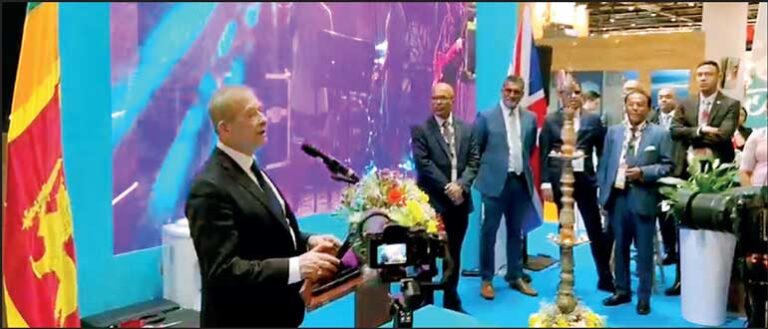
May 11, Colombo (LNW): The United States has officially assumed the Presidency of the Colombo Plan Council, with US Ambassador to Sri Lanka Julie Chung taking over the role during a Special Session held on May 7, 2025. This annual rotating presidency, determined in alphabetical order among the 28 member states, was previously held by Thailand.

The Special Session in Colombo brought together high-level diplomats and officials, including outgoing Council President and Thai Ambassador Paitoon Mahapannaporn, Sri Lanka’s Deputy Foreign Minister Arun Hemachandra, and Indonesia’s Deputy Minister for Multilateral Cooperation, Tri Tharyat. The session was attended by 23 member states, with eight ambassadors and 15 deputy ambassadors participating, both in person and virtually.

The Colombo Plan Council consists of representatives from member states’ diplomatic missions based in Sri Lanka. Since 2020, virtual participation has enabled broader engagement from members located outside Colombo. The Council convenes quarterly to discuss the organization’s strategic direction and ongoing initiatives.

The United States holds a unique position within the Colombo Plan as the first non-Commonwealth country to join the organization in 1951. It has since been a strong supporter of Sri Lanka’s development efforts, particularly in the ports sector, by contributing technical assistance and counter-narcotics programming aimed at improving security and operational efficiency.

As the Colombo Plan prepares to celebrate its 75th anniversary in 2026, Ambassador Chung’s leadership is expected to guide both the commemorative activities and the organization’s evolving strategic vision. The milestone marks a significant chapter in the history of one of Asia-Pacific’s oldest regional intergovernmental bodies.

Founded on July 1, 1951, the Colombo Plan was established to promote cooperative economic and social development across Asia and the Pacific. Its origins trace back to the Commonwealth Foreign Ministers’ Conference held in Colombo in January 1950.

There, Sri Lankan Finance Minister J.R. Jayewardene and Australian Foreign Minister Sir Percy Spencer jointly championed the idea of a ten-year development program for Southeast Asia, laying the groundwork for the Plan.

Initially supported by seven nations—Australia, Canada, India, Pakistan, New Zealand, Sri Lanka, and the UK—the Colombo Plan has since expanded to include 28 member countries, including non-Commonwealth and regional partners such as ASEAN and SAARC members.

The Colombo Plan continues to function as a partnership for mutual and self-help among member countries, promoting socio-economic development, technical cooperation, and the exchange of knowledge. Its highest governing body, the Consultative Committee, meets biennially to review progress and address current development challenges across the region.

With new leadership at the helm and a historic anniversary on the horizon, the Colombo Plan looks set to reaffirm its commitment to regional cooperation and development.

Sri Lanka Solar Sector Faces Collapse Without Urgent Policy Reforms

0

By: Staff Writer

May 11, Colombo (LNW): Sri Lanka’s solar power industry is raising alarm over a potential collapse in the renewable energy sector unless urgent policy reforms are introduced.

In a comprehensive submission to the Public Utilities Commission of Sri Lanka (PUCSL), the Solar Industries Association (SIA) has warned that flawed regulations, poor policy decisions, and misinformation are undermining investor confidence and threatening the future of solar energy in the country.

With over 1.5 GWp of solar PV capacity already installed, the sector has contributed significantly to national energy savings. However, the SIA claims the current regulatory environment is creating instability, jeopardising further development, and endangering tens of thousands of jobs.

Central to the Association’s concerns are what it describes as “unprofessional” and inaccurate recommendations influencing policymaking.

The SIA accuses recent Cabinet proposals of relying on faulty data, particularly exaggerated plant load factor (PLF) assumptions. While actual solar performance averages between 13–14%, official models use a 16% benchmark, skewing tariff calculations and deterring investment.

The disparity in tariffs between rooftop and ground-mounted systems is another sticking point. Rooftop solar accounts for 88% of the country’s solar output, yet it is being financially penalised. The SIA argues that these policies are not only arbitrary but detrimental to the most cost-effective segment of solar generation.

The 2024 Electricity Act, initially passed to accelerate renewable energy deployment, is also under threat, according to the submission. The SIA claims there has been a deliberate slowdown in renewables, highlighted by the approval of a second LNG plant, allegedly based on misleading data that contradicts least-cost energy principles.

Solar developers are also grappling with operational setbacks, including uncontracted energy curtailments—where their power output is restricted without compensation. The Association proposes tariff-based incentives for such curtailments and calls for an audit of curtailment data to ensure transparency.

The lack of battery storage tariffs, outdated grid infrastructure, and delays in implementing smart meters and power wheeling further complicate the industry’s challenges. The SIA emphasises that energy storage should be considered essential infrastructure, and urges the immediate rollout of smart meters for improved grid management.

Investor uncertainty has been heightened by frequent, unexplained tariff changes and ambiguity around the Net Plus scheme. The SIA warns that a proposed cut to feed-in tariffs could decimate the SME-led solar sector and result in the loss of around 40,000 jobs. Over 100,000 rooftop systems, mainly owned by middle-income families, risk becoming economically unviable.

Compounding the crisis, the solar industry has been unfairly blamed for the nationwide blackout on 9 February 2025, despite no supporting evidence.

The SIA concludes with urgent calls for rational tariff reforms, compensation for curtailment, transparent policymaking, and the restoration of supportive programs like the Net Plus Plus scheme. “Swift action is critical,” the SIA said, “Solar energy is central to Sri Lanka’s sustainable development and energy future.

Surge in dengue infections sparks public health alert across Sri Lanka

0

May 11, Colombo (LNW): Health authorities in Sri Lanka are raising the alarm over a significant spike in dengue infections, with over 19,000 cases recorded in the first four and a half months of 2025.

The National Dengue Control Unit (NDCU) has warned that unless immediate preventative measures are taken, the country could face a wider public health crisis in the coming months.

The latest figures show a steady month-on-month increase, with January seeing 4,936 infections, followed by 3,665 in February.

March registered a similar figure at 3,770, but the number jumped considerably in April, reaching 5,175. By the 10th of May alone, 1,669 new cases had already been reported, indicating the likelihood of another surge if the current trend continues.

Ten districts have been identified as high-risk zones due to persistently high case numbers. These include urban and semi-urban areas such as Colombo, Gampaha, and Kalutara in the Western Province, alongside districts from other parts of the island including Ratnapura, Kandy, Batticaloa, Trincomalee, Matale, Galle, and Matara.

These regions are now under intensified surveillance and targeted vector control operations.

Officials from the NDCU attribute the rise in cases to a combination of prolonged rainy weather, inadequate waste disposal, and public complacency in eliminating mosquito breeding grounds.

With the Aedes aegypti mosquito—responsible for transmitting the dengue virus—thriving in stagnant water, authorities are urging citizens to be vigilant in maintaining clean surroundings, particularly during the monsoon season.

Health experts have reiterated that dengue is not simply a seasonal nuisance but a recurring public health threat that can become deadly if left unaddressed.

They have appealed to the public to take basic but critical actions, such as regularly emptying water containers, cleaning gutters, covering water storage tanks, and disposing of old tyres and bottles that collect rainwater.

Meanwhile, local government bodies are ramping up awareness campaigns and inspection drives in both residential and commercial areas.

Mobile medical units and emergency response teams are also being prepared in high-incidence regions to respond swiftly to potential outbreaks.

Medical professionals are advising individuals showing early symptoms of dengue—such as high fever, severe headaches, pain behind the eyes, muscle and joint pain, and skin rashes—to seek medical attention promptly.

Delays in treatment, particularly in cases that progress to dengue haemorrhagic fever, can be fatal.

President vows swift action as Gerandi Ella bus tragedy claims 21 lives

0

May 11, Colombo (LNW): President Anura Kumara Dissanayake has expressed profound sorrow over the tragic bus accident that took place in the early hours of Saturday (11) in the Gerandi Ella area of Kotmale, which resulted in the deaths of at least 21 passengers and left over 35 others injured.

The vehicle, travelling from Kataragama to Kurunegala via Nuwara Eliya, reportedly plunged into a deep precipice along the Nuwara Eliya–Gampola main road, in what authorities are calling one of the deadliest road accidents in recent years.

In a statement issued by the President’s Media Division, the Head of State extended his condolences to the bereaved families and instructed both the security forces and health sector personnel to ensure that all necessary medical facilities be mobilised without delay.

Hospitals in the surrounding regions have been directed to prioritise emergency care for the injured.

President Dissanayake also acknowledged the alarming frequency of road accidents across the country, describing the current trend as a serious national concern that requires urgent intervention.

He reaffirmed the government’s commitment to enhancing road safety, not only through stricter enforcement of existing laws but also through initiatives aimed at reshaping public attitudes towards responsible driving.

As part of this broader agenda, the President indicated that the government will roll out a new road safety initiative under the “Clean Sri Lanka” programme. While specific details have yet to be released, officials close to the administration suggest the project will focus on both punitive and preventative measures, including education campaigns and enhanced traffic monitoring systems.

Initial investigations into Saturday’s crash are still ongoing, but police have stated that the bus appears to have veered off the road before tumbling down the steep hillside. The precise cause has not yet been officially determined, though early reports point to the possibility of driver fatigue, mechanical failure, or excessive speed as potential factors.

Emergency response teams, including police, military personnel, and ambulance services, were deployed swiftly to the scene and worked under challenging conditions to retrieve the injured and deceased. Eyewitnesses described scenes of chaos and devastation, with rescue operations extending into the afternoon.

With the number of casualties mounting and public concern deepening, the tragedy has reignited calls for a more systematic overhaul of Sri Lanka’s road safety protocols.

Road traffic incidents remain one of the leading causes of unnatural deaths in the country, with rural roads such as those in the Central Highlands being particularly prone to fatal accidents due to poor visibility, sharp bends, and inadequate safety infrastructure.

President Dissanayake’s remarks suggest that while long-term strategies are being formulated, the government also intends to take immediate steps to curtail further loss of life. Analysts say the effectiveness of these interventions will depend heavily on political will, institutional coordination, and community engagement—particularly in high-risk areas.

Sri Lankan thought leader joins global foresight body’s board of directors

0

May 11, Colombo (LNW): For the first time in its history, the influential global think tank, the Millennium Project, has appointed a Sri Lankan to its Board of Directors.

Asanga Abeyagoonasekera, a well-known strategist and regional policy expert, has been named an Ex-officio board member in recognition of his exceptional work advancing foresight initiatives in South Asia.

This milestone appointment not only highlights Abeyagoonasekera’s growing international standing but also reflects the increasing relevance of South Asian perspectives in global future-oriented policy discourse.

He first joined the Millennium Project in 2022 as a Senior Fellow and currently leads the South Asia Foresight Network (SAFN), an initiative committed to building strategic foresight capacity and regional collaboration across the subcontinent.

Abeyagoonasekera brings to the board a wealth of experience from his tenure in key governmental and diplomatic roles in Sri Lanka.

He served as Director General of the Institute of National Security Studies (INSS), operating under the Ministry of Defence, and as Executive Director of the Lakshman Kadirgamar Institute of International Relations and Strategic Studies (LKI), where he helped shape national and regional policy dialogues.

Founded in 1996 with origins linked to the American Council for the United Nations University, the Millennium Project has evolved into a leading international non-profit dedicated to long-range future research and scenario building.

With 72 globally connected Nodes, the think tank fosters multidisciplinary insight into pressing global challenges, from emerging technologies to climate change and governance.

The organisation’s current focus areas include governance frameworks for Artificial General Intelligence (AGI) and its influential “State of the Future” reports, which are widely referenced in both academic and policy-making circles.

SAFN, under Abeyagoonasekera’s leadership, has contributed to enhancing regional participation in such discussions, especially from South Asia—an area traditionally underrepresented in global foresight agendas.

Public Sector distress loan ceiling raised to Rs. 400,000 amid salary adjustments

0

May 11, Colombo (LNW): Public sector employees in Sri Lanka will now be eligible for a higher distress loan, with the ceiling increased from Rs. 250,000 to Rs. 400,000.

The Ministry of Public Administration confirmed that the new limit will come into effect from 1 May 2025, marking a significant policy adjustment aligned with the 2025 Budget’s commitment to improve the financial well-being of state workers.

The change stems from recent adjustments to the minimum basic salaries of public servants, which were announced in the national budget earlier this year.

The updated loan cap has been formalised through Public Administration Circular 10/2025, issued on 25 March, and was prepared in consultation with the General Treasury.

Under the revised terms, the distress loan granted to a public officer will now be calculated based on their updated basic salary, providing access to greater financial relief during times of personal or family emergencies.

This move is expected to benefit a wide cross-section of state employees, including teachers, administrative officers, and health workers, many of whom have been facing increased cost-of-living pressures.

Government departments and public institutions have been directed to facilitate the processing of applications under the new ceiling and to ensure that requests are prioritised based on genuine need.

The Ministry has also advised accounting officers and administrative heads to adopt transparent and efficient procedures to manage loan disbursements fairly.

CEB Chairman Tilak Siyambalapitiya tenders resignation

0

May 11, Colombo (LNW): Dr Tilak Siyambalapitiya has reportedly stepped down from his role as Chairman of the Ceylon Electricity Board (CEB), according to informed sources.

His resignation is believed to have been formally submitted amidst a backdrop of persistent institutional and structural challenges facing the country’s power sector.

Appointed on 26 September last year by the administration of President Anura Kumara Dissanayake, Dr Siyambalapitiya’s tenure marked a period of heightened public scrutiny over electricity pricing, regulatory reforms, and national energy sustainability.

Sri Lanka’s Port City risks falling behind as Maldives lures global investors

0

May 11, Colombo (LNW): Sri Lanka’s port city, despite having 100% foreign ownership, sound regulations, and first-class infrastructure, has not been able to fully tap its investment potential due to delays in approval, slow progress in regulatory development, and a lack of government-led international promotion, the Sri Lankan media commented.

At present, investors in the Middle East are seeking opportunities for “South-South cooperation.” “If the Sri Lankan government continues to act slowly, it may hand over a large number of potential investment opportunities to the Maldives and emerging economic special zones in eastern Africa.”

Commentators believe that the government must take decisive measures to accelerate the facilitation of cross-border investment, demonstrate construction progress, ensure policy continuity, and revitalize the confidence of international investors. The Port City has the potential to be the engine of Sri Lanka’s economy, but without government-level promotion and publicity, the project may become a textbook example of “missed opportunities.”

Although Sri Lanka has a stronger foundation, if it does not show a “truly open” attitude, the Maldives will take the opportunity to attract more investment. At present, there are several flagship projects launched in Port City, the government should show its value proposition as early as possible to gain competitive advantages in the region. The World Bank predicts that Maldives’ GDP will grow by 5.7% in 2025.

Devastating bus crash near Ramboda claims multiple fatalities

0

May 11, Colombo (LNW): A tragic road accident in the central highlands of Sri Lanka has claimed the lives of at least fifteen individuals after a passenger bus veered off the Nuwara Eliya–Gampola main road and plunged into a deep precipice in the Garandiella area of Ramboda early this morning (11 May).

Emergency services responded to the scene shortly after the incident, with police confirming that over 35 people sustained injuries of varying severity. The wounded were promptly transported to nearby hospitals, where several remain in critical condition.

The ill-fated bus, operated by the Sri Lanka Transport Board (SLTB), was reportedly travelling from Kataragama to Kurunegala, passing through the hill country town of Nuwara Eliya. The route, known for its steep inclines and sharp bends, can pose considerable danger, particularly in poor weather or under low visibility.

While the exact cause of the accident has yet to be formally established, preliminary accounts suggest that the bus may have lost control while navigating a sharp bend.

Investigations are underway to determine whether driver error, mechanical failure, or hazardous road conditions contributed to the incident.

Footage and photographs from the crash site show a mangled vehicle at the base of a steep slope, surrounded by emergency personnel and concerned bystanders.

The scale of the wreckage has drawn widespread public attention and raised fresh concerns about road safety standards, especially on mountainous routes that are frequented by long-distance public transport.

Authorities are expected to review transport safety protocols following this latest tragedy, which adds to a growing list of fatal road accidents involving state-operated buses.

Calls for stricter regulation, improved driver training, and more rigorous vehicle inspections have been renewed in the wake of the disaster.

Actress Semini Iddamalgoda taken into custody over multiple outstanding warrants

0

May 11, Colombo (LNW): Well-known Sri Lankan actress Semini Iddamalgoda has been arrested by officers of the Welikada Police in connection with a series of unresolved legal matters.

According to police sources, the arrest stems from seven outstanding warrants issued against her, reportedly linked to allegations involving financial misconduct.

While details surrounding the nature and timeline of the alleged offences remain limited, authorities have confirmed that the warrants relate to complaints of financial irregularities, which had been under investigation for some time.

Her apprehension was carried out earlier today following coordination between various units within the police service.