October 20, Colombo (LNW): Ishara Sewwandi, the female suspect at the centre of a major underworld-related murder investigation, has been transported to Kilinochchi for field inquiries as part of an ongoing probe led by the Colombo Crimes Division (CCD).
Sewwandi is believed to have played a leading role in the killing of Sanjeewa Kumara Samararatne, a known underworld figure commonly referred to as ‘Ganemulla Sanjeewa’.
She, along with five others, was recently apprehended in Nepal and extradited to Sri Lanka. The arrests were the result of a joint operation involving Sri Lankan law enforcement and international authorities. The group was brought back to the island under the supervision of Assistant Superintendent of Police Rohan Olugala on October 15.
Following their return, the Ministry of Defence authorised a 90-day detention order for Sewwandi under provisions that allow extended custody for suspects in serious criminal cases. Investigators have since escorted her to a number of locations in the northern region, including Kilinochchi, where she is believed to have sought refuge in the days following the murder.
In a parallel development, officers have been following a lead connected to a woman resembling Sewwandi, who was discovered in Jaffna during the course of a search carried out under the direction of an individual identified as Kehelbaddara Padme.
This woman, known as ‘Thakshi’, was reportedly taken to Nepal under false pretences by a man named Suresh, who allegedly promised her overseas employment. Authorities believe she may have been used as a decoy or caught up in the plot without her knowledge.
While ‘Thakshi’ is not currently considered a direct suspect in the murder, her connection to the group has prompted further inquiries. Investigators are working to determine the exact nature of her involvement and whether she had any awareness of the activities of those she travelled with.
The suspects have been distributed among various police units for further questioning. Sewwandi, along with ‘Duplicate Ishara’ (believed to be Thakshi), ‘J.K. Bai’, and ‘Jaffna Suresh’, are now in the custody of the Colombo Crimes Division. Two other suspects—‘Gampaha Baba’ and ‘Nugegoda Babee’—have been handed over to the Western Province North and South Crimes Divisions respectively.
Hulftsdorp Court Killing: Ishara Sewwandi Brought to Kilinochchi for Further Investigations

President Anura Kumara Dissanayake Calls for Unity and Light in Deepavali Message
October 20, Colombo (LNW): President Anura Kumara Dissanayake, in his message marking the Deepavali festival, extended heartfelt wishes to Hindu communities in Sri Lanka and around the world, highlighting the festival’s enduring symbolism of light triumphing over darkness and righteousness prevailing over evil.
Observed today, Deepavali commemorates the victory of Lord Vishnu over the demon Narakasura, and the President acknowledged the spiritual significance of the festival as devotees engage in religious rituals praying for the illumination of hearts and the spreading of light.
Linking the essence of Deepavali to the current challenges facing the nation, President Dissanayake emphasised his government’s ongoing efforts to confront serious issues such as drug trafficking and organised crime, which he identified as barriers to national development. He reaffirmed the government’s commitment to ensuring every citizen’s right to safety, which he described as fundamental to a good and healthy life.
In his statement, the President also underlined the administration’s broader mission to protect the physical, mental, material, and emotional well-being of not only citizens but also residents and visitors in Sri Lanka. He reiterated a pledge to eliminate religious and ethnic extremism, promote social justice, and foster a society where all individuals enjoy civil, political, and cultural rights without obstruction, and where freedom and dignity are upheld.
Calling Deepavali a festival of light, President Dissanayake expressed hope that the festival would inspire unity and collective progress toward a common vision of “A Thriving Nation, A Beautiful Life.” He concluded by wishing all Hindus a blessed and radiant Deepavali, expressing hope that their hearts may be filled with the enduring spirit of the festival.
Full Statement:
“The Deepavali festival, celebrated with great devotion by Hindus around the world, is celebrated today (20). In remembrance of Lord Vishnu’s defeat of the demon Narakasura, devotees engage in religious observances while praying that, as righteousness triumphed over unrighteousness, darkness in everyone’s hearts may be dispelled and light spread throughout.
This celebration symbolises the victory of goodness over evil. Currently, our government is undertaking substantial initiatives to address the serious challenges confronting our nation, including the pervasive threat of drug menace and organised crimes, which obstruct our nation’s progress. Ensuring the right of every citizen to live safely and promoting this right as fundamental to a good and healthy life remains the primary aim of our endeavours.
Furthermore, as a government, we are committed to safeguarding the physical, mental, material, and emotional well-being not only of our citizens but of all residents and visitors in the country. We emphasise that we act to overcome all religious and ethnic extremism, to establish social justice and to build a safe nation where every individual can freely enjoy all civil, political and cultural rights without hindrance and where the freedom and dignity of all are preserved.
Deepavali is, above all, a festival of light. On this day, as every household illuminates itself with lamps, we pray that the collective path towards fulfilling the hopes for “A Thriving Nation, A Beautiful Life” may become ever more united. I extend my warmest wishes for a blessed and radiant Deepavali to all Sri Lankan and overseas Hindus, hoping that their hearts may shine with the spirit of the festival.”
Low-level atmospheric disturbance developed: Heavy falls above 100 mm expected (Oct 20)

October 20, Colombo (LNW): A low-level atmospheric disturbance has developed over the south east of the Island, the Department of Meteorology said in its daily weather forecast today (20).
Cloudy skies are expected over most parts of the island with Showers or thundershowers will occur at times.
Heavy falls above 100 mm are likely at some places in Western, Sabaragamuwa, Central, Uva, North-western, Southern and Northern provinces.
The general public is kindly requested to take adequate precautions to minimise damages caused by temporary localised strong winds and lightning during thundershowers.
Marine Weather:
A low-level atmospheric disturbance has developed over the south east of the Island. Naval and fishing communities engaged in fishing and naval activities in the deep and shallow sea areas to the southeast of the island are requested to be vigilant in this regard.
Condition of Rain:
Showers or thundershowers will occur at times in the sea areas off the coast extending from Galle to Pottuvil via Matara and Hambantota. Showers or thundershowers will occur at several places in other sea areas around the island.
Winds:
Winds will be south-westerly or variable in direction and speed will be (25-35) kmph. Wind speed can increase up to 50 kmph at times in the sea areas off the coast extending from Galle to Pottuvil via Matara and Hambantota.
State of Sea:
The sea areas off the coast extending from Galle to Pottuvil via Matara and Hambantota will be fairly rough at times. The other sea areas around the island will be slight.
Temporarily strong gusty winds and very rough seas can be expected during thundershowers.
Betrayal of Trust: Six Years After the Easter Bombings, Sri Lanka’s Government failure is absolute disgrace.

Faraz Shauketaly
Today, October 19th 2025, marks 2,406 days since the devastating Easter Sunday bombings shook Sri Lanka, leaving a trail of death, destruction, and despair in their wake. On April 21, 2019, coordinated suicide bomb attacks targeted churches and luxury hotels, claiming the lives of 270 innocent people and injuring over 500 others.
The painfully slow progress the investigation has traversed in is to create nothing more important than public distrust.
The attacks, initially said to have been claimed by the Islamic State, were a brutal reminder of the threat of terrorism and the importance of ongoing vigilance. Investigators have cast doubt on the Islamic State angle. If at all that angle is nothing more than a red herring.
A singular and spectacular judgement call was made by now disgraced Nilantha Jayawardena who was ejected by the Police Force for his role in derelicting his fundamental duty of care to the sovereign people of Sri Lanka. Criticism of Nilantha Jayawardena is even more potent considering he had military intelligence sent by India’s RAW. Inspite of the devastating advisory coming to him a full two weeks before the event, Jayawardena failed to bring this to the notice of Churches or hotels and the public at large. The carnage that followed was inevitable. And what was the motive for this attack? Why was the Taj Hotel spared, did Jameel kill himself or was he blown up by remote control after he met with Intel personnel? Indeed did he meet such people at all?
However, as the years have passed, it has become abundantly clear that the government’s response to the attacks has been woefully inadequate and certainly disgraceful.
A Conspiracy of Silence:
Despite promises of a thorough investigation and swift justice, the government has yet to hold those responsible for the attacks accountable. The lack of progress is staggering, with key officials implicated in the attacks and some still occupying positions of power.
Gothabya Rajapaksa the political beneficiary of the fear psychosis generated by the Easter bombings, described the Channel 4 documentary on the subject as being, “absurd … a tissue of lies”.
If anything it is the state lethargy and lack of commitment that is absurd and the various statements and undertakings that has proven to be a tissue of lies.
Luxury bus deal faces scrutiny over tender issues
By: Bandula Sirimanna
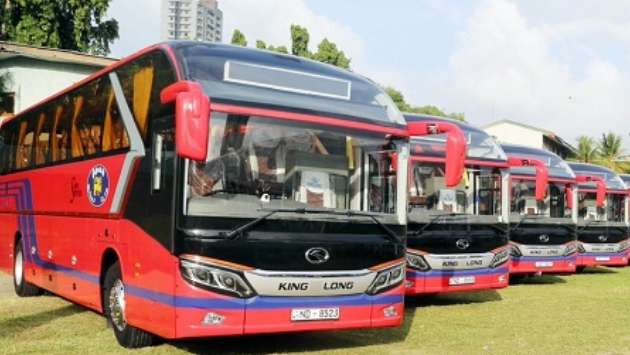
Sunday Times: A flagship government initiative to procure 100 luxury low-floor buses under the 2025 Budget has ignited a storm of controversy, as mounting allegations suggest the tender may have been structured to favour a single dominant player in Sri Lanka’s motoring industry.
Valued at over Rs. 3 billion, the project aims to establish a “Metro Bus Company” to modernise urban transport on key corridors such as Kottawa-Pettah, Kadawatha-Pettah, and Moratuwa-Pettah.
While the government hails it as a milestone in public mobility and digitalised transport, procurement analysts and civil society groups are questioning whether the tender process was manipulated to restrict fair competition.
The row deepened when the share price of a flagship listed motor company which was among the bidders jumped sharply weeks after the government announced the tender for the purchase of buses. Political commentators and market analysts pointed out that the timing of the sudden surge seemed anything but coincidental, and claims were made that inside information could have been leaked prior to the official announcement of the tender release.
According to government reports, officials who took part in the preparation of the bid documents are now facing an internal investigation.
The most contentious point is a financial eligibility clause requiring bidders to have maintained an annual turnover exceeding Rs. 6 billion (US$ 18 million) during at least three of the past five years, alongside stringent balance sheet and liquidity conditions including a positive asset-to-liability ratio below 60 per cent, and working capital exceeding Rs. 3 billion or $ 9 million for two of the last five years.
Procurement specialists argue that such criteria are excessive and inconsistent with the project’s scale.
“Turnover thresholds should ensure competence, not exclude credible competitors,” one former senior transport ministry official said. “These requirements effectively rule out most local bus importers who have reliably supplied vehicles to the government in the past.”
The technical specifications have also drawn scrutiny. The bid requires manufacturers to have produced at least 750 buses annually over three of the last five years, exported to five or more countries, and obtained multiple ISO certifications.
While such standards may seem reasonable for international procurements, critics contend that the combined requirements form a narrow filter that aligns almost perfectly with the production profile of one specific manufacturer effectively precluding competition from other qualified suppliers.
Sri Lanka’s Tea Sector Brews Big Gains amid Global Shifts
By: Staff Writer
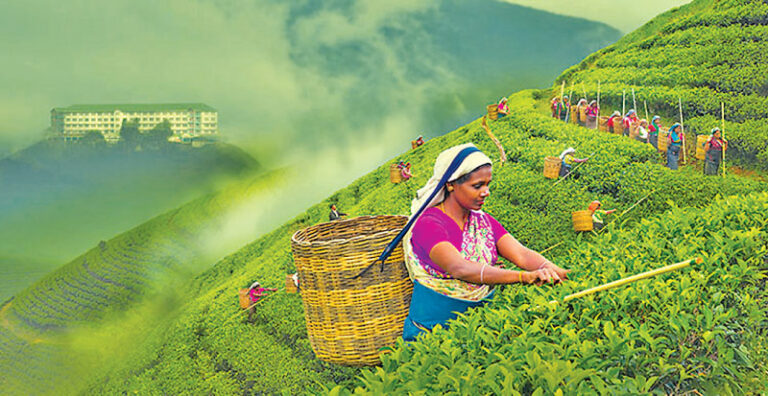
October 19, Colombo (LNW): Sri Lanka is stepping up the global positioning of its iconic “Ceylon Tea” brand as export earnings surge and a European Union Geographical Indication (GI) registration is pursued to protect its identity and value. The push for GI status backed by a €1 million French-funded programme—comes as the tea industry posts robust figures and braces for new challenges.
At a recent forum in Colombo, Sri Lanka Tea Board Chairman Raaj Obeysekere described the GI move as “a major step toward safeguarding the authenticity of Ceylon Tea and securing higher export prices.”
The initiative, supported by Agence Française de Développement (AFD) in partnership with France’s Agricultural Research Centre for International Development (CIRAD), is designed to reinforce legal protection for the brand, combat counterfeiting and strengthen the premiums earned by producers and rural communities.
Meanwhile, the numbers point to a tea industry experiencing a weather-rebounce and increasing value-added transformation. Earnings for the first quarter of 2025 reached US $370.9 million, up about 5 percent from a year earlier, with export volumes at 63.2 million kg and average Free on Board (FOB) price of US $5.87 per kg.
From January to August 2025, tea export earnings had already surpassed US $1 billion, up 9.04 percent year-on-year, with 174.55 million kg shipped. For the first eight months, tea export revenue stood at around US $1,026.03 million, marking an 8.89 percent increase.
On the volume front, production for the full year of 2025 is projected at 275-280 million kg, up from 245.7 million kg in 2024. Export earnings are forecast at US $1.4-1.5 billion marginally above 2024’s US $1.435 billion.
Sri Lanka holds a reputable position in the global tea map: though no longer the world’s top producer, the country remains a significant exporter of orthodox black tea and holds a strong presence in value-added forms (tea bags, instant tea, branded packets). The shift to higher margin products is clearly underway. For example, in the first quarter of 2025 value-added selections grew their share to 56 percent of total exports.
Yet while momentum is positive, industry watchers caution that Sri Lanka still faces structural headwinds. Rising wages, older plantations, soil fertility concerns, and stiff competition from large-scale producers such as India and Kenya all present ongoing challenges.
The GI campaign is tailored in part to bolster Sri Lanka’s branding edge in a crowded marketplace. As Plantations Minister Samantha Vidyaratne noted, “Given current market conditions, internationally recognised standards through GI certification are essential.”
The GI process began around 2021 with input from over 500 stakeholders, as noted by AFD Country Director Yazid Bensaïd: “This initiative had to be participatory.” With an EU GI seal in place, “Ceylon Tea will join a global family of products whose quality and origin are celebrated,” said French Ambassador Rémi Lambert.
For Sri Lankan tea producers, the timing may be auspicious: global tea markets are undergoing shift from bulk commodities toward branded, traceable product lines, and demand from major markets such as India, China, Iraq, Russia and Libya remains strong. Analysts suggest that the GI tag, combined with the industry’s improving export performance, could help Sri Lanka leverage its premium positioning.
Overall, the tea sector’s current trajectory blends robust export growth, improved value-added offerings and strategic branding moves even as it navigates cost pressures and structural reforms. The sector’s next challenge will be converting its headline numbers and GI momentum into sustained profitability for estates and workers across the island.
Geopolitics and Commercial Clashes Delay Sri Lanka’s $3.7 B Sinopec Refinery
By: Staff Writer
October 19, Colombo (LNW): Sri Lanka’s ambitious plan to build a China National Petroleum Corporation (“Sinopec”)-backed oil refinery in the southern port city of Hambantota has entered a critical phase of gridlock, exposing a tangle of strategic and commercial challenges behind the touted US $3.7 billion investment.
Announced formally in January 2025, the project envisages a 200,000-barrel-per-day (bpd) greenfield facility, making it the largest foreign-direct-investment (FDI) venture in Sri Lankan history.
Land has reportedly been allocated and initial infrastructure push-forward underway, yet final investment agreements and construction commencement remain unscheduled.
At the heart of the delay is a dispute over domestic market access, equity structure, and export quotas. Initially the government insisted that only 20 % of output be sold domestically and 80 % earmarked for export. Sinopec, however, seeks a higher proportion for local sales, citing commercial viability.
The mismatch in expectations has triggered a negotiation stalemate.On top of commercial wrangling, the project sits amid a broader strategic contest: India, China and Sri Lanka’s Western partners are all vying for influence in Sri Lanka’s rapidly evolving energy and infrastructure landscape.
For China, the Hambantota port and adjacent refinery represent a toehold in the Indian Ocean energy-supply chain. For India, the project raises concerns of strategic entrenchment near its maritime periphery.
Sri Lankan officials publicly emphasise that most “major issues” — such as land, water and tax clearances have been resolved. Foreign Minister Vijitha Herath met with Sinopec Vice President Liu Liangong in recent weeks to “expedite the remaining hurdles”.
Yet, insiders warn of latent political risk: the government remains under pressure to balance foreign-investment openings with national economic sovereignty. A local energy-industry source described the state’s approach as “cautious rather than eager”.
Critics point to Sri Lanka’s previous heavy debt accumulation tied to Chinese infrastructure, notably the Hambantota port lease, as a cautionary backdrop. The refinery now reignites debate over whether major Chinese FDI carries long-term strategic strings.
Analysts note that if the refinery becomes fully operational, its impact could be transformative. Estimates suggest annual export revenues of US $6–8 billion, plus reduced import-bill burdens for refined fuels.
But for now the project remains suspended in limbo.It is not just Sinopec’s patience being tested: Sri Lanka’s ability to attract and structure mega-projects in a politically sensitive environment is being scrutinised. With global competitors queuing up, any further delay could push Sri Lanka into the margins of the very global investment recovery wave it hopes to ride.
Colombo’s Port City Crosses Major Infrastructure Milestone

By: Staff Writer
October 19, Colombo (LNW): The $1.4 billion Port City Colombo reclamation project has now reached a defining moment with the completion of its first infrastructure phase, officials announced yesterday. This milestone marks the transformation of the 269-hectare artificial island into Sri Lanka’s most ambitious urban and economic development.
Phase 1 covers critical infrastructure links, including connection of electricity and water supply systems to the existing city grid and integration of wastewater drainage networks with the mainland.
“This milestone marks an essential step in the progress of Port City Colombo and ushers in the next stage of development and future investments,” said Harsha Amarasekera, Chairman of the Colombo Port City Economic Commission (CPCEC).
According to the CPCEC, the project has already benefited from an investment of around US $1.4 billion by developer China Harbour Engineering Company (CHEC) and its parent China Communications Construction Company (CCCC). These investments make Port City Colombo one of Sri Lanka’s largest foreign-direct-investment ventures to date.
Looking ahead, the overall investment value of the development is projected at up to US $20 billion when fully developed, featuring over 6.3 million m² of built-up space and housing a projected population of around 273,000.
Despite delays the project originally commenced land reclamation in 2014 and the finishing of this phase took longer than expecte government officials say the completion now arrives at a time of renewed investor confidence in Sri Lanka’s economy.
The Finance Ministry’s Secretary, Harshana Suriyapperuma, noted “while the completion of Phase 1 took longer than expected, it marks a defining opportunity for Sri Lanka to demonstrate its potential as a destination for better foreign investments, business, trade, tourism and lifestyle.”
Project Director, Udaya Nanayakkara (Retd Major General), said the master-plan emphasises sustainability and livability: a “walkable city” with reduced traffic emissions, a clear road hierarchy, and underground utility networks. The 12-kilometre internal road network will link the city’s northern and southern ends seamlessly, positioning the island as a central South Asian hub.
Now that Phase 1 is complete, the focus shifts to attracting anchor investors for commercial, residential and lifestyle developments within the Special Economic Zone (SEZ). Four major projects were recently granted “Primary Business of Strategic Importance” status, unlocking incentives and visa-facilitated investment into real-estate, finance, and tourism.
However, analysts caution that despite the projections, the bulk of future investment hinges on global economic conditions, domestic regulatory clarity, and delivering infrastructure on cost and schedule. With household incomes in Sri Lanka still under pressure, ensuring tangible yields from such mega-projects remains a challenge.
For now, Port City Colombo’s infrastructure milestone sets the stage for Sri Lanka’s next chapter one where reclaimed land, deep-water location and strategic connectivity are meant to converge into a high-end urban-lifestyle and business hub.
Sri Lankan Cardholders Trapped in Costly Cycle of Hidden Fees and High Debt

By: Staff Writer
October 19, Colombo (LNW): Sri Lankan credit- and debit-card users are facing mounting financial pressure as invisible charges, steep interest rates and surging card debt converge amid high living costs and low incomes. Despite directives from the Central Bank of Sri Lanka (CBSL), many cardholders find themselves caught in a punishing financial trap.
Banks charge annual interest rates on credit-card purchases as high as around 20 percent, and up to 26 percent for cash advances—far above the policy rate of 7.75 percent. On top of this, surcharges of 2.5–3 percent are still routinely passed onto customers by merchants when payments are made by card. Since these are often calculated on tax-inclusive prices, consumers end up paying a “tax on tax” in effect.
The emerging scale of the problem is stark. By August 2024, total outstanding credit-card debt at licensed commercial banks stood at Rs. 150.6 billion, up by Rs. 942 million in that month alone.
The number of active credit-cards has climbed as well: by April 2024 there were 1,914,126 in use, though the figure edged up just marginally from end of December 2023.
Consumer advocates say these numbers undershoot the anguish faced by many cardholders whose monthly incomes are squeezed and whose living-costs are rising. One recent study reported that although active card numbers were under 2 million, the value of defaulted cards as of Q2 2024 was Rs. 20.7 billion even though the number of defaulted accounts fell slightly to 168,978.
On top of high interest and surcharges, card users face ATM withdrawal fees (especially at machines of other banks), foreign-exchange mark-ups, and stamp duties embedded in overseas cards. For instance, some “Gold” credit-cards levy Rs. 25 for every Rs. 1,000 spent abroad, in addition to currency conversion costs.
A significant government reform is under review: the Ministry of Finance, Sri Lanka has confirmed it is considering a proposal from the Ministry of Digital Economy, Sri Lanka to eliminate extra fees on card transactions. Initial consultations have been held with the CBSL and the Inland Revenue Department of Sri Lanka to assess how to cover losses borne by consumers. The reform forms part of a broader push towards a fully cash-less economy, routing payments through QR-based mobile systems.
Yet until reforms take effect, millions of Sri Lankans with cards will continue to bear the brunt of hidden costs and high-interest debt. With many households already living on tight margins, the combination of surcharges, interest and default risk poses a growing threat to household financial stability.
Sri Lanka to Field Record-Breaking Squad at Asian Youth Games in Bahrain
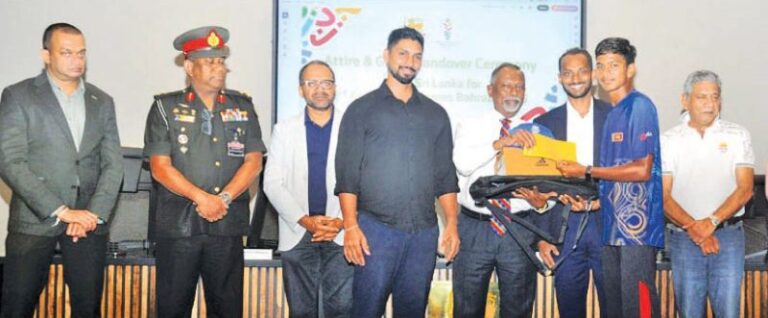
October 19, Colombo (LNW): Sri Lanka is preparing to make a historic appearance at the upcoming Asian Youth Games (AYG), with the island nation set to send its largest-ever delegation to the continental multi-sport event, taking place in Bahrain from October 22 to 31.
A total of 150 individuals will represent the country, including a record 100 young athletes—56 boys and 44 girls—who will compete across 12 disciplines. The athlete group will be supported by a team of 31 sport-specific officials and 19 members from the wider national delegation.
The young Sri Lankan competitors will take part in athletics, badminton, 3×3 basketball, boxing, esports, golf, kabaddi, swimming, taekwondo, beach volleyball, weightlifting, and wrestling—highlighting the growing breadth of youth sport development on the island.
Flying the national flag at the Opening Ceremony will be two standout athletes: Janidu Dhananjaya, the country’s top-ranked Under-16 boxer in the 52kg weight class, and Dilini Nethsala, a rising star in the long jump. Their selection as flag-bearers reflects both promise and performance in their respective fields.
This year’s participation comes with added significance as it marks the first time the National Olympic Committee of Sri Lanka (NOCSL) will offer a daily allowance to athletes during an international youth event—a progressive step aimed at recognising their commitment and easing financial burdens on young sportspeople and their families.
Sri Lanka’s track record at the AYG includes a modest but meaningful medal haul. At the most recent edition in Nanjing in 2013, Sri Lankan athletes earned six medals, including a silver in the men’s 110m hurdles. The inaugural Games in Singapore in 2009 saw the country take home three medals, one of which was silver in the men’s 4x200m relay.