The Minor International Group CEO insisted the country should not be positioning itself as a cheap destination
Natalie Wilson (Independent)
Sri Lanka has been urged to move beyond “discount-led tourism” to focus on value over price.
Minor International Group CEO Dillip Rajakarier said that the country should not be positioning itself as a cheap destination in his keynote speech at CA Sri Lanka’s 46th National Conference this week, reported Sri Lankan outlet Daily FT.
He described Sri Lanka as a “living museum, wellness sanctuary, and adventure playground that can win on authenticity if the service chain works”.
In recent years, terrorism, political instability and a financial crisis have tested the Indian Ocean nation to its limits.
Visitor numbers to Sri Lanka starting declining in 2019 following a series of bomb attacks, and from 2022 the country saw its worst economic emergency since gaining independence from Britain in 1948.
Sri Lanka is back on the tourist map, but it is still seen as an affordable travel destination, with rooms from around $60 (£45).
“For $60, I cannot travel from London to Birmingham”, added the Minor CEO.
Rajakarier said the country needs to invest in infrastructure, service and sustainability to rebrand its tourism to travellers.
According to the Sri Lanka Tourism Development Authority, in 2024, the country welcomed 2.05 million tourists with a total of 1.2 million tourists in the first six months – a growth of 61.6 per cent compared to the same period in 2023.
“We talk about 2 million tourists. That does not add to GDP unless it is value tourism,” said Rajakarier.
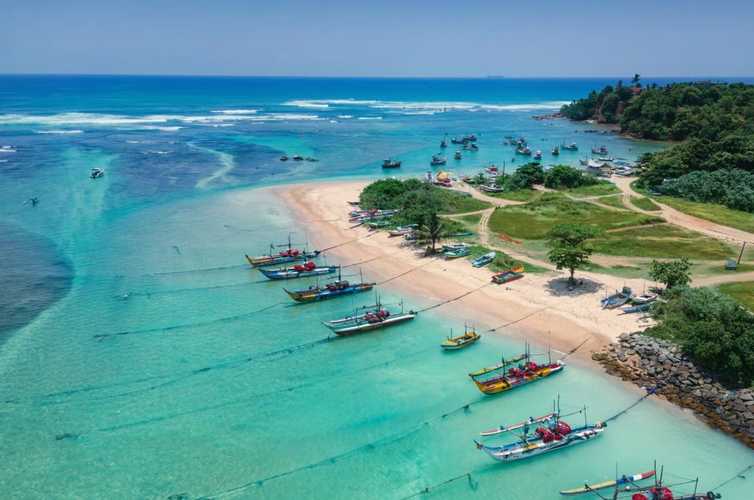
Alongside high-adrenaline adventures such as white water rafting on the Kelaniya Ganga river and climbing in the Kodigahakanda Sanctuary, Sri Lanka’s natural landscapes with golden beaches and tea estates, as well as wildlife-spotting and a focus on wellness, result in a rich tourism offering.
Visitors are often drawn to the Cultural Triangle in the centre of the island, with a number of Unesco World Heritage sites, including the Sacred City of Anuradhapura, the Sigiriya fortress and the Ancient City of Dambulla.
Following a recent delay on arrival in Colombo, due to multi-use business-class lanes, Rajakarier added: “This is not seamless tourism. This is painful tourism,” he added,
The hotel CEO called for a more powerful national brand to encourage visitors. He said: “Tourists do not buy hotels. They buy a story”.
Hotel group boss says Sri Lanka must rebrand as a value destination
Massive Drug Haul Linked to Colombo-Bengaluru Route Uncovered by Indian Authorities

October 14, Colombo (LNW): Indian anti-narcotics officials have intercepted a large consignment of illegal drugs believed to have been trafficked from Colombo to Bengaluru, seizing narcotics valued at approximately Rs. 500 million.
The operation, led by the Narcotics Control Bureau (NCB), has resulted in the arrest of three individuals, including a Sri Lankan national suspected to be a key figure in the trafficking network.
According to reports from Indian media, the NCB seized 45.4 kilogrammes of high-grade hydroponic cannabis—commonly referred to as hydro cannabis—and 6 kilogrammes of psilocybin mushrooms, a hallucinogenic substance categorised as a controlled psychedelic drug in many jurisdictions.
The investigation was triggered by intelligence pointing to the smuggling of hydroponic cannabis from Thailand to Bengaluru via transit routes, including Colombo. Acting on this tip-off, NCB officers ramped up security checks at Kempegowda International Airport in Bengaluru.
On October 09, two passengers arriving from Colombo were detained after their luggage was found to contain 31.4 kilogrammes of hydro cannabis and 4 kilogrammes of psilocybin mushrooms. The narcotics were meticulously concealed in approximately 250 sealed food tins, a method designed to evade routine inspections.
Information extracted during the interrogation of the initial suspects led authorities to a third individual, identified as a Sri Lankan national believed to have played a coordinating role in the operation. He too had arrived via a flight from Colombo and was apprehended carrying an additional 14 kilogrammes of hydro cannabis and 2 kilogrammes of psilocybin mushrooms.
Investigators say the arrests mark a significant breakthrough in ongoing efforts to dismantle international drug smuggling networks operating through South Asia. Authorities are now working to determine the full extent of the operation, including any connections to regional or transnational drug cartels.
The NCB has reiterated its commitment to intensifying surveillance at key transit points and has urged greater cross-border cooperation in tackling the growing challenge of synthetic and hydroponic drug trafficking across the region.
Sri Lanka Sees Continued Growth in Tourist Arrivals as October Figures Climb
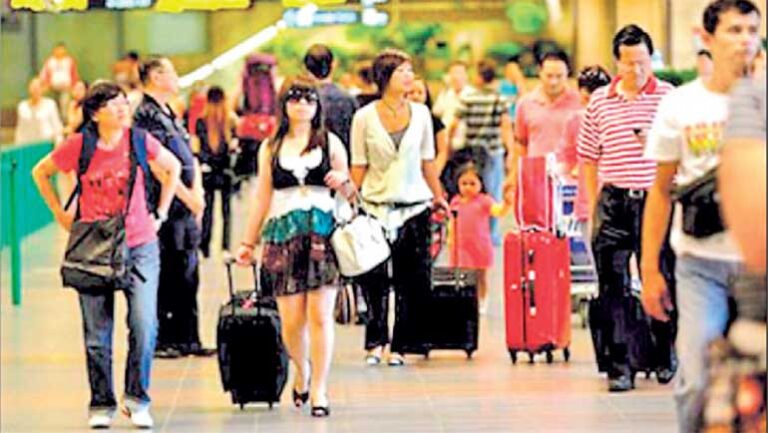
October 14, Colombo (LNW): Sri Lanka’s tourism sector continues its upward trajectory, with over 62,000 international visitors recorded in just the first 12 days of October, according to figures released by the Sri Lanka Tourism Development Authority (SLTDA).
The latest data reveals that India remains the dominant source market, contributing 18,299 tourists during this period—nearly 30 per cent of all arrivals. China followed with 5,417 visitors, while 4,874 travellers arrived from the United Kingdom. Germany accounted for 3,804 arrivals, and 2,954 Australians also made their way to the island nation this month.
Cumulatively, tourist arrivals for 2025 have now reached 1,788,235, reflecting growing international interest in Sri Lanka as a travel destination. India continues to lead with 292,633 arrivals so far this year, followed by the United Kingdom (166,767), Russia (125,035), Germany (110,792), and China (107,007).
The rise in visitor numbers signals a robust recovery for the tourism industry, which has faced multiple challenges in recent years. September alone saw 158,971 arrivals, marking a 30.2% increase compared to the same month in 2024—a promising indicator ahead of the peak holiday season.
United States Updates Travel Advisory for Sri Lanka, Urges Heightened Caution

October 14, Colombo (LNW): The United States has revised its travel guidance for Sri Lanka, issuing an updated advisory that places the island nation under a Level 2 classification—urging travellers to exercise increased caution.
Released by the U.S. Department of State, the advisory highlights a number of concerns for prospective visitors, including the potential for civil unrest, the lingering threat of terrorism, and the continued presence of landmines in certain areas.
The notice reflects a shift in how Sri Lanka is currently assessed in terms of travel risk, with officials advising that while the country remains a viable destination, travellers should remain alert to developing situations, particularly in regions with a history of conflict or political tension.
The updated advisory includes new cautionary indicators, signalling that the broader global climate—as well as domestic conditions—are being closely monitored by U.S. authorities.
Government Races to Restore Disrupted Digital Services Amid Widespread Cloud Outage
October 14, Colombo (LNW): A high-level meeting has been convened today (14), to accelerate the restoration of essential online government services following a significant disruption to the Lanka Government Cloud (LGC), which has affected digital operations across several key state departments.
According to senior officials from the Ministry of Digital Economy, the urgent discussions are aimed at coordinating technical efforts, assessing the scale of the outage, and ensuring that public services return to normalcy without further delay.
The Information and Communication Technology Agency (ICTA), which oversees the national digital infrastructure, confirmed that the outage has temporarily disabled online platforms used by at least eight government entities. Among the affected services are the issuance of birth, marriage, and death certificates by the Registrar General’s Department; the e-Revenue Licence system used by Provincial Departments of Motor Traffic (excluding the Western Province); and the online police clearance system.
Other systems impacted include the platform for generating Certificates of Origin by the Department of Commerce and the websites of several public institutions, such as the Department of Meteorology, the Registrar of Companies, and the Sri Lanka Accounting and Auditing Standards Board.
Engineers from ICTA, in collaboration with the cloud service provider, are reportedly working around the clock to resolve the technical issues. While an exact cause has not yet been publicly detailed, initial assessments suggest the disruption may stem from internal system failures within the LGC infrastructure. No evidence has been released to indicate a cyberattack at this stage.
In response to the service interruption, the Registrar General’s Department has advised citizens to obtain physical copies of certificates from the relevant Divisional Secretariats as a temporary workaround.
Government departments relying on the cloud platform have been kept informed of developments, and contingency plans are being enacted to minimise the disruption to administrative processes.
The ICTA further stated that the ongoing LGC expansion project, which commenced earlier this month, is expected to significantly enhance system resilience and capacity once completed. Officials expressed confidence that the current limitations exposed by the outage will be addressed through the phased rollout of the new infrastructure.
While regretting the inconvenience caused to citizens and government bodies, ICTA reiterated its commitment to restoring full functionality as swiftly as possible. It urged the public to remain patient as technical teams continue their efforts to resolve the situation.
Police Constable Accused of Assaulting Lawyer at Court Premises Granted Bail: Mediation Ordered
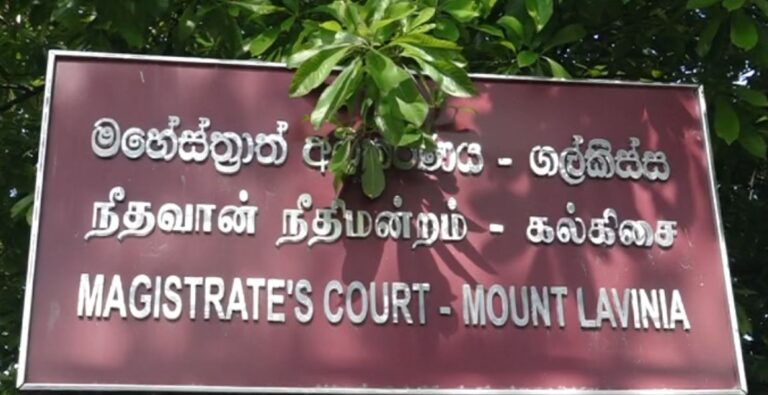
October 14, Colombo (LNW): A police constable remanded in connection with an alleged physical altercation involving a lawyer within the premises of the Mount Lavinia Magistrate’s Court has been released on bail following a court order issued earlier today.
The case, which has stirred notable attention due to the parties involved, was taken up before Magistrate Pasan Amarasekara, who granted bail to the officer under two sureties of Rs. 100,000 each. In addition, the matter has been referred to the local Mediation Board, with instructions to submit a report on its progress by 17 November.
The incident in question occurred last Friday, when Constable Tharindu Dilhara was arrested for allegedly assaulting attorney-at-law Sanjeewa Anthony on court premises—a space meant to uphold the rule of law. The arrest led to his immediate remand custody until today’s hearing.
The courtroom was attended by representatives from the Attorney General’s Department, senior police officials, the injured party, and members of the Colombo Bar Association. Their submissions revealed conflicting accounts of what transpired during the confrontation.
Deputy Inspector General Jaliya Senaratne, together with the Officer-in-Charge of the Mount Lavinia Crimes Division, informed the court that several witness statements had been recorded. These included accounts from the prison bus driver, a Sub-Inspector, a female constable stationed at the court entrance, and even a Buddhist monk, among others who had come forward voluntarily. According to the police, none of the witnesses corroborated claims of physical assault.
They also requested court approval to retrieve CCTV footage from the premises, although it was noted that the surveillance system may have been non-operational at the time—a detail conveyed by a previous presiding judge. If footage is found to exist, the court ordered that it be examined by the Government Analyst.
Counsel representing the alleged victim presented video footage purportedly showing the confrontation, claiming that it clearly indicated verbal abuse and physical aggression. “This is not simply a matter of misunderstanding—there was an assault,” said President’s Counsel Shanaka Ranasinghe, acting for Mr Anthony. The police, however, challenged the reliability of the video, suggesting it could have been altered.
Appearing for the accused officer, lawyer Kamal Silva argued for leniency, noting that the constable was relatively junior, with six years of service and no disciplinary history. He added that releasing him would not pose a threat to public order nor aggravate tensions between the legal and law enforcement communities.
Deputy Solicitor General Wasanta Perera, representing the Attorney General’s Department, echoed a sentiment of conciliation, expressing hope that the situation would not escalate into institutional conflict. He emphasised that the Attorney General’s involvement was neutral and proposed that mediation would be the most appropriate path forward.
Ultimately, Magistrate Amarasekara granted bail and directed that the issue be handled through mediation. The court will revisit the matter next month, pending the submission of a report from the Mediation Board.
IMF Chief Warns of AI Divide, Calls for Urgent Ethical and Regulatory Reforms

October 14, Colombo (LNW): The global community is unprepared for the pace and scale of artificial intelligence (AI) advancement, particularly when it comes to the ethical and regulatory challenges it presents, warned International Monetary Fund (IMF) Managing Director Kristalina Georgieva on October 13.
Speaking at the opening session of the joint IMF and World Bank annual meetings, Georgieva urged civil society organisations across the world to raise their voices and push governments to address the growing risks posed by unchecked AI development.
Highlighting the disparity in preparedness between wealthy and poorer nations, Georgieva stressed that while AI is progressing rapidly in advanced economies—most notably the United States—developing countries are struggling to keep pace. “The readiness gap is widening,” she said, “and this makes the road to digital inclusion steeper for many low-income countries.”
Although some emerging economies, such as China, are beginning to develop robust AI ecosystems, many others remain hindered by limited internet access, inadequate technological infrastructure, and a shortage of skilled professionals. The IMF, she said, has been advising governments in these regions to first invest in core digital foundations—including education systems, broadband connectivity, and human capital—before seeking to implement more sophisticated AI systems.
Georgieva also reiterated concerns she voiced earlier this month regarding speculative trends in financial markets, which she likened to the exuberance seen during the dot-com boom. She warned that AI-fuelled investment hype, if left unchecked, could trigger volatility and economic setbacks—particularly for vulnerable economies already lagging behind.
To help assess and address these disparities, the IMF has developed an AI preparedness index, which evaluates countries based on four pillars: digital infrastructure, workforce capabilities, innovation, and governance frameworks. Among these, the area where most countries are falling significantly short is the establishment of effective regulation and ethical guidelines.
“The ethical and regulatory backbone of AI is still missing in most of the world,” Georgieva said. “Without it, we risk letting a powerful technology develop in ways that may not align with the public good.”
She urged civil society groups to step in and hold both governments and the private sector to account. “Sound the alarm,” she said. “In the world of AI, standing still means falling behind.”
Fugitive ‘Ishara Sewwandi’ Linked to Underworld Killing Apprehended in Nepal
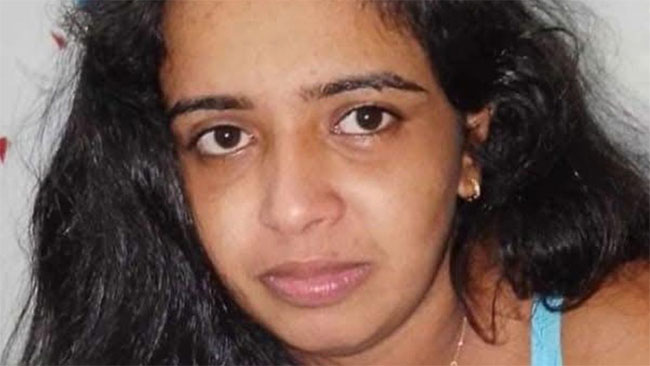
October 14, Colombo (LNW): A female suspect long sought by Sri Lankan authorities in connection with the high-profile assassination of alleged underworld leader Sanjeewa Kumara Samararatne, known by the alias ‘Ganemulla Sanjeewa,’ has reportedly been captured in Nepal.
The woman, identified as Ishara Sewwandi, had been evading law enforcement for several months following the fatal incident, which drew significant media and public attention due to its links with organised criminal networks.
Her arrest in a foreign jurisdiction marks a key development in the investigation, which has spanned across borders.
Sri Lankan Travel Firm Earns International Acclaim at Prestigious Global Awards

October 14, Colombo (LNW): In a significant boost to Sri Lanka’s presence on the global tourism stage, Expo Leisure has achieved a landmark victory at the 2025 World Travel Awards, emerging as one of the first companies from the island nation to claim major accolades in both the inbound and outbound travel sectors.
The company’s travel arms—Classic Travel and Classic Destinations—were honoured for their outstanding contributions to the tourism industry during the Asia & Oceania Gala Ceremony, which took place on 13 October in Hong Kong. The event, regarded as one of the most prestigious in the global travel calendar, draws leading hospitality and tourism operators from across the region.
Classic Travel was recognised as Sri Lanka’s Travel Agency of the Year for 2025, marking its second consecutive win in the category. Meanwhile, Classic Destinations secured the award for Destination Management Company of the Year, highlighting the group’s strength in curating memorable and seamlessly managed travel experiences for international visitors to Sri Lanka.
Receiving the awards on behalf of the company, Sabry Bahaudeen—Chief Commercial Officer and Director of the Expo Leisure Cluster—expressed gratitude and pride, noting that the recognition reflects years of dedication, innovation, and a firm commitment to service excellence. He added that the honours serve not only as a celebration of corporate success but as a moment of pride for the entire Sri Lankan travel industry.
“Our mission has always been to place Sri Lanka firmly on the map as both a vibrant tourist destination and a trusted travel services hub,” Bahaudeen said following the ceremony. “These awards validate the hard work of our teams and our continued investment in raising the bar for travel services both within and beyond our borders.”
The accolades are expected to further strengthen Expo Leisure’s international reputation and reinforce Sri Lanka’s appeal as a destination capable of delivering world-class travel experiences amidst a competitive global market.
Supreme Court Orders Police Officers to Compensate Bus Operator Over Rights Violations
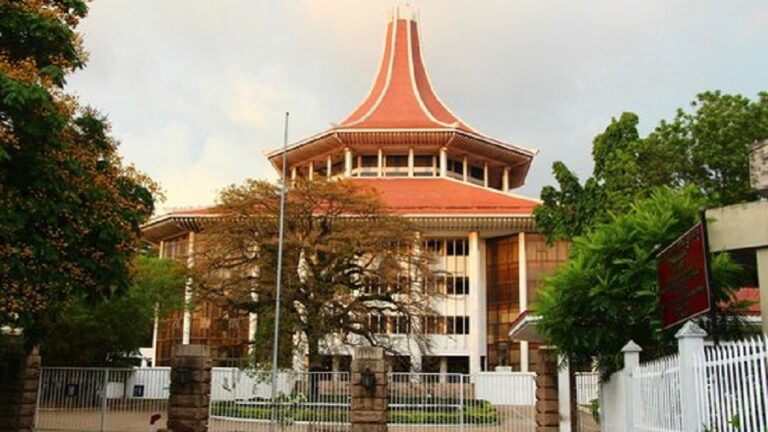
October 14, Colombo (LNW): In a The Supreme Court of Sri Lanka has found six officers attached to the Kottawa Police responsible for serious violations of fundamental rights, including unlawful arrest, physical abuse, and a fabricated narcotics charge against a private bus operator.
The ruling, issued yesterday (13), came as part of a fundamental rights petition filed by Vithanage Sunil, a bus owner operating two vehicles along the Kottawa–Pettah route. The bench, led by Justice Menaka Wijesundara and supported by Justices Yasantha Kodagoda and Janak de Silva, concluded that the conduct of the officers amounted to a gross abuse of power. The Court ordered that a sum of Rs. 1 million be paid to the petitioner as compensation—personally borne by the officers involved.
According to the details presented in court, the incident occurred on the night of July 09, 2016. Mr Sunil had been returning home after visiting a friend when he was intercepted by a group of policemen. Without warning or explanation, a firearm was allegedly pointed at his head, he was forced to the ground, physically assaulted, and subsequently accused of heroin possession—a charge he vehemently denied from the outset.
Despite being remanded following his arrest and produced before the Homagama Magistrate’s Court, a medical report later confirmed that Mr Sunil had sustained injuries to multiple parts of his body while in police custody. Further, an investigative report showed no evidence of drug use, casting serious doubt on the legitimacy of the accusation.
In delivering the verdict, Justice Wijesundara observed that the treatment meted out to the petitioner amounted to degrading and inhumane conduct, constituting a violation of Article 11 of the Constitution, which guarantees protection against torture and cruel treatment. The Court criticised the lack of credible justification for the arrest and noted that the officers’ explanations were riddled with inconsistencies and suspicion.
The officers held accountable include then-Officer-in-Charge L.P.B. Samarasinghe, Inspector Cyril Perera, Sub-Inspector Premasiri, and Constables Nandana Piyal, Sampath, and Chandra Niroshan. The ruling sends a clear message regarding the consequences of police misconduct, reaffirming the judiciary’s role in safeguarding civil liberties.