Home Blog Page 357

Re Daniel, Dawal Migel

0

April 11, Colombo (LNW): The Sports Minister is spreading rumors about the punishment of misconduct and corruption charges. It is said that during the time
of Namal Rajapaksa, a member of parliament, he used foreigners to play for rugby and fined the country 50,000 pounds. The rugby administration, which lost that money to Sri Lanka, instead of paying that money, is telling them to deduct the debt from the aid received by Sri Lankan rugby.

As the ministers and government failed to take any disciplinary action against those responsible, these same individuals continue to hold positions within Sri Lankan rugby at the Asian level.

When Namal Rajapaksa left, Roshan Ranasinghe, who was appointed as the Sports Minister, and Shemal Fernando, who also served as the Sports Director General during Harin Fernando’s time, avoided punishing the previous offenders by saying, ‘Those mistakes did not happen during his time.’ That same agenda is still being brought forward. Just as they took it upon themselves to do with those ministers, they are bringing together those who were complicit in the mistake with this minister and appearing in public, even better than those ministers. They are interpreting the needs of those responsible for that mistake as the needs of Asia and are working to change the constitution.

Despite the fact that the constitutional power that has been created for the expansion of the local rugby game has been delegated to several sports clubs and a framework that works accordingly will reduce the spread of the game throughout the country, the Minister is putting administrators on platforms to show Namal and to show the country that they made wrong decisions that even Namal could not make, holding media conferences with them and giving speeches. Although the allegations against the election committee to postpone the election have been resolved and an agreement has been reached, the case against the Director General of Sports, who postponed the election based on a letter from the Asia President, as agreed in court, is not being implemented.

At the press conference held for the match between Malaysia and Sri Lanka, the Director General said that the Minister of Sports, the Ministry and the Attorney General’s Department had the blessing for it. The fact that the Minister was seated between the Chairman and Secretary of the Administration, who are responsible for the £50,000 fine imposed on Namal Rajapaksa in Parliament, is a sign of the current government’s interference in rugby in Sri Lanka.

These questions are not heard in the national media. Nor are they heard in Parliament. The only sport that Parliament questions is cricket. That is a question that is asked because of the financial wealth that surrounds it. Otherwise, if Parliament and the national media understand that sport is something of national value and go on to question Minister Nalinda Jayatissa about the contradictions between the state of rugby and the public statements of the Sports Minister, Minister Nalinda Jayatissa will be influenced by the Sports Minister on the same level as Nalin Hewage, Sunil Watagala, Samantha Vidyaratne.

Those who try to establish their rugby interests in Sri Lanka as a result of the interests of Asia and the world can be banned from the game with a fine of £50,000, even according to the current sports law in Sri Lanka. After that, they cannot represent Asia or the world. However, the current Sports Minister is happy to work with the administrative body responsible for the mistake by blaming Namal in Parliament to show the country.

Meanwhile, the administration at fault continues to operate unchecked, with a key figure from that same group now appointed to lead the National Sports Council.

It is a serious mistake to use a group of foreigners to represent Sri Lanka as Sri Lankans. Also, that mistake has been proven before the world and a fine has been imposed. The officials who were responsible for that mistake have decided to pay the fine from the aid money received for the development of rugby in Sri Lanka,
thereby hindering the development process of rugby in Sri Lanka. What will a group responsible for such a situation get from a government that prioritizes the aspirations of the people?

The chairmanship of the National Sports Council appointed by the incoming minister. Since the current governments did not implement the law, the officials of the guilty administration have risen to Asian responsibilities and are trying to change the situation where they are not accepted within the existing rugby constitution.

In the future, only the Namal Rajapaksa and Malik Samarawickrama families will be able to play rugby, and when the Thambuttegama Economic Development Center is built, the members of the families living near the single signal post will
have the opportunity to work in a factory where Malik or Namal’s friends will be working, but their dreams of representing the country in a game like rugby will have to be completely buried.

Because the Director General of Sports and the Minister are working very quickly and sometimes with impatience to curtail and weaken provincial rugby activities and give most of the statutory power of rugby to the sports clubs in Sri Lanka.

This change is happening when a boy who came from Thambuttegama and sold goods on the train is the country’s president and a boy who came from Olcott College, which was not noticed as a prince type school in Galle, is the country’s sports minister. Perhaps they are thinking, why do they have a sport they don’t enjoy now? Even though it seems that they are getting that blessing from the top, the Director General of Sports is saying that the election will not be held based on the existing case that he insulted the court by not fulfilling the matters that he had agreed with the court.

It is clear that the intention of postponing the election by involving the Minister, the Ministry, and the Attorney General’s Department, while claiming that he, as the competent authority, should appear alone in the case in which he has been accused of contempt of court, is to forcefully bring the new constitution into force and bring the parties that hold power under the existing constitution into line.

Now, here is a better picture of this need and the false opposition of the minister than the new constitution. The noise of the parliament about the 50,000 pound fine and the picture of the Director General with the Secretary and Chairman of the Administration on both sides of that incident is the best example of that. Although neither the former ministers nor the current government were punished for this offense, none were as brave as this minister and the Director General to appear in public with them in this way. The Minister and the Director General are ready to completely suppress the opposition that they were unable to suppress on the path to Asian office, where they tried to go to the past without imposing fines for the offense, and to reduce the scope of its power in such a way that they can win a majority by the constitution itself. The only place left to challenge it is the
courts.

*Adapted from original article, “රෑ දනියෙල් දවල් මිගෙල්” by Nishman Ranasinghe published on 11/04/2025.

Drought-Driven Agri Slump Threatens Sri Lankan Food Security and livelihoods

0

By: Staff Writer

April 13, Colombo (LNW): Sri Lanka is facing a significant downturn in agricultural output during the first two months of 2025, with key crops such as paddy, tea, coconut, and rubber experiencing notable declines. The Central Bank of Sri Lanka revealed that these setbacks—largely driven by unfavorable weather conditions and structural inefficiencies—are already impacting both food availability and the income of farming communities across the island.

The drop in production has serious implications for the country’s rural economy, which depends heavily on agriculture for employment and sustenance. With thousands of families reliant on farming and related industries, the dip in crop yield and fisheries output raises concerns about rising food prices, reduced export earnings, and mounting financial pressure on vulnerable households.

Main Body (Paraphrased Content):

According to the Central Bank’s latest statistics, paddy cultivation for the 2024/2025 Maha season is expected to drop by 4.2%, reaching 2.61 million metric tons, compared to the previous season. This decline follows an otherwise positive trend in 2024’s Yala season, which saw an 8.8% increase in output, bringing the total annual paddy production for 2024 to 4.7 million metric tons—up 4.1% from the year before.

Fish production has also shown a troubling pattern, decreasing by 15.1% in January 2025 compared to January 2024. Although February saw a slight 1.0% year-on-year increase, the overall output remains weak, particularly due to a fall in inland fishery activities, which form a significant part of rural food supply and employment.

Tea, one of Sri Lanka’s most crucial export commodities, recorded a dramatic 22.0% year-on-year drop in February 2025. The primary cause is attributed to prolonged dry weather conditions affecting plantation zones. Adding to the pressure, global tea prices saw a general downturn, with only the Mombasa auction reflecting a modest increase, while Colombo and Kolkata auctions posted lower average prices.

Coconut yields also fell sharply, with a 31.6% decrease year-on-year in February 2025. Similarly, the rubber sector showed a production slump during the same period, as per provisional figures from the Rubber Development Department. While the international price of natural rubber saw a rise due to supply disruptions from adverse weather in major producing countries, domestic producers may not benefit equally, given the local production drop.

Spice exports offered a glimmer of hope, with higher revenues in February 2025, particularly from products like pepper, cinnamon, and cloves. However, other spices, including turmeric, ginger, clove, and cinnamon, saw price declines, reflecting market volatility and uneven performance across crop categories.

In summary, Sri Lanka’s agricultural sector is facing multiple challenges at the start of 2025, threatening both economic stability and the well-being of those who rely on it. Unless corrective measures are taken to mitigate the impact of climate variability and strengthen support for farmers and fisheries, the country may face further hardships in food security and rural livelihoods.

Sri Lanka Eyes Energy Imports and Tariff Reforms to Counter US Trade Barriers

0

By: Staff Writer

April 13, Colombo (LNW): Sri Lanka is exploring measures such as energy imports and tariff reforms in response to the 44 percent tariff imposed by former US President Donald Trump, according to Deputy Economic Minister Anil Jayantha. Energy remains one of the country’s largest imports, and a shift in this area could yield significant change.

Before the suspension of the tariff, Sri Lanka had held two virtual meetings with US officials. Although the US does not directly engage in government-to-government transactions, Minister Jayantha indicated that private firms in the US could become potential partners for Sri Lanka. A mission to Washington or Colombo to negotiate details was also discussed, with the goal of resolving tariff-related issues.

In an effort to address the matter, President Anura Kumara Dissanayake sent a letter to President Trump, while the Treasury submitted a more comprehensive document to the US Trade Representative and the White House.

Regarding tariffs, Sri Lanka’s highest rate was 20 percent, with some goods already exempt. However, the country also imposes additional charges through para-tariffs, such as the CESS and Port and Airport Levy, which contribute to overall import costs.

Sri Lanka’s trade policies have faced criticism over the years. In 2004, the country embarked on a ‘de-liberalization journey’ by issuing a gazette that imposed taxes on various products without parliamentary approval, resembling a move similar to Trump’s executive orders. This shift toward protectionism led to the emergence of oligarchs who hindered free trade agreements by financing political figures.

Economic experts often resort to measures like interest rate cuts or refinancing bank credits when foreign exchange shortages arise. These actions have historically prompted Sri Lankan politicians to impose trade or exchange controls. The US Trade Representative (USTR) noted that Sri Lanka had reversed its course and was moving toward self-sufficiency rather than embracing global free trade policies.

In a 2005 report, the USTR expressed concern over Sri Lanka’s abandonment of the trade liberalization strategy that had been championed by previous governments. The government’s new approach focused on protecting small and medium-sized enterprises and agriculture, which led to the introduction of a new import tax on specific items. Despite improvements in foreign reserves, the government did not repeal the tax.

The shift toward protectionism also resulted in controversial policies, such as restricting maize imports, which drove up prices for chicken and eggs, according to critics. This move was perceived as a way to favor certain political interests. Critics also pointed out that the taxation of dairy products benefitted a single company, further raising concerns about the impact on the public.As the country navigates these economic challenges, the USTR continued to highlight the negative effects of such protectionist measures, particularly on apparel and food products. During the Yahapalana era, when Sri Lanka faced forex shortages due to increased money printing and flexible inflation targeting, the USTR flagged further trade controls that hindered economic stability.

Ransomware Threats in Sri Lanka Increase, Urging Stronger Cybersecurity

0

By: Staff Writer

April 13, Colombo (LNW): In 2024, Kaspersky’s cybersecurity solutions detected and blocked 2,803 ransomware incidents targeting businesses in Sri Lanka. This represents a 6% increase from the previous year, highlighting the ongoing and escalating threat of ransomware across various sectors. Experts emphasize the need for businesses to enhance their IT security measures to combat the increasingly sophisticated nature of these attacks, which can have devastating financial and reputational consequences.

Notably, in November 2024, Sri Lanka experienced significant cyberattacks targeting major corporations and government entities. These breaches exposed vulnerabilities and led to unauthorized access to sensitive data, underscoring the urgency of strengthening the nation’s cybersecurity infrastructure.

Kaspersky’s Sam Yan, Head of Sales for Asia Emerging Countries, stressed that while the number of ransomware attempts may seem manageable, the impact of even a single successful attack can be catastrophic. He urged businesses to invest in effective cybersecurity solutions that offer comprehensive protection against ransomware, as not all security products provide the same level of defense.

Kaspersky’s cybersecurity tools, including Kaspersky Endpoint Security for Business, Kaspersky Small Office Security, and Kaspersky Standard, have demonstrated perfect ransomware protection in real-world testing scenarios, according to assessments by AV-TEST. This performance reinforces the effectiveness of Kaspersky’s solutions in safeguarding businesses from ransomware threats.

To support victims of ransomware and aid in global efforts to combat cybercrime, Kaspersky continues its partnership with Europol, the Dutch National Police, and other cybersecurity organizations through the No More Ransom initiative. Launched in 2016, this initiative provides free decryption tools and resources to help ransomware victims recover their data. By the end of 2024, the initiative had expanded to cover 42 ransomware families, helping over 2.3 million victims worldwide.

Kaspersky’s contribution to the No More Ransom initiative highlights its dedication to fighting ransomware and strengthening global cybersecurity. The company encourages businesses to adopt best practices for protecting themselves from ransomware attacks, such as avoiding exposure of remote desktop services to public networks, using strong passwords and two-factor authentication, and ensuring software is regularly updated.

In addition, Kaspersky advises businesses to focus on detecting lateral movements and data exfiltration during cyberattacks and to regularly back up data, particularly offline backups. Companies should also be cautious of downloading pirated software or software from untrusted sources and assess the security of their supply chain and managed services.

Furthermore, educating employees about cybersecurity risks is vital. Kaspersky offers training courses via its Automated Security Awareness Platform to help businesses bolster their defenses. By staying informed through resources like the Kaspersky Threat Intelligence Portal, organizations can gain valuable insights into the tactics, techniques, and procedures (TTPs) used by cybercriminals.

In conclusion, as ransomware threats continue to evolve, businesses in Sri Lanka must prioritize cybersecurity and adopt comprehensive protection strategies to safeguard their operations and data.

Government discusses ways to Response to US Tariff Concerns at All-Party Conference

0

By: Staff Writer

April 13, Colombo (LNW): President Anura Kumara Dissanayake has revealed that two letters have been sent to US President Donald Trump addressing the ongoing tariff issues between Sri Lanka and the United States. According to Samagi Jana Balawegaya (SJB) MP Dr. Harsha de Silva, the first letter, written by President Dissanayake, was followed by a more detailed letter from the Secretary to the Treasury outlining potential solutions to resolve the dispute.

The All-Party Conference (APC), held on Thursday, April 10, gathered key political figures, government officials, and economic advisors to discuss Sri Lanka’s response to potential economic challenges posed by US trade policies. During the meeting, Opposition Leader Sajith Premadasa emphasized the need for a unified national approach to mitigate the potential fallout, which he warned could include job losses and factory closures if no decisive action was taken.

Dr. de Silva, who chairs the parliamentary Committee on Public Finance, provided a technical analysis during the meeting. He stressed the importance of economic reforms and regional integration to enhance Sri Lanka’s economic resilience. One key proposal was to sign the Economic and Technology Cooperation Agreement (ETCA) with India, which could unlock regional growth opportunities. Additionally, he suggested a Harmonised System (HS) Code-based approach to trade negotiations with the US, which could help improve bilateral relations and address the tariff concerns.

Despite acknowledging these suggestions, President Dissanayake did not commit to any specific actions at the time. Dr. de Silva, however, stressed the need for pragmatic engagement with the US, pointing out that President Trump’s approach to trade, especially his focus on trade deficits, was fundamentally flawed but must be navigated carefully due to its transactional nature.

Addressing the concerns over the US’s imposed tariffs, Dr. de Silva pointed out that the 88% tariff figure was misleading. He explained that the number was derived by dividing the trade deficit by the value of imports from Sri Lanka, using arbitrary parameters. He argued that this calculation did not reflect the actual tariffs and that debating it on technical grounds was futile.

The APC also raised concerns about Sri Lanka’s economic future, particularly regarding the potential loss of the European Union’s GSP+ trade concessions. Dr. de Silva warned that the upcoming changes in EU regulations could result in Sri Lanka losing its preferential trade status. He emphasized the urgency of securing a transitional arrangement to prevent disruptions to Sri Lanka’s export economy.

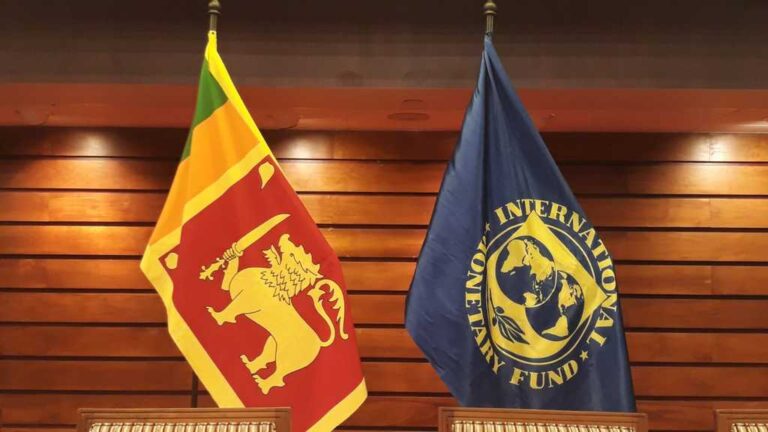
 At the conclusion of the APC, it was agreed to monitor the situation closely and reconvene for further discussions. Although no formal committee was established, there were suggestions to form a working group to continue addressing the issue. Sri Lankan officials are expected to engage with US trade representatives during the upcoming IMF and World Bank Spring Meetings in Washington, DC, to further advance the discussions.

Sri Lanka Sticks to Export Goals amid Trade Turmoil

0

By: Staff Writer

April 13, Colombo (LNW): Despite mounting global trade pressures, Sri Lanka is holding firm on its $18.7 billion export target for 2025. The government’s stance comes amid a 44% tariff hike by the United States and the possible suspension of the European Union’s GSP+ trade benefits due to concerns over human rights practices.

The Generalised Scheme of Preferences Plus (GSP+), which allows Sri Lankan exports reduced tariffs to the EU, has been vital for key sectors such as apparel, seafood, and rubber. Any withdrawal of this preferential access could severely damage export competitiveness and lead to job losses, especially in the apparel industry—one of the country’s largest employers.

While the EU’s concerns are centered on human rights compliance, the U.S. tariff hike, announced by former President Donald Trump, forms part of a broader global trade strategy and is not exclusively aimed at Sri Lanka. However, the Ministry of Trade, Commerce, and Food Security acknowledges the potential fallout, as Sri Lanka exports nearly $3 billion worth of goods to the U.S., with apparel alone contributing $1.8 billion.

“We believe this tariff may be related to our trade imbalance with the U.S., where we import only about $300 million,” a ministry spokesperson stated. “But we remain optimistic and are seeking a diplomatic resolution.”

Officials further confirmed that even if no exemption is reached, Sri Lanka is preparing to diversify its export markets. Early discussions are underway to boost trade with Europe and Asia, ensuring resilience in case U.S. access becomes more restricted.

The Export Development Board (EDB) has projected $14.54 billion from merchandise exports and $4.16 billion from services by 2025. Despite the expected increase in competition due to rising costs, the government maintains that the U.S. market won’t be entirely lost.

Meanwhile, Colombo-based think tank Verité Research has urged a multilateral approach through the World Trade Organization (WTO) rather than isolated bilateral deals. They warn that unilateral moves like Trump’s tariff hikes weaken global trade norms. Verité recommends a “Cooperative Common Response” to defend the integrity of the international trading system.

 Diplomatic efforts are ongoing. While the U.S. typically avoids direct government-to-government trade negotiations, Sri Lanka has initiated virtual discussions. Deputy Economic Minister Anil Jayantha said energy imports and tariff reforms may be used as bargaining tools during these talks.

With no plans to adjust its 2025 export ambitions, Sri Lanka is navigating the complexities of global trade with a dual strategy: defending its current markets while actively pursuing new ones. Whether through diplomacy or diversification, officials remain committed to shielding the economy from external shocks.

Hundreds of retailers face legal action over food safety breaches during holiday crackdown

0

April 13, Colombo (LNW): Health authorities have launched widespread legal proceedings against nearly 600 retailers across Sri Lanka following a nationwide inspection campaign targeting food safety violations during the recent festive period.

The operations, led by the island’s Public Health Inspectors, were conducted between 23 March and early April, focusing on shops and food outlets suspected of breaching public health regulations.

According to Chamil Muthukuda, Secretary of the Public Health Inspectors’ Union, a total of 591 establishments were found to be in contravention of the Food Act, prompting immediate legal action.

These offences ranged from the sale of expired and mislabelled goods to poor hygiene practices and unsafe food storage.

The extensive campaign covered over 4,700 retail outlets, with officers deployed across urban and rural areas to ensure compliance with national food safety standards.

Muthukuda noted that whilst the majority of businesses operated responsibly, a significant number were found to be endangering public health through negligence or deliberate malpractice.

Meanwhile, the Health Ministry has urged consumers to remain vigilant when purchasing food and to report any suspicious products or unhygienic practices to local authorities. Officials are also encouraging businesses to undergo training and certification to ensure that their operations align with updated food safety protocols.

Paradise Lost: How “The White Lotus” Unmasks Capitalism’s Rotten Core

0

By: Isuru Parakrama

April 13, World (LNW): Mike White’s acclaimed television series The White Lotus unfolds like a luxury holiday gone wrong, yet beneath its sun-soaked resorts and picture-perfect vistas lies an astute dissection of modern capitalism and the quietly simmering tensions between the elite and the rest.

With this article exploring the depths of such social phenomena, viewer discretion is advised – spoilers ahead!

With biting satire and razor-sharp dialogue, the show pulls back the curtain on the hypocrisies, self-delusions, and unchecked power of the wealthy, revealing not only how they live in a world immune to consequence, but how their hubris often leads to their moral – and sometimes literal – downfall.

Each season of The White Lotus is meticulously set in an opulent hotel, a microcosm where class hierarchies become grotesquely visible. The staff, though superficially polite, are all too aware of their position within the hierarchy, often quietly seething beneath the surface. The wealthy guests, meanwhile, remain blissfully detached from the reality they impose on others. It is not merely a critique of wealth, but of the culture that sustains it – a capitalism that grooms its beneficiaries to believe in their inherent superiority whilst turning a blind eye to the systems that crush everyone else.

There is a subtle, persistent grudge simmering between the elite and the middle class throughout the series. The middle class is either desperate to ascend into the elite circle or resentfully aware that they never truly will. Characters like Harper in Season 2 embody this tension – sharp, observant, and critical of her surroundings, yet ultimately drawn into the very lifestyle she critiques. It is a grim commentary on how capitalism does not only oppress, it seduces. The middle class clings to morality, but once proximity to power and money is introduced, values are tested, distorted, or abandoned altogether.

Perhaps the most chilling element of the series is how the characters’ vanity leads them to ruin. From Tanya’s delusional pursuit of affection and status, to Shane’s obsessive entitlement over a hotel room, their inflated self-worth blinds them to reality. The pursuit of self-importance – whether through relationships, money, or dominance – becomes their undoing. The White Lotus does not just portray these downfalls as individual flaws, but as symptomatic of a system that rewards narcissism and punishes humility. When characters fall, it is often not due to malicious forces, but because they are trapped within their own illusions of grandeur.

Tanya’s tragic end in Season 2 is the most glaring example of this. Seduced by the charm of European aristocrats and flattered into a false sense of belonging, she is ultimately manipulated and cornered, her wealth and naïveté exploited by those who see her only as a means to an end. Her final moments – absurd, panicked, and accidental – are not just a darkly comic twist, but a metaphor for how the elite can be consumed by the very world they think they control. Tanya dies not just because she is foolish, but because the system that raised her on vanity and isolation leaves her utterly defenceless when real danger arrives.

The show’s genius lies not only in its satire of the elite, but in the way it shows how systemic behaviours repeat across social strata. Belinda Lindsey, the spa manager in Season 1, is initially portrayed as a victim of Tanya’s erratic generosity – promised support and upliftment, only to be discarded when Tanya finds a new distraction. However, in a clever turn in the Thailand-based Season 3, Belinda is shown repeating the exact same behaviour towards a local hotel employee. She, too, dangles hope – a spa business idea, a chance at upward mobility – only to abandon it in pursuit of her own ambitions. What was once oppression becomes replication. The abused, now with marginal power, becomes the abuser. The show lays bare how capitalism does not merely harm from above – it teaches people to internalise its logic and reproduce it whenever they get the chance.

Racism, sexism, and homophobia simmer beneath the glossy surface, never addressed outright but always present, woven into the fabric of elite behaviour. Paula’s experience in Season 1 as a woman of colour amongst white guests is suffused with awkward silence, well-meaning microaggressions, and ultimately, betrayal. The guests’ liberal façades crumble under pressure, revealing how deep-seated biases remain alive even amongst the wealthy who claim to be progressive. In truth, their wealth insulates them from the real work of justice – why challenge a system that benefits you, even if it disadvantages everyone else?

Sexism, too, runs rampant. Women are either trophy wives, mistresses, or struggling for autonomy in a world designed by and for men. Even characters like Tanya, who wield wealth, are not truly free. They are entangled in emotional dependencies, illusions of romance, and the manipulation of men who see them as nothing more than bank accounts in heels. Sex is transactional; relationships are power games. The show does not ask whether liberation is possible in such a world – it suggests that, within the system as it stands, it is merely a fantasy.

Homophobia, particularly in the upper echelons, is handled with similar complexity. Characters present as tolerant, open-minded cosmopolitans, but when control is at stake, old prejudices rise to the surface. The duplicity of the elite – publicly progressive, privately prejudiced – is rendered in chilling clarity, particularly in the ways they exploit, marginalise, or fetishise LGBTQIA+ individuals for their amusement, convenience, or image.

Perhaps most damning of all is the series’ portrayal of how the rich view the law: as a suggestion, not a boundary. Whether it is covering up deaths, exploiting workers, or committing fraud, the consequences are either softened or wholly evaded. Money shields them, lawyers buffer them, and the system bends around them. In contrast, the less privileged suffer the full brunt of justice, or worse, are coerced into silence. In The White Lotus, justice is not blind – it is bought.

Ultimately, the show is a bleak, brilliant exploration of a society where morality is optional for those with wealth, and consequence is something that happens to other people. Behind the Instagram-perfect holidays, beneath the designer labels and infinity pools, lies a world rotting from the inside. The White Lotus does not just invite us to sneer at the rich – it forces us to reckon with how easily we could become them, and how willingly we might trade our integrity for comfort if given the chance.

Photos: The Internet

Audit report on NOC reveals more troubling issues

0

In a damning audit report, Sri Lanka’s Auditor General has uncovered a series of financial mismanagement issues, questionable spending decisions, and governance failures at the National Olympic Committee (NOC) of Sri Lanka. The findings raise serious concerns about the organisation’s stewardship of resources meant to develop the country’s Olympic athletes and sports programmes.

The report, which examined the NOC’s operations during 2023, comes at a particularly troubling time as the International Olympic Committee (IOC) has imposed financial sanctions against Sri Lanka’s NOC effective last December, with the possibility of complete suspension of membership looming.

Among the most concerning revelations was the failure of the NOC’s scholarship programme for the Paris 2024 Olympics. The Committee spent Rs. 53,009,144 on scholarships for athletes between 2022 and 2024, yet remarkably, not a single scholarship recipient qualified for the Olympic Games. Meanwhile, the six athletes who did represent Sri Lanka at the Olympics received no support from this programme.

The audit also highlighted several instances of questionable spending without proper authorisation. In one case, the NOC spent Rs. 15,450,579 on overseas training for an athlete preparing for the 2023 Asian Games without obtaining approval from the executive committee, the respective national federation, the department of sports development, or the relevant minister. The athlete subsequently failed to qualify for the Asian Games due to poor performance.

In another troubling incident, the NOC advanced US$ 1,430 (approximately Rs. 464,750) to a retired weightlifter for an overseas sports education programme without the consent of the Weightlifting Federation. The individual, who was supposedly being groomed as a coach, never returned to Sri Lanka after completing the programme and has not settled the advance payment.

The report also revealed the NOC’s failure to distribute allocated annual member grants totaling Rs. 5,400,000 and other project-related payments of Rs. 5,266,980 to 18 National Sports Associations during the year under review.

Property management issues have further compounded the NOC’s financial troubles. The gymnasium was leased to an outside party who vacated the premises without settling outstanding balances of
Rs. 2,699,256 as of December 31, 2023. Similarly, a restaurant leased to a private company left Rs. 3,801,979 in unpaid annual rent by the end of 2023. Despite collecting Rs. 683,000 from the leaseholder to renew the restaurant’s bar license, the NOC failed to complete the renewal.

Questions about duplicate expenditures have also emerged. While the NOC hired an external legal consultant for a two-year period beginning February 2023 at a cost of Rs. 935,000 for the year, it simultaneously paid Rs. 6,878,219 to external legal personnel for the same matters.

Other financial irregularities included Rs. 1,602,000 spent on gifts and donations to athletes, officials, and coaches without an approved scheme, and long-standing uncollected receivables from the Cycling Federation of Sri Lanka (Rs. 271,800) and Sri Lanka Baseball/Softball Federations (Rs. 720,047) that have remained outstanding for over three years.

The IOC had granted Rs. 7,109,600 to the NOC for preparing a strategic plan for 2023-2028, yet the Committee failed to complete the plan by December 31, 2023, despite spending Rs. 9,246,111 on the effort.

Perhaps most concerning were the governance issues related to the Commonwealth Games held in 2022. The NOC arranged for 176 people to participate, with six attending without the approval of the Minister of Sports and Youth Affairs. Fourteen individuals did not return to Sri Lanka after the Games, despite the NOC spending Rs. 9,294,968 on behalf of 12 participants during 2022.

As Sri Lanka’s sports community grapples with these revelations, athletes preparing for upcoming international competitions face uncertainty about organisational support and funding. The audit report’s stark findings suggest that comprehensive reforms will be necessary to restore credibility to the National Olympic Committee and prevent further damage to the country’s sporting reputation.

Source: Sunday Times

Probe launched into alleged abuse of schoolchildren in Colombo amid public outcry

0

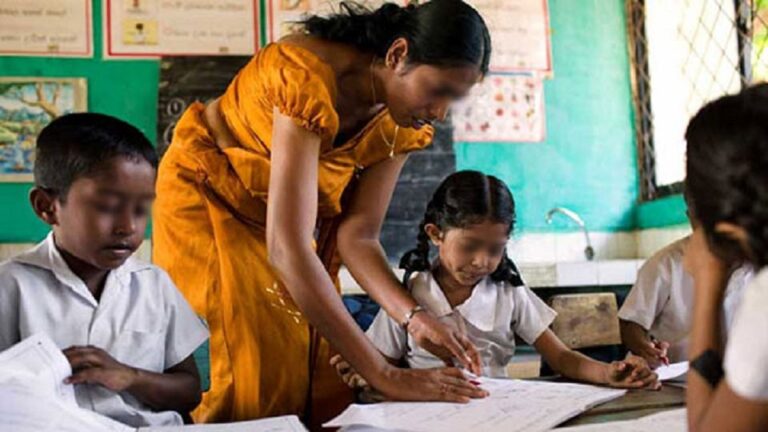
April 13, Colombo (LNW): Authorities have begun a formal inquiry into a troubling incident at a Colombo-based boys’ primary school, where young students were reportedly subjected to severe physical punishment by a teacher.

The National Child Protection Authority (NCPA) confirmed that its Special Investigation Unit initiated the probe following public concern over a video that recently emerged online.

The footage, widely circulated on social media platforms, is said to depict a Grade 3 teacher meting out what appears to be violent discipline to children under his supervision.

The teacher, identified as R. Ganeshamoorthy, is accused of striking the students with a stainless steel ruler—an act allegedly carried out in response to their inability to memorise and recite a lesson.

The children involved, both aged seven, have since provided detailed statements to investigators alongside their parents and school officials.

The NCPA’s Director of Law Enforcement, Ms Sajeewani Abeykoon, noted that whilst some parents were initially reluctant to press charges, further discussions clarified that legal action would serve to protect not only their children but potentially others as well.

“Our responsibility is to uphold the rights and wellbeing of the child, irrespective of the initial hesitation from guardians,” she said.

In the course of the inquiry, investigators visited the school to examine the classroom where the incident is believed to have occurred.

Forensic medical assessments of the children have been conducted and video testimonies have been collected under judicial authorisation.

Officials confirmed that the preliminary phase of the investigation has concluded and that the matter has now been brought before court under Section 308 of the Penal Code, which addresses cruelty inflicted on children.

The teacher, believed to be a resident of Badulla, has not yet been apprehended and is reportedly evading arrest. Police have launched a targeted operation to locate and bring the individual into custody.

The incident has reignited public discourse on the persistence of corporal punishment in Sri Lanka’s education system, despite longstanding calls for reform.

Whilst the use of physical discipline in schools is officially discouraged and prohibited under child protection regulations, enforcement remains inconsistent, particularly in primary institutions.

Child rights advocates and educational experts have expressed outrage over the incident, urging stronger institutional accountability and better mechanisms for reporting abuse within schools.

Many have emphasised the need for sustained teacher training on non-violent disciplinary methods, coupled with psychological support frameworks for both students and educators.