Home Blog Page 365

President appeals to Washington over tariff dispute amid trade deficit concerns

0

April 08, Colombo (LNW): Sri Lanka has formally engaged the United States government over the economic fallout from newly introduced tariffs, with President Anura Kumara Dissanayake directly reaching out to President Donald Trump in a bid to address the strain these measures have placed on bilateral trade.

The move was disclosed in Parliament by Deputy Minister of Economic Development Prof. Anil Jayantha Fernando, who confirmed that the White House had acknowledged receipt of the correspondence.

The intervention comes as Sri Lanka grapples with an increasingly lopsided trade relationship with the United States, its largest single-country export destination.

According to Deputy Minister Fernando, the island nation is currently facing a trade imbalance with the US that hovers around 88 per cent, a figure based on trends observed over the past five years.

Responding to a parliamentary query raised by New Democratic Front MP Ravi Karunanayake, the Deputy Minister said that apparel and food products, along with three other primary export categories, make up the bulk of Sri Lankan shipments to the US.

These goods are now subject to a range of new tariffs and para-tariffs, introduced as part of Washington’s efforts to recalibrate its trade relationships based on persistent deficits.

The government, Fernando noted, is seeking to address the situation through both direct diplomacy and strategic policy interventions aimed at mitigating the potential harm to domestic industries.

“This is not an issue isolated to our country alone,” he said, adding that a common formula had been used by the US to assess trade deficit-related tariffs across the board, which even regional powers like India have been unable to circumvent.

As part of ongoing efforts to negotiate relief, Sri Lanka’s Ambassador in Washington has been engaged in continuous dialogue with senior officials from the Trump administration since early February.

In addition, Fernando confirmed that another round of high-level discussions was scheduled for the evening of 8 April with representatives from the Office of the United States Trade Representative.

He stressed that the new administration remains committed to addressing the wider implications of these tariffs. Measures taken so far include assessments of affected sectors, support for local manufacturers, and potential diversification of trade partners to reduce dependency on any single market.

Although no immediate concessions have yet been announced, the government insists that diplomatic pressure and pragmatic negotiations will continue in parallel with internal economic adjustments.

These include a review of export structures, identifying vulnerable sectors, and introducing support frameworks to cushion the impact on small and medium-sized enterprises.

MP Chamara Sampath secures bail amid ongoing corruption allegations

0

April 08, Colombo (LNW): National Democratic Front MP Chamara Sampath Dassanayake has been granted bail by the Colombo Magistrate’s Court, following his arrest on charges linked to alleged misuse of public funds during his time in provincial office.

Dassanayake, who formerly held the position of Chief Minister in the Uva Province, stands accused of financial misconduct dating back to 2016.

The charges, brought forward by the Commission to Investigate Allegations of Bribery or Corruption (CIABOC), centre on the alleged misappropriation of state funds earmarked for early childhood education programmes.

In court proceedings, the prosecution outlined claims that Dassanayake had approached three state-owned banks, presenting a request for funding purportedly intended to provide schoolbags for preschool children.

Whilst two institutions approved a combined sum totalling Rs. 3.5 million, these funds were reportedly deposited into a personal charitable foundation linked to the MP.

A third bank, which refused to release funds, allegedly faced retaliatory action through the withdrawal of provincial council deposits, prompting significant financial repercussions for the council — with CIABOC estimating losses exceeding Rs. 17 million.

The Colombo Chief Magistrate, Thanuja Lakmali, upon hearing submissions from both legal teams, approved bail for Dassanayake under specific conditions. He was released on a cash bond of Rs. 50,000, along with two personal sureties each amounting to Rs. 2 million.

Additionally, an overseas travel ban has been imposed to ensure his presence during future proceedings. The court has scheduled the next hearing for 17 June.

In a separate matter, the Badulla Magistrate’s Court had earlier ordered the MP to be held in remand until 21 April in connection with a related investigation also initiated by CIABOC.

These cases form part of a broader inquiry into three separate incidents of suspected corruption tied to Dassanayake’s tenure as a provincial leader.

Since his arrest on 27 March, the legal proceedings have garnered widespread public interest, not least due to the intersection of politics and allegations of financial abuse.

Whilst bail has now been granted in all three cases, the implications of the investigations continue to reverberate through both provincial and national political circles.

Counsel representing the MP, President’s Counsel Kalinga Indatissa, requested court permission for his client to attend ongoing parliamentary sessions, a request which the Magistrate permitted without objection.

Sri Lanka’s Economic Comeback: A Year of Recovery and Reform in 2024

0

By: Staff Writer

April 08, Colombo (LNW): In 2024, Sri Lanka continued its path of steady economic recovery after experiencing its worst economic crisis two years prior. Despite the difficulties, the pace of recovery was faster than that seen in most debt-ridden nations, Central Bank’s annual economic review report for 2024  revealed.

 Reforms implemented following the crisis began to yield positive outcomes. Economic activity picked up, purchasing power partially improved, and uncertainties started to fade—especially those related to the elections, which lessened as the government showed clear intent to continue reforms and maintain consistent policies.

A major turning point came with the near-finalization of external debt restructuring and the country’s removal from its restricted default credit rating, which significantly boosted confidence among investors and stakeholders.

Sri Lanka’s economic growth surpassed expectations in 2024. Inflation, which had been a concern, eased and even transitioned into deflation by September, mainly due to declining energy prices. This pushed inflation below the Central Bank’s target.

With interest rates remaining low, lending to both households and businesses increased, helping to revive domestic economic activity and regain ground lost during the pandemic and prior crisis.

On the external front, Sri Lanka’s performance was robust. The country saw stronger foreign exchange inflows and a surplus in its current account. The rupee appreciated under a flexible exchange rate policy, lowering import prices and benefiting consumers, though it slightly hurt export earnings. The fiscal sector also saw improvement, with the primary budget balance in surplus for the second year running.

The Central Bank focused on maintaining both price and financial system stability. Continuing with the Flexible Inflation Targeting framework, it kept monetary policy accommodative due to the subdued inflation outlook.

With external conditions improving, restrictions on imports and capital flows were gradually lifted. Financial sector stability was further supported by the Banking (Amendment) Act, which improved bank governance. Regulatory steps were also taken to enhance risk management and corporate governance.

The establishment of business revival units in banks aimed to help micro, small, and medium-sized enterprises (MSMEs). Efforts to boost financial literacy, inclusion, and digital banking services were also ramped up.

The crisis of 2022 had revealed deep structural flaws in Sri Lanka’s economy. The reform agenda since then has aimed at fixing these issues while maintaining fiscal discipline for long-term debt sustainability.

The government prioritized support for the vulnerable through social protection programs and began addressing corruption vulnerabilities. With inflation and interest rates low, and the financial sector stable, conditions are favorable for future growth. Positive market sentiment and political stability have further enhanced the economic outlook.

 However, global uncertainties—such as proposed U.S. tariffs—could pose risks to Sri Lanka’s external sector. This makes it vital to maintain prudent policymaking and build stronger fiscal and external reserves.

In summary, Sri Lanka’s recovery in 2024 was driven by bold reforms, prudent policies, and international support, including the IMF-EFF programme. Although substantial progress has been made, the country’s continued success depends on a strong commitment to structural reforms that ensure long-term prosperity for all its people.

MillenniumIT ESP Expands to Australia, Strengthening Sri Lanka’s Rising IT Industry Presence Globally

0

By: Staff Writer

April 08, Colombo (LNW): As Sri Lanka’s IT industry continues its steady rise on the global stage, one of its foremost technology companies, MillenniumIT ESP, has marked a significant milestone by expanding operations into Australia. This move marks the firm’s fifth international location, underscoring both the growing global demand for Sri Lankan tech expertise and the nation’s emergence as a regional innovation hub.

Sri Lanka’s IT and BPM (Business Process Management) sector has shown strong momentum in recent years, driven by a skilled workforce, cost-effective solutions, and a maturing digital infrastructure. Industry bodies such as SLASSCOM have highlighted the country’s potential to generate over US$ 5 billion in IT exports by 2030. MillenniumIT ESP’s latest expansion is a clear example of this upward trajectory and the international confidence in Sri Lankan technology service providers.

MillenniumIT ESP’s entrance into the Australian market is a strategic initiative aimed at accelerating digital transformation and forging strong local partnerships across the region. The company, known for delivering end-to-end IT solutions, brings decades of global experience to Australian businesses, helping them adapt and thrive in an increasingly digital-first environment.

“Expanding into Australia is a significant milestone in our journey as a global technology solutions provider,” said Shevan Goonetilleke, CEO of MillenniumIT ESP. “With our expertise and commitment to innovation, we aim to deliver high-impact IT solutions that empower businesses in their digital transformation efforts. We look forward to building strong local partnerships and making a lasting impact in the Australian market.”

Headquartered in Colombo, Sri Lanka, MillenniumIT ESP boasts nearly 30 years of experience in the tech industry, with over 2,000 successfully delivered projects and a clientele of more than 500 organizations worldwide. In addition to its presence in Sri Lanka, the company has operations in Bangladesh, Singapore, Dubai, and now Australia, along with a state-of-the-art Global Service Delivery Centre at Port City Colombo.

The company’s service portfolio spans infrastructure platforms, cybersecurity, managed services, software development, cloud solutions, automation, and advanced network technologies. It caters to a broad range of sectors including telecommunications, banking and finance, manufacturing, government, retail, and more.

Analysts view this move as a timely one, with Australia’s digital economy projected to be worth over AU$250 billion by 2030. MillenniumIT ESP’s arrival offers Australian enterprises a new partner equipped with global know-how and a unique value proposition grounded in agility, innovation, and affordability.

This expansion also sends a strong message about the capabilities of Sri Lanka’s technology sector, which continues to produce firms ready to compete and collaborate on the world stage. With increasing interest from global investors and growing demand for tech talent, Sri Lanka’s IT industry appears poised for a defining decade.

Sri Lanka March Tea Sales Show Resilience amid Market Headwinds

0

By: Staff Writer

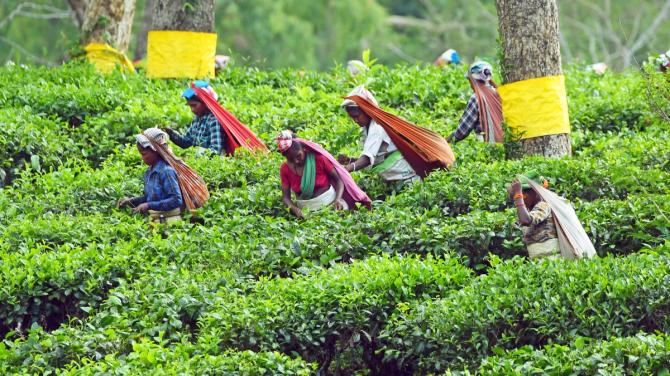
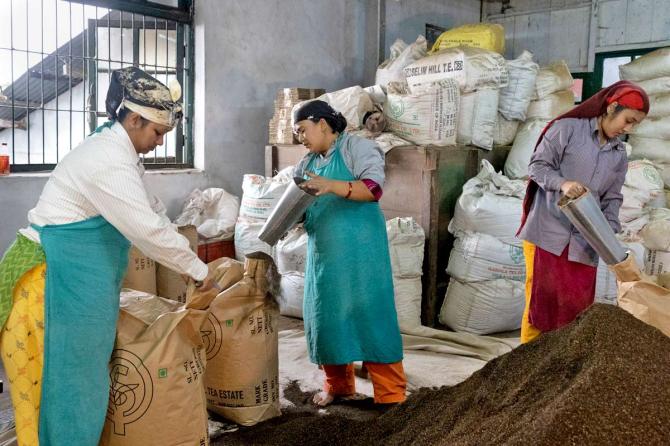
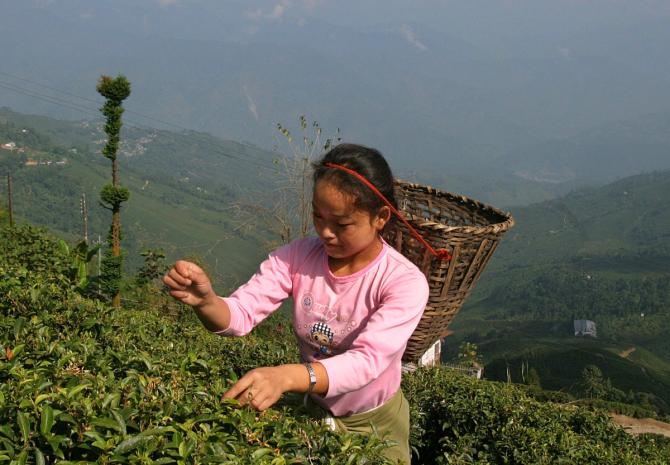
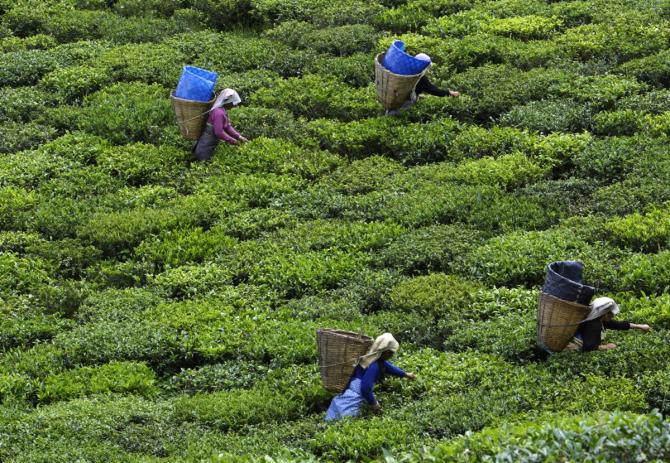
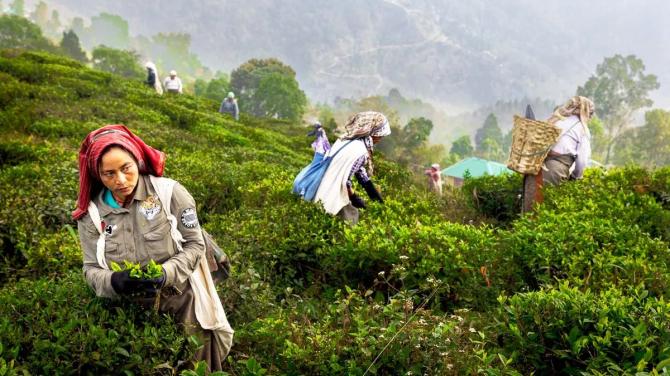
April 08, Colombo (LNW): Sri Lanka’s tea industry recorded a slight rebound in March 2025, with the National Sales Average (NSA) reaching Rs. 1,183.76 ($4.02), reflecting an increase of Rs. 14.83 and $0.06 compared to February. While this offers a glimmer of hope for the sector, year-on-year comparisons still show a downward trend, as the March 2024 NSA stood significantly higher at Rs. 1,296.48 ($4.27).

Despite the seasonal challenges, industry analysts see the March figures as a sign of stability in an otherwise volatile market.

Tight Global Supply Supports Price Trends

A combination of factors is shaping the global tea market this year. The consistent decline in Sri Lankan tea output over recent years, along with India’s production shortfall in 2024, has created a tighter supply of orthodox large leaf teas.

Additionally, the first quarter is traditionally a low cropping period across most tea-producing nations. However, Sri Lanka benefits from its Western quality season during this time, which helps support stronger prices. Market watchers anticipate that prices may remain firm through the first quarter and possibly into the early part of the second quarter, depending on how global supply levels unfold.

Exchange Rate and Policy Changes to Influence Pricing

The strength of the Sri Lankan Rupee (LKR) against the US Dollar (USD) remains a critical factor influencing domestic tea prices. With the government planning to gradually lift restrictions on imports—particularly vehicles—currency fluctuations could have a noticeable impact on the industry’s profitability.

Cautious Optimism for 2025 Output

Despite facing ongoing challenges such as climate variability, higher input costs, labour wage pressures, and government regulations on fertiliser, the Sri Lankan tea sector is cautiously optimistic. Industry estimates project a total annual output of around 280 million kilograms in 2025.

Key Markets and Sustainability in Focus

Modest growth is expected in the global tea trade this year, with India and China continuing to present strong demand opportunities. However, weather unpredictability and economic pressures are likely to influence performance. Quality assurance and sustainability practices will remain vital for Sri Lanka to maintain a competitive edge.

Monthly and Regional Price Movements

In March, High Grown teas posted a month-on-month increase of Rs. 39.28 ($0.14), though still fell short of 2024’s levels by Rs. 96.94 ($0.20). Medium Grown teas rose by Rs. 28.02 ($0.10) from February but recorded a drop of Rs. 117.07 ($0.28) year-on-year. Low Grown teas gained Rs. 10.82 ($0.05) compared to the previous month, yet experienced a significant annual decline of Rs. 121.00 ($0.27).

 Overall, all regions reported lower prices for the January–March period compared to the same period in 2024, with High Grown teas being the only elevation to show slight strength in USD terms.

Public-Private Alliance to Promote Integrity and Accountability in Sri Lanka

0

By: Staff Writer

April 08, Colombo (LNW): The Sri Lankan government, private sector, and civil society organizations have formed a strategic alliance to enhance integrity, transparency, and accountability across the business landscape. This collaboration emphasizes shared objectives, capacity development, and the use of data-driven strategies to build a culture of ethical practices.

A key initiative is to create a common understanding of these values within the private sector, with clear, measurable goals. A joint framework will define stakeholder roles, responsibilities, and methods of cooperation to ensure coordinated and accountable actions.

Transparency International Sri Lanka (TISL) and the International Chamber of Commerce Sri Lanka (ICCSL) formalized their partnership through a Memorandum of Understanding (MoU), signed at ICCSL’s premises.

This MoU enables the government to support ethical training for private sector leaders and employees, focusing on anti-corruption, regulatory compliance, and the implementation of effective internal controls such as whistleblower systems and independent audits.

The agreement also encourages open data sharing among government bodies, businesses, and civil society, enhancing transparency and oversight. Recognizing the importance of ethical business for economic development, the MoU outlines a cooperative structure between TISL and ICCSL to combat corruption risks, promote best practices, and strengthen compliance, especially among small and medium enterprises (SMEs).

Key goals include exchanging knowledge on integrity and anti-corruption efforts, launching joint advocacy to raise awareness of corruption’s impact, and building business capacity to maintain strong ethical standards. The partnership will also include co-hosted events, training, and the publication of educational resources and reports.

By involving civil society in performance monitoring and establishing protections for whistleblowers, the initiative aims to reinforce accountability and improve the legal framework governing corporate conduct. Overall, the partnership seeks to foster a transparent, ethical, and resilient business environment in Sri Lanka.

It will engage civil society organizations in the monitoring and evaluation of private sector performance, ensuring that there are independent voices advocating for accountability.

A robust mechanisms will be established for protecting whistleblowers who report unethical or illegal activities within the private sector.

This will strengthen the legal and regulatory framework to ensure that private sector entities are held accountable for their actions and that there are effective mechanisms for addressing violations.

It will ensure a level playing field for all businesses, preventing corruption and unfair competition that can undermine integrity and transparency.

By fostering a strategic partnership that addresses these key areas, Sri Lanka can create a more resilient and accountable private sector that contributes to sustainable economic growth and development.

Adani Ports commences operations at Colombo Terminal, boosting regional maritime prospects

0

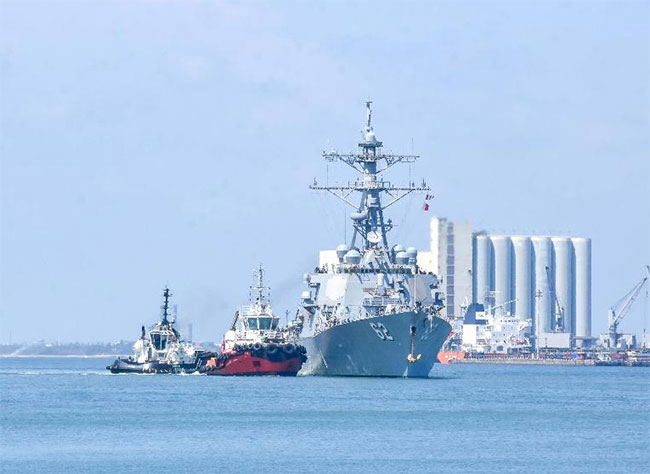
April 08, Colombo (LNW): Shares of Adani Ports and Special Economic Zone Ltd (APSEZ) saw a notable uptick on Tuesday as investor sentiment strengthened following the formal launch of operations at the newly built Colombo West International Terminal (CWIT) in Sri Lanka.

The stock rose 3.6 per cent during intraday trading on the Bombay Stock Exchange, reaching Rs. 1,151.95.

The terminal, located within the Port of Colombo, marks a significant milestone in regional infrastructure collaboration, developed under a tripartite public-private initiative involving India’s Adani Ports, Sri Lanka’s leading conglomerate John Keells Holdings PLC, and the Sri Lanka Ports Authority.

Conceived in 2022 and backed by an investment of approximately $800 million, the CWIT boasts a quay length of 1,400 metres and a berth depth of 20 metres, making it one of the most technically advanced maritime facilities in the region.

Once fully operational, the terminal is expected to process around 3.2 million twenty-foot equivalent units (TEUs) annually.

What sets CWIT apart is its distinction as Colombo’s first fully automated deep-water terminal, designed to drastically reduce vessel turnaround time and enhance the port’s handling efficiency.

This technological edge is anticipated to position the Sri Lankan capital as a formidable contender in the transshipment trade across South Asia and the wider Indian Ocean region.

Gautam Adani, Chairman of the Adani Group, hailed the commencement of operations as a landmark achievement, describing the terminal as “a symbol of deeper regional integration and a testament to what strategic partnerships can achieve in maritime infrastructure.”

He added that the development would bolster Sri Lanka’s role in global trade, establishing it firmly on the world’s maritime map.

Krishan Balendra, Chairperson of the John Keells Group, echoed the sentiment, stressing the strategic value of the terminal in shaping the country’s economic trajectory.

He noted that the success of the joint venture reflects Sri Lanka’s potential to become a key transshipment node, particularly for cargo flowing between East Asia, Africa, and the Middle East.

Despite recent volatility in the broader market, APSEZ has drawn renewed interest from investors. Analysts, citing data from Trendlyne, project an average target share price of Rs. 1,541, indicating a potential upside of 39 per cent from current levels. Market sentiment remains strong, with 15 analysts collectively rating the stock a ‘Strong Buy’.

However, the company’s stock has experienced headwinds over the past year, with a decline of 19 per cent year-on-year and a 9 per cent dip since the beginning of 2025.

Nevertheless, its current market capitalisation stands robust at around Rs. 2.4 lakh crore, reflecting continued investor confidence in its long-term growth strategy.

Arrests made following twin shootings in Devinuwara and Hikkaduwa

0

April 08, Colombo (LNW): Authorities have confirmed the apprehension of two individuals believed to be involved in the fatal shooting of two young men near the sacred premises of the Devundara Sri Vishnu Devalaya in Devinuwara.

The suspects, aged 26 and 35, were taken into custody yesterday (07), after voluntarily surrendering through legal counsel at the Gandara Police Station.

According to police sources, one of the detainees has been identified as the primary assailant in the double murder.

The shooting, which occurred on March 21, saw two victims on a motorcycle gunned down in broad daylight by assailants travelling in a van. The attack took place on Sinhasana Road, directly in front of the revered temple, prompting heightened concern over brazen acts of violence taking place in culturally and religiously significant spaces.

Police investigations into the case have since intensified, with the arrested individuals now undergoing questioning to uncover the broader network potentially linked to the killings.

In a separate but similarly disturbing case, law enforcement officials apprehended a 23-year-old suspect connected to a recent shooting in the Hikkaduwa Police Division. The individual, a resident of Gonapeenuwala, was arrested in the Ginimellagamaha area on the same day.

This second incident, which took place on April 03, involved two gunmen on a motorcycle who opened fire on a man and a woman standing near a clothing outlet in Kumarakanda. Both sustained serious injuries and were admitted to the Karapitiya Teaching Hospital. Tragically, the male victim later died as a result of his wounds.

The suspect in custody is believed to have assisted in facilitating the attack, though authorities have not ruled out his direct involvement. Police are continuing to trace the movements of the gunmen and are analysing CCTV footage and call records in an effort to build a clearer picture of the incident.

President calls for overhaul of policing culture to restore public trust

0

April 08, Colombo (LNW): President Anura Kumara Dissanayake has called for a fundamental reimagining of Sri Lanka’s policing ethos, stressing that meaningful transformation within the law enforcement sector is critical to reinforcing public confidence and preserving the rule of law.

Addressing the graduation ceremony of the 82nd intake of the Special Task Force (STF) at the Katukurunda training facility in Kalutara, the President underscored the urgency of institutional reform.

He acknowledged the prevailing public disillusionment with many sectors of governance and emphasised that citizens had already initiated political change at the ballot box.

However, he warned that political turnover alone would not suffice to rescue the nation from systemic decay.

In his remarks to the newly commissioned STF personnel, President Dissanayake implored them to take pride in their service, not simply as a job but as a moral responsibility.

He urged them to rise above past failures, emphasising that a renewed sense of professionalism and ethical commitment would be pivotal in ensuring public safety, dismantling organised crime networks, and curbing the narcotics trade.

The President made a pointed reference to the widespread institutional breakdown in recent years, asserting that rebuilding national integrity required a collective effort across the civil service, including law enforcement.

He reminded the officers that their daily conduct would define the image of the police in the eyes of the public, and that the younger generation must shoulder the challenge of guiding the nation forward.

As part of the ceremonial proceedings, 118 newly recruited Sub-Inspectors and 231 Probationary Constables completed their training and formally entered the police service.

Certificates and honours were presented by President Dissanayake to those who had demonstrated excellence throughout the rigorous training process.

In a symbolic moment, the President also received a commemorative memento to mark his participation as the Chief Guest. The event included an elaborate tactical demonstration staged by STF officers, simulating combat scenarios to showcase their preparedness and specialised capabilities.

Founded in 1983 under the guiding motto “Victory is Certain,” the Special Task Force has evolved into one of Sri Lanka’s most respected elite units. In addition to counter-narcotics and crime suppression, the STF plays a critical role in safeguarding dignitaries and responding to national emergencies.

In his closing remarks, President Dissanayake praised the dedication of the STF during times of national distress, reaffirming that the country’s progress hinges not merely on reform at the top, but on dedicated service across every level of public administration.

The ceremony was attended by a host of senior figures, including the Minister of Public Security and Parliamentary Affairs Ananda Wijepala, Minister of Health and Mass Media Dr. Nalinda Jayatissa, Deputy Minister of Public Security Sunil Watagala, and Acting Inspector General of Police Priyantha Weerasooriya. Parents and families of the graduating officers, alongside senior police personnel, were also present at the occasion.

Fairly heavy showers of about 75 mm likely to occur (April 08)

0

April 08, Colombo (LNW): Showers or thundershowers will occur at most places of the island during the afternoon or night, with showers being expected to occur in Western and North-western provinces and in Galle and Matara district in the morning as well, the Department of Meteorology said in its daily weather forecast today (08).

Fairly heavy rainfall of about 75 mm are likely at some places in Sabaragamuwa, Central, Uva, Eastern and Sothern provinces.

Misty conditions can be expected at some places in Sabaragamuwa, Central, Uva and Eastern provinces during the morning.

The general public is kindly requested to take adequate precautions to minimise damages caused by temporary localised strong winds and lightning during thundershowers.

On the apparent northward relative motion of the sun, it is going to be directly over the latitudes of Sri Lanka during April 05th to 14th in this year. The nearest areas of Sri Lanka over which the sun is overhead today are Nainamadama, Sandalankawa, Kundasale, Mahiyanganaya and Kalmunanai at about 12:12 noon.

Marine Weather:

Condition of Rain:
Showers or thundershowers will occur at several places in the sea areas extending from Colombo to Pottuvil via Galle. Showers or thundershowers may occur at a few places in the other sea areas around the island during the evening or night.
Winds:
Winds will be Westerly or variable in direction and wind speed will be (20-35)kmph.
State of Sea:
Sea areas around the island will be slight to moderate. Temporarily strong gusty winds and very rough seas can be expected during thundershowers.