Home Blog Page 393

President Directs Urgent Reforms to Ensure Continuous Supply of Essential Medicines

0

A high-level meeting chaired by President Anura Kumara Dissanayake was held this afternoon (22 July) at the Presidential Secretariat to address and streamline the procurement and distribution process of essential medicines across Sri Lanka.

The discussion included Minister of Health and Mass Media Dr. Nalinda JayatissaDeputy Minister Dr. Hansaka Wijemuni, and senior health officials. The meeting focused on current challenges within the medicine procurement and distribution mechanisms, with an emphasis on preventing shortages and ensuring uninterrupted access to vital drugs at public hospitals.

According to the President’s Media Division (PMD), the President:

  • Instructed officials to urgently address existing inefficiencies in the system,
  • Called for immediate measures to resolve any ongoing medicine shortages,
  • Emphasised the need to implement long-term plans to prevent future disruptions.

President Dissanayake reaffirmed that necessary funds for medicine procurement have already been allocated by the Treasury, and stressed that collective responsibility and swift action are essential to deliver reliable and high-quality healthcare to the public.

Among those present were:

  • Dr. Anil Jasinghe – Secretary to the Ministry of Health and Mass Media
  • Dr. Asela Gunawardana – Director General of Health Services
  • W.S.N. Botheju – Senior Assistant Secretary (Procurement), Ministry of Health and Mass Media
  • Dr. Manuj C. Weerasinghe – Chairman, State Pharmaceuticals Corporation
  • Prof. Jayantha Wijayabandara – Chairman, State Pharmaceutical Manufacturing Corporation
  • Dr. Ananda Wijewickrama – Chairman, National Medicines Regulatory Authority (NMRA)
  • Other senior officials of the Ministry of Health

The meeting reflects the Government’s ongoing focus on strengthening Sri Lanka’s public health infrastructure, especially in the wake of prior medicine shortages and procurement delays.

Parliament Passes Key Labour Law Amendments with Unanimous Support

0

Parliament today (22 July) passed three significant labour-related bills with overwhelming support, reinforcing the Government’s commitment to improving wage protections for workers across Sri Lanka.

The bills passed include:

  1. Budgetary Relief Allowance of Workers (Amendment) Bill – 2005 Act
    • Second Reading: 182 votes in favour, none against
    • Third Reading (post-committee stage): 181 votes in favour, none against
  2. Budgetary Relief Allowance of Workers (Amendment) Bill – 2016 Act
    • Second Reading: 180 votes in favour, none against
    • Third Reading: 181 votes in favour, none against
  3. National Minimum Wage for Workers (Amendment) Bill
    • Passed with amendments and without a vote

The Budgetary Relief Allowance of Workers Acts (2005 and 2016) were amended to revise and streamline the existing provisions related to wage allowances granted to workers, particularly in the context of economic challenges and inflationary pressures.

The National Minimum Wage for Workers (Amendment) Bill was also passed to update the legal minimum wage thresholds, helping ensure a baseline standard of living for all workers across sectors. The bill’s passage without objection reflects bipartisan support for strengthening workers’ rights.

Labour and Foreign Employment Minister Manusha Nanayakkara previously stated that these legislative changes are part of the Government’s broader agenda to improve wage equity, promote decent work conditions, and support low-income employees across the country.

Six Elephant Carcasses Found in Dambulla Forest Reserve Amid Concerns of Poaching, Negligence

0

Residents of Inamaluwa, Dambulla have reported the discovery of the carcasses of six wild elephants, including a tusker, suspected to have died about a month ago within the Inamaluwa Government Forest Reserve and adjacent areas.

Locals say the decomposed bodies of a tusker and two other elephants were located within the reserve and the nearby Teak Plantation, approximately a kilometre apart. They also claimed that three additional carcasses exist deeper in the forest, but due to terrain difficulties, access to those locations has been limited.

According to residents, repeated alerts had been made to relevant authorities over several weeks, with no adequate response or investigation into the cause of death. It is alleged that the tusks of the tusker had been cut off and removed, raising serious suspicions of poaching.

When contacted, Wildlife Conservation Officer at the Sigiriya Wildlife Office, S.S. Malinda, confirmed that he had received information regarding three elephant deaths, noting that one carcass had been reported to court while another was located outside his jurisdiction. However, he admitted that no formal investigation has yet been launched to ascertain how the elephants died.

Residents are now demanding an immediate probe by both the Department of Wildlife Conservation and Forest Conservation Department, urging authorities to take swift action against possible illegal wildlife trafficking or negligence, and to prevent further loss of Sri Lanka’s endangered elephant population.

India’s High Commissioner Inaugurates Sri Lanka’s First Replica of Ashoka’s Pillar of Dhamma in Waskaduwa

0

India’s High Commissioner to Sri Lanka, Santosh Jha, inaugurated the country’s first replica of King Ashoka’s Pillar of Dhamma in Vaishali during a ceremony at the Rajaguru Sri Subuthi Maha Viharaya in Waskaduwa.

Joining High Commissioner Jha was the Temple’s Chief Incumbent, Most Ven. Dr. Waskaduwawe Mahindawansa Mahanayake Thera, as they unveiled a special exposition of the Sacred Kapilavastu Relics. During the event, High Commissioner Jha also extended birthday wishes to the Most Ven. Mahanayake Thera and offered prayers for his long life.

In his remarks, Most Ven. Mahanayake Thera underscored the significance of installing the first Ashokan Pillar replica in Sri Lanka as a tribute to King Ashoka’s pivotal role in preserving and propagating Buddhist teachings. He also recounted the historical journey of the temple’s relic collection and expressed deep gratitude to the Government of India under Prime Minister Narendra Modi for its sustained support of Buddhist heritage.

High Commissioner Jha highlighted the shared historical, cultural, and spiritual ties between India and Sri Lanka, noting that Sri Lanka remains one of the foremost centres for Buddhist learning. He outlined several initiatives by India to deepen this heritage in Sri Lanka, including:

  • Free solar electrification for nearly 10,000 Buddhist Viharas and Pirivenas
  • Support for the Anuradhapura Sacred City Complex restoration project
  • Upcoming exposition of Sacred Relics of the Buddha from Devnimori, Gujarat
  • Past expositions featuring relics from Sarnath and Kapilavastu
  • Special pilgrimage visits and mobile exhibitions on the life of the Buddha
  • Republishing of ancient Pali grammar treatises such as Namamala and Balawatharo
  • Distribution of Sinhala translations of the Jataka Tales to Dhamma schools nationwide

The inauguration of the Ashokan Pillar replica and accompanying relic exposition mark a milestone in India–Sri Lanka cultural diplomacy, further cementing the two nations’ enduring Buddhist heritage and cooperation.

SriLankan and Five Other Airlines Default Rs.27.6 Billion in Embarkation Levy – Deputy Minister

0

Ports and Civil Aviation Deputy Minister Janitha Ruwan Kodithuwakku informed Parliament that six airlines, including SriLankan Airlines, have defaulted a total of Rs. 27.659 billion in embarkation levy payments owed to the Civil Aviation Authority (CAA).

Of this amount, SriLankan Airlines alone accounts for Rs. 24.655 billion in unpaid levies. The other defaulters and the amounts owed are:

  • Air Asia Berhad – Rs. 88 million
  • Aeroflot (Russia) – Rs. 508 million
  • Air India – Rs. 57 million
  • Thai Air Asia – Rs. 221 million
  • Fitz Aviation – Rs. 2.126 billion

The Deputy Minister was responding to a question raised by SJB MP Kins Nelson, and stated that the CAA has already initiated steps to recover the arrears, including notifying the airlines via email and written communication.

He added that bank guarantees held by the CAA have been liquidated in some cases to recover portions of the outstanding funds. However, the current Civil Aviation Authority Act lacks legal provisions to pursue full recovery through legal means.

To address this gap, the Ministry plans to submit a Cabinet paper proposing necessary amendments to the Act, which would empower the CAA to initiate legal proceedings against defaulting airlines in the future.

Fuel Tax to Be Removed After CPC Debt Settlement – Minister Jayakody

0

Power and Energy Minister Kumara Jayakody informed Parliament that the Rs. 50 tax on fuel will be removed once the Ceylon Petroleum Corporation’s (CPC) debt, previously absorbed by the Treasury under the former government, is fully repaid.

The Minister said that of the Rs. 884 billion in CPC debt taken over by the Treasury, nearly half has already been settled, and that only standard government taxes are currently being imposed on fuel.

Responding to a question raised by SJB MP Dayasiri Jayasekara on July 22, Minister Jayakody clarified that the fuel surcharge was introduced specifically to address CPC’s liabilities, and not as a permanent levy. He further stated that the Government is conducting investigations into possible fraudulent fuel sales that may have occurred during the period from September 21, 2023 to September 20, 2024.

Minister Jayakody also advised MP Jayasekara to stay informed about the fuel pricing formula and refrain from making unsubstantiated allegations regarding fuel taxes and pricing mechanisms.

Showers will occur at times in the Western, Sabaragamuwa and Central provinces

0

Showers will occur at times in the Western, Sabaragamuwa and Central provinces and in Galle and Matara districts.

Several spells of showers may occur in the North-western province.
Strong winds of about (55-60) kmph can be expected at times over Western slopes of the central hills and in Northern, North-central and Central provinces and Trincomalee and Hambanthota districts. Fairly strong winds about (40-50) kmph can be expected at times elsewhere.


The general public is kindly requested to take adequate precautions to minimize damages caused by strong winds.

Sri Lanka to Launch ‘Super App’ for Seamless Access to Public Services

0

By: Staff Writer

July 22, Colombo (LNW):In a major stride toward digital governance, Sri Lanka’s Information and Communication Technology Agency (ICTA) is preparing to launch a unified “Super App” aimed at transforming citizen interaction with government services. The initiative is part of a broader national strategy to streamline public sector operations through cutting-edge digital infrastructure and reduce dependency on paper-based systems.

The ‘Super App’ will serve as a centralised mobile platform integrating various government services into a single interface. ICTA’s Acting CEO Sanjaya Karunasena described it as the next phase in Sri Lanka’s Digital Public Infrastructure (DPI) journey, building on the recently introduced GovPay system, which laid the groundwork for online payment facilitation across state institutions.

“The app is already under development, and the first rollout is expected within the next six months,” Karunasena announced at a media briefing. He explained that the platform would allow citizens to digitally access key services, including national ID, examination certificates, and licenses, all stored and managed through a secure mobile system.

One of the standout features of the Super App will be its integrated payment options, enabling users to complete transactions using credit and debit cards, fintech services, and in-app payment systems. Karunasena emphasized that the procurement process for payment solution providers is underway to ensure secure, seamless transactions with minimal user friction.

A core pillar supporting the app’s capabilities is the National Digital ID project, which will embed biometric data into citizens’ digital identification. This will allow remote verification and eliminate the need for physical visits to government offices for services like passport applications or driving license renewals. “This digital NIC will save citizens time, effort, and money,” Karunasena noted.

The app will also introduce verifiable digital credentials—such as birth certificates and academic records—that can be stored and presented via mobile devices, enabling a paperless and efficient interface with public institutions.

“This is a significant shift from the fragmented and paper-heavy processes we’ve been used to. The Super App aims to make public services citizen-centric, accessible, and secure,” Karunasena said.

In tandem with the Super App, ICTA is also revamping the longstanding 1919 Government Information Centre. According to ICTA Board Member Harsha Purasinghe, the upgraded version will incorporate artificial intelligence to improve responsiveness and automate user interactions.

“We’ve already finalised the technical architecture and user interface for the AI-driven 1919 platform. It’s slated to launch within six to eight months,” Purasinghe stated.

Both the Super App and the AI-powered 1919 centre are seen as crucial components in the country’s ongoing digital transformation, designed to cut bureaucracy, enhance transparency, and increase efficiency in public service delivery.

Sri Lanka Ramps up Digital Revenue Reforms to achieve 2025 Budget Targets

0

By: Staff Writer

July 22, Colombo (LNW):In line with International Monetary Fund (IMF) directives, the Sri Lankan Government has intensified its efforts to enhance state revenue collection by restructuring and digitalizing key revenue authorities. These include the Inland Revenue Department (IRD), Sri Lanka Customs, the Excise Department, and the Department of Motor Traffic. The reform agenda aims to boost transparency, plug leakages, and improve efficiency to meet ambitious fiscal targets outlined in the 2025 budget.

This initiative is central to Sri Lanka’s economic recovery and debt restructuring program under the IMF’s Extended Fund Facility (EFF). While these reforms are expected to broaden the tax base, reduce evasion, and improve compliance, critics caution that over-reliance on indirect taxes and rapid enforcement could burden consumers and small businesses. Nonetheless, analysts view digitalization and institutional restructuring as critical tools for long-term fiscal stability and governance reform.

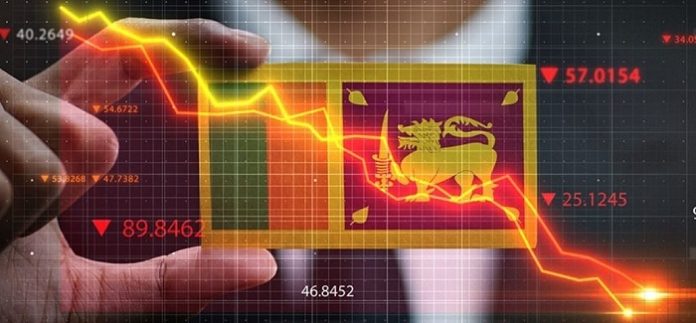
Recent data from the Central Bank of Sri Lanka (CBSL) indicates that these efforts are already bearing fruit. In May 2025 alone, government revenue collection peaked at Rs. 486 billion—the highest monthly total recorded this year. This figure contributed to a cumulative revenue haul of Rs. 1.94 trillion for the first five months, marking a 20% year-on-year increase from Rs. 1.62 trillion during the same period in 2024. Of this, Rs. 1.8 trillion was collected through taxes.

May’s collection outperformed previous months, surpassing Rs. 414 billion in February, Rs. 387 billion in April, and Rs. 306 billion in March. Analysts attribute the uptick to improved enforcement and an expanded tax base, including the inclusion of motor vehicles under new tax regimes beginning March.

This follows a steady revenue trajectory from 2023 to 2024, with total government income rising from Rs. 3 trillion to Rs. 4 trillion. The continued momentum suggests a strong start for 2025, bolstering hopes of meeting IMF-backed fiscal targets.

Despite the revenue surge, CBSL data shows that total government expenditure and net lending also increased to Rs. 2.18 trillion during the January–May period, up 9.7% from Rs. 1.99 trillion in the same timeframe last year. However, the budget deficit narrowed significantly to Rs. 236.6 billion, compared to Rs. 366.8 billion in 2024—an encouraging sign of improving fiscal discipline.

Additionally, net domestic financing dropped to Rs. 298.6 billion from Rs. 394.4 billion in 2024. Meanwhile, foreign financing recorded a net repayment of Rs. 62 billion, double the Rs. 27.6 billion paid back in the same period last year.

As Sri Lanka moves forward with structural reforms, the success of its revenue transformation will be vital not only for securing future IMF tranches but also for restoring economic sovereignty and long-term financial stability.

Sri Lanka Seeks U.S. Tariff Cuts, Offers Oil Imports in Return

0

By: Staff Writer

July 22, Colombo (LNW): In a strategic move to rebalance its trade relations with the United States, the Sri Lankan government is exploring the procurement of U.S.-based West Texas Intermediate (WTI) crude oil while actively lobbying for reductions in the steep reciprocal tariffs imposed by Washington. The initiative is part of a broader effort to mitigate the negative impact of U.S. tariffs on Sri Lankan exports and to revive Sri Lanka’s stalled para-tariff reform program.

The government’s renewed push follows a sweeping tariff regime introduced by U.S. President Donald Trump earlier this year, targeting trade deficit countries. Initially, Sri Lankan exports were hit with a 44% tariff, which has since been reduced to 30%, effective August 1. However, Colombo is still striving to secure further relief through high-level engagements with the Office of the United States Trade Representative (USTR).

As part of the counterbalance, Sri Lanka is offering to expand its crude oil procurement base to include American energy exporters. Managing Director of the Ceylon Petroleum Corporation, Dr. Mayura Neththikumarage, confirmed that discussions are underway to consider WTI crude oil in future tenders. Presently, Sri Lanka’s crude oil supplies originate mainly from the Gulf region. The inclusion of U.S.-registered companies in the tender process is aimed at not only diversifying suppliers but also strengthening trade relations with Washington.

“Decisions will ultimately be based on price competitiveness, but incorporating WTI into our oil basket can open new avenues for bilateral trade,” Dr. Neththikumarage noted. He added that any reduction in U.S. tariffs would further benefit Sri Lanka’s economic outlook, particularly for both imports and exports.

On the trade front, the Export Development Board (EDB) is spearheading talks to ease the remaining 30% tariff. EDB Chairman Mangala Wijesinghe revealed that discussions are scheduled before the August 1 deadline in a bid to widen tariff relief. The Ministry of Finance also hosted a virtual meeting on July 18 with USTR officials, led by Secretary Dr. Harshana Suriyapperuma, focusing on boosting trade and investment between the two nations.

Deputy Minister of Economic Development, Prof. Anil Jayantha Fernando, stated that the U.S. has offered Sri Lanka duty-free access for 70–80% of its exports under the revised terms. This includes a list of 1,161 products, such as apparel and 42 agricultural items.

These developments come in the wake of a dramatic global tariff overhaul announced by President Trump. The new tariff regime introduced a baseline 10% levy on all imports, with higher rates for countries running trade surpluses with the U.S. Sri Lanka was among the hardest hit, with an initial 44% tariff—on par with Vietnam and just below Cambodia’s 49%.

In a White House statement, President Trump positioned the tariff campaign as a “declaration of economic independence,” designed to protect domestic manufacturers and rebalance unfair trade practices. However, the sudden imposition of steep duties on long-standing partners like Sri Lanka sparked concern across global trade circles.As discussions continue, Sri Lanka is attempting to turn a potential trade crisis into an opportunity by linking tariff relief to broader trade and energy cooperation with the United States.