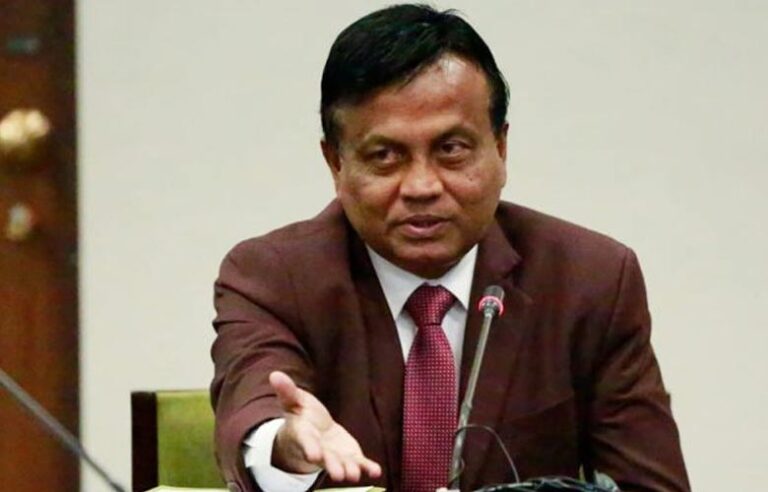
September 15, Colombo (LNW): Deputy Minister of Public Security, Attorney-at-Law Sunil Watagala has strongly denied rumours circulating on certain social media channels alleging that he has recently acquired a high-end residence in Colombo, describing the claims as entirely baseless and part of a calculated effort to discredit him.
In a public statement, Watagala clarified that all his possessions have been truthfully disclosed in his official declaration of assets and liabilities, and that he has not made any recent property acquisitions beyond what is legally recorded. He attributed the emergence of these rumours to the growing backlash he has faced after raising serious allegations against drug networks and their affiliates.
“These falsehoods are a deliberate attempt to tarnish my name,” Watagala said. “The individuals and interests behind these fabrications are clearly unnerved by the exposure I have brought upon narcotics operations and those connected to them. In response, they have launched an organised campaign to undermine my integrity.”
Watagala revealed that he plans to take formal legal action, both by lodging a complaint with the Criminal Investigation Department (CID) and initiating defamation proceedings against those responsible for spreading the misinformation.
Dep Minister Watagala Dismisses Claims of Lavish Property Purchase Amid Smear Campaign: CID Complaint to Follow
Showery trend continues for several districts across island: Fairly heavy falls about 50 mm to follow

September 15, Colombo (LNW): Several spells of showers will occur in Western and Sabaragamuwa provinces and in Galle, Matara, Kandy and Nuwara-Eliya districts, the Department of Meteorology said in its daily weather forecast today (15).
Showers or thundershowers will occur at several places in Uva and Eastern provinces and in Hambantota district after 1.00 p.m. Fairly heavy falls about 50 mm are likely at some places.
Cloudy skies can be expected over Eastern, Uva, Central and Southern provinces.
The general public is kindly requested to take adequate precautions to minimise damages caused by temporary localised strong winds and lightning during thundershowers.
Marine Weather:
Condition of Rain:
Showers will occur at several places in the sea areas off the coast extending from Chilaw to Matara via Colombo and Galle.
Winds:
Winds will be south-westerly and wind speed will be (30-40) kmph.
Wind speed can increase up to (50-55) kmph at times in the sea areas off the coast extending from Matara to Pottuvil via Hambantota.
Wind speed can increase up to (40-50) kmph at times in the sea areas off the coast extending from Kankasanthurai to Matara via Puttalam, Colombo and Galle.
State of Sea:
The sea areas off the coast extending from Matara to Pottuvil via Hambantota may be rough at times.
The sea areas off the coast extending from Kankasanthurai to Matara via Puttalam, Colombo and Galle may be fairly rough at times.
Education Ministry Confirms Examination Timetable for 2026 Academic Year

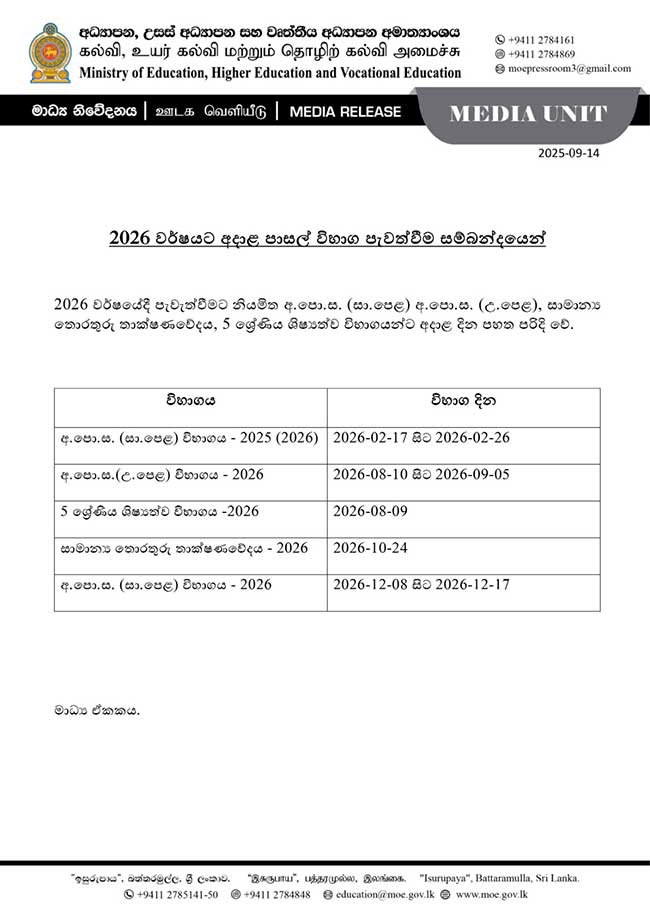
September 14, Colombo (LNW): The Ministry of Education has officially released the national examination schedule for the 2026 academic year, confirming the dates for several key public exams, including the G.C.E. Ordinary Level, Advanced Level, and Grade 5 Scholarship examinations.
According to the announcement, the 2025 (2026) G.C.E. Ordinary Level examination—originally scheduled for the end of 2025 but postponed due to academic calendar adjustments—will now be held from February 17 to 26, 2026.
The G.C.E. Advanced Level examination is set to take place from August 10 to September 05, 2026, allowing candidates nearly a full month to complete assessments across various subject streams.
In the case of younger pupils, the Grade 5 Scholarship examination as been scheduled for August 09, 2026.
Looking ahead, the Ministry also confirmed that the regular 2026 G.C.E. Ordinary Level examination will return to its standard December slot and will be conducted from December 08 to 17, 2026.
Southern Expressway Rest Stop Lease Triggers Public Outrage
By: Staff Writer
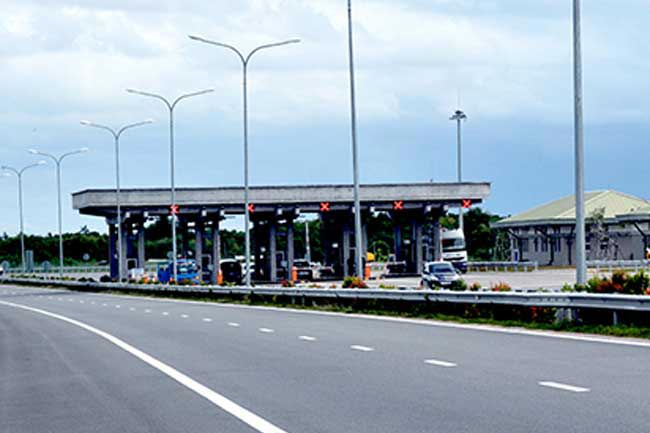
September 14, Colombo (LNW): A fresh controversy has erupted in Parliament over the lease of the Southern Expressway’s sole rest stop, the “Canowin Arcade” at Welipenna, following shocking revelations about its terms. Transport and Highways Minister Bimal Ratnayake told lawmakers this week that the facility had been handed over on a 99-year lease for a token fee of just Rs. 10,000 a sum critics say makes a mockery of public asset management.
The lease, granted in March 2012 during the Rajapaksa administration, was approved by Cabinet on a proposal submitted by then President Mahinda Rajapaksa in his capacity as Ports and Highways Minister. It was awarded to Canowin Hotels & Spas (Pvt) Ltd., a subsidiary of the state-owned Sri Lanka Insurance Corporation (SLIC). The company was tasked with developing and managing service areas along the Southern Expressway, which includes food courts, restrooms, fuel stations, and retail shops.
While later clarifications stressed that the property was not transferred to a private investor but instead to an SLIC-owned company, the nominal lease fee and extraordinary 99-year duration have drawn heavy criticism. “The public deserves to know how a vital national asset was locked away for the cost of a single meal,” Minister Ratnayake told Parliament. “This is not about privatization; it is about accountability.”
Analysts argue that even though Canowin Hotels is state-owned, the financial arrangement undermines basic governance principles. They question whether the state secured adequate value for a high-traffic commercial facility that serves thousands of commuters daily. For many, the symbolic lease terms reflect a broader pattern of opaque decision-making in the management of public property during past administrations.
The Canowin Arcade was promoted as a flagship rest complex during the rollout of the Southern Expressway, Sri Lanka’s first and longest highway. However, the revelation of its virtually free lease has reignited doubts about how key infrastructure projects were structured and whether long-term public interest was compromised.
Lawmakers from across the aisle are now demanding a comprehensive audit of the lease terms, Canowin Hotels’ operational performance, and the justification for awarding a century-long concession. Governance experts caution that without greater transparency, even state-to-state transactions risk fostering inefficiency, political favoritism, and public mistrust.
As Sri Lanka grapples with severe fiscal constraints, the controversy underscores the urgent need for reforms in managing state assets. Critics argue that every rupee of potential revenue counts, and sweetheart deals even within state entities deprive the treasury of much-needed income. For the public, the Canowin Arcade episode is more than a question of one highway rest stop; it is a test case for accountability in the stewardship of national resources.
Sri Lanka’s New PPP Law Promises Reform, But Risks Remain

By: Staff Writer
September 14, Colombo (LNW): Sri Lanka is preparing to usher in a landmark Public-Private Partnership (PPP) law, a move that could redefine the country’s development model by shifting more responsibility for infrastructure and public services to private investors.
With fiscal constraints limiting the state’s capacity to fund large projects, the new PPP Act drafted by the Finance Ministry seeks to provide a uniform legal and institutional framework to attract private capital while ensuring accountability and transparency.
At the heart of the legislation is the creation of a National Agency for Public Private Partnerships, mandated to oversee the full lifecycle of PPP projects.
This agency will handle everything from project identification and feasibility assessments to procurement and contract monitoringareas that have historically been fragmented across multiple state institutions, leading to duplication, inefficiency, and political interference.
Proponents argue that the new law marks a decisive break from Sri Lanka’s ad hoc approach to PPPs, which has often left projects exposed to inflated costs, poor management, and unfavorable terms for the state.
The draft Act introduces rigorous value-for-money and feasibility assessments, alignment with the Public Finance Management Act No. 44 of 2024, and integration with national procurement standards.
This principle-based approach is expected to curb politically motivated or financially unsustainable projects, a recurring criticism of past PPP initiatives.
The law also emphasizes capacity-building within the public sector. Officials will undergo systematic training in negotiating and managing complex PPP contracts an area where Sri Lanka has previously suffered, with inadequate expertise resulting in lopsided agreements that favored private players.
If properly implemented, this training component could help level the playing field and safeguard public interests in future contracts.
However, the reform is not without risks. Analysts caution that the effectiveness of the PPP Act hinges on the independence of the new National Agency.
Without robust safeguards against political interference, even the strongest legal framework could be undermined. Critics also point to Sri Lanka’s uneven track record in governance, warning that transparency promises must be matched with enforcement mechanisms.
For investors, the Act signals greater policy stability, potentially boosting foreign and domestic confidence at a time when the country urgently needs capital inflows. Yet the ultimate test will be in execution: whether projects are selected on merit, contracts remain transparent, and the government resists the temptation to use PPPs as a quick fix for short-term political gains.
If successful, the PPP Act could emerge as a cornerstone of Sri Lanka’s economic recovery, balancing scarce state resources with private sector efficiency. But if implementation falters, it risks becoming another layer of bureaucracy that fails to deliver the transformative impact the country urgently needs.
Sri Lanka’s Fiscal Gains Mask Fragile Foundations Amid Debt Strain

By: Staff Writer
September 14, Colombo (LNW): Sri Lanka’s public finances showed a marked turnaround in the first half of 2025, with higher revenues and a sharply reduced deficit boosting hopes of meeting year-end fiscal targets.
Yet, analysts warn that the recovery rests on a fragile base, heavily dependent on volatile import duties and overshadowed by steep debt servicing costs.
According to the Finance Ministry’s Fiscal Review Report for January–June, government revenue rose 24.7 percent year-on-year to Rs. 2.3 trillion, while the budget deficit narrowed by 32.3 percent to Rs. 405.6 billion, compared with Rs. 598.9 billion during the same period in 2024.
Officials expressed confidence that the government is on course to limit the deficit to 6.5 percent of GDP by year-end, a key target under fiscal consolidation.
Much of the revenue surge, however, stemmed from a one-off boost in excise duty on motor vehicles, which climbed to Rs. 129.1 billion following the relaxation of import restrictions earlier this year.
Economists cautioned that such windfalls make fiscal performance vulnerable to swings in import demand, exchange rate volatility, and policy changes.
The International Monetary Fund (IMF) has also stressed the need for broader, more sustainable tax reforms to reduce reliance on unpredictable revenue streams.
Beyond vehicle duties, other tax categories performed relatively well. Income tax collections increased by 9.2 percent to Rs. 489 billion, while VAT receipts jumped 27.6 percent to Rs. 876 billion, including Rs. 354 billion from imports.
The Special Commodity Levy soared 70.5 percent to Rs. 77.6 billion. Both the Inland Revenue Department and Customs reported stronger compliance and enforcement, helping them achieve a large share of their half-year targets.
Yet the structure of revenue growth remains skewed towards trade-related duties, keeping the country’s tax base narrow and highly sensitive to external conditions.
On the expenditure side, pressures remain persistent. Government spending expanded by 10.9 percent to Rs. 2.7 trillion, driven by a 13 percent rise in recurrent expenditure to Rs. 2.5 trillion. Debt servicing continues to weigh heavily, with interest payments alone consuming Rs. 1.2 trillion in the six-month period.
Meanwhile, capital expenditure and net lending contracted by 8.6 percent to Rs. 224 billion—a reduction that helps contain the deficit in the short term but risks undermining long-term economic growth by cutting back on infrastructure and development projects.
Sri Lanka’s mid-year fiscal performance highlights tangible progress in deficit reduction, but it also underscores the delicate balance policymakers face.
While headline numbers point to recovery, the country’s dependence on volatile import-related taxes, coupled with soaring debt obligations and underfunded investment, threatens to erode the foundations of fiscal stability.
Central Bank charts reforms to safeguard Sri Lanka’s recovery
By: Staff Writer
September 14, Colombo (LNW): The Central Bank of Sri Lanka (CBSL) has stepped up efforts to safeguard macroeconomic stability and strengthen public confidence, with Governor Dr. Nandalal Weerasinghe underscoring that preserving the Bank’s independence is fundamental to the country’s recovery and long-term growth. The Governor outlined key reforms undertaken to reinforce monetary discipline, financial stability, and institutional credibility.
Dr. Weerasinghe cautioned that political interference in monetary policy has historically undermined Sri Lanka’s economic stability. Before the enactment of the new Central Bank Act (CBA), governments had financed budget deficits through direct borrowing from the Bank, triggering monetary expansion and inflationary pressures.
“Such practices undermined our mandate of price stability. Under the CBA, this is no longer possible,” he stated, stressing that the law now prevents monetary financing and anchors credibility.
While safeguarding independence, the Governor noted that the Bank does not operate in isolation. The Act ensures coordination with the Ministry of Finance through the Monetary Board to align fiscal and monetary policies, particularly in times of crisis.
On accountability, Dr. Weerasinghe highlighted that the CBSL is legally required to report to Parliament if inflation targets are breached for two consecutive quarters. Public reporting provisions, including the publication of annual Financial Stability Reviews, enhance transparency and enable businesses and households to make informed decisions.
Another major step has been the designation of the CBSL as Sri Lanka’s Macroprudential Authority, tasked with managing systemic risks and protecting financial stability.
Complementary reforms, including the 2023 Banking (Special Provisions) Act and the 2024 amendment to the Banking Act, have strengthened governance, expanded safety nets, and empowered the CBSL to resolve troubled banks while safeguarding depositors.
Addressing misconceptions, Dr. Weerasinghe stressed that the CBSL remains accountable to Parliament and the people, with senior appointments subject to Constitutional Council oversight. He rejected claims that the Bank acts beyond sovereignty, clarifying that while it works with the IMF under the Extended Fund Facility, programme ownership rests firmly with Sri Lankan authorities.
He also clarified the Bank’s role, explaining that its mandate is to maintain price and financial stability rather than directly drive growth. On exchange rates, he reiterated that the rupee is market-determined, with CBSL interventions limited to smoothing volatility and building reserves.
Looking ahead, the Bank will gradually phase out non-core functions such as debt management and concessional loan administration, redirecting resources towards its core mandate. Dr. Weerasinghe concluded with a warning that undermining Central Bank independence would jeopardize recovery, resilience, and prosperity.
Sri Lanka Welcomes Over 52,000 Visitors in First Half of September Amid Steady Tourism Growth

September 14, Colombo (LNW): Sri Lanka’s tourism sector continues to show signs of sustained recovery, with over 52,000 international visitors recorded in the first two weeks of September alone, according to the latest data released by the Sri Lanka Tourism Development Authority (SLTDA).
The figures indicate that a total of 52,246 tourists entered the country so far this month, contributing to an encouraging trend that has been building throughout the year. India remains the leading source market, with 14,300 Indian nationals visiting during this period—accounting for 27.4 per cent of the overall arrivals for the month.
Other key markets for September include the United Kingdom, with 4,092 travellers, followed by Germany (3,488), China (2,796), and Australia (2,603). These numbers reflect a continued interest in Sri Lanka as a leisure destination, despite a challenging global travel climate marked by fluctuating airfares and regional uncertainties.
With the inclusion of the latest September figures, the cumulative number of international arrivals in 2025 has now reached 1,618,769. Of this total, India has contributed 339,895 visitors, followed by 155,233 from the UK and 119,132 from Russia—underscoring the strategic importance of these markets for Sri Lanka’s tourism revival.
Industry observers note that the increase in arrivals can be attributed to a combination of improved marketing campaigns, greater flight connectivity, and a renewed focus on promoting Sri Lanka as a safe, diverse, and culturally rich destination. The government has also introduced several streamlined visa measures and incentives for tour operators, which are believed to be supporting the uptick in foreign interest.
Excavation of Kurukkalmadam Mass Grave Site Set to Begin

September 14, Colombo (LNW): A long-awaited archaeological and forensic excavation is expected to commence next week at a suspected mass grave site in Kurukkalmadam, located in the Batticaloa district.
The operation comes following a directive issued by the Kaluwanchikudy Magistrate’s Court, and forms part of broader efforts to investigate unresolved cases linked to Sri Lanka’s conflict-era past.
Deputy Minister of National Integration, Muneer Mulaffer, confirmed that a sum of Rs. 2.9 million has been allocated to facilitate the initial phase of the excavation.
The site, long regarded by local communities and human rights advocates as potentially holding critical evidence related to enforced disappearances or extrajudicial killings, has remained largely undisturbed until now.
Election Commission Refers Non-Compliant Candidates to Attorney General for Possible Legal Action
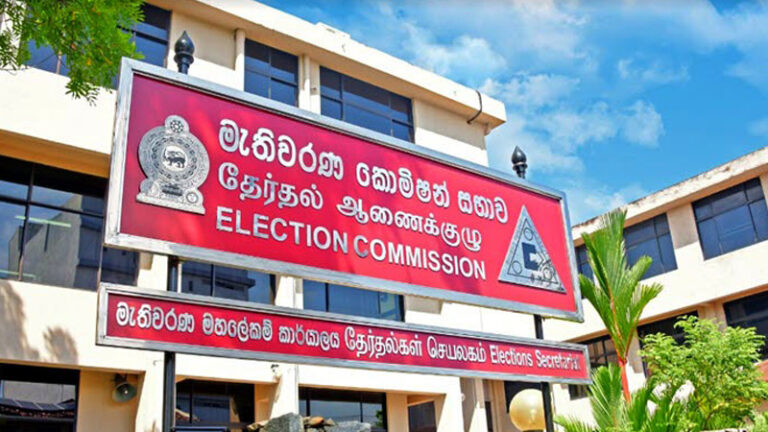
September 14, Colombo (LNW): The Election Commission has escalated proceedings against several candidates from the 2024 Presidential Election who failed to comply with mandatory financial disclosure requirements, forwarding relevant case files to the Attorney General’s Department for further consideration.
According to officials, five individuals who contested the presidential race did not submit their legally required statements detailing income and campaign-related expenses, as stipulated under the Election Expenditure Regulation Act No. 3 of 2023. The Commission is now seeking legal advice from the Attorney General on how to proceed with potential prosecutions.
The legislation, enacted to ensure greater financial transparency in electoral processes, obliges all candidates to declare their campaign funding sources and expenditures within a specified timeframe. Failure to comply is considered a punishable offence under the Act.
In addition to the five presidential candidates, the Commission revealed that 13 other individuals, linked to various election activities, also failed to meet the reporting requirements. Law enforcement authorities have been directed to take appropriate action against those parties, with investigations currently underway.
Statements have already been obtained from the defaulting candidates, and the matter has been formally referred to court for further legal proceedings.