Home Blog Page 400

G.C.E. O/L Examinations commence today, over 474,000 candidates to take part

0

March 17, Colombo (LNW): The 2024 G.C.E. Ordinary Level (O/L) examinations have officially begun today (17), with a total of 474,147 candidates scheduled to sit for the exam at 3,663 centres across Sri Lanka.

This year’s cohort is a mix of both school and private candidates, with 398,182 students from schools and 75,965 private candidates, all preparing to face the critical assessment.

The Commissioner General of Examinations, Amith Jayasundara, has made a public appeal to all candidates, urging them to arrive at their respective examination centres ahead of time.

In his message, he emphasised the importance of having both the admission card and a valid identity card on hand, which will be required for entry into the examination halls.

“Ensure that you bring your admission card and an official ID with you to the exam. The ID card must be shown for each paper you sit. Your admission card will be collected on the first day of the exams and will not be returned,” Jayasundara clarified.

He also advised students to be mindful of the items they bring into the examination halls, stressing that only pens and pencils are permitted for use during the exam.

“It is essential to remember that no other items are allowed inside the hall. However, if needed, someone may bring a bottle of water for you,” he added.

Showery trend persists across island: Fairly heavy showers above 50 mm expected (Mar 17)

0

March 17, Colombo (LNW): Several spells of showers will occur in Eastern and Uva provinces and in Polonnaruwa, Nuwara-Eliya and Matale districts, with showers or thundershowers being expected to occur at several places in Western, Sabaragamuwa, Southern and North-western provinces and in Kandy district after 2.00 p.m., the Department of Meteorology said in its daily weather forecast today (17).

Fairly heavy showers above 50 mm can be expected at some places.

Misty conditions can be expected at some places in Western, Sabaragamuwa, Central and Uva provinces and in Galle and Matara districts during the morning.

The general public is kindly requested to take adequate precautions to minimise damages caused by temporary localised strong winds and lightning during thundershowers.

Marine Weather:

Condition of Rain:
Showers or thundershowers will occur at a few places in the sea areas off the coast extending from Trincomalee to Hambantota via Batticaloa. Showers or thundershowers may occur at several places in the other sea areas around the island during the evening or night.
Winds:
Winds will be North-easterly or variable and speed will be (20-30) kmph.
State of Sea:
Sea areas around the island will be slight to moderate. Temporarily strong gusty winds and very rough seas can be expected during thundershowers.

Defect detected in oil pipeline linking Colombo Port to Storage Terminal

0

March 16, Colombo (LNW): A fault has been discovered in one of the oil pipelines connecting the Colombo Port to the Ceylon Petroleum Storage Terminal Limited (CPSTL) in Kollonawa, the Ceylon Petroleum Corporation (CEYPETCO) confirmed today (16).

According to CEYPETCO, the defect was identified in one of the two pipelines responsible for transporting fuel from the port to the storage facility.

The corporation has assured the public that the situation is under control and that measures are being taken to maintain a steady fuel supply.

The remaining functional pipeline will be used to ensure that there is no disruption in the distribution of fuel.

While CEYPETCO is actively addressing the issue, it has reiterated that fuel deliveries will continue uninterrupted for the time being.

The corporation has also committed to monitoring the situation closely to prevent any further issues that could affect the fuel supply chain.

Sri Lanka to hold talks with US Trade Office over upcoming tariffs

0

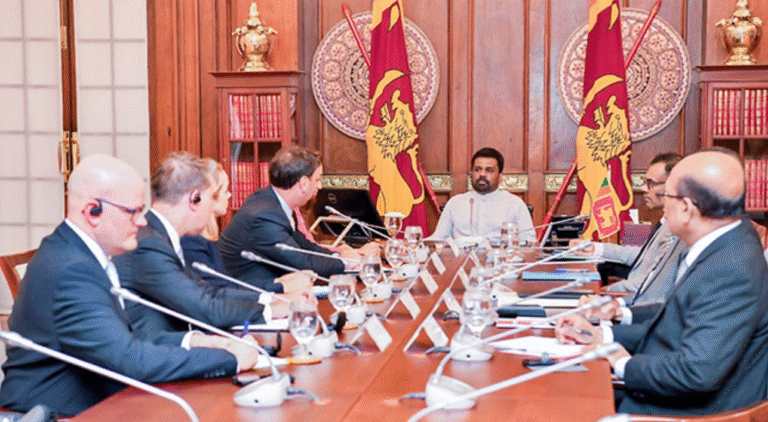
March 16, Colombo (LNW): A Sri Lankan delegation is set to visit the United States next month to engage in discussions with the US Trade Office regarding the reciprocal tariffs that are scheduled to take effect on April 02, 2025, Minister of Foreign Affairs Vijitha Herath confirmed in Parliament.

During his speech yesterday (15), Minister Herath explained that the government would seek to address how Sri Lanka could avoid the imposition of these tariffs, which could have a serious impact on the country’s exports.

The Minister stressed that Sri Lanka’s fragile economic situation, already strained by numerous challenges, would not be able to bear the additional burden of these tariffs.

Herath further elaborated on the government’s plans to engage in high-level discussions, revealing that a business forum featuring Sri Lankan representatives from the Foreign Ministry, Finance Ministry, and the business community will be held in the US next month.

This forum will serve as a platform for Sri Lanka to raise concerns about the upcoming tariffs and explore potential relief measures.

The Foreign Minister expressed hope that through these discussions, Sri Lanka could negotiate a tax waiver, particularly within the context of its ongoing programme with the International Monetary Fund (IMF).

He made it clear that the country is in no position to endure further economic pressure, especially with the threat of increased tariffs.

The impending tariffs come after US President Donald Trump, in his first address of his second term to a joint session of Congress, defended his administration’s strict tariff policies.

He noted that the US had long been subjected to high tariffs from various countries, and as part of his “America First” strategy, he announced reciprocal tariffs on several nations, including Sri Lanka, to level the playing field.

These tariffs are set to impact a range of industries, with Sri Lanka’s key export sector, notably the garment industry, expected to be heavily affected.

In 2023, Sri Lanka exported goods valued at approximately US$3 billion to the US, with over 70% of these exports coming from the garment sector.

Given the US’s significant role as one of Sri Lanka’s largest trading partners, the upcoming tariffs have raised considerable concern.

The Sri Lankan government is taking swift and proactive steps to mitigate the impact of these tariffs, seeking both relief and the potential for a more favourable trade relationship with the United States.

Government urges investors to tap into improving economic indicators

0

By: Staff Writer

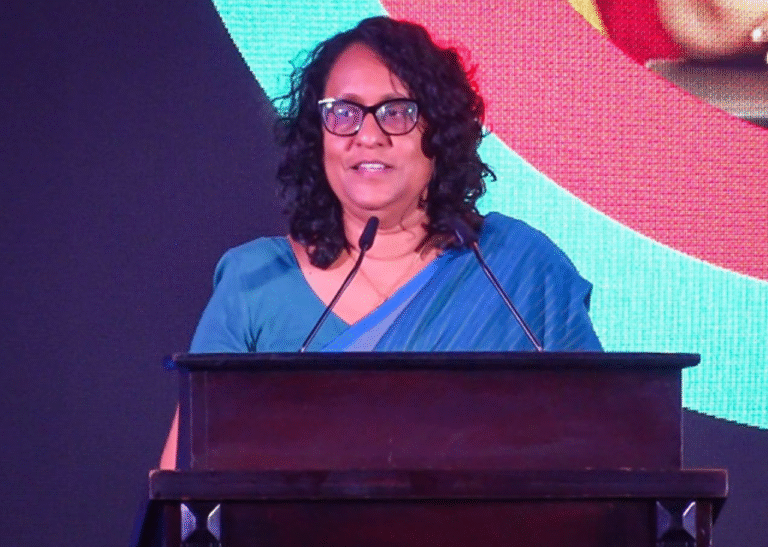
March 16, Colombo (LNW): Adaptability remains crucial for sustained economic growth. The Investor Forum 2025, hosted by Softlogic Stockbrokers, served as a key platform for financial experts, industry leaders, and investors to discuss strategies for navigating the evolving investment landscape.

Under the theme ‘Thriving through Change & Rising Strong,’ the forum offered valuable insights into Sri Lanka’s economic outlook, stock market trends, and cross-sector financial developments.

Delivering the keynote address, Treasury and Ministry of Finance, Planning and Economic Development Secretary Mahinda Siriwardana detailed Sri Lanka’s economic recovery since the 2022 crisis. He highlighted that the nation’s GDP grew by 5% in 2024, reversing previous contractions.

Siriwardana attributed this progress to disciplined fiscal management, debt restructuring, and IMF-supported reforms that helped stabilize inflation—once as high as 70%—and reduce interest rates from 30% to single digits. He emphasized the need for policy continuity to sustain long-term economic resilience.

Addressing concerns about the IMF’s role, he clarified that Sri Lanka voluntarily engaged with the institution to implement necessary reforms addressing structural economic weaknesses.

“The 2025 Budget focuses on investment-led growth, fiscal responsibility, and social welfare, with Rs. 749 billion allocated for social protection and Rs. 619 billion for education,” Siriwardana stated. He encouraged investors to capitalize on improving economic indicators by investing strategically in capital markets and critical industries.

The forum’s panel discussion, moderated by Raynal Wickremeratne, examined resilience in Sri Lanka’s economic recovery. Brandix Lanka Limited Managing Director Hasitha Premaratne noted that businesses focusing on operational efficiency and financial prudence managed to navigate past challenges successfully.

“Sri Lanka’s corporate sector has learned to adapt. Cost-cutting and reinvesting in productivity have been key,” he explained. He also stressed the importance of expanding export markets to drive economic stability.

Saneth Gamage, Head of Treasury at Citibank, N.A., discussed the financial sector’s role in economic transformation. While acknowledging global uncertainties, he remained optimistic about Sri Lanka’s prospects. “Liquidity management and risk mitigation are critical now,” he noted. Gamage also highlighted the increasing role of fintech and AI-driven analytics in reshaping investment strategies.

Moiz Rehmanjee, Group CFO of Hemas Holdings, emphasized policy consistency, stating that investor confidence depends on transparent, predictable policies. He also underscored the growing significance of ESG (Environmental, Social, and Governance) factors in investment decisions. “Companies integrating sustainability will lead in the future,” he remarked.

The forum reinforced that despite ongoing economic challenges, Sri Lanka has an opportunity to rebuild through strategic planning and policy consistency. With an upgraded sovereign credit rating and the Colombo Stock Exchange trading at a discount compared to regional markets, the event aimed to inform stakeholders about emerging trends and investment opportunities.

 Softlogic Stockbrokers Co-Head of Research Shadini Silva provided a comprehensive analysis of Sri Lanka’s macroeconomic trends and equity market. She projected a 5% GDP growth in 2024, exceeding IMF expectations. Silva also noted the positive impact of external debt restructuring, which led to a credit rating upgrade in December 2024, enhancing investor confidence.

Her insights on declining treasury bill yields since Q3 2022 and the growing market capitalization of the Colombo Stock Exchange (CSE) reinforced the investment potential in Sri Lanka. With the All Share Price Index (ASPI) expected to surpass LKR 6 trillion by 2025, she underscored the opportunities available in the stock market.

Rising Cyber security Threats in Sri Lanka: Financial Phishing Attacks Surge

0

By: Staff Writer

March 16, Colombo (LNW): Sri Lanka is facing a significant increase in cyber-attacks targeting businesses’ financial transactions, with 9,218 financial phishing incidents detected in 2024, according to the latest Kaspersky Security Bulletin. This surge highlights the growing sophistication of cybercriminals who are increasingly using deceptive tactics to steal sensitive financial information.

Financial phishing, a major concern for businesses globally, involves fraudulent communications designed to mimic legitimate financial institutions. These attacks trick businesses and individuals into revealing sensitive details such as banking logins, credit card numbers, and payment information. Cybercriminals typically use malicious links or attachments to lure victims, often resulting in substantial financial and reputational damage.

Kaspersky’s Head of Sales for Asia Emerging Countries, Sam Yan, emphasized that the rising number of phishing attacks in Sri Lanka signals the increasing sophistication of cybercriminals. As businesses digitize their financial transactions, he stressed the importance of adopting a multi-layered approach to cyber security. “Organizations must prioritize cyber security to safeguard sensitive data,” Yan said, urging businesses across Sri Lanka to treat cybersecurity as a critical business imperative.

Phishing attacks are among the most prevalent cyber threats today, with far-reaching consequences if not addressed promptly. Kaspersky recommends that businesses take immediate action by implementing anti-phishing technologies and ensuring their employees are trained to identify and avoid such attacks. Employee awareness is crucial in mitigating these risks.

The Kaspersky report also points to a sharp rise in financial phishing targeting the business-to-business (B2B) sector, with Sri Lanka seeing a significant increase in attacks. This underscores the urgency for Sri Lankan businesses to strengthen their cyber security practices.

To combat these threats, Kaspersky suggests several proactive measures: deploying anti-phishing technologies to detect and block malicious communications in real-time, investing in employee training to recognize phishing tactics, and implementing multi-factor authentication for enhanced security during financial transactions.

Furthermore, the Kaspersky Security Bulletin revealed a troubling rise in web-borne and local malware attacks in Sri Lanka, with over 8.6 million web-based cyber threats and 12.5 million local malware incidents detected in 2024 alone. These figures highlight the critical need for a comprehensive cyber security strategy that includes proactive threat detection and robust incident response systems.

While Sri Lanka faces an increasing number of phishing attacks, it is not alone. Countries such as Belarus, Moldova, and the Philippines have also experienced high levels of web-borne threats. Nevertheless, Sri Lanka remains a key target, with many businesses still vulnerable to these cybercrimes.

Government to Fast-Track Drug Supplier Registrations to Increase Competition

0

By: Staff Writer

March 16, Colombo (LNW): Sri Lanka’s Health Minister, Nalinda Jayatissa, announced plans to expedite the registration of drug suppliers, aiming to improve competition and eliminate delays in the National Medical Regulatory Authority (NMRA) process.

Previously, there was a backlog in processing files, reducing the number of registered suppliers, which hindered market competition and, in some cases, left only one supplier for certain drugs.

Jayatissa explained that steps are being taken to resolve these issues, with only 450 files remaining in the NMRA process, down from 2,500.

The lack of competition has been detrimental, as fewer registered suppliers mean higher prices for consumers. The Minister emphasized that by increasing the number of suppliers, consumers would benefit, as it would help regulate prices more effectively.

He also encouraged more suppliers to register with the NMRA and urged them to reach out for support if needed.The NMRA, established by the previous Yahapalana administration, was created to control drug prices and regulate the pharmaceutical industry.

However, its policies have been controversial, particularly regarding the reduction in drug registrations. Critics argue that limiting the number of registered suppliers leads to monopolies or oligopolies, driving up prices rather than controlling them. In 2015, analysts warned that the NMRA’s approach could reduce competition and increase drug prices, a concern that has since been realized.

The NMRA’s efforts to control prices have been met with criticism from various sectors, particularly in the case of generic drugs.

The promotion of these drugs, without the requirement for clinical trials to prove efficacy, has led to serious health risks, including patient deaths due to ineffective or contaminated drugs. The regulatory body has faced multiple allegations of corruption and mishandling of data, further undermining public trust.

In conclusion, the Sri Lankan government is now taking action to address the long-standing issues in the pharmaceutical sector. The fast-tracking of supplier registrations is a crucial step towards increasing competition, improving drug availability, and lowering prices for consumers.

However, the NMRA’s past actions, including the promotion of generic drugs and its controversial price control measures, continue to raise concerns about the future effectiveness and integrity of the regulatory system.

GRACE Project: Empowers SL Communities via Conflict Prevention and Economic Recovery

0

By: Staff Writer

March 16, Colombo (LNW): The Grassroots Conflict Prevention in Sri Lanka Project (GRACE), a €2.1 million initiative funded by the European Union and implemented by World Vision Lanka, continues to make a significant impact on vulnerable communities across Sri Lanka. Running from April 2023 to March 2025, GRACE aims to address critical conflict drivers such as resource scarcity, economic hardship, ethnic and religious tensions, and the effects of natural disasters.

The project has directly benefited 227,815 individuals, contributing to their long-term well-being through various interventions. A key element of GRACE’s success is its close collaboration with local communities and administrations, ensuring sustainability and ongoing positive outcomes.

Notably, 156,992 individuals have received support in conflict resolution and social cohesion, while 60,417 have been trained in violence prevention and rapid response mechanisms. In addition, 10,406 individuals have improved their income opportunities through income-generating activities and savings groups.

Implemented across five areas—Kalpitiya, Nawagattegama, Mundalama, Wattala, and Ja-Ela—GRACE integrates both development and peacebuilding efforts, fostering stability and economic resilience in the region. By addressing both immediate needs and long-term solutions, GRACE has helped bridge community divides, creating a foundation for lasting peace and prosperity.

The project’s impact was celebrated during the “A Maze in GRACE” closure event, held on 25 February at the Don Bosco Development Centre. This event marked two years of transformative progress and offered participants the opportunity to interact with stakeholders, women’s groups, and youth, who showcased their achievements and shared the personal effects of the project on their lives.

The event featured an interactive maze, panel discussions, presentations, and networking opportunities that highlighted GRACE’s role in driving social change and strengthening conflict resolution.

One of the most impactful aspects of the event was the session dedicated to personal impact stories, where stakeholders shared how GRACE contributed to their communities’ recovery and economic empowerment. This was a powerful reminder of how collaboration among diverse sectors can foster positive change.

European Union Ambassador Carmen Moreno commended the project, noting its tangible results in empowering women and youth while supporting Sri Lanka’s economic recovery efforts.

 She emphasized the European Union’s commitment to promoting climate-neutral, socio-economic growth. GRACE Project Manager Deepthi Silva expressed that the initiative had created a space for transformation, dialogue, and hope, enabling communities to break barriers and embrace change, thus sparking a ripple effect of positive transformation across the region.

Ex-President Ranil Wickremesinghe dismisses ‘Batalanda’ Commission Report as politically biased

0

March 16, Colombo (LNW): Former President Ranil Wickremesinghe has strongly rejected the conclusions of the Batalanda Commission report, labelling it a politically driven attempt to tarnish his reputation.

In a special address, Wickremesinghe asserted that the commission’s formation was motivated by the desire to discredit him, though it ultimately failed to achieve this goal.

Wickremesinghe pointed out that the report only referred to his role in facilitating housing for police officers during the 1988-1990 insurgency, a function he said was conducted according to established regulations.

He clarified that he was summoned to the commission solely as a witness and that his involvement was limited to the provision of housing, a task that, by protocol, should have been overseen by the Inspector General of Police.

The commission’s findings suggested that both he and Nalin Delgoda were indirectly involved in this process, but beyond this, he was not implicated in any other allegations.

“I was not accused of any criminal wrongdoing or direct involvement in the other matters raised by the commission. The report only touches upon my role in housing, which was in accordance with the regulations at the time,” Wickremesinghe explained.

He further emphasised that despite the gravity of the issues discussed, the report was presented in Parliament as early as 2000, yet none of the political parties, including the JVP, had called for a debate on its contents.

Full Statement:

In 1987, following the signing of the Indo-Lanka Accord, the Janatha Vimukthi Peramuna (JVP) launched a wave of terror across the country.

During this period, President J.R. Jayewardene assigned the responsibility of securing key locations in the country to Cabinet ministers. Several economically significant sites were located in the Biyagama area, including the oil refinery, diesel power plant, the substation supplying electricity from Mahaweli to Colombo, and the free trade zone. The military was deployed to safeguard these locations.

To accommodate security personnel, it was decided to provide them with abandoned buildings and houses owned by the Lanka Fertilizer Manufacturing Corporation. At the time, several employees of the Ceylon Electricity Board were residing in some of these houses.

During this period of terror, the Sapugaskanda police station was attacked, and its officer-in-charge was killed. In response, Deputy Minister of Defence Ranjan Wijeratne contacted me, requesting that the vacant houses in the complex be allocated to military and police personnel for their security. Consequently, the administrator at the time took steps to hand over the houses to Kelani Police Chief Nalin Delgoda.

Several individuals, including a provincial councilor, a cooperative society chairman, and a police sergeant, were assassinated during this period. Additionally, an attack was carried out on the residence of another provincial council member.

The government in power took steps to restore the country’s stability, rebuilding the economy and ensuring national security.

After 1994, President Chandrika Bandaranaike Kumaratunga appointed a commission to investigate allegations of a torture centre in the Batalanda area. Several individuals were summoned before the commission, and I was called as a witness. At that time, I was serving as the Leader of the Opposition. The establishment of the Batalanda Commission was politically motivated, but the attempt to use it for political gain was unsuccessful.

According to the commission’s findings, I was implicated only in the matter of providing housing for police officers, which, as per regulations, should have been done through the Inspector General of Police. The report indicates that both Nalin Delgoda and I were indirectly responsibile for this process.

Apart from this, I was not implicated in any other allegations in the commission’s report. The report also extensively documented the JVP’s terrorist activities between 1988 and 1990, detailing the background and listing numerous violent acts committed by the JVP in Chapter Three. The entire history of those events is included in the report.

Beyond these findings, no other accusations in the report are relevant to me, and I completely reject the report.

No one can claim that the Batalanda Commission report was hidden. It was made available as a parliamentary session record in 2000, yet no one, including the JVP, requested a debate on it. Many did not accept the report, which may explain why no steps were taken to debate it in Parliament.

It is also noteworthy that no political party that came to power has attempted to use the report for political advantage. Furthermore, there is no precedent in Sri Lanka or other parliaments for debating a session record 25 years after its publication.

GCE O/L Examination papers distributed

0

March 16, Colombo (LNW): The Department of Examinations has confirmed that all question papers for the upcoming GCE Ordinary Level (O/L) examinations have been successfully distributed to the relevant examination centres.

The exams are scheduled to commence tomorrow (17) and will continue until March 26.

According to the Department, a total of 534 coordination centres have been established to manage the distribution of the papers, ensuring that everything is in place ahead of the testing period.

This year, the O/L examinations will be conducted at 3,663 centres across Sri Lanka, with a total of 478,182 candidates registered to take part. Of these, 398,182 are school candidates, marking a significant turnout as students across the nation prepare to sit for one of the most important academic assessments.

To ensure the smooth conduct of the examinations and maintain the integrity of the process, a special security protocol has been put in place. Police officers have been assigned to examination centres as necessary, adding an extra layer of oversight and protection.

In a bid to further ensure the security and confidentiality of the examination process, the Department of Examinations has implemented a policy restricting mobile phone use.

Only examination supervisors and their assistants will be allowed to carry mobile phones into the centres during the exam sessions, ensuring that no unauthorised communication or cheating occurs during the tests.