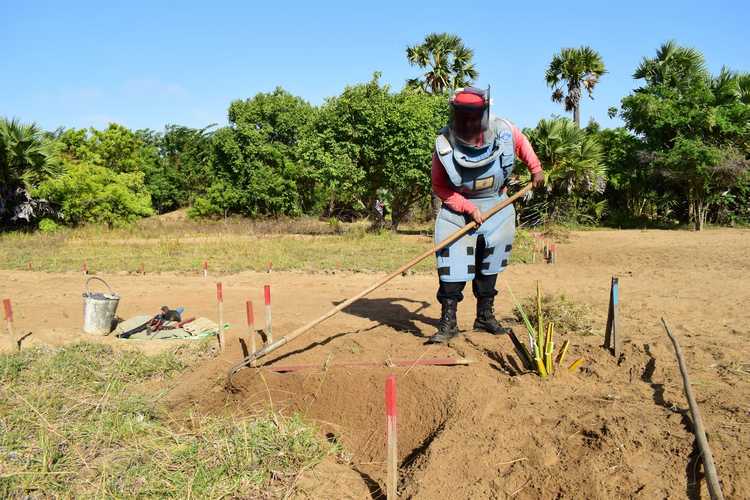
August 28, Colombo (LNW): The government has intensified efforts to complete the clearance of landmines scattered across several regions of Sri Lanka—a legacy of the decades-long civil conflict.
The initiative is overseen by the Ministry of Urban Development, Construction and Housing and marks a significant push toward finalising one of the country’s most protracted post-war recovery tasks.
According to M. M. Naimudeen, Additional Secretary to the Ministry, mine clearance activities have been ongoing for over 20 years, with critical support from both domestic institutions and international humanitarian partners.
The campaign has led to the restoration of vast swathes of land previously deemed unsafe due to the threat of unexploded ordnance.
To date, more than 1,300 square kilometres of land—primarily in the Northern, Eastern, and North Central provinces—have been successfully demined, transforming once-inaccessible terrain into habitable and cultivable ground. These efforts have enabled the resettlement of nearly one million individuals, many of whom were displaced for years.
Despite the considerable progress, a remaining 22.7 square kilometres still await clearance. Authorities have vowed to accelerate work in these final areas, prioritising zones with high potential for resettlement and agriculture.
Officials stress that the safe return of residents to their ancestral lands, along with the restoration of livelihoods, remains a central objective of the ongoing programme.
Accelerated Landmine Clearance Paves Way for Final Resettlements
Islandwide SLTB Trade Union Action Sparks Tensions Over New Timetable Scheme
August 28, Colombo (LNW): Multiple trade unions representing employees of the Sri Lanka Transport Board (SLTB) have launched a coordinated islandwide industrial action, commencing at midnight yesterday (27), in protest against the government’s introduction of a new integrated timetable that combines private and state-run bus services.
The protest, led by seven of the eight SLTB-affiliated trade unions, is being spearheaded by the Samagi United Trade Union Force. Its convenor, Ananda Palitha, alleged that the integrated scheduling initiative is a covert attempt by the government to systematically weaken and dismantle the state-run transport service, placing the SLTB’s future at risk.
According to Palitha, the new timetable system disproportionately favours private operators and undermines the operational autonomy and sustainability of the SLTB.
He further warned that the move could pave the way for the privatisation of key transport services, at the expense of public sector workers and affordable passenger mobility.
In response, Deputy Transport Minister Dr. Prasanna Gunasena dismissed the union action as unwarranted, claiming it lacks a legitimate foundation and is primarily aimed at creating political friction. He affirmed that all SLTB drivers had been instructed to report for duty as usual and warned that disciplinary action, including suspension, would be taken against those participating in the strike without authorisation.
Petroleum Sector Begins Workforce Restructuring to Streamline Operations
August 28, Colombo (LNW): The Ceylon Petroleum Corporation (CEYPETCO) and the Ceylon Petroleum Storage Terminals Ltd. (CPSTL) have initiated a restructuring programme aimed at gradually reducing their workforce, with the goal of improving operational efficiency and long-term sustainability.
According to Mayura Nettikumara, Managing Director of CEYPETCO, the staff reduction will be carried out through natural attrition, primarily by not replacing employees who retire.
He emphasised that no compulsory layoffs are planned as part of this transition.
Currently, the combined workforce of the two state-owned entities exceeds 3,200 employees. The restructuring plan seeks to bring this number down to approximately 2,035, aligning with industry benchmarks and the organisations’ evolving operational needs.
The process is expected to take place gradually over the coming years, allowing for a smoother transition without disrupting ongoing services.
Sri Lankan Underworld Suspects Captured in Joint Jakarta Operation
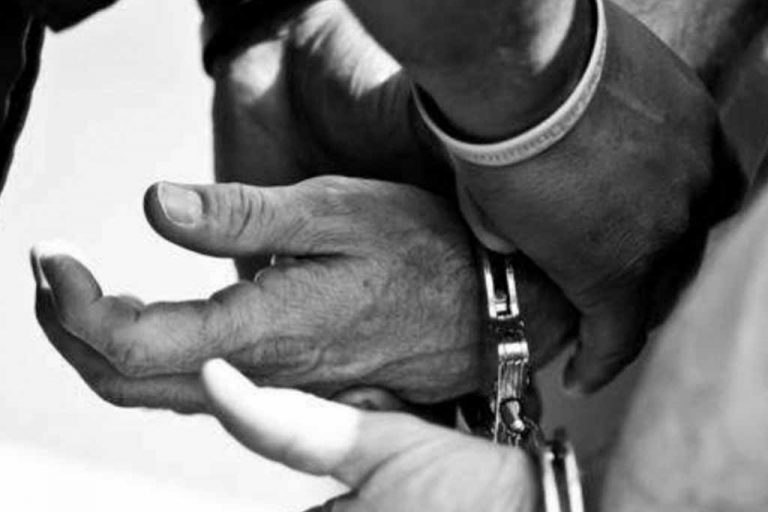
August 28, Colombo (LNW): In a coordinated effort between Indonesian and Sri Lankan authorities, six individuals linked to organised crime networks were apprehended in Jakarta.
The suspects, believed to be key players in the Sri Lankan underworld, were identified as Backhoe Saman, Thembili Lahiru, Kehelbaddara Padme, Commando Salinda, Panadura Nilanga, and a female accomplice.
Several amongst them have long been considered high-value targets due to their alleged involvement in a range of serious criminal activities.
The arrests were the result of a joint operation between Jakarta police and a specialised team from Sri Lanka’s Criminal Investigation Department (CID), carried out discreetly in the Indonesian capital.
President Engages Ceramic Industry Stakeholders Ahead of 2026 Budget Planning
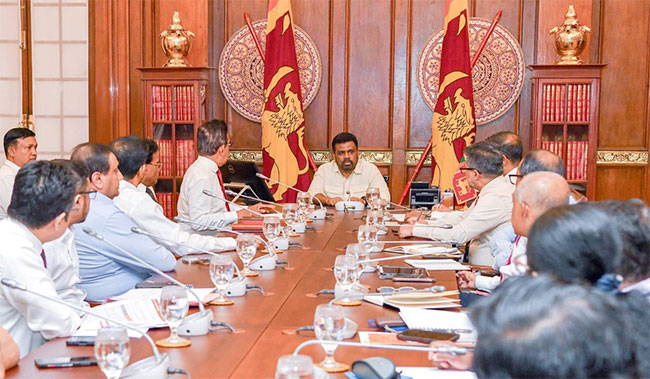
August 28, Colombo (LNW): In preparation for the forthcoming 2026 national budget, President Anura Kumara Dissanayake held a consultative session yesterday (27), at the Presidential Secretariat with key figures from Sri Lanka’s ceramic manufacturing sector.
The meeting brought together government officials and private entrepreneurs to exchange views on the state of the industry, its pressing challenges, and potential strategies for growth and resilience.
The session served as a platform for ceramic manufacturers to raise concerns regarding regulatory constraints, quality control, production costs, and difficulties in sourcing raw materials. Industry representatives stressed the urgent need for policy reforms and targeted support, particularly in light of increasing global competition and shifting market dynamics.
During the dialogue, President Dissanayake reaffirmed the government’s commitment to revitalising domestic manufacturing, with a particular focus on boosting the export capacity of local industries whilst ensuring the protection of small and medium-scale enterprises. The President underscored the importance of maintaining high standards and product quality, especially for commonly used items such as tiles, bathroom fixtures, and sanitary ware, which are widely consumed both locally and abroad.
He further emphasised the state’s intention to make quality ceramic products accessible to the public at reasonable prices, pledging practical support to manufacturers to help reduce overheads and improve efficiency without compromising standards.
Participants also explored long-term strategies for overcoming material shortages, improving infrastructure, and expanding access to international markets. Collaborative efforts between the public and private sectors were highlighted as essential to building a robust and competitive ceramic industry capable of contributing meaningfully to the country’s economic recovery.
Amongst those in attendance were Dr. Harshana Suriyapperuma, Secretary to the Ministry of Finance, Mangala Wijesinghe, Chairman of the Export Development Board, and several senior representatives from the private sector engaged in both manufacturing and export.
Former Local Councillor Apprehended Over Officer Injury During Protest Near Fort Magistrate Court
August 28, Colombo (LNW): Authorities have taken into custody a 52-year-old man believed to be responsible for injuring a police officer during a recent demonstration in the heart of Colombo.
The incident occurred near the premises of the Colombo Fort Magistrate Court on August 26, amid a tense protest that drew significant public attention.
The suspect, reportedly a former member of the Municipal Council representing the Nagoda area in Kalutara, was detained the following day in Kalutara by personnel from the Colombo Crime Division (CCD).
His arrest follows allegations that he hurled a bottle during the protest, striking an officer who was deployed for crowd control duties. The injured officer was performing his official responsibilities at the time.
The accused now faces charges relating to both the infliction of physical harm and interference with police operations. Following his arrest, he was transferred to the custody of the Kompannavidiya Police, who are currently spearheading a broader investigation into the events of that day.
The individual is expected to appear before the Colombo Fort Magistrate’s Court today (28).
Showers expected in many parts: Sun directly over latitudes of island of due to southward relative motion (Aug 28)

August 28, Colombo (LNW): Showers will occur at times in the Western, Sabaragamuwa and Central
provinces and in Galle and Matara districts, the Department of Meteorology said in its daily weather forecast today (28).
Fairly heavy falls above 50 mm are likely at some places in the Sabaragamuwa province and in
Nuwara-Eliya and Kandy districts, the statement added.
Several spells of showers may occur in the North-western province and in Hambantota district. Strong winds of about (40-50) kmph can be expected at times over Western slopes of the central hills and in Northern, North-central, Western and North-western provinces and in Trincomalee and Hambantota districts.
The general public is kindly requested to take adequate precautions to minimise damages caused by strong winds.
The sun is going to be directly over the latitudes of Sri Lanka from August 28 to September 07 due to its apparent southward relative motion.
The nearest places of Sri Lanka over which the sun is overhead today are Naagadeepaya (Nainativu), Pooneryn, Manelkadu, Aliyawalei about 12.11 noon.
Marine Weather:
Condition of Rain:
Showers will occur at several places in the sea areas off the coast extending from Puttalam to Matara via Colombo and Galle.
Winds:
Winds will be westerly to south-westerly and wind speed will be (30-40) kmph.
Wind speed can increase up to (50-60) kmph at times in the sea areas off the coast extending from Chilaw to Mannar via Puttalam and from Matara to Pottuvil via Hambantota.
Wind speed can increase up to 50 kmph at times in the sea areas off the coast extending from Chilaw to Matara via Colombo and Galle and from Mannar to Trincomalee via Kankasanthurai and Mullaittivu.
State of Sea:
The sea areas off the coast extending from Chilaw to Mannar via Puttalam and from Matara to Pottuvil via Hambantota will be rough at times.
The sea areas off the coast extending from Chilaw to Matara via Colombo and Galle and from Mannar to Trincomalee via Kankasanthurai and Mullaittivu will be fairly rough at times.
Should Cardinal Ranjith Receive Costly State Protection?
By Adolf
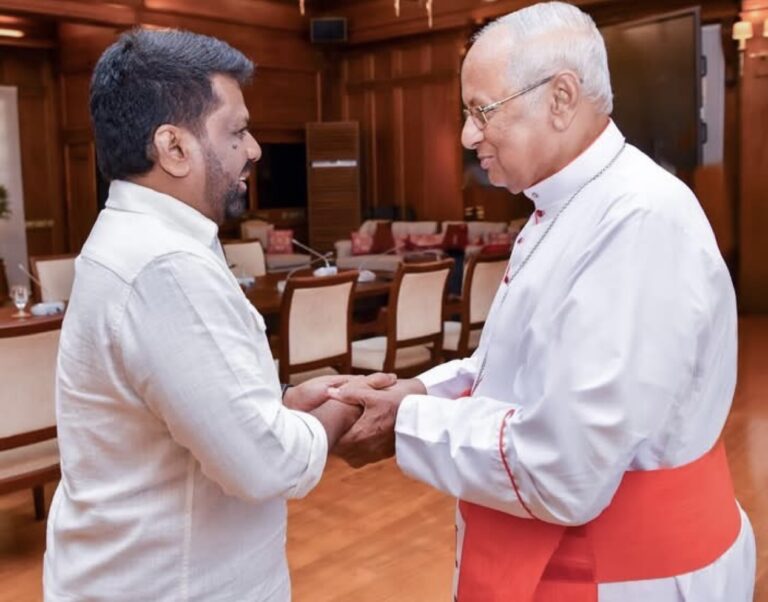
Colombo (LNW): Sri Lanka is constitutionally a secular country with freedom of religion, but state resources are not meant to serve as private conveniences for clergy or institutions, no matter how influential. Reports suggest that Cardinal Ranjith receives military protection on a scale that far exceeds what is typically accorded to other religious leaders. The deployment of soldiers, vehicles, and security infrastructure comes at enormous cost to the taxpayer. When the government is pleading with citizens to tighten their belts, these expenditures cannot be justified without transparent criteria. Especially since the government arrested an ex president over $50000 spent on his security fir an overseas trip.
The question then arises: are other religious leaders afforded the same treatment? The heads of the Buddhist, Hindu, and Muslim communities certainly command respect, but none appear to enjoy the same degree of state-funded protection or diplomatic privileges. The apparent exception made for the Cardinal invites accusations of favoritism and selective application of public resources. Equality before the law, and parity in the treatment of all religions, is supposed to be a cornerstone of Sri Lanka’s governance.
Compounding the issue is the Cardinal’s own conduct. Far from being a strictly spiritual leader, he has been outspoken on political matters, regularly criticizing governments, lobbying on policy, and shaping public opinion. Of course, clergy have the right to express views, but when they choose to actively dabble in politics, they cannot simultaneously claim the entitlements of apolitical figures of worship. Political actors must play by the rules of politics, not enjoy state-funded privileges beyond accountability.
Equally contentious is the matter of the diplomatic passport. Diplomatic passports are normally reserved for government officials representing the state on official duty abroad. A religious leader, however prominent, is not a government servant and does not act in a sovereign capacity. Granting such privileges blurs the lines between church and state, raises questions of legal propriety, and sets a precedent that could lead other religious figures to demand the same.
There is no denying that the Catholic Church in Sri Lanka is an influential and wealthy institution with global connections and considerable assets. If the Church deems extensive security necessary for its leader, it is both financially capable and morally responsible to fund those arrangements from its own resources, rather than passing the bill onto taxpayers already struggling with inflation, taxes, and reduced public services.
This is not a matter of personal animosity toward Cardinal Ranjith, but of principle. Religious leaders exist to serve the people, not to be served by them through endless state-funded privileges. A legal determination is long overdue. Someone must take the matter to court to clarify whether such perks are constitutional, fair, and sustainable. The taxpayers of Sri Lanka deserve nothing less than transparency, equity, and the assurance that public resources are not being abused under the cover of religion.
UNP Chairman Claims Prison Land Belongs to Ranil Wickremesinghe’s Family
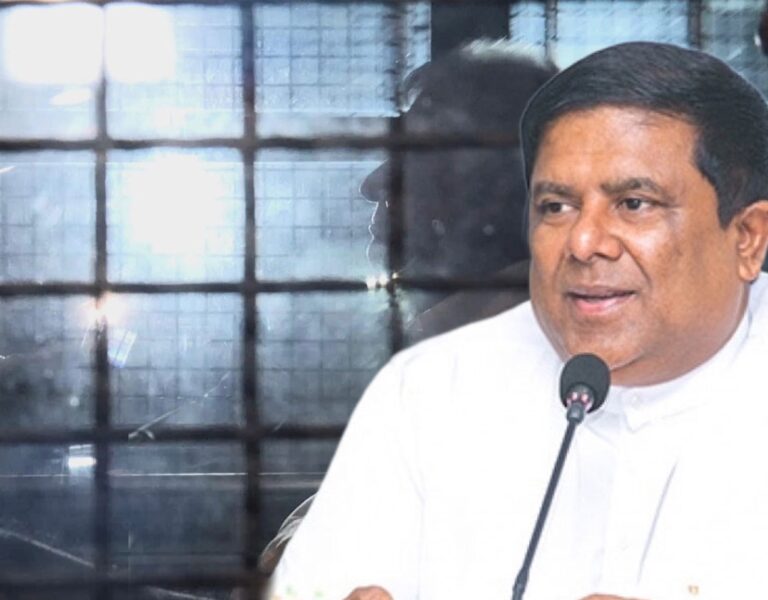
Colombo (LNW): Former President Ranil Wickremesinghe, who has been remanded on allegations of using state funds for a private trip while in office, is being held on land belonging to the Wickremesinghe family, says United National Party Chairman and former Minister Vajira Abeywardena.
“Mr. Ranil Wickremesinghe was taken into custody and remanded in the Welikada Prison, which stands on 43 acres of land that once belonged to his family—more specifically, to his wife, Helena Wijewardena. So, the true owners of that property are none other than Mr. Ranil Wickremesinghe and members of his family. Therefore, this too is an unfortunate twist of fate.”
He expressed these views today (27) at a press conference held at former President Ranil Wickremesinghe’s political office on Flower Road, Colombo.
“No impact on President Anura”
When asked by a journalist whether the situation faced by Ranil Wickremesinghe would also affect current President Anura Kumara Dissanayake, Vajira Abeywardena stated that, according to the Constitution, no such impact would fall upon President Anura Kumara Dissanayake.
Further clarifying the matter, the UNP Chairman said:
“The actions carried out by the President under his official powers are, according to Article 33 of the Constitution, functions vested in him. Under Article 33(ඌ), the President has the authority to perform all acts that he is required to carry out or is empowered to carry out under the Constitution, any written law, or regulations, provided they are not contrary to the law, as well as actions permitted under international law, customs, or usage. Therefore, the same authority I mentioned is vested in the current President, Mr. Anura Kumara. It is not the relevant country that decides whether President Anura Kumara travels to Delhi, Washington, or anywhere else in the world—it is President Anura Kumara Dissanayake who makes that decision. Accordingly, in no way will the issue you raised have any impact on the current President.”
“The past week was a dark chapter in Sri Lanka’s history”
Continuing his remarks at the press conference, the UNP Chairman stated that the past week should be regarded as a period that marked a historic black mark for Sri Lanka.
Vajira Abeywardena further noted:
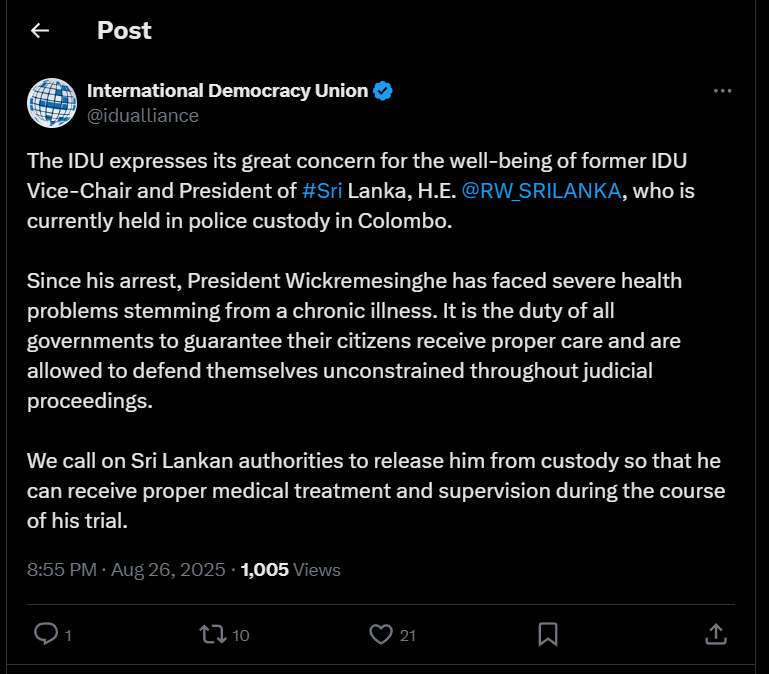
“In particular, I wish to remind you that yesterday the International Democratic Union issued a statement on Twitter. That message stated as follows:
As Vice Chairman of the International Democratic Union, former President Ranil Wickremesinghe’s arrest has been met with deep regret by the IDU. Following his arrest, a rapid deterioration in the former President’s health condition was observed. Therefore, the IDU urges the Government of Sri Lanka to release him from prison custody in order to allow him to receive treatment under proper medical supervision.”
The connection between Welikada Prison land and Ranil Wickremesinghe
“I also noticed that many people on social media are expressing various views regarding Mr. Ranil Wickremesinghe’s health conditions. I believe his life has always been maintained according to a certain routine. That routine could involve some regular exercises, having meals at specific times, working at Flower Road at 12:30 p.m., taking a two-hour rest afterwards, resuming work at 3 p.m., and continuing until 10 p.m. every day. This is how he carried out his daily activities.
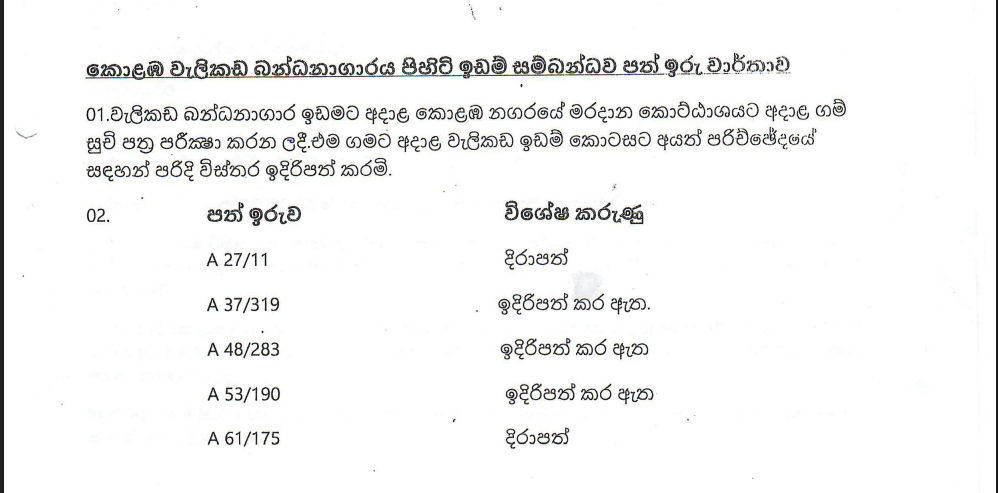
At this moment, that routine has been subjected to heavy pressure, which caused his health condition to deteriorate. Another special point is that Mr. Ranil Wickremesinghe was taken into custody and remanded at the Welikada Prison, which stands on 43 acres of land that once belonged to his family—specifically to his wife’s family. Therefore, the real owners of that land are none other than Mr. Ranil Wickremesinghe and his family members. This, too, is an unfortunate twist of fate.
I have in my possession the land registry documents relating to Welikada Prison, and I will provide copies to the media. Then the media and the people of Sri Lanka can understand that this is a deeply regrettable incident that has befallen a member of such a distinguished family.”
Doctors who signed the bail application
“Finally, let me say this: all political parties in Sri Lanka, all forces, the entire legal community, and all medical groups stood on his behalf. In the end, when he was granted bail, doctors themselves stayed in court, even during their leave, without drinking even a glass of water, saying: ‘We will stand surety for him.’ It was the doctors themselves who signed as sureties for Mr. Ranil Wickremesinghe’s bail. Therefore, on behalf of our party, we extend our respect and gratitude to all Sri Lankans who dedicated themselves in that manner for Mr. Ranil Wickremesinghe.”
A journalist’s question and Vajira Abeywardena’s response
Question:
“Now, he fell ill while in prison. But in court, didn’t he already have this condition? Are you suggesting that his illness arose because of his imprisonment?”
Answer:
“The way I see it, this is how it happened. He was asked to appear around 9:30 a.m. and then questioned for about 4–5 hours. He has a specific routine for taking meals, and his medication must be taken at the proper time. During that period, all of this was disrupted. Afterwards, he was brought to court and kept inside the dock for another 5–6 hours, without electricity, until about 10:30 at night. Altogether, he was held for nearly 12 hours under such conditions. Naturally, when that kind of pressure is applied, illnesses can develop.”
UNP Deputy Leader, former Minister Akila Viraj Kariyawasam
“Thank you to everyone who stood by him…!”
“Today, we are holding this press conference especially to thank all those who came forward on behalf of Mr. Ranil Wickremesinghe. We, as the United National Party, express our gratitude to the leaders of all political parties, their general secretaries, and all the representatives who stood with us.
We also extend our thanks to the prison officials who supported him after he was taken into custody, and to the doctors and medical staff at the Colombo National Hospital who cared for him after he was admitted there from prison.
Furthermore, we express our appreciation to the team of lawyers who stood by him, to all UNP members who rallied for him, and to representatives of other political parties who came forward on his behalf.”
UNP General Secretary, former Minister and Attorney-at-Law Thalatha Athukorala
“Everyone came forward for Ranil”
“As our Deputy Leader mentioned, I too, as the General Secretary of the United National Party, wish to thank everyone who came forward on behalf of Mr. Ranil Wickremesinghe. The support we received from all of you gave us immense strength. To my knowledge, this was the first time in Sri Lanka that such a large number of lawyers participated in a single legal case. For us in the UNP, that gave great encouragement.
There was no party division here. Everyone came forward for Mr. Ranil Wickremesinghe. Even from the moment he was imprisoned, our party supporters across the island engaged in their own religious practices in temples, churches, and kovils, praying for his speedy recovery and good health. Therefore, I take this opportunity to express our gratitude for all of that as well.”
The way my father taught me
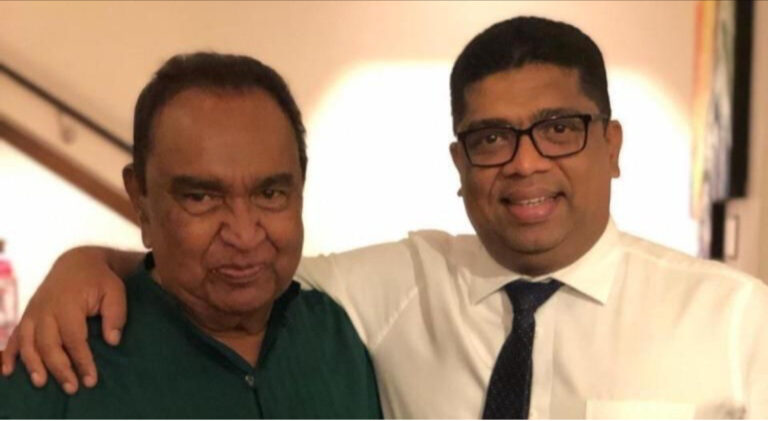
By Krishantha Prasad Cooray
“My father didn’t tell me how to live; he lived, and let me watch him do it”. — Clarence Budington Kelland
It’s been a year since a man of quiet greatness who shaped me into who I became and showed me the true meaning of duty left this world. Though I live overseas now, I am deeply grateful to God above for granting me the opportunity to be by his side and hold his hand as he passed. Thaththa was my true hero.
I have been acutely aware this past year that a part of me was missing. I know it was Thaththa, but that’s a reality I did not want to admit. I did not, or perhaps could not, face the truth of my loss in all its dimensions.
He was truly extraordinary, hardworking, loving, and humble. The way he faced criticism quietly and with grace was remarkable. When life tested him, he responded with calm strength. He thought clearly, without being swayed by empty words. He was always steady and sober in word and deed. He never sought credit for what he did and his humility is a lesson for us all.
Faith and discipline were his greatest strengths. For many years, he attended early morning mass almost every day. When I think of discipline, my father is the first face that comes to my mind. When I consider the responsibility I have towards my children, I think of him and remember that his love for his three sons was fierce and protective, and yet so very gentle. In moments when I need strength to face life’s challenges, I think of his quiet but extraordinary courage. When I reflect on friendship and loyalty, I think of the example he set. And when anger threatens to overwhelm me, I remember him and peace follows. Whenever I face difficult decisions, I pause and ask, “What would Thaththa say?”
He obviously offered advice and taught many things, but my father, Eric Cooray, as I mentioned, was a quiet individual. The greatest lessons were not spoken, they were acted out in real life situations. We saw. We learned. We are grateful. Beyond words.
He, in fact, crafted his ways into our hearts and minds. And there he lives, now and always. It is hardly a consolation for the absence of his physical presence is acutely felt and overwhelming. But until we meet again in the hereafter, my father, Eric Cooray, will be by my side in the form of the lessons he taught, effortless and, indeed without intending to teach.
Memories of him come to me in waves, sometimes bringing smiles, other times tears I cannot hold back.
Thaththa, thank you for every sacrifice, every teaching, every moment of love. I think of you all the time. I miss you, deeply and always.