Home Blog Page 424

NCE Calls for Careful Transition to VAT refund mechanism from SVAT

0

By: Staff Writer

February 27, Colombo (LNW): The National Chamber of Exporters of Sri Lanka (NCE) has voiced concerns about the proposed removal of the Simplified Value Added Tax (SVAT) system and its replacement with a VAT refund mechanism.

While acknowledging the Government’s commitment to digital transformation and economic modernization, the NCE highlights the potential risks this change could pose to the export sector and urges careful planning.

Impact on the Export Sector

Exporters are a crucial pillar of Sri Lanka’s economy, playing a significant role in achieving the Government’s $19 billion export target.

 However, the industry is already facing multiple challenges, such as fluctuating global demand, intense international competition, and domestic operational constraints.

The elimination of SVAT without an efficient refund system in place could further strain exporters, creating financial instability and reducing global competitiveness.

The SVAT system has provided a vital advantage by mitigating cash flow disruptions through VAT offsetting on inputs. This mechanism ensures smoother operations and cost efficiency for exporters.

Replacing it with a refund-based system assumes that digitalization will facilitate timely and efficient VAT reimbursements.

While the NCE supports the Government’s digital economy vision, it insists that the new system must be rigorously tested before full implementation to avoid potential disruptions.

Past Challenges with VAT Refunds

Historically, VAT refund mechanisms have presented significant difficulties, with exporters experiencing prolonged delays and cumbersome administrative procedures.

These inefficiencies have led to cash flow constraints, forcing businesses to seek high-interest loans to meet order commitments, thereby increasing operational costs.

Such setbacks emphasize the need for a robust and reliable refund system that prevents recurrence of past issues.

NCE’s Recommendations for a Smooth Transition

To mitigate risks and ensure a successful transition, the NCE recommends a phased, well-monitored approach, including:

Pilot Testing: A comprehensive pilot project in collaboration with the Export Development Board (EDB) to evaluate system functionality under real-world conditions and identify potential issues before full implementation.

Clear Implementation Timeline: The Government should establish a structured timeline with a transitional period, allowing exporters to adapt gradually without operational disruptions.

Stakeholder Training and Support: Adequate training and technical support must be provided to exporters and relevant stakeholders to facilitate seamless adoption of the new system.

Timely VAT Refunds: The Department of Inland Revenue must guarantee prompt VAT refunds, with clear mechanisms for handling delays and resolving disputes efficiently.

Contingency Measures: A backup plan should be in place to address potential system failures, ensuring exporters do not suffer due to administrative inefficiencies.

Avoiding Irreversible Consequences

Once implemented, reversing a flawed system will be challenging. A poorly executed rollout could undermine exporter confidence in Government policies, exacerbating the sector’s existing struggles. Therefore, all potential risks must be addressed beforehand to prevent any negative repercussions.

Call for Collaborative Dialogue

The NCE urges the Government to engage in meaningful discussions with exporters and other key stakeholders to ensure a balanced approach to the VAT system transition. Any reform must align with the broader objective of strengthening the export sector, a key driver of Sri Lanka’s economic growth.

Trump’s war against corruption and crimes. The opposition (US & world) panic and confused.

0

This short article is to highlight radical actions taken by the President Donald Trump to clean up the federal government from corruption and inefficiency to reform it to be market friendly. His ideology is to cut the deep federal bureaucracy and regulations and reduce budget deficit and debt so that the economy can grow faster competitively through markets with lower inflation. The short background of the topic is as follows.

  • Unlike in Sri Lanka, Donald Trump has already commenced historic actions against the corruption of the federal government as promised at the Presidential election. As promised, he immediately after taking oath on 20 January 2025 established the Department of Government Efficiency (DOGE) headed by Elon Musk, a top global businessman in the US, to audit all federal government agencies, assess the performance and efficiency on tax payers’ money, detect wasteful spending and close or reform such agencies without delay.
  • The DOGE has got the access to information and payment systems of federal agencies in order to detect wasteful spending and questionable operations based on a simple question of the purpose to tax payers.
  • The DOGE officials are not normal government auditors who ask for hard copies of sample documents for audit that takes years. Elon Must has employed young software engineers who get the access to operations systems of the agencies and work day and night to retrieve historical information hiding in all corners on operations. Then, questionable transactions and payments are immediately informed to the President and media with printouts. 
  • On DOGE’s findings, several agencies have been suspended, e.g., UASID and CFPB, giving shockwaves to both the US and the globe. Many agencies such as Department of Education and Department of Transportation are in the list for closure. The DOGE releases details of questionable spending items of corrupted nature on almost daily basis making political news. It is reported that nearly US$ 95 bn of wasteful spending is already saved through suspension of such spending. The DOGE’s target is to cut nearly US$ 2 trillion of federal spending within two years. At the Cabinet meeting held today, Elon  Musk told the media that the government would go bankrupt without the technical support of the DODE, given the structure of budget deficit and debt stock (Watch the video of Elon Musk at the Cabinet meeting) (Video 2) (Video 3).
  • Trump Administration has given an ultimatum to all federal civil employees of nearly 2 million to early retire by 6 February 2025 with wages of 8 months or confront termination of employment. It is reported that many federal employees have accepted the option to retire.
  • The DOGE is to audit the US gold reserve held in vaults at Fort Knox, Kentucky, and to ensure whether the gold is there in physical or in paper as recorded because it has not been audited since 1953. It is reported that the Fort Knox gold reserve is around 147.3 mn troy ounces with a book value at 1974 prices (i.e., US$ 42 per troy ounce) against the value of US$ 428 bn at current price. It is also reported that the total US gold reserve is around 248 mn troy ounces (nearly 8,133 MT) at book value of US$ 10.5 bn. and current market value of US$ 760 bn. There is speculation that Trump Administration plans to monetize the gold reserve to reduce the federal debt burden.
  • The DOGE has already visited the Tax Department, PENTAGON, Social Security System and Treasury Payment System for audit and is in the process to audit the central bank (Federal Reserve).
  • Reciprocal tariff policy has been launched and diplomatic discussions have been commenced with foreign governments to implement the policy.
  • The opposition and public interest groups have rallied against the President, DOGE and Elon Musk and taken a series of legal actions to block the DOGE for access to federal information. In retaliation, President Donald Trump and Elon Must have threatened investigations on the wealth accumulation of lead-Democratic politicians for prosecution against corruption.

DOGE e-mail to federal employees 
to report their individual work accomplishments

The latest federal panic has arisen from the DOGE e-mail to all federal employees sent on last Sunday (23 February 2025) requiring them to report by Monday their work accomplishments in the last week in five bullet points or failure to respond would be treated as resignation.

  • President Trump commented that this information will help detect whether employees really exist in respective agencies because it has been found that some employees never attend office or gone dead while continuing to receive respective remuneration on their names even after the retirement since the retirement files are not completed.
  • Elon Must commented that information received would be assessed through AI to identify employees between wasteful work and productive work. He also commented that some employees did not know their job description and contribution to the society and, therefore, the e-mail was meant to spot outright fraud from people on the payroll who were not working at all.
  • It is reported that nearly 40% of federal employees have responded to the e-mail and necessary policy action will be decided on those who did not respond in due course. It is well known that state employees world over are reluctant to assess work performance due to various reasons, given the structure of the bureaucratic system including the legal protection to state employees.

Concluding remarks

  • Unlike in new governments of many countries, Trump Administration has got no honeymoon or celebration time. It has immediately commenced to keep promises radically. Therefore, the delivery in just one month is both radical and remarkable.
  • It is reported that some of reforms to federal agencies and bureaucracy are what several past Presidents proposed but failed to activate or proceed.
  • As promised at the election campaign, the President Trump and his team seem to be dynamic and energetic to deliver the national mission. All members of the Cabinet have been appointed for the delivery of the same announced mission without any variations and, therefore, no private missions or ideologies are confronted.
  • The speed, braveness, dynamism, focus and team coordination exhibited from Trump Administration are exemplary to national leaders of other countries if they intend to be on real national policy delivery in a time frame. 
  • As usual in politics across the world, allegations against the past President and government leaders have become a routine of the Trump team.
  • What Trump Administration is doing to fight corruption and make the economy more efficient and productive through market forces is a historic lesson to governments of the other part of the world which shout at corruption of past governments in the media while operating in the same corrupted governance system until voters overthrow them too on same corruption charges. Finally, countries and generations of people live in de facto bankruptcy being the reality of the countries of successive governments talking of corrupt-free, good governance.

(This article is released in the interest of participating in the professional dialogue to find out solutions to present economic crisis confronted by the general public consequent to the global Corona pandemic, subsequent economic disruptions and shocks both local and global and policy failures. All are personal views of the author based on his research in the subject of Economics which have no intension to personally or maliciously discredit characters of any individuals.)

P Samarasiri

Former Deputy Governor, Central Bank of Sri Lanka

(Former Director of Bank Supervision, Assistant Governor, Secretary to the Monetary Board and Compliance Officer of the Central Bank, Former Chairman of the Sri Lanka Accounting and Auditing Standards Board and Credit Information Bureau, Former Chairman and Vice Chairman of the Institute of Bankers of Sri Lanka, Former Member of the Securities and Exchange Commission and Insurance Regulatory Commission and the Author of 13 Economics and Banking Books and a large number of articles published.)

Source: Economy Forward

*The content in this article is of personal views of the author and does not reflect the opinion of LNW in any way.

President meets Japanese Ambassador to strengthen bilateral ties

0

February 27, Colombo (LNW): President Anura Kumara Dissanayake welcomed the Ambassador of Japan to Sri Lanka, H.E. Mr. Akio Isomata, to the Presidential Secretariat this morning (27) for a significant meeting aimed at enhancing diplomatic and economic relations between the two countries.

During the meeting, Ambassador Isomata extended an official invitation to President Dissanayake to visit Japan, expressing strong appreciation for the new administration’s policy framework.

The Ambassador also conveyed Japan’s desire to deepen cooperation with Sri Lanka in various sectors, particularly in areas of security and economic development.

A key topic of discussion was Japan’s recent efforts to include Sri Lanka in its newly launched security cooperation assistance programme, which is designed to strengthen regional security and foster closer ties with Sri Lanka.

Ambassador Isomata underscored Japan’s commitment to supporting Sri Lanka through various developmental initiatives.

The two leaders also engaged in a detailed conversation about the joint program between Japan, Switzerland, and South Africa, which focuses on national reconciliation efforts in Sri Lanka, particularly in the northern regions that have been heavily impacted by the 30-year conflict.

Both sides expressed a mutual interest in continuing to support these initiatives to promote long-term peace and unity within Sri Lanka.

In addition to these discussions, the current state of Japanese investments in Sri Lanka was reviewed. Particular attention was given to ongoing and future investments in the digital economy and infrastructure sectors, such as airport development and port modernisation.

Ambassador Isomata reaffirmed Japan’s commitment to Sri Lanka’s Digital Transformation Programme, highlighting Japan’s intention to invest in projects that will enhance the country’s digital capabilities and improve its transport infrastructure.

The meeting was attended by several high-ranking officials, including Dr. Duminda Hulangamuwa, Advisor to the President on Economic and Financial Affairs, Roshan Gamage, Senior Additional Secretary to the President, OHASHI Kenji, First Secretary and Head of Economics and Development Cooperation Section, and MURATA Shinichi, First Secretary and Head of the Political Section.

Prime Minister criticises excessive spending on foreign tours by previous Presidents

0

February 27, Colombo (LNW): Prime Minister (Dr.) Harini Amarasuriya has strongly criticised the extravagant spending on foreign trips by former presidents, drawing a stark contrast with the more modest expenditures of the current President, Anura Kumara Dissanayake.

During a debate on the expenditure for the office of the President, the Prime Minister revealed that former President Mahinda Rajapaksa had allocated a staggering Rs. 3,572 million from public funds for foreign visits between 2010 and 2014.

This spending was, according to Amarasuriya, one of the highest recorded during his tenure, with 2013 alone seeing an expenditure of Rs. 1,144 million on foreign travel.

In comparison, the Prime Minister highlighted that the current President, Anura Kumara Dissanayake, had spent a mere Rs. 1.8 million on his three foreign visits so far.

Amarasuriya pointed out that such a contrast in spending reflected the fiscal discipline that the current administration was committed to, especially when compared to the lavish spending of previous leaders.

Further detailing the foreign travel expenditures of former presidents, Amarasuriya noted that former President Maithripala Sirisena had spent Rs. 384 million during his time in office between 2015 and 2019.

She also highlighted that former President Gotabaya Rajapaksa, over the course of his two-year term, had spent Rs. 126 million on foreign visits.

The Prime Minister went on to scrutinise the foreign travel spending under former President Ranil Wickremesinghe, who, according to Amarasuriya, had spent Rs. 533 million for foreign trips in the 2023-2024 period alone.

Wickremesinghe had reportedly undertaken 33 foreign trips, accompanied by as many as 154 individuals. Notably, he had taken opposition members of Parliament with him on some of these journeys, including a trip to the UK for the funeral of Queen Elizabeth II, where he was accompanied by 10 people.

Furthermore, 18 individuals travelled with him to Japan for the funeral of former Japanese Prime Minister Shinzo Abe, while 12 individuals joined his visit to the UK for the coronation of King Charles III.

Additionally, the Prime Minister noted that he had taken 23 individuals with him on an official visit to India.

In contrast, President Anura Kumara Dissanayake’s foreign trips have been much more restrained, with only five people accompanying him on his trip to India.

AG informs Supreme Court of Rs. 245 mn compensation paid to Easter Carnage victims

0

February 27, Colombo (LNW): The Attorney General has informed the Supreme Court that a total of Rs. 245 million has been disbursed as compensation to the victims of the tragic Easter Sunday terror attacks.

This payment follows an order issued in relation to the Fundamental Rights petitions filed by the victims, which highlighted the failure of authorities to take preventative action prior to the attacks.

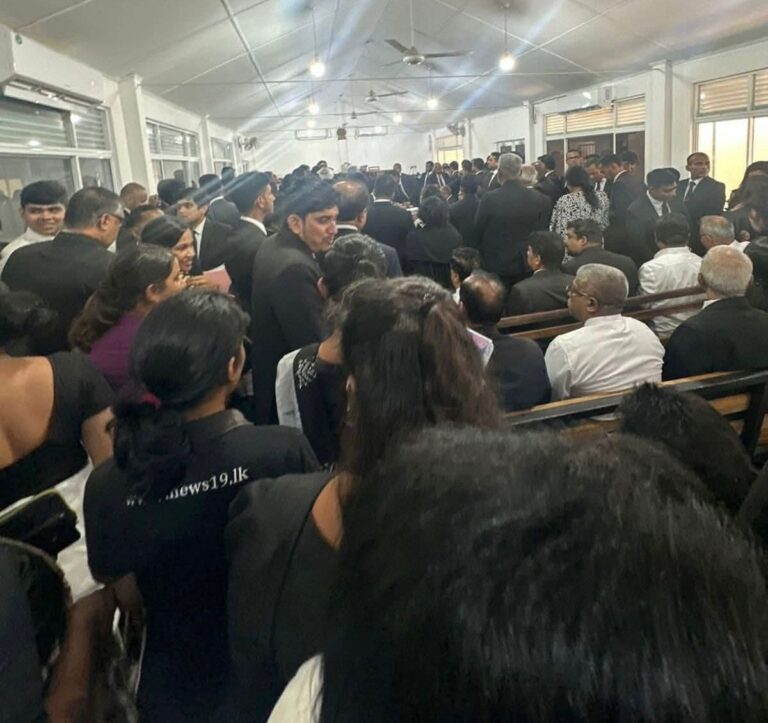
The update was presented during a hearing of 12 petitions concerning the disbursement of compensation to those affected by the attacks.

The petitions were brought before the Supreme Court for scrutiny, with the intention of ensuring that the payment process was carried out in accordance with the court’s previous instructions.

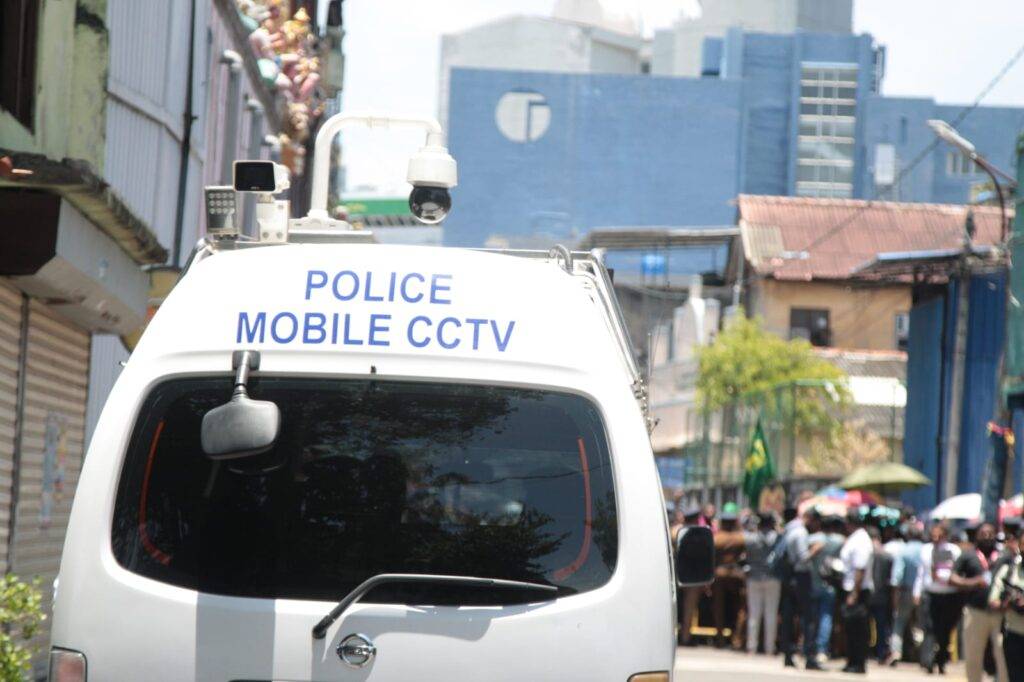
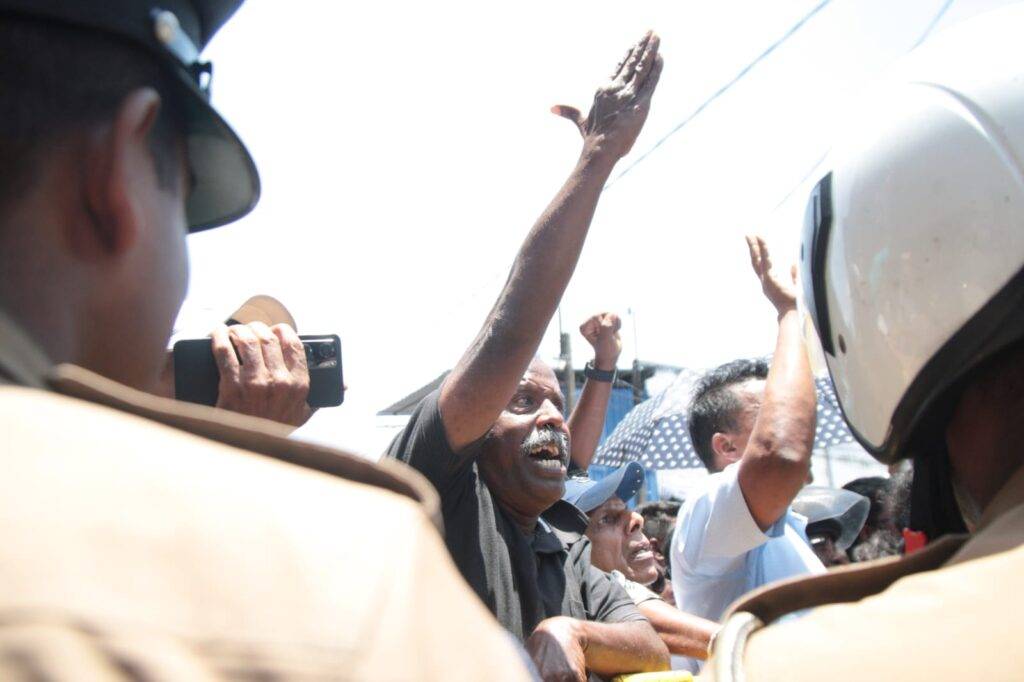
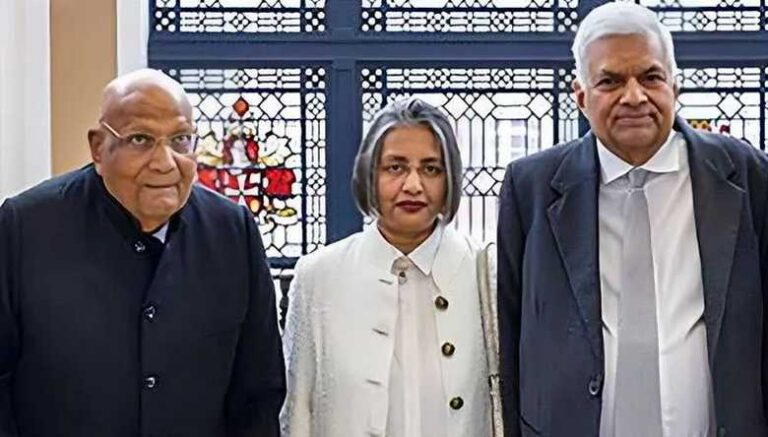
The case was heard by a three-judge bench consisting of Chief Justice Murdu Fernando, Justice S. Thurairajah, and Justice A.H.M.D. Nawaz.

The Supreme Court’s involvement in these matters has underscored the importance of ensuring justice for the victims, as well as the need for accountability and transparency in the compensation process.

Central Bank of Sri Lanka issues warning over use of ‘Finance’ in business names

0

February 27, Colombo (LNW): The Central Bank of Sri Lanka (CBSL) has issued a stern reminder regarding the improper use of the word ‘Finance’ in business names, stressing that such usage violates the provisions outlined in the Finance Business Act, No. 42 of 2011.

The CBSL clarified that under Section 10(2) of the Act, only registered finance companies and institutions specifically authorised by the Act are permitted to use terms like ‘finance’, ‘financing’, or ‘financial’ in their business names.

Any other entity attempting to do so, whether alone or combined with other words or their derivatives, is required to obtain prior written approval from the Central Bank.

The regulation is designed to prevent misleading business practices and ensure that the use of financial terminology is exclusive to institutions that are legally recognised and regulated within the sector.

The CBSL emphasised that failure to adhere to this requirement could result in legal repercussions, as individuals or entities found in violation of this rule are considered to have committed an offence under Section 56(4) of the Finance Business Act.

As part of this public advisory, the CBSL strongly urged all businesses and individuals to familiarise themselves with these legal stipulations and comply with the necessary procedures to avoid potential penalties.

Election Commission to meet today to decide on date for LG Polls

0

February 27, Colombo (LNW): The Election Commission of Sri Lanka is set to hold an important meeting today (27), with reports indicating that a decision on the date for the upcoming Local Government (LG) Elections will be made during the session.

This meeting has been anticipated for weeks, as the nation awaits clarity on when the elections, crucial for local governance, will take place.

According to a recent gazette notification issued by the Ministry of Public Administration, Provincial Councils, and Local Government, local government institutions are scheduled to hold their inaugural sessions after the elections on June 2, 2025.

Sources within the Election Commission have hinted that the elections are likely to be held either at the end of April or in the first week of May 2025. The final decision, which will confirm the exact date, is expected to provide clarity on the timeline for the electoral process.

Sri Lanka’s 2025 Budget marks key step towards economic recovery: Treasury Secretary

0

February 27, Colombo (LNW): Sri Lanka’s 2025 national budget has been hailed as a pivotal moment in the country’s ongoing recovery, balancing urgent public needs with long-term fiscal responsibility.

Treasury Secretary Mahinda Siriwardana acknowledged that whilst the budget prioritises fiscal discipline, it also ensures vital support for the nation’s most vulnerable communities, investing heavily in social welfare, infrastructure, education, and healthcare.

Delivering the keynote address at the Softlogic Investor Forum in Colombo, Siriwardana stressed that the budget outlines a clear roadmap for Sri Lanka’s future, but he urged all sectors to collaborate in turning this vision into reality.

This is a critical turning point for the country,” he noted, “and it’s up to us all to work together to ensure its success.

Siriwardana pointed out the unusual continuity in Sri Lanka’s economic strategy, which has remained largely stable despite political changes over the past few years.

Unlike the policy shifts that followed the 2019 political transition, the current approach has remained consistent, which he described as a rare and promising sign for the country’s future.

The stability we’re now witnessing in macroeconomic policy, even through an election cycle, is something we haven’t seen before,” he observed. “This stability is not without its critics, but the positive results speak for themselves. We have restored stability, regained investor confidence, and are on the right path towards debt sustainability.

Highlighting the progress made over the past three years, Siriwardana underlined the importance of staying committed to the ongoing economic reforms.

Although these reforms have been challenging, they are starting to show tangible benefits, including an improved fiscal position and increased international trust.

Whilst acknowledging the hardships of reform, he pointed to the country’s stronger position today, which has allowed it to engage more effectively with international partners.

The government’s fiscal discipline has made targeted relief for vulnerable groups possible, without derailing the reform process.

Looking ahead, Siriwardana expressed confidence that Sri Lanka’s ongoing relationship with the International Monetary Fund (IMF) could be the last, provided the country remains resolute in its reform efforts.

This must be the final IMF programme,” he stated. “To make that a reality, we must avoid policy missteps and continue strengthening our economic foundations.

He concluded by emphasising that the hardest reforms have already been implemented. The focus now, he said, is on consolidating these changes and ensuring their long-term success. “If we stay disciplined, Sri Lanka will emerge stronger and more prosperous in the years ahead.

Aravinda Sirinatha appointed as Chairman of National Housing Development Authority

0

February 27, Colombo (LNW): Aravinda Sirinatha has officially taken over as the new Chairman of the National Housing Development Authority (NHDA), marking the beginning of his leadership at the authority’s headquarters today (27).

Sirinatha comes to the role with a solid academic background. He graduated from the University of Kelaniya, where he earned a degree in commerce, before advancing his education with a postgraduate qualification in business administration.

In addition to his academic achievements, Sirinatha has also honed his skills through professional training at the Institute of Chartered Accountants of Sri Lanka, further enhancing his understanding of financial and managerial practices.

His career spans a variety of roles in the private sector, where he gained valuable experience in both management and strategic planning.

With his expertise in business administration and finance, Sirinatha is expected to lead the NHDA in implementing sustainable housing solutions and driving the authority’s broader objectives.

Water and power supply strain amidst ongoing dry conditions in SL

0

February 27, Colombo (LNW): The prolonged dry weather in Sri Lanka has led to significant disruptions in water supply across several regions, including Colombo, Kalutara, Ratnapura, Matara, and Kandy, according to the National Water Supply and Drainage Board (NWSDB).

The decreased rainfall has resulted in lower water levels in reservoirs, making it difficult for the authorities to maintain regular water distribution.

In response to the situation, the NWSDB has increased the use of water bowser trucks to deliver water to affected areas. However, with the supply under pressure, the public is being urged to use water sparingly and avoid wastage during these challenging conditions.

In addition to water shortages, the Ceylon Electricity Board (CEB) has reported a sharp rise in the cost of power generation. This is largely due to an increase in the operation of thermal and fuel oil power plants, which are being used more frequently to compensate for the reduction in hydroelectric power output.

The Norochcholai Power Plant, which is one of the country’s key sources of electricity, is currently operating at full capacity to meet the demand.

The country’s reliance on hydroelectric power has significantly decreased, with only 20 per cent of daytime electricity and 40 per cent of nighttime electricity now being sourced from hydro plants.

This shift has placed additional strain on thermal power generation, which has resulted in a spike in energy costs.

The combination of water and power supply issues highlights the severe impact of the ongoing dry spell, with authorities urging the public to remain vigilant and make efforts to conserve both water and energy.