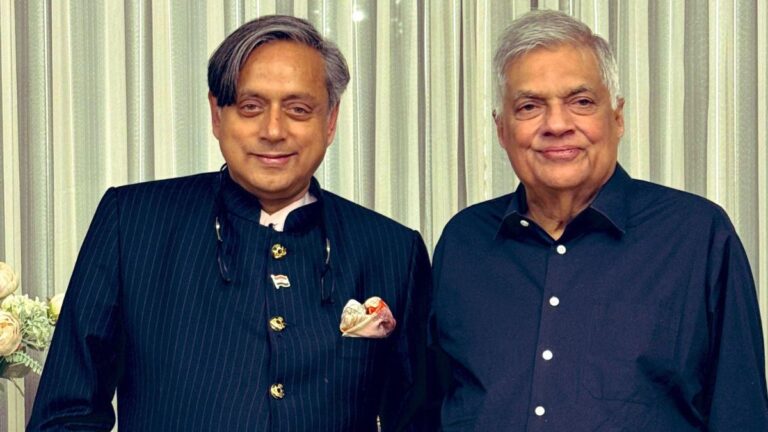
August 24, Colombo (LNW): Indian Congress MP Shashi Tharoor has raised serious concerns over the arrest and detention of former Sri Lankan President Ranil Wickremesinghe, cautioning against what he described as “the politics of vengeance” taking root in the island nation.
In a statement shared on social media, Tharoor questioned the basis of the charges, suggesting that, on initial examination, they appeared to be of a minor nature. He further revealed that Wickremesinghe’s health had worsened during his time in custody, prompting his transfer from the prison hospital to the National Hospital in Colombo.
Tharoor, who met with the former president earlier this month during a visit to Sri Lanka, urged authorities to ensure that Wickremesinghe is treated with the dignity befitting his long-standing contribution to public service. He called for adherence to due legal process and expressed hope that the situation would be handled with fairness and humanity.
Whilst acknowledging that the matter remains an internal issue for Sri Lanka, Tharoor emphasised that the way it is managed will not go unnoticed beyond the country’s borders. His remarks suggest growing international interest in the political and legal developments unfolding in Colombo, particularly as concerns mount over the potential misuse of state mechanisms for political retribution.
Concerned about the detention of former Sri Lankan President Ranil Wickramasinghe on what, on the face of it, seem trivial charges. His health issues have already seen him taken to the prison hospital. I call on the government of Sri Lanka — while fully respecting that this is… pic.twitter.com/ojuEfEu4FG
August 24, Colombo (LNW): An ambassador representing a prominent Western nation has reportedly met with Prof. Maithree Wickramasinghe, the wife of former President Ranil Wickremesinghe, in what sources have described as a “cordial and empathetic” encounter held at the couple’s residence, Pulseline reported.
The visit, which has not yet been officially confirmed by either the embassy or the Wickremesinghe family, took place against the backdrop of heightened political tensions following the arrest and remand of the former president, according to report.
Wickremesinghe, who held office from 2022 to 2024, is currently facing legal proceedings related to allegations of misappropriating state funds.
While specific details of the private discussion have not been disclosed, individuals familiar with the matter characterised the ambassador’s demeanour as respectful and compassionate, suggesting that the visit may have been motivated by diplomatic concern rather than political intent, the report detailed.
Prof. Wickramasinghe, who served as First Lady during her husband’s presidency, has remained largely out of the public eye since his departure from office earlier this year. The recent developments mark one of the few times she has been drawn back into the public spotlight.
The meeting comes at a particularly delicate moment, as the government insists the former president’s arrest is the result of independent judicial processes, while opposition figures have accused the ruling administration of orchestrating a political vendetta.
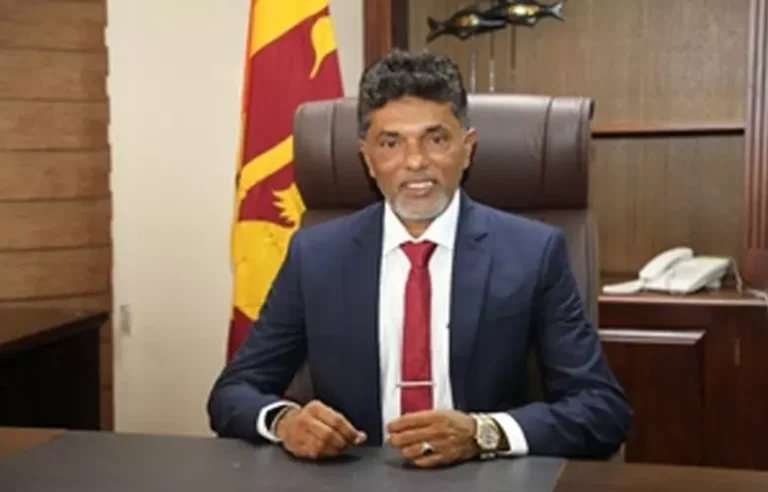
August 24, Colombo (LNW): Health and Mass Media Minister and Cabinet Spokesman Dr Nalinda Jayatissa has reiterated that the government has not interfered in any ongoing legal proceedings, emphasising that all investigative and judicial institutions are operating independently and without political pressure.
Responding to media questions yesterday (23) regarding recent remarks made by a YouTuber — who had notably predicted the arrest of former President Ranil Wickremesinghe — Minister Jayatissa dismissed the notion that such commentary pointed to political orchestration behind the legal action.
“The government’s sole responsibility is to ensure that the relevant institutions are provided with the necessary facilities and resources,” Jayatissa said. “Whether it’s in connection with financial misconduct, criminal activity, or corruption, investigations are progressing freely and independently. This particular case also stands as further evidence that the law is applied equally to all, irrespective of their position or power.”
He went on to clarify that public speculation, even if occasionally accurate, does not indicate any form of manipulation or external influence on legal processes. Drawing a comparison, the Minister referred to past instances where journalists and commentators had made similar predictions about judicial decisions.
“Take journalist Victor Ivan, for example. He once made remarks in advance regarding a court verdict. People speculate all the time — some think bail will be granted, others think it won’t. These are merely guesses. Sometimes they turn out to be right, other times not,” he explained.
However, Minister Jayatissa issued a caution regarding attempts to undermine the integrity of the judiciary through such speculation. “If anyone attempts to suggest that outcomes are being dictated or predicted due to undue influence, that borders on contempt of court. The public must understand the seriousness of making such claims.”
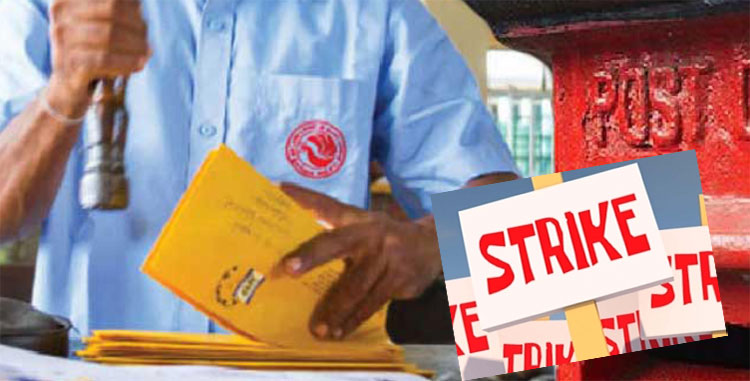
August 24, Colombo (LNW): A crucial meeting is set to take place today (24) between striking postal workers and Health and Mass Media Minister Dr Nalinda Jayatissa, as the nationwide postal strike enters its seventh day.
The discussion, scheduled for 9:00 a.m., will bring together representatives from all trade unions currently participating in the industrial action.
The strike, launched on Sunday (17), has been led by several key unions, including the Postal and Telecommunications Officers’ Union and the United Postal Trade Unions’ Front (UPTUF). Workers are demanding the resolution of 19 longstanding issues, which they claim have been ignored by authorities for far too long.
The ongoing action has brought postal operations across the island to a near halt, severely disrupting services in most areas. Long queues and frustrated citizens have become a common sight outside post offices, as the suspension of mail delivery and other essential postal services continues to affect thousands.
Chinthaka Bandara, co-convener of the UPTUF, confirmed that union representatives are willing to engage in dialogue with Minister Jayatissa. “We are prepared to discuss our demands in good faith,” Bandara said. “The ball is now in the government’s court to offer a serious response.”
In a potentially significant development, Jagath Mahinda, Chairman of the Sri Lanka Postal Services Association, claimed that a considerable number of employees who had joined the strike have since returned to work. He expressed optimism that postal services could return to normal as early as tomorrow, should discussions proceed positively.
August 24, Colombo (LNW): Deputy Minister of Housing T. B. Sarath has firmly denied any government involvement in the legal proceedings that led to the remand of former President Ranil Wickremesinghe, stating that the matter lies entirely within the domain of the judiciary and has nothing to do with political retaliation.
Speaking to the media following a public event yesterday (23), Sarath emphasised that the current administration, led by the National People’s Power (NPP), is committed to upholding democratic values and the rule of law — even when it involves high-profile political figures.
“As the NPP, we recognise that every political leader, regardless of party affiliation, possesses a fundamental democratic right to lead and to govern according to their policies,” Sarath said. “That includes Mr Ranil Wickremesinghe — he had that right yesterday, he has it today, and he will have it tomorrow. What we are witnessing now is not government interference. There is no act of revenge at play here.”
He went on to stress that the legal action taken against Wickremesinghe was part of an independent judicial process, free from political influence or directive. According to the Deputy Minister, any attempt to portray the remand as a political manoeuvre is a mischaracterisation of the facts.
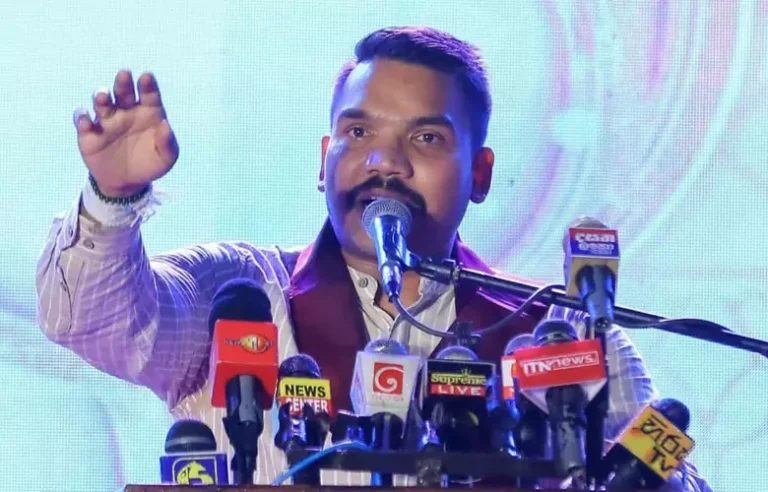
August 24, Colombo (LNW): Addressing supporters at a party event in Beruwala yesterday (23), Sri Lanka Podujana Peramuna (SLPP) MP Namal Rajapaksa accused the current government, led by the National People’s Power (NPP), of orchestrating the arrest of former President Ranil Wickremesinghe as a political smokescreen to divert attention from mounting corruption allegations against its own ranks.
Rajapaksa claimed that the Criminal Investigation Department (CID) had been weaponised by the government in a calculated effort to deflect public scrutiny. According to him, the arrest was less about justice and more about shifting focus away from issues such as suspicious tender procedures and alleged misconduct involving high-ranking government figures.
“We visited the CID yesterday following the arrest of Mr Wickremesinghe. We understand the weight of politically driven vengeance because we have endured it ourselves. My entire family has been a target,” he remarked, referencing what he described as a long history of political persecution. “If we think about who has suffered most from political revenge in this country, Lady Sirimavo Bandaranaike and President Mahinda Rajapaksa come to mind — both victims of United National Party-led governments. But we never responded with retaliation. We faced it and moved forward. That’s not a path we are willing to inflict on others.”
He went further, accusing the NPP of attempting to undermine Sri Lanka’s democratic institutions by using state power to enforce a hidden political agenda. “What could not be achieved through violence in the late ’80s or through decades of separatist war is now being attempted through administrative suppression,” he warned. “The JVP, operating under the NPP umbrella, is steering this country dangerously close to authoritarianism.”
Rajapaksa strongly criticised the government’s treatment of Wickremesinghe, noting that the former president was detained and interrogated over actions taken while in office. “If this is how a head of state ends up — jailed and questioned for doing his duty — what incentive does any future leader have to take bold decisions for the country?” he asked. “It sends a chilling message: lead, and you may be punished for it.”
The MP also listed a series of controversies he claims the government is attempting to bury — including alleged irregularities in coal tenders, the purported influence of a senior minister over the energy sector, and accusations of land grabs involving government figures. He also mentioned the recent abrupt transfer of a judge handling sensitive cases in Parliament, suggesting this too was part of a broader pattern of institutional interference.
“And while they’ve spent months boasting about launching a so-called ‘rocket’, it ends up crashing into the Pelawatte office. Is this the future they’ve promised?” he asked mockingly.
Rajapaksa accused the government of hiding its inefficiencies and policy failures behind a spectacle of law enforcement and spectacle arrests. “Dragging a former leader into this kind of drama doesn’t solve the people’s problems. It’s a deflection, pure and simple.”
Concluding his remarks, he issued a stark warning to the ruling administration: “We are facing a grave challenge to democracy. This government is using the machinery of the state to crush dissent and silence the opposition. But our patience has limits. If you want to lead this country, do so by honouring your promises — not by suppressing those who stand against you.”
He called on the government to stop its alleged campaign of repression and instead deliver on the pledges it made to the people, warning that further escalation would not be tolerated silently.
August 24, Colombo (LNW): Speaking at a public event on the 23rd, National People’s Power (NPP) MP Jagath Manuwarna underscored the importance of maintaining judicial independence in the wake of former President Ranil Wickremesinghe being placed in remand custody.
Manuwarna asserted that the legal action was a decision made by the judiciary alone, without any external political interference.
Addressing the media, the MP reflected on the NPP’s core promise made during their campaign — that the rule of law would be upheld equally for all, regardless of their status. He emphasised that the judiciary’s move against the former president was a reflection of that principle, not a politically motivated act.
“This is not a matter of government ability or inability,” Manuwarna stated. “We pledged before coming into office that the law would be enforced fairly, and we meant it. This is a legal matter, not a political vendetta. The judiciary has been empowered to operate independently, and it is fulfilling its role. If anyone is accused of wrongdoing, whether weak or powerful, the appropriate institutions — the police, the Criminal Investigation Department, the Bribery Commission, and the courts — must take action within the law. That is what is happening now.”
The MP did not mince words in his criticism of Wickremesinghe’s legacy, suggesting that the former president ascended to office through undemocratic means following the ousting of Gotabaya Rajapaksa. Manuwarna described Wickremesinghe’s rise as lacking a public mandate and said the country continued to suffer under the consequences of mismanagement during his tenure.
“Let’s be honest. If he had truly rebuilt the nation, we wouldn’t still be facing the kind of economic devastation we are today,” he said. “The public continues to bear the brunt of that failure. Meanwhile, it has been alleged that vast sums of public money were squandered during that period — in a country that was already declared bankrupt. If those responsible are not held accountable, that would be a grave injustice to the people.”
Manuwarna reiterated that the current government, though relatively new in power, is committed to reducing corruption and unnecessary public spending. He cited examples such as cutting back on excessive privileges previously enjoyed by politicians, stating that government leaders are now working with limited resources in an effort to set an example.
“We have begun the difficult task of trimming state excesses — not just symbolically, but meaningfully,” he said. “Everyone, from the President to the Prime Minister, is operating with minimum facilities. This is not about austerity for show, but about a genuine commitment to restoring public trust.”
In closing, Manuwarna reaffirmed that the NPP-led administration is acting within the democratic mandate it received — to guide the country out of crisis, not to misuse power. He noted that the law must be allowed to take its course, and that institutions must be given the space to function without political meddling.
“We were not elected to carry out witch hunts or personal vendettas. We were entrusted with rebuilding a nation. That requires letting legal institutions do their work — and they are now doing exactly that.”
August 24, Colombo (LNW): A few showers may occur in the Western and Sabaragamuwa provinces and in Kandy, Nuwara-Eliya, Galle and Matara districts.
Showers or thundershowers may occur at a few places in Uva province and in Ampara and Batticaloa districts after 2.00 p.m.
Mainly fair weather will prevail over elsewhere of the island.
The general public is kindly requested to take adequate precautions to minimise damages caused by temporary localised strong winds and lightning during thundershowers.
Marine Weather:
Condition of Rain: Showers may occur at a few places in the sea areas off the coast extending from Chilaw to Matara via Colombo and Galle.
Winds: Winds will be westerly to south-westerly and wind speed will be (25-35) kmph.
Wind speed can increase up to 50 kmph at times in the sea areas off the coast extending from Puttalam to Kankasanthurai via Mannar and from Matara to Pottuvil via Hambantota.
State of Sea: The sea areas off the coast extending from Puttalam to Kankasanthurai via Mannar and from Matara to Pottuvil via Hambantota may be fairly rough at times.
The Dangerous Precedent: Why Arresting Former President Ranil Wickremesinghe Sets a Troubling Standard for Sri Lankan Democracy
By:Niroshana De Silva
August 23, 2025
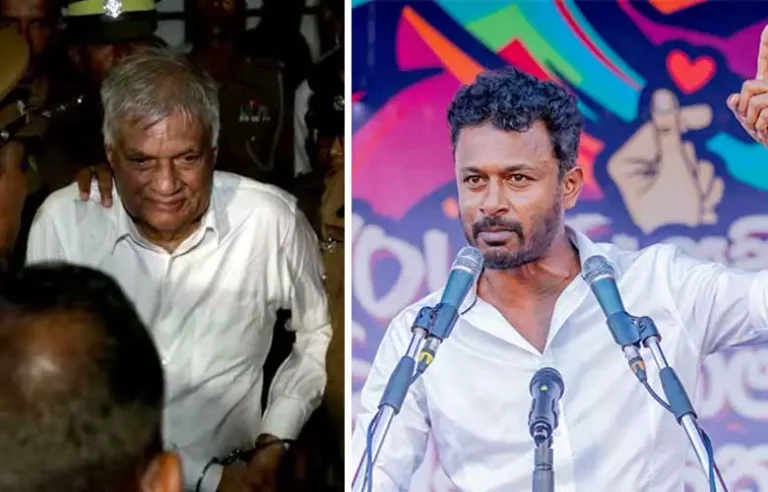
Yesterday marked what many are calling a black day in Sri Lankan political history. For the first time since King Sri Wickrama Rajasinghe was deposed by the British in 1815, a Sri Lankan head of state has been arrested and handcuffed—this time, former President Ranil Wickremesinghe, detained over allegations of misusing in public funds during a 2023 London trip.
This arrest represents not just a legal action, but a fundamental misunderstanding of the unique nature of presidential duties and a dangerous precedent that threatens the very fabric of our democratic institutions. The Myth of Separation: Presidential Life vs. Official Duty
The central flaw in this arrest lies in the naive assumption that heads of state can somehow separate their “official” and “private” lives. This is not merely impractical—it’s impossible. When a sitting president travels anywhere in the world, every handshake, every conversation, every public appearance is an extension of state diplomacy.
Unlike ordinary citizens or even regular government officials, presidents cannot switch off their representative capacity. They carry the weight of national interest in every interaction. A “personal” meeting with international business leaders becomes economic diplomacy. A cultural event becomes soft power projection. Even informal conversations can open doors to crucial partnerships that benefit the entire nation.
To criminally prosecute a former president for expenses incurred during such activities is to fundamentally misunderstand the nature of presidential responsibility and to set a precedent that will paralyze future leaders.
A Pattern of Political Revenge
This arrest fits into a troubling global pattern of political weaponization of the justice system. History shows us that arresting political opponents often reflects revenge politics rather than genuine justice:
1. Indira Gandhi was arrested by Morarji Desai using emergency laws, yet she returned to lead India for years 2. Jayalalitha faced imprisonment while in opposition, only to become South India’s most powerful leader 3. Donald Trump faced legal challenges, yet completed his presidential term 4. Sheikh Hasina and Ferdinand Marcos faced similar political persecution
The common thread? Political arrests often backfire, creating martyrs rather than delivering justice.
The Wickremesinghe Legacy: Three Times the Savior
Mr. Ranil Wickremesinghe’s record speaks for itself. He has stepped forward during three of Sri Lanka’s darkest hours:
1. 1993: After President Premadasa’s assassination, he maintained governmental stability and prevented the country from descending into anarchy 2. 2000: During the first major economic downturn, he restored economic growth and confidence 3. 2022: At the peak of our most severe economic crisis, he took leadership when no one else would, securing a $2.9 billion IMF bailout and pulling Sri Lanka back from total collapse
This is a man who has consistently put country before personal comfort, who took the helm when others fled, who stabilized our economy when we were on the brink of becoming a failed state.
The Hypocrisy of Selective Justice?
While former President Wickremesinghe faces arrest over misusing the public funds during the UK visit, where is the accountability for the billions that were truly stolen from this nation as present president highlighted during his pre presidential campaigns? Where are the arrests of those who actually bankrupted Sri Lanka as per the present presdient? The focus on this relatively minor sum while ignoring the massive corruption highlighted by the present president and the govrenment that led to our economic collapse reveals the political nature of this prosecution.
Moreover, the same government that arrests Wickremesinghe over London trip expenses to attend his wife, Professor Maithree Wickremesinghe’s graduation ceremony at the University of Wolverhampton, UK should examine its own representatives’ performance on the international stage. The recent embarrassment at the World Economic Forum, where Minister Sunil Handunnetti’s poor performance damaged Sri Lanka’s image globally, cost far more than the value in terms of lost credibility and investment opportunities and also about the fake doctorate holders in his party.
A Dangerous Precedent for Democracy
This arrest sends a chilling message to future leaders: “Serve the country at your own risk.” If presidents can be prosecuted for expenses incurred while representing national interests, who will want to take on the burden of leadership during crises?
The handcuffs on Ranil Wickremesinghe’s wrists are not just restraining one man—they’re constraining the very institution of the presidency and the willingness of capable leaders to serve their nation when it matters most.
The Politics of Gratitude vs. Revenge
Sri Lankan culture has always been rooted in values of kindness, empathy, respect, and gratitude. We honor those who sacrifice for the greater good. We remember those who stood by us in dark times. This arrest represents a departure from these fundamental values.
As Presidential Lawyer Mohamed Ali Sabry correctly noted, “Sri Lanka needs a politics that expresses gratitude to those who have restored, stabilized and protected the nation again and again.” Instead, we’re witnessing a politics of revenge that threatens to destroy the very people who saved us.
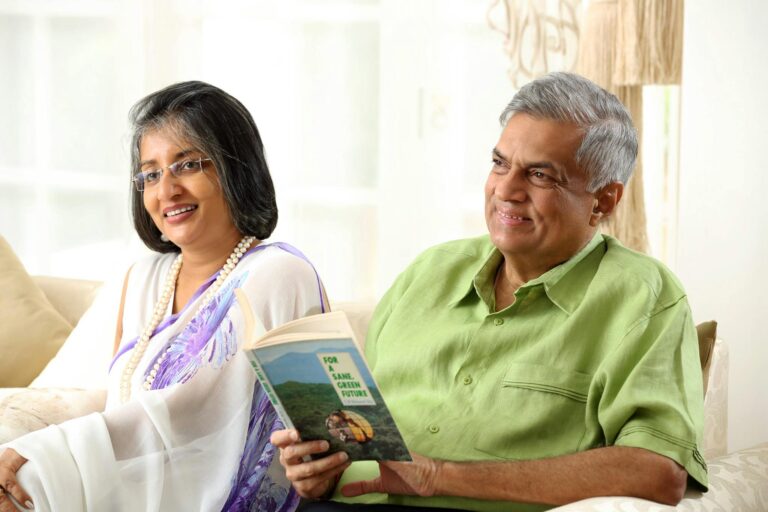
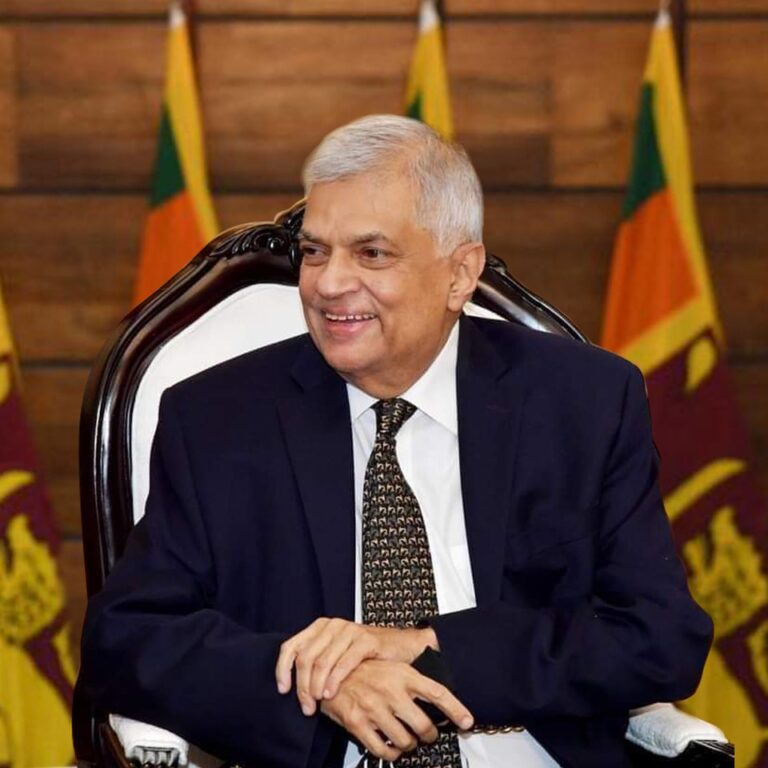
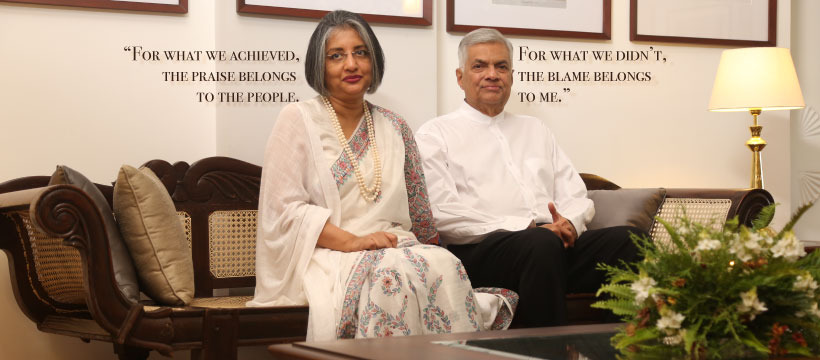
Professor Maithree Wickremesinghe, 8th First Lady of Sri Lanka and Mr. Ranil Wickremesinghe, Former President of Sri Lanka
Looking Forward: The Need for “RW 3.0”
History suggests that this arrest may well catalyze Ranil Wickremesinghe’s political comeback an “RW 3.0” that unites opposition forces around the principles of stability, economic competence, and international respect.
His calm demeanor even while handcuffed demonstrates the resilience that has characterized his 48-year career.
His vision for Sri Lanka—balanced diplomacy with major powers, attraction of investment, completion of stalled projects, and positioning within the shifting global order from West to East—remains more relevant than ever.
A Call for Reason
The arrest of former President Ranil Wickremesinghe is not about justice—it’s about politics. It’s not about accountability—it’s about revenge. It’s not about protecting public funds—it’s about destroying political opponents.
This cycle of hate and revenge must end. Sri Lanka deserves leaders who think beyond the next election cycle, who understand that presidents cannot have private lives separate from their official duties, and who recognize that representing the nation on the world stage is always an official function deserving of support, not prosecution.
We stand at a crossroads. We can continue down the path of destructive politics that has characterized too much of our recent history, or we can return to the values of gratitude and respect that define us as Sri Lankans.
The choice is ours. The time is now.
Because we are Sri Lankans with gratitude… Always!
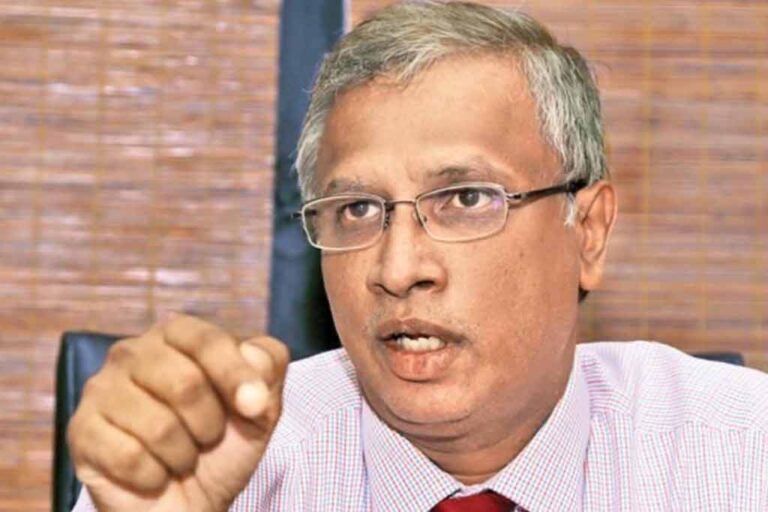
Top constitutional lawyer, former parliamentarian, and ITAK General Secretary M.A. Sumanthiran PC stated that while heads of state must indeed be held accountable and prosecuted for very serious crimes committed during their tenure, the arrest of former President Ranil Wickremesinghe on a Friday, coupled with the decision to oppose bail, appeared ill-advised.
Sumanthiran emphasized that no one is above the law. However, he pointed out that the timing of the arrest and the insistence on refusing bail for the alleged offence disclosed in court raised serious questions.