U.S. President Donald Trump has accused both Israel and Iran of violating the recently declared ceasefire, but expressed particular frustration with Israel, urging it to cease airstrikes and “bring your pilots home now!”
Speaking on Tuesday, Trump said he was “really unhappy” with Israel’s actions, despite calling it a “great honour” to have destroyed Iran’s nuclear facilities and then mediated an end to the war initiated by Israel on June 13.
Tensions escalated further when Iran launched a missile attack on a U.S. military base in Qatar on Monday, in retaliation for the strikes that destroyed key nuclear sites within its territory a day earlier.
According to Iranian officials, more than 400 people, including 13 children, have been killed and over 3,000 woundedsince Israel began its military campaign on June 13. In contrast, at least 28 Israelis have reportedly died in Iranian retaliatory strikes.
The rapidly evolving conflict has drawn global concern, with pressure mounting on all sides to restore calm and abide by the ceasefire agreement.
The UN secretary-general has called on Iran and Israel to fully adhere to the ceasefire.
Posting on X, António Guterres said he “welcomed President Trump’s announcement of a ceasefire between Israel and Iran” and urged both sides to respect it in full.
“The fighting must stop,” he wrote, adding that “the people of the two countries have already suffered too much”.
“It is my sincere hope that this ceasefire can be replicated in the other conflicts in the region,” said Guterres.
The Ministry of Fisheries and Aquatic Resources Development has reaffirmed its dedication to strengthening infrastructure and protecting the livelihoods of Sri Lanka’s coastal communities. At the Mannar District Fisheries Coordination Committee meeting held yesterday (June 24) at the Mannar District Secretariat, key decisions were made to address persistent challenges faced by the region’s fishing communities.
Minister Ramalingam Chandrasekar, speaking to the media after the meeting, announced that the Government will move forward with the construction of a fully-fledged fisheries port in Pesalai, Mannar District. Slated for implementation in 2026, the project will be funded with assistance from the World Bank and is expected to significantly uplift the local fisheries sector and associated infrastructure.
“There is currently no designated fisheries port in Mannar. This project will address a long-standing gap. We recognize the concerns some locals may have and urge officials, including the Government Agent and other stakeholders, to actively engage with the community to highlight the port’s economic and social benefits,” Minister Chandrasekar stated.
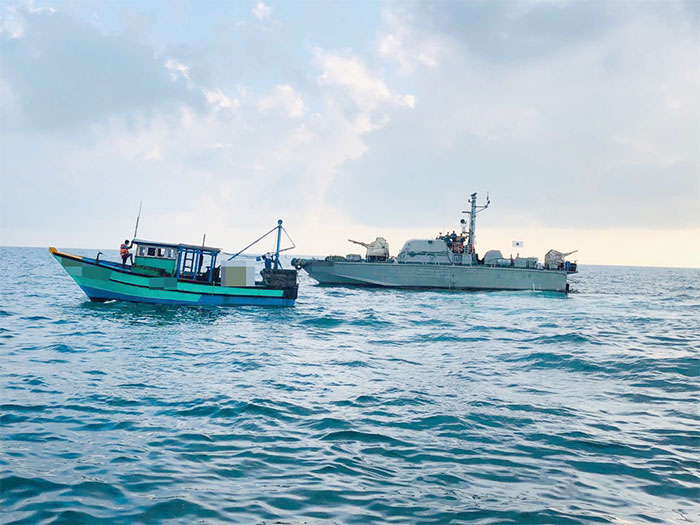
Addressing another pressing issue, the Minister discussed the illegal entry of Indian fishermen into Sri Lankan waters, expressing confidence in the ongoing efforts to combat the problem. He highlighted the coordinated actionbeing taken by the Sri Lanka Navy, government ministries, and through diplomatic channels to prevent further encroachment.
“The concerns of our fishing communities are well understood. The Government, along with the Navy, is implementing targeted strategies to halt these illegal activities. I’m confident that we’ll be able to fully curtail cross-border intrusions in the near future,” he added.
The Minister also addressed the matter of lands previously acquired by the Navy, confirming that discussions are underway to resolve the issue and return appropriate lands to their original owners where possible.
Deputy Minister Ratna Gamage, who was also in attendance, reaffirmed the Ministry’s commitment to continued community outreach in the Northern and Eastern Provinces, ensuring that the grievances of fishing communities are systematically addressed through district and provincial mechanisms.
“The establishment of the Pesalai port marks a pivotal step in our broader mission to empower fishing communities and strengthen maritime livelihoods,” Gamage noted.
Representatives from Mannar’s fishing community welcomed the Government’s proactive measures, particularly efforts by the Sri Lanka Navy to combat illegal fishing, and expressed appreciation for the transparent approach taken by authorities.
The meeting was attended by a broad spectrum of stakeholders, including the Additional Secretary of the Ministry, Mannar District Government Agent, Divisional Secretaries, Sri Lanka Coast Guard, Police, environmental organisations, and representatives from key fisheries-related institutions such as the Sri Lanka Fisheries Ports Corporation, Sri Lanka Fisheries Corporation, National Aquatic Resources Research and Development Agency (NARA), and the National Aquaculture Development Authority (NAQDA).
As part of the government’s ‘Clean Sri Lanka’ initiative, the Colombo Central Bus Stand is set to undergo a major upgrade within the next year, alongside the renovation of 50 major bus terminals across the country.
The large-scale refurbishment plan—aimed at enhancing cleanliness, efficiency, and commuter experience—will be carried out with support from the Sri Lanka Air Force. The Colombo Central Bus Stand, established in 1964 and spread across 1.42 hectares, currently facilitates 1,500 to 2,000 buses daily.
Renovation work at the Colombo terminal will include the modernization of several key facilities, including the canteen, rest areas, ticket counters, administrative unit, operations room, and driver quarters.
The announcement was made during a high-level discussion on the ‘Clean Sri Lanka’ programme held at the Presidential Secretariat on Monday (June 23).
The meeting was attended by Transport, Highways, Ports and Civil Aviation Minister Bimal Rathnayake, President’s Secretary Dr. Nandika Sanath Kumanayake, Defence Secretary Air Vice Marshal (Retired) Sampath Thuyacontha, senior Sri Lanka Air Force officers, and other government officials.
This move reflects the government’s broader commitment to infrastructure improvement and public service delivery under its national cleanliness and modernization agenda.
United Nations High Commissioner for Human Rights Volker Turk met with Prime Minister Dr. Harini Amarasuriya at the Prime Minister’s Office for high-level discussions on strengthening cooperation in human rights, governance, and reconciliation.
Welcoming the High Commissioner, Prime Minister Amarasuriya reaffirmed Sri Lanka’s commitment to engaging constructively with the Office of the High Commissioner for Human Rights (OHCHR). She highlighted that the recent political transition represents a major shift in Sri Lanka’s political culture, stemming from a historic, broad-based public mandate received across all communities.
During the meeting, the Prime Minister outlined the Government’s priorities under three central pillars:
Alleviating rural poverty,
Accelerating digital transformation, and
Advancing legal, political, and institutional reforms necessary for lasting social change.
Dr. Amarasuriya emphasized the Government’s dedication to upholding the full range of human rights, including social, educational, health, and economic rights, and reiterated that reconciliation remains a core priority. She noted the strengthening of domestic mechanisms such as the Office for Missing Persons (OMP), Office for Reparations (OR), and the Office for National Unity and Reconciliation (ONUR) as key to achieving sustainable peace and justice.
High Commissioner Volker Turk commended Sri Lanka’s continued engagement with the UN and stressed the importance of sustained collaboration in advancing human rights, democratic values, and national reconciliation efforts.
Also present at the meeting were UN Resident Coordinator in Sri Lanka Marc-André Franche and other UN officials. The Sri Lankan delegation included Secretary to the Prime Minister Pradeep Saputhanthri, Foreign Affairs, Foreign Employment and Tourism Ministry Secretary Aruni Ranaraja, and senior officials from both the Prime Minister’s Office and the Ministry of Foreign Affairs.
The government’s flagship initiative, the ‘Praja Shakthi’ National Programme, aimed at empowering communities and ensuring equitable economic development, is set to officially launch on July 4 at Temple Trees under the patronage of President Anura Kumara Dissanayake.
In preparation for the launch, the inaugural meeting of the Praja Shakthi National Operations Committee was held this afternoon (June 24) at the Presidential Secretariat. The discussion was chaired by Minister of Rural Development, Social Security and Community Empowerment Upali Pannilage, alongside Secretary to the President Dr. Nandika Sanath Kumanayake.
The Operations Committee comprises nine Ministry Secretaries and Chief Secretaries of Provincial Councils, and is coordinated by the Senior Additional Secretary (Development Administration) to the President, who also serves as the Secretary and Convener of the Committee.
Praja Shakthi is envisioned as a multi-dimensional framework for community empowerment, aligning with the government’s national policy priorities. As one of three major development programmes currently being implemented, it focuses on ensuring the fair distribution of economic outcomes and fostering inclusive development, particularly in rural and underserved regions.
The initiative seeks to restructure and align existing empowerment efforts under a unified, policy-driven approach. It introduces a new structural framework that supports comprehensive development planning—from identifying local needs to policy formulation, implementation, and monitoring.
Key topics discussed during the meeting included the role of provincial and local government bodies, strategies for capacity building, and the planned establishment of “Praja Shakthi Councils” to drive grassroots participation and oversight.
Currently, one in six Sri Lankans lives in multidimensional poverty, with 95.3% of this population located in rural and estate sectors. This persistent condition hampers national productivity and economic growth. Praja Shakthi aims to tackle these challenges by reinforcing social protection mechanisms and targeting vulnerable populationsthrough an inclusive and structured welfare system.
Among those present at the meeting were Senior Additional Secretary to the President Kapila Janaka Bandara, Public Administration Ministry Secretary S. Aloka Bandara, as well as other ministry secretaries, district secretaries, and senior government officials.
Showers will occur at times in the Western and Sabaragamuwa provinces and in Nuwara-Eliya, Kandy, Galle and Matara districts. Several spells of showers may occur in the North-western province.
Showers or thundershowers may occur at a few places in the Uva province and in Ampara and Batticaloa districts during the afternoon or night.
Fairly strong winds of about (30-40) kmph can be expected at times over Western slopes of the central hills and in Northern, North-central and North-western provinces and in Trincomalee and Hambantota districts.
The general public is kindly requested to take adequate precautions to minimize damages caused by temporary localized strong winds and lightning during thundershowers.
June 24, Colombo (LNW): The International Chamber of Commerce (ICC), which represents over 45 million businesses in more than 170 countries, has issued a warning against rising global tariff retaliation, urging nations to support an open and stable trading environment. As Sri Lanka moves from economic recovery towards sustainable development in the 2025–2030 period, this global backdrop presents both pressing challenges and rare opportunities for the island nation.
Sri Lanka, emerging from a crippling economic crisis, finds itself at a strategic juncture. The evolving global order—particularly the G7 and G20’s push for “de-risking” from China and developing resilient supply chains—is encouraging the formation of new regional economic blocs. This shift, according to Dinesh Weerakkody, immediate past Chairman of the ICC Sri Lanka, opens doors for Sri Lankan firms to become globally relevant and profitable multinationals.
Sri Lanka’s geographic location in the Indian Ocean, coupled with its deep-sea ports in Colombo and the potential of Trincomalee, enhances its appeal as a regional logistics and manufacturing hub. With trade agreements already in place with India, Singapore, and Thailand—and ongoing negotiations with China and Vietnam—Sri Lanka is well-placed to capitalise on rising investment in high-value industries such as apparel, electronics assembly, pharmaceuticals, shipping, tourism, logistics, and business process outsourcing (BPO).
However, this potential hinges on crucial reforms. The government must ensure consistent policies, upgrade energy and port infrastructure, and maintain a stable, transparent business environment. Additionally, Sri Lanka could benefit significantly from participation in the India–Middle East–Europe Economic Corridor, boosting its strategic importance.
A key sector requiring attention is critical minerals. Developing a transparent, ESG-compliant regulatory framework will help attract investment and position Sri Lanka as a responsible source for minerals vital to global manufacturing. Encouraging in-country value addition, such as local processing, will further strengthen this proposition.
With approximately 60,000 vessels traversing the East–West maritime route annually, Sri Lanka’s ports are a strategic asset. Enhancing Hambantota’s operations, expanding the West Container Terminal through the Adani–John Keells partnership, and exploring development in Trincomalee with Indian collaboration are seen as positive investment models. But all port development must adhere to principles of financial sustainability, sovereignty, and transparency to attract strategic foreign partnerships.
Recent visits by IMF Deputy Managing Director Dr. Gita Gopinath and World Bank President Ajay Banga underline the global importance of Sri Lanka’s reform agenda. Completing the IMF Extended Fund Facility and enacting reforms in state enterprises, trade, labour, and governance are vital for restoring investor confidence and achieving long-term economic stability.
Renewal of the EU’s GSP+ trade concessions is another top priority. As a major support for Sri Lanka’s apparel industry, meeting EU expectations on labour, human rights, and environmental standards is essential—not only to retain GSP+ but to unlock broader trade deals.
Moreover, Sri Lanka has a unique opportunity to lead the region in green finance and climate-resilient initiatives. Developing viable projects in offshore wind, solar energy, and climate adaptation—backed by banks, regulators, and global funding partners—can position the country as a hub for sustainable innovation and clean energy exports.
If Sri Lanka can maintain reform momentum, it stands to reposition itself as a resilient and competitive player in the new global economic order.
June 24, Colombo (LNW): Sri Lanka has achieved financial system stability despite the unprecedented economic and sovereign debt crisis that peaked in 2022, but full economic recovery to pre-crisis 2018 levels may be at least three more years, according to the Central Bank.
Addressing the Financial Stability Conference in Colombo recently , Central Bank Governor Dr. Nandalal Weerasinghe highlighted that the country had managed to avert a total collapse of the financial system during the crisis, a rare achievement in similar global debt meltdowns.
“This success was made possible through timely policy decisions, effective regulatory measures, adequate financial buffers, and the collective effort of all financial sector stakeholders,” he noted.
The Central Bank implemented tight monetary policy, fiscal consolidation, and structural reforms to stabilise macroeconomic fundamentals. These moves helped reduce inflation from a peak of 70% in September 2022 to single digits within a year, setting the stage for a tentative economic recovery. The country exited six consecutive quarters of economic contraction by the latter half of 2023, prompting a shift to an accommodative monetary policy to support growth.
Inflation is expected to remain below the 5% target through early 2025, with stability anticipated thereafter, the Governor said. This positive outlook has helped rebuild confidence in the financial system and opened the door for renewed growth momentum.
However, the broader economy still lags behind. At a separate discussion on the “2024 Annual Economic Review” this week, Central Bank Assistant Governor Dr. Chandranath Amarasekara revealed that it would take until at least 2027 for the Sri Lankan economy to recover to the real GDP levels recorded in 2018.
“The real GDP in 2018 was Rs. 13.2 trillion. Due to the combined impact of the COVID-19 pandemic and the economic crisis, it declined to Rs. 12.2 trillion in 2022 and further to Rs. 11.9 trillion in 2023,” Dr. Amarasekara said. However, the economy is projected to expand by 5% in 2024, reaching a GDP of Rs. 12.5 trillion.
He emphasized that while the positive growth projection is a sign of recovery, the path to full restoration of lost economic output remains long and uncertain. Sri Lanka recorded only one year of growth—from 2019 to 2023—highlighting the severity of the setbacks it endured.
Analysts point out that while macroeconomic indicators have turned favorable, structural weaknesses, external debt restructuring, political instability, and investment inertia remain key risks to the outlook. The Central Bank’s cautious optimism underlines the need for continued reforms and sustainable fiscal policies to ensure a robust and inclusive recovery.
June 24, Colombo (LNW): Haskoning DHV Nederland B.V, a consulting engineering firm, has been appointed to draft the master plan for the expansion project of the Bandaranaike International Airport (BIA).
This master plan will concentrate on planning the future of the airport, taking into account capacity, efficiency, and passenger experience to ensure that it is able to accommodate more passenger traffic and meet Sri Lanka’s tourism objectives.
It will make the airport ready to cater to the expected increase in tourist movement, with a goal of welcoming 5 to 7 million rich-spending tourists by 2030.
This Dutch Company selected by an international tender will assess the effectiveness of existing infrastructure and technologies, as well as processes, human resources, and the regulatory framework, finance ministry sources revealed.
The Airport and Aviation Services (Sri Lanka) (Private) Ltd had cancelled the contract awarded previous company some times back for not following the contract’, and resumed the procurement process, Cabinet Spokesman Nalinda Jayatissa said.
However the on going BIA Phase II Stage 2- Package A1 project does not affect by this new development in the the Japan-funded expansion project.
This project, including the new terminal (Package A), is funded by JICA and aims to boost Sri Lanka’s aviation capacity. The Dutch company will be responsible for completing the construction of the new terminal building, piers, and associated works as part of the BIA Phase II project.
In a stunning turn of events, the Cabinet Appointed Negotiating Committee (CANC) has taken a monumental stand by disqualifying the Sojitz-L&T consortium, citing an invalid Power of Attorney – a move that has electrified public sentiment and revived hope in the integrity of Sri Lankan public service.
The catalyst for CANC’s decision is the bid submission’s Power of Attorney, which was revealed to be not attested by the local registrar, directly violating Sri Lankan procurement law – an offense considered so serious that technical disqualification is mandatory, as past precedents have shown
.Sources close to the CANC confirm: “they have correctly disqualified Sojitz, despite intense political pressure and last‑minute unethical efforts by vested interests.” This bold and lawful move is being hailed as a defining moment in Sri Lanka’s anti-corruption journey.
The technical evaluation committee extended tender deadlines to accommodate Sojitz-L&T-a clear sign of preferential treatment.
A damning letter surfaced from Welcome Hotels (ITC Group), which accused L&T of irresponsibly abandoning a major project mid-stream.
Sojiz previously withheld crucial legal history, including international arbitration against the Government of Sri Lanka and a disqualification from an Egyptian airport bid .
We reliably learn that the CANC has acted decisively, fully aware of the immense political and business pressure to bend the rules. Their refusal to cave has rekindled hope among the “right-thinking people” who yearn for officials who prioritize law and the public interest over influence and profit.
The tender for the construction of Phase 11 of the BIA project in 2025 was marred by controversy
The the BIA Phase II Stage 2 expansion project was,planned as a state-of-the-art terminal covering 180,000 square meters, a 210,000-square-meter apron, improved road networks, viaducts, and modern passenger facilities. But behind the impressive figures lies growing concern over irregularities in previous consultancy practices.
The initiative aimed to boost the capacity of the country’s sole international gateway in line with the surge in tourism and economic activity following the civil war.
Yet, amid yen loan agreements and final inspection procedures, the vision of streamlined global connectivity has been overshadowed by rising costs, alleged mismanagement, and mounting bureaucratic hurdles.
June 24, Colombo (LNW): The Committee on Public Finance (COPF) has approved the importation of casino machines into Sri Lanka, lifting restrictions imposed during the country’s economic crisis. However, the committee has directed the creation of a special monitoring mechanism to oversee all such imports, according to COPF Chairman Dr. Harsha de Silva.
, Dr. de Silva revealed that casino equipment was among the items listed for import clearance. “With the concurrence of the committee, I instructed that a special system be introduced to monitor each casino machine brought into the country,” he stated.
The move comes in the wake of the recent presentation of the Gambling Regulatory Authority Bill, 2025 in Parliament, which seeks to establish a framework to oversee all gambling activities, both physical and online.
Dr. de Silva raised concerns about gaps in the existing regulatory landscape. “The law only establishes the regulator, but does not include regulations to govern operations. For example, Singapore has separate laws for the regulator and casino operations. Here, the government seems intent on legalising junket operations without proper oversight,” he said, adding that online gambling remains untaxed and unregulated.
COPF member and former finance minister Ravi Karunanayake echoed a pragmatic approach. “The government wanted to explore how this could generate revenue. Our role was to evaluate its financial benefits, not its social implications. That’s why we approved it,” he noted.
Import restrictions on casino machines were initially introduced under the Casino Business Regulation Act No. 17 of 2010 during the economic crisis. The recent decision reverses that ban, aiming to facilitate investment in licensed tourist establishments and boost revenue.
The government views gambling as a strategic tool to revitalize the tourism and entertainment sectors. Currently, the industry operates under outdated laws such as the Betting and Gaming Levy Act No. 40 of 1988 and the 2010 Casino Business Act. However, regulatory loopholes have hindered effective licensing and enforcement.
The new Gambling Regulatory Authority Bill seeks to rectify this. It proposes the establishment of a central authority responsible for issuing licences, enforcing compliance, and implementing anti-money laundering (AML) and Know Your Customer (KYC) guidelines. The authority will include officials from the Finance Ministry, Inland Revenue, the Financial Intelligence Unit, and the police, along with independent experts.
Meanwhile, Sri Lanka’s casino sector continues to attract international investment. A landmark project is the City of Dreams Sri Lanka, a $1 billion integrated resort in Colombo by Melco Resorts & Entertainment and John Keells Holdings. The resort, South Asia’s first of its scale, opened its first phase in October 2024. Its second phase, due later this year, will include casino operations under a 20-year licence held by Melco’s local subsidiary, Bluehaven Services.
To further boost revenue, the government has proposed doubling casino entrance fees from $50 to $100 and increasing the gambling turnover tax from 15% to 18%.
Authorities believe that these reforms will not only attract foreign investors and tourists but also establish a transparent and accountable gambling environment that contributes meaningfully to the national economy.