July 31, Colombo (LNW): Authorities in Sri Lanka have intensified their efforts to tackle corruption and drug-related crimes, with dozens of individuals taken into custody over the past several months in a series of coordinated enforcement operations.
Between January and the end of June 2025, the Commission to Investigate Allegations of Bribery or Corruption (CIABOC) received over 3,000 public complaints related to bribery and misconduct.
Following targeted investigations, 54 separate operations were conducted, leading to the arrest of 34 suspects connected to various corrupt activities.
Those arrested include a notable number of public officials: ten from the police force, five from the Ministry of Justice, two from the Ministry of Health, and two from the Sri Lanka Transport Board. In addition to state employees, six civilians were also taken into custody in relation to bribery cases.
The legal response has been swift. During this six-month period, prosecutors filed 50 cases involving 60 individuals in courts across the country. While six cases reached a conclusion, a significant backlog remains, with 273 bribery-related cases currently pending in the judicial system.
Simultaneously, the country continues to grapple with a pervasive drug crisis. According to figures released by the Ministry of Public Security and Parliamentary Affairs, an extraordinary 122,913 arrests were made for drug offences between 1 January and 29 July this year.
Authorities have confiscated vast quantities of illicit substances during this period, including nearly 929 tonnes of heroin, approximately 1.4 million kilogrammes of crystal methamphetamine (commonly known as ICE), over 11 million kilogrammes of cannabis, 27,836 kilogrammes of cocaine, and more than 381,000 kilogrammes of hashish.
On July 29, a large-scale joint operation was launched involving the Sri Lanka Police, the Special Task Force (STF), and the country’s armed forces. A total of 6,695 personnel were deployed across the island to conduct vehicle checks, surveillance, and targeted arrests.
As part of the operation, authorities inspected over 10,000 vehicles and more than 7,700 motorcycles. These efforts led to the arrest of 948 suspects for drug-related offences, in addition to 13 individuals identified as directly connected to narcotics trafficking and distribution networks. Furthermore, three illicit firearms were recovered during the sweep.
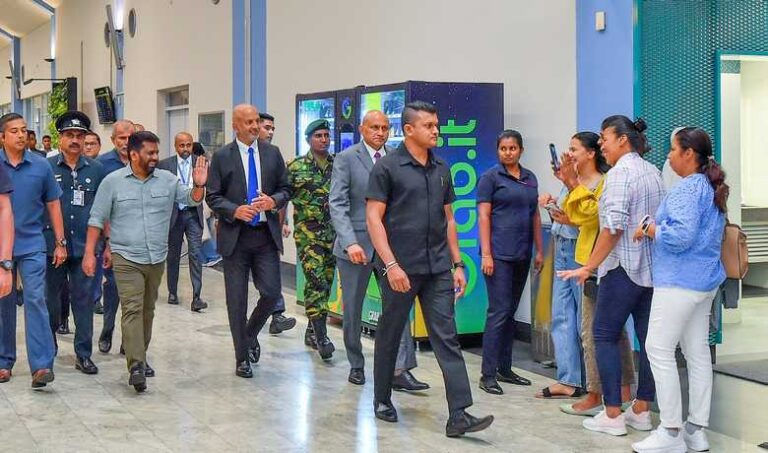
July 31, Colombo (LNW): President Anura Kumara Dissanayake returned to Sri Lanka late on the evening of July 30, following the conclusion of a three-day official visit to the Republic of Maldives.
The visit, held at the invitation of Maldivian President Dr Mohamed Muizzu, marked a significant step in reinforcing the longstanding bilateral relationship between the two Indian Ocean neighbours.
Beginning on July 28, the visit comprised a series of high-level engagements, including comprehensive discussions with President Muizzu, as well as key members of the Maldivian Cabinet and senior government figures. The talks addressed a wide spectrum of topics ranging from bilateral cooperation and regional stability to pressing global matters of shared concern.
Several formal agreements were signed during the visit, reflecting a growing commitment to deepen collaboration in multiple areas. Among them was a Memorandum of Understanding between the Foreign Service Institute of Maldives and Sri Lanka’s Bandaranaike Diplomatic Training Institute.
This pact aims to facilitate the exchange of knowledge, training programmes, and diplomatic expertise between the two institutions. Additionally, a bilateral agreement on mutual legal assistance was concluded, with a focus on strengthening judicial cooperation, particularly in matters relating to criminal justice.
President Dissanayake’s visit included a number of symbolic and diplomatic highlights. A formal state banquet was held in his honour at the Kurumba Resort, hosted by President Muizzu, underscoring the cordial ties between the two nations. On July 30, the Sri Lankan head of state participated in a ceremonial tree-planting event at Sultan Park in Malé. This act, commemorating six decades of diplomatic relations between Sri Lanka and the Maldives, stood as a tribute to the enduring friendship and shared values between the countries.
In addition to official engagements, President Dissanayake addressed a business forum jointly arranged by the Sri Lankan High Commission in Malé and the Sri Lanka–Maldives Business Council of the Ceylon Chamber of Commerce. There, he emphasised the importance of enhancing economic cooperation, particularly in tourism, trade, and labour mobility.
Later, he met with members of the Sri Lankan expatriate community in the Maldives, acknowledging their contribution to strengthening people-to-people links and reaffirming his government’s commitment to their welfare.
The President was accompanied by Foreign Affairs, Foreign Employment, and Tourism Minister Vijitha Herath, along with other senior officials. The delegation’s visit is expected to pave the way for a new chapter of enhanced cooperation, rooted in mutual respect, strategic partnership, and cultural affinity.
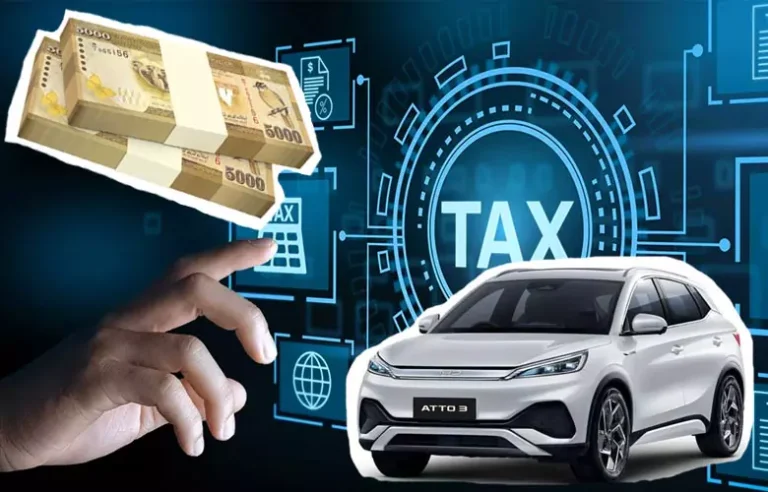
July 31, Colombo (LNW): In a developing controversy with potentially far-reaching fiscal implications, approximately 1,100 units of the BYD ATTO 3 electric vehicle remain detained by Sri Lanka Customs at Hambantota Port, amid allegations of tax evasion through software-based motor capacity manipulation. The matter has caught the attention of the Committee on Public Finance (CoPF) and ignited significant media and public discourse.
The issue first surfaced last week when Samagi Jana Balawegaya (SJB) Member of Parliament Mujibur Rahman raised concerns in Parliament regarding stark discrepancies in the taxation of new and reconditioned BYD ATTO 3 vehicles imported from China.
According to MP Rahman, brand new ATTO 3 vehicles are subject to a tax of approximately LKR 5.5 million, while reconditioned versions of the same model attract only around LKR 1 million in duties. This discrepancy, he asserted, stems from differences in the declared motor capacity—100kW for new units and 150kW for reconditioned ones.
The MP insisted that these vehicles are technically identical, with no difference in hardware, and alleged potential fraud by the importing company. He argued that a tax reduction of approximately LKR 4.5 million per vehicle for the same model is implausible and highly suspicious.
He went further to suggest that the importer might have manipulated the declared specifications to benefit from lower customs duties, thus defrauding the state and undermining public revenue collection.
The Software Downgrade Argument
The company in question, John Keells CG Auto Pvt Ltd, the exclusive local distributor of BYD vehicles and a subsidiary of the John Keells Group, claims that although the vehicles are manufactured with 150kW motors, they have been ‘software-limited’ to 100kW specifically for the Sri Lankan market. They cite that the same software-restricted models are sold in Singapore, and argue that since the manufacturer officially declares the power output as 100kW, taxes should be assessed accordingly.
This explanation has raised critical questions: Does Sri Lanka Customs assess tax based on the physical capability of the motor or the software-controlled output? Can a more powerful, higher-end vehicle receive a lower tax simply due to a software-imposed limitation that could potentially be reversed?
The implications extend beyond mere classification. In the production of electric vehicles (EVs), models with 150kW motors are typically larger, more luxurious, and equipped with superior features compared to 100kW versions. If such vehicles are permitted lower tax rates due to software downgrades, it would not only represent a loss of government revenue but also an unfair commercial advantage for the importer. In this case, the alleged per-vehicle benefit of LKR 4.5 million could amount to LKR 10 billion across the 1,100 detained vehicles and an estimated 1,000 already sold units.
A Dangerous Precedent
The matter has sparked broader concern over the precedent such software-based tax interpretations may set. If this method is accepted, it raises the question of whether other importers could intentionally down-specify or “lock” features via software—from engine power to safety systems—to qualify for reduced taxation, only to later unlock them post-importation.
A hypothetical example posed by critics is whether a six-wheeled vehicle could be taxed as a four-wheeled one if two wheels were “locked” or rendered inactive by design or software, with the manufacturer certifying it as such. If the company goes on saying that a luxury car with a motor power of 390kW, which is in their stock, is locked to 100kW via software and sent to Sri Lanka, will it also be exempted with a lower tax of Rs. 2.5 million?
Chinese EV Manufacturers Watching Closely
Compounding the issue is intelligence suggesting that three other Chinese electric vehicle manufacturers are monitoring how the Sri Lankan government addresses this loophole. Should the software limitation approach be accepted, these companies are reportedly ready to similarly downgrade 150kW vehicles to 100kW via software and export them to Sri Lanka.
This could potentially cost the Sri Lankan government hundreds of billions of rupees in lost tax revenue over time, a burden that would ultimately fall on the general public.
The broader concern is whether this might open the floodgates to widespread tax evasion under the guise of software-based modification, with little to no enforceability once the vehicles are in private hands. Given Sri Lanka’s ongoing fiscal recovery amid an economic crisis, any form of systemic revenue loss would be catastrophic.
Concerns Over Enforcement and Tampering
There is also significant scepticism about Sri Lanka’s ability to enforce such software restrictions, should these vehicles be allowed in under the 100kW classification. In a context where technical tampering is common and accessible, critics worry that local firms could simply restore the vehicles to their original 150kW capacity—thereby enjoying the benefits of lower tax while still selling or using higher-performance vehicles.
John Keells: A Controversial History
The issue is further complicated by the involvement of John Keells Holdings, which has faced previous allegations of tax avoidance and regulatory evasion.
One notable instance dates back to 2002, when John Keells acquired Lanka Marine Services Ltd (LMSL) from the Ceylon Petroleum Corporation (CEYPETCO) through the Public Enterprise Reform Commission (PERC). The sale was legally challenged by former MP Vasudeva Nanayakkara, and in 2008, the Supreme Court ruled the privatisation illegal, ordering the return of the business to the state and citing unfair tax concessions granted to John Keells.
More recently, the company has come under fire for its “City of Dreams – Sri Lanka” integrated resort project, set to open on August 02. Allegations have emerged that a casino, operated by Melco Resorts & Entertainment Ltd, a Hong Kong-listed firm led by Lawrence Ho Yau Lung, is being included in the development and may have benefited from tax concessions under the Strategic Development Act—despite a 2015 Cabinet decision prohibiting such activity. Under Sri Lankan law, casino operations are ineligible for tax incentives, further fuelling suspicions of preferential treatment.
An Urgent Need for Accountability
This incident has exposed gaping vulnerabilities in Sri Lanka’s customs and taxation systems, particularly concerning the treatment of software-modifiable goods such as electric vehicles. If permitted, it could pave the way for a new form of sophisticated tax evasion, facilitated not by smuggling or falsified documents, but by technical ambiguity and regulatory oversight.
Big businesses are vital to economic growth—but only when they adhere to the rule of law. If allowed to manipulate systems for personal or corporate gain—especially during a time of national economic fragility—they cease to be national assets and instead become economic liabilities.
The Sri Lankan government must act decisively to resolve this issue and close any regulatory gaps that allow for the circumvention of fair tax practices—lest it risk further undermining public trust and jeopardising long-term economic recovery.
July 31, Colombo (LNW): Atmospheric conditions are getting favourable for evening thundershowers in the Northern, North-Central, Uva and Eastern provinces during the next few days, the Department of Meteorology said in its daily weather forecast today (31).
Showers or thundershowers will occur at several places in Northern, North-Central, Central, Uva and Eastern provinces after 1.00 p.m. Fairly heavy falls above 50 mm are likely at some places.
A few showers may occur in Western and Sabaragamuwa provinces and in Galle and Matara districts.
Fairly strong winds of about 40 kmph can be expected at times over Southern province.
The general public is kindly requested to take adequate precautions to minimise damages caused by temporary localised strong winds and lightning during thundershowers.
Marine Weather:
Condition of Rain: Light showers may occur in the sea areas off the coast extending from Colombo to Matara via Galle.
Winds: Winds will be westerly to south-westerly and wind speed will be (30-40) kmph.
Wind speed can increase up to (50-55) kmph at times in the sea areas off the coast extending from Colombo to Hambantota via Galle.
State of Sea: The sea areas off the coast extending from Colombo to Hambantota via Galle will be rough at times.
The wave height may increase (about 2.0 – 2.5 m) in the sea areas off the coast extending from Colombo to Hambantota via Galle (this is not for land area).
John Keells CG Auto (Pvt) Ltd (JKCG), the authorized distributor of BYD vehicles in Sri Lanka, has issued an official statement addressing recent media reports concerning the import of certain BYD vehicle models. The company has clarified that the vehicles in question were imported directly from the manufacturer, BYD in China, and are fully compliant with all local regulations.
JKCG reassured stakeholders and the public that the vehicles have a motor power rating of 100 kW and are identical to those available in international markets such as Singapore. These specifications have been verified by test reports from BYD China and further certified by an independent testing body.
The company emphasized its ongoing cooperation with relevant authorities and reaffirmed its commitment to transparency. “We are providing all necessary documentation to support this process and will keep our customers and stakeholders informed as the matter progresses,” the statement read.
JKCG further confirmed that all vehicle imports were conducted in full compliance with applicable Sri Lankan laws, dispelling any doubts raised in recent social and mainstream media coverage.
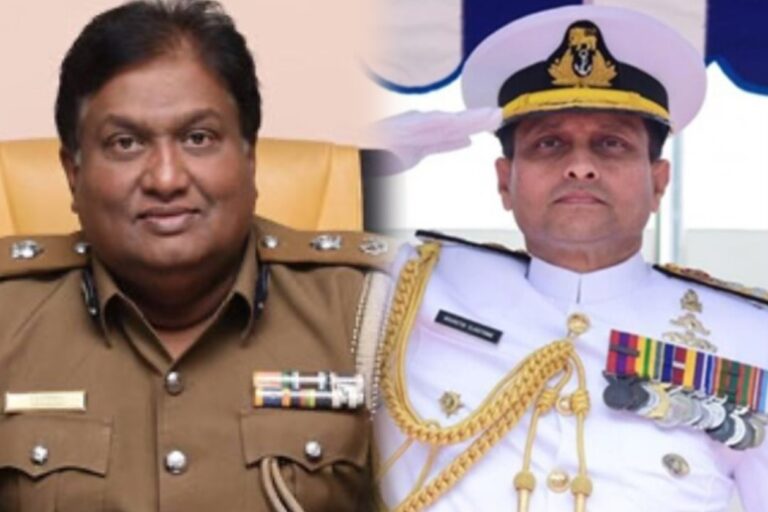
July 30, Colombo (LNW): In a dramatic turn of events, Sri Lanka’s security and law enforcement agencies have been shaken by the arrest of two prominent figures,former Commander of the Sri Lanka Navy, Admiral (Retd.) Nishantha Ulugetenne, and former Senior Deputy Inspector General of Police (SDIG) Priyantha Jayakody. These high-profile arrests have sent shockwaves through the political and law enforcement circles, revealing the complex and often murky relationship between powerful officials, the military, and the police in the island nation.
Admiral Nishantha Ulugetenne: Arrested Over Wartime Disappearance
On July 27, 2025, Admiral (Retd.) Nishantha Ulugetenne, a decorated military officer who had served as the Commander of the Sri Lanka Navy from 2020 to 2022, was arrested by the Criminal Investigations Department (CID) in connection with a wartime disappearance that occurred during his tenure as the head of naval intelligence.
Ulugetenne, who played a pivotal role in the Sri Lankan Navy’s operations during the final years of the civil war, was taken into custody after an investigation into the alleged disappearance of an individual in the Pothuhera Police area. While the details of the case remain under wraps, police spokesperson ASP F.U. Wootle stated that more information would be provided once the CID Director was briefed. As of now, Ulugetenne has been remanded until July 30 by the Polgahawela Magistrate’s Court.
The arrest is particularly significant, as Ulugetenne had not previously been investigated in connection with the allegations of wartime atrocities, despite the fact that several senior military officers have been probed for their roles during the civil war. As head of naval intelligence, Ulugetenne was heavily involved in the planning of operations that targeted the LTTE’s floating warehouses, a campaign that was backed by both local and US intelligence agencies. This arrest marks a critical moment in Sri Lanka’s ongoing investigation into war-era abuses.
Moreover, Ulugetenne’s arrest is the first high-profile case to be made since the rise of the National People’s Power (NPP) government in 2024. Ulugetenne’s connection to former Navy Commander Vice Admiral Wasantha Karannagoda and his tenure under the presidency of Gotabaya Rajapaksa raise questions about the ongoing political dynamics surrounding these investigations, with some speculating that the arrest could be politically motivated.
Ulugetenne’s subsequent appointment as Sri Lanka’s Ambassador to Cuba in 2024 under the presidency of Ranil Wickremesinghe further highlights the complex intersection of military, political, and diplomatic affairs in Sri Lanka. The arrest has raised more questions than answers, with many waiting to see how this investigation unfolds.
Priyantha Jayakody: Allegations of False Complaints and Underworld Connections
Simultaneously, former SDIG Priyantha Jayakody found himself in the spotlight after being arrested in connection with a separate, yet equally alarming, case. Jayakody, who served in the police force for decades, was taken into custody on July 28, 2025, after the CID uncovered that he had allegedly orchestrated a false complaint claiming he had received death threats from a notorious underworld figure, ‘Kehelbaddara Padme.’
The investigation revealed that Jayakody’s actions were not just an isolated incident but part of a broader attempt to protect his personal safety by fabricating a connection to underworld figures. This revelation came to light after the arrest of a suspect, who allegedly pretended to be ‘Kehelbaddara Padme,’ and falsely threatened former Public Security Minister Tiran Alles and Senior Deputy Inspector General Lalith Pathinayake at Jayakody’s request.
The man behind the threats, arrested by the CID, had claimed to be an overseas underworld figure, and during interrogations, it was revealed that Jayakody had facilitated these threats in an effort to create a façade of danger. Both Minister Alles and SDIG Pathinayake had filed complaints claiming to have been targeted by the fabricated threats.
Jayakody, who is currently receiving medical treatment at a private hospital in Ragama, was presented before the Mahara Magistrate’s Court on July 29 and remanded until August 6, 2025. His arrest has triggered a series of questions about the abuse of power within Sri Lanka’s police force, particularly the potential for senior officers to manipulate the system for personal gain. The investigation continues, and authorities are probing whether other officials were involved in the orchestration of these false claims.
A Pattern of Corruption and Power Abuse? The arrests of Ulugetenne and Jayakody come at a time when Sri Lanka is still grappling with the fallout of the 2019 Easter bombings, the collapse of the Rajapaksa government, and ongoing efforts to bring transparency and accountability to the country’s security institutions. Both individuals were once seen as powerful figures within their respective fields, with Ulugetenne commanding the Navy during a critical period of Sri Lanka’s military history and Jayakody holding one of the highest-ranking positions in the Sri Lanka Police Service.
Their arrests have reignited public concerns over systemic corruption and abuse of power within Sri Lanka’s military and law enforcement agencies, particularly in relation to the misuse of state resources and the alleged involvement of high-ranking officials in criminal activities. In Ulugetenne’s case, the wartime disappearances are a particularly sensitive topic, as Sri Lanka continues to face international scrutiny for alleged human rights violations during its brutal civil war against the Tamil Tigers (LTTE). Meanwhile, Jayakody’s case underscores the ongoing problems with underworld connections within the police force, as well as the ease with which some individuals have manipulated the system for personal protection or advantage.
While both arrests signal a step toward accountability, they also highlight the deep-rooted issues within Sri Lanka’s security apparatus. As investigations continue, the country’s citizens, political analysts, and human rights organizations will be closely monitoring these developments, hoping for meaningful reform in a system that has long been criticized for its lack of transparency and accountability.
Unraveling the Past, Rebuilding the Future
The high-profile arrests of Admiral Nishantha Ulugetenne and former SDIG Priyantha Jayakody reflect the broader challenges Sri Lanka faces as it attempts to address its troubled past and rebuild its institutions. Whether these cases represent a genuine move toward greater accountability or are merely a political maneuver remains to be seen. Regardless, they underscore the need for a thorough and impartial investigation into the practices that have plagued Sri Lanka’s military and law enforcement sectors for decades.
In the coming weeks, as these investigations unfold, the people of Sri Lanka will undoubtedly be watching closely, hoping that the truth will emerge and that the path toward a more transparent and accountable future will be paved.
Sri Lanka’s export sector has shown strong resilience and steady recovery in the first half of 2025, achieving a total export value of US$ 8.34 billion, reflecting a 6.7% growth compared to the same period last year, according to the Export Development Board (EDB).
The combined exports for June 2025 alone reached US$ 1.46 billion, marking an 8.73% year-on-year growth, driven by solid performance in both merchandise and services. Merchandise exports rose by 6.85%, reaching US$ 1.15 billion, while services exports were estimated at US$ 309.6 million, representing a growing share of national export income.
For the January–June 2025 period, merchandise exports totaled US$ 6.5 billion, up by 5.86% from the previous year. Meanwhile, services exports surged 9.78% to reach US$ 1.83 billion, underscoring the increasing contribution of Sri Lanka’s knowledge-driven sectors such as ICT/BPM, Construction, Financial Services, and Logistics & Transport.
Key Sectoral Highlights:
Tea Exports: Tea, accounting for 12.8% of merchandise exports, earned US$ 132.97 million in June 2025, rising 9.21% year-on-year. The increase was driven by robust demand for Tea Packets (+25.53%) and Instant Tea (+49.65%). Export volumes grew 11.02%, with notable gains in shipments to Iraq (+82.99%) and Libya (+172.38%), despite a sharp drop in exports to Iran (-55.31%).
Coconut-Based Products: A standout performer in June 2025, this category grew 59.62% year-on-year. Subcategories recorded sharp increases: Coconut kernel products (+88.56%), fiber products (+33.61%), and shell products (+13.09%). Key items such as Coconut Oil (+97.09%) and Coconut Cream (+131.26%) saw strong global demand.
Apparel & Textiles: The sector saw modest growth of 3.71%, totaling US$ 463.12 million in June 2025, reflecting gradual recovery in global fashion markets.
Gems & Jewellery: Estimated to grow by 26.96% to US$ 37.9 million, aided by steady demand and value addition.
ICT/BPM Exports: One of the fastest-growing service sectors, ICT/BPM exports jumped 34.12%, earning US$ 147.18 million in June alone.
Transport & Logistics: This sub-sector generated US$ 148.18 million, growing by 12.39%, reinforcing its role in export service expansion.
Food & Beverages: Earnings rose 28.33%, reaching US$ 47.43 million, driven by a 46.44% boost in processed food exports.
Areas of Concern:
While several sectors recorded growth, others faced downturns:
Spices & Essential Oils fell 27.16%, mainly due to a 57.13% drop in pepper exports.
Seafood exports declined 23.83%, with fresh/chilled fish falling 63.35%.
Ornamental Fish dropped sharply by 54.66%, totaling just US$ 1.07 million.
Rubber Products dipped 1.04%, driven by a 66.67% fall in sheet rubber.
Despite isolated setbacks, Sri Lanka’s export performance in the first half of 2025 reflects a promising trajectory, with diversified growth across traditional and emerging sectors, positioning the country to better navigate global economic challenges.
Sri Lanka Customs has detained nearly 1,000 BYD electric vehicles (EVs) at the Colombo Port over alleged discrepancies in their declared motor capacities—raising red flags under the island’s newly revised vehicle import tax regime.
The controversial move comes just months after the government restructured its import tax system, where electric vehicle excise duties are now strictly based on motor output (in kilowatts). Customs officials say the detentions are in line with these updated rules to prevent significant tax revenue losses.
Nearly 1,000 Chinese-manufactured BYD electric vehicles, imported into Sri Lanka in six consignments, have been detained by Sri Lanka Customs over disputes regarding their declared motor power output, which is now a critical determinant of applicable excise duty under the country’s latest vehicle tax regulations.
The vehicles, mostly of the BYD Atto 3 model, were declared as having 100 kilowatt (kW) motors. However, Customs suspects that these cars may actually have 150kW motors—an allegation with significant financial implications, as the tax rate increases steeply with higher motor capacity under the new framework.
According to official sources, the excise duty on a 100kW EV is approximately Rs. 2.4 million, whereas the duty on a 150kW model can be as high as Rs. 5.4 million. The dispute could result in an estimated additional Rs. 4 million in tax per vehicle if the declared capacity is found to be inaccurate.
The detentions, though controversial, are being justified by Customs officials under the latest tax regulations implemented by the government on 1 February 2025. The revised vehicle import tax structure reintroduced excise duties on EVs based on motor capacity (kW), a system that was once challenged but now fully reinstated and expanded.
Current EV Tax Structure in Sri Lanka (Effective Feb 2025)
Motor Power (kW) Age of Vehicle Excise Duty Rate
Up to 100 kW < 3.5 years 200–300% of CIF value
100–200 kW < 3.5 years 300% of CIF value
> 200 kW < 3.5 years Higher tiers apply
All categories > 3.5 years 200% duty across board
Additional levies include:
Customs Import Duty (CID): 30% of CIF value (20% base + 50% surcharge)
Luxury Tax: 60% on EVs with CIF values exceeding Rs. 6 million
VAT: 18% on total value (CIF + taxes)
Social Security Contribution Levy (SSCL): 2.5% of dutiable value
This structure reinforces motor capacity (in kW) as a core determinant of vehicle taxation. Customs officials argue that strict enforcement is essential to prevent under-declaration and protect state revenue, especially given the government’s tight fiscal position.
The agents for BYD in Sri Lanka, JKCG Auto, have maintained that the imported vehicles are 100kW variants manufactured to suit specific market needs, such as those in Singapore and Nepal. “These configurations are provided directly by the manufacturer and are not unique to Sri Lanka,” a company spokesperson said.
Globally, variations in EV motor ratings are common. For instance, Singapore permits lower kW models to qualify for its Category A entitlement scheme. Even Tesla offers a down-rated 110kW Model Y in Singapore for the same reason.
However, concerns persist that manufacturers may be downgrading software ratings without physically altering the motor, making enforcement difficult. A 100kW-rated car could share the same physical motor as the 150kW version but offer lower performance. According to reviews, the BYD Seal’s 100kW version takes 10 seconds to go from 0–100 km/h, while the 150kW variant takes just 5.9 seconds.
Earlier this year, during a session of the Parliamentary Committee on Public Finance, several members’ highlighted cases where identical EV models were being taxed differently based on the declared motor rating. At the time, Customs Spokesman Seevali Arukgoda acknowledged the complaints and confirmed that an investigation had commenced.
While over 1,000 BYD vehicles have already been cleared and sold to end users, the current detentions mark a significant shift in enforcement under the revised tax code. Industry stakeholders now await clarity on how Customs will assess manufacturer documentation and real-world vehicle specs in the weeks ahead.
:Sri Lanka’s renewed diplomatic push under President Anura Kumara Dissanayake’s leadership marked a significant milestone this week, with his first official State visit to the Maldives laying the groundwork for stronger economic cooperation and regional integration. In the context of shifting geopolitical and economic dynamics in the Indian Ocean, this visit signaled a fresh start in bilateral relations, anchored in mutual development and strategic collaboration.
The visit—timed with the 60th anniversary of formal diplomatic ties between Sri Lanka and the Maldives—emphasized economic diplomacy, as both countries aim to emerge stronger from recent economic setbacks. President Dissanayake’s discussions with Maldivian President Dr. Mohamed Muizzu placed particular emphasis on boosting trade, investment, tourism, fisheries, and renewable energy cooperation.
Following high-level talks, President Dissanayake expressed Sri Lanka’s intent to “diversify the economic relationship” and invited greater Maldivian participation in Sri Lanka’s growth sectors. “Maldivian investors can always look at Sri Lanka as a trusted destination,” he said, outlining incentives such as investor-friendly Technology Parks and single-window systems to facilitate smoother investment processes.
Target sectors for collaboration include IT and Artificial Intelligence, agro-processing, real estate, tourism, fisheries, and urban infrastructure. Notably, Dissanayake highlighted opportunities for joint ventures in Sri Lanka’s growing digital economy, underscoring its push to become a regional tech hub.
Tourism and trade also featured prominently in the talks, with both leaders agreeing to improve air connectivity and enhance cross-border travel. With the Maldives being a major employment destination for Sri Lankan workers, such developments could further boost remittance flows and cultural ties. Additionally, new tourism packages are expected to be jointly developed, recognizing the sector’s shared importance to both island economies.
Fisheries cooperation, especially regarding transit routes and sustainable marine practices, was described as a “mutual economic imperative” due to the heavy maritime dependence of both nations. President Dissanayake also pushed for broader collaboration in ocean-based economic activities, including port development and fishing logistics.
On renewable energy, the President reiterated Sri Lanka’s ambitious target of generating 70% of its electricity from renewables by 2030. He extended an invitation for Maldivian collaboration on clean energy initiatives, noting Sri Lanka’s national program, Clean Sri Lanka, aligns closely with the Maldives’ sustainability agenda.
In addition to economic matters, legal and diplomatic agreements were formalized during the visit. A treaty on mutual legal assistance in criminal matters was signed, enhancing judicial cooperation and law enforcement coordination between the two countries. The agreement allows cases to be received, processed, and executed through designated Central Authorities.
Moreover, a Memorandum of Understanding on diplomatic training and information exchange was signed between the Foreign Service Institute of Maldives and Sri Lanka’s Bandaranaike International Diplomatic Training Institute. This MoU is expected to strengthen institutional ties and improve capacity-building in both foreign ministries.
President Dissanayake’s engagement with the Sri Lankan expatriate community and plans to address a business forum in Malé further demonstrate the administration’s commitment to deepening economic engagement and people-to-people ties. The visit, observers say, not only enhanced bilateral cooperation but also positioned Sri Lanka as a proactive regional partner in a rapidly changing Indo-Pacific geopolitical environment.
Sri Lanka’s decision to impose an 18% Value-Added Tax (VAT) on global digital payment platforms like PayPal and Stripe from October has sparked growing concern among the country’s freelance and digital workforce. The move, aimed at boosting government revenue under International Monetary Fund (IMF) guidance, threatens to place new financial burdens on thousands of Sri Lankans who rely on online platforms for their livelihoods.
The new tax measure brings foreign digital service providers into the local VAT net, aligning with international frameworks like those of the Organisation for Economic Co-operation and Development (OECD). However, critics argue that the government is pushing ahead without addressing significant enforcement and implementation gaps — and at a time when the country is trying to grow its $4 billion digital economy to $15 billion by 2030.
While the Inland Revenue Department (IRD) has clarified that VAT will be charged only on the service value and not on the 2.5% stamp duty already imposed on foreign card transactions, the confusion has persisted. Freelancers and digital entrepreneurs — many of whom use platforms such as Fiverr, Upwork, PayPal, and Stripe — say they’ve received no clear guidance or communication on how the tax will be applied in practice.
Experts point out that the tax design is fundamentally flawed when it comes to gig economy transactions. For example, when a Sri Lankan hires a freelancer through Fiverr, the platform often takes a 30% cut from the freelancer’s earnings — not the client’s payment. This means the Sri Lankan user may not be the party remitting payment directly to the platform, making enforcement of VAT nearly impossible without compelling the platforms themselves to collect and remit the tax.
“In other countries, the law makes platforms like Fiverr liable for VAT collection. Sri Lanka hasn’t reached that point,” noted a senior tax advisor. “The current model assumes that non-resident freelancers earning from Sri Lankans will voluntarily register for VAT, which is practically unenforceable.”
Another challenge lies in the legal classification of digital goods and services. Under the VAT Act, tailor-made software is treated as a service and taxed accordingly, but off-the-shelf software downloaded from app stores is classified as a good — which may be outside the digital VAT scope. These ambiguities make it difficult for digital service providers and consumers to understand their obligations.
Cybersecurity expert Asela Waidyalankara warned that the tax risks undermining the country’s digital development goals. “Gig workers and freelancers form the backbone of our digital economy. This tax will directly raise their costs and limit their competitiveness globally,” he said. Most freelancers operate on fixed contracts with international clients, giving them little room to renegotiate fees mid-project to account for new taxes. “They’ll either absorb the extra cost or risk losing business,” he added.
Waidyalankara also emphasized Sri Lanka’s limited capacity to enforce cross-border tax compliance. “Large economies can demand compliance from global tech giants. Sri Lanka can’t,” he said, suggesting that the country must rethink its approach and consider practical enforcement models.
As Sri Lanka seeks to modernize its tax regime under IMF oversight, balancing revenue goals with the survival of its digital workforce remains a complex and urgent challenge.