Home Blog Page 494

Government’s Cigarette Tax Hike to Boost Revenue, Reducing Smoking rates

0

By: Staff Writer

January 16, Colombo (LNW): The recent hike in cigarette taxes in Sri Lanka aims to enhance government revenue and reduce smoking rates. However, its effectiveness is shaped by consumer behavior, market trends, and enforcement against illicit trade.

According to the Alcohol & Drug Information Centre (ADIC), the latest tax increase has allowed cigarette companies to earn an additional Rs. 7 billion in profit.

While the tax on the most popular cigarette category rose by Rs. 4.51 per stick, retail prices increased by Rs. 10 per cigarette, enabling companies to capture substantial profits.

ADIC attributes this to inefficient tax collection systems, which persist regardless of changes in government leadership.

Tobacco and alcohol consumption in Sri Lanka have significant public health consequences. Smoking causes nearly 20,000 deaths annually, while alcohol consumption accounts for around 15,000 premature deaths. Despite these figures, tax hikes on these products show mixed outcomes.

For instance, a 20% alcohol tax increase in 2023 reduced alcohol consumption by 8.3 million liters while boosting government revenue by Rs. 11.6 billion. Similarly, cigarette excise revenue increased by Rs. 7.7 billion, even with a decline in cigarette sales. These trends highlight the dual impact of taxation on consumption patterns and state revenue.

In July 2023, Sri Lanka implemented another 20% cigarette tax increase, with specific rates varying by product size. However, the Ceylon Tobacco Company (CTC) reported a decline in both sales volume and revenue in early 2024 compared to the previous year.

 Revenue dropped from Rs. 46.93 billion to Rs. 45.85 billion, and turnover-linked taxes fell from Rs. 34.2 billion to Rs. 31.7 billion. This decline is attributed to reduced cigarette consumption, a shift to cheaper alternatives like beedi, and increased smuggling.

Over the long term, however, cigarette tax revenue has shown a positive trend. Between 2015 and 2023, revenue from cigarette taxes grew from Rs. 81.15 billion to Rs. 110 billion, despite a notable decrease in cigarette consumption.

The effects of cigarette tax increases can be summarized as follows:

Economic Impact: Higher taxes aim to boost government revenue, but reduced legal sales and shifts to untaxed alternatives like beedi or smuggled cigarettes may undermine this goal. Illicit trade also negatively impacts the broader economy.

Corporate Outcomes: Although CTC experienced reduced sales and revenue in early 2024, the company increased its profits from Rs. 5.999 billion to Rs. 6.8 billion by cutting costs. This occurred despite rising expenses for wages and raw materials.

Consumer Behavior: Rising cigarette prices due to tax hikes have led many consumers to reduce consumption, opt for cheaper alternatives, or turn to smuggled products. These shifts may impact public health negatively if consumers choose more harmful substitutes and can also reduce government revenue from taxed products.

While cigarette taxes have proven effective in reducing consumption and increasing state revenue over time, their success hinges on strong regulatory enforcement, minimizing illicit trade, and addressing market shifts to untaxed alternatives.

Colombo Port Delays Raise Costs, Threaten Consumers and Importers Alike

0

By: Staff Writer

January 16, Colombo (LNW): Efficient border operations are vital for an island nation like Sri Lanka, where trade plays a critical role in driving economic growth.

However, delays in cargo clearance at Colombo Port have disrupted the smooth flow of goods, leading to increased costs and diminished competitiveness in global markets.

This ongoing issue not only undermines the country’s gross domestic product (GDP) but also inflates operational expenses for businesses and discourages foreign direct investment.

The congestion at the port’s container terminal has reached critical levels. According to Customs Media Spokesman Seevali Arukgoda, the delay in clearing 603 containers already released by Sri Lanka Customs has severely restricted space.

To address this, Sri Lanka Customs initiated a special program, as directed by President Anura Kumara Dissanayake, aimed at expediting container clearance.

On a single day, 459 containers were released from Colombo Port, while another 242 were processed at the Rank Container Terminals (RCT) and associated yards after completing inspections.

Despite the efforts, Customs officials are struggling to inspect and release more than 500 containers daily due to the limited availability of clearance agents and vehicle drivers. As of the latest reports, gate permits have been issued, but 496 containers still await transfer to inspection yards.

The repercussions of these delays extend beyond the port. Deputy Minister of Ports and Civil Aviation, Janith Ruwan Kodithuwakku, revealed that 25 to 30 cargo ships had turned away from Sri Lankan ports due to prolonged clearance times.

These disruptions not only strain the country’s logistics but also highlight inefficiencies that jeopardize its reputation as a reliable trading hub.

President Dissanayake convened a meeting with key stakeholders to address the issue, during which customs officials committed to operating round-the-clock to resolve the backlog.

The Container Transport Owners’ Association noted that clearance processes have improved following these discussions, yet long queues of container trucks continue to plague the Orugodawatta customs yard.

Major importers have raised alarms over escalating costs stemming from these delays. Over 1,000 containers, including essential food items and raw materials, remain stuck, incurring additional costs exceeding Rs. 100 million.

On average, importers are paying an extra Rs. 100,000 per container, with some costs soaring to Rs. 300,000 due to higher transportation charges, port delay fees, and staffing expenses.

These rising costs have led importers to warn that consumer prices will inevitably increase as they pass on these financial burdens.

The Sri Lanka Logistics and Freight Forwarders Association (SLFFA) echoed these concerns, emphasizing that container vehicles are now spending over three days in port queues. Each day of delay adds Rs. 50,000 to Rs. 100,000 to importers’ expenses, further straining their operations.

SLFFA Chairman Channa Gunawardena highlighted the broader implications, noting that delays have prompted 30 cargo ships to bypass Sri Lanka altogether, exacerbating supply chain disruptions and threatening the country’s trade networks.

To compound matters, Customs has announced that all taxes on delayed containers must be paid before their release, further burdening traders already grappling with the crisis. With over 600 containers still awaiting clearance, the situation underscores systemic inefficiencies that demand urgent resolution.

Ultimately, the delays at Colombo Port have placed significant pressure on Sri Lanka’s economy, threatening its trade prospects and increasing costs for businesses and consumers alike.

A coordinated effort involving all stakeholders is essential to restore efficiency, minimize disruptions, and safeguard the country’s economic stability.

UAE commits to expanding career opportunities and strengthening bilateral ties with SL

0

January 16, Colombo (LNW): The United Arab Emirates (UAE) has reaffirmed its commitment to increasing job opportunities for Sri Lankans and enhancing employment prospects for professionals in the UAE.

This pledge was made by UAE Ambassador to Sri Lanka, Khaled Nasser Al Ameri, during a meeting with Sri Lanka’s Secretary to the President, Dr. Nandika Sanath Kumanayake, at the Presidential Secretariat.

Ambassador Al Ameri shared that approximately 150,000 Sri Lankans are currently employed in the UAE, contributing significantly to the labour force in various sectors.

He expressed the UAE’s ongoing support for Sri Lanka’s economic development, with a focus on fostering deeper economic ties and creating new avenues for employment.

During the discussions, the Ambassador highlighted that the UAE is eager to expand its employment offerings for Sri Lankans, particularly targeting skilled professionals, and is keen to build on the existing strong workforce presence in the Gulf.

Al Ameri also noted that under the new political framework in Sri Lanka, opportunities for UAE investors have been significantly enhanced, providing a more attractive and conducive environment for business investments.

He went on to explain that while Sri Lanka had previously faced challenges in fostering an investment-friendly atmosphere, recent reforms have opened up promising prospects for foreign investors, particularly from the UAE.

As a result, the UAE is looking forward to entering into new trade and investment agreements with Sri Lanka, further strengthening the commercial relationship between the two nations.

The UAE Ambassador also extended an invitation to Sri Lankan President Anura Kumara Dissanayake to visit the UAE, with a view to engaging in direct discussions with UAE leaders and potential investors.

Al Ameri suggested that such high-level meetings would provide an excellent platform for advancing diplomatic and economic cooperation, ultimately benefiting both countries.

India and Sri Lanka finalise grant agreement for Police vehicle assistance

0

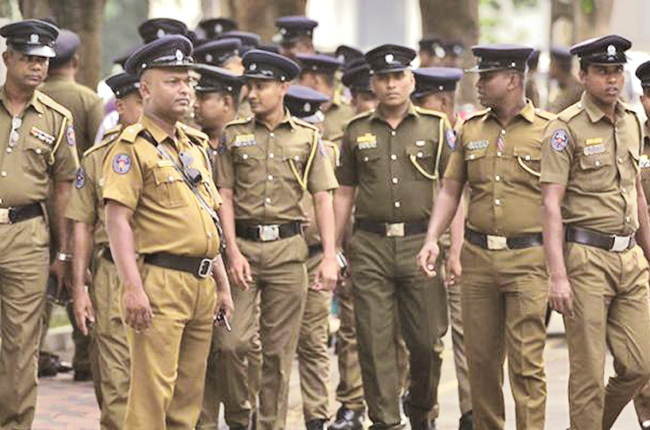
January 16, Colombo (LNW): India and Sri Lanka have formalised a significant grant assistance agreement to support the Sri Lankan police force with new vehicles.

The agreement, which focuses on the supply of single-cab vehicles for use in police stations, was officially signed between the High Commission of India in Sri Lanka and the Ministry of Public Security of Sri Lanka.

The Memorandum of Understanding (MoU) was exchanged by Indian High Commissioner to Sri Lanka, Santosh Jha, and the Secretary of Sri Lanka’s Ministry of Public Security & Parliamentary Affairs, D.W.R.B. Seneviratne.

This collaboration marks a milestone in the growing security partnership between the two nations.

Under the terms of the agreement, India will provide grant assistance to the value of up to Rs 300 million, which will be used to supply at least 80 single-cab vehicles, along with spare parts and accessories, to police stations across Sri Lanka’s Northern Province.

The signing ceremony was attended by several distinguished officials, including Acting Inspector General of Police Priyantha Weerasuriya, along with senior representatives from the Ministries of Public Security, Finance, Planning & Economic Development, and the Sri Lanka Police.

The vehicles provided through this grant are expected to improve the accessibility of police services in remote and underserved areas, contributing to overall public safety.

Sri Lanka secures $3.7 bn FDI for oil refinery during President’s visit to China

0

January 16, Colombo (LNW): Sri Lanka has successfully secured a major foreign direct investment (FDI) during President Anura Kumara Dissanayake’s ongoing state visit to China.

A landmark agreement, worth $3.7 billion, was signed today (16) to establish a state-of-the-art oil refinery in the Hambantota region, a statement by the President’s Media Division (PMD) confirmed.

The deal, formalised between Sri Lanka’s Ministry of Power and Energy and China’s Sinopec Corporation, will see the development of a refinery with a capacity to process 200,000 barrels of oil per day.

A significant portion of the refined product is expected to be allocated for export, contributing to Sri Lanka’s foreign exchange earnings.

This strategic investment aims to stimulate economic growth by bolstering the country’s energy sector while also creating jobs and fostering development in the Hambantota area.

The refinery is expected to have a positive ripple effect, benefiting local communities and contributing to the broader economic landscape of Sri Lanka.

The signing ceremony, which took place in the presence of key government officials, was attended by Sri Lanka’s Foreign Minister Vijitha Herath and Transport Minister Bimal Ratnayake.

The agreement is viewed as a significant milestone in the strengthening of bilateral ties between Sri Lanka and China, with both nations recognising the potential for this project to enhance economic cooperation and infrastructure development.

The new refinery will not only support Sri Lanka’s growing energy needs but also position the country as a more prominent player in the regional oil market.

US commends Sri Lanka’s economic reforms and anti-corruption efforts under President AKD’s leadership

0

January 16, Colombo (LNW): The United States has expressed strong support for the Sri Lankan government’s commitment to economic reforms and anti-corruption measures under the leadership of President Anura Kumara Dissanayake.

US Ambassador to Sri Lanka, Julie Chung, praised the new administration’s dedication to stabilising the economy and ensuring transparency in governance, particularly its efforts to adhere to the International Monetary Fund (IMF) programme and finalise restructuring of international sovereign bonds.

As Sri Lanka embarks on a critical period of economic recovery, Ambassador Chung highlighted the importance of these steps in securing financial stability and laying the foundation for future growth.

We welcome the Sri Lankan government’s commitment to remaining aligned with the IMF programme and its work towards restructuring sovereign bonds. These are pivotal moves to restore confidence in the country’s economy,” she remarked, underlining the significance of these initiatives for both domestic progress and international relations.

Ambassador Chung also emphasised that while stabilising the economy is an essential first step, the more complex challenge lies in driving long-term growth, enhancing productivity, and establishing sustainable economic practices.

The ambassador lauded the launch of the “Clean Sri Lanka” initiative, an ambitious project designed to overhaul the political and economic culture of the country, promoting transparency and accountability in all sectors.

The “Clean Sri Lanka” initiative, which aims to root out corruption and improve governance, has been recognised as a bold move towards reform. Ambassador Chung expressed optimism regarding the government’s commitment to following through with tangible actions.

These include the potential restructuring of inefficient state-owned enterprises, upholding contracts, and creating a fair playing field for foreign companies operating in Sri Lanka, free from protectionist policies.

With the government’s focus on the ‘Clean Sri Lanka’ initiative, we look forward to seeing measurable steps towards political and economic renewal. It’s vital that state-owned enterprises are reformed, contracts are honoured, and foreign businesses are provided with equal opportunities to thrive,” added Ambassador Chung.

As we look to the future, we must also consider the role of emerging technologies like artificial intelligence and how they will shape business opportunities in Sri Lanka.

In addressing broader global challenges, Ambassador Chung also acknowledged the impact of external factors such as shipping delays due to Houthi attacks in the Red Sea and the economic repercussions of Russia’s invasion of Ukraine.

She stressed the importance of resilience and strategic planning in navigating these complex and often unpredictable circumstances.

The United States has continued to play a crucial role in supporting Sri Lanka’s development. Ambassador Chung pointed to ongoing US support, which includes loans through the US Development Finance Corporation to small and medium enterprises (SMEs), entrepreneurial training, and technical assistance from both the US Treasury Department and USAID. These initiatives focus on sectors such as renewable energy, procurement reform, and enhancing tax revenue systems.

Sri Lanka’s first all-female staffed tourist hotel opens in Dambulla

0

By: Staff Writer

January 15, Colombo (LNW): A groundbreaking milestone in South Asia’s tourism industry was achieved on January 10th with the grand opening of “Amba Yaalu”, the island nation’s first 100% female-staffed tourist hotel.

A thematic resort nestled in the middle of a mango plantation with 457 TJC mango trees bordering the tranquil banks of Kandalama Reservoir. Inspired by the novel ‘Amba Yaluwo’ (Mango Friends) and the golden era of Sri Lankan cinema, this unique property is Sri Lanka’s first hotel fully managed and staffed by women.

Built under the auspices of “Thema Collection”, the hotel was inaugurated with a lively ceremony attended by embassy officials, government representatives, and prominent figures in the tourism industry. 

Highlighting the cultural significance of the event, two female Buddhist monks conducted a Pirith sermon to bless the hotel and its all-women staff.

The visionary behind this initiative, Chandra Wickramasinghe, Chairman of “Thema Collection”, emphasized that the hotel showcases how women can excel in every facet of the hospitality industry. 

The hotel manager, Madhuwanthi Adhikari, shared her enthusiasm for leading this one-of-a-kind project.

Adding to the excitement, Anuradhapura native Kaushalya Batagoda has taken on the role of head chef, using her culinary expertise acquired locally and abroad. 

“It’s an incredible honor to be a part of this all-female team and lead the culinary department of such a unique venture,” she expressed.

Reflecting a vintage cinematic charm, ‘Amba Yaalu’ incorporates elements inspired by the iconic Sinhala novel ‘Amba Yaaluwo’, by B. Ilangaratne. 

The hotel features an old movie theater as part of its design, with posters, banners, and antique camera equipment displayed throughout. 

The restaurant itself is styled to resemble a retro cinema, creating a nostalgic experience for guests.

New Vehicle Taxes Crush Hopes for Affordable Imports

0

By: Staff Writer

January 15, Colombo (LNW): Despite the easing of vehicle import restrictions in Sri Lanka, high taxes have dashed public hopes for affordable car prices, creating significant barriers to imports, MP Dayasiri Jayasekara said.

Speaking to the media, he criticized the government for raising expectations during elections only to impose stringent regulations that make importing vehicles nearly impossible.

Jayasekara highlighted that four key taxes now apply to vehicle imports: taxes based on engine capacity, valuation tax, luxury tax, and an 18% VAT. Together, these taxes have caused vehicle prices to skyrocket, with importers predicting a price hike of up to 500%.

He added that the Central Bank’s insistence on maintaining “artificial vehicle prices” in the local market has further exacerbated the issue, as the government prioritized increasing tax revenue over addressing inflated prices.

Prasad Manage, President of the Vehicle Importers Association of Sri Lanka (VIASL), echoed these concerns, explaining that vehicle import taxes range between 200% and 500% depending on the vehicle.

 He outlined that beyond excise duties, other levies, including luxury taxes, customs duties, and the 18% VAT, are calculated based on the vehicle’s value, insurance, and freight (CIF) costs. For some vehicles, cumulative taxes could reach 600%, he said, cautioning buyers against making advance payments before import processes resume.

Initial pricing estimates reveal steep costs. Popular petrol vehicles, such as the Suzuki Every, Toyota Corolla, and Nissan Dayz, are priced at Rs. 1.3 million, Rs. 6.6 million, and Rs. 1.9 million, respectively.

Hybrid vehicles, including the Suzuki Wagon R and Honda Fit, start at Rs. 1.8 million and Rs. 3.5 million, with premium models like the Toyota Prius reaching Rs. 11.3 million. These figures exclude the full impact of layered taxes.

Meanwhile, Sampath Merenchige, President of the Vehicle Importers Association of Lanka (VIAL), called for policy changes to allow the import of vehicles over five years old. Noting Japan’s tendency to phase out older vehicles, he argued that this could reduce costs and expand consumer choices.

Vehicle importers are urging the government to adopt a balanced approach that considers affordability, tax revenue, and market stability. They caution against premature panic as the final taxation structure remains uncertain.

Additionally, the government announced that fuel taxes, effective since January 2024, will remain unchanged. Petrol is taxed at Rs. 72 per liter, super diesel at Rs. 57, and auto diesel at Rs. 50.

With vehicle imports set to resume on February 1, 2025, all eyes are on the government’s final tax policies and their impact on the automobile industry. Importers hope for measures that promote affordability while ensuring market sustainability.

Sri Lanka revives Council of Ministers for EDB after 28 years

0

January 16, Colombo (LNW): The Sri Lanka Export Development Board (SLEDB) has officially announced the reinstatement of the Council of Ministers for Export Development, a significant move after an absence of 28 years.

This marks a pivotal moment in the nation’s efforts to revitalise its export sector and enhance economic growth.

Chairman of the Export Development Board, Mangala Wijesinghe, shared the news, revealing that President Anura Kumara Dissanayake will assume the role of chairperson of the newly reformed council.

Whilst there have been previous attempts to establish such a council in the past, these initiatives lacked proper implementation, leading to limited success.

However, Wijesinghe expressed confidence that the current council would be more systematically structured, with clear objectives and a strategic focus on expanding Sri Lanka’s export capabilities.

The primary goal of the newly formed council is ambitious yet essential: to elevate Sri Lanka’s export income of goods and services to an impressive 18 billion dollars by the end of the current year.

This target reflects the government’s determination to boost the country’s international trade and secure a more prominent position in global markets.

The re-establishment of the Council of Ministers for Export Development is expected to provide a much-needed coordinated approach to export growth, addressing key challenges and seizing new opportunities across various sectors.

Two dead and two injured in shooting outside Mannar Magistrate’s Court

0

January 16, Colombo (LNW): A shooting incident outside the Mannar Magistrate’s Court this morning has resulted in the deaths of two individuals and left two others injured.

The incident occurred at approximately 09:20 am, sending shockwaves through the local community.

Two assailants, riding a scooter, approached the victims and opened fire using a pistol. The gunmen fled the scene immediately after the attack, according to Police Spokesman SSP Buddhika Manatunga.

Emergency services quickly responded, and the wounded individuals were rushed to the hospital for treatment.

Despite efforts to save them, hospital sources confirmed that two of the victims succumbed to their injuries.

Initial investigations suggest that the victims were scheduled to testify in a case being heard at the court. It is believed they were on their way to the hearing when the gunmen targeted them.

The motive behind the attack remains unclear, but the police are focusing on the possibility that the shooting may be linked to the victims’ involvement as witnesses in a case.

The Mannar Police have launched an extensive investigation into the incident, with officers working to gather more information and identify the perpetrators.

Authorities are exploring all potential leads, including examining the nature of the case the victims were associated with and whether the shooting was an act of intimidation or a targeted assault.