German-affiliated companies in Sri Lanka are expressing renewed confidence in the country’s economic trajectory, despite facing turbulent global economic conditions, according to the Spring 2025 AHK Business Barometer released by the Delegation of German Industry and Commerce in Sri Lanka (AHK Sri Lanka).
The survey, based on feedback from 54 German-linked businesses operating in Sri Lanka, revealed that over half (54%) described their current business situation as “good,” with none reporting a negative assessment. A strong 66% anticipate improved business conditions over the next 12 months, while 32% expect stability—leaving only one respondent forecasting a downturn.
These findings were presented by AHK Sri Lanka Chief Delegate Martin Klose at a high-profile Breakfast Dialogue event in Colombo. Klose noted that German companies in Sri Lanka are demonstrating “cautious optimism,” especially in contrast to the prevailing sentiment back home in Germany, where firms are grappling with stagnant growth, weak demand, and escalating labour costs.
Klose emphasized the contrasting outlooks, stating that while German firms in Europe face shrinking GDP forecasts and declining investment appetite, their counterparts in Sri Lanka are showing readiness to expand. According to the survey, 33% of German businesses in Sri Lanka plan to increase local investment, and 48% aim to maintain current levels. Furthermore, 31% intend to expand their workforce, and 63% expect to retain their current staffing—indicating a relatively stable employment outlook.
However, companies also identified a number of structural challenges. Chief among them is the shortage of skilled labour, highlighted by 47% of respondents. Other concerns include weak local demand (26%), tight financing conditions (25%), and rising labour costs. These issues are common across many emerging markets and are being closely monitored by German businesses in Sri Lanka.
Geopolitical concerns also loom large. A significant 71% of the companies surveyed believe evolving U.S. trade policies will negatively impact their operations in Sri Lanka, although the expected severity varies among firms. Long-term strategic challenges such as global economic fragmentation, climate change, supply chain restructuring, and the energy transition were also identified as critical factors for future business planning.
The survey also shed light on the business composition: nearly 50% operate in the trade sector, with the rest engaged in manufacturing, construction, and services. About 70% are subsidiaries or branches of German firms, and 39% represent companies employing over 1,000 people globally.
The event concluded with a panel discussion featuring B. Braun Lanka’s Managing Director Dr. Nathalie de Dieuleveult and Allianz Insurance Lanka CEO Prashant Grover, who shared insights on adapting to global challenges, workforce strategies, and aligning with sustainability goals.
Sri Lanka’s apparel sector continues to demonstrate resilience despite global uncertainties, including looming tariff threats from the United States and ongoing demand volatility in key Western markets. As the country’s largest industrial export sector and a major employment provider, the apparel industry has remained a pillar of economic stability through turbulent times—supported by market diversification and a pivot towards value-added products.
In May 2025, Sri Lanka’s apparel exports remained broadly stable, recording only a marginal decline of 0.63% compared to the same month in 2024. Total export earnings reached US$ 365.08 million. While this figure suggests a temporary softening, the overall export performance for the first five months of the year tells a story of steady recovery and adaptability.
The May downturn was primarily due to reduced demand in two key markets— the United States and the United Kingdom. Shipments to the US fell by 7.59%, while exports to the UK declined by 6.81%. These contractions underscore the persistent uncertainties in Western consumer markets, which continue to be affected by high inflation, shifting consumption patterns, and geopolitical concerns, including trade policy fluctuations such as the potential re-imposition of tariffs by a future Trump administration.
However, this dip was largely offset by strong performances in other regions. Exports to the European Union rose by 5.15%, while shipments to non-traditional markets surged by an impressive 11.1%. This diversification strategy appears to be yielding results, with exporters successfully penetrating alternative markets amid sluggish Western demand.
From January to May 2025, total apparel export earnings climbed by 9.8% to US$ 2.02 billion, reflecting the sector’s broader recovery momentum. The EU (excluding the UK) recorded the highest growth at 15.36%, followed by a 13.12% increase in non-traditional markets. Even the US and UK markets showed year-to-date growth of 6.52% and 3.74%, respectively—suggesting that despite monthly fluctuations, overall demand remains stable over the longer term.
Commenting on the sector’s performance, a spokesperson for the Joint Apparel Association Forum (JAAF) said, “The industry’s year-to-date performance demonstrates resilience and adaptability, driven by strategic market shifts and continued investment in value-added products. We are encouraged by the momentum, particularly in emerging and EU markets.”
To sustain this recovery trajectory, JAAF emphasized the critical need for a stable and predictable trade policy environment. Industry stakeholders continue to advocate for policies that ensure long-term competitiveness and help exporters navigate global headwinds. As the global landscape evolves, Sri Lanka’s apparel sector is proving its capacity to adapt, innovate, and survive.
The United Arab Emirates continues to solidify its reputation as a premier destination for the world’s ultra-wealthy, driven by regulatory reforms, favourable tax policies, and long-term residency options such as the Golden Visa, as reported by the Gulf News.
According to the latest Henley & Partners Private Wealth Migration Report, at least 9,800 millionaires are projected to move to the UAE in 2025 alone, underscoring the country’s appeal to high-net-worth individuals seeking stability and strategic advantage.
Norwegian-born shipping tycoon John Fredriksen is among the several high-profile billionaires from around the globe who made the move to the UAE. Fredriksen, long based in the UK, has moved a significant part of his business operations from London to the UAE.
Once ranked the UK’s ninth-richest individual, Fredriksen cited the British government’s decision to scrap the long-standing “non-dom” tax regime as a major catalyst for his relocation. Known for building one of the world’s largest oil tanker fleets, his move is seen as symbolic of a broader trend of wealth migration from Britain to the Gulf. Additionally, Michael Edward Platt, British billionaire and hedge fund veteran, Michael Platt, co-founder of BlueCrest Capital Management, has also shifted his base to the UAE. The firm, once Europe’s third-largest hedge fund, has managed assets exceeding USD 35 billion at its peak. In June 2025, Platt moved his primary residence and family office to Dubai, continuing a UAE expansion that began in 2022 following regulatory approval for BlueCrest’s operations in the region.
Shravin Bharti Mittal, son of telecom magnate Sunil Bharti Mittal and Managing Director of Bharti Global Ltd, has also made a high-profile shift to Abu Dhabi. As the founder of Unbound, a global technology investment firm, Mittal represents the younger generation of India’s Bharti family. In April 2025, he registered a new branch of Unbound in Abu Dhabi amidst tightening tax regimes in the UK. The Bharti family remains the largest individual shareholder in BT Group Plc.
Furthermore, Pavel Durov, the Telegram founder, has called Dubai home since 2017. After leaving Russia in 2014 due to political pressure, Durov and his brother established the encrypted messaging platform’s global headquarters in the UAE. Now a UAE citizen, Durov was ranked the world’s 120th richest person in 2024 and was previously named the richest expatriate in the UAE by Forbes. In 2023, Arabian Business hailed him as Dubai’s most powerful entrepreneur.
Nassef Sawiris, Egypt’s richest man, Nassef Sawiris, has also chosen the UAE as his financial base. In late 2023, his family office, NNS Group, relocated to the Abu Dhabi Global Market (ADGM). Sawiris controls a 30 per cent stake in OCI NV, a leading global fertiliser producer, and owns significant shares in Adidas and LafargeHolcim. His move reinforces Abu Dhabi’s growing status as a global hub for elite wealth management.
The Consumer Affairs Authority (CAA) has announced it will initiate legal action against traders selling salt packets that do not display the importer’s or manufacturer’s details and the retail price.
In a statement issued yesterday, the CAA revealed that certain importers and manufacturers have released salt products into the market without proper labeling, in violation of consumer protection regulations. The Authority warned that selling or distributing such unregulated goods is illegal and urged all traders and consumers to refrain from engaging with such products.
The CAA also advised traders to retain formal invoices containing accurate details of the importer or manufacturer and the corresponding pricing. It cautioned that the possession of salt stocks without valid documentation would also result in legal consequences.
Additionally, the Authority dismissed recent media reports suggesting that a maximum retail price (MRP) for salt had been agreed upon during discussions with the Salt Manufacturers Association. It clarified that no such agreement was reached and labeled the reports as false.
The CAA reiterated its commitment to ensuring fair trading practices and protecting consumer rights through strict enforcement of regulations.
The Government of Japan has committed US$ 2.5 million to support a three-year project aimed at strengthening anti-corruption mechanisms and promoting transparency and accountability in Sri Lanka’s public governance.
The initiative, to be implemented in partnership with the United Nations Development Programme (UNDP), focuses on establishing a robust anti-corruption framework to combat corrupt practices in both public and private sectors. The agreement was formally signed yesterday (July 1) at the Embassy of Japan in Colombo by Japanese Ambassador Akio Isomata and UNDP Resident Representative Azusa Kubota.
The project’s key objectives include enhancing the integrity of governance and business practices, improving the efficiency of government operations, and boosting investor confidence by curbing institutional corruption. It will also work to strengthen the capacity of anti-corruption institutions, improve investigation and prosecution processes, enhance stakeholder coordination, and empower citizens—especially youth and journalists—to play an active role in promoting accountability.
Importantly, the project will include components to engage young journalists and children in anti-corruption advocacy, aiming to build a culture of integrity from an early age and ensure sustained civic engagement.
Several high-ranking officials attended the signing ceremony, including Attorney General and President’s Counsel Parinda Ranasinghe, Secretary to the President Nandika Sanath Kumanayake, Secretary to the Ministry of Justice and National Integration Ayesha Jinasena, Commissioners of the Commission to Investigate Allegations of Bribery or Corruption (CIABOC), and representatives from the Embassy of Japan and UNDP.
This strategic partnership marks a significant step in Sri Lanka’s long-term efforts to foster good governance and social accountability through international cooperation.
The National Transport Commission (NTC) has announced a 0.55% reduction in bus fares, effective from July 4. This decision follows the latest fuel price revision carried out under the fuel price formula.
In a statement issued yesterday, the NTC noted that the annual bus fare revision—traditionally implemented on July 1—had initially indicated a 2.5% reduction for 2025. However, after evaluating the most recent changes in fuel prices, the Commission adjusted the fare revision to a more modest 0.55% decrease.
The NTC clarified that although the fare adjustment was initially expected to come into effect on July 1, it will now be enforced from July 4 due to the timing of the monthly fuel price revision.
Despite the fare cut, the minimum fare of Rs. 27, along with the second, third, and fourth lowest fares—Rs. 35, Rs. 45, and Rs. 66—will remain unchanged. The fare reduction will apply to other fare brackets, with adjustments starting from one rupee and varying across different categories.
The NTC reiterated that annual bus fare revisions take into account multiple factors, including fuel prices, and are implemented accordingly to ensure fair pricing for commuters and sustainability for service providers.
Former Controller General of Immigration and Emigration Harsha Ilukpitiya yesterday (July 1) pleaded guilty before the Supreme Court to charges of Contempt of Court for failing to comply with a Supreme Court order related to the controversial outsourcing of visa services.
Ilukpitiya, who has been in remand custody for the past nine months, admitted guilt when the case was taken up before a three-judge bench comprising Justices Yasantha Kodagoda, Janak de Silva, and Arjuna Obeyesekere. The Court scheduled further proceedings for July 24 to determine the appropriate sentence.
The charges stem from Ilukpitiya’s failure to implement a Supreme Court order that suspended a Cabinet decision permitting the outsourcing of online and expatriate visa processing in Sri Lanka. His noncompliance triggered contempt proceedings under Section 9(7) of the Contempt of Court, Tribunal, or Institution Act No. 08 of 2024.
On September 25, 2024, the Supreme Court ordered Ilukpitiya to be remanded for the duration of the proceedings, citing a serious disregard for the authority of the judiciary.
Several spells of showers will occur in the Western, Sabaragamuwa and North-western provinces and in Nuwara-Eliya, Kandy, Galle and Matara districts.
A few showers may occur in Jaffna and Mannar districts.
Fairly strong winds of about (30-40) kmph can be expected at times over Western slopes of the central hills and in Northern, North-central and North-western provinces and in Trincomalee and Hambantota districts.
July 01, Colombo (LNW): Nishantha Wickramasinghe, the former Chairman of SriLankan Airlines, has been ordered to remain in custody until July 15 as investigations into multiple corruption allegations continue. The decision was handed down by Colombo Chief Magistrate Thanuja Lakmali following his appearance in court today (01).
Wickramasinghe, who was arrested by officials from the Commission to Investigate Allegations of Bribery or Corruption (CIABOC), was brought before the magistrate under tight security. During the proceedings, both the prosecution and defence presented their arguments, after which the magistrate ruled that the former airline chief should be further remanded.
The court has also instructed CIABOC to finalise its inquiries and present a comprehensive report at the next hearing. The investigative body maintains that Wickramasinghe’s arrest is tied to a broader inquiry into misconduct during his tenure at the helm of the national carrier.
The allegations levelled against him span a number of incidents from 2014, each suggesting an abuse of authority and misappropriation of state resources. These include altering a scheduled flight route in January 2014, purportedly causing a loss of over US$ 4,500 to the government; removing dozens of transit passengers from another flight later that month, allegedly incurring an additional US$ 19,160 in losses; and the alleged use of public funds totalling LKR 1.25 million in support of a political campaign held in December that same year.
Wickramasinghe was initially detained on June 27 in the Nawala area. This is not the first time his name has surfaced in relation to questionable decisions taken during his leadership at the airline, but this marks a significant escalation as the inquiry moves through the legal system.
*This article was originally published on 30.09.2017
Dr. Lionel Bopage
Introduction Sri Lanka’s armed conflicts have touched the whole Island, affecting all its ethnicities and faiths. By 2013, Sri Lanka recorded the second highest number of unresolved disappearances in the world.1 Despite the rhetoric of successive regimes, the people had disappeared not because they had gone abroad or been displaced, rather they had been killed and or executed in order to generate fear and anguish among the population. Their bodies are said to be piled up and buried in mass graves somewhere in the island. Several such mass graves have been discovered in recent years that warrant genuine investigations.
Serious human rights abuses and crimes against humanity have occurred in Sri Lanka in the seventies and eighties during the uprisings by the Sinhala youth in the South. Many thousands of Tamils also disappeared during the 30-year war between the LTTE and the state, during the IPKF occupation in the late eighties and during the push to retake the Jaffna peninsula in the nineties, many thousands of Tamils also disappeared. In their attempt to establish a Tamil homeland, the LTTE evicted Muslims from the North and massacred many hundreds of Muslims in the east. A UN investigation in 2015 documented serious human rights abuses allegedly committed by the security forces and the LTTE.
Credible investigations into all mass graves dotted across the country are necessary, if reconciliation based on social justice is to be achieved for all Sri Lankans. The urgency is underlined by the fact that the Presidential Commission of Inquiry on Missing Persons had received over 24,000 complaints.3 Except for the well-known mass grave of school children in Sooriyakanda, Embilipitiya in the South, several attempts to investigate mass graves found accidentally have exposed macro and micro level systemic flaws of serious concern in the judicial, constitutional and political architecture of the country. The killers utilized such flaws to avoid or escape justice.
In 2009, Amnesty International (AI) came to certain conclusions, which remain the same even today. AI found that new violations of human rights persist and the political will to stop or prevent such violations – by investigating them properly, prosecuting suspected perpetrators of such criminal offences in proceedings that meet international standards of fairness, and ensuring reparations for the victims according to Sri Lanka’s obligations under international human rights and humanitarian laws – is almost non-existent. They cited, for example, the case of the brutal killing of the 17 Action Contre la Faim (ACF) workers in Muttur in August 2006 as “another case of a long list of cases where the Sri Lankan State has been manipulating evidence to exculpate the security forces personnel from blame.”4 They also cite in support of their conclusions, earlier cases such as the Bindunuwewa Massacre (2000), Chemmani (1998), and the 20-odd bodies of abducted Tamils found in Bolgoda Lake (1995).5
Even the “Good Governance” regime displays the same reluctance to investigate, marking time to avoid international scrutiny, and do everything possible to dissuade the international pressure. This situation informs us of the need for “international technical assistance in the forensic field, particularly forensic anthropology and archaeology”6, as the UNHRC has emphasized. The current regime, despite its commitment in 2015 to implement the recommendations of the UNHRC resolution and establish a broad transitional justice framework, has so far only made slim progress.7
In spite of the slow progress, the current regime to its credit has established and incorporated into law the Right to Information Act and the Office on Missing Persons Act. Sri Lanka needs to find local and/or foreign professionals skilled in DNA testing, forensic anthropology and archaeology for them to be able to carry out this mammoth task of identifying new graves. Sri Lanka also needs to provide professional judges and adequate resources to properly oversee the consequent investigations.
This paper will discuss in general the context and nature of mass atrocities committed, first under colonialism and then under post-independent regimes, with special focus on mass graves that have already been found and investigated, or avoided from being investigated. Such a discussion, it is hoped, would assist in achieving justice for the thousands of missing persons and their families, both in the South and the North East8.
Background The phenomenon of mass killings and mass graves is not something new9. In Peru alone internal armed conflict has paved the way to more than 6,000 clandestine graves10. Many investigations into mass graves had been initiated in the latter part of the last century, for example in Argentina, Guatemala, Iraqi Kurdistan, Ukraine, El Salvador, Rwanda, Croatia, Bosnia, Kosovo and East Timor. Though less publicised, investigations into several such mass graves have also been carried out in Somaliland, Indonesia, Sri Lanka and Bangladesh.
Among the prominent mass graves found in Sri Lanka are at Sooriyakanda, Ankumbura, Chemmani, Mirusuvil and Thuraiappah Stadium in Jaffna. Asian Human Rights Commission has mapped 28 mass graves of which many are yet to be exhumed.11 In the Sooriyakanda mass grave located in 1994 there were skeletal remains of more than 300 murdered Sinhala youth including 24 school children of Embilipitiya Maha Vidyalaya. They were killed during the state’s counter insurgency operations launched by the state to eradicate the JVP.
The JVP led an armed uprising during the 1987-1989 period, against the Indo-Sri Lankan Accord. They carried out targeted killing of civilians and families of armed forces personnel.12 The state crushed the uprising in 1989 by brutally eliminating almost the entire JVP leadership. The state used para military forces to kill tens of thousands of people13 carried out under the slogan Ten of yours for one of ours14. At the time, the People’s Alliance (PA) regime promised to investigate alleged atrocities carried out during the 18 years of the previous UNP regime, including that of the Sooriyakanada mass grave. However, not much happened since the PA came to power in 1993.
When the armed conflict with the LTTE began in the late seventies, the State stationed a full Sri Lanka Army brigade in Jaffna. The LTTE was proscribed. Both the State and the LTTE employed terror, engaging in mass killing of civilians, enforced disappearance of suspected activists and carried out indiscriminate attacks against civilians.15 There had been mass killings in the early 1990s. Many hundreds of Police officers that surrendered to the LTTE were slaughtered, and many hundreds were massacred in retaliation by the security forces. About a further thousand people were said to have disappeared. Similar massacres continued in the 1990s.16
The Emergency Regulations contributed to a climate of impunity and hampered investigations into the massacres and disappearances of civilians.17 These included the disappearance after rounding up of Tamil people in the nineties, who had found shelter at the Vantharumoolai campus of Eastern University, Batticaloa, and the mass murder of school children at Sooriyakanda in the 1990s. The late Dr Neelan Thiruchelvam called for at least a partial revocation of the Emergency Regulations for an impartial inquiry to take place.18
Reports indicated that the initially indicted security officers had been honourably discharged in the late 1990s. For example, regarding the 186 Tamil men, women and children19 from the Sathurukondan and surrounding villages who had been taken to an army camp and killed later, an inquiry identified three Captains of the Sri Lankan army as being responsible. The judge who led the inquiry citing strong evidence urged the then President to hold the perpetrators to account. However, the government took no action against them. In the late 1980s, the school children from Embilipitiya were abducted and murdered at the behest of the school principal, who had connections with the security forces. In 1996, pressured by the UN the government reported that it had conducted a forensic analysis with the help of a team of forensic, investigative and legal experts under the supervision of the High Court. However, media, civil society groups and the US State Department claimed that the investigations were unsatisfactory.20
In addition, the Government at the time stated that it was investigating newly discovered graves, including one at Ankumbura alleged to contain 36 human skeletons of the people the police had killed in 1989.21 In 1996 and 1998, the US State Department stated that the government had not made significant progress relating to investigations of the mass graves at Sooriyakanda, Ankumbura and Nikaweratiya. Forensic investigations reportedly took place, but no progress was reported in the years 1995 – 1999, and the case apparently stagnated thereafter.22 In April 1999, an additional mass grave was unearthed during excavations at the Thuraiappah Sports Stadium in Jaffna.
In December 2000, eight internally displaced people had returned from Uduppidy to Mirusuvil with appropriate permissions to inspect their properties and to collect firewood, when they had been arrested allegedly by the security forces in Mirusuvil, Jaffna. One of them had allegedly escaped from custody with serious injuries and informed relatives of the others that they had been killed. According to the evidence of District Medical Officer, their throats had been slashed. Due to international pressure23, the government eventually took into custody five soldiers for carrying out illegal arrests, torture, murder and burial of dead bodies in a mass grave. Despite the promises of the government to try those arrested without a jury, the case disappeared from public scrutiny after 2007.24
In June 1990, the security forces recaptured Kaluwanchikudy and Kiran in the East.25 In 2014, a mass grave was found in Kaluwanchikudy that was suspected of containing the remains of about 100 Muslim people. They were believed to have been killed in 1990 in Kattankudy by the LTTE on different occasions. 27 family members had been reported missing during the time the LTTE prevailed in the East.26 The grave was to be excavated in July 2014, but put off due to a court order. Instead of forensic examination, the Police wanted to use statements of relatives to identify the remains of victims through their belongings. During the military campaign, the LTTE resorted to the extreme measure of chasing out Muslims from the areas identified as the Tamil homeland.27
Conceptual framework According to the UN Special Rapporteur on extrajudicial, summary, or arbitrary executions, a mass grave is a location where three or more such victims are buried, not having died in combat or armed confrontations (International Criminal Tribunal for The Former Yugoslavia, 1996).28 This definition of a mass grave provides primacy to victims of a particular type, i.e., the manner in which those buried in graves had died. 29. Another characteristic of a mass grave is the fact that the dead is placed in a disorganised manner reflecting the ‘lack of dignity given to their disposal’.30
Burial or cremation has been a common cultural tradition of disposal of human bodies dead under normal circumstances. However, under extra-ordinary circumstances, such as for preventing spread of diseases, mass burials are legally allowed. For example, when many deaths occur due to earthquakes, landslides, floods or droughts such mass burials have become common practice.31 Yet, mass killings and the resulting mass graves do not allow for such cultural traditions or opportunities for families and friends of those killed to achieve closure.32 With bodies lying in mass graves for decades, their families and friends continue to wait to find conclusive closure.
Burial, cremation, dumping in the sea, or feeding to animals are among methods that have been used for expediting disposal of dead bodies to cover up human rights abuses and war crimes. Historically, fighting between groups for power, mostly in the name of ethnicity, religion or class, wars between countries or nations, terror campaigns of states or non-state actors fighting against the political repression of the ‘other’, have led to many mass killings, mostly civilians.
Law and justice Security and judiciary mechanisms established for “protecting” human rights do not operate in a socio- economic and political vacuum. They are created for protecting the socio-economic and political interests of those who establish such mechanisms. On many occasions, the judiciary itself appears politicised or biased. Reporting on these issues become harder.33 Compounding the issue, sections of the media have been biased; thus, making it almost impossible to assess the extent of atrocities committed during a certain conflict. Thus, media has more often allowed victors of many wars to write the history following a colonial or neo-liberal text.
The gap between the concepts of statutory law and their practical application has been widening for many decades. Practical application of certain statutes of law has been found extremely difficult as legal, technical and political barriers are being set on the path to achieving justice and fairness. Certain bureaucratic mechanisms have been established since the 1960s, allegedly for protecting our human rights. Yet, such mechanisms have more often been used for violating the rights of those who oppose an autocratic or dictatorial system of governance. Such mechanisms are found to have failed even to uphold the rights of the human rights defenders themselves.
Exhumation and investigation of mass graves are necessary in a human rights context. They are essential to find the narrative and collect physical evidence that are needed to ensure accountability, so that those responsible for such crimes can be brought to justice. This process involves identifying victims and returning their remains to their surviving kith and kin. In a historic sense, this process creates a documentary trail that enables people to stand up to appeasers of a victors’ criminal activity. Such a process exposes atrocities of criminals to the international community and helps establish international standards for preventing the recurrence of such crimes in the future. In a humanitarian sense, such a process will provide basic dignity to those piled up in mass graves and closure to their living relatives.
Certain mass atrocities can be classified as war crimes and crimes against humanity under the international law. However, application of the international law has become so much problematic and hindered by those who seek to protect their economic, political and ideological interests. Often this has been related to establishing, maintaining, or consolidating power of a certain bloc or regime. A cursory look at the atrocities committed during the last six decades in Sri Lanka indicates that both the state and its opponents have been responsible for committing colossal human rights violations. The state has been pre-equipped with an armory of repressive legislation34 like, providing the security forces indemnity from prosecution, making them less than accountable for their atrocities and killings most of the time. Such repressive legislation has been enacted under the cover of protecting human rights, in many parts of the world.
Mass atrocities under colonialism and beyond The early expansion of European colonial powers and the subsequent establishment of nation states on foreign lands were achieved through violent mass destruction of indigenous communities. Colonial destruction had mainly been imposed either through deliberate clearing of indigenous inhabitants from the territories, to make them exploitable for extracting resources, or for enlisting them as forced labourers in colonial economic projects.35 At the time, the main perpetrators of crimes against the indigenous were the colonialists and their local cohorts in the lands that had been colonised. Acts of violence against indigenous groups in the Americas, Australia, Africa and Asia involved destruction of the indigenous way of life,36 and imposing a colonisers’ way of life on the indigenous people.
International conventions on civil, political and economic rights did not exist during the colonial days. Rhetorically at least, most of the western countries seem to have moved from this phase of overt brutal mass crimes to a new phase of championing human rights and freedoms in general. Yet, covert criminal operations persist. Despite the Universal Declaration of Human Rights, International Conventions and a UN Human Rights Council, current global events make it clear that voicing for human rights exists only until the regimes are confronted with critical social, economic or political contingencies, or so long as the commoners stand up for their rights and threaten the autocratic and the exploitative systems of governance that the colonialists themselves had imposed.
In light of the definition of crimes against humanity – such as mass murder, war crimes, religious and ethnic cleansing, plunder of cultural artifacts, large scale destruction and plunder of resources etc. – the colossal destruction the colonialists inflicted on indigenous communities can be easily classified as crimes against humanity. The technologies available for recording and reporting such crimes at the time by those at the receiving end, were not as advanced and sophisticated as the technologies available today37. As such, the evidence related to the most brutal and repressive atrocities the colonialists committed in the name of moving the local populations to modern civilization has been very rare. Any resulting investigative trials have only been occasional. It is appropriate to emphasise here that many mass killings and mass graves have been found in almost all parts of the world. The largest ten mass graves38 in the world are said to have been found in Kampuchea39, the former Soviet Union40, Chechnya41, Iraq42, Croatia43, Sri Lanka44, and the Philippines45.
Colonialism in Sri Lanka During the period 1505-1948, the Portuguese, the Dutch and the British colonized in varying degrees the land the native people inhabited. The objective of the Crown, the State and the Church was to establish their socio-economic and political power over the natives and to transfer their allegiance from a local to a foreign sovereign. To achieve this, the natives had to be alienated from their traditions and mores including culture, identity, language and beliefs. In this process, colonial rulers and their elite used diverse manipulative strategies and tactics, of persuasion, inducement, persecution, discrimination, and destruction. They carried out their acts by enacting oppressive proclamations, decrees and laws both overt and covert, such as the use of force, repression, fraud, allurement, deportations and killings.
Let me cite some references. Sir James Emerson Tennent refers to the conduct of Portuguese in the island as follows:
… Their expeditions consisted of soldiers as well as adventurers, and included friars and chaplain majors. Their instructions were to begin by preaching, but, that failing, to proceed to the decision of the sword.46
Dr G P Malalasekera distinctly refers to the high-handed methods the Portuguese used:
Every stage of their progress was marked by a rapacity, bigotry, cruelty and inhumanity unparalleled in the annals of any other European colonial power. Their ferocity and their utter indifference of all suffering increased with the success of their army; their inhuman barbarities were accompanied by callousness which knew no distinction between man, woman and child; no feeling of compassion was strong enough to stay their savage hands in their fell work. To terrify their subjects and bring home to them the might of the Portuguese Power, they committed atrocities which had they not been found recorded in the decades of their friendly historians, seems too revolting to be true. Babes were spitted on the soldier’s pikes and held up that their parents might hear the young cocks crow. Sometimes they were mashed to pulp between millstones, while their mothers were compelled to witness the pitiful sight before they themselves were tortured to death. Men were thrown over bridges for the amusement of the troops to feed the crocodiles in the river, which eventually grew so tame that at whistle they would raise their heads above the water in anticipation of the welcome feast.47
For brevity, I will not refer further to the dreadful events that had taken place during the colonial period. Almost seven decades ago, colonialists left Lanka to their own devices; handing over power to their local indigenous backers. The post-1948 regimes have continually made use of most of the brutal and repressive instruments established under colonialism. Colonial powers set judicial precedents for the post-1948 Sri Lankan regimes to follow. While colonialists made the rules, they also waived the application of those very rules whenever they needed to do so. Colonial regimes simply destroyed many who opposed their rule,48 including those who took part in the 1818 and 1848 insurrections.
Post-1948 period: Crimes against humanity Since 1948, successive regimes have continued to condone and practice torture and killings as a systemic weapon. Despite being party to international conventions against torture49, these regimes have been condoning, using and/or tolerating the use of torture, ill-treatment and killing of individuals to this day. In this sense, violence, torture, disappearances and extrajudicial executions have been a central issue of politics in Lanka’s modern history.
Since 1948, disappearances and extrajudicial executions have been reported with increasing frequency. Most of those subjected to mass killings on an island wide scale, appear to be students, or rural youth mainly belonging to the so-called low-castes. In 1971 during the first JVP (Janatha Vimukthi Peramuna)50 youth uprising, for several months there were reports of disappearances and extrajudicial executions in the South. Again, between mid-1987 and early 1990 during the second JVP insurrection, tens of thousands of such disappearances and extrajudicial executions had taken place in the south. From 1983 up to mid-2009, there had been a dramatic increase in reports of disappearances and extrajudicial executions particularly in the North and East, where Tamil militants had been engaged in an armed struggle to establish a separate state.
In a general sense, the use of violence, torture, disappearances and killings is considered illegitimate and illegal. Despite the highly unethical nature of the State using violence, torture, disappearances and killings, the view that such use is legal and legitimate also prevails.51 Since the late 1970s, with the provision of extraordinary powers and indemnity, the security forces appear to have become more confident that they can commit any crime and abuse with impunity. Apart from the very short period of nearly six months between January and June 1989, a nationwide state of emergency had been imposed on people. Several years back, the government allowed the Emergency Regulations to lapse, but incorporated a range of new provisions through an Order made under section 12 of the Public Security Ordinance, calling out all members of the Armed Forces for maintaining public order in all the 25 Districts. The Prevention of Terrorism Act (PTA) has been in force almost during the entire period since July 1979, despite the current regime’s pledge to discard it.52
Mass killings and mass graves in Sri Lanka Botched investigations into the mass graves that were already found raises the concern that the killers and their political masters are following a strategy to thwart any possible future investigations. This has become particularly evident in investigations into the mass killing of prisoners in Welikada and Galenbindunuwewa. The tactics that have been used are coming to the open in other enquiries such as in the cases of journalist Prageeth Ekneligoda and Rugger captain Wassim Thajudeen. As such, how to ensure credibility of any future investigations is a critical question that the people in Sri Lanka and the international community must ask.
Accidental uncovering of grave sites has become more common in the Sri Lankan context.53 In May 2017, human remains found at the Shangri La hotel construction site again raised the issue of mass killings and mass graves for discussion.54 This site had been an army base and a cemetery previously. Preliminary investigations have been made and a report has been submitted to the court. The three Presidential Commissions of Inquiry, which were appointed in November 1994 had investigated a total of 27,526 cases of disappearance and resolved 16,742 cases. The final reports submitted to the President in September 1997 implicated hundreds of officers in respect of 3,861 cases associated with the 1988-89 JVP uprising. There are tens of thousands of cases yet to be investigated. The implicated officers have not been prosecuted. The Reports have served merely as a statistical analysis of the disappeared, without providing recommendations that that would serve justice to the victims.
The Defence Ministry’s Board of Investigation, established in November 1996 to specifically investigate the disappearances of those arrested by the Army in Jaffna in mid-1996 has never made its report public, thereby making verification of cases impossible and any legal action impossible. It is not surprising that these complaints were not taken seriously since the complaints filed were against the very officials who were investigating them. Investigative bodies like Disappearance Investigative Unit of the police and Missing Persons Commissions Unit of the Attorney General’s department, which were set up exclusively for the purpose, are afflicted with similar problems. While there are many mass graves in different parts of the island, for brevity of this paper, only four mass graves that have been found will be discussed here at length. In July 1998, the scrubby flat lands Chemmani in the Jaffna peninsula was claimed to contain mass graves of Tamil civilians murdered by the Sri Lankan troops. In 2013, a mass grave was also found at Matale. In January 2014, a mass grave was found at Thiruketeeswaram, Mannar. In 2014, based on a civilian’s claim, a mass grave was found in Kaluwanchikudy in the Batticaloa District.
Precursor to Chemmani In early 1996, the Sri Lankan Army recaptured the Jaffna peninsula, the LTTE had held since 1990. After the army take over, Tamil youth began to disappear with bodies of people the army arrested being found dumped by the road side. Amnesty International believed up to 600 Jaffna Tamils had disappeared while in military custody and had been tortured to death or deliberately killed.
In the latter part of 1996, a year-12 school girl, Krishanthi Kumaraswamy was arrested at the Kaithady army checkpoint, then raped and killed. Her mother, her brother and a neighbour, who went looking for her had also disappeared. The army denied arresting any of them. Remains of the dead bodies were noticed in shallow graves within the restricted area. The bodies were taken to the school girl’s sister’s house in Colombo. However, the Army imposed a condition to cremate the remains within 24 hours.
In 1997, the UN Special Rapporteur on Disappearances and Extrajudicial Killings reported that investigations into the disappearances in Jaffna in 1996 appear to have been delayed due to the Emergency Regulations, Prevention of Terrorism Act55 and the powers of the Minister to hamper investigations. The State and its political leadership held back any investigations on the pretext that the security forces will be demoralised by carrying out such investigations during the military offensive. In 1998, a five-member committee identified the members of the forces responsible for 25 disappearances. However, the report remained unpublished without any action being taken.[21]
Chemmani mass grave – 1996 During the military operations launched in the Jaffna Peninsula in 1995-96, between 300 to 400 people are believed to have been tortured to death and their remains buried in Chemmani. In July 1998, Lance Corporal Somaratne Rajapaksa, one of the soldiers on trial for the rape and murder of the school girl Krishanthi Kumaraswamy, her brother, mother and neighbour – made a statement in court just before being sentenced to death that he knew the location of mass graves around the Chemmani checkpoint where more than 400 people killed by the security forces in 1996 were buried. The Lance Corporal later testified to the existence of 27 mass graves in the area. Another accused in the same case had corroborated this statement. The soldier had been personally involved in the burial of murdered Tamil civilians. He had stated that he simply carried out the orders of his superiors and named three army captains and a lieutenant who had been involved in the rapes and killings.56 Following a case filed against them, the accused were arrested.57
This case attracted high local and international publicity and pressure to investigate the alleged mass grave in Chemmani. In 1997, Amnesty International appealed to the Attorney General to ensure any exhumation of the site be impartially and independently conducted so that any evidence collected was admissible in court. It also called for bringing in experienced international forensic experts to assist local experts in the process of exhumation and the investigation processes. Though agreed at the time, the government did not do anything further to that effect. 58
In August 1998, the Criminal Investigation Department visited the alleged Chemmani mass graves with the first accused. His statement was recorded on the instructions of the Attorney General, while the Human Rights Commission (HRC) also recorded a separate statement. The HRC requested forensic assistance from the UNHCHR, and it was granted. Despite the then Foreign Affairs Minister’s statement to the effect that a forensic team was being assembled, nothing materialised. When the process of prosecution did not progress as expected, the possibility of a cover-up was suspected. There had been serious concerns that the evidence at Chemmani might be destroyed to pervert the course of justice.
The government ordered the military to seal off the area under the pretext of securing the evidence. After the order, however, significant activities were reported including smokes seen billowing from the area, allegedly destroying any evidence crucial for the investigation.59 The Sri Lankan regime deliberately obstructed the efforts to investigate the Chemmani mass grave60, even going to the extent of ordering the closure of all local courts.
In July 1999, the Jaffna magistrate urged the CID and the Attorney General’s Department (AG’s) to bring the five army personnel convicted in the rape and murder of Krishanthi to identify the areas where the civilians killed by the army are said to be buried and to arrange for their early exhumation. However, the Counsel of the AG stated that it was not possible due to the ongoing security arrangement in the area. The magistrate considered this as an undue delay that eroded public confidence and urged the Counsel to expedite the investigation. The Counsel went onto state that if the court ordered an early exhumation, then the AG will appeal against the decision.61 Excavations were eventually undertaken in September 1999 under the supervision of a forensic pathologist with the technical assistance of foreign forensic experts and a Coroner recovered 15 bodies. All recovered bodies were found to be homicides, mostly killed by applying blunt force to the head and chest. And later, the venue of the case was shifted to Colombo.
In late 2002, the CID submitted a confidential report to the Colombo Chief Magistrate on the exhumation of the Chemmani mass grave. The CID had also sent a full report to the AG and was awaiting further instructions to proceed. Bone samples were sent for DNA testing to the Hyderabad Forensic Laboratory in India and then to the UK for DNA testing. The DNA results are not yet known and the case, too, has fizzled out. Investigations into the mass killings in Chemmani came to an abrupt end, and with the assistance apparently received from Mohan Pieris of the AG’s Department62, the suspects had been released on bail.63
Later under the direction of the then AG, this case was thrown out of court with the passports returned to the accused. They have been granted promotions and during the 2015 Presidential Elections they had actively campaigned for re-electing the incumbent Mahinda Rajapaksa. A University Teachers for Human Rights (Jaffna) Special Report indicated ‘very definite pointers to culpability at a much higher level.’64 No one at the higher levels has been prosecuted and no further investigations have been made into the aspects of command responsibility for human rights violations that occurred in Jaffna even during the period of the mid-1990s.65 Yet, it is the soldier who gave evidence still held in prison as the sole rapist and the killer of the school girl. He had also been subjected to an assassination attempt to make him withdraw his statement on the mass graves.66 Nothing has been done to address the trauma of the families affected by the mass killings of Chemmani even after the ‘Good Governance’ regime came to power in January 2015.
How did the court case filed on Chemmani mass grave die out? Despite the Human Rights Commission undertaking in January 1998 to investigate disappearances in the Jaffna peninsula, no one has been identified as responsible for the mass killings. And no one has been found guilty or convicted for the killings in Chemmani. All the suspects have been freed, except the person who became the State Witness. A murder suspect, usually, does not receive promotions. But all four suspects in this case have been subsequently promoted. Captain C J T K Lalith Hewa is now a Senior Lieutenant Colonel in charge of an Army Holiday House in Panadura. Captain T D Sasika Perera was a Senior Lieutenant Colonel in charge of the Mannar Army Camp, but now attached to the Kalawewa Army camp. Captain Sachindra Wijesiriwardana was a Junior Lieutenant Colonel in charge of the Mullaitivu Army Camp, now attached to the Army Headquarters in Panagoda. Lieutenant A Yatagama has retired from service.
Twenty-one years on, it is abundantly clear that the Sri Lankan government has failed to do justice to the victims of mass killings in Chemmani and deflected mounting calls to investigate infringements of international humanitarian law.
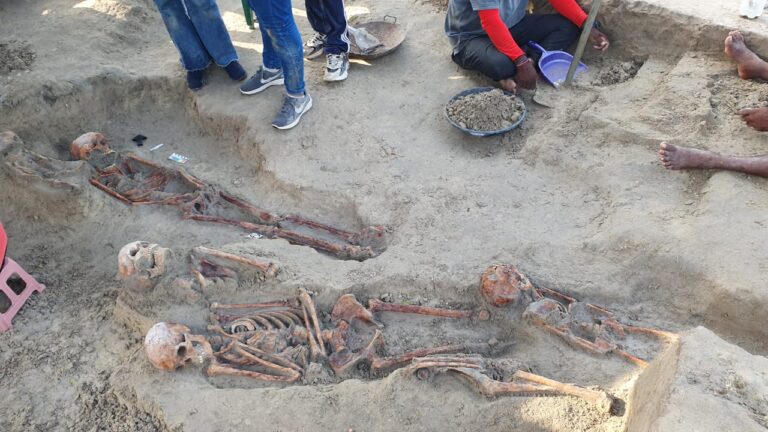
Matale mass grave – 2012 In the 1988-89 period, the JVP led an armed uprising mainly in the south of Sri Lanka, against the Indian Peace Keeping Forces and the Indo-Sri Lanka Accord. This uprising was put down with tens of thousands of Sinhala youth killed. In Matale, Central Sri Lanka, more than 450 people had disappeared. In November 2012, workers installing a biogas plant at a construction site in the Matale General Hospital found human remains that had been buried. In November 2012, the Matale Magistrate’s Court ordered the remains to be exhumed. By February 2013, 155 human skeletons were unearthed. This is the largest mass grave discovered in the South so far.67 The police claimed that these skeletons were of victims of a smallpox epidemic in the 1950s.68 Yet, the site had all the hall marks of a mass grave, with all its skeletons stacked on top of each other and laid out in rows. The JVP called for a criminal investigation and a full disclosure of its results.69
An all-out campaign was launched to undermine the investigations with many rumours such as – the remains found were skeletons of landslide victims in the forties, the malaria victims of the fifties, or a mass burial made during colonial rule in the mid-19th century – were being floated around. But based on the placement of the skeletons, the investigations concluded that it was not a regular burial site, but a mass grave. A Sri Lankan forensic archaeologist examined the site and identified physical artefacts that reliably dated the site as “not earlier than the year 1986 and not later than the year 1990”.70
The forensic expert concluded that the physical deformations found in bodies were results of neither a natural disaster nor an epidemic. The preliminary forensic reports indicated those found have been tortured and killed.71 Both professionals concluded that the remains found belonged to the period 1986-1990.72 Their reports indicated the use of fire arms and blunt instruments, iron nails being driven into skulls and signs of decapitation.73 The skulls found also did not have the rest of their skeletons. Despite the specified timeframe with physical artifacts and other evidence, the report of experts recommended testing using the Radiocarbon Bomb-pulse Method (RBM) with Beta Analytic, Inc. in the United States. As such, the court ordered the investigators to seek the assistance of overseas expertise with radiocarbon dating to have a more accurate time frame.
According to witnesses, the Gajaba Regiment of the Sri Lanka Army had maintained a torture center near the hospital, where the mass grave was found.74 Lawyers represented some families who may have had relatives murdered. The Bar Association of Sri Lanka also sought to represent all families of the disappeared.75 The Court directed the CID to place tri-lingual newspaper advertisements asking families of the disappeared in the latter part of the eighties to come forward. With Interpol assistance, DNA tests were to be carried out on the skeletal remains found.76 However, the CID ignored the court order for over six weeks without sending the skeleton samples for testing overseas.77 The CID also did not carry out the order to publish public notices in media to encourage more families of the disappeared and witnesses to come forward.78
By 2013, this investigation had become prominent and had become a serious issue for the regime of former President Mahinda Rajapaksa. The commanding officer of the Gajaba Regiment in Matale during the late eighties had been Gotabhaya Rajapaksa79, a younger brother of the former President,80 and the Defense Secretary of his regime. Witnesses gave evidence that they saw soldiers detaining children in a camp near the Matale hospital.81 Yet, the very same judicial procedure disallowed or disregarded requests for using DNA testing technology for the personal identification of victims, made by the relations of those disappeared. If DNA of victims in graves matched with those of family members alive, that would have established their personal identification and ruled in or out the specified time period of the grave.
The Judicial Medical Officer of Matale District Hospital, who was in charge of the scientific examination of the skeletons found in the Matale mass grave was transferred to another hospital with immediate effect.82 Despite the many objections by the Bar Association and other lawyers citing a magisterial inquiry was already ongoing, the former President appointed a three-member Presidential Commission of Inquiry.83 The judge of the court was promptly transferred and replaced by another judge. The new judge refused to accept additional affidavits and deferred those affidavits to the Presidential Commission of Inquiry. The Commission collected evidence from 156 witnesses84 and obtained a forensics report from a laboratory in China85 and from Beta Analytic.
Without expert supervision, the samples for DNA testing were sent to Beta Analytic. There was no document trail to ascertain that the authenticity of the test sample did come from the Matale mass grave, and there was no evidence to show that the samples were gathered following Beta Analytic’s specific guidelines. This was highly significant as tissues of different bone samples decompose at different rates, thus affecting the test results. Similar concerns were expressed on the skeletons sent to Beijing for international forensic analysis.
The lawyers that appeared for the families of the disappeared had already objected to this process. They were sceptical of the independence of such inquiries, on the basis that the facilities for such inquiries in China were not reliable and the possibility of interference into such investigations existed. Yet, the magistrate allowed the remains to be sent to the facility in China. In an apparent move to stall the magisterial inquiry, the judge who was conducting it was also transferred.86 The new Magistrate postponed hearing this case on two occasions.87 Despite the courts requiring the Interpol to assist, a report towards November 2014 by Beta Analytic, Inc88 stated that these skeletal remains belonged to the pre-1950 period.89 In interpreting the Beta Analytic test results, another specialist of the Smithsonian Institute reserved his confirmation of remains being from the pre-1950 period.90 This specialist stated that he did not oversee the sampling process and had no way of assessing the integrity of the samples sent for testing.
As the specialists had pointed out at the Presidential Commission, the samples may have been contaminated, as they had seen the excavated from a pit submerged in rainwater. The aarchaeologist disputed the findings implying that the wrong skeletal samples had been sent for testing.91 International experts experienced with the Balkans and Latin American mass graves have agreed with the archaeologist for dating the grave to the late 1980s. They also believed that the exhumed remains need further analysis. However, the Presidential Commission discounted this expert testimony. In 2015, Matale Magistrate Court transferred the case to the AG’s Department for a decision whether to close the case.
The Presidential Commission finally rejected the allegations of a mass grave. As the propaganda war intensified for the January 2015 elections, President Mahinda Rajapaksa’s government shelved the Commission’s report and phased out all mention of it from the public domain. When the government changed in 2015, the Commission reopened its report, however, upholding the 1950s hypothesis and rejecting the allegations that the mass grave was a scene of crime. The report submitted to President Maithripala Sirisena has not yet been made public. There has been no progress in the case since then.
It is worthwhile to note that in 1994, the Commission of Inquiry into the involuntary removal or disappearance of persons in the Central, North western and Uva provinces former President Chandrika Kumaratunga appointed in 1994,92 recorded complaints of more than 20,000 disappearances. It received over 15,000 submissions of which 6,443 complaints had been inquired into. In Matale alone, the complainants identified and named several officers who were responsible for the abductions and subsequent disappearances of several hundreds of people.
An army camp was identified to have coordinated such enforced disappearances. The coordinating officer who had been in charge of the camp at the time has also been publicly identified. The said coordinating officer and several other identified persons were holding high posts in the Mahinda Rajapaksa regime. The final report identified and named the persons who were responsible for the disappearances, and included names “found to be credibly implicated in involuntary removals/disappearances in these provinces.”93 Separately, a confidential list was also sent to the then President. That report lies somewhere in a drawer, but no legal action has been taken against those who have been named.
In August 2014, the UN High Commissioner for Human Rights was to visit Colombo as the first of a series of visits. A UNHRC session was due in September 2014, and a Commonwealth Heads Meeting was to follow in November. Canada had already boycotted this due to the lack of concern of the Sri Lanka regime for human rights. Obviously, the Rajapaksa regime’s human rights track record was under scrutiny. The Asian Legal Resource Centre had written to the UN Working Group on Enforced Disappearances to study the situation through their experts, conduct inquiries relating to the remains found in Matale, and assist the government to ensure that these inquiries meet international standards.94
In addition, there were appeals for Ms Navanethem Pillay, the UN High Commissioner for Human Rights to discuss cases like Matale mass graves when she met with the leaders of the previous regime. The State-run media immediately launched an unprecedented vilification campaign95 against her focusing on her Tamil ethnicity, despite her South African background with South Indian origins.96 To date, justice has not been meted out for those who had committed these gruesome atrocities and heinous murders committed in Matale.
Mannar mass grave – 2013 In December 2013, workers of the National Water Supply and Drainage Board digging trenches in Manthei, Thiruketheeswaram, Mannar discovered three human skeletons.97 After the military defeat of the LTTE in May 2009, this was the first mass grave found and forensically examined. The Mannar Police launched an investigation alongside a magisterial inquiry led by the Magistrate of Mannar. The Judicial Medical Officer, who accompanied the Magistrate to the grave site was the same JMO involved in the Chemmani investigation in 1999.98 The Magistrate ordered the investigation to proceed in two phases, firstly with the excavation, recovery of remains, preservation, transportation and safe storage for further examination and secondly with forensic anthropological and pathological examination of the remains and further investigation by the court.99
Under the instructions of the Magistrate to investigate and report on this mass grave, the excavation commenced in December 2013 and carried out in stages till March 2014. As more remains unearthed in the mass grave, the Tamil National Alliance called for an international probe into this mass grave. The top layer of the skeletons had already been damaged due to the construction work and some had been fragmented by earth-moving machinery.100 In January 2014, The JMO stated that no signs of clothing or human-made artifacts had been found in the grave. He had packed more than 80 boxes of skeletonized remains for preservation, labeled and sealed them, and transported them under court order to the medico-legal morgue of the Teaching Hospital in Anuradhapura for storage and further examination.
According to the state sources, this site had been used for mass burial of civilians and soldiers killed by the LTTE during the war. Mannar and most of the northern part of Sri Lanka were under the LTTE control for about 30 years, until they were militarily defeated in May 2009. Yet, according to the LTTE sources, the skeletons found were of those disappeared under the occupation of the army. This area had been a High Security Zone since early nineties. Further excavations later led to unearthing of at least 81 more remains. In April 2014, the Director General of the Department of Archaeology stated that this was a normal cemetery,101 used since 1930s and not a mass grave. With that the excavations came to an end.
Nevertheless, the absence of clothes or human-made artefacts at the burial site suggested that “the bodies were not disposed of as a part of conventional funerals”.102 Apparently, some of the skeletal remains had bullet holes, while some others were found to have their hands bound behind. Gunshot injuries were allegedly discovered on the bodies. The TNA demanded an independent international investigation pointing to the risk of evidence being tampered with or destroyed completely.103 Families of the disappeared continued to demand further excavation of the mass grave. The courts approved the request for further excavation. The courts also ordered an affidavit from the Chairperson of the Mannar Pradeshiya Sabha, who stated that there were no records of a cemetery in the area.104
The Magistrate had ordered 88 skeletons found to be sent abroad for DNA tests. Permission had been granted to send the skeletons to either Yugoslavia, Argentina or Guatemala for this. However, the Judicial Medical Officer, who conducted the initial examinations objected saying this was not necessary. According to him, the age, time, gender and the cause of death can be determined at a local laboratory.105 The CID reported to the courts that there had been a cemetery at the particular location in the past. However, several volunteer organizations objected claiming that a large number of people had disappeared in the area during the war, and the CID report was false.106
In 2015, yet another suspected mass grave was found not far away from the original mass grave in Thiruketheeswaram. The Mannar Magistrate ordered its excavation. With regime change in 2015, the CID was ordered to conduct fresh investigations into both graves. The excavation was to commence in October 2015 with Forensic Medicine, Archaeology, and Survey Departments participating. This did not occur. In February 2016, excavation started again, but could not complete it as the well began to submerge. The court ordered to divert water from the well and recommence excavation in April 2016. As the Judicial Medical Officer was not available (yet again), the court ordered postponing the excavation. In August 2016, the excavation continued and two more skeletal remains were found. However, by then only a small part of the 37 feet deep well had been dug.
The investigation into the Mannar mass grave raised several concerns:
Prior to a forensic archaeologist/ anthropologist dating the grave, a geologist and atomics expert had submitted reports, which was apparently unusual; despite the Magistrate’s orders, the Department of Archaeology had not been asked to date the grave.107 So, the Mannar mass grave has not been dated, but it appears related to the period of the three-decade long armed conflict;
Despite the statement of Director General of Department of Archaeology that the gravesite is an “ancient cemetery” that existed between 1940 and 1953108 and that the bodies had been “buried systematically”, neither the 1954, 1955, and 1961 official survey plans of the village indicate the existence of any cemetery109 nor do longtime residents of the area recall such a cemetery. The Chairperson of Mannar Pradeshiya Sabha also submitted a letter to the Magistrate Court, confirming that there were no local government records of a cemetery in that area, which he had later confirmed when CID questioned him on this matter. A Magistrate had noted in his order that according to Hindu custom, a cemetery or burial ground would not have been built so close to the Thiruketheeswaram temple and that due to the age of the temple and the condition of the bones, the cemetery cannot be considered to predate the temple;110
The CID’s apparent disinterest, wanton delays and stalling attempts in locating and excavating an adjacent sealed well, even when in October 2014, the Magistrate ordered it to be excavated. In August 2015, the judge refused to accept the CID’s request to extend time, and the Survey Department located the sealed well. However, the excavation that was due to commence in February 2016, has not occurred yet;
The Director General of Department of Archaeology has proposed developing a standard operating procedure to investigate mass graves throughout Sri Lanka. However, a lack of transparency on the proposed procedures and refusal to learn from the past mistakes would not see this proposal in a favourable light; and
96 skeletal remains that were discovered had been kept at Anuradhapura Teaching Hospital awaiting DNA testing.
Due to concerns of sample contamination, lawyers for Center for Human Rights and Development (CHRD) asked the court to have an international team based in Sri Lanka to work with local experts to oversee aspects of excavation, sample collection, preparation, preservation, transmission, and testing. In October 2015, the magistrate prohibited the removal of remains kept in Anuradhapura Teaching Hospital without a court order. In December 2015, the CID agreed to send the samples to the Argentine, Peruvian, or Guatemalan forensic anthropology teams. However, the CID displayed their lack of specific knowledge in handling sample remains to be collected and sent for testing. The CID and other state stakeholders also do not welcome international assistance. After a long delay, the CID had contacted the Guatemalan forensic anthropology team, but not others.111
Kaluwanchikudy mass grave – 2014 In 2014, a young Muslim from the Batticaloa District112 complained to Kaluwanchikudi Police Station that his father had been killed and buried in a mass grave. He apparently petitioned the Kaluwanchikudy court to grant an order for the exhumation of a suspected mass burial site containing remains of more than 100 Muslim people the LTTE had allegedly killed in Kaththankudi in August 1990 and later buried in Kaluwanchikudy. He testified before the Lessons Learnt and Reconciliation Commission (LLRC) and the Presidential Commission on Disappearances. Local Muslims testified before the Presidential Commission that they could identify the location where the LTTE killed 167 Muslims in July 1990. According to reports, this mass grave was seemingly implicating the LTTE, and the State commenced investigating this site more expeditiously than the mass grave sites in Mannar and Matale.113
In July 2014, the Police recorded statements of relatives reported missing during that time114, which were to be used to help identify the remains when the grave is to be excavated when a court order is granted. However, the excavation was postponed till August, and then again till November due to the difficulties in getting down the forensic experts such as the Chief Judicial Medical Officer and the Government Analyst from Colombo to the grave site.
The Police stated that human remains will not be identifiable and as such, statements relatives had made for identifying the remains. Since then, investigations and exhumations have stalled. This was apparently due to the fact that the state came to the realization that the continuation of investigations on this mass grave might implicate Vinayagamoorthy Muralitharan (Colonel Karuna), who had switched sides from the LTTE to join the Mahinda Rajapaksa regime in 2008.
Conclusion Many investigations into mass killings had commenced in the past, but almost all of them have stalled. Killings and disappearances in the name of national security and patriotism have become the norm and part of the non-disclosed statistics. The common thread one could find among all this is the belief of the State that if it can deflect and ignore the obvious, the secrets of criminality will be buried and everything will be forgotten with time.
From the above narrative of exhumations and investigations into mass graves, it would appear that all parties to conflicts in Sri Lanka, the security forces, the paramilitary forces that supported them and the militants who fought against the state are culpable for many hundreds of disappearances over the years. Since the time of the military defeat of the LTTE in 2009, mass killings have stopped. Yet, this was also the case after the mid-1971 and 1987-89 uprisings in the South. In the societies the State is said to have “liberated” politically, ethnically or religiously, the practice of demonising the losing side continued and as a result many hostile cinders appear to remain dormant. Such cinders could ferment conflicts leading to future civil wars if their root causes are not dealt with.115
There are three important conclusions that could be made from the above analysis. First, despite the significant international focus on Sri Lanka including that of the United Nations Human Rights Council and its High Commissioner, all mass grave investigations have remained stagnated. The relatives of the victims of enforced disappearance are no closer to the truth and remain in the dark as to what happened to their loved ones. They still have to rely on the government in their long search for truth and justice!
Second, the unwillingness of the State to admit responsibility and be accountable to the society for the past suffering, injustice and conflict, and move towards a future based on recognition of human rights, justice, equity, inclusiveness and democracy for all peoples. This is because the state and those opposed the state are incapable of admitting guilt that underpin the mass killings and mass graves, as enforced disappearances became a cornerstone of the military policy of the State. Third, the procedural blockages that had arisen due to the lack of both independent professional expertise, and clear domestic legislation, regulations and guidelines in dealing with excavations and investigations associated with mass graves. There had been no scientific guidelines provided during the early stages of exhumations and investigations. Untrained manual labour and tools such as pickaxes and bulldozers were used for excavations. The methods employed more often destroyed the human and other remains that needed to be preserved for scientific investigation.
The incoherent investigations processes were left to the discretion of individual magistrates following normal criminal procedures, allowing the CID and AG’s Department to lead investigations. The experts they have retained do not appear to have specific expertise on matters such as international law, forensic anthropology, forensic archaeology, and forensic pathology. As the mass graves are directly associated with enforced disappearances implicating the state and the government, the wisdom of leaving the investigation in the hands of the State is highly questionable. Political interference in the investigations both at the legal and forensic level were pretty evident. As discussed earlier – transfer of judges and medical officers, appointing Presidential Commissions terminating judicial investigations, branding mass graves as cemeteries even when the skeletal remains pointed to torture, unnecessary but wanton delays, allowing human remains to be contaminated, not adhering to court orders to place tri-lingual notices, lack of transparency and documentary trails related to handling of samples and non-disclosure and even lack of foreign forensic expert reports on sample remains sent overseas – are direct pointers to such political interference.
The individuals and institutions who have placed obstacles in the path of exposing the truth are mainly those who are implicated in such mass atrocities. It is for this reason that we need to pursue a cohesive, centralised and credible independent accountability mechanism at least with international judicial, forensic and other relevant expertise participating in it. With some urgency, the State needs to employ internationally accepted best practices to investigate all mass graves found in Sri Lanka. The Office on Missing Persons should promptly take the responsibility to identify appropriate mechanisms for tracing the missing persons as mandated by the Act and ‘identify avenues of redress to which missing persons and relatives of missing persons are entitled’.
The non-application of the international humanitarian law in relation to the mass atrocities in Sri Lanka may indicate a deliberate attempt to suppress the exposure of the truth, thus stifling justice to the victims and their relatives. The lack of interest on the part of government and State to learn from past mistakes points to the absence of political will and commitment to establishing the truth for the sake of national unity and reconciliation. Establishing truth based on solid facts can challenge the divisive nature of the historical violence and lead to better understanding among communities, fostering fairness and equity.
1 Second only to post-war Iraq: See U.N. Human Rights Council 28 January 2013, Report of the Working Group on Enforced or Involuntary Disappearances, Doc No. A/HRC/22/45, 17-18. 2 In 2015, the U.N. OHCHR Investigation on Sri Lanka (OISL) concluded that government security forces and associated paramilitary groups committed unlawful killings, enforced disappearances, arbitrary detentions, sexual violence, and torture on a systematic and widespread scale. See Report of the OHCHR Investigation on Sri Lanka (OISL), U.N. Doc. No. A_HRC_30_CRP_2 (Sept. 16, 2015) ^ 1116, 1117, 1119, 1120-1123,1127, 1128, 1129-1130, 1131-1135, 1172-1174. The OISL also concluded that the LTTE was involved in unlawful killings of civilians, abductions and forced recruitment, child conscription, and interference with civilians’ freedom of movement. Id. ^ 1118, 1136, 1139, 1140, 1141, 1161. 3 See Presidential Commission of Inquiry on Missing Persons, at: http://www.pcicmp.lk/
4 Amnesty International June 2009, Twenty Years of Make-Believe: Sri Lanka’s Commissions of Inquiry, Index ASA 37/005/2009, at: http://www.observatori.org/paises/pais_75/documentos/srilanka.pdf 5 Ibid, 60 6 UNHC for Human Rights 16 September 2015, Report on Promoting Reconciliation, Accountability and Human Rights in Sri Lanka, U.N. Doc. No. A/HRC/30/61, 72-73 7 UNHR: Office of the High Commissioner 15 September 2017, Darker and more dangerous: High Commissioner updates the Human Rights Council on human rights issues in 40 countries, at: http://www.ohchr.org/EN/NewsEvents/Pages/Media.aspx?IsMediaPage=true 8 Amnesty International 3 April 2017, Sri Lanka – Victims of disappearance cannot wait any longer for justice, at: https://www.amnesty.org/en/latest/news/2017/04/sri-lanka-victims-of-disappearance-cannot-wait-any-longer-for-justice/; and Groundviews 30 August 2017, “We vehemently refuse to be deceived again”: Protests by families of disappeared, continuing abductions and empty promises, and at: http://groundviews.org/2017/08/30/we-vehemently-refuse-to-be-deceived-again-protests-by-families-of-disappeared-continuing-abductions-and- empty-promises/ 9 Colls C S 2016, The investigation of historic missing persons cases genocide and ‘conflict time’ human rights abuses, In 2016, Handbook of Missing Persons, New York 10 Baraybar J P and Blackwell R 2014, Where are They? Missing, In Forensics, and Memory, Annals of Anthropological Practice 38:1, 28 11 AHRC Feb.- Apr. 2014, In Torture: Asian and Global Perspectives, Exclusive: The Island of Mass Graves, 49. 12 Human Rights Watch March 2008, Recurring Nightmare: State Responsibility for “Disappearances” and Abductions in Sri Lanka, 19, at: http://www.hrw.org/reports/2008/srilanka0308/srilanka0308web.pdf 13 Lynch C 2004, Economic Liberalization, Nationalism, and Women’s Morality, in Winslow D, Woost M D eds., 2004, Economy, Culture, and Civil War in Sri Lanka 168, 188, describing consensus that while both government forces and the JVP committed atrocities during 1980s counterinsurgency efforts, government forces committed the bulk: “Amnesty International (1990) quotes some observers who hold the government responsible for 30,000 and quotes the government holding the JVP responsible for 6,517. Chandraprema (1991) breaks it down as 23,000 killed by the government and 17,000 by the JVP.” 14 For a blog containing pictures of corpses, posters, and threats and summarizes key scholarly works on this period, see “Search, Interrogate and Destroy” – Hard COIN for Hard Times (Feb. 26, 2013), at: https://thecarthaginiansolution.wordpress.com/2013/02/26/search-interrogate-and- destroy-hard-coin-for-hard-times/ 15 Yogasundram N 2006, A Comprehensive History of Sri Lanka: From Prehistory to Tsunami, 313, Vijitha Yapa Publications 16 Kingsbury D 2012, Sri Lanka and the Responsibility to Protect: Politics, ethnicity and genocide, 70, Routledge 17 The immunity given to the security forces has been a persistent problem in addressing the issue of disappearances; under the Emergency Regulations and the PTA the security forces enjoy immunity for holding detainees for prolonged periods of time without explanation. For example, Section 26 of the Indemnity Act provides for immunity from prosecution or other proceedings, civil or criminal: any officer or person for any act or thing in good faith done or purported to be done in pursuance or supposed pursuance of any order made or direction given under this Act. 18 Wikipedia 2017, Sooriyakanda mass grave, at: https://en.wikipedia.org/wiki/Sooriyakanda_mass_grave 19 Those massacred included 38 from Sathurukondan, 37 from Panichchaiyady, 62 from Pillaiyaradi and 47 from Kokuvil. 20 Gunaratna R. 1990. Sri Lanka, a lost revolution? The inside story of the JVP. Published by the Institute of Fundamental Studies, Sri Lanka 21 Sri Lanka Human Rights Practices 1994, at: http://dosfan.lib.uic.edu/ERC/democracy/1994_hrp_report/94hrp_report_sasia/SriLanka.html 22 Archived U.S. State Department Human Rights Reports, at: http://dosfan.lib.uic.edu/ERC/democracy.html (1993-1998) and http://www.state.gov/j/drl/rls/hrrpt/ (1999-2013). 23 BBC News 6 March 2005, New panel to probe Mirusuvil massacre, at: http://www.bbc.com/sinhala/news/story/2005/03/050306_mirusuvil.shtml 24 Canadian Humanitarian Appeal for Relief of Tamils 2009, Plight of the People, at: https://issuu.com/canadianhart/docs/plight_of_the_people 25 Obeysekera G. 24 June 1990, The Long March to Kiran Victory, Weekend, 4-5. In Wickremesekera, C 2016, The Tamil Separatist War in Sri Lanka, 71, Routledge. 26 Sinhalanet 8 July 2014, Mass Grave of Muslims Found, at: http://www.sinhalanet.net/mass-grave-of-muslims-found 27 Z News 24 June 2014, Sri Lanka to dig up eastern mass grave site, at: http://zeenews.india.com/news/world/sri-lanka-to-dig-up-eastern-mass- grave-site_942293.html?pfrom=article-next-story 28 Anstett E and Dreyfus J 2015, Human remains and identification: Mass violence, genocide, and the ‘forensic turn’, 145, Manchester University Press. 29 Haglund, W D and Sorg, M H 2002, Advances in Forensic Taphonomy: Method, Theory, and Archaeological Perspectives, 244, CRC Press 30 Skinner, M 1987, Planning the Archaeological Recovery of Evidence from Mass Graves. Forensic Science International, 34, 267-287. 31 Thieren M and Guitteau R 2000, Identifying cadavers following disasters: why, at: http://apps.who.int/disasters/repo/6077.html 32 The Wire 14 June 2016, Sri Lanka’s 65,000 Disappeared: Will the Latest Missing Persons’ Office Bring Answers? at: https://thewire.in/42687/sri- lankas-disappeared-will-the-latest-missing-persons-office-bring-answers/; and The New York Times 26 January 2017, ‘Give Us Our Children Back’: Hunger Strikers in Sri Lanka Demand Answers, at: https://www.nytimes.com/2017/01/26/world/asia/sri-lanka-hunger-strike- missing.html?mcubz=1 33 Both by the state and those who opposed the state 34 State security forces and para militaries carried out the most of such violations under the Emergency Regulations, Prevention of Terrorism Act and the Indemnity Act utilising the impunity and safeguards provided to them. 35 Maybury-Lewis D. 2002. Indigenous peoples, ethnic groups, and the state, Allyn and Bacon, Boston, at: http://wps.prenhall.com/wps/media/objects/12330/12626747/myanthropologylibrary/PDF/CSS_5_Maybury_Lewis_5.pdf 36 Lemkin, R 2008. Axis Rule in Occupied Europe. The Lawbook Exchange 37 For example, the latest alleged crimes against humanity are supported by the satellite images that recorded systematic torching of entire Rohingya villages in the Rakhine state in Myanmar. See Sydney Moring Herald 15 September 2017, Systematic torching of entire Rohingya villages a ‘crime against humanity’, at: http://www.smh.com.au/world/systematic-torching-of-entire-rohingya-villages-a-crime-against-humanity-20170914- gyhwx7.html 38 Thomas R 2012, Top 10 Mass Graves, at: http://listverse.com/2012/06/15/top-10-mass-graves/ 39 20,000 mass graves under the Khmer Rouge regime containing at least 1.38 million bodies of intellectuals, professionals, many ethnic/religious groups and anyone suspected with links to the former regime. 40 About 700,000 bodies in mass graves, scattered all over the former Soviet Union executed by the secret police. 41 So far, 57 mass graves, possibly with thousands of bodies, found including 5,000 civilians disappeared during the 2nd Chechen War in 1999. The largest mass grave is in Grozny with 800 bodies from the 1st Chechen War. 42 40 confirmed mass graves of reported 250 sites and a million missing Iraqis. 43 Outside the city of Vukovar, the 264 mostly Croatian victims, largely civilians and hospital patients killed by Serbians. Seven have been charged by the International Criminal Tribunal for the Former Yugoslavia. 44 Tens of thousands missing, believed to be in mass graves all over the island, or dumped in rivers to be flown by water to the seas. In many cases, proper forensic methods seem to have not been used in the bodies found. Necessary evidence could also have been destroyed. 45 A total of 58 people, including at least 37 journalists killed. A helicopter found bodies while being buried. 46 Tenant, J .E., 1860, Ceylon: An Account of the Island, 1, 547-548, Longman, Green, Longman, and Roberts. Quoted in Lim, D., Spaulding, S., and De Neui, P. H. 2005. Sharing Jesus Effectively in the Buddhist World, 98, William Carey Library 47 Malalasekera G P 1938, The Pali Literature in Ceylon, PhD Dissertation, in Tennakoon Vimalananda, xxvi 48 This has been the global practice of colonialism, despite the existence of Conventions on human rights: For example, the massacre of unarmed demonstrators in Amritsar in 1919, the killing of political opponents in Kenya in the fifties and the killing unarmed protestors in Northern Ireland in the seventies. 49 Such as the Declaration on the Protection of All Persons from Torture and Other Cruel, Inhuman or Degrading Treatment or Punishment and the Declaration against Torture. 50 The JVP – the People’s Liberation Front, a revolutionary Marxist movement formed in the mid-sixties. 51 For example, see Dayan Jayatilleka theorizing a morally justifiable violence, particularly in 2009, during the last phase of the war, and his defence of alleged executions, targeting non-combatants and physical torture. 52 The Emergency Regulations have facilitated the disappearances of tens of thousands of persons held in the custody of the security forces. Through these regulations, all restraints on law enforcement officers have been removed, and the power to dispose of dead bodies is given to the concerned officers. Judicial supervision is suspended. There are no provisions even to keep records of the disposed bodies. Additional ERs, passed in 2000, granted “any authorized person”, in addition to the security forces, the right to arrest and detain any person engaged in activities considered to be a threat to national security, public order and maintenance of essential services. 53 Roar Reports 7 June 2017, Bodies Beneath: Accidentally Discovered Mass Graves In Sri Lanka, at: https://roar.media/english/reports/history/bodies-beneath-accidentally-discovered-mass-graves-in-sri-lanka/ 54 Daily Mirror 15 May 2017, Human skeletal remains recovered at a Colombo construction site, at: http://www.dailymirror.lk/article/Human- skeletal-remains-recovered-at-a-Colombo-construction-site-128835.html 55 The PTA, a draconian legislation, overrules most of the guarantees provided by the Constitution against disappearances. For instance, Section 6 allows the Police to arrest, search a person or premises and to seize any document or item without warrant, and allows the police to detain a person for three days without judicial supervision if there is a reasonable suspicion that the person is connected with any unlawful activity. Section 9 empowers any Minister of the government to order the detention of a person for up to eighteen months without judicial supervision, where the Minister ‘has reason to believe or suspect that any person is connected with or concerned in any unlawful activity’. 56 World Socialist Web Site 26 June 1999, Eyewitness account from Sri Lanka: Tamil mass graves excavated in Chemmani, at: https://www.wsws.org/en/articles/1999/06/sri-j26.html 57 Lance Corporal Somaratne Rajapaksa stated that he did not kill or rape anyone, but simply followed the orders of the hierarchy and burnt or buried dead bodies. In the process, he had kept some jewellery found on those bodies. He revealed that rapes and killings were carried out by Captain C J T K Lalith Hewa (61834), who was the Officer in Charge of the Army camp in Araali, Captain T D Sasika Perera (62188), Captain Sachindra Wijesiriwardana (62421) and Lieutenant A Yatagama (63088). As they were found to have committed the crimes, Somaratne was made a State Witness of the case (No. H C B A 29/2000) filed against them. Based on his evidence and the Police “B” Report (B 28/99), the four suspects were remanded in custody on 13 March 2000 with their passports seized. 58 Amnesty International 22 June 1999, Sri Lanka: Chemmani exhumations — positive first steps towards truth and justice, 121/99 AI Index: ASA 37/17/99, at: https://www.amnesty.org/download/Documents/144000/asa370171999en.pdf 59 Asian Human Rights Commission 24 August 1998, Sri Lanka: Allegation of Mass Grave of About 400 Bodies – No Investigations, AHRC SL/UA980825, at: http://www.humanrights.asia/news/urgent-appeals/UA980825/?searchterm=1998%20Sri%20Lanka 60 The New York Times, 4 April, 1998, see how the Serbians destroyed much of the evidence of the slaughter at Srebrenica. 61 TamilNet 15 July 1999, Jaffna Magistrate urges early exhumation, at: http://www.tamilnet.com/art.html?catid=13&artid=3586 62 Mohan Peiris rose through the ranks of the Attorney General’s Department as a state counsel and a Senior State Counsel. In 2008, he was appointed Attorney General. He was appointed Senior Legal Officer to the Cabinet of the previous regime. Following the impeachment of the former Chief Justice Dr Shirani Bandaranayake, President Mahinda Rajapaksa nominated him as Chief Justice. The UN High Commissioner for Human Rights doubted his independence and impartiality, particularly when dealing with allegations of serious human rights violations by the government. The International Commission of Jurists condemned his appointment as a further assault on the independence of the judiciary. However, in 2015, with the acknowledgement that his appointment was void, Dr. Shirani Bandaranayake resumed duties as the Chief Justice. Mohan Peiris arranged to withdraw murder charges against a former deputy minister and a rape case against a government parliamentarian. He concurred at a local court that he lied at the UN Committee Against Torture in 2011 saying that the government had received information that the missing journalist Prageeth Ekneligoda was living overseas. According to the current President, Mohan Peiris visited him several times to persuade not to remove Mohan from the position of Chief Justice, promising to deliver judgements according to the President’s wishes. 63 Mohan Pieris arranged to provide private legal advice to all suspects of the Chemmani case. All of them were released on bail on 6 July 2000. How this happened, while Mohan Pieris being promoted in rank remains a secret. Their passports were also returned, and large sums of money has allegedly exchanged hands. The four suspects, who are said to have been ‘obedient servants’ of the former Defence Secretary, have worked hard after their release to bring back the incumbent Mahinda Rajapaksa as President. 64 University Teachers for Human Rights (Jaffna) 1999, Gaps in the Krishanthi Kumaraswamy Case: Disappearances and Accountability, Special Report, at: http://www.uthr.org/SpecialReports/spreport12.htm 65 Ibid, 48 66 Agence-France Presse, 23 August 1998, When prisoners were executed in Welikada Prison in November 2012, Somaratne Rajapaksa was said to be a prime target, but somehow escaped. 67 Sri Lanka Brief 23 February 2013, Written Statement to UNHRC: Sri Lanka: The need for the preservation and proper inquiries into the remains of about 200 bodies found in the mass grave at Matale, at http://srilankabrief.org/2013/02/written-statement-to-unhrc-sri-lanka-the-need-for-the- preservation-and-proper-inquiries-into-the-remains-of-about-200-bodies-found-in-the-mass-grave-at-matale/ 68 Adaderana 18 November 2014, Matale mass grave: skeletons belong to early 1950s, at: http://www.adaderana.lk/news/matale-mass-grave- skeletons-belong-to-early-1950s 69 Sri Lanka Brief 10 April 2013, Matale mass grave: No ‘humbug’ commissions, what is needed is a special court – JVP, at: http://srilankabrief.org/2013/04/matale-mass-grave-no-humbug-commissions-what-is-needed-is-a-special-court-jvp/, and at: http://www.island.lk/index.php?page_cat=article-details&page=article-details&code_title=71981 70 Human Skeletal Remains found at the District General Hospital Premises in Matale: The Report on Forensic Archaeology (2013), at 47, and Sri Lanka Brief 28 March 2013, Sri Lanka mass grave from Marxist uprising (1988 -1990) era: expert, at: http://srilankabrief.org/2013/03/sri-lanka- mass-grave-from-marxist-uprising-1988-1990-era-expert/ 71 Sri Lanka Brief 31 March 2013, Matale Mass Grave: Gory details of torture; nails inserted into the fingers, at: http://srilankabrief.org/2013/03/matale-mass-grave-gory-details-of-torture-nails-inserted-into-the-fingers/ For example, signs of torture on several skeletons included iron nails through the phalanges (fingers) of one skeleton with one leg bone tied with a carefully knotted metal wire. A third skeleton showed signs of “conscious” cutting of the skull with a “sharp tool.” 72 BBC News 28 March 2013, Sri Lanka Matale mass grave ‘dates from late 1980s’, at: http://www.bbc.com/news/world-asia-21964586 73 Sri Lanka Mirror 27 May 2014, Iron nails driven into Matale skulls, at: http://archive.srilankamirror.com/news/15150-iron-nails-driven-into- matale-skulls 74 Sri Lanka Brief 30 March 2013, Military torture chamber near Matale mass grave, at: http://srilankabrief.org/2013/03/military-torture-chamber- near-matale-mass-grave/ 75 Sri Lanka Brief 8 May 2013, Magistrates Court accepts 13 petitions for Matale mass grave, at: http://srilankabrief.org/2013/05/magistrates-court- accepts-13-petitions-for-matale-mass-grave/ 76 Sri Lanka Brief 22 June 2013, President appoint a Commission on Matale grave, at: http://srilankabrief.org/2013/06/president-appoint-a- commission-on-matale-grave/ 77 Sri Lanka Brief 22 July 2013, CID ignores Court order on Matale Mass Grave, at: http://srilankabrief.org/2013/07/cid-ignores-court-order-on- matale-mass-grave/ 78 Sri Lanka Brief 10 June 2013, Matale mass grave: CID ignores Court order, at: http://srilankabrief.org/2013/06/matale-mass-grave-cid-ignores- court-order/ 79 Mahinda Rajapaksa as MP headed the Parliamentary human rights committee. In May 1989, he had been promoted and posted to Matale as the district coordinating officer until the JVP uprising was put down at the end of 1989. He left the country for USA in January 1990, after crushing the insurgency. Incidentally, the very same Gotabhaya Rajapaksa held overall command responsibility during the handling of the last stage of the civil war. 80 In 1990, when he was apprehended with 500 photographs of missing persons while on his way to Geneva for a UNHRC special session on human rights abuses in Sri Lanka, he defiantly said, “Tears of innocent grieving mothers compel us to tell their story of pain and sorrow to the world. We will do it today, tomorrow and always. Remember that.” He proved himself to be not of that character by committing much worse abuses when he served as President. 81 Despite many being frightened to talk about disappearances under the Mahinda Rajapaksa regime. 82 Sri Lanka Brief 20 May 2013, JMO in charge of Matale mass grave also to be transferred, at: http://srilankabrief.org/2013/05/jmo-in-charge-of- matale-mass-grave-also-to-be-transferred/ 83 The Commission comprised of retired Supreme Court Judge Justice S.I. Imam, ex- Parliament Secretary General Dhammika Kithulgoda and retired High Court Judge Bandula Atapattu, at: http://www.dailymirror.lk/article/presidential-commfor-matale-mass-grave-issue-31248.html 84 Sunday Times 15 February 2015, Matale mass graves report to be exhumed for President Sirisena, at: http://www.sundaytimes.lk/150215/news/matale-mass-graves-report-to-be-exhumed-for-president-sirisena-135948.html 85 Sri Lanka Brief 8 October 2013, Matale Mass grave findings to China for Carbon dating, at: http://srilankabrief.org/2013/10/matale-mass-grave- findings-to-china-for-carbon-dating/ 86 Mr Chandrapala Kumarage, then Chair of the Human Rights Committee of the Bar Association of Sri Lanka (BASL) said that the government was trying to cover it up. In an unprecedented move, he intervened to protect and restore human rights as it was necessary to do so in the public interest. 87 Sri Lanka Brief 9 September 2013, Matale Mass Grave: JVP disappointed over delay, at: http://srilankabrief.org/2013/09/matale-mass-grave-jvp- disappointed-over-delay/ 88 Report on Radiocarbon Analysis of Samples, Matale Case No. B.1810/12, Sri Lanka, Douglas H. Ubelaker, PhD Smithsonian Institution Washington, D.C. USA 30 October 2014, at: http://www.dailymirror.lk/76921/contradictory-reports-on-matale-mass-grave-site 89 Ada Derana 18 November 2014, Matale mass grave: skeletons belong to early 1950s, at: http://www.adaderana.lk/news/matale-mass-grave- skeletons-belong-to-early-1950s 90 Ratnawalli, D. 21 December 2014, Matale Mass Grave: Skeletons in Closets as Well? at: http://www.colombotelegraph.com/index.php/matale- mass-grave-skeletons-in-closets-as-well/ 91 Sri Lanka Brief 15 May 2015, Matale Commission Conclusions, an Insult to Professional Experts, at: http://srilankabrief.org/2015/05/matale- commission-conclusions-an-insult-to-professional-experts/ 92 Sri Lanka Brief 30 June 2013, Presidential Commission of Inquiry to begin sittings within next fortnight, at: http://srilankabrief.org/2013/06/presidential-commission-of-inquiry-to-begin-sittings-within-next-fortnight/ 93 Sunday Times 30 June 2013, Presidential Commission of Inquiry to begin sittings within next fortnight, at: http://www.sundaytimes.lk/130630/news/presidential-commission-of-inquiry-to-begin-sittings-within-next-fortnight-50836.html 94 Asian Legal Resource Centre 20 February 2013, SRI LANKA: The need for the preservation and proper inquiries into the remains of about 200 bodies found in the mass grave at Matale, at: http://alrc.asia/sri-lanka-the-need-for-the-preservation-and-proper-inquiries-into-the-remains-of- about-200-bodies-found-in-the-mass-grave-at-matale/ 95 Sri Lanka Brief 22 June 2013, President appoint a Commission on Matale grave, at: http://srilankabrief.org/2013/06/president-appoint-a- commission-on-matale-grave/ 96 Sri Lanka Brief, 15 August 2014, Sri Lanka accuses UN human rights chief Navi Pillay of prejudice in war crimes probe, at: http://www.abc.net.au/news/2014-08-15/sri-lanka-accuses-un-human-rights-chief-of-prejudice/5672268 97 YouTube 28 August 2015, Mannar Thiruketheeswaram human grave identified 1 to 5 (in parts), at: https://www.youtube.com/watch?v=I7hjmDQYVNo 98 Bala M 2015, Transitional Justice and the Right to Know: Investigating Sri Lanka’s Mass Graves; at: http://www.academia.edu/33043502/Transitional_Justice_and_the_Right_to_Know_Investigating_Sri_Lankas_Mass_Graves.pdf 99 Waidyaratne Dr D.L. 23 October 2014, Report on the Excavation of the Suspected Mass Grave in Manthei, Mannar, Case No. B 768/2013 100 Colombo Telegraph 19 January 2014, Mannar Mass Grave Reveals More Skeletons, at: https://www.colombotelegraph.com/index.php/mannar- mass-grave-reveals-more-skeletons/ 101 Daily Mirror 7 April 2014, Mannar mass grave an ordinary cemetery: DG, at: http://www.dailymirror.lk/article/mannar-mass-grave-an-ordinary- cemetery-dg-45632.html 102 Roar Reports 7 June 2017, Bodies Beneath: Accidentally Discovered Mass Graves In Sri Lanka, at: https://roar.media/english/reports/history/bodies-beneath-accidentally-discovered-mass-graves-in-sri-lanka/ 103 Sri Lanka Brief 9 August 2016, International Forensic Analysts Essential in Mannar Investigation – Selvam Adaikkalanathan, at: http://srilankachrd.org/assets/book-a.pdf http://srilankabrief.org/2016/08/international-forensic-analysts-essential-in-mannar-investigation-selvam- adaikkalanathan/ 104 Centre for Human Rights and Development 2015, Enforced Disappearance in Sri Lanka: Lessons from CHRD’s Advocacy, 40, at: http://srilankachrd.org/assets/book-a.pdf 105 Daily News 14 December 2015, Mannar skeletal remains to be sent abroad for DNA tests, at: https://www.dailynews.lk/?q=2015/12/14/security/mannar-skeletal-remains-be-sent-abroad-dna-tests&qt-popular_articles=0 106 Ibid. 107 Nawaratne S W 18 June 2015, Test Report on Case No. B 768/2013, Department of Geology, University of Peradeniya; cited in Bala M 2015, Transitional Justice and the Right to Know: Investigating Sri Lanka’s Mass Graves; at: http://www.academia.edu/33043502/Transitional_Justice_and_the_Right_to_Know_Investigating_Sri_Lankas_Mass_Graves.pdf 108 Perera C and Kathiragamathamby S 10 March 2014, Mass Grave? No, Graveyard – Archaeologists, In Daily News, at: http://www.dailynews.lk/local/mass-grave-no-graveyard-archaeologists 109 Groundviews 12 March 2014, From mass grave to cemetery: Questioning the claims in Mannar; at: http://groundviews.org/2014/03/12/from- mass-grave-to-cemetery-questioning-the-claims-in-mannar/ (with survey plans enclosed). Plans record the area as featuring “high jungle and a masonry well.” 110 Rajah A Magistrate 7 August 2015 in his order. 111 Bala M 2015, Transitional Justice and the Right to Know: Investigating Sri Lanka’s Mass Graves; at: http://www.academia.edu/33043502/Transitional_Justice_and_the_Right_to_Know_Investigating_Sri_Lankas_Mass_Graves.pdf 112 Daily FT 28 June 2014, Kattankudy mass grave investigations to start from 1 July, at: http://www.ft.lk/article/314580/Kattankudy-mass-grave- investigations-to-start-from-1-July. 113 Bala M 2015, Transitional Justice and the Right to Know: Investigating Sri Lanka’s Mass Graves, 7, at: http://www.academia.edu/33043502/Transitional_Justice_and_the_Right_to_Know_Investigating_Sri_Lankas_Mass_Graves.pdf 114 The Sunday Leader 13 July 2014, Police Record Statements About Mass Grave, at: http://www.thesundayleader.lk/2014/07/13/police-record- statements-about-mass-grave/; and Pakistan Defence 20 August 2014, Excavations of Muslim mass grave site in eastern Sri Lanka postponed again, at: https://defence.pk/pdf/threads/excavations-of-muslim-mass-grave-site-in-eastern-sri-lanka-postponed-again.329883/ 115 Adam H and Moodley K 2014, Imagined Liberation: Xenophobia, Citizenship and Identity in South Africa, Sun Press, 14