Home Blog Page 522

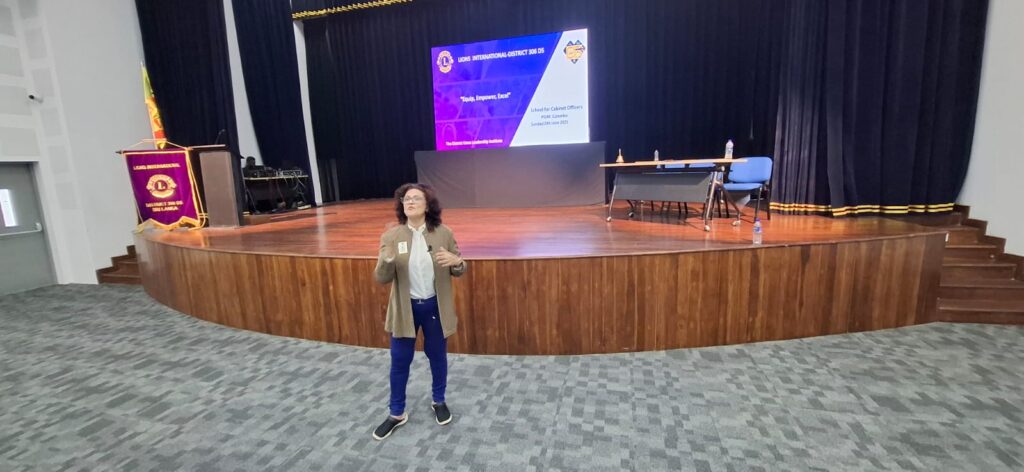
The cabinet school was successfully held under the perview of The District Governor elect For 306 D5 Lion Sashikumar Subramaniam SCA PMJF PMAF…

0

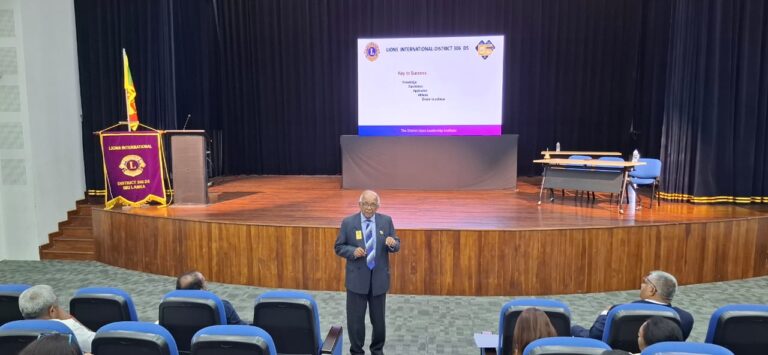
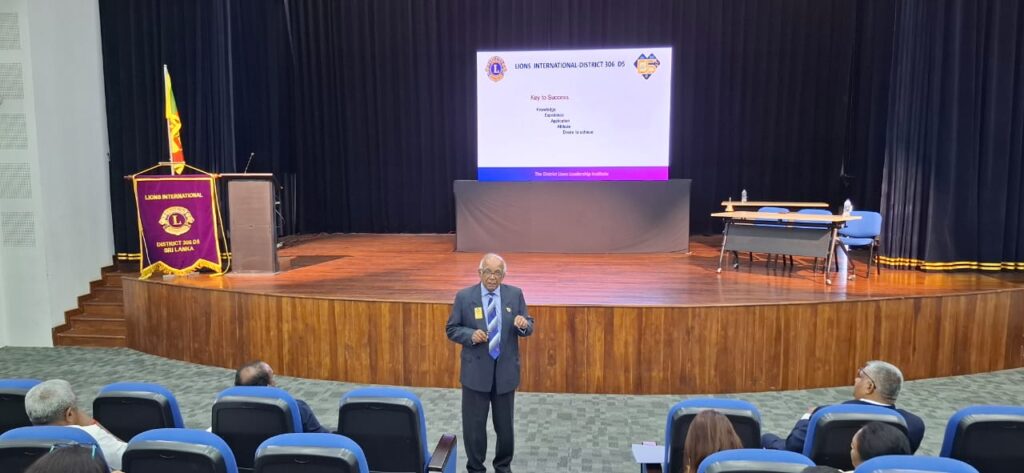
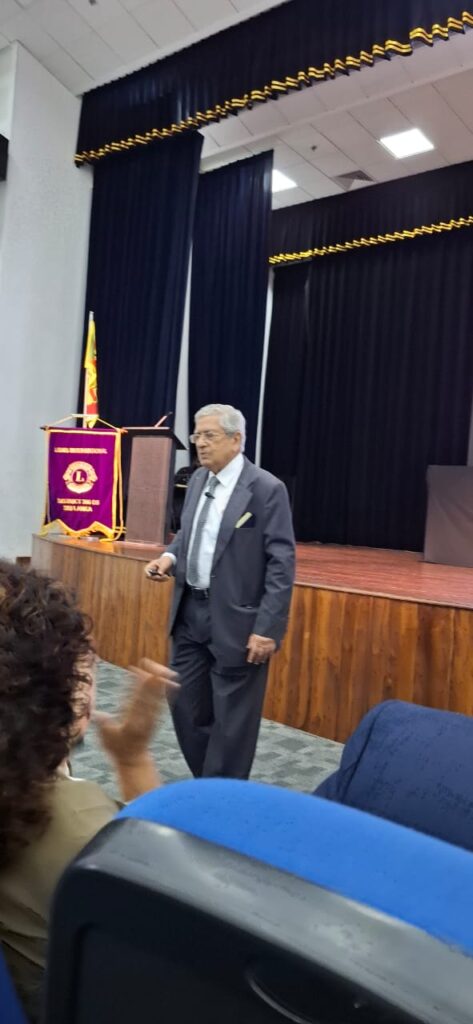
Lions international District 306 D5 successfully conducted the Cabinet school for cabinet officers designate on the 15th of June 2025 at PGIM Academic Centre, Borella. The Cabinet school started with the national anthem, followed by pledge of aligence as per the customary of Lions International organitation. The club school was successfully held under the perview of The District Governor elect For 306 D5 Lion Sashikumar Subramaniam SCA PMJF PMAF
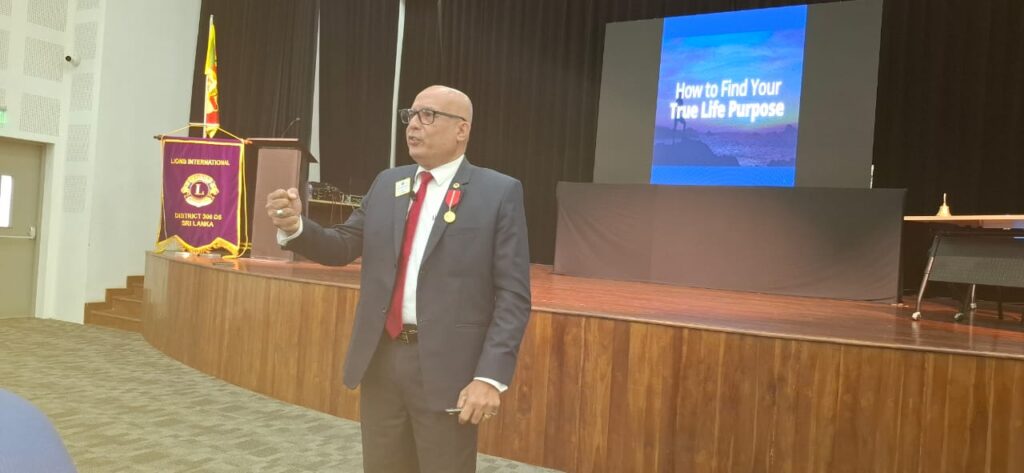
The key note speaker Dr. Jeewantha Perera a corporate trainer, Youth Development Guide, Power parenting Coach, visiting lecturer at numours organizations and a Motivational speaker truly captured the audience attention through his art of approaching techniques, including starting with Captivating questions, well placed jokes, humors, compeling stories, using real-life examples where audience could connect with to give more impact to the message and visual aids.
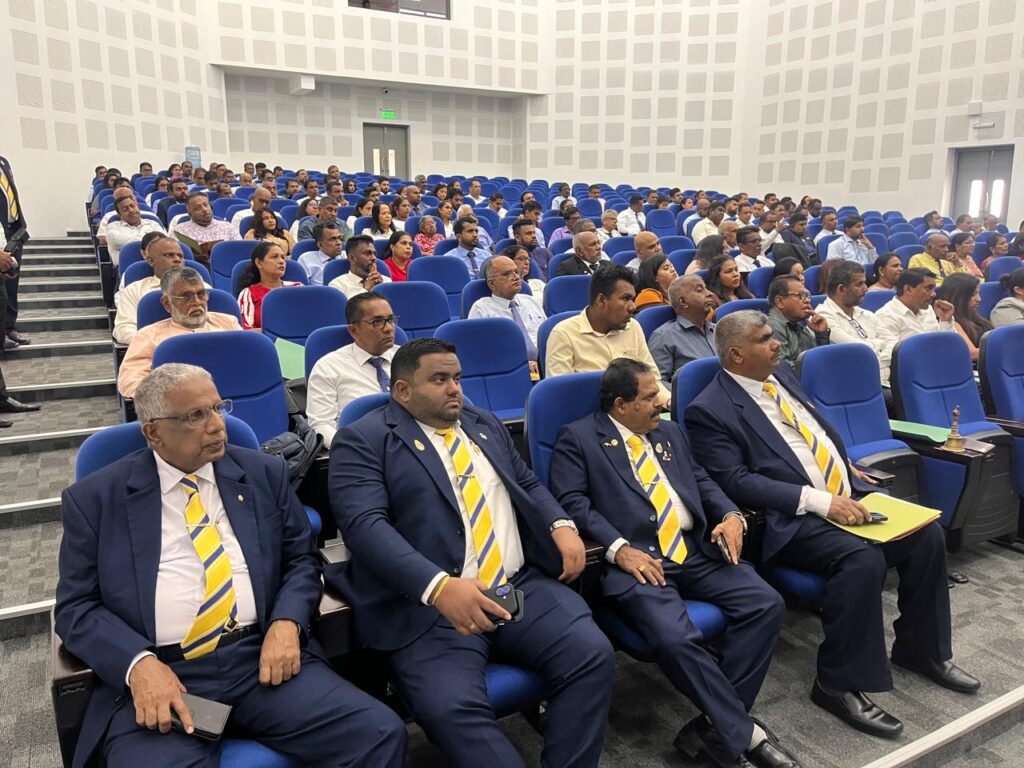
Apart from Dr. Jeevantha the faculty members of DLLI IPDG Lion Anura Kumara Dissanayake PMJF PMAF, IPCC Lion Indra Kaushal Rajapakshe PMJF PMAF, PDG Gamini Jayasooriya, PCC Lion Dr. Fahmy Ismail MJF MAF, Area Leader LCIF & ID endorse Lion P Jeyarajan PMJF MAF, Multiple LCIF chairperson 2025/26 PDG Lion Gratien Fernando PMJF PMAF and the head of DLLI faculty PDG Lion Shyama Silva added more value to the Cabinet school by sharing their depth knowledge in different areas of Lionism they are excelled at.

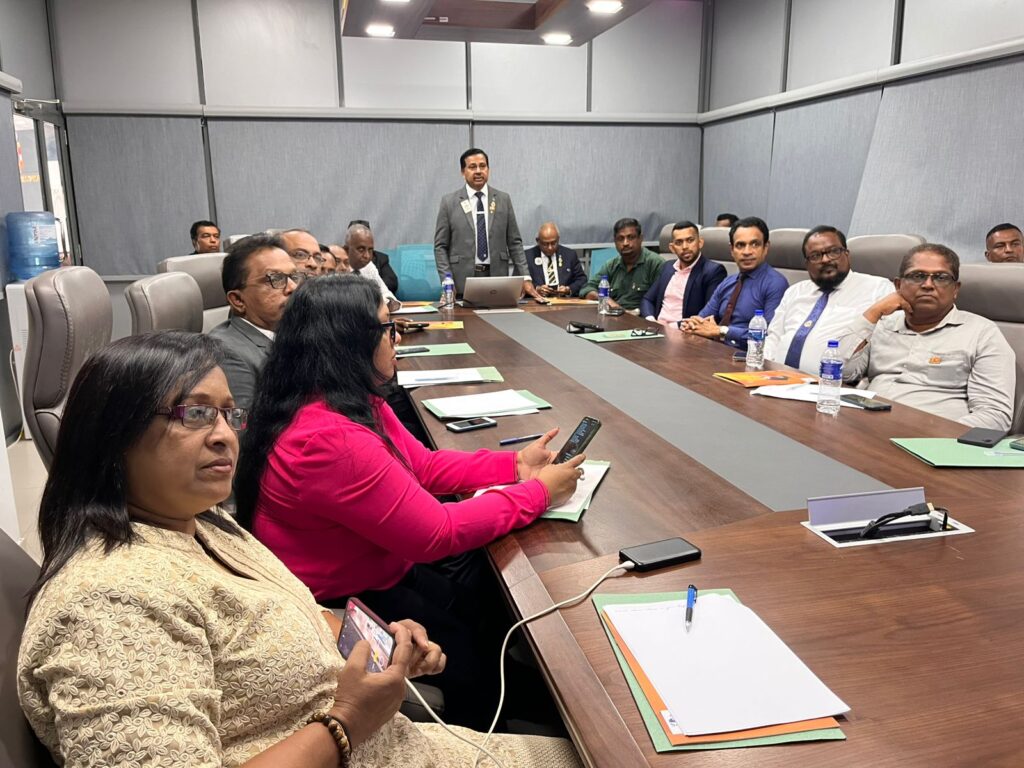
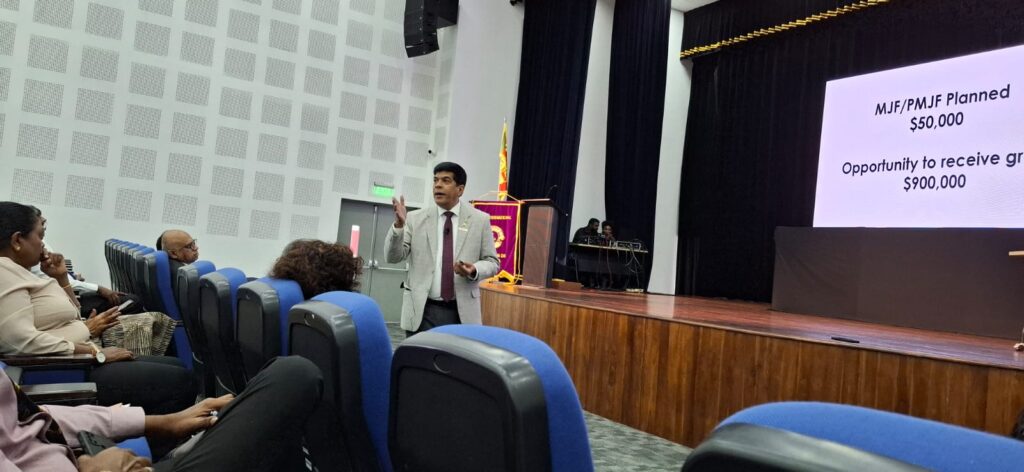
The head of the faculty PDG Lion Shayama Silva educated the Cabinet elect members
of their designate roles while Multiple LCIF chairprlerson Lion Gratien Fernando insisted the importance of LCIF contribution and how it makes an impact in the life of needy people across the Globe.
Lionism in Sri Lanka began in 1958, when the first Lions Club, the Lions Club of Colomo was established as a club extension from the South Indian District. The movement grew, leading to the formation of District 306 in 1972. The Multiple District 306 was initially demarcated into three sub-districts (A, B, & C) in 1998, and then further divided into six in 2004/2005 ( A1,A2, B1, B2, C1 & C2)

With a rapid increase in members and and the establishment of new clubs the Multiple 306 was undergoing a significant redistricting, transitioning from 6 exisisting districts to 12 new districts will be effective from July 2025. This restructuring aims to accommodate the growth of Lionism within the country and provide a more focused approach to community service.

The District Governor Elect for District 306 D5 Lion Subramaniam Sashikumar SCA PMJF PMAF under his perview his elected cabinet members succesfully completed the cabinet school yesterday. . The cabinet school was organized by the District GLT coordinator Lion Amalrajah Jayaseelan & Disrict GMT coordinator Lion Selva Mariyathasan.
We wish the District Governor Elect and his team a succesfull Lionistic year ahead
Written by
Angie Gardiner

Sri Lanka Launches Ambitious Digital Drive to Modernize Industrial Sector

0

By: Staff Writer

June 16, Colombo (LNW): Sri Lanka is actively pursuing a digital transformation program aimed at modernizing its industrial sector. It is a Joint initiative by Industries and Digital Economy Ministries by introducing  digital payments, readiness index, and Industry 4.0 adoption to boost productivity and competitiveness.

This initiative, spearheaded by the Ministry of Industries in collaboration with the Digital Economy Ministry, focuses on leveraging technology to boost productivity and competitiveness. The program includes streamlining public services, promoting digital payments, and digitizing key sectors like manufacturing.

Industrial and Entrepreneurship Development Deputy Minister Chathuranga Abeysinghe announced the launch of a new digital transformation program designed to modernise the industrial sector.

The initiative is being rolled out in collaboration with the Digital Economy Ministry to boost productivity and competitiveness through technology-driven solutions.

“We have officially kicked off our digital journey with the Ministry of Digital Economy,” Abeysinghe noted in a post via ‘X’.

He said the Ministry of Industries (MoIE) is taking bold steps to digitise its services and spearhead digital transformation across the industrial sector.

The program is a joint effort between the Ministry of Industries and the Digital Economy Ministry. The Ministry is digitizing its services and those of its affiliated institutions, starting with onboarding them to the GovPay platform for streamlined payments and service delivery

A key component is the launch of an Industry Digital Readiness Index to assess and accelerate the digital maturity of industries.

The GovPay platform, already used for streamlining public services, will be expanded to facilitate digital payments within the industrial sector.

The program emphasizes raising digital literacy and skills to ensure all citizens, especially those in underserved areas, can participate confidently in the digital economy, according to the Information and Communication Technology Agency of Sri Lanka.

The program aims to embrace Industry 4.0 principles, which involve integrating digital technologies into manufacturing processes to enhance efficiency and collaboration. It aligns with the broader National Digital Economy Strategy 2030, which outlines Sri Lanka’s vision for a digitally transformed future.

It is o enhance productivity and competitiveness within the industrial sector through technology adoption, and modernize industrial processes and operations through digital technologies.

It will contribute to Sri Lanka’s overall economic growth and development through a digitally empowered industrial sector.

Overall, the program represents a significant step towards modernizing Sri Lanka’s industrial sector by embracing digital technologies and promoting a more efficient, competitive, and inclusive digital economy, according to the Ministry of Digital Economy.

 “As a first step, all institutions under the Ministry will be onboarded to GovPay starting next month, streamlining payments and service delivery,” Deputy Minister Chathuranga Abeysinghe announced.

“We also finalised plans to launch the Industry Digital Readiness Index — a critical tool to assess and accelerate the digital maturity of our industries,” the Deputy Minister added.

Haskoning DHV Takes Helm of BIA Expansion after Past Plans Derail

0

By: Staff Writer

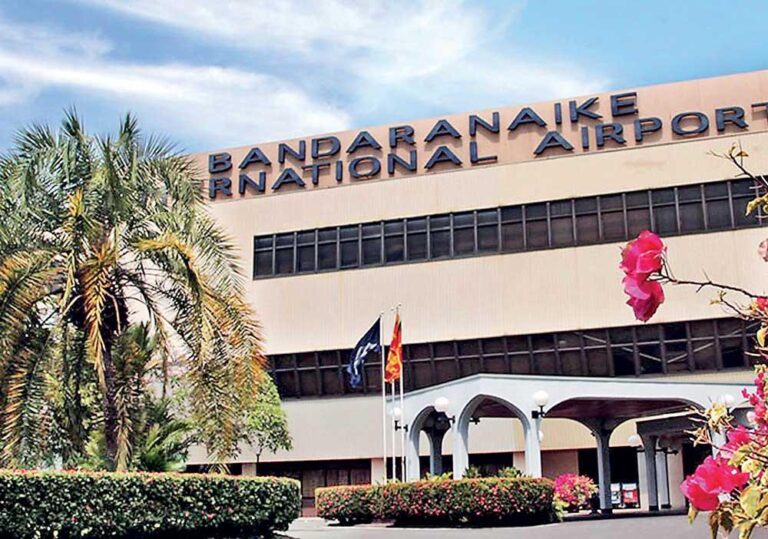
June 16, Colombo (LNW): Haskoning DHV Nederland B.V, a consulting engineering firm, has been appointed to draft the master plan for the expansion project of the Bandaranaike International Airport (BIA).

This latest master plan will concentrate on planning the future of the airport, taking into account capacity, efficiency, and passenger experience to ensure that it is able to accommodate more passenger traffic and meet Sri Lanka’s tourism objectives.

The BIA expansion project aims to increase the airport’s capacity from 6 million to 16 million passengers annually.

This dutch company selected by an international tender will assess the effectiveness of existing infrastructure and technologies, as well as processes, human resources, and the regulatory framework, finance ministry sources revealed.

The Airport and Aviation Services (Sri Lanka) (Private) Ltd  had cancelled the contract awarded to the previous consulting company some times back for not following the contract’, and resumed the procurement process,  Cabinet Spokesman Nalinda Jayatissa said.

Back in February 2014, the Government of Sri Lanka, with the backing of the Japan International Cooperation Agency (JICA), announced the BIA expansion plan. JICA approved a yen loan and tapped Japan Airport Consultants Inc. (JAC) and Nippon Koei for what should’ve been a model infrastructure project.

The consultants and designers—originally brought in through the JICA funding framework—had provided international-standard blueprints. This included specific placement of fuel hydrants on the tarmac, crucial infrastructure that allows airplanes to refuel quickly and safely.

But then came the twist. The Ceylon Petroleum Corporation (CPC), specifically a contractor operating under the rather unassuming name VAC, reportedly decided that international standards were just… suggestions.

Instead, VAC insisted on a new fuel hydrant layout, deviating from the original Japanese design and introducing what one COPE member diplomatically called “a logistical and engineering absurdity.” In less polite terms, a complete mess.

This isn’t JAC’s first rodeo, and Sri Lanka isn’t their only client. As a Japanese firm heavily involved in Asian infrastructure projects, JAC has a polished portfolio. But critics argue their BIA engagement reflects a worrying trend: consultancy without consequence.

They were paid to deliver expert design and management. Instead, they delivered bottlenecked bays, awkward aprons, and terminal design choices that have left ground operators fuming—and planes idling.That was the old saga of the consultancy service and its outcome

In a stunning turn of events, the Cabinet Appointed Negotiating Committee (CANC) has taken a monumental stand recently by disqualifying the Sojitz-L&T consortium selected bidder for the the construction of Phase 11 of the BIA project in 2025, citing an invalid Power of Attorney – a move that has electrified public sentiment and revived hope in the integrity of Sri Lankan public service.

The tender for the construction of Phase 11 of the BIA project in 2025 was marred by controversy and delays, with one international bidder, a foreign consortium, facing disqualification.

The tender officially closed on March 25, 2025, and the project was intended to be completed within 30 months, with a final deadline in 2027. .          

Cabinet Appointed Negotiating Committee (CANC) has taken a firm stand by disqualifying the consortium, citing an invalid Power of Attorney.

Their bid was questionable due to a lack of attestation of the Power of Attorney (POA) by the local registrar, which was a requirement under Sri Lankan procurement law.

This shortfall, combined with a previous instance when the main partner of the consortium reportedly reneged on a deal after it had been awarded to them, drew eyebrows on the bidder’s accountability and monitoring by responsible authorities.

A sudden extension of the tender deadline, while criticized by other bidders who had already invested resources to meet the original deadline, raised concerns about unfair advantage given to one bidder.

The the BIA Phase II Stage 2 expansion project was  ,planned as  a state-of-the-art terminal covering 180,000 square meters, a 210,000-square-meter apron, improved road networks, viaducts, and modern passenger facilities. But behind the impressive figures lies growing concern over irregularities in previous consultancy practices.

The initiative aimed to boost the capacity of the country’s sole international gateway in line with the surge in tourism and economic activity following the civil war.

Yet, amid yen loan agreements and final inspection procedures, the vision of streamlined global connectivity has been overshadowed by rising costs, alleged mismanagement, and mounting bureaucratic hurdles.

NPP’s Balthazaar elected Colombo Mayor following tense council vote

0

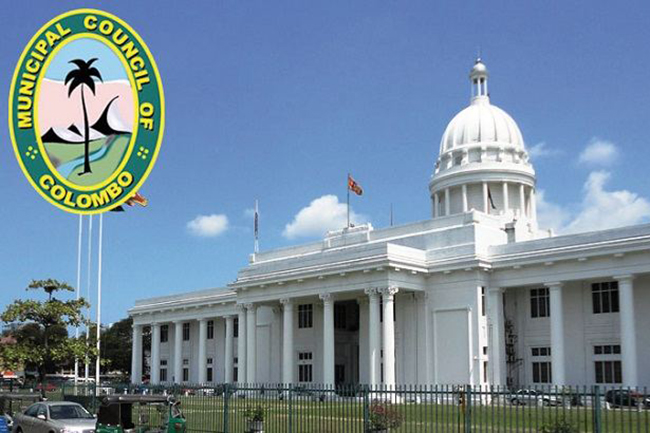
June 16, Colombo (LNW): In a closely watched and hotly contested process, Vraie Cally Balthazaar of the National People’s Power (NPP) has been elected as the new Mayor of Colombo, following a decisive but tension-filled vote held during the inaugural session of the newly elected Colombo Municipal Council.

The council met this (16) morning for its first official sitting since the recent local government election held on May 06. The session, presided over by Sarangika Jayasundara, Commissioner of the Western Province’s Department of Local Government, marked the beginning of a new chapter in the governance of Sri Lanka’s capital.

Amid an atmosphere of uncertainty, two primary candidates were nominated for the mayoral position—Balthazaar representing the NPP, and Riza Zarook backed by the Samagi Jana Balawegaya (SJB). The initial disagreement over the voting method—whether the Mayor should be elected through a show of hands or a secret ballot—led to a spirited and occasionally fractious debate.

The SJB and the United National Party (UNP) lobbied for an open vote, whilst the NPP stood firmly in favour of preserving secrecy, citing the need for a free and fair selection process. Ultimately, consensus was reached, and the council proceeded with a secret ballot.

In the end, Balthazaar secured 61 votes, narrowly surpassing Zarook, who garnered 54. The result reflected not just party loyalties, but also the intense lobbying that took place in the lead-up to the vote, as no single party managed to gain a clear majority in the council.

The composition of the council reflects a deeply fragmented political landscape. The NPP holds 48 seats, followed by the SJB with 29. The UNP, once a dominant force in Colombo, secured 13 seats, whilst the Sri Lanka Podujana Peramuna (SLPP) gained 5.

A range of smaller parties and independent groups—including the Sri Lanka Muslim Congress, Sarvajana Balaya, and the United Peace Alliance—hold the remainder, with several factions earning between one and four seats each.

With 117 seats in total, a simple majority of 59 is required to control the council, making alliances and cross-party negotiations essential for governance. In recent weeks, both the NPP and SJB claimed to have built coalitions capable of capturing the mayoralty, but the final tally revealed the NPP’s success in stitching together enough support across a broad political spectrum.

Sri Lankans advised to use overland routes to reach Israel amid airport shutdown

0

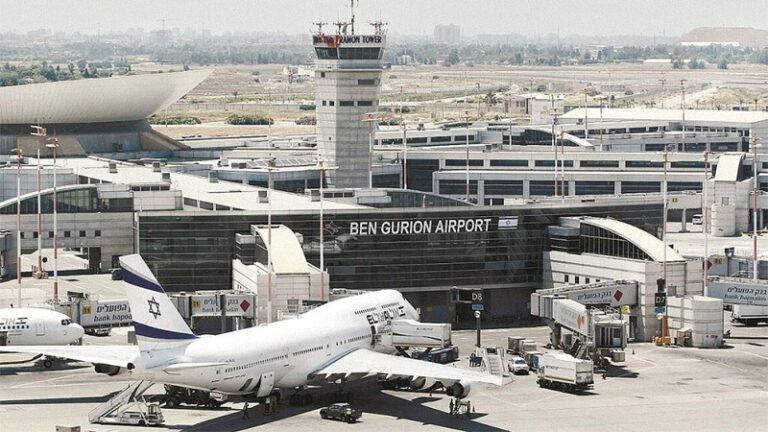
June 16, Colombo (LNW): Sri Lankan nationals intending to travel to or from Israel have been urged to explore alternative transit options, as Tel Aviv’s Ben Gurion International Airport remains closed to commercial air traffic amidst the ongoing regional conflict.

The closure, prompted by escalating military tensions, has left many stranded or uncertain about their travel plans.

Nimal Bandara, Sri Lanka’s Ambassador in Israel, has confirmed that although direct air travel into the country is currently suspended, viable overland routes remain open via neighbouring states. Individuals can enter Israel through designated land crossings from Jordan and Egypt, provided they secure the necessary short-term visas from either country.

The southern border near the Israeli city of Eilat is amongst the active entry points, accessible through Jordan. Similarly, crossings from Egypt are being utilised, with the Cairo and Amman international airports now serving as the nearest viable hubs for those en route to Israel.

Speaking after a diplomatic briefing with fellow ambassadors in Tel Aviv, Ambassador Bandara relayed remarks from Israel’s Foreign Minister, Gideon Sa’ar, who acknowledged the uncertainty surrounding the reopening of Ben Gurion Airport. Whilst no date has been confirmed, he reportedly reassured attendees that movement into and out of Israel remains possible for those in urgent need—albeit by land.

This guidance comes against the backdrop of continued hostilities between Israel and Iran, which have significantly disrupted civilian life and international transit. The missile exchanges between the two countries have intensified, with no clear de-escalation on the horizon. The airspace over large swathes of Israel remains restricted due to security concerns, with the threat of further missile strikes prompting extended closures of air corridors.

Ambassador Bandara further encouraged Sri Lankan citizens to stay in close contact with the embassy and to avoid unofficial travel arrangements that might place them at risk. He also advised those travelling via Jordan or Egypt to be mindful of visa procedures, security protocols, and potential delays at border crossings.

Sarvajana Balaya sides with Opposition ahead of key Colombo Mayoral vote

0

June 16, Colombo (LNW): The political alliance Sarvajana Balaya has formally pledged its support to the candidate put forward by the Opposition bloc in the contest to elect the next Mayor of Colombo, marking a significant shift in the capital’s municipal power struggle.

The decision, announced ahead of the inaugural sitting of the newly elected Colombo Municipal Council (CMC), could play a decisive role in today’s vote.

The executive committee of Sarvajana Balaya reached a unanimous agreement to oppose the mayoral nominee fielded by the National People’s Power (NPP), which had emerged as the largest single party following the local government elections held on 6 May, according to alliance leader MP Dilith Jayaweera.

Sources close to the alliance suggest that their backing is likely to benefit the Samagi Jana Balawegaya (SJB)-led coalition, which has been actively courting smaller parties and independents.

The inaugural session of the new CMC is set to convene this morning at 9:30 a.m. at the historic Town Hall premises. According to a gazette notification issued by Sarangika Jayasundara, Commissioner of the Western Province’s Local Government Department, the election of the Mayor and Deputy Mayor will be the first item on the agenda.

Landslide alerts remain in place across multiple districts amid persistent rainfall

0

June 16, Colombo (LNW): Authorities have extended precautionary alerts for landslides across various parts of the island, as heavy and prolonged rainfall continues to raise the risk of ground instability.

The National Building Research Organisation (NBRO) confirmed that these warnings will remain active until 4:00 p.m. today (16).

Among the affected regions, a Level 2 warning—categorised as ‘Amber’ under the NBRO’s hazard classification system—has been issued for the Ratnapura and Ayagama Divisional Secretariat Divisions and adjacent areas within the Ratnapura District.

This elevated alert signifies an increased likelihood of landslides, slope failures, rock falls, and ground subsidence, prompting residents to remain vigilant and take precautionary measures.

Additionally, a broader Level 1 (Yellow) advisory, denoting early signs of potential landslide risk, has been declared for several other regions across the country. The Colombo District’s Padukka Division is currently under this warning, alongside Elpitiya in Galle and multiple zones in Kalutara, including Walallawita, Matugama, Bulathsinhala, Palindanuwara and Agalawatta.

Further inland, the Ganga Ihala Korale Division in Kandy, as well as the Ambagamuwa area in Nuwara Eliya, have also been flagged. In Kegalle, three divisions—Deraniyagala, Dehiowita, and Yatiyanthota—are under similar alert status.

Meanwhile, additional locations in Ratnapura District including Eheliyagoda, Kalawana, Pelmadulla, Nivithigala, Kuruwita, and Elapatha continue to be monitored under the Level 1 warning.

The NBRO urges residents in these zones to be especially cautious if they observe warning signs such as the appearance of cracks on walls or soil, leaning trees, unusual sounds from the ground, or changes in water flow patterns.

Local authorities, disaster response units, and community leaders have been advised to maintain close coordination to mitigate risk and ensure swift response if conditions deteriorate.

Residents are encouraged to follow updates through official NBRO channels and to prioritise safety over property should evacuation become necessary. The situation remains dynamic, with rainfall expected to continue intermittently in several regions throughout the day.

New Colombo Municipal Council Prepares for Crucial First Meeting Amid Power Struggle

0

June 16, Colombo (LNW): The recently elected members of the Colombo Municipal Council are set to gather today (16) for their first formal sitting following last month’s local government elections, which have resulted in a fragmented council with no party holding an outright majority.

An official announcement confirming the meeting was issued by the Western Province’s Department of Local Government, with the Commissioner, Sarangika Jayasundara, gazetting the date and time.

Proceedings are scheduled to commence at 9:30 a.m. at the historic Town Hall premises, marking the beginning of what is likely to be a highly contested political chapter in the capital’s local governance.

The primary agenda for this inaugural session is the election of the Mayor and Deputy Mayor—two pivotal roles that will determine the administrative direction of the Colombo Municipal Council. With no party achieving a clear majority from the 117 seats available, negotiations and behind-the-scenes alliances have intensified in recent days, as parties seek to consolidate power.

The National People’s Power (NPP) emerged as the single largest group, having secured 48 seats. Close behind, the Samagi Jana Balawegaya (SJB) claimed 29 seats, whilst the United National Party (UNP) and the Sri Lanka Podujana Peramuna (SLPP) followed with 13 and 5 seats respectively. The Sri Lanka Muslim Congress garnered 4 seats, and Independent Group No. 03 secured 3 seats.

Several smaller factions and independent groups also hold sway in the council’s composition. Sarvajana Balaya and the United Peace Alliance each captured 2 seats. Independent Groups No. 04 and 05 also gained 2 seats apiece. Meanwhile, a range of lesser-known entities—including the United Republic Front, National People’s Party, National Freedom Front, Podujana United Front, and Democratic National Alliance—each managed to win a single seat, alongside Independent Groups No. 01 and 02.

With 59 seats required to command a working majority in the council, both the NPP and the SJB have claimed in recent days to have secured the support of enough allies to lead the administration.

The outcome of today’s vote for Mayor and Deputy Mayor will be an early indication of which coalition has succeeded in stitching together a governing bloc.

Trump reportedly opposed Israeli proposal to assassinate Iran’s Supreme Leader amid regional tensions

0

June 16, World (LNW): Amid the rapidly escalating hostilities between Israel and Iran, it has emerged that former United States President Donald Trump reportedly turned down a proposal from Israeli leadership to target Iran’s Supreme Leader, Ayatollah Ali Khamenei, according to individuals familiar with the matter.

BBC citing its American wing CBS indicated that the proposal was floated during confidential discussions held after Israel initiated air strikes on Iranian territory.

President Trump is said to have advised against the action, reportedly telling then-Israeli Prime Minister Benjamin Netanyahu that carrying out such an assassination would be unwise and risk catastrophic fallout.

Despite the sensitive nature of the claim, Trump has not issued any public statements addressing the report.

When questioned about the matter during a televised appearance, Netanyahu declined to confirm or deny whether such a conversation with Trump had taken place. Instead, he dismissed reports about private discussions as often inaccurate, choosing to focus instead on broader strategic goals.

He reaffirmed Israel’s commitment to act decisively in its national interest, while offering no specific insight into the alleged plan.

A senior Israeli official, when approached for comment by international media, said Israel traditionally avoids targeting political heads of state. “Our strategic focus remains on dismantling military threats and curbing nuclear ambitions,” the official said. “Those making decisions in those areas should not be under any illusion of safety.”

Military operations between Israel and Iran have now entered their third consecutive day, with both sides launching strikes across strategic and urban locations. The cycle of aggression has left hundreds dead and injured, heightening fears that the confrontation could spiral into a broader regional conflict.

In an online statement released via his platform Truth Social, Trump urged both nations to reach a diplomatic solution, suggesting he could mediate an agreement as he claims to have done between India and Pakistan. “Iran and Israel should make a deal,” he posted, drawing parallels to previous tensions in South Asia that de-escalated during his term in office.

During remarks made prior to his departure for a G7 summit in Canada, Trump reiterated America’s commitment to supporting Israel, but declined to elaborate on whether he had requested a halt to Israeli air strikes.

He also maintained that the United States was not involved in Israel’s military actions against Iran, distancing Washington from the operation.

Simultaneously, efforts to revive nuclear negotiations between the US and Iran appear to have stalled. Talks scheduled to take place over the weekend were abruptly cancelled, according to Oman’s foreign ministry, which had been mediating discussions.

Iran reportedly informed its regional interlocutors that it had no intention of engaging in diplomacy while facing continued bombardment from Israel.

Tensions have further intensified following Trump’s statement on Saturday, in which he warned Tehran against retaliating against US interests. “Should Iran attack us in any form, the response will be swift and of a magnitude never before seen,” he declared.

Escalating conflict between Iran and Israel claims hundreds of civilian lives

0

June 16, World (LNW): The ongoing confrontation between Iran and Israel has intensified dramatically over the past few days, leaving a trail of devastation in both countries and drawing international concern over the rapidly deteriorating humanitarian situation.

According to an official spokesperson for Iran’s Ministry of Health, more than 240 people have been killed and well over a thousand injured in a sustained wave of aerial bombardments attributed to Israeli forces. The bombardments, which reportedly began early Friday, struck multiple urban centres including the capital, Tehran.

Among the dead are numerous women and children, with officials claiming that the overwhelming majority of those affected are civilians. Over 1,200 individuals are said to be receiving hospital treatment, many with life-threatening injuries.

Iranian authorities say the air raids targeted a range of locations, including strategic military compounds and scientific research facilities. Reports also suggest that a number of high-ranking defence officials and nuclear specialists were killed in the initial wave of strikes. However, many of the attacks reportedly hit residential districts and public buildings, amplifying the civilian toll.

In retaliation, Iran has carried out a series of missile attacks directed at Israeli territory since Friday evening. Israeli emergency services have confirmed that at least two people were physically injured in the latest round of strikes launched on Sunday night, while dozens more required medical attention for shock and trauma.

Fires broke out in several locations following the impact of missile debris, with fire crews deployed to contain the blazes.

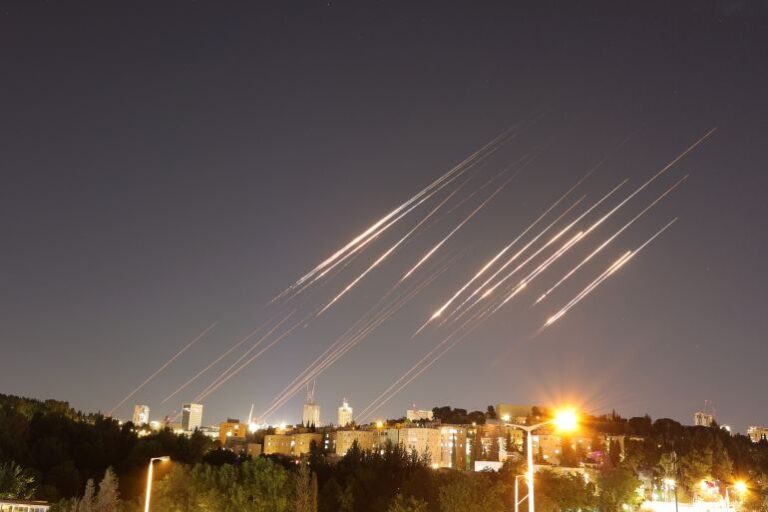
Sirens warning of incoming attacks were activated across wide areas of Israel, including Tel Aviv and parts of the occupied Golan Heights. Witnesses reported hearing loud explosions throughout the night. Israeli officials stated that more than 30 projectiles had been fired by Iranian forces, though many were intercepted mid-air by the country’s missile defence systems.

Fragments of intercepted missiles caused damage in the Haifa region, where several buildings and vehicles were set alight. Additional strikes in the south reportedly led to another large-scale fire, though no deaths have been confirmed as of yet on the Israeli side.

The ongoing hostilities have heightened fears of a broader regional escalation, with both nations trading blame and vowing to continue their military operations. Neither government has shown signs of de-escalation, and there is little indication that diplomatic channels are currently being pursued.

In response to the crisis, humanitarian agencies and international observers have urged all parties to prioritise civilian safety and adhere to international laws governing armed conflict.