After months of anticipation, Sri Lanka Tourism Promotion Bureau (SLTPB) yesterday announced that it will officially launch its long-awaited ‘Nation Branding Campaign’ on 26 June, to rejuvenate its global tourism image and woo travellers.
In a statement, SLTPB described the upcoming event as an “extraordinary” gathering, promising to bring together top State officials, key private sector players, tourism experts and guests on a single platform.
The move is something the private-sector-run industry stakeholders have constantly urged the authorities and the Government to expedite the campaign, stressing that without a robust promotional push, only through an ‘organic footfall’ — the ambitious target of attracting 3 million tourists and generating $ 5 billion in revenue for 2025 is unrealistic.
Although the date of the event has been confirmed, the venue is yet to be disclosed.
The early announcement, nearly three weeks ahead, is somewhat unusual, particularly for an event, where finer logistical details remain under wraps.
However, industry sources suggest the move is part of a strategic effort to generate pre-launch buzz and position Sri Lanka as a destination that is not only ready, but eager to re-enter the international spotlight with renewed energy and focus.
“This landmark occasion will showcase the latest initiatives driving the growth and development of Sri Lanka’s thriving tourism industry, while highlighting the remarkable progress in tourist arrivals,” it added.
A total of 132,919 tourists have arrived in the country in May 2025, data from the Sri Lanka Tourism Development Authority (SLTDA) shows.
This is an increase of 18.5% in comparison to the numbers arrived in May 2025. The May arrival figures are also an increase of 2.7% in comparison to the number of foreign nationals arrived in May 2018.
Accordingly, the total number of tourist arrivals in the first five months of 2025 stands at 1,029,803.Among source markets, India accounted for the highest share of tourist arrivals in May, contributing 35.4% of the total, with 47,001 visitors.
Furthermore, 9,221 persons from the United Kingdom, 8,803 from China, 7,282 Bangladesh and 7,223 individuals from Germany also visited Sri Lanka last month.
Sri Lanka’s tourism sector showed improved growth in tourist arrivals in May 2025, compared to the same period in 2024.
The upward trend was significantly propelled by a strong influx of visitors from India, who accounted for nearly one-third of all arrivals during this period.
Industry analysts note that the proposed free-visa travel initiative and a comprehensive global promotion campaign are yet to be fully implemented.
Prime Minister Dr. Harini Amarasuriya met with Kenji Kuronuma, the newly appointed Chief Representative of the Japan International Cooperation Agency (JICA), at Parliament on Thursday (June 5) to reaffirm the longstanding development partnership between Sri Lanka and Japan.
Kuronuma reiterated JICA’s continued commitment to supporting Sri Lanka, particularly in the education sector, aligning with the Government’s emphasis on accountability, transparency and inclusive reform.
The meeting focused on expanding inclusive education, especially for children with special needs. Key areas of collaboration discussed included:
Establishing special education units in all administrative divisions
Revising teacher training curricula
Conducting needs assessments to guide implementation
Promoting vocational training and overseas employment opportunities
Enhancing Japanese language instruction for Sri Lankan job seekers
The Prime Minister congratulated Kuronuma on his new role and welcomed continued technical cooperation from JICA, highlighting its alignment with national development priorities.
Also present at the meeting were Prime Minister’s Secretary Pradeep Saputhanthri, Additional Secretary Sagarika Bogahawatta, Foreign Affairs Ministry Acting Director General Ruwanthi Delpitiya, Assistant Director Gayanga Dias, and officials from the External Resources Department.
SriLankan Airlines deployed a relief flight to Medan, Indonesia, yesterday (June 6) after flight UL 306, en route to Singapore, was diverted to Medan International Airport due to a technical issue. The airline also sent an engineering team from Colombo to address the grounded aircraft.
According to an official statement, the aircraft was carrying 93 passengers and eight crew members, all of whom safely disembarked in Medan. Due to stringent immigration formalities at the airport, there was a delay in transferring passengers to hotels, but the airline confirmed that all passengers were attended to and accommodated.
SriLankan Airlines expressed regret over the inconvenience caused and assured that efforts are being made to transport the affected passengers to their final destination, Singapore, as quickly as possible.
The airline also thanked the Indonesian Embassy in Colombo and the Sri Lankan Embassy in Jakarta for their support in securing necessary regulatory clearances during the disruption.
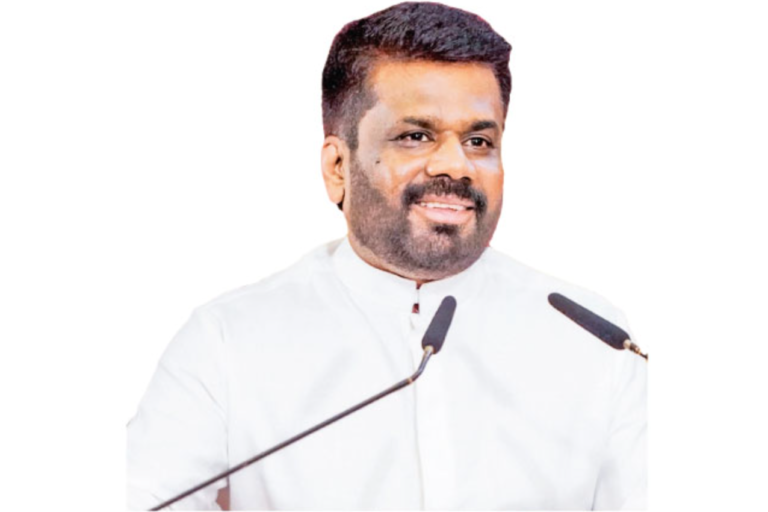
Today, June 7, marks the observance of Hajj, the sacred pilgrimage undertaken with profound devotion by Muslims across the world. As the fifth pillar of Islam, this profound spiritual undertaking symbolises Prophet Ibrahim’s unwavering faith and ultimate sacrifice to Almighty Allah, President Anura Kumara Dissanayake said in his Hajj message.
The message:True faith aspires to perfect society through compassion and establish righteous communities. The Hajj pilgrimage, wherein believers from every nation converge in Makkah in collective worship, powerfully demonstrates how we may live harmoniously with all people of faith through equality and mutual respect. Furthermore, Hajj serves as a living embodiment of commitment and self-sacrifice.
“The essence of Hajj lies in bridging divisions and fostering universal brotherhood. As Sri Lanka strives to overcome national challenges and realise our vision of a developed, civilised nation, we require transformative social, economic and political progress. This demands our collective endeavour, goodwill and inclusive participation. Hajj provides a significant platform for such unity of purpose.
“To humanity worldwide, Hajj conveys an enduring message of peace while awakening our shared consciousness to the values of equality, fraternity and sacrifice.
“This sacred observance, uniting Muslim devotees through common faith, blesses our national endeavour to build an enlightened Sri Lanka, one founded upon brotherhood and goodwill rather than division.
“On this auspicious occasion, I extend heartfelt wishes to all Muslim devotees in Sri Lanka and globally for a blessed Eidul-Adha,” the message said.
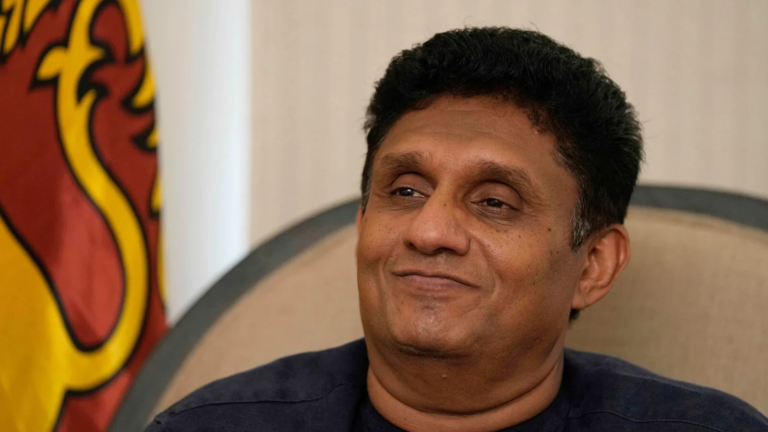
Leader of the Opposition Sajith Premadasa said it is essential to reflect deeply on the true meaning of Hajj. I am pleased to extend my heartfelt wishes to all Muslim devotees in Sri Lanka. “The pilgrimage is not only a spiritual obligation but also one of the five fundamental pillars of Islam. These five obligations – faith, the five daily prayers, fasting during the month of Ramadan, giving Zakat (charity for the needy), and undertaking the Hajj pilgrimage – form the foundation of every Muslim’s religious life, he said in his Hajj message.
“These pillars serve as a moral compass, guiding one toward a virtuous life. Values such as peace, coexistence, devotion, self-sacrifice, and spiritual growth are at the heart of this guidance.
In today’s world, which faces many complex challenges, the teachings of Islam offer a powerful framework for a just and harmonious society. Importantly, this philosophy provides inspiration not only to Muslims but to followers of all faiths, helping them live according to the values of their own religions. “For Hajj to be truly meaningful, it must be practiced in the spirit of the life and teachings of Prophet Muhammad. In a society that follows such a vision, there is no room for conflict or violence in the name of religion. True celebration of Hajj lies in understanding and living by these teachings, and sharing their message with society at large.
“I pray that today’s celebration of Hajj by Muslim devotees around the world brings peace, harmony, and prosperity to our society,” the message said.
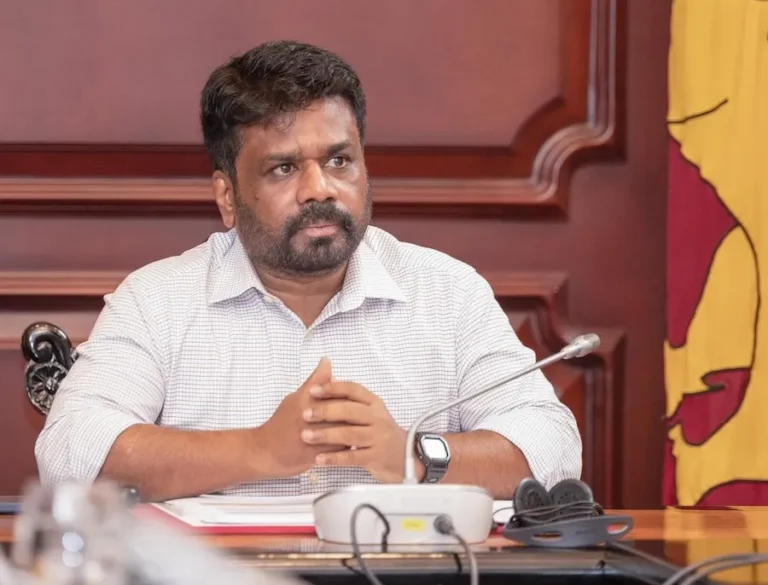
A progress review meeting on infrastructure projects funded under the 2025 Budget by the Ministry of Transport, Highways, Ports and Civil Aviation was held on June 6 at the Presidential Secretariat, presided over by President Anura Kumara Dissanayake.
The meeting focused on updates related to highways and transport sector projects, with ministry officials outlining both milestones achieved and challenges encountered in project execution. Special emphasis was placed on ensuring that initiatives funded through the current budget remain on track.
President Dissanayake issued a directive to expedite rural road development, highlighting its importance within the national infrastructure agenda. He stressed the urgency of completing these projects on time to ensure equitable development and improved connectivity for rural communities.
The session was attended by:
Transport, Highways, Ports and Civil Aviation Minister Bimal Rathnayake
Secretary to the President Dr. Nandika Sanath Kumanayake
Finance Ministry Secretary Mahinda Siriwardena
Transport Ministry Secretary Prof. Kapila Perera
Senior Additional Secretaries to the President Russell Aponso and Kapila Janaka Bandara
Senior officials from the Finance and Transport Ministries
The review is part of the Government’s broader commitment to transparency, efficiency, and accelerated infrastructure development under the 2025 Budget implementation framework.
Showery conditions are expected to enhance in the southwestern part of the island from June 10th, with strong gusty winds expected over the island and in the sea areas around the island.
General public is requested to be attentive to future forecasts issued by the Department of Meteorology in this regard.
Several spells of showers will occur in Western, Sabaragamuwa and North-western provinces and in Kandy, Nuwara-Eliya, Galle and Matara districts.
Showers or thundershowers may occur at a few places in the Northern and Uva provinces and in Ampara and Batticaloa districts in during the afternoon or night. Fairly strong winds of about (30-40) kmph can be expected at times over Western slopes of the central hills and in Northern, North-central, North-western and Southern provinces and in Trincomalee district. The general public is kindly requested to take adequate precautions to minimize damages caused by temporary localized strong winds and lightning during thundershowers.
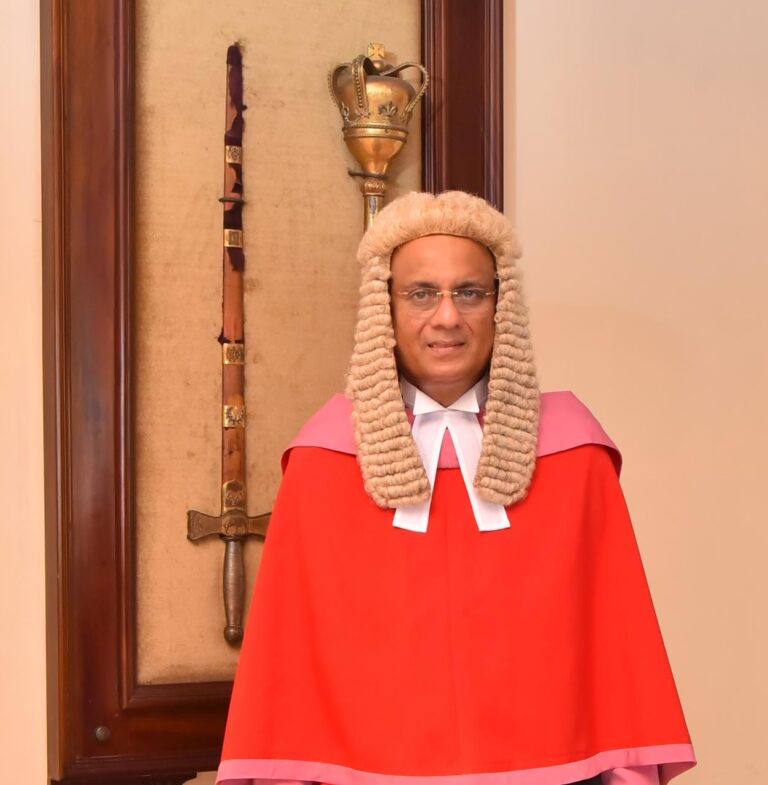
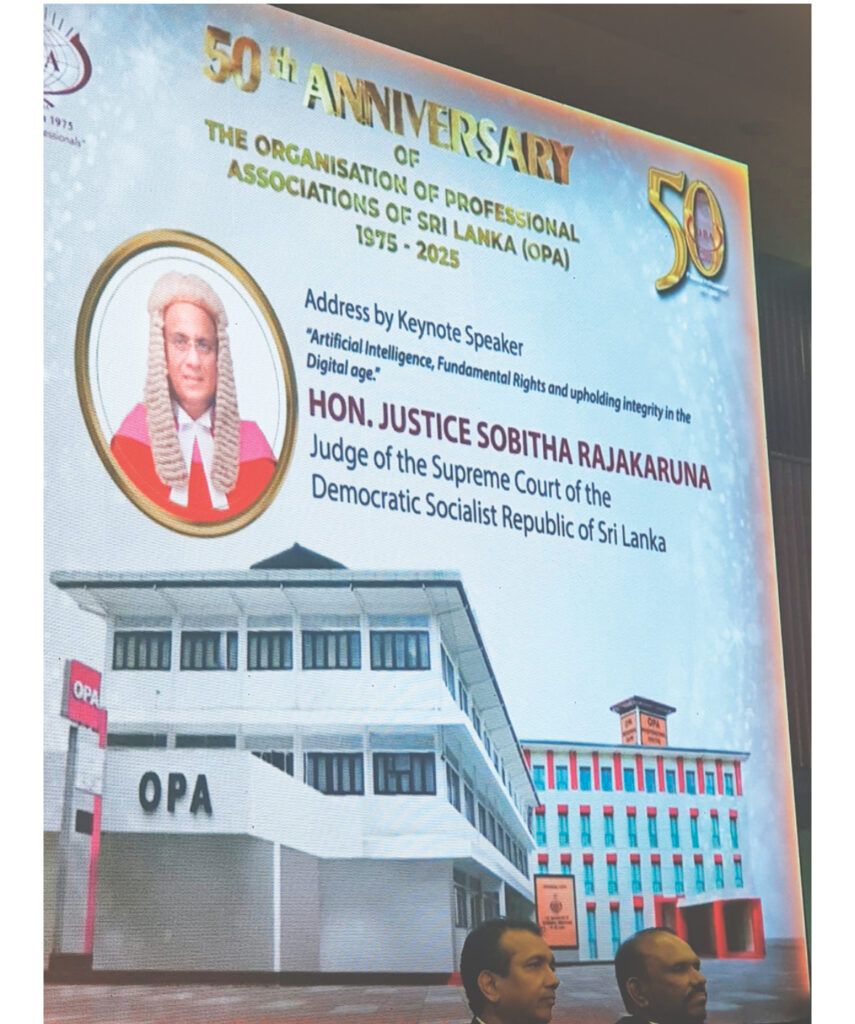
Dr. Nath Amarakoon Memorial Oration by His Lordship Justice Sobhitha Rajakaruna, Judge of the Supreme Court of Sri Lanka at the 50* Anniversary Celebrations of OPA delivered at BMICH on 29 May 2025
I am deeply honoured to have been invited to deliver the Dr. Nath Amarakoon Memorial Oration before this August assembly, where the Organisation of Professional Associations of Sri Lanka (OPA) celebrates its 50th Anniversary.
The OPA holds a special place in my heart for many reasons, particularly because I had the unique opportunity to engage with it during my period of apprenticeship, 33 years ago, even before becoming an Attorney- at- Law.
I have had the pleasure of working there in several capacities under several Presidents at the OPA, including those elected from BASL, such as the legal luminary Mr. Parakrama Karunarathna, who was a higher-ranking officer and my supervising officer at the Attorney General’s Department. Likewise, I must acknowledge the Attorneys- at- Law, the late Mr. Gamini Jayasinghe, Mr. Sena Lianasuriya and Mr. Serasinghe who aligned me with the activities and mission of the OPA.
Dr. Amarakoon Mudiyanselage Nath Amarakoon, the founder President of OPA, was a former Permanent Secretary to the Ministry of Housing, former Chairman of the State Engineering Corporation, General Secretary of the Eksath Sinhala Maha Sabhawa, Head of the Sanathana Foundation, Nawinna, and a committed Philanthropist. I have found, among many, that his commitment to the construction and commissioning of the Steel Factory at Oruwela and the Tyre Project at Kelaniya was tremendous. He was the beloved husband of the distinguished Dental Surgeon, Dr. Indrani Wijesinghe Amarakoon.
Dr. Nath Amarakoon was instrumental in founding and shaping the early growth of OPA in Sri Lanka, making a significant contribution that laid its groundwork. In 1972, together with other prominent professionals like Dr. H.W. Jayawardena, Queens’s Counsel and Dr. S.A. Cabraal, he engaged with Mr. John Chadwick, the Commonwealth Foundation’s first Director, to discuss forming a professional alliance to complement the Commonwealth Heads of Government Meeting (CHOGM). This effort sought to bring together Sri Lankan professionals from various fields to amplify their collective influence on National and Commonwealth goals.
On 29 April 1975, OPA was officially founded during a meeting at the ASTW headquarters, where its Constitution was adopted, and the first Office-Bearers and Executive Committee were elected. Dr. Amarakoon and other key members identified the need for a shared facility, as many member associations lacked permanent offices.
I have gathered through extensive research that Dr. Amarakoon’s efforts have become fruitful with OPA obtaining a substantial GBP 45,000 grant from the Commonwealth Foundation to build the present Professional Centre. An additional GBP 10,000 has reportedly been provided to complete the original structure. The Professional Centre, which was inaugurated in September 1982 by then President J.R. Jayewardene, now hosts numerous member Associations and serves as a focal point for professional activities, including Seminars, Workshops, and Research addressing National concerns.
Dr. Amarakoon passed away on 22 November 2017, at the age of 81 and his vision and organisational efforts fostered inter-sectoral collaboration, aligning with OPA’s mission to address National challenges through professional expertise.
With that note, I must now advert to my topic. I have selected to speak on — Artificial Intelligence, Human Rights and Upholding Integrity in the Digital Age. It would be relevant to first consider what Artificial Intelligence (AI) refers to. “AI is the simulation of human intelligence processes by machines, especially computer systems.” Alternatively, it could be defined as “the development of computer systems that can perform tasks requiring human-like intelligence.”
As judges, we are entrusted with safeguarding the Constitution and the fundamental rights it enshrines. In this rapidly evolving digital era, AI presents both unprecedented opportunities and profound challenges to our mandate. I have witnessed the judiciary’s evolving role in balancing technological advancements with the hallowed principles of justice and human dignity. I invite you to reflect with me on this duality: how AI can both fortify and threaten the structure of human rights, amidst the eroding element called integrity. Our legal heritage, rooted in Constitutionalism and the Rule of Law, demands a proactive response to this duality.
AI has emerged as a transformative force, reshaping industries, governance, and daily life with incredible speed and scale. Its capability to analyse extensive data, forecast results, and streamline decision-making offers significant potential to advance fundamental rights, while concurrently presenting serious dangers that jeopardise those same Rights. Bridging privacy, equality, freedom of speech, and access to justice, AI’s twofold character—as both an enabler of progress and a possible source of suppression- demands a delicate examination.
AI isn’t a physical item you stumble upon in a box, basket, or container, nor is it a consumable like food or a drink. Instead, AI resides within electronic devices, such as laptops, phones, or tablets, existing outside our bodies as a digital construct. Yet, through these devices, AI can metaphorically be ‘absorbed’ into our minds and lives, as we interact with its outputs, learn from its insights, or adapt to its influence at our choice. Far from being a tangible substance, AI is an external technological entity that we engage with, shaping our thoughts and actions through the tools we choose to wield. That’s how the component of integrity also comes into play.
On the other hand, your friend, neighbour or political opponent may wield AI in a way that infringes upon your rights by using AI-generated deepfakes to defame you, breaching dignity. In such an event, the affected individual would need to seek a remedy through a Court of Law, either to obtain compensation or to have penalties imposed on the perpetrator.
In my opinion, AI poses a threat not merely by its simple existence, but by how we apply it to our Rights and thoughts. Its capacity to configure privacy, equality, and justice — whether through surveillance, biased algorithms, or unclear evidence — transforms its relevance into a pathway for harm if not properly regulated. However, through strict supervision and principled or ethical development, we can steer AI’s impact towards empowerment, guaranteeing its strengths rather than its weaknesses as the foundation of Fundamental Rights. The decision rests with us: ‘shape AI into a protector of fairness or allow it to evolve into a danger we regret’.
AI may offer the Supreme Court a powerful tool to strengthen Fundamental Rights applications by refining evidence relevancy under the Evidence Ordinance, enabling faster, data-driven justice. Yet, this strength harbours danger: if AI’s analysis is flawed, due to biased training data, violation of patent or privacy laws or vague algorithms, it risks presenting distorted facts, skewing judicial outcomes. Judicial training in AI literacy, coupled with laws mandating accountability, can safeguard the rights of citizens. International norms, such as the UN Basic Principles on the Independence of the Judiciary, reinforce that technology must serve justice, not subvert it. By reining in AI’s relevance with accountability, we can harness its potential while averting its peril.
AI’s danger, tied to its relevance, is not inevitable, but I believe that it can be tamed through good conscience and good governance. The challenge lies not in AI itself, but in our choice or discretion to wield it justly, safeguarding the dignity and rights of all living in a world where desirous and daily requirements are rapidly increasing on a ‘per second’ basis.
I need to highlight another interesting aspect here today. In crafting my speech and for the purpose of making it with practical experience, I turned to an AI app and fed it with the topic for today’s address. Certainly, it was only to find whether its output was attractively akin to my own thoughts — a revelation that sparked a dilemma. Had I delivered my original speech without looking at AI, some professionals familiar with similar AI-generated content might accuse me of plagiarism; yet, relying wholly on AI’s text would invite the same charge.
One may query why AI-assisted learning or linguistic borrowing should be deemed wrong. But, currently, the learning is always leant mostly on external sources such as books, Google, apps, or devices, and lectures.
Where do you get a law which prevents you from learning lawful subject content from reading or watching prima facie lawful substance through a legal app or an electronic device? Are we confined to outdated textbook methods, or can’t we embrace AI as a legitimate tool to sharpen our intellect?
This question challenges us to reconsider the boundaries of creativity, influence, patent and privacy rights and ethics in an AI-driven world. When AI engages with Fundamental Rights or judicial processes, its impact on these vital domains can heighten its potential for harm, transforming a tool of advancement into a threat that undermines privacy, equality, due process, and justice. AI does not inherently pose a threat through its influence on our rights and fact-finding processes unless we choose to exploit it for personal gain, thereby breaching the principles of good conscience or sound governance.
So, is AI a new era of protection or peril? The answer lies in our hands, as jurists, lawmakers, future leaders and other professionals like yourselves. We must craft legal frameworks that embed accountability into AI systems, mandating transparency and human oversight, much like the constitutional checks we uphold.
I have shared many of these thoughts when I was delivering a speech at a Law School in Pune, India during the month of March this year. There also, I spoke about a ‘vaccine’ and an ‘antibiotic’. The members of the legal fraternity together with policymakers – your task is to innovate legal ‘vaccines’ to shield the rights of individuals who integrate AI’s productivity into their personal experiences, while scientists and computer experts must develop advanced software- ‘antibiotics’- to evaluate and verify authenticity, protect patent rights, and uphold human dignity within AI’s domain. Together, with these efforts, we can steer AI towards empowerment, balancing its promise with the preservation of justice and humanity.
At the same time, I must stress that integrity and good conscience are the cornerstones of ethical living, serving as an internal compass that guides our actions, decisions, and interactions, even in the rapidly evolving digital era dominated by artificial intelligence (AI). Integrity embodies honesty, moral uprightness, and adherence to principles, while good conscience reflects an inner awareness of right and wrong, acting as a vigilant monitor of our choices. Together, they empower individuals to maintain their moral sovereignty, ensuring that no external force, be it AI or any third party, can compromise their values without their explicit or implicit consent and knowledge.
In this digital age, AI systems, with their vast capabilities in data processing, surveillance, and decision-making, may attempt to influence the behaviour of individuals. However, no AI or external force can dominate your mind or compromise your integrity without your permission, whether given directly or indirectly. Your integrity remains within your control, rooted in your ability to exercise free will and judgment.
For instance, while AI-driven platforms may nudge you towards certain choices, it is your conscious decision to accept or reject those influences that define your moral stance.
Good conscience operates like an internal CCTV camera, constantly observing and recording your thoughts and actions. It alerts you when you stray from ethical boundaries, ensuring that no act, whether in private or public, escapes its scrutiny. You cannot act without the knowledge of your conscience; it is an ever-present witness, urging you to align with what is just and true.
However much you meticulously plan to engage in wrongdoing under tight security, using AI or any other advanced methods, you cannot execute anything without the awareness and knowledge of your own conscience. The cleanliness of your conscience is eternally recorded, whether you like it or not, at the visa counter to heaven or hell. So don’t bring even a paper clip home from your workplace and don’t abuse your right to operate your official Photocopy machine to copy your child’s school notes. Such an act can be considered as ‘robbery’ or ‘corruption’ respectively although it appears in its miniature version. Public Servants and politicians, including Judges, should not expect rewards for their good service here other than in heaven.
This inner vigilance empowers you to uphold integrity, even amidst the pervasive presence of AI systems that may challenge ethical norms. Upholding integrity is, therefore, entirely within your hands and conscience. It requires active resistance to external pressures and a commitment to self-reflection.
Even in a robust AI-driven system, your conscience remains sovereign. By staying informed, questioning AI outputs, and prioritising ethical principles, you can safeguard your integrity. Ultimately, integrity and good conscience are your unassailable defences, ensuring that you remain the master of your moral destiny, no matter how advanced the digital landscape becomes.
So, I take the view that the AI’s peril is not inherent but crafted by human choices — its design, training, and application dictate its impact on rights and facts. As human beings, we have many desires. There is a kind of ‘monkey trap’ that is used in Asia. “The monkey smells the sweets, reaches in with his hand to grasp the food and is then unable to withdraw from it. The clenched fist won’t pass through the opening. When the hunters come, the monkey becomes frantic but cannot get away. There is no one keeping that monkey captive, except the force of its own attachment. All that it has to do is open the hand. But so strong is the force of greed in the mind that it is a rare monkey which can let go. It is the desires and clinging in our minds which keep us trapped.”
All we need to do is open our hands, let go of ourselves and our attachments, and be free. This greed suppresses the genuine conscience of any average human being. So, we should open our hands and let go of ourselves towards the genuine direction to overcome the bad and dangerous effects and shadows, if any, of AI.
One of the legal Interns who served in my Chambers- Ms. Theruni Hettithanthrige, when she was 12 years has authored a poem, titled A World Without Red? In her book “A Chocolate Box of Poetry”:
A World Without Red?
Red is the colour of the lips of a sophisticated lady Red is the colour of soil when it is shady
Red is the colour of a cheerleader’s skirt Red is the colour of a bullfighter’s shirt
Red is the colour of the traffic light
Red is the colour of a person who just threw a fight Red is the colour of a shy girl’s cheeks
Red is the colour of birds’ beaks Red is claimed to be the colour of danger
As well as love
Imagine a world without This amazingly bright colour.
I urge all of you not to paint AI with the vibrant shade of red a choice that could trap you in self-imposed limits, binding your life so tightly to its presence that living without it becomes unimaginable.
Finally, I need to thank the Executive Council of the OPA including the current President of the OPA who represents BASL and the Past President, Mrs. Ruchira Gunasekara, another representative of BASL for granting me this opportunity.
Virtusa Corporation, a global leader in digital engineering and IT services with significant operations in Sri Lanka, has announced its acquisition of Mav3rik, an Australian-based advisory and implementation partner specializing in Salesforce and MuleSoft technologies.
This strategic move not only strengthens Virtusa’s footprint in the Australia-New Zealand (ANZ) and Asia-Pacific (APAC) regions but also offers considerable long-term benefits for Sri Lanka’s thriving IT sector.
The acquisition reinforces Virtusa’s commitment to expanding its service capabilities across digital transformation platforms, especially Salesforce, one of the world’s leading customer relationship management systems. Mav3rik is recognized for its expertise in delivering advisory and implementation services to public sector clients, healthcare providers, and various other industries across the region.
Nitesh Banga, President and CEO of Virtusa, highlighted the importance of this acquisition in driving innovation. “Our investment in Mav3rik is part of our broader strategy to strengthen our presence in the ANZ and APAC regions — which we view as technology powerhouses. These markets will be key engines of growth not only for Virtusa but also for the broader digital economy,” he said.
For Sri Lanka, where Virtusa has long maintained one of its largest delivery centers and a substantial talent base, this development is expected to generate increased opportunities in high-value tech services. With Mav3rik’s Salesforce and MuleSoft expertise now part of Virtusa, the company can bring more specialized, global-scale projects to its Sri Lankan workforce, enhancing skill development and employment potential in the local IT sector.
Naresha Supramaniam, Market Head for ANZ at Virtusa, added, “We’re partnering with Mav3rik to scale our Salesforce services across Australia. Our shared focus on industry solutions allows us to leverage platforms like Agentforce to deliver automation at speed and scale.”
Mav3rik brings to the table a highly qualified team, including Certified Technical Architects (CTAs) and domain specialists in AI, mobile development, and advisory services. This infusion of talent and expertise is expected to elevate Virtusa’s service delivery and reinforce its “Engineering First” philosophy, which is deeply embedded in its operations — including those based in Sri Lanka.
Sean Finucane, Director and Co-Founder of Mav3rik, welcomed the partnership, stating, “Joining Virtusa empowers us to move faster and deliver more value not just in Australia and New Zealand, but also in other key regions.”
As Virtusa integrates Mav3rik into its operations, Sri Lanka stands to benefit as a strategic IT hub, with the potential to take on more complex digital transformation projects, enhance tech exports, and solidify its position in the global tech services market.
India and Sri Lanka are taking significant steps to deepen defence and security cooperation, marking a new phase in their long-standing bilateral relationship. In a series of high-level meetings held on Thursday (June 5), senior officials from both nations reaffirmed their commitment to enhanced collaboration across key strategic areas.
Indian Defence Secretary Rajesh Kumar Singh, heading a high-level delegation, met separately with Sri Lanka’s Deputy Minister of Defence, Major General (Retd) Aruna Jayasekara, and Defence Secretary Air Vice Marshal (Retd) Sampath Thuyacontha. The Indian High Commissioner to Sri Lanka, Santosh Jha, was also present, underscoring the importance both sides place on strengthening defence ties.
The discussions covered a wide range of mutual interests, including maritime security, counter-terrorism, defence training, capacity building, disaster response, and humanitarian assistance. Both sides placed strong emphasis on tackling illegal fishing and enhancing surveillance operations in the Indian Ocean region.
Sri Lankan officials expressed deep appreciation for India’s continued support, particularly during times of crisis. Deputy Minister Jayasekara highlighted the historic friendship between the two neighbours, while Defence Secretary Thuyacontha conveyed gratitude for India’s role in bolstering Sri Lanka’s defence infrastructure.
In turn, Secretary Singh reiterated India’s steadfast commitment to regional peace and stability, vowing to build upon the existing defence partnership. He emphasized India’s readiness to share knowledge and resources, particularly under the “AatmaNirbhar Bharat” (self-reliant India) initiative, which promotes indigenous defence manufacturing and research.
Both nations agreed to continue regular high-level engagements and explore new avenues for cooperation. Sharing of intelligence and enhancing operational coordination were identified as critical to addressing evolving security challenges in the region.
India has already extended substantial support to Sri Lanka’s armed forces, including training programmes and the provision of defence equipment such as L-70 anti-aircraft guns, Indra Radar systems, and Offshore Patrol Vessels.
The meetings signify a strategic alignment between India and Sri Lanka in safeguarding the Indian Ocean region. Strengthened maritime cooperation, joint military exercises, and increased interoperability are expected to be key pillars of this evolving defence partnership.
As regional security dynamics evolve, the deepening defence collaboration between India and Sri Lanka is poised to play a crucial role in maintaining peace and stability in South Asia.